
Flexo vs digital printing: Which is better for packaging?
Practical, data-driven answers to six advanced buyer questions about flexo printing machines and Flexo vs digital printing for packaging — covering true break-even runs, anilox selection, hidden owning costs, on-site tests, plate workflows, and food-contact compliance.
- 1. What is the true break-even run length between flexo and digital for labels and flexible packaging when you include plates, setup, ink, substrate waste and finishing?
- 2. How do I specify the correct anilox roll cell count and volume to hit a Pantone spot color in flexo with water-based or UV inks?
- 3. What hidden maintenance and consumable costs should a buyer expect in the first 3 years of owning a used narrow-web flexo press?
- 4. How do I verify claimed speed and print repeatability during on-site trials — what specific tests and metrics should I run?
- 5. Which flexo plate-making workflow (digital CTP vs analog/exposure) gives the fastest turnaround and best stability for high-solids UV inks?
- 6. For food-contact packaging, what certifications, ink/laminate combinations and migration testing must be validated before buying a flexo press for packaging?
- Flexo vs digital printing: Which is better for packaging?
1. What is the true break-even run length between flexo and digital for labels and flexible packaging when you include plates, setup, ink, substrate waste and finishing?
Short answer: there is no single number — but you can calculate a defensible break-even by including fixed and variable components. For most label and narrow-web flexible packaging jobs, the break-even typically falls between 5,000 and 25,000 units depending on job complexity. For wider web or high-speed corrugated/web-fed flexible packaging, break-even often rises into the tens of thousands.
How to calculate it (step-by-step):
- Identify fixed setup costs for flexo: plate-making (photopolymer or digital CTP plates), plate mounting and makeready labor, anilox changeover cost, and any cylinder or sleeve fabrication. Get quotes from your supplier for plate cost per job size. For narrow-web labels, typical photopolymer plates often cost in the low hundreds per job (region and size dependent); digital plates may be somewhat higher but reduce makeready time.
- Estimate digital fixed costs: usually minimal per-job makeready (no plates), but include label printer prepress RIP costs and any varnishing/finishing required offline.
- Calculate variable costs per 1,000 units: ink consumption (use solids percentage × coverage × substrate yield), substrate waste during makeready (express as percent scrap), finishing/die-cut costs, and operator time per 1,000 units at expected press speed. Flexo variable costs typically include ink (lower per-unit on long runs due to economy of scale) and consumables like doctor blades and wash solvents; digital variable costs include higher toner/inkjet ink cost per unit and media cost if using specialty substrates.
- Include effective speed: compare practical production speed (m/min or ppm) after makeready and while running to tolerance. Digital often reaches steady speeds quickly with little waste; flexo needs more makeready but reaches much higher sustained throughput on long runs.
- Compute break-even: (Flexo fixed setup - Digital fixed setup) / (Digital variable cost per unit - Flexo variable cost per unit) = units to break-even.
Practical example (illustrative): if flexo plates and makeready cost $400 more than digital for a job, and flexo variable cost is $0.03 less per label, break-even = $400 / $0.03 = 13,333 labels. Adjust using your real cost inputs (ink solids, substrate price, scrap %).
What websites often miss: include finishing and inspection costs (hot-foil, laminating, varnish stations) and make allowance for color proofing costs. Also factor in operator learning curve: first 10–50 unique jobs have higher scrap and make-ready than mature jobs.
2. How do I specify the correct anilox roll cell count and volume to hit a Pantone spot color in flexo with water-based or UV inks?
Choosing anilox cell count (lines per inch / lpi or cells per cm) and cell volume (cm³/m² or BCM) is the single most impactful mechanical decision to control ink laydown for accurate Pantone matching in flexo.
Practical approach:
- Define the target: specify percent solids of the ink, desired dot gain, and substrate absorbency. Soft, absorbent substrates (uncoated papers, kraft) need higher volumes to compensate for ink penetration; coated films need lower volumes.
- Use benchmark ranges: for solid spot colors on film labels, start with anilox volumes in the 1.0–2.0 BCM (approximately 300–600 cm³/m²) range for mid-tone solids, moving to 2.5–3.0 BCM for heavy solids; metals and special effects often require tailored volumes. For high-density solids on paper, 2.0–4.0 BCM is common. Fine process color work using HD Flexo often uses higher line screens (e.g., stochastic or 120–150 lpi equivalents) with lower apparent volumes but precise cell geometry.
- Match to ink type: UV and EB inks have higher pigment load and lower penetration — often allowing lower volumes than solvent or water-based inks for the same visual density.
- Testing protocol for verification: print a standardized test patch (e.g., 5 cm × 5 cm solids and gradation wedge) with 3 anilox options (low/medium/high volume) and measure with a spectrophotometer. Record L*a*b, density, and ΔE to the Pantone target. Also check optical density and good contrast under production curing.
- Control variables: use fresh plates with known depth, a clean anilox, consistent doctor blade pressure, and stable ink viscosity. Anilox condition (wear, chrome loss) changes transferred volume — track anilox history and replace or re-chrome when occlusion reduces effective volume by more than ~10%.
What suppliers often omit: anilox cell geometry matters — hexagonal vs. straight cell walls affect release — and real-world effective volume decreases with wear and contamination. Plan for re-calibration every 3–6 months depending on run frequency and abrasive pigment load.
3. What hidden maintenance and consumable costs should a buyer expect in the first 3 years of owning a used narrow-web flexo press?
Used-equipment pricing often hides the real-life cost of consumables and maintenance. Budget planning must include:
- Anilox servicing/re-chroming: aniloxes wear and may need cleaning, ceramic re-chroming, or replacement. Re-chroming a worn anilox can cost several hundred to a few thousand dollars depending on size and coating. Expect servicing every 12–36 months based on usage.
- Plates & sleeves: photopolymer plates, sleeves and cassettes. For frequent short jobs, plate cost accumulates quickly — budget for plate remakes and spare mounting sleeves.
- Doctor blades and blade holders: replace regularly (frequency depends on ink type and abrasive pigments). Blades and holders are inexpensive per item but recurring.
- Bearing, gear and drive maintenance: older presses may need bushings, bearings, gearbox oil changes. Factor in scheduled preventive maintenance plus occasional unplanned repairs.
- Ink and solvent usage: water-based and UV reduce solvent costs, but UV requires lamps and lamp maintenance (bulb replacement or LED array replacements). Solvent recovery, extraction and disposal add operating expense on solvent systems.
- Utility and environmental controls: chillers, web-tension control systems, and ventilation add to operating costs. UV LED retrofits reduce HVAC and extraction requirements and lower electrical draw vs traditional mercury arc lamps.
- Spare parts inventory: keep common spares (belts, sleeves, sensors) on hand to minimize downtime. A recommended buffer budget is 5–10% of annual depreciation for spares and emergency repairs.
Estimate: for a moderately used narrow-web flexo press, plan on consumables and maintenance equal to roughly 8–20% of the press purchase price annually during the early years — this varies with run intensity and ink chemistry. If buying used, insist on a recent maintenance log and inspection by a trained technician before purchase.
4. How do I verify claimed speed and print repeatability during on-site trials — what specific tests and metrics should I run?
Manufacturers often state theoretical top speed; you must verify practical production speed and repeatability. Run the following on-site checks:
- Makeready time measurement: time from job receipt (with ready-to-run plates and anilox) to first good printed sheet. Repeat for several jobs with different color counts. Good shops record achievable makeready times under realistic conditions — expect narrow-web makeready from 15–60 minutes depending on complexity.
- Running speed test: run a representative job for at least 30–60 minutes at the supplier’s recommended production speed. Measure throughput (m/min or ppm) and number of stoppages. Confirm you can sustain the speed without unacceptable register drift or web breaks.
- Color stability and repeatability: print an initial run and then a second run after 1 hour cold start. Measure ΔE (use spectrophotometer) across multiple points and across repeat runs. Industry target for stable production is ΔE ≤ 2 for brand-critical work; specialty packaging may require ΔE ≤ 1.5. Check density and dot gain variation too.
- Registration and multi-pass repeatability: for multi-station presses, measure cross-web and machine-direction registration at start and after 10,000 meters of run. Tight registration for labels is often ±0.1–0.25 mm depending on converting finish.
- Waste measurement: measure scrap percentage during makeready and also during color matching and changeovers. Use these figures in your break-even calculations.
- Substrate handling: test with your specific substrate stock (film, metallized film, coated/uncoated paper, laminates). Verify corona treatment requirements and that the press handles the substrate tension and curl behavior without web breaks.
Bring your own prepress files, plates or digital proofs, and a spectro/densitometer to validate claims. Ask for a written report of the test run including environmental conditions (temperature, humidity) because inks and substrates are sensitive to these factors.
5. Which flexo plate-making workflow (digital CTP vs analog/exposure) gives the fastest turnaround and best stability for high-solids UV inks?
Modern high-quality flexography for packaging increasingly relies on digital plate-making (CTP) plus high-definition surface screening. But the right choice depends on volume, in-house capability and required plate longevity.
Comparison highlights:
- Digital CTP photopolymer plates: pros — faster turnaround (fewer manual steps), higher consistency, better dot reproduction for HD flexo and stochastic screening. They reduce variability between plate-makers. Cons — initial investment in CTP equipment and RIP workflows.
- Conventional analog exposure: pros — lower capital if you already outsource plates and for very large plate sizes some shops still use analog workflows. Cons — more variability, longer lead times, and inferior control of highlight dots and surface relief compared to CTP.
- Plate material selection for high-solids UV inks: choose plates with good solvent/ink resistance and stable relief height. UV inks can be more aggressive mechanically in coulters and doctor blades; modern polymer formulations and surface coatings resist deterioration and minimize dot gain. Confirm with plate vendor the chemical compatibility and recommended post-exposure baking or finishing steps to increase plate hardness and stability.
Operational recommendation: if you will run many short-to-medium runs with frequent color changes and require consistent color (Pantone/brand work), invest in a digital CTP plate workflow and certified plate materials optimized for UV inks. Outsourcing plates to a reputable local supplier that uses CTP can be a compromise when capital is constrained.
6. For food-contact packaging, what certifications, ink/laminate combinations and migration testing must be validated before buying a flexo press for packaging?
Food-contact compliance is non-negotiable and region-specific. Before investing in a flexo press for food packaging, verify and document the following:
- Regulatory framework: identify applicable regulations — for EU shipments check EU Regulation (EC) No 1935/2004 and the relevant Commission Regulations on plastic materials (e.g., EU Regulation No 10/2011) and/or national measures; for U.S. market check FDA Title 21 CFR sections relevant to indirect food additives and functional barrier guidance. Different global markets (China, Japan, Canada) have their own rules — consult a compliance specialist for target markets.
- Ink approvals: use inks with manufacturer statements for food-contact indirect printing (migration-tested). Many inks are approved only for non-direct food contact or require a functional barrier (laminate) between printed surface and food. Get documented statements of composition and specific migration test results from ink suppliers.
- Substrate and lamination system: laminate selection and adhesive chemistry are critical. Many packaging solutions rely on a multi-layer film with a tested functional barrier (e.g., oriented PET as a barrier or metallized layers). Validate the full laminate stack — printed layer + adhesive + sealant — using migration testing (overall and specific migration tests) performed by accredited labs (ISO/IEC 17025).
- Migraton testing and documentation: run worst-case migration tests on finished packaging (with food simulants appropriate to fat, aqueous, acidic foods). Keep certificates of compliance (CoC) from suppliers and third-party lab reports on file. Routine re-testing is prudent when inks, adhesives or substrates change.
- Production controls: implement strict changeover cleaning, dedicated inks/rollers for food-contact lines when possible, and documented lot tracking. Maintain a supplier approval program for inks, adhesives and substrates and ensure all materials carry traceable CoCs.
Don’t rely on verbal claims. Before purchasing, request the press vendor provide references of other customers producing food-contact packaging and confirm they have installed production lines with documented migration test results for comparable laminate and ink systems.
Flexo vs digital printing: Which is better for packaging?
There's no universal 'better' — the correct choice depends on run length, SKU complexity, material range and brand color tolerance.
- Choose flexo when: you need high throughput, low unit cost on medium-to-long runs, broad substrate compatibility (metallized films, paper, board), and inline finishing (varnish, laminating, cold-foil). Flexographic presses (narrow-, mid- and wide-web) excel where repeatability and low per-unit cost matter across large volumes.
- Choose digital when: you require true versioning/personalization, very short runs, rapid turnarounds without plate costs, and fewer SKUs or proofs. Digital reduces inventory and enables marketing agility; however, per-unit ink cost and substrate limitations can be higher.
- Hybrid solutions: many modern converters use hybrid flexo-digital presses (digital print bar + flexo stations) to combine short-run personalization with flexo’s finishing and inline varnishing, offering the most flexibility for complex packaging portfolios.
Decision checklist: estimate your annual SKU volume distribution, typical run lengths, substrate types, and required color tolerances. Then run break-even calculations (see Q1) and pilot tests on real substrates to validate G7/ICC color workflows and curing behavior.
Conclusion — Why choose flexo when buying a flexo printing machine?
Flexo remains the pragmatic choice for converters prioritizing high-speed production, low unit costs on medium-to-high volumes, and broad substrate versatility (films, metallized structures, coated/uncoated papers). Modern flexographic technology — HD Flexo, improved photopolymer CTP plates, precisely specified anilox rolls, UV/LED curing and inline finishing — narrows quality gaps with offset and gravure while retaining operational advantages like fast sustained throughput and lower per-unit consumable cost. For buyers, the key is matching press architecture (narrow-web vs. mid/wide-web, inking system, servo drives), plate workflow (CTP vs outsourced), and ink chemistry to the product mix and regulatory needs (food contact, recyclability). Properly specified, a flexo printing machine delivers scalable production, consistent Pantone control, and cost-efficiency for most packaging portfolios.
For a tailored equipment recommendation, ROI calculation, or on-site trial plan, contact us for a quote at www.shinkomachinery.com or kl@keshenglong.com.cn.
Recommended for you
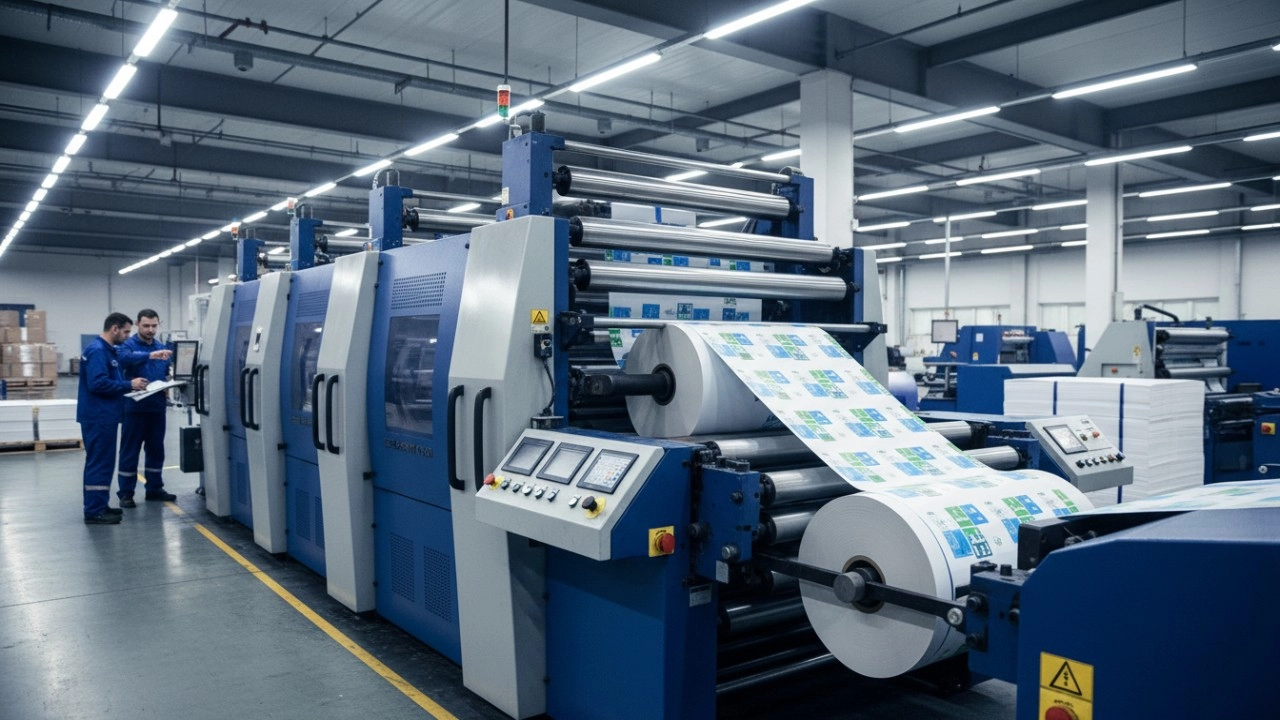
How to Optimize Your Flexo Printing Machine for Maximum Speed and Zero Defects
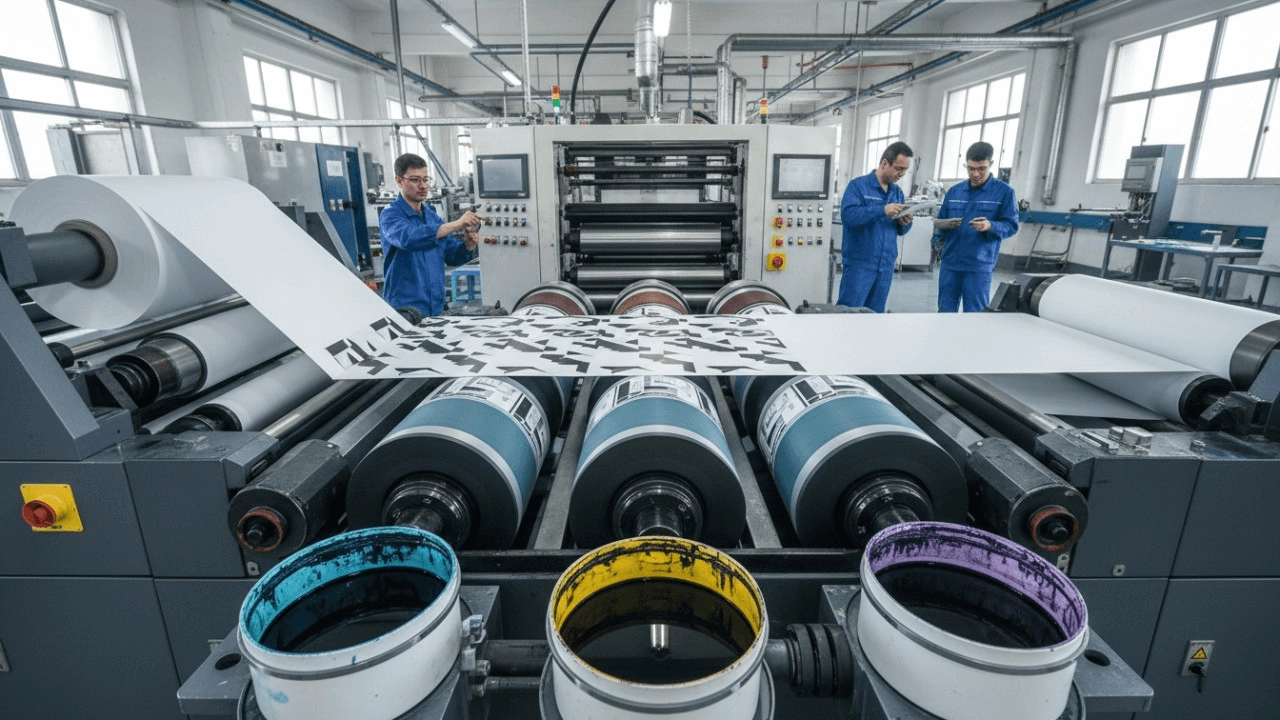
What is Flexographic Printing? The Ultimate Technical Guide & Process Breakdown (2025)
Top 10 Best Flexo Printer Manufacturers (2026): Reviews & Buying Guide
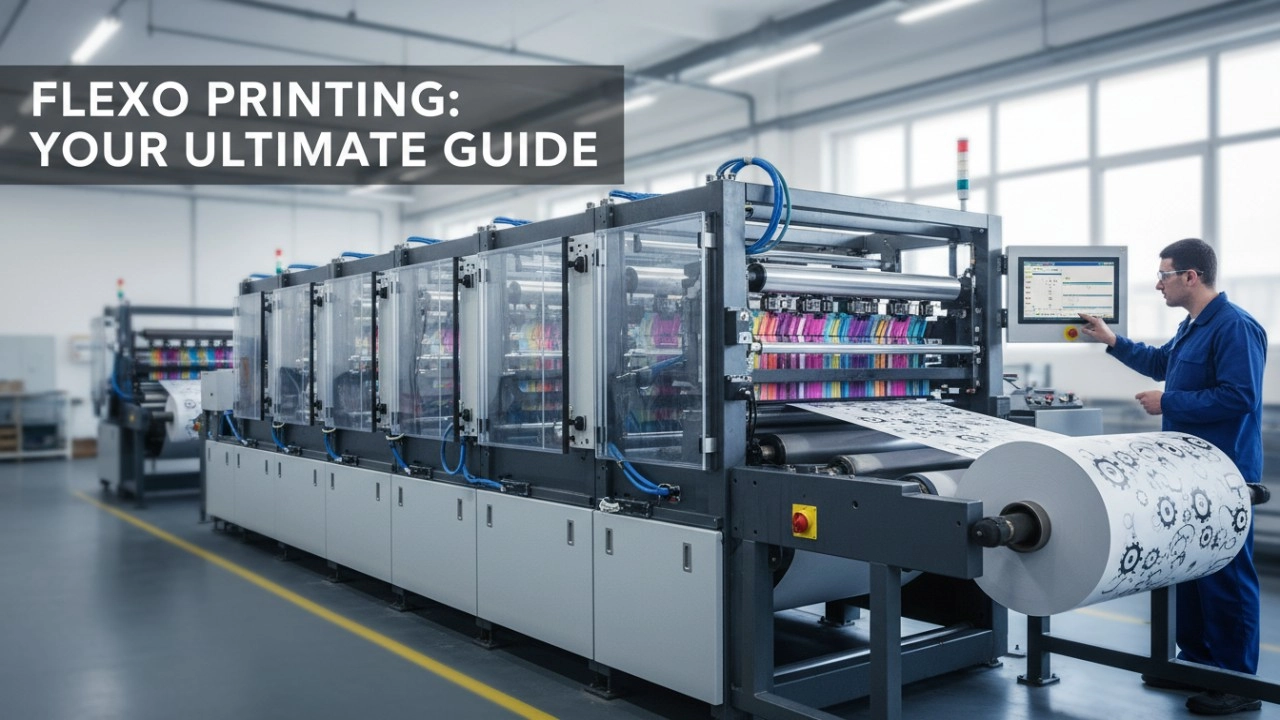
How to Select the Best Flexo Printing Press Manufacturer: A Data-Driven Checklist (2026 Edition)
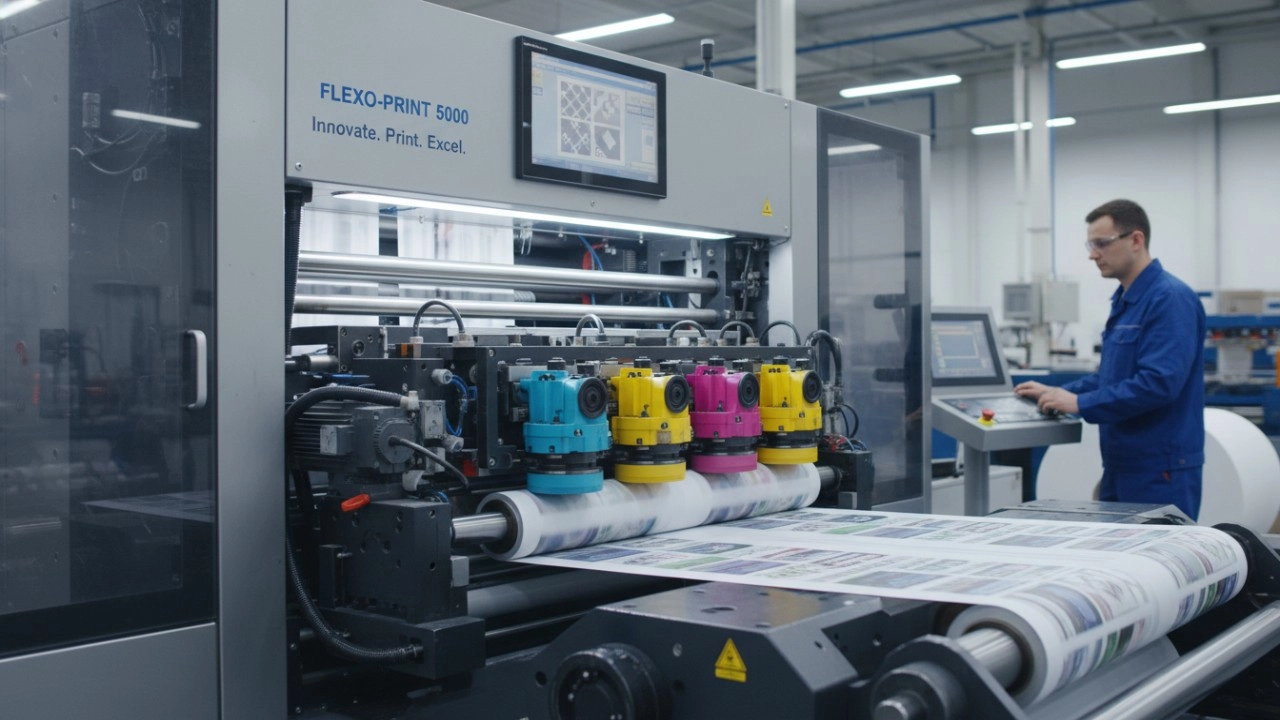
High-Efficiency Flexo Press Solutions: A Complete Guide to Optimizing Your Packaging Production
Product
How do I troubleshoot common issues with the folding mechanism?
Common issues can often be resolved by checking the alignment of the folding plates and ensuring there is no debris obstructing the mechanism.
What materials are compatible with your folding carton machines?
Our machines are compatible with a wide range of materials including cardboard, corrugated board, and paperboard.
Shipping
Can you ship to remote or difficult-to-access locations?
Yes, we can arrange shipping to remote locations, though additional charges and time may apply.
Do you offer international shipping for your machines?
Yes, we offer international shipping and can handle all necessary customs documentation.
Industry Solutions
Do you offer customized solutions for unique production needs?
Yes, we work closely with clients to develop customized solutions that meet their specific production requirements.
Leave a message
Have any questions or queries about our products? Please leave us a message here and our team will get back to you promptly.
* Rest assured that your privacy is important to us, and all information provided will be handled with the utmost confidentiality.


© 2025 Keshenglong & SHINKO All Rights Reserved.
Keshenglong Carton Packing Machine
Keshenglong Carton Packing Machine
Keshenglong Carton Packing Machine
Keshenglong Carton Packing Machine
Keshenglong Carton Packing Machine