
What is the true cost to buy a flexo printing machine?
Detailed, practical answers to 6 long-tail questions beginners and buyers ask about buying a flexo printing machine: real cost breakdowns, TCO, prepress choices, consumables per-run, hidden integration expenses, and service/SLA requirements.
- 1) What is the complete true cost of buying a new narrow-web flexo printing machine for food-grade labels (including installation, anilox, plates, chillers, commissioning, and regulatory validation)?
- 2) How much should I budget for prepress and plate-making equipment versus outsourcing when buying a 6-color mid-web flexo press?
- 3) What are realistic total cost of ownership (TCO) and payback period for buying a used 8-color wide-web central-impression (CI) flexo press vs a new one?
- 4) How do I calculate per-unit ink and consumable cost for a production run of 100,000 labels on a flexo printing machine?
- 5) What hidden integration costs are commonly overlooked when buying a converting-capable flexo press (die-cutting, inspection, web controls, HMI upgrades)?
- 6) Which warranty, service and spare-parts agreements should I insist on to avoid unexpected failures on high-speed flexo presses?
- Concluding summary — Advantages of buying the right flexo printing machine
True Cost to Buy a Flexo Printing Machine — 6 Specific Buyer Questions Answered
Buying a flexo printing machine is more than the sticker price. This guide answers six specific, frequently under-addressed buyer questions — with realistic cost ranges, step-by-step calculations, and procurement protections you can demand. Embedded technical terms such as narrow-web flexo press, anilox roll, photopolymer plates, CI (central impression) cylinder, UV/EB curing and inline finishing are used naturally so you get a commercially accurate picture when comparing quotes.
1) What is the complete true cost of buying a new narrow-web flexo printing machine for food-grade labels (including installation, anilox, plates, chillers, commissioning, and regulatory validation)?
Short answer: budget ~25–40% over the equipment list price for a complete, production-ready food‑grade line. The final cost depends on press configuration (1–10 colors), curing method (solvent, UV, EB), and required validation (GMP, HACCP, customer audits).
Typical cost breakdowns (industry ranges as of 2022–2024):
- New narrow-web flexo press (1–6 colors, 300–420 mm web): $80,000–$450,000.
- Inline finishing add-ons (dies, slitter, inspection, rewinders): $15,000–$120,000 depending on automation level.
- Anilox rolls (per color): $800–$6,000 each depending on ceramic quality and cell count.
- Photopolymer plates (per plate, typical sizes): $20–$200 each; for 6 colors multiple plates per job may be needed.
- Chillers / drying system for UV/solvent or UV: $10,000–$60,000.
- Installation, commissioning, onsite training: 5–12% of equipment price ($4,000–$50,000 typical).
- Regulatory validation and customer audits (documentation, swab tests, GMP alignment): $3,000–$25,000 depending on scope.
Example subtotal: buying a mid-range 4-color narrow-web press listed at $220,000 could require:
- Press $220,000
- Finishing $35,000
- Anilox & plates initial kit $12,000
- Chiller & dryer $18,000
- Installation & validation $20,000
- Total ≈ $305,000 (≈39% over list price).
Practical tips:
- Ask suppliers for an itemized turnkey quote that separates press price from mandatory extras (anilox, plates holder sleeves, prepress setup, safety guards, CE/GMP documentation).
- For food-grade: require material declarations for rollers, ink contact surfaces, and traceability for consumables.
- Negotiate a scope that includes initial plate proofs, training runs, and service during first production weeks.
2) How much should I budget for prepress and plate-making equipment versus outsourcing when buying a 6-color mid-web flexo press?
Decision drivers: run frequency, short-run volume, color complexity, and lead-time control. Owning plate-making gives speed and repeatability but requires capex and skilled operators. Outsourcing reduces capex but increases per-job cost and lead time.
Typical costs (industry ranges):
- External outsourcing (per job): plate set for 6 colors usually $150–$1,200 depending on size, complexity and rush factors.
- In-house prepress investment:
- Computer-to-plate (CTP) photopolymer plate imaging unit: $25,000–$120,000.
- Plate exposure unit/washer: $10,000–$45,000.
- Software, RIP, workstation: $5,000–$25,000.
- Skilled operator training salary overhead: $30k–$60k/year total cost depending on region.
Break-even example: If outsourcing averages $400 per 6-color plate set and you run 150 unique jobs per year, annual outsourcing = $60,000. If in-house equipment amortized over 5 years plus operation equals $40,000/year, in-house becomes cost-effective and shortens lead times.
Recommendations:
- Calculate expected jobs/year and average cost per plate set; include rush High Qualitys.
- For label converters doing many short runs and daily job changes, invest in in-house plate-making and a plate mounter to reduce downtime.
- For large long-run clients with predictable repeats, outsourcing may be cheaper and lower operational complexity.
3) What are realistic total cost of ownership (TCO) and payback period for buying a used 8-color wide-web central-impression (CI) flexo press vs a new one?
Used presses reduce capex but increase risk: higher maintenance, spare-part obsolescence, lower resale value, and potential need for retrofit (controls, motors, pneumatic parts). Expect higher downtime risk and budget for refurbishment.
High-level TCO components to model for both used and new:
- Purchase price (new vs used).
- Installation, alignment, and commissioning.
- Spare parts and critical spares kit.
- Annual maintenance and service contracts.
- Consumables and energy (dryers, chillers, motors).
- Downtime cost (lost production + expedited shipping for missed orders).
- Training and engineering hours for retrofits.
Industry ranges and example:
- New 8-color CI wide-web press: $650,000–$2,500,000 depending on width, automation, and brand.
- Used (refurbished good condition): 40–70% of new price ($260,000–$1,750,000).
- Annual maintenance (new with SLA): 4–8% of purchase price; used often 8–15% actual due to parts and labor.
Simple payback scenario: New press $1,000,000, expected annual incremental profit (higher speed, quality, reduced waste) $250,000 → payback ≈ 4 years. Used press $500,000 but with $75,000 extra average annual maintenance and 10% more downtime reducing profit by $50,000 → net annual benefit might be $125,000 → payback ≈ 4 years too, but with higher operational risk.
Bottom line: used presses can yield similar payback but only if you budget for refurbishment, local spares, and have skilled maintenance. Insist on mechanical/electrical inspection reports, run-time logs, and an agreed warranty period from the seller.
4) How do I calculate per-unit ink and consumable cost for a production run of 100,000 labels on a flexo printing machine?
Rather than a single universal number, use a calculation method and realistic ranges. Key inputs: label area, number of colors, coverage percent, ink solids, ink price, anilox transfer efficiency, and plate life.
Step-by-step example (transparent assumptions so you can adapt):
- Label size: 50 × 50 mm = 0.0025 m2; 100,000 labels → printed area = 250 m2.
- Number of printed colors: 4. Assume average coverage 30% per color (varies by design).
- Estimated ink film weight: industry rule-of-thumb for flexo label work ≈ 0.8–2.5 g solids per m2 per 100% coverage (varies by ink type and anilox). We'll use 1.2 g/m2/100% as conservative.
- Ink solids required = area × coverage% × solids-per-m2. Calculation: 250 m2 × 0.30 × 1.2 g/m2 = 90 g solids per color. For 4 colors → 360 g solids.
- Account for transfer efficiency and waste (mixing, wash-ups): practical yield 60–80% of charged ink used on substrate. Using 70% yield → required ink solids charged = 360 g / 0.7 ≈ 514 g ≈ 0.514 kg.
- Convert solids to liters using density (many flexo inks ~1.0–1.2 kg/L). Using 1.05 kg/L → 0.49 L total ink consumed for all colors over 100,000 labels (this is a low-coverage example typical for many labels).
- Ink cost: typical flexo label inks range $6–$25 per liter depending on solvent/UV and pigments. Using $12/L average → ink cost ≈ $6.
- Additional consumables: plates (6 plates at $80 each if single-use per job) = $480; anilox cleaning & wear allocation maybe $5–$30; substrate waste (make-ready) ≈ 1–5% of run length — budget substrate scrap value accordingly (for 100,000 labels maybe $30–$200). Total consumable cost for run likely dominated by plates and make-ready, not ink volume.
Result interpretation: for many label runs, per-label ink cost is often a few fractions of a cent; main per-job costs are plates, make-ready waste, machine setup time and operator cost. In our example, if plates + waste + setup equal $600 total, that's $0.006 per label (0.6 cents) plus negligible ink cost — realistic for small labels and low coverage.
How to reduce per-unit costs:
- Increase run length (amortize plates over more labels).
- Use longer-life plates and optimize anilox selection for transfer efficiency.
- Stabilize color to reduce wash-ups and make-ready time (spectral matching, preset jobs).
5) What hidden integration costs are commonly overlooked when buying a converting-capable flexo press (die-cutting, inspection, web controls, HMI upgrades)?
Buyers often focus on printer modules and miss the automation and integration hardware/software needed for production-level output. Hidden costs frequently include:
- Guaranteed PLC/HMI upgrades to match factory automation and ERP integration: $5,000–$40,000 if retrofits are required.
- Inline inspection systems (camera-based print inspection, splice detection): $12,000–$120,000 depending on resolution and analytics.
- Die-cutting and rotary tooling: tooling sets $800–$8,000 per die depending on complexity; solid dies vs magnetic cylinders affect cost and changeover speed.
- Web guiding, tension control, and dancer systems for new substrates: $4,000–$40,000 for modern closed-loop controls and load cells.
- Conveyor, stacker, and palletizing interfaces for offline finishing: $8,000–$60,000.
- Safety interlocks and guarding for upgraded production speeds (CE/OSHA compliance): $2,000–$15,000.
- Software licensing for MIS/press presets and remote monitoring: $2,000–$25,000 per year or one-time fees.
Procurement checklist to avoid surprises:
- Request a factory acceptance test (FAT) with your specific converting modules and substrates.
- Require an itemized integration quote including control wiring, PLC mappings, and communications to your MIS/ERP.
- Confirm whether quoted inspection/die-cut modules are vendor-supplied or third-party, and who is responsible for integration.
- Ask for validated run samples on your substrates and tooling cost per job scenario.
6) Which warranty, service and spare-parts agreements should I insist on to avoid unexpected failures on high-speed flexo presses?
Mitigating operational risk is as important as price. Define success metrics (uptime percentage, MTTR — mean time to repair) and insist these are in the contract.
Minimum contractual elements to negotiate:
- Warranty: at least 12 months parts & labor from acceptance; for refurbished machines negotiate at least 6–12 months on mechanical and 3–6 months on electronics depending on condition.
- Service Level Agreement (SLA): include maximum response time (e.g., 24-hour on-site for critical breakdowns or next-business-day for non-critical), target MTTR, and escalation path.
- Spare parts kit: require an initial spare-parts kit (bearings, seals, drive belts, fuses, PLC modules, spare anilox roll bearings) included or discounted. Typical kit cost = 2–6% of press price.
- Remote monitoring & predictive maintenance: include remote diagnostics access and a prioritized support channel; remote support can cut downtime materially.
- Field training & documentation: detailed preventative maintenance schedule, parts lists, and at least 3 days on-site operator/maintenance training during commissioning.
- Optional uptime guarantees: negotiate service credits if agreed uptime targets are not met during the first 12 months.
Practical vendor questions:
- Where are the nearest authorized service partners and how many field engineers are in your country/region?
- What’s the average parts delivery time for critical spares?
- Can the vendor provide references of customers using the same model in similar production environments?
By requiring these items in the purchase contract you convert an equipment vendor into a production partner rather than only a supplier.
Concluding summary — Advantages of buying the right flexo printing machine
Flexo printing machines offer excellent speed, low per-unit costs on long or repeat runs, and compatibility with a wide range of substrates (film, paper, corrugated liner). Properly specified, a modern narrow-web or CI flexo press delivers high throughput, consistent color with the right prepress workflows, and lower ink costs for large-volume packaging and label work. Key strategic advantages are scalability (inline converting options), relatively low unit cost on long runs, and the ability to use water‑based, solvent, or UV/EB inks depending on product requirements.
If you want a personalized total-cost estimate or a turnkey quote that includes press, finishing, validation and service, contact us for a detailed proposal and on-site assessment.
Website: www.shinkomachinery.com • Email: kl@keshenglong.com.cn
Recommended for you
How to Optimize Your Flexo Printing Machine for Maximum Speed and Zero Defects
What is Flexographic Printing? The Ultimate Technical Guide & Process Breakdown (2025)
Top 10 Best Flexo Printer Manufacturers (2026): Reviews & Buying Guide
How to Select the Best Flexo Printing Press Manufacturer: A Data-Driven Checklist (2026 Edition)
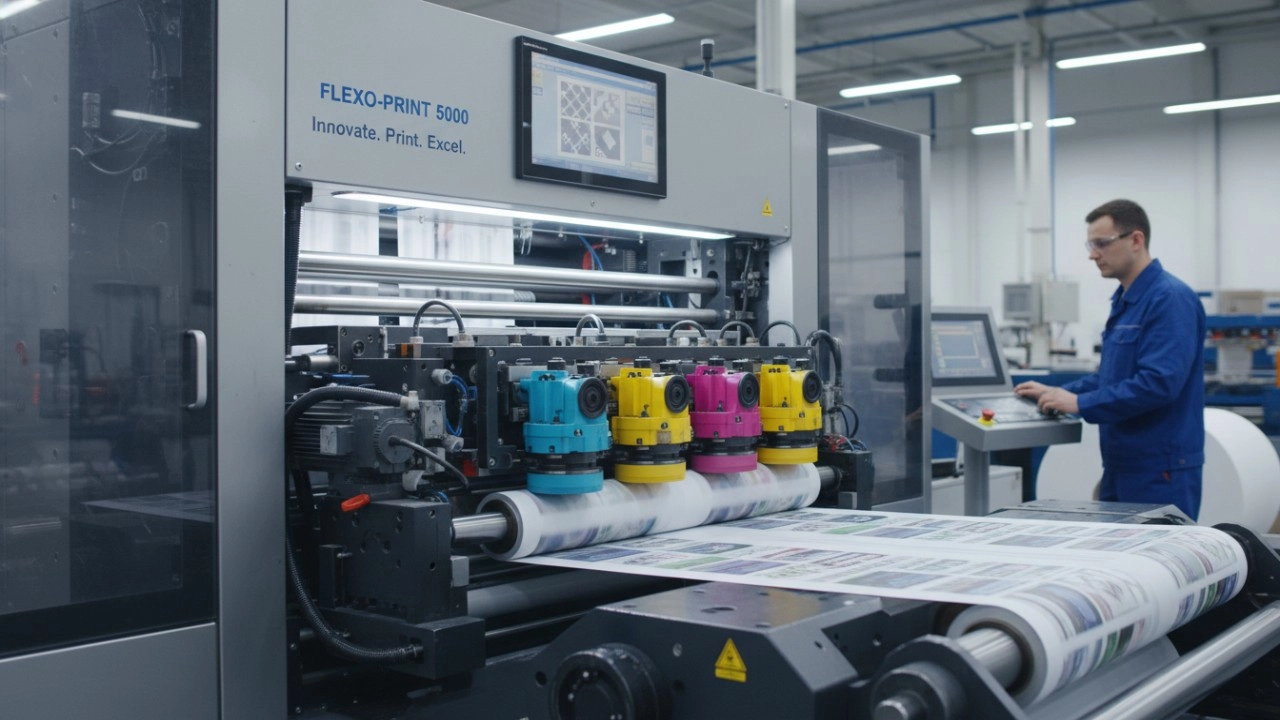
High-Efficiency Flexo Press Solutions: A Complete Guide to Optimizing Your Packaging Production
Industry Solutions
How can your folding carton machines benefit my packaging business?
Our machines increase production efficiency, reduce labor costs, and ensure high-quality, consistent carton production.
Can your machines handle high-volume production demands?
Yes, our machines are designed for high-volume production, ensuring reliable and efficient operation.
What industries typically use your folding carton machines?
Our machines are used in various industries including food and beverage, pharmaceuticals, cosmetics, and electronics.
Shipping
Can I track my shipment once it has been dispatched?
Yes, we provide tracking information for all shipments so you can monitor the delivery status.
Product
Do your machines support automated quality control checks?
Yes, our machines can be equipped with automated quality control systems to ensure consistent production quality.
Leave a message
Have any questions or queries about our products? Please leave us a message here and our team will get back to you promptly.
* Rest assured that your privacy is important to us, and all information provided will be handled with the utmost confidentiality.
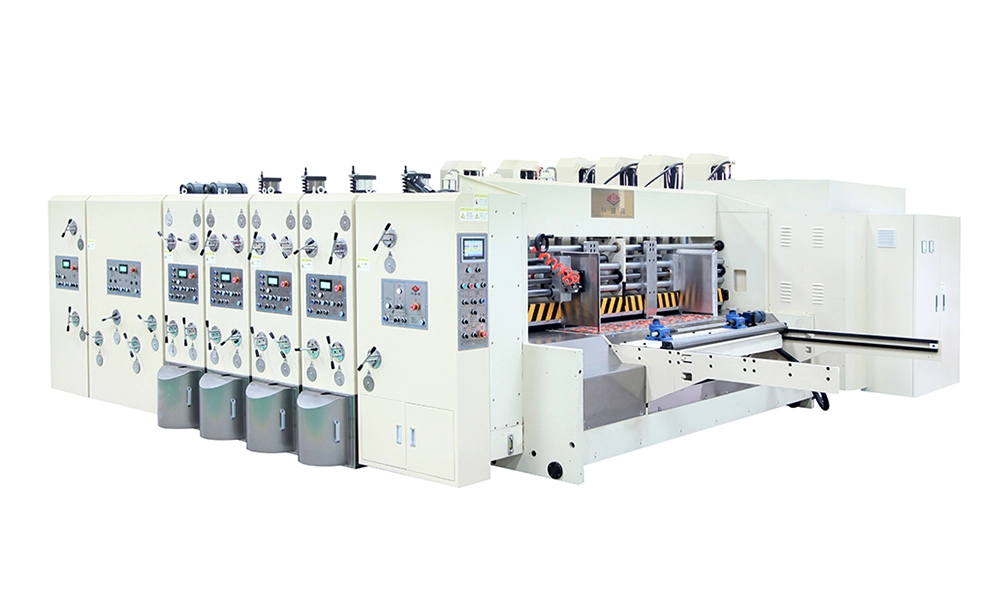
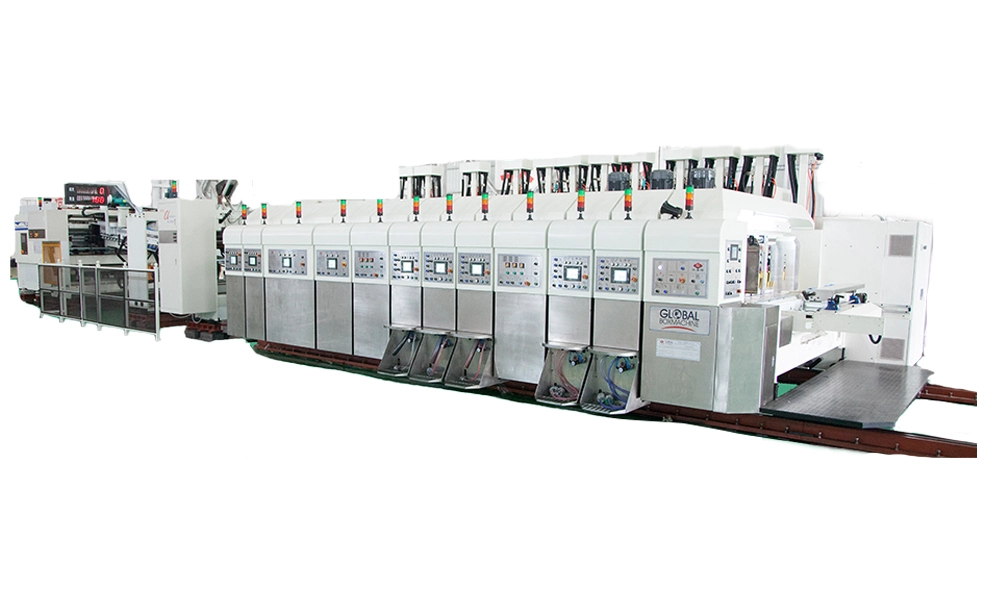
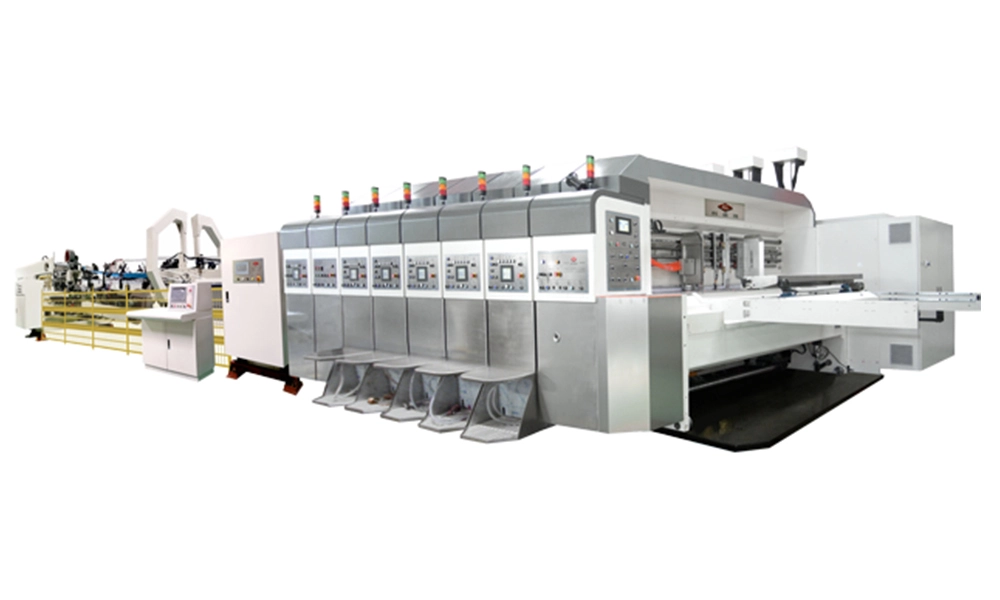


© 2025 Keshenglong & SHINKO All Rights Reserved.
Keshenglong Carton Packing Machine
Keshenglong Carton Packing Machine
Keshenglong Carton Packing Machine
Keshenglong Carton Packing Machine
Keshenglong Carton Packing Machine