
What ink types are best for flexo printing machines?
Practical, in-depth answers for buyers and operators of flexographic presses—covering anilox sizing, ink selection for food films, UV/LED curing, plate/setup tolerances, color stability, and true TCO for narrow- vs wide-web machines.
- 1. How do I calculate the right anilox cell volume and screen for my substrate and ink to hit a target solid density and highlight detail?
- 2. What ink types are best for flexo printing machines for food packaging films while minimizing migration and meeting regulations?
- 3. How should I set up and maintain inline drying/LED-UV systems to prevent mottling, set-off and incomplete cure at higher web speeds?
- 4. What plate preparation, mounting tolerances and impression pressure settings reliably minimize highlight loss and preserve 1–2% dot details?
- 5. Why do I still get color fluctuations despite closed-loop dosing and inline spectrophotometry—and how do I fix it?
- 6. What is the real total cost of ownership (TCO) when deciding between a used narrow-web flexo press and a new UV-LED flexo machine for label production?
1. How do I calculate the right anilox cell volume and screen for my substrate and ink to hit a target solid density and highlight detail?
The anilox roll (ceramic-coated anilox) is the single most important consumable for controlling ink film thickness, dot gain and solid density in flexo printing. Choose anilox by target ink film volume, substrate absorbency and the resolution you need.
Practical workflow to calculate/select anilox:
- Define the print goals: target L*/density for solids (measured with a spectrophotometer/densitometer), minimum highlight dot (percent), and maximum acceptable dot gain.
- Determine substrate porosity and finish: uncoated paper, coated board, PE/PP film, and corrugated accept and spread ink differently. Porous substrates need higher film volumes to achieve solid density; films and coated stock need lower volumes to avoid mottling and strike-through.
- Estimate required ink film thickness (practical method): run a drawdown or press trial with several anilox volumes and measure optical density. Map density vs anilox volume to find the minimum volume that achieves target density without excessive dot gain.
- Select line screen (cell geometry and cells per inch/cm): for tight process color and fine stochastic screening use finer screens and lower anilox volumes; for heavy solids and large areas use coarser cells and higher volumes. Cell geometry (hexagonal vs elongated) affects ink transfer and laydown—elongated cells suit directional printing at high speeds.
Helpful rules of thumb (industry ranges—validate on press):
- Low ink laydown (fine tints, process work on film/coated papers): anilox volumes toward the low end of the supplier range (e.g., 1–4 BCM / low cm3/m2).
- Mid-range work (labels, coated stock): moderate volumes (3–7 BCM).
- High solids/opaque whites (film lamination, corrugated): higher volumes (6–12 BCM or more).
Key checks and adjustments:
- Always correlate anilox selection with the plate resolution and plate hardness—soft plates compress more and increase mechanical gain.
- Use a densitometer and print control strip to measure solids and dot gain; keep records and create a lookup table mapping anilox volumes to expected results per substrate and ink type.
- Replace or recoat aniloxes on a preventive schedule—worn anilox cells increase variability and require higher ink consumption to hit densities.
2. What ink types are best for flexo printing machines for food packaging films while minimizing migration and meeting regulations?
For food-contact or indirect food contact flexible packaging, ink choice must balance adhesion, printability at production speed, low migration risk, and regulatory compliance (EU and U.S. rules). The main flexo ink technologies today are water-based, solvent-based, UV-curable (including LED UV) and electron-beam (EB) cured.
Decision matrix (substrate: polyethylene/PP films are common):
- EB cured inks: lowest migration potential because curing is by high-energy electrons that crosslink almost completely. EB often offers excellent adhesion on films without photoinitiators, but equipment cost is highest and maintenance is specialized. EB is preferred when the strictest migration limits apply.
- UV/LED UV inks (free-radical): fast cure, near-zero VOCs, and high productivity. Migration risk depends on formulation: low-migration UV inks exist but must be certified for indirect food contact and combined with an approved functional barrier or lamination. LED UV lowers substrate heat load and prolongs lamp life.
- Water-based inks: low VOC and increasingly capable. For coated films or when combined with appropriate drying and barrier coatings, water-based can meet migration requirements. However, adhesion on some polyolefins may require primers or corona treatment.
- Solvent-based inks: excellent rub and adhesion on many films but involve VOC controls and higher migration risk; regulations and workplace safety are key drivers away from high-VOC solvent systems.
Regulatory and practical guidance:
- Follow region-specific rules: EU indirect food-contact legislation (e.g., Regulation (EU) No 10/2011 and related plastic and migration testing), and U.S. FDA guidance for indirect food additives. Many brand owners require migration testing and documented good manufacturing practices (GMP).
- Use functional barriers (coatings or laminates) whenever ink constituents are not explicitly approved for food contact. Barrier lamination or metallized/sealable layers are widely used to control migration.
- Request manufacturer declarations and migration test reports (overall migration and specific migration) from ink suppliers and validate on your finished structure—printer responsibility cannot be outsourced.
Practical recommendation: for high-speed polyethylene film label and flexible packaging production where migration is a concern, LED UV or EB flexo inks formulated and certified for low migration—used with a validated barrier or lamination process—offer the best balance of speed, low VOC, and regulatory defensibility. If budgets or product types preclude EB/LED, low-migration water-based systems with good primers and barrier layers are a viable alternative.
3. How should I set up and maintain inline drying/LED-UV systems to prevent mottling, set-off and incomplete cure at higher web speeds?
Drying and curing are tightly coupled to ink chemistry, substrate, web speed and machine layout. Common failure modes are mottling (uneven sheen), set-off (tack transfer), and undercure (tack, migration, poor rub resistance).
Setup and validation steps:
- Establish cure/dry maps: measure cure across web width and machine speed. Use a calibrated radiometer for UV/LED (mW/cm2) and an IR pyrometer for temperature profiling. Map at maximum planned speeds.
- Match ink photoinitiator sensitivity to lamp spectrum: LED UV emits narrow bands (typically 365–405 nm), so ensure inks are LED-compatible. Formulations designed for mercury lamps may not cure with LEDs.
- Control oxygen inhibition: free-radical UV systems are sensitive to oxygen at the surface and may remain tacky. Use higher dose, oxygen scavengers in ink, or inerting (nitrogen) when surface cure is critical (e.g., heavy solids or clear varnishes).
- Balance drying energy for water/solvent inks: for hot-air, IR and IR-assisted systems, tune air temperature and web cooling (chill rolls) to prevent film distortion, varnish mottling or blistering. Maintain relative humidity and web tension stability—moisture affects drying rates and gloss uniformity.
Maintenance and process controls:
- Daily lamp output checks and routine optics cleaning—LED arrays lose output if dust blocks optics.
- Use tack testers (Sutherland rub tester, peel/tack measurement) after curing to verify full cure at production speed.
- Implement preventative maintenance for reflectors, chilled rollers and ventilation to keep temperature and web tracking stable.
- Document cure doses and maintain a change control log when switching inks, substrates, or speeds—small changes can move you from full cure to marginal cure.
4. What plate preparation, mounting tolerances and impression pressure settings reliably minimize highlight loss and preserve 1–2% dot details?
Dot preservation is a system issue: plate material and processing, mounting accuracy, impression settings, and press hardware all contribute. Beginners often over-compress plates or use too-soft plates, losing highlight dots.
Plate preparation best practices:
- Choose plate hardness by job: harder plates (higher durometer) preserve highlight dots and reduce mechanical gain; softer plates give ink density but risk dot deformation. Use a plate hardness matrix for substrates.
- Optimize imaging and exposure: under- or over-exposure creates surface irregularities. Perform exposure latitude tests, and post-expose/bake per plate manufacturer recommendations to stabilize dots.
- Use digital platemaking with consistent processing: maintain developer concentration, temperatures, washout and post-exposure times to reproduce dots across batches.
Mounting and press settings:
- Mount plates on a precision sleeve or cylinder with minimal incremental thickness variation—use micrometer gauges and check runout. For multi-station printers, keep axial and circumferential registration to within the tolerances required by your artwork (often <0.1 mm for fine work).
- Impression pressure: set to the minimum required to transfer ink. Too much pressure squeezes the dot (mechanical gain). Use pressure-indicating films (pressure-sensitive detector strips) to check nip uniformity across the width and reduce pressure uniformly.
- Use incremental proofing: start with minimal impression and increase in small steps while checking highlight retention (1–2% dots) and solid density. Record settings per substrate/ink combination in an SOP.
Verification tools: densitometer/spectrophotometer for solids and gray balance, microscopic dot measurement or plate-to-press dot gain tools, and in-line inspection cameras for real-time dot monitoring. Standardize and log every plate’s process settings into a job setup sheet so re-makes don’t require guesswork.
5. Why do I still get color fluctuations despite closed-loop dosing and inline spectrophotometry—and how do I fix it?
Closed-loop dosing and an inline spectrophotometer are powerful, but they only control the ink formulation at the point of measurement. Color drift can still come from other parts of the value chain.
Common root causes and fixes:
- Anilox wear or contamination: worn cells reduce transfer and require more ink; contaminated cells give inconsistent transfer. Remedy: implement anilox cleaning/inspection schedule and keep spares for quick changeover.
- Ink temperature and viscosity shifts: if the press room or recirculation lines heat/cool, pigment dispersion and viscosity change: control ink temperature (chill or heat as required) and use inline viscosity controllers and thermometer probes.
- Substrate batch variability: coatings, porosity, moisture or surface energy vary. Track substrate lot numbers and build substrate-specific color profiles. Include substrate checks in the SPC chart.
- Doctor chamber / seal leaks and metering inconsistencies: leaking seals or wrong chamber settings cause variable film thickness—maintain chambers and replace wear parts on schedule.
- Pigment flocculation/ink stability: incompatible additives, insufficient filtration or poor mixing lead to pigment settling. Filter inks to the recommended micron size and use proper recirculation and agitation schemes; respect recommended shelf life.
- Mechanical issues—registration and web tension: if registration and tension drift, color alignment and dot area changes. Use tension control, servo-driven registration systems and mechanical maintenance routines.
Implement these process controls and verification steps:
- Root-cause workflow: when variance is detected, stop the line, confirm anilox and plate condition, check ink temperature/viscosity and substrate lot, then re-run a control strip.
- SPC and control charts: log spectrophotometer readings, densitometer values, ink temperature and viscosity, and substrate lot numbers to build a data model of what causes drift.
- Maintenance and spare parts strategy: pre-emptive anilox/doctor chamber/spare plate sleeves and trained changeover teams reduce variability caused by wear or emergency swaps.
6. What is the real total cost of ownership (TCO) when deciding between a used narrow-web flexo press and a new UV-LED flexo machine for label production?
TCO goes far beyond purchase price. Create a five-year TCO model including capital, consumables, energy, staffing, downtime, waste, regulatory costs and residual value. Below are the line items and practical guidance for building the model.
Key cost categories:
- Acquisition cost: new press cost vs used purchase price plus refurbishment. New UV-LED presses have higher capital but include modern controls and warranty.
- Installation and commissioning: electrical, ventilation, inerting (if needed), and operator training. Older used presses often require retrofitting for modern drying systems.
- Consumables and inks: UV/LED inks are generally more expensive per liter than standard solvent inks but typically have lower VOC control costs; water-based costs vary. Consider ink consumption per job (ink laydown linked to anilox volumes and solid coverage).
- Energy and utilities: LED UV reduces power draw compared with traditional mercury UV lamps and reduces HVAC load. Solvent systems add VOC abatement energy and ongoing costs (carbon adsorption, incineration).
- Maintenance and spare parts: older presses often have higher maintenance labor and part replacement costs. Modern presses may have predictive maintenance features and lower unscheduled downtime.
- Productivity and waste: new presses with faster make-ready, automated register and inline inspection lower waste and labor per job. Include expected waste reduction (%) in the TCO model and translate to material savings.
- Regulatory and insurance costs: solvent systems may require additional permits, fume handling and insurance. Newer low-VOC systems reduce compliance burden.
- Residual value: used equipment depreciates faster; new presses often retain value better if well maintained.
How to build the model (practical steps):
- List itemized yearly costs for each category for a 5-year horizon and discount as needed to compute NPV.
- Estimate throughput and calculate cost per linear meter/label for each scenario (including labor and waste).
- Run sensitivity analysis for ink price change, energy price swings and unplanned downtime to see which scenario is more robust.
Typical outcome patterns:
- For small converters with low production volumes and tight budgets, a well-inspected used narrow-web press may be the fastest ROI—if you can accept higher maintenance and lower automation.
- For mid-to-high-volume label producers who need consistent color, faster make-ready, low VOCs and lower waste, a new UV-LED flexo press often produces lower operating costs (energy, regulatory compliance, waste) and faster throughput—making TCO favorable over 3–5 years despite higher capex.
Conclusion: run a tool-based TCO (spreadsheet) with your specific throughput, ink consumption, energy costs and expected waste to make a defensible buy decision. Vendors often provide sample TCOs—validate every assumption before relying on them.
Concluding paragraph: Flexo printing machines offer decisive advantages in speed, material flexibility and low per-unit cost for labels, flexible packaging and corrugated work when configured correctly. Choosing the right combination of anilox selection, plate preparation, ink system (water-based, solvent, UV/EB) and drying/curing (LED UV, inerting, hot-air balance) will reduce waste, lower operating costs and meet regulatory demands for food-contact structures. Modern UV-LED flexo platforms also reduce VOCs and energy use while improving make-ready times and inline inspection capability, delivering measurable improvements in productivity and TCO.
For help selecting the optimal flexo printing machine, inks, or consumables for your production goals—and to get a quote—contact us at www.shinkomachinery.com or email kl@keshenglong.com.cn.
Recommended for you
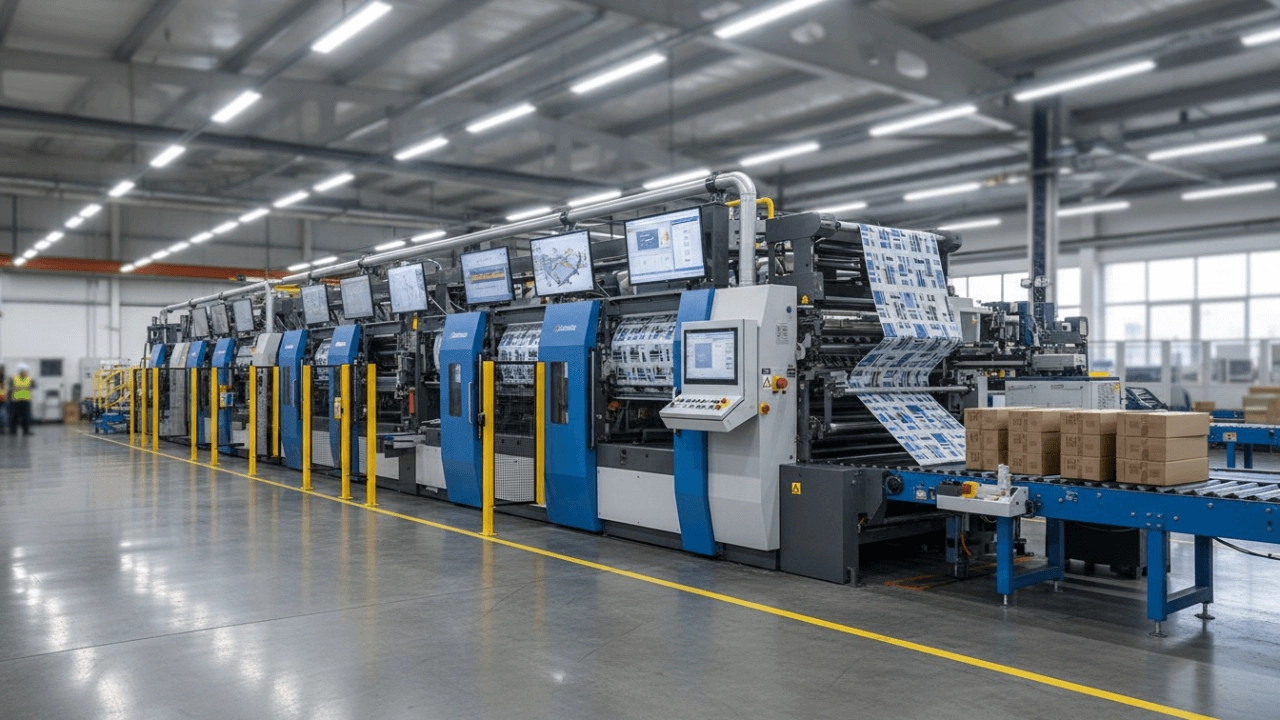
The Ultimate Guide to Choosing a Flexo Folder Gluer for High-Speed Carton Production
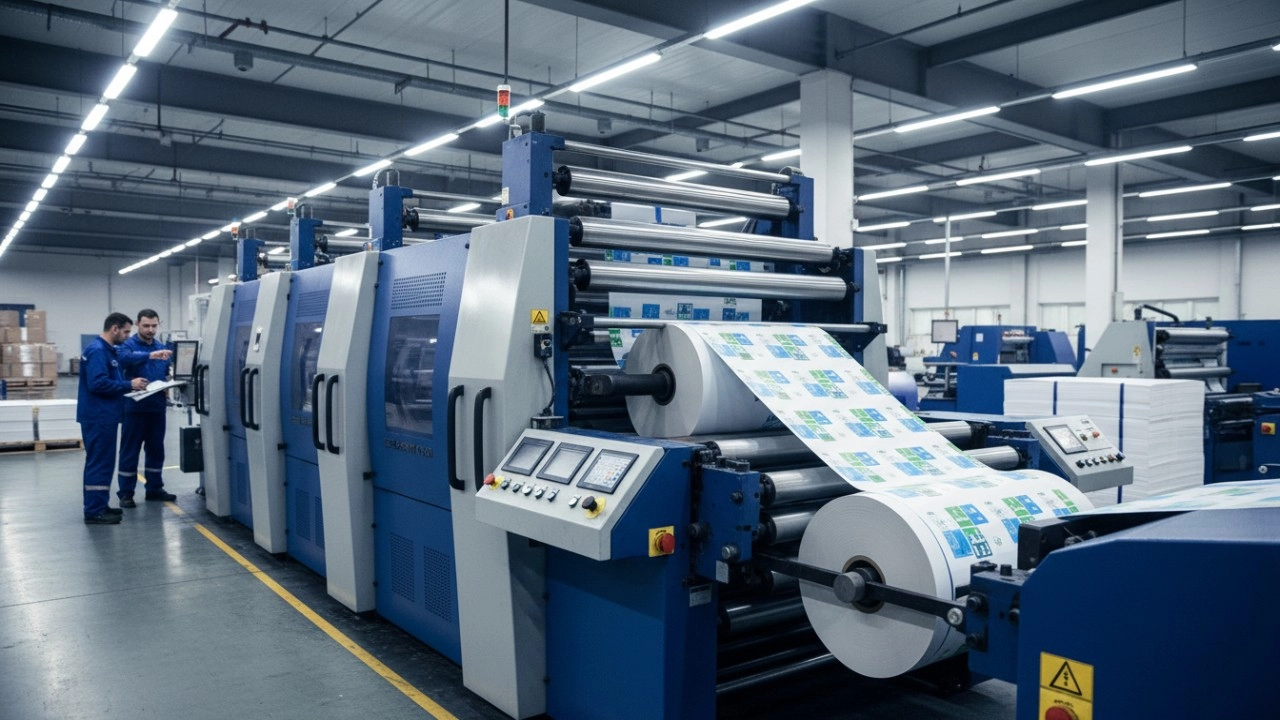
How to Optimize Your Flexo Printing Machine for Maximum Speed and Zero Defects
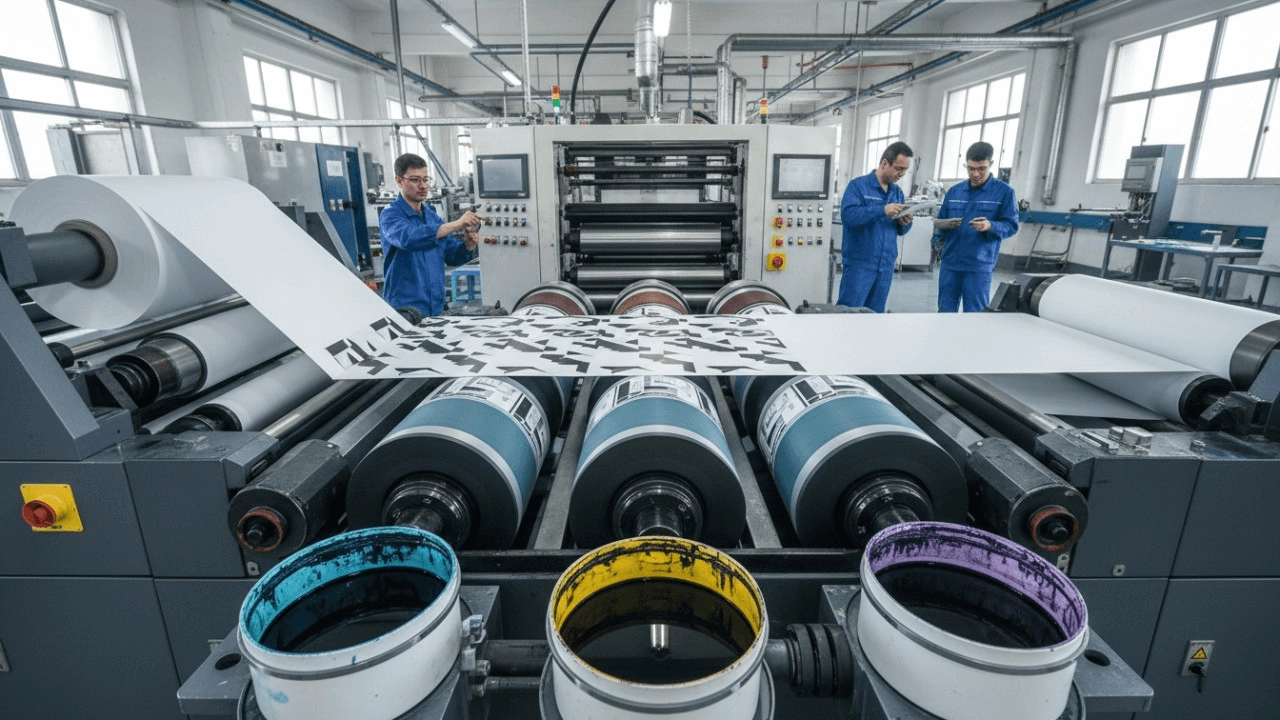
What is Flexographic Printing? The Ultimate Technical Guide & Process Breakdown (2025)

Top 10 Best Flexo Printer Manufacturers (2026): Reviews & Buying Guide
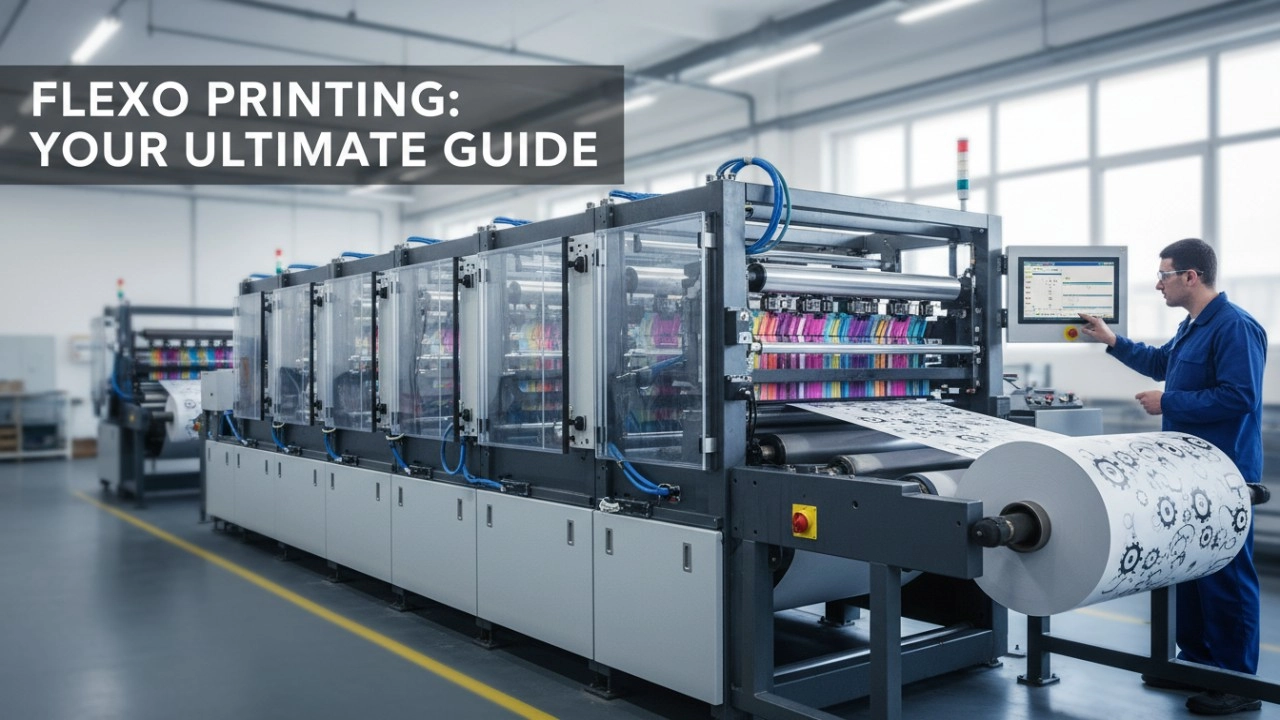
How to Select the Best Flexo Printing Press Manufacturer: A Data-Driven Checklist (2026 Edition)
Shipping
Do you offer international shipping for your machines?
Yes, we offer international shipping and can handle all necessary customs documentation.
Do you provide installation services upon delivery?
Yes, we offer on-site installation and training services to ensure your machine is set up correctly.
Can you ship to remote or difficult-to-access locations?
Yes, we can arrange shipping to remote locations, though additional charges and time may apply.
Industry Solutions
How can your machines improve my production workflow?
By automating carton production, our machines streamline your workflow, increase output, and reduce downtime.
Product
Do your machines support automated quality control checks?
Yes, our machines can be equipped with automated quality control systems to ensure consistent production quality.
Leave a message
Have any questions or queries about our products? Please leave us a message here and our team will get back to you promptly.
* Rest assured that your privacy is important to us, and all information provided will be handled with the utmost confidentiality.


© 2025 Keshenglong & SHINKO All Rights Reserved.
Keshenglong Carton Packing Machine
Keshenglong Carton Packing Machine
Keshenglong Carton Packing Machine
Keshenglong Carton Packing Machine
Keshenglong Carton Packing Machine