
What features matter when buying a flexo printing press?
Practical, expert answers to 6 high-impact, undercovered questions beginners ask when buying a flexo printing machine. Covers press sizing, registration tolerance, anilox selection, drying systems, ROI, and service/SLA—actionable checklists and metrics to reduce waste and downtime.
- 1. How should I size web width and repeat length on a flexo printing machine to minimize material waste across 40+ SKUs?
- 2. How do I evaluate a press’ real registration accuracy beyond vendor specs, and what tolerance matters for my packaging jobs?
- 3. Which anilox roll cell counts and volumes should I buy now if I plan to run both fine-screen HD flexo and heavy solid coverage jobs?
- 4. For mixed water-based and UV inks, how do I evaluate the drying/curing system so my press doesn't limit substrate choice?
- 5. How do I calculate real total cost of ownership (TCO) and payback period for a new vs refurbished flexo press (including consumables, labor, and downtime)?
- 6. What service, spare-parts policy and remote-diagnostics features should I require to keep downtime under 48 hours?
Authored by experienced flexo press engineers with hands-on installation, service and application development experience. This article addresses six specific long-tail questions that often lack up-to-date, practical answers online. It uses industry norms (ISO, FTA best practices) and manufacturer-grade criteria to help you evaluate a flexo printing machine for modern label, flexible packaging and tag production.
1. How should I size web width and repeat length on a flexo printing machine to minimize material waste across 40+ SKUs?
Pain point: Buyers often overbuy press width or choose an unsuitable repeat length and then incur high substrate waste, expensive tooling runs, and inefficient job nesting.
Checklist and method:
- Collect SKU data: list each SKU's finished width, repeat (label length), run frequency, and average run length. Export to spreadsheet.
- Calculate nesting efficiency: for each SKU, compute how many-up fits across candidate web widths (e.g., 330 mm, 520 mm, 760 mm) and total rolls used. Higher “up” count reduces per-piece waste and improves throughput.
- Repeat length compatibility: choose press cylinder repeat (repeat length) that is a common denominator of high-volume SKU repeats where possible. Modern flexo presses offer repeat ranges; narrow-web presses often support 76–520 mm repeats—confirm with vendor.
- Optimize roll diameter and core: higher roll dia reduces splices and changeovers for short SKU runs. Use roll planning to estimate changeovers/month. n
- Target ROI metric: compare substrate waste % and labor hours for candidate configurations. A rule of thumb—improving nesting to add one-up on production often reduces material cost per piece by >10% on short runs.
Practical recommendation: run a simple nesting simulation (spreadsheet or nesting module from the supplier) with your real SKU mix. For flexible packaging and labels, narrow- to mid-web (330–520 mm) is usually optimal for SKU diversity; wide-web only makes sense if you have high-volume large-format SKUs to justify increased substrate and handling costs.
2. How do I evaluate a press’ real registration accuracy beyond vendor specs, and what tolerance matters for my packaging jobs?
Pain point: Sales brochures give theoretical registration numbers, but real production registration varies with web tension, plate mounting, and speed.
How to test and which tolerances matter:
- Ask for a factory test run or acceptance test using your substrates and a multicolor test job. Request video of the job at full production speed.
- Measure lateral and circumferential registration: industry shops target ±0.05 mm (±50 microns) for high-end narrow-web label work; ±0.1–0.2 mm is common for conversion-grade packaging. If you're doing fine type, microtext or multi-up labels, require ≤±0.05 mm.
- Examine registration stability across speed range: run tests at 60%, 80% and 100% of rated speed. Some presses hold registration at low speed but drift at high speeds if tension control or air knifes are inadequate.
- Plate mounting: verify whether the press uses precision pin registration, vision-assisted laser plate mounting or mechanical plate clamps. Automatic, vision-aligned plate mounters shorten make-ready and visually eliminate most lateral error sources.
- Drive system: servo-driven, camless stations with independent register control reduce cumulative error over mechanical cam-driven setups. Central impression cylinder (CIC) designs can deliver more uniform impression and registration for multiple colors, particularly on flexible films.
Acceptance criteria to include in purchase order: specify registration tolerance (e.g., ±0.05 mm at rated speed), test substrate and test job, and require signed factory acceptance testing (FAT) video and data logs showing temperature, web tension and registered optical overlays.
3. Which anilox roll cell counts and volumes should I buy now if I plan to run both fine-screen HD flexo and heavy solid coverage jobs?
Pain point: Buyers order the wrong aniloxes and endure poor ink transfer, mottling or high ink costs. Online advice is often generic and outdated given current high-definition flexo capabilities.
Key principles and ranges:
- Understand two metrics: cell count (lines per inch or LPI, sometimes cells/cm) and cell volume (BCM—billion cubic microns per square inch). Both determine ink laydown.
- General guidance: for heavy solids you need higher cell volume (e.g., 6–15 BCM) with lower line counts; for fine halftone or HD flexo screening you need higher line counts with lower volumes (higher LPI with 1–6 BCM). Modern HD flexo screening commonly uses 800–1200 LPI equivalents and cell volumes in 1–6 BCM range depending on ink viscosity.
- Select anilox for substrate and ink system: porous substrates and highly absorbent papers often need higher volumes. Filmic substrates with lower absorption typically need lower cell volumes and finer cells for crisp highlights.
- Inventory strategy: start with a small matrix—1 low-volume fine-screen anilox (e.g., ~800–1200 LPI, 1–3 BCM), 1 medium-volume universal anilox (~400–600 LPI, 3–7 BCM), and 1 high-volume solid anilox (~200–400 LPI, 8–15 BCM). Expand based on production mix.
Verification: require test prints from the vendor using your ink and substrate with the recommended anilox. Measure print density and dot gain with a densitometer and spectrophotometer; ensure results meet your color tolerances (Delta E targets) and screening requirements.
4. For mixed water-based and UV inks, how do I evaluate the drying/curing system so my press doesn't limit substrate choice?
Pain point: Buying a press with only one curing system forces costly retrofits or rejects jobs because substrates cannot be cured properly.
Decision factors and checklist:
- Modularity: choose a press with modular dryer modules (IR/hot air, infrared, and UV) so you can configure or upgrade based on job mix.
- Water-based inks: require sufficient thermal drying (hot-air + IR) and effective web cooling to prevent web stretch and distortion. Pre-dry and after-dry zones help remove solvents before rewind.
- UV curing: offers instant cure and minimal VOCs—ideal for films and shrink sleeves—but generates heat on the web. Confirm UV lamp types (mercury vs LED). LED UV systems offer lower heat, instant on/off, longer lamp life and lower maintenance—prefer LED for heat-sensitive substrates and energy savings when possible.
- EB (electron beam) is an option for full cure of thick coatings but requires heavy safety and power infrastructure—rare for most narrow-web converters.
- Measure dryer capacity: vendor should specify kW per meter (or per dryer module) and maximum line speed at given ink/substrate combinations. Ask for real-world test data with your substrates. Ensure adequate cooling/air-knives to avoid web distortion.
Operational tip: if you run both water-based and UV jobs, insist on a press with at least two configurable drying zones and the option to upgrade to LED UV to future-proof your flexo printing machine.
5. How do I calculate real total cost of ownership (TCO) and payback period for a new vs refurbished flexo press (including consumables, labor, and downtime)?
Pain point: Purchase price alone is misleading. Many buyers undercount recurring costs (ink, anilox wear, plates, energy, spare parts, downtime) and overestimate output capacity.
Step-by-step TCO model:
- Initial capital: purchase price, shipping, installation, tooling (plates, anilox) and training.
- Annual operating costs: inks & solvents, anilox maintenance/replacement, plates, rollstock, energy (kW/hr × hours/year), operator labor, preventive maintenance parts, and service contracts. Vendors should help estimate energy usage (kW per hour) for press + dryers.
- Downtime cost: compute cost/hour of unplanned downtime (lost revenue + expedited rework). Include spare-parts availability and vendor SLA—this can be the single largest variable with refurbished equipment if spares are scarce.
- Productivity adjustments: realistic run efficiency (actual press uptime %), make-ready time per job, average job length and number of changeovers per day. Short-run, high-changeover shops should heavily weigh automatic plate mounters and quick-change tooling to reduce labor cost per job.
- Calculate payback: (New press cost − Alternative cost) / annual net benefit (reduced waste + reduced labor + higher yield + additional revenue from new capabilities) = years to payback.
Benchmarks: high-utilization converters (continuous production, >2,000 hours/year) often see payback on a new, automated flexo printing machine within 18–36 months when it enables faster job changeover and less waste. For low-utilization shops, used or refurbished presses may be better if service and spare parts are guaranteed.
6. What service, spare-parts policy and remote-diagnostics features should I require to keep downtime under 48 hours?
Pain point: A cheap press with poor after-sales support can cost more in lost production than a higher-priced machine with strong service.
Minimum SLA and tech requirements to include in contract:
- Parts availability: vendor must list critical spare parts (PLC modules, drive units, bearings, anilox sleeves, clutch assemblies) and guaranteed delivery times. Target same-region spares stock and <48–72 hour delivery for critical spares.
- Service response SLA: define on-site response time (e.g., <24–48 hours for business-critical faults) and mean time to repair (MTTR) targets.
- Remote diagnostics: require PLC/HMI with secure remote access (VPN) and built-in telemetry to allow vendor trouble-shooting, error log analysis and predictive maintenance alerts. This reduces diagnostic time and often enables remote fixes.
- Training and documentation: include on-site operator and maintenance training blocks and spare-parts kits. Obtain maintenance manuals and a recommended PM schedule tied to operating hours.
- Upgrade path and retrofits: ensure the press architecture (servo drives, modular stations) supports common upgrades—additional stations, LED UV retrofits, servo unwinds—so future investments are eased and downtime minimized.
Contract clause suggestion: include penalty or rebate clauses for missed SLA response times and require annual performance review including uptime metrics and spare-parts consumption analysis.
Concluding summary — advantages of a modern flexo printing machine
When chosen and specified correctly, a modern flexo printing machine delivers high throughput, low unit cost, quick make-ready (with automatic plate mounting and servo-driven stations), consistent color with proper anilox and drying systems, and flexible substrate compatibility that supports both labels and flexible packaging. Investments in registration accuracy, modular drying (LED UV + IR), anilox inventory and a strong service/SLA pay back through reduced waste, faster job changeovers and the ability to bid on higher-margin jobs.
For a tailored evaluation, send us your SKU mix, substrates and sample jobs and we will run a configuration and ROI analysis tailored to your operation. Contact us for a quote: www.shinkomachinery.com — kl@keshenglong.com.cn
Standards and industry references used in forming these practical recommendations include ISO print standards and Flexographic Technical Association (FTA) best practices for anilox, registration and color control. For factory acceptance testing and installation, require documented FAT and SAT with your test files.
Recommended for you
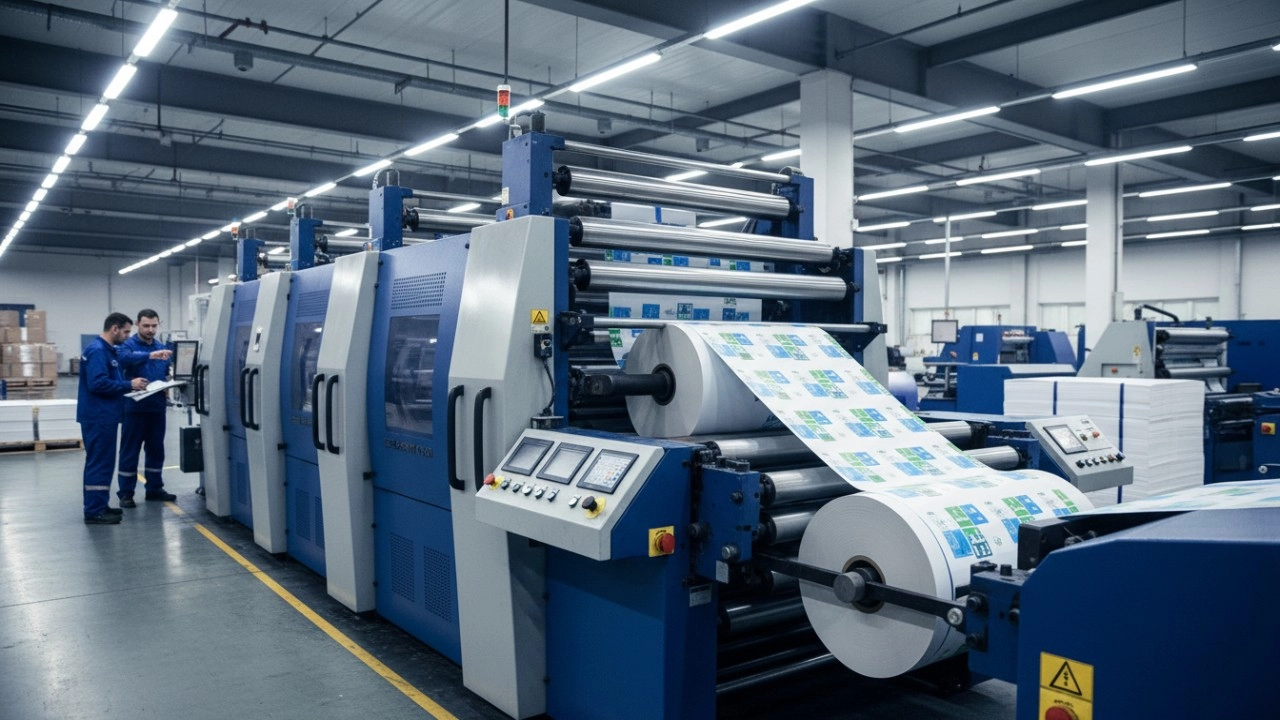
How to Optimize Your Flexo Printing Machine for Maximum Speed and Zero Defects
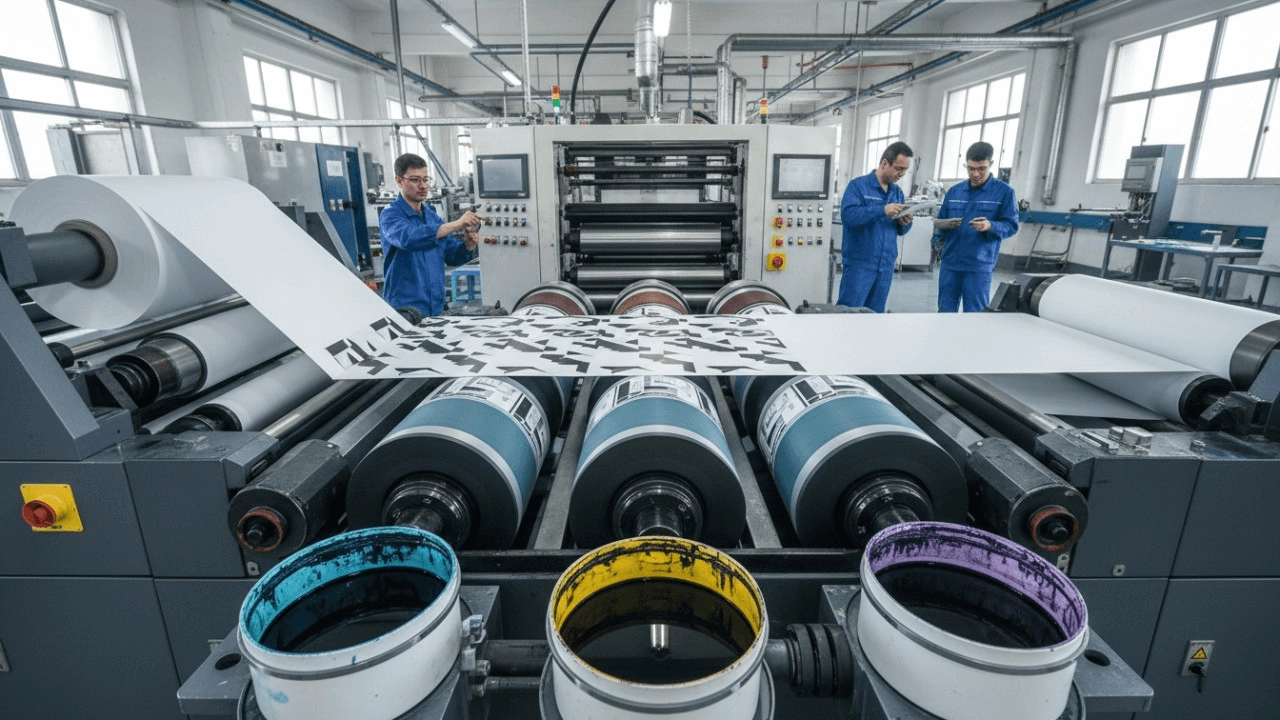
What is Flexographic Printing? The Ultimate Technical Guide & Process Breakdown (2025)

Top 10 Best Flexo Printer Manufacturers (2026): Reviews & Buying Guide
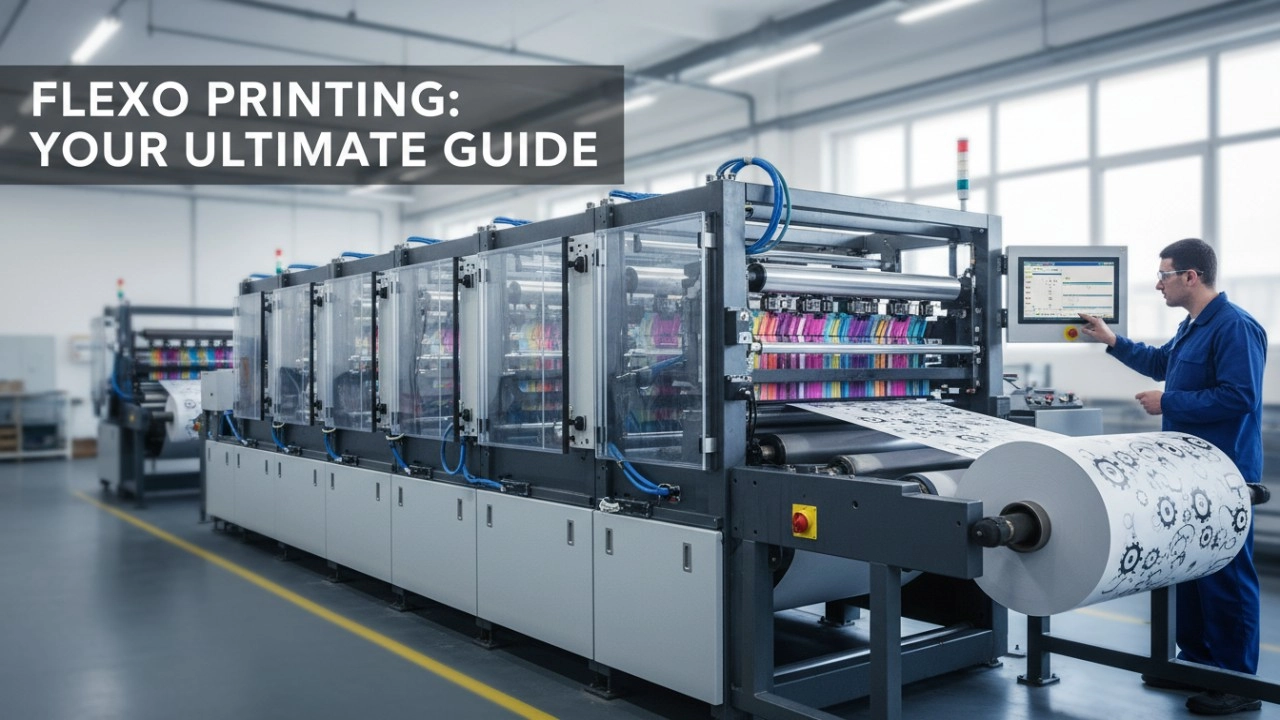
How to Select the Best Flexo Printing Press Manufacturer: A Data-Driven Checklist (2026 Edition)
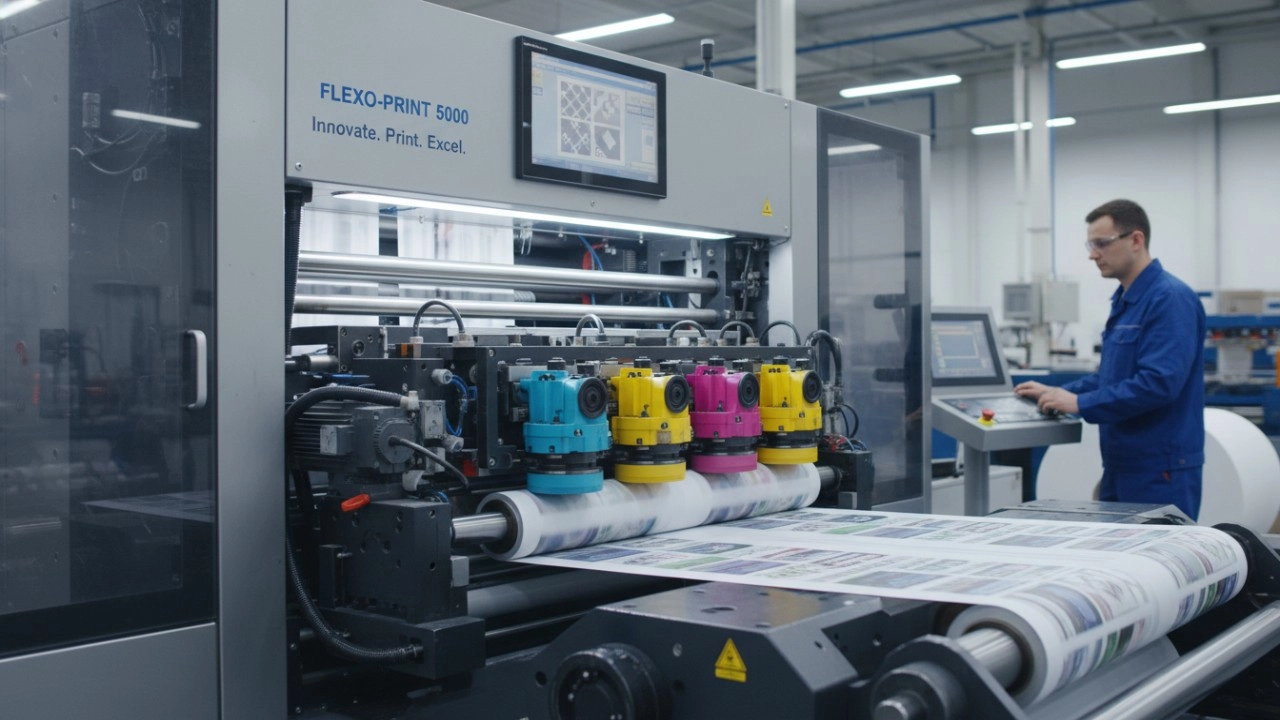
High-Efficiency Flexo Press Solutions: A Complete Guide to Optimizing Your Packaging Production
Product
What maintenance is required for optimal machine performance?
Regular lubrication, cleaning of the folding units, and checking for worn parts are essential for maintaining optimal performance.
Can your machines handle custom carton designs?
Yes, our machines can be customized to handle various carton designs and specifications.
Industry Solutions
What industries typically use your folding carton machines?
Our machines are used in various industries including food and beverage, pharmaceuticals, cosmetics, and electronics.
How do your machines comply with industry standards and regulations?
Our machines are manufactured to meet or exceed industry standards and regulations, ensuring safe and compliant operation.
What kind of technical support do you offer for industry applications?
We provide comprehensive technical support, including installation, maintenance, and troubleshooting services.
Leave a message
Have any questions or queries about our products? Please leave us a message here and our team will get back to you promptly.
* Rest assured that your privacy is important to us, and all information provided will be handled with the utmost confidentiality.


© 2025 Keshenglong & SHINKO All Rights Reserved.
Keshenglong Carton Packing Machine
Keshenglong Carton Packing Machine
Keshenglong Carton Packing Machine
Keshenglong Carton Packing Machine
Keshenglong Carton Packing Machine