
Mastering the Flexo Printer: The 2026 Complete Guide to High-Speed Production Efficiency
A comprehensive 2026 guide to mastering flexo printer efficiency. Covers CI press technology, AI-driven automation, and ROI analysis for high-volume packaging production.
- What is a Flexo Printer and How Does it Redefine Modern Packaging?
- The Backbone of High-Volume Manufacturing
- Key Takeaways: Quick Summary for Decision Makers
- Strategic Insights for 2026
- Anatomy of a High-Performance Flexo Press
- 1. The Anilox Roller: The Heart of the Press
- 2. Plate Cylinder and Sleeves
- 3. Inking System & Doctor Blades
- 4. Substrate Handling
- 2026 Technology Trends: AI and Industry 4.0 Integration
- The Era of the Smart Press
- Expert Tips for Optimal Press Performance
- Mastering the Variables
- Common Operational Mistakes to Avoid
- The Cost of Negligence
- Investment Outlook: Pricing and ROI Analysis
- Calculating the Real Value
- Frequently Asked Questions (FAQ)
- How much does a commercial flexo printer cost in 2026?
- What are the 3 main types of flexo presses?
- How long do flexographic printing plates last?
- Flexo vs. Digital: Which is better for large runs?
- What is an anilox roller?
- References
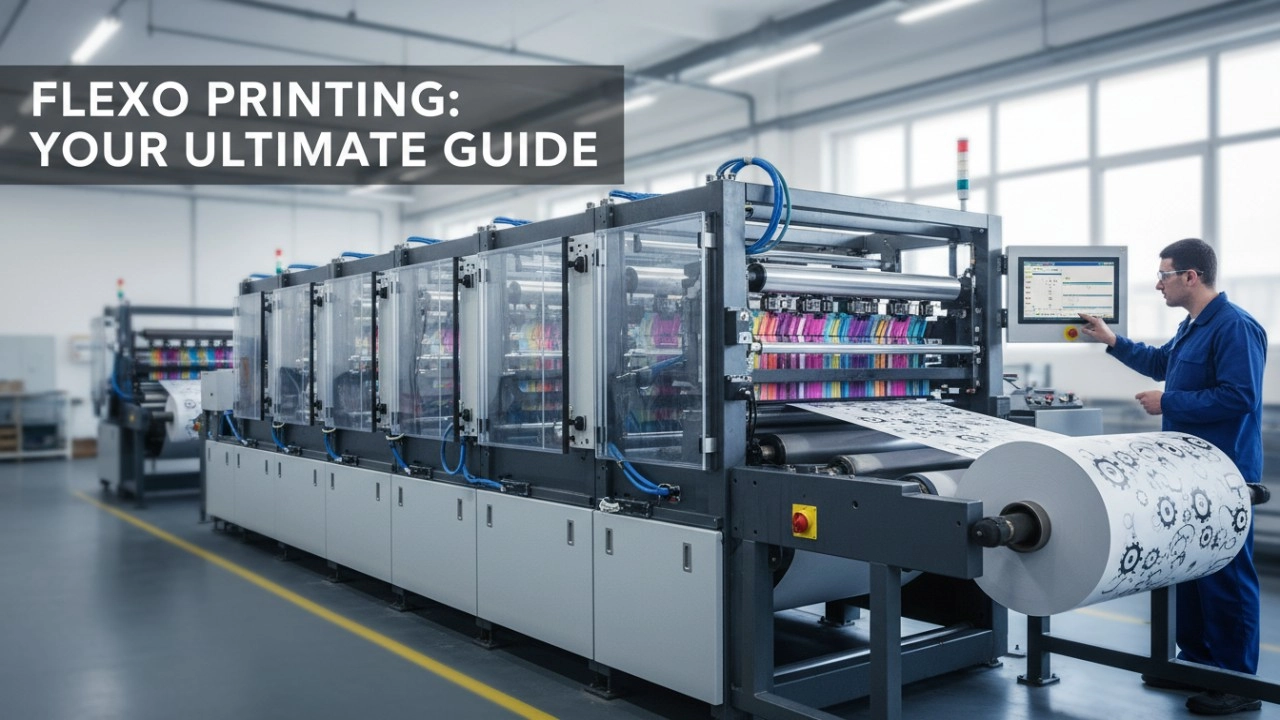
What is a Flexo Printer and How Does it Redefine Modern Packaging?
A flexo printer is a high-speed rotary printing press that utilizes flexible relief plates and fluid inks to transfer images onto diverse substrates. It serves as the global standard for high-volume packaging, offering superior speed and versatility compared to offset or digital methods.
The Backbone of High-Volume Manufacturing
While digital printing grabs headlines for short-run customization, flexography remains the heavy lifter for industrial-scale production. In 2026, the technology has evolved far beyond simple stamping. Modern CI flexo press technology integrates advanced automation and precise tension controls, allowing manufacturers to print on non-porous materials like breathable films, foils, and heavy-duty corrugated board with offset-quality results.
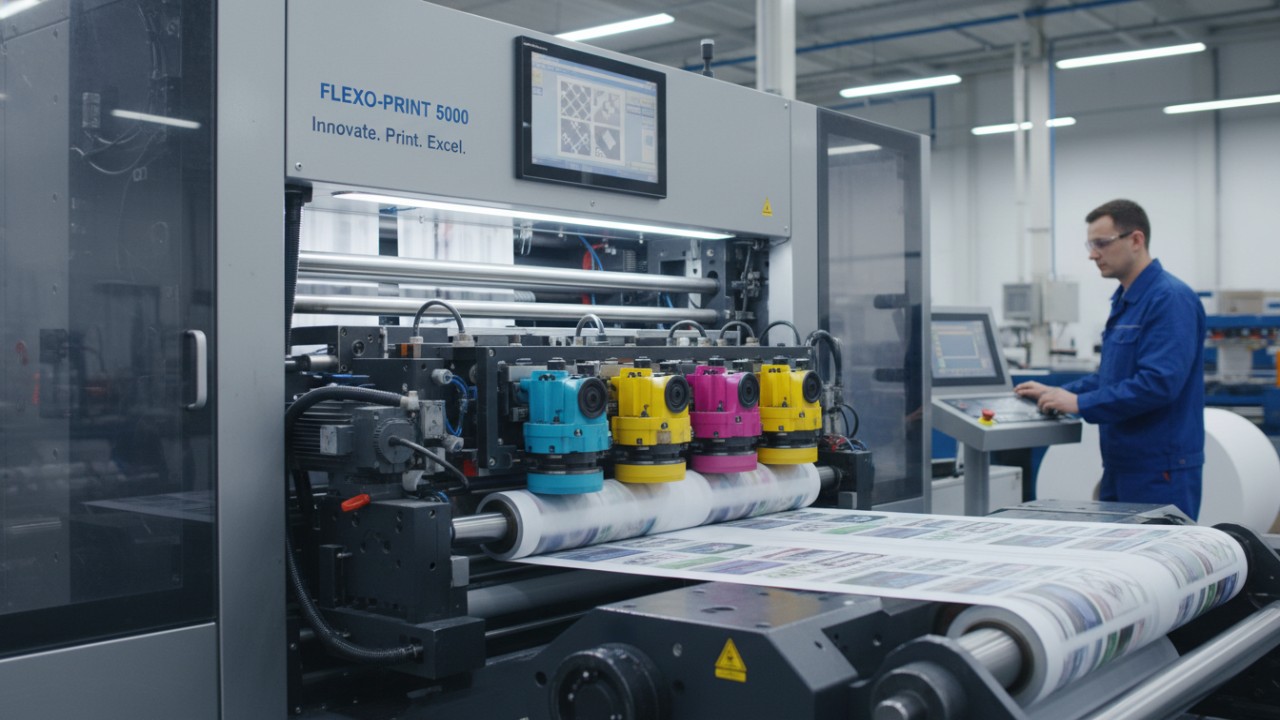
According to a 2026 market report by Mordor Intelligence, the global flexographic printing market is valued at approximately $20.94 billion, driven largely by the e-commerce boom and the demand for sustainable, lightweight packaging. The ability to run at speeds exceeding 600 meters per minute while maintaining tight registration makes flexo the undisputed leader for long runs.
Why Flexo Dominates the 2026 Market:
- Substrate Versatility: Prints easily on flexible plastics, metallized films, and rough corrugated surfaces.
- Speed & Efficiency: Capable of producing over 2,000 feet per minute (FPM) on advanced lines.
- Cost-Effectiveness: significantly lower consumable costs per unit compared to digital for runs over 15,000 units.
- Integrated Processing: Combines printing, coating, and die-cutting in a single pass.
Key Takeaways: Quick Summary for Decision Makers
Flexo printing is the most economically viable solution for production runs exceeding 50,000 units, offering a balance of speed, quality, and low per-unit cost. Decision-makers should prioritize Central Impression (CI) presses for flexible film applications due to their superior registration accuracy.
Strategic Insights for 2026
For plant managers and procurement officers, understanding the shift toward automation is critical. The days of manual adjustments are fading. Today's competitive edge comes from reducing "makeready" time—the downtime between jobs. Data from Guangzhou Keshenglong Carton Packing Machine Co., Ltd. indicates that their latest "6+1" high-precision machines, developed with Japan Shinko technology, have streamlined these changeovers, allowing for rapid deployment of complex packaging designs.
Top Strategic Considerations:
- Volume Thresholds: Flexo remains the cost leader for long-run jobs; digital is only viable for runs under 2,000-5,000 units.
- Sustainability: Adoption of water-based inks and UV-LED curing reduces volatile organic compounds (VOCs).
- Automation: AI-driven registration systems can reduce material waste by up to 25%.
- Global Reach: Equipment from established leaders like Keshenglong now supports operations in over 70 countries, proving the reliability of modern Asian-manufactured presses.
Anatomy of a High-Performance Flexo Press
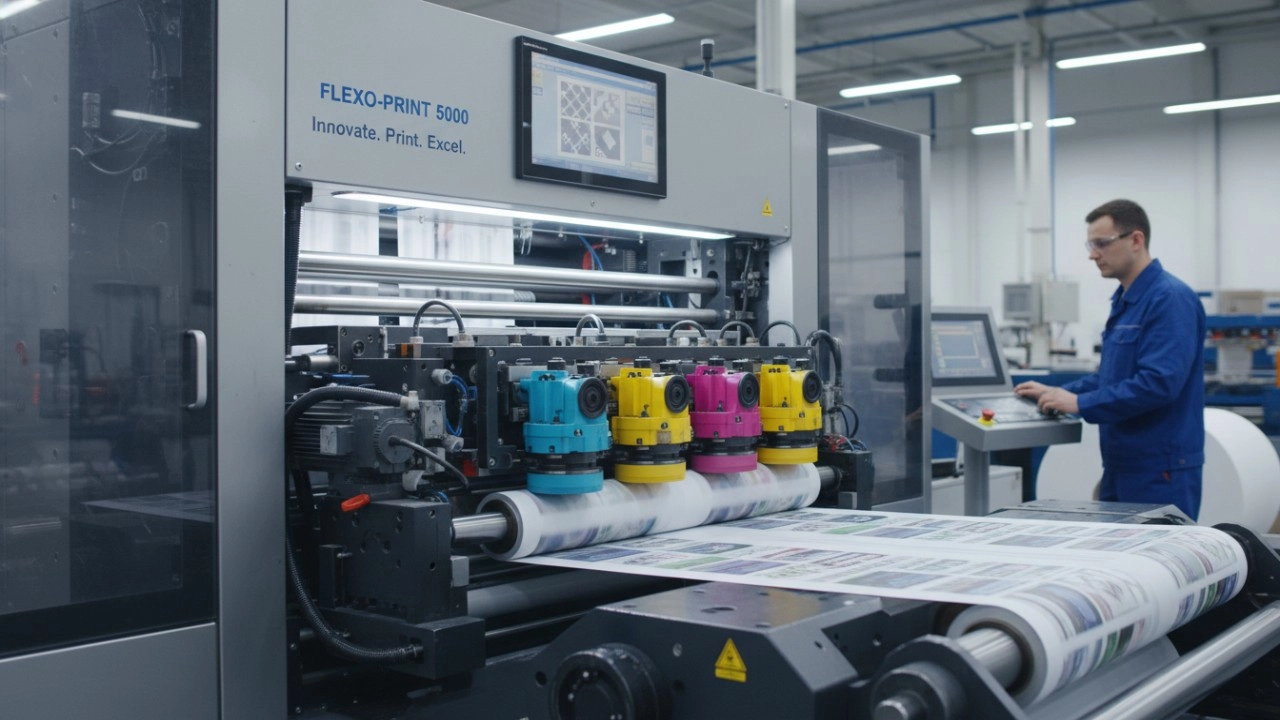
A high-performance flexo press consists of four critical subsystems: the anilox roller, the plate cylinder, the inking system, and the substrate handling unit. Each component must be perfectly calibrated to ensure the final print is sharp, consistent, and free of defects like "gear marks" or "halos."
1. The Anilox Roller: The Heart of the Press
The anilox roller cell volume is the single most important variable in flexographic printing. This ceramic-coated cylinder is laser-engraved with millions of microscopic cells that carry a specific amount of ink to the printing plate. If the cell volume (measured in BCM - Billion Cubic Microns) is too high, the image will smear; too low, and the colors will look washed out.
2. Plate Cylinder and Sleeves
Modern presses use lightweight carbon fiber sleeves that slide onto the air-cushioned mandrels. This design allows for quick changeovers without the need for heavy lifting equipment. The printing plates themselves are often made via digital photopolymer plate processing, which uses laser ablation to create sharper dots and finer vignettes than traditional analog plates.
3. Inking System & Doctor Blades
An enclosed chambered doctor blade system is standard in 2026. A doctor blade wipes excess ink from the anilox roller, ensuring a consistent ink film thickness. This enclosed system prevents solvent evaporation and keeps flexographic ink viscosity control stable throughout the run—a critical factor for color consistency.
4. Substrate Handling
Whether feeding flimsy polyethylene film or rigid corrugated board, tension control is vital. Advanced servo motors monitor the web tension millisecond-by-millisecond to prevent stretching or wrinkling, which is crucial when using CI flexo press technology where the substrate is wrapped around a single large central drum.
Core Components Breakdown:
- Anilox Roller: Controls ink density; requires regular laser cleaning.
- Plate Cylinder: Holds the photopolymer plate; determines the repeat length of the print.
- Doctor Blade: Wipes the anilox; angle and pressure are key to preventing scoring.
- Drying System: Utilizes hot air or UV-LED to cure ink instantly between color stations.
2026 Technology Trends: AI and Industry 4.0 Integration
Industry 4.0 in flexography refers to the integration of AI (Artificial Intelligence) and IoT (Internet of Things) sensors to create a "smart press" that self-corrects and predicts maintenance needs. This technology shifts the focus from reactive troubleshooting to proactive optimization.
The Era of the Smart Press
According to a 2025 report by Gelato, 80% of print professionals now view AI and automation as essential for workflow improvement. In a modern flexo setup, cameras scan the printed web 100% of the time. If the color deviates from the target Delta E, the system automatically adjusts the ink flow or viscosity without operator intervention.
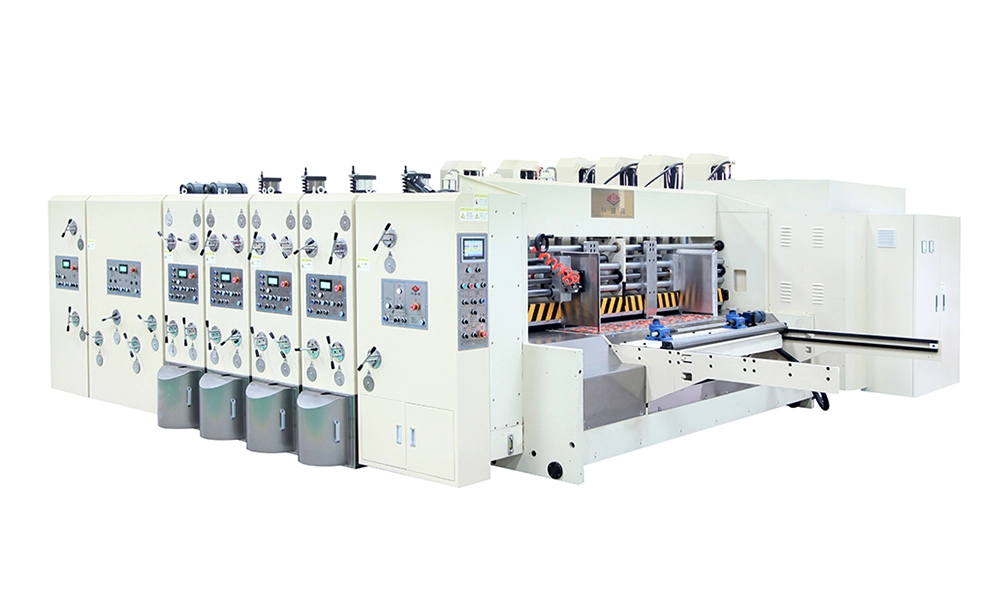
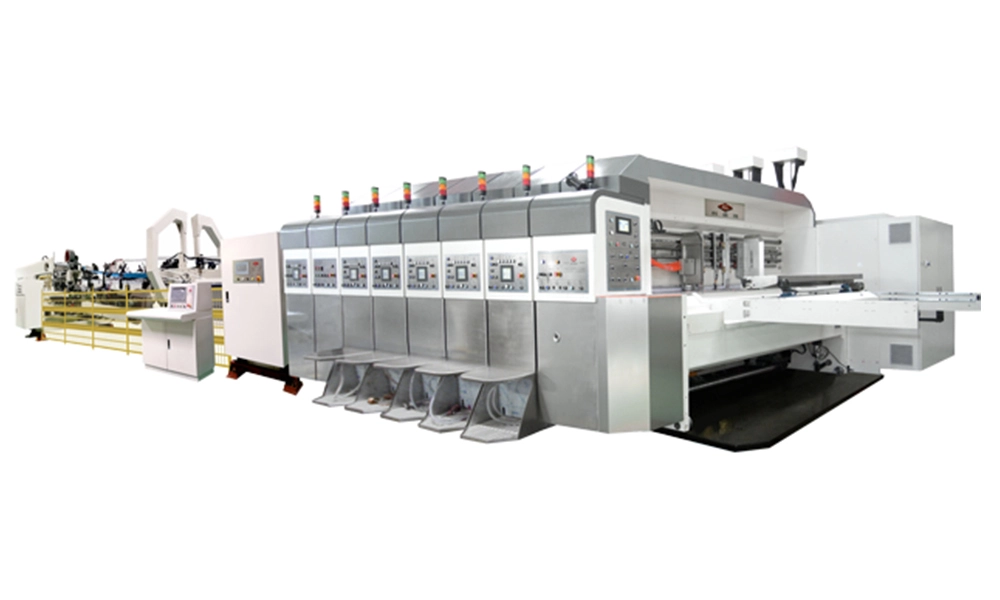
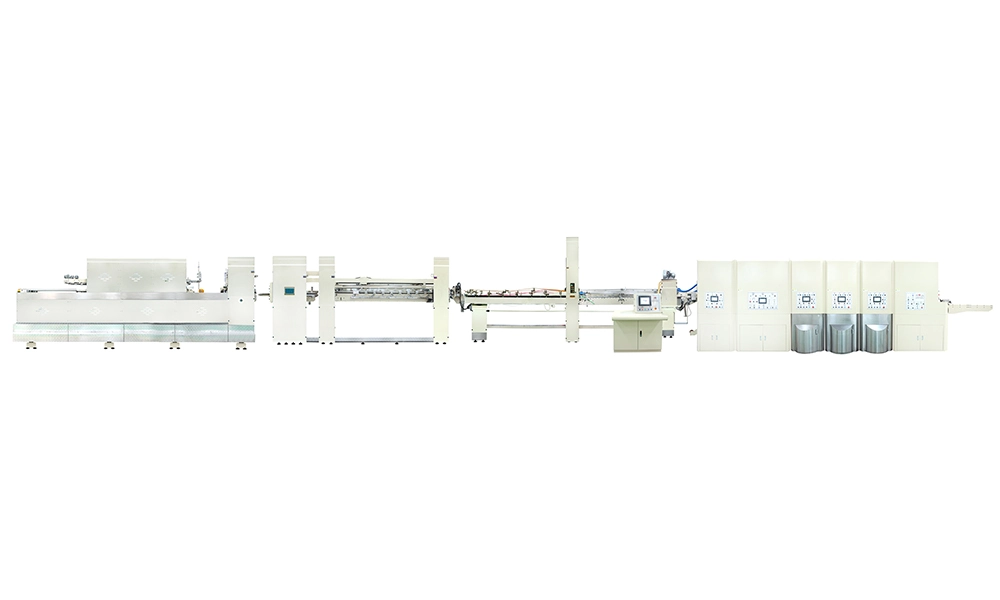
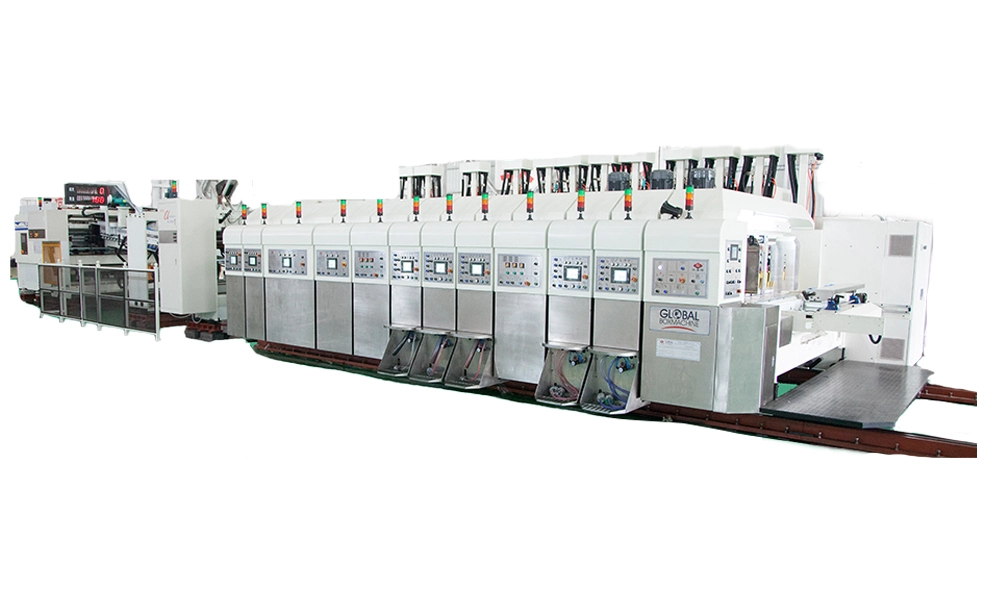
Furthermore, machines like the computerized high-speed flexo slotting die-cutting systems from Keshenglong utilize digital twin technology. This allows operators to simulate a job run virtually before wasting a single foot of material, ensuring that the physical setup is perfect on the first try.
Key Technological Advancements:
- Predictive Maintenance: Sensors detect bearing vibrations weeks before failure, preventing unplanned downtime.
- Closed-Loop Color Control: Real-time spectrophotometers maintain brand colors automatically.
- Automated Registration: AI aligns print stations within seconds, drastically reducing setup waste.
- Energy Analytics: Monitors power usage per job, helping plants reduce their carbon footprint.
Expert Tips for Optimal Press Performance
To achieve optimal press performance, operators must rigorously manage ink viscosity and perform regular "fingerprinting" of the press to match physical output with digital proofs. Consistency in these variables is the difference between a profitable run and a rejected order.
Mastering the Variables
Even the most advanced CI flexo press technology cannot compensate for poor process control. One common oversight is the maintenance of inline finishing systems. These modules, which cut, fold, or glue the product immediately after printing, must be synchronized perfectly with the press speed. If the die-cutter lags, the entire web can snap.
Proven Strategies for Efficiency:
- Match Anilox to Artwork: Use high-volume anilox rolls for solids and low-volume, high-line-screen rolls for fine text.
- Monitor Viscosity: Check flexographic ink viscosity control every 15 minutes if not automated; thick ink causes color shifts.
- Tape Selection: Use softer mounting tapes for halftone jobs to reduce dot gain, and harder tapes for solid blocks of color.
- Clean-in-Place (CIP): Implement automated washing cycles to extend the life of your anilox rollers.
Common Operational Mistakes to Avoid
The most frequent operational mistakes in flexo printing are improper doctor blade pressure, neglecting substrate surface tension (dyne level), and inadequate plate storage. These errors lead to downtime, material waste, and permanent damage to expensive equipment components.
The Cost of Negligence
Applying too much pressure to the doctor blade doesn't clean the anilox better; it grinds the blade into the ceramic, causing "score lines" that ruin the roller. Similarly, failing to check the dyne level of a plastic film can result in ink flaking off immediately after curing.
Keshenglong emphasizes that operator training is as vital as the machine itself. Their Japanese-instructed technicians focus heavily on proper setup protocols to avoid these costly pitfalls.
Critical Errors to Watch For:
- Over-Impression: Squeezing the plate too hard against the substrate causes "halos" around text.
- Ignoring Dyne Levels: If surface tension is below 38 dynes for water-based inks, adhesion will fail.
- Poor Storage: Leaving photopolymer plates exposed to UV light or ozone causes them to crack and brittle.
- Dirty Anilox Rolls: Dried ink in the cells reduces volume, causing colors to fade over time.
Investment Outlook: Pricing and ROI Analysis
Investing in a modern flexo press requires analyzing the Total Cost of Ownership (TCO), where initial capital expenditure is weighed against long-term savings in labor, energy, and waste reduction. While a high-end automated line costs more upfront, the ROI is typically realized within 3 to 5 years through higher throughput.
Calculating the Real Value
Entry-level presses may seem attractive, but they often lack the automation required for 2026 standards. A fully automated Keshenglong high-speed flexo printer, for example, allows for faster changeovers. If a machine saves 30 minutes of setup time per shift, that accumulates to hundreds of additional production hours per year.
Recent data suggests that upgrading to UV-LED curing systems can reduce energy consumption by 60-85% compared to traditional mercury lamps (Flexography.org). This massive reduction in utility bills directly improves the bottom line.
ROI Factors:
- Labor Reduction: Automated controls allow one operator to manage a task that previously required two.
- Waste Savings: Reducing startup waste from 500 meters to 50 meters saves significant material costs.
- Energy Efficiency: Modern servo drives and LED drying lower the monthly electricity overhead.
- Speed to Market: Faster turnaround times attract premium clients who need "just-in-time" delivery.
Frequently Asked Questions (FAQ)
How much does a commercial flexo printer cost in 2026?
Commercial flexo printer prices vary widely based on automation and width. Entry-level narrow web presses start around $150,000, while high-end, wide-web CI flexo press technology with full AI automation can exceed $2.5 million. Used equipment typically trades at 40-60% of new value.
What are the 3 main types of flexo presses?
The three main configurations are:
- Central Impression (CI): Features a single large drum; best for thin films and high-precision registration.
- Stack Press: Stations are stacked vertically; allows for easy access and printing on both sides of the web.
- Inline Press: Stations are arranged horizontally; ideal for heavy substrates like corrugated board and integrating inline finishing systems.
How long do flexographic printing plates last?
With proper handling and photopolymer plate processing, modern plates can last for over 1 million impressions. However, abrasive inks (like white titanium dioxide) and improper cleaning can significantly reduce their lifespan.
Flexo vs. Digital: Which is better for large runs?
Flexo is significantly more cost-effective for large runs. While digital requires no plates, the ink cost is high. The "break-even" point in 2026 is approximately 10,000 to 15,000 units; beyond this, flexo offers a much better ROI and faster production speeds.
What is an anilox roller?
An anilox roller is a hard, ceramic-coated cylinder engraved with millions of microscopic cells. It is the core component that meters the exact amount of ink delivered to the printing plate. Its capacity is measured by anilox roller cell volume (BCM).
References
The Future of Flexographic Printing to 2029
Prebiotic Market Growth, Size, Share, Industry Analysis 2035
Recommended for you
How to Optimize Your Flexo Printing Machine for Maximum Speed and Zero Defects
What is Flexographic Printing? The Ultimate Technical Guide & Process Breakdown (2025)
Top 10 Best Flexo Printer Manufacturers (2026): Reviews & Buying Guide
How to Select the Best Flexo Printing Press Manufacturer: A Data-Driven Checklist (2026 Edition)
High-Efficiency Flexo Press Solutions: A Complete Guide to Optimizing Your Packaging Production
Industry Solutions
Do you offer customized solutions for unique production needs?
Yes, we work closely with clients to develop customized solutions that meet their specific production requirements.
Can your machines be integrated with digital printing technology?
Yes, our machines are compatible with digital printing systems for custom, high-quality printing on cartons.
Shipping
Can I track my shipment once it has been dispatched?
Yes, we provide tracking information for all shipments so you can monitor the delivery status.
Do you offer international shipping for your machines?
Yes, we offer international shipping and can handle all necessary customs documentation.
Product
How do I adjust the machine settings for different carton sizes?
Machine settings can be adjusted using the intuitive control panel, which allows for quick changes to accommodate different carton sizes.
Leave a message
Have any questions or queries about our products? Please leave us a message here and our team will get back to you promptly.
* Rest assured that your privacy is important to us, and all information provided will be handled with the utmost confidentiality.


© 2025 Keshenglong & SHINKO All Rights Reserved.
Keshenglong Carton Packing Machine
Keshenglong Carton Packing Machine
Keshenglong Carton Packing Machine
Keshenglong Carton Packing Machine
Keshenglong Carton Packing Machine