
Improve Print Quality on Your Flexo Printing Machine: 10 Tips
- Understanding common causes of flexo print defects
- Anilox roll and ink transfer issues
- Plate condition, impression and elastic recovery
- Ink formulation, viscosity and substrate interaction
- 10 practical tips to improve print quality
- Prepress and plate care (Tips 1–3)
- Tip 1 — Optimize plate selection and mounting
- Tip 2 — Keep plates clean and use appropriate cleaning chemistry
- Tip 3 — Control plate exposure and post-exposure
- Pressroom setup and ink management (Tips 4–7)
- Tip 4 — Select the right anilox cell volume and line screen
- Tip 5 — Maintain tight ink viscosity and tack control
- Tip 6 — Improve ink filtration and agitation
- Tip 7 — Pre-treat and test substrates
- Process control, hardware and maintenance (Tips 8–10)
- Tip 8 — Establish standard impression and nip settings
- Tip 9 — Regularly inspect and clean anilox rollers
- Tip 10 — Use inline inspection and closed-loop control where possible
- Measuring and verifying quality: tools and standards
- Color measurement and process control
- Standards and recommended references
- Choosing the right flexo printing machine and partner
- What to look for when selecting machinery and suppliers
- Why Keshenglong & Shinko — a manufacturing advantage
- Common defects, likely causes and corrective actions
- FAQ — Frequently asked questions
- 1. How often should anilox rollers be cleaned?
- 2. Can I use the same plate for different types of corrugated boards?
- 3. What measurement tools give the best return on investment?
- 4. How can automation reduce print quality variation?
- 5. Are there standards specifically for corrugated flexo printing?
- 6. What are the quick first steps when a new job shows mottling?
I work with converters and packaging manufacturers worldwide to troubleshoot and raise print quality on corrugated flexo lines. In this article I summarize the most common root causes I see on flexo printing machines and give 10 practical, field-tested tips you can apply immediately — from anilox selection and plate care to ink formulation, press setup, measurement and preventive maintenance. Where appropriate I reference industry standards and authoritative resources so you can verify the recommendations and implement measurable process control on your press.
Understanding common causes of flexo print defects
Anilox roll and ink transfer issues
Most repeatable print problems begin with ink transfer. The anilox roller controls the film thickness and uniformity of ink delivered to the plate. Over- or under-charged cells, clogged cells, incorrect line screen (LPI) or cell volume all directly affect density, mottle and dot gain. For background reading, see the Anilox roller overview.
Plate condition, impression and elastic recovery
Flexo plates (photopolymer or elastomeric) must be mounted flat and kept free of contamination. Excessive impression pressure flattens the plate relief causing haloing, dot gain and mottling; insufficient pressure causes missing ink and weak edges. Plate shore hardness and relief height influence ink transfer; mismatches between plate relief and substrate compressibility produce inconsistent print.
Ink formulation, viscosity and substrate interaction
Ink viscosity, tack and pigment dispersion interact with substrate absorbency and corrugated flute structure to determine print appearance. On corrugated cartons, substrate porosity and top-surface treatments (coatings, primers) significantly change dot definition and color strength.
10 practical tips to improve print quality
Prepress and plate care (Tips 1–3)
Tip 1 — Optimize plate selection and mounting
I always inspect plate relief and choose shore hardness according to the substrate. For corrugated surfaces, slightly harder plates with appropriate relief height reduce dot collapse across flutes. Mount plates using calibrated thickness shims and verify runout with a dial indicator to avoid micro-ghosting.
Tip 2 — Keep plates clean and use appropriate cleaning chemistry
Contamination (ink build-up, paper dust, adhesives) alters dot shape. Use plate cleaners recommended by the plate supplier and avoid aggressive solvents that reduce plate life. Implement a daily plate-cleaning checklist and log plate ages to detect wear patterns early.
Tip 3 — Control plate exposure and post-exposure
Poor plate exposure increases surface tackiness and undercures the relief. Use densitometric and visual checks during plate proofing. For photopolymer plates, follow supplier exposure charts and validate with test prints; underexposure increases dot gain and reduces durability.
Pressroom setup and ink management (Tips 4–7)
Tip 4 — Select the right anilox cell volume and line screen
Match anilox cell volume (BCM/cm2 or BCM/in2) and line screen (LPI) to the ink type, plate and target solids. For heavy solids and bold solids choose higher cell volume; for fine screens and process-color work pick a higher LPI with tighter cells. I usually keep a matrix of anilox recommendations by job type for repeatability.
Tip 5 — Maintain tight ink viscosity and tack control
Measure viscosity and tack during first-up and hourly during production. Small changes in viscosity (±5–10%) change ink transfer significantly. Use calibrated viscometers and bring inks back to target with controlled reducers or thinners recommended by the ink manufacturer.
Tip 6 — Improve ink filtration and agitation
Remove pigment agglomerates and dried skin with inline filtration and proper agitation. Filtration reduces spotting and screen-outs; agitation prevents pigment settling that causes color fluctuation. Implement a scheduled filter change based on run hours and solids loading.
Tip 7 — Pre-treat and test substrates
Corrugated facings vary between mills and production batches. Use quick ink adhesion and wetting tests before production. Consider a light primer or surface treatment on low-energy liners to improve ink holdout and reduce mottling.
Process control, hardware and maintenance (Tips 8–10)
Tip 8 — Establish standard impression and nip settings
I use pressure charts and tactile indicators to set the impression consistently for each job. Record press settings (impression, speed, soak time) in your job ticket system. Small, documented changes reduce trial-and-error and improve first-run yield.
Tip 9 — Regularly inspect and clean anilox rollers
Anilox cell blockage is one of the most common causes of mottling and inconsistent density. Use non-abrasive cleaning systems or ultrasonic cleaning for deep cleaning; avoid metal brushes that damage cells. Track anilox volumes and recondition when cell volume drops below the target by more than 10%.
Tip 10 — Use inline inspection and closed-loop control where possible
Inline color measurement (spectrophotometers, densitometers) and web inspection systems allow real-time corrections and reduce waste. Closed-loop systems that adjust ink keys, anilox metering or speed based on densitometric feedback deliver consistent color across long runs.
Measuring and verifying quality: tools and standards
Color measurement and process control
To quantify improvements you must measure. Use spectrophotometers for color and density measurement. Track ΔE and dot gain across runs. Many shops implement SPC (Statistical Process Control) charts for density and ΔE to detect drift early.
Standards and recommended references
Adhere to industry standards for color and process control. The flexographic industry association (Flexographic Technical Association) provides best-practice resources and technical papers. For printing-process color standards refer to ISO 12647, which outlines process control for offset and can be adapted for flexo color control philosophy. Using recognized standards helps when validating workflows for customers.
Choosing the right flexo printing machine and partner
What to look for when selecting machinery and suppliers
Machine repeatability, automation (auto-register, servo-driven web control), anilox and plate changeover speed, and local service support are critical. Also evaluate supplier documentation, spare-parts availability and their experience with corrugated substrates. Total cost of ownership includes uptime, parts, training and consumables.
Why Keshenglong & Shinko — a manufacturing advantage
Keshenglong, founded in 1995 and merged with Japan Shinko in 2017, specializes in corrugated carton flexo printing and integrated packaging machinery. I recommend considering their product line for corrugated flexo applications because:
- Main products include flexo printers, computerized high-speed flexo slotting die-cutting machines (1–6 color), computerized case makers, 6+1 high-precision printing-slotting-die-cutting machines, top & bottom printing slotting die-cutting machines, and jumbo-size flexo printing slotting die-cutting machines — covering the full range of corrugated carton requirements.
- R&D and production are supported by Japan Shinko’s technical base; main parts are imported from Japan and assembly is instructed by experienced Japanese technicians, with on-site testing to maintain Japanese quality standards.
- As an integrated intelligent packaging solution supplier, Keshenglong has exported to more than 70 countries, demonstrating international service capability and established export logistics.
For machine specifications and to contact sales: https://www.shinkomachinery.com/ or email kl@keshenglong.com.cn.
Common defects, likely causes and corrective actions
| Defect | Likely Causes | Corrective Actions |
|---|---|---|
| Mottling | Clogged anilox cells, poor ink dispersion, substrate porosity | Clean/recondition anilox, filter inks, pretest substrate, adjust cell volume |
| Excessive dot gain | High impression, soft plate, substrate absorption | Reduce impression, use harder plate or different relief, adjust ink tack |
| Streaks/lines | Damaged plate, roller contamination, dried skin in ink | Inspect plates, clean rollers, filter/replace ink, check doctor systems |
| Inconsistent color/density | Variable viscosity, speed fluctuations, worn anilox | Stabilize viscosity, use inline densitometer, recondition anilox |
Data backing the importance of anilox cleaning and cell volume retention is well documented in industry literature and technical guides from associations like the Flexographic Technical Association. For fundamental technology background see Flexography — Wikipedia.
FAQ — Frequently asked questions
1. How often should anilox rollers be cleaned?
Frequency depends on ink type and run length. For pigment-heavy inks I recommend daily visual inspections and weekly deep cleaning; for paper and lightweight inks, every 2–4 weeks may suffice. Use volume checks to determine when reconditioning is required (usually when cell volume drops >10%).
2. Can I use the same plate for different types of corrugated boards?
It is possible but not ideal. Different flute profiles and surface energies affect impression and dot gain; you should have sets optimized for each substrate type (e.g., single face vs. double-wall).
3. What measurement tools give the best return on investment?
Start with a bench spectrophotometer and a handheld densitometer; then add inline measurement for high-volume, high-spec work. The ROI comes from reduced make-ready time and lower waste.
4. How can automation reduce print quality variation?
Automation (servo-driven registration, automatic tension control, closed-loop color control) reduces operator variability and maintains consistent impression and color across long runs, lowering scrap and rework.
5. Are there standards specifically for corrugated flexo printing?
While ISO 12647 focuses on process-control principles for printing, corrugated packaging often uses adapted specifications and buyer-specific tolerances. Consult customers early and use objective measurement (ΔE, density, dot gain) to create mutually agreed acceptance criteria. Industry groups such as the FTA provide practical guidelines applicable to corrugated flexo.
6. What are the quick first steps when a new job shows mottling?
Stop press, inspect anilox and plate, take an ink sample and filter it, run a quick substrate test, and compare to the job certificate for expected density. Often a short cleaning and a small anilox volume adjustment resolves the issue.
If you want help diagnosing a persistent quality issue on your flexo printing machine, or you are considering a new corrugated flexo press, contact me or the Keshenglong sales team for a technical consultation. Keshenglong & Shinko offer a broad product range including corrugated carton flexo printing machines, flexo printing slotting die-cutting machines, and integrated printing-slotting-die-cutting & stacker solutions designed for stable production of high-quality corrugated cartons.
Contact: https://www.shinkomachinery.com/ | Email: kl@keshenglong.com.cn
How to Choose the corrugated box printing die cutting machine manufacturer and supplier in us?
Flexo vs Digital Printing: Which Is Better for Labels?
Speed vs Quality: Optimizing Flexo Printing Machine Performance
Case Studies: Packaging Brands Using Flexo Printer Machines
Product
How can I integrate your machines into my existing production line?
Our technical team can assist with integrating our machines into your current production setup, ensuring a seamless operation.
Do your machines support automated quality control checks?
Yes, our machines can be equipped with automated quality control systems to ensure consistent production quality.
Industry Solutions
How can your machines improve my production workflow?
By automating carton production, our machines streamline your workflow, increase output, and reduce downtime.
How do your machines comply with industry standards and regulations?
Our machines are manufactured to meet or exceed industry standards and regulations, ensuring safe and compliant operation.
Shipping
What is the estimated delivery time for your machines?
Delivery times vary based on location and order size, but we typically estimate 4-6 weeks for delivery.
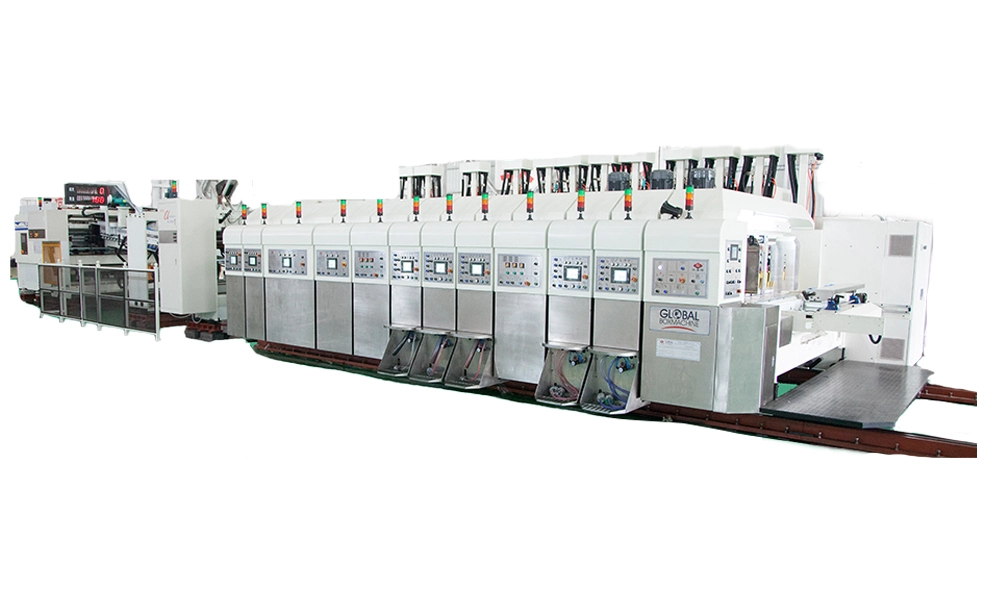
Computerized Flexo Printing Slotting Die-Cutting Inline Folding Gluing Countering Ejecting Machine
Introducing the Keshenglong&Shinko Computerized Flexo Printing Slotting Die-Cutting Inline Folding Gluing Countering Ejecting Machine. Engineered for precision, this advanced machine streamlines your packaging production with integrated Flexo Printing Slotting Die-Cutting functionalities. Seamlessly perform inline folding, gluing, countering, and ejecting—all in one efficient system. Designed for optimal performance, it enhances productivity while reducing downtime.
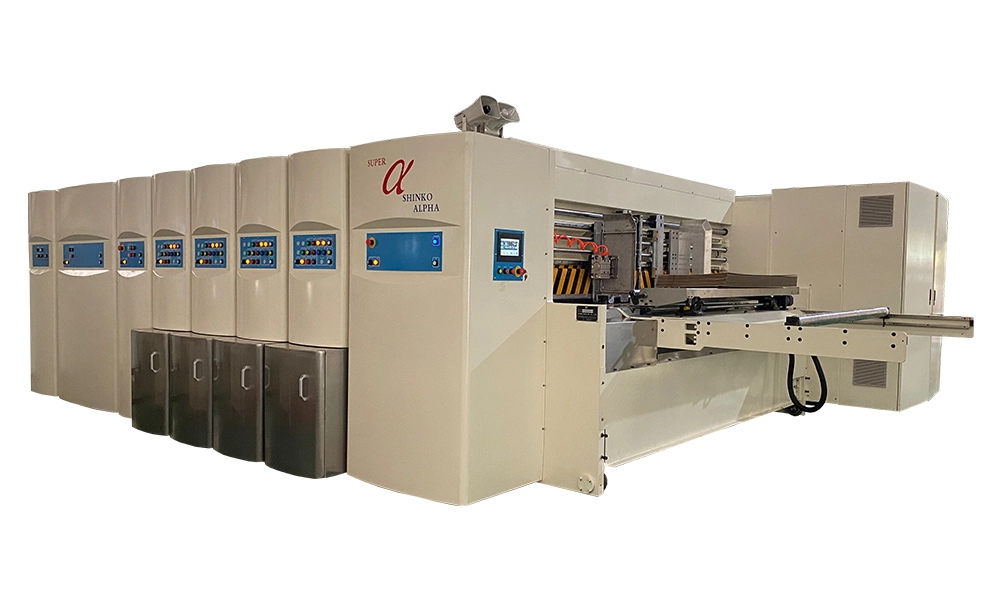
Shinko Super Alpha Movable Type Full Servo Drive Flexo Printing Slotting Die Cutting Machine
Introducing the Shinko Super Alpha Movable Type Full Servo Drive Flexo Printing Slotting Die Cutting Machine by Keshenglong. Engineered for precision and efficiency, this state-of-the-art machine enhances your production line with its advanced servo drive technology. Designed for seamless Flexo printing, slotting, and die-cutting, it ensures superior quality with every output.
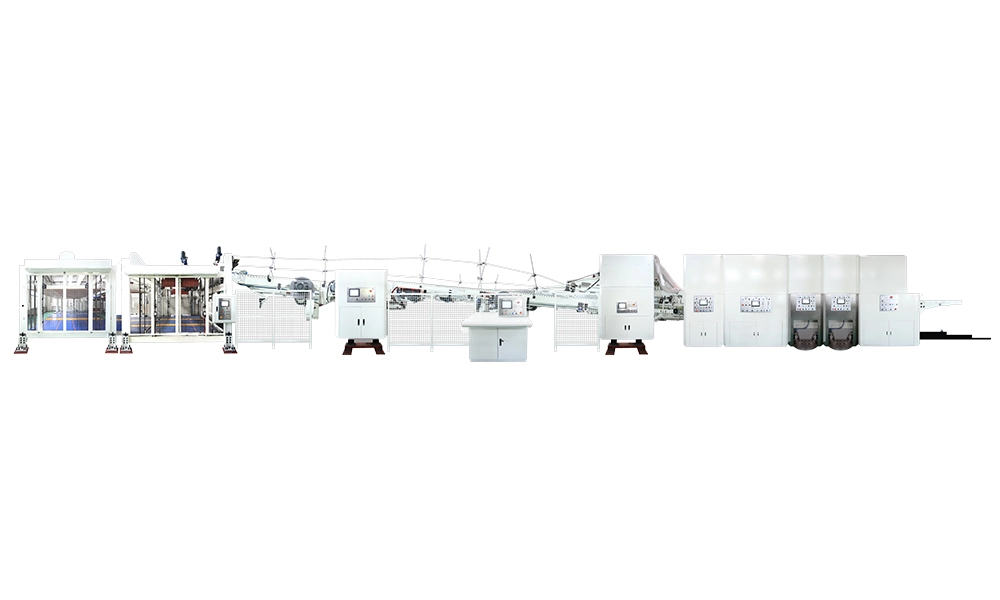
Jumbo Flexo Bottom Printing Slotting Die-Cutting Inline Folding Gluing Countering Ejecting Machine
Introducing the Keshenglong&Shinko Jumbo Flexo Bottom Printing Slotting Die-Cutting Inline Folding Gluing Countering Ejecting Machine. This advanced flexo printing slotting die-cutting machine ensures precision and efficiency for your packaging needs. Designed as a versatile flexo folder gluer machine, it optimizes every step from printing to ejecting, delivering seamless integration and superior quality.
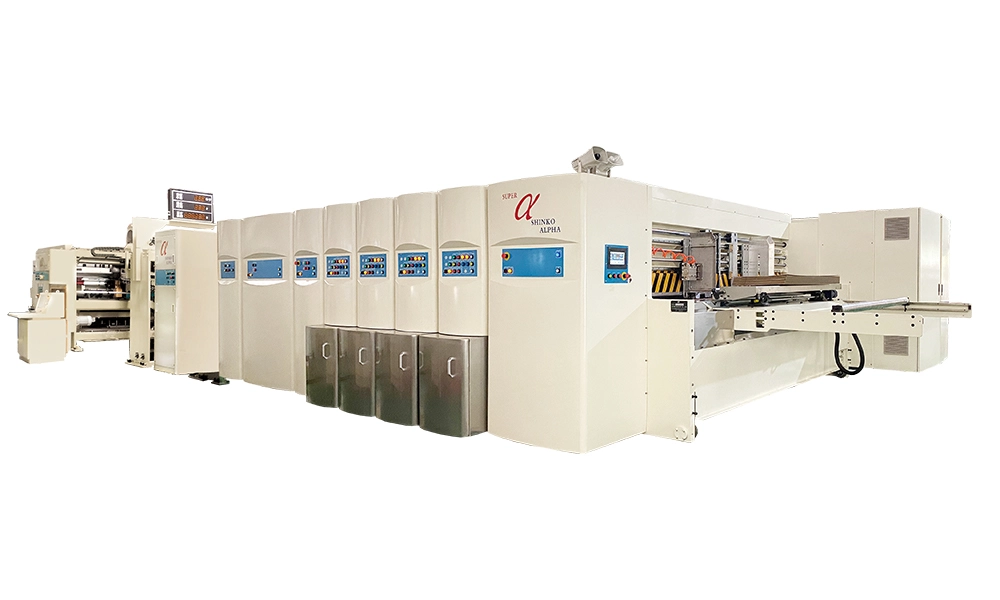
Shinko Super Alpha Movable Type Full Servo Drive Flexo Printing Slotting Die Cutting Inline Folding Gluing Counting Ejecting Machine
This state-of-the-art Movable Type Full Servo Drive Flexo Printing Slotting Die Cutting Machine streamlines your production with precision. Experience seamless operation with its Inline Folding Gluing Counting Ejecting capabilities, ensuring unparalleled efficiency. Designed for high-performance tasks, this Keshenglong&Shinko Super Alpha Movable Type Full Servo Drive Flexo Printing Slotting Die Cutting Inline Folding Gluing Counting Ejecting Machine enhances productivity while maintaining premium quality. Ideal for businesses seeking innovation and reliability, the Shinko Super Alpha is your go-to solution for advanced printing and cutting needs.


© 2025 Keshenglong & SHINKO All Rights Reserved.
Keshenglong Carton Packing Machine
Keshenglong Carton Packing Machine
Keshenglong Carton Packing Machine
Keshenglong Carton Packing Machine
Keshenglong Carton Packing Machine