
Speed vs Quality: Optimizing Flexo Printing Machine Performance
- Understanding production drivers in corrugated flexo printing
- What customers really want: speed, consistency, and brand fidelity
- Key machine and process variables that affect output
- How I diagnose bottlenecks
- Speed vs Quality: Balancing throughput and print integrity
- Defining 'speed' and 'quality' in measurable terms
- Practical adjustments to push speed without catastrophic quality loss
- When to slow down: quality-critical jobs and brand-sensitive packaging
- Process control and maintenance: the backbone of high performance
- Preventive maintenance that pays for itself
- Standardizing makeready and setups
- Data-driven SPC and closed-loop control
- Tools, technologies and investments that change the equation
- Advanced anilox and plate technology
- Automation, registration and web-handling improvements
- Drying systems and ink chemistry
- Speed vs Quality: Comparative metrics and decision table
- Implementing improvements on-site: a step-by-step plan I use
- Phase 1 — Baseline and quick wins
- Phase 2 — Process control and training
- Phase 3 — Technology and capital improvements
- Keshenglong & Shinko: practical equipment options and company strengths
- Case examples and references
- Real-world example: reducing scrap while increasing throughput
- Guidance from industry sources
- FAQ — Common questions about speed vs quality in flexo printing
- 1. How much can I safely increase speed without affecting print quality?
- 2. Which upgrades give the best ROI for improving both speed and quality?
- 3. Can modern flexo printers match offset quality on corrugated cartons?
- 4. How do I measure whether a speed change is successful?
- 5. What role does operator training play?
- 6. When should I contact machine manufacturers or OEMs for support?
- Final recommendations and next steps
As a consultant with years of hands-on experience optimizing flexo printing machine lines, I understand that manufacturers face continuous pressure to increase throughput while maintaining—or improving—print quality. This article gives actionable guidance you can apply to corrugated carton flexo lines and flexo printers to get the best balance between speed and quality, with measurable KPIs, maintenance practices, and process optimization strategies I have used with customers worldwide.
Understanding production drivers in corrugated flexo printing
What customers really want: speed, consistency, and brand fidelity
From my work with packaging manufacturers, the core customer demands are straightforward: consistent color reproduction, clean registration, minimal waste, and on-time delivery. For brand owners, print quality and color fidelity directly affect perceived product value; for converters, throughput and uptime determine margins. Aligning on the true production drivers is the first step when optimizing a flexo printing machine.
Key machine and process variables that affect output
Several variables interact to determine both speed and quality: anilox screening and volume, plate mounting and tension control, ink viscosity and drying, nip/press pressure, web handling and registration systems, and the skill of operators. Each variable can be tuned to push throughput or to improve quality—rarely both simultaneously without compromise.
How I diagnose bottlenecks
My diagnostic approach starts with data: measuring downtime reasons, waste rates (ppm scrap), makeready time, and run speed distribution. I use time-stamped production logs and visual inspections to map defects to machine states. Common bottlenecks include inadequate drying at high speeds, web flutter causing registration errors, and worn aniloxes or plates that cannot reproduce fine detail at speed.
Speed vs Quality: Balancing throughput and print integrity
Defining 'speed' and 'quality' in measurable terms
I define speed as productive meters (or sheets) per hour excluding planned stops; quality is measured by print metrics (ΔE color deviation, registration accuracy in mm, dot %) and scrap rate. This clarity lets teams evaluate trade-offs numerically rather than emotionally.
Practical adjustments to push speed without catastrophic quality loss
When customers need more throughput, I recommend a staged approach: first reduce makeready time (improve job changeovers), then raise running speed incrementally while monitoring drying and registration. Improvements I implement include optimized plate mounting jigs, pre-calibrated anilox-plate pairs for standard SKUs, and closed-loop registration systems. Incremental speed increases with real-time monitoring prevent sudden jumps that cause defects.
When to slow down: quality-critical jobs and brand-sensitive packaging
Some jobs—fine lines, photographic halftones, or High Quality brands—require sacrificing speed. I establish 'quality speed limits' for those SKUs and use tooling (higher line screen anilox rollers, multiple printing stations) or different process flows (pre-printed liners) rather than pushing a single pass beyond its design envelope.
Process control and maintenance: the backbone of high performance
Preventive maintenance that pays for itself
Effective preventive maintenance (PM) reduces unscheduled downtime and keeps print quality stable at higher speeds. My PM plans include regular anilox inspection (microscopic cell checks), plate relief checks, web path alignment, vacuum drum maintenance, and UV/IR dryer calibration. I link PM tasks to production KPIs so that maintenance is prioritized where it impacts quality or speed most.
Standardizing makeready and setups
Reducing makeready time is one of the most cost-effective ways to increase average plant throughput. I standardize plate mounting, use digital job recipes stored in the control system, and implement visual work instructions. For flexo slotting die-cutting lines, preconfigured pallet and stacker settings reduce trial-and-error at each job change.
Data-driven SPC and closed-loop control
Statistical Process Control (SPC) applied to color, registration, and waste rates enables early detection of drift. I recommend integrating spectrophotometer feedback and registration sensors into a closed-loop system where possible. For guidance on standard quality systems, refer to ISO 9001: https://www.iso.org/iso-9001-quality-management..
Tools, technologies and investments that change the equation
Advanced anilox and plate technology
Upgrading to precision laser-engraved anilox rollers and solvent-stable, high-resolution flexo plates often yields better dot gain control at higher speeds. Anilox selection (lines per inch, cell volume) must match the ink and substrate; poor matching causes mottling or insufficient ink laydown at speed.
Automation, registration and web-handling improvements
Investing in automated registration systems, servo-driven tension control, and improved web guides reduces oscillation and misregistration at higher speeds. Web handling that keeps the web stable is critical when you increase RPMs—otherwise marginal defects multiply.
Drying systems and ink chemistry
Drying capacity is a frequent limiting factor. UV curing systems and more efficient IR/airflows can allow higher line speeds without setoff or smearing. Similarly, modern low-VOC UV and water-based inks with faster tack development help achieve acceptable print quality at higher throughput. The Flexographic Technical Association provides practical resources on ink and drying optimization: https://www.flexography.org/.
Speed vs Quality: Comparative metrics and decision table
Below is a practical comparison I use with production managers when deciding whether to prioritize speed or quality for a given job. The metrics are qualitative tiers aligned with typical corrugated flexo production scenarios.
| Priority | Operating Speed | Typical Quality Targets | Required Investments / Actions | When to choose |
|---|---|---|---|---|
| Max Throughput | Run at or above average line speed (target high) | Accept ±3–5 ΔE, registration ±1–2 mm | Reduce makeready, lower-resolution anilox, faster inks/dryers, stricter PM | High-volume, commodity packaging with price sensitivity |
| Balanced | Moderate speed (stable run band) | ΔE ≤ 3, registration ±0.5–1 mm | Optimized anilox-plate pairing, closed-loop registration, SPC monitoring | Most corrugated box lines where brand appearance matters |
| High Quality Quality | Reduced speed for best repro | ΔE ≤ 1–2, registration ±0.2–0.5 mm | High-res anilox, multiple print stations, proofing, skilled operators | High-value or consumer-brand packaging |
These categories are based on field experience and broadly accepted industry practices rather than a single numeric maximum speed, which varies by machine design and substrate.
Implementing improvements on-site: a step-by-step plan I use
Phase 1 — Baseline and quick wins
Collect baseline KPIs: average run speed, uptime, scrap rate, makeready time, and common defect modes over 2–4 weeks. Typical quick wins include improved plate mounting protocols, cleaner anilox maintenance, and operator checklists for web path alignment.
Phase 2 — Process control and training
Implement SPC on color and registration, set alarm thresholds, and train operators on root-cause analysis. Introduce job recipes in the machine PLC and maintain a knowledge base of best anilox/plate/ink combinations per SKU.
Phase 3 — Technology and capital improvements
Based on ROI, deploy automation (servo drives, automatic register), upgraded dryer systems, or new anilox/plate technology. I prioritize investments that reduce variability first (registration and web handling), then those that increase absolute capacity (dryers, faster drives).
Keshenglong & Shinko: practical equipment options and company strengths
Keshenglong, founded in 1995, is a leading manufacturer in China specializing in corrugated carton printing and packaging machinery. As a supplier of integrated intelligent packaging solutions, Keshenglong merged Japan Shinko in 2017, keeping Shinko as the R&D center and production base and adding a Guangzhou production base in China. Main parts are imported from Japan and assembly is instructed by experienced Japanese technicians to ensure quality comparable to Japan Shinko standards.
Their product range addresses the full spectrum of corrugated flexo needs: flexo printers, computerized high-speed flexo slotting die-cutting machines (1–6 color), computerized high-speed flexo case makers, 6+1 high-precision precision printing slotting die-cutting machines, top & bottom printing slotting die-cutting machines, and jumbo-size flexo printing slotting die-cutting machines. These machines are designed for high uptime, accurate registration, and efficient makeready routines—features I've leveraged with clients to move from a throughput focus to a balanced, quality-aware production model.
Keshenglong's global footprint is notable: their machines and solutions have been exported to more than 70 countries. For more information and product details, visit https://www.shinkomachinery.com/ or contact them at kl@keshenglong.com.cn.
Case examples and references
Real-world example: reducing scrap while increasing throughput
I worked with a corrugated converter who ran a 3-color flexo slotter. By implementing pre-set job recipes, upgrading the aniloxes to laser-engraved units for higher consistency, and adding closed-loop registration, they reduced scrap by 40% and increased average productive speed by 18% within six months. The investment payback was under a year due to reduced waste and labor time.
Guidance from industry sources
The fundamentals of flexography and its role in packaging are summarized by authoritative sources such as Wikipedia's flexography overview: https://en.wikipedia.org/wiki/Flexography. For practical training and technical resources, the Flexographic Technical Association (FTA) provides standards and guidance: https://www.flexography.org/.
FAQ — Common questions about speed vs quality in flexo printing
1. How much can I safely increase speed without affecting print quality?
There is no universal number—safe increases depend on your anilox/plate match, dryer capacity, web handling, and substrate. I recommend incremental increases of 5–10% while monitoring ΔE and registration, and only continue if SPC indicators remain within thresholds.
2. Which upgrades give the best ROI for improving both speed and quality?
In my experience, reducing makeready time (standardized setups and job recipes), improving web handling (tension and servo controls), and upgrading drying systems deliver the best combined ROI. Anilox and plate improvements are high impact for quality but can be more capital intensive.
3. Can modern flexo printers match offset quality on corrugated cartons?
Modern flexo with high-resolution anilox, HD flexo plates, and proper color management can approach or match offset-like reproduction for many corrugated applications, especially when considering inks and substrates. For photographic continuous-tone work, additional stations or alternative processes may still be preferred.
4. How do I measure whether a speed change is successful?
Track key KPIs: productive meters/hour, scrap rate (ppm), makeready time, customer rejects, and color ΔE and registration statistics. A successful speed change increases productive throughput while keeping scrap and ΔE within agreed limits.
5. What role does operator training play?
Operator skill is crucial. Even the best machine requires knowledgeable setup and quick troubleshooting. Regular training in setup, basic maintenance, and root-cause analysis significantly reduces downtime and quality drift.
6. When should I contact machine manufacturers or OEMs for support?
Contact OEMs when you need upgrades (automation or dryer capacity), when repetitive failures occur beyond operator correction, or when you want factory-level optimization such as control-system tuning. Keshenglong/Shinko and other reputable manufacturers offer field support and tailored solutions for corrugated flexo lines.
Final recommendations and next steps
Balancing speed and quality on a flexo printing machine is an ongoing optimization problem. Start with data, stabilize the process through standardization and PM, then apply targeted investments where variability limits speed or quality. Use SPC and closed-loop controls to sustain gains and train your staff to detect and respond to deviations early.
If you are evaluating equipment upgrades or want a site-specific action plan, I recommend discussing machine options and retrofits with experienced OEMs. Keshenglong (merged with Japan Shinko) offers a comprehensive portfolio of corrugated carton flexo printing machines and integrated solutions that align with the strategies discussed here. Explore products and technical specifications at https://www.shinkomachinery.com/ or reach out at kl@keshenglong.com.cn to request case studies or a site audit.
For pragmatic next steps, I suggest: 1) collect baseline KPIs for 2–4 weeks, 2) implement 2–3 quick wins (plate mounting, anilox cleaning, job recipes), and 3) evaluate ROI on automation or dryer upgrades if variability persists. If you want, I can help you build a prioritized implementation plan based on your line data.
Contact for consultation or to view product options: visit https://www.shinkomachinery.com/ or email kl@keshenglong.com.cn.
Keshenglong&Shinko best professional corrugated flexo folder gluer Manufacturers and supplier brand in China
Everything You Need to Know About how to operate a flexo folder gluer
Top Flexo Press Maintenance Tips to Maximize Uptime
What is flexo-printer
Product
Are there safety features integrated into your machines?
Yes, our machines come equipped with multiple safety features including emergency stop buttons and safety guards.
What should I do if the machine jams during operation?
In case of a jam, immediately stop the machine, remove any obstructions, and check for any damage before restarting.
How do I troubleshoot common issues with the folding mechanism?
Common issues can often be resolved by checking the alignment of the folding plates and ensuring there is no debris obstructing the mechanism.
Industry Solutions
How do your machines comply with industry standards and regulations?
Our machines are manufactured to meet or exceed industry standards and regulations, ensuring safe and compliant operation.
Shipping
Do you provide installation services upon delivery?
Yes, we offer on-site installation and training services to ensure your machine is set up correctly.
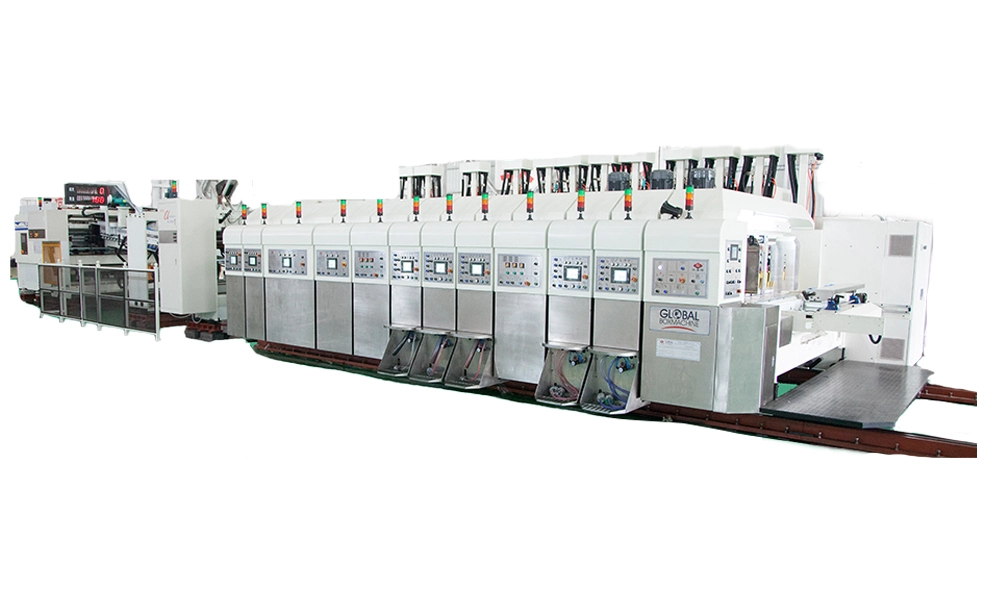
Computerized Flexo Printing Slotting Die-Cutting Inline Folding Gluing Countering Ejecting Machine
Introducing the Keshenglong&Shinko Computerized Flexo Printing Slotting Die-Cutting Inline Folding Gluing Countering Ejecting Machine. Engineered for precision, this advanced machine streamlines your packaging production with integrated Flexo Printing Slotting Die-Cutting functionalities. Seamlessly perform inline folding, gluing, countering, and ejecting—all in one efficient system. Designed for optimal performance, it enhances productivity while reducing downtime.
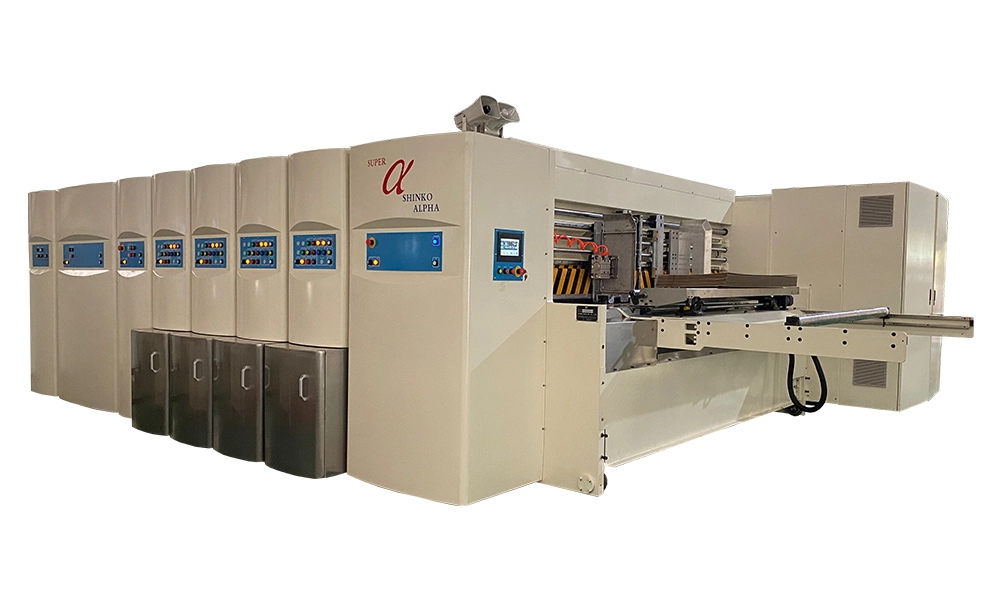
Shinko Super Alpha Movable Type Full Servo Drive Flexo Printing Slotting Die Cutting Machine
Introducing the Shinko Super Alpha Movable Type Full Servo Drive Flexo Printing Slotting Die Cutting Machine by Keshenglong. Engineered for precision and efficiency, this state-of-the-art machine enhances your production line with its advanced servo drive technology. Designed for seamless Flexo printing, slotting, and die-cutting, it ensures superior quality with every output.
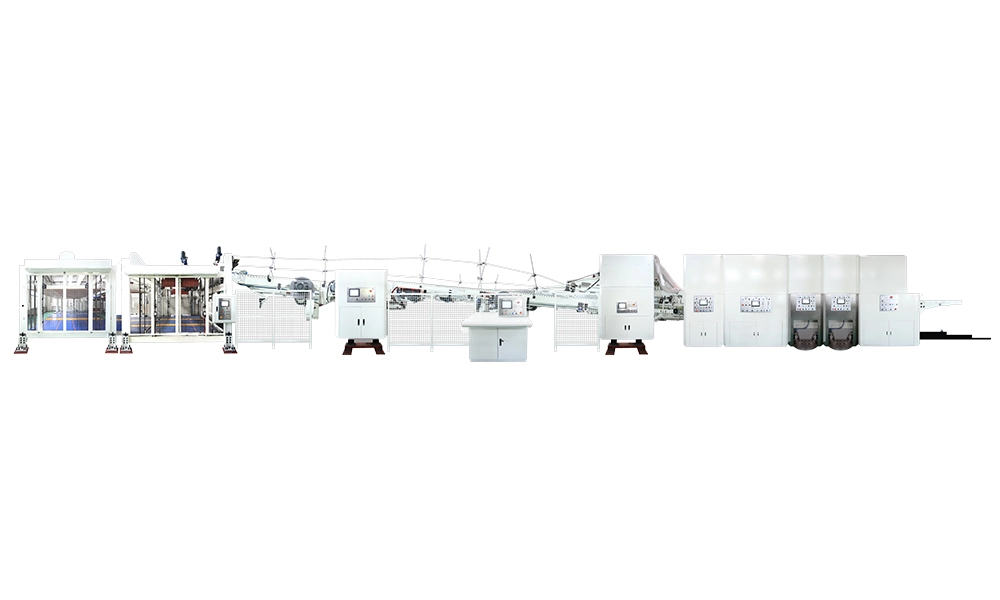
Jumbo Flexo Bottom Printing Slotting Die-Cutting Inline Folding Gluing Countering Ejecting Machine
Introducing the Keshenglong&Shinko Jumbo Flexo Bottom Printing Slotting Die-Cutting Inline Folding Gluing Countering Ejecting Machine. This advanced flexo printing slotting die-cutting machine ensures precision and efficiency for your packaging needs. Designed as a versatile flexo folder gluer machine, it optimizes every step from printing to ejecting, delivering seamless integration and superior quality.
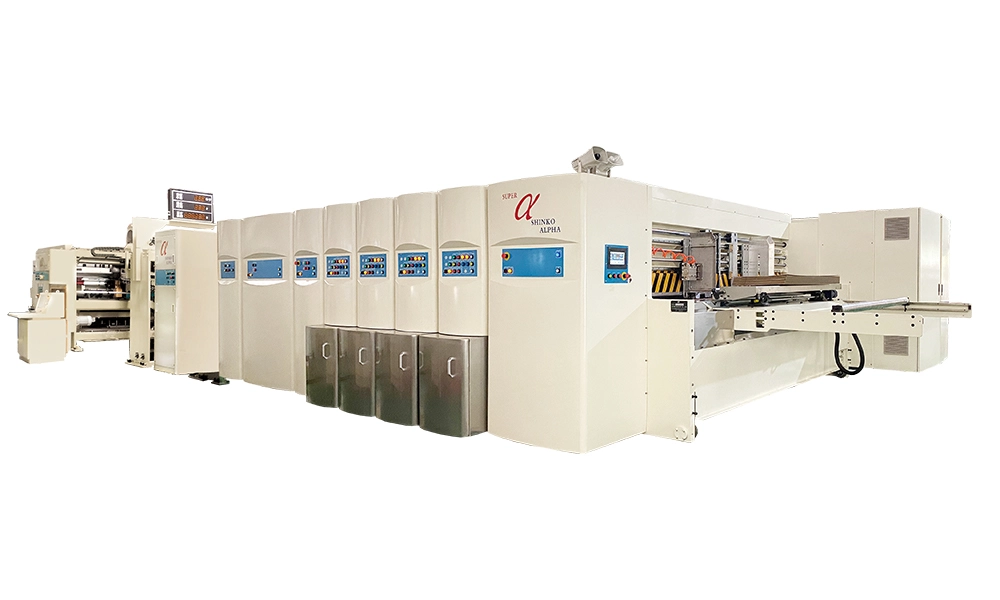
Shinko Super Alpha Movable Type Full Servo Drive Flexo Printing Slotting Die Cutting Inline Folding Gluing Counting Ejecting Machine
This state-of-the-art Movable Type Full Servo Drive Flexo Printing Slotting Die Cutting Machine streamlines your production with precision. Experience seamless operation with its Inline Folding Gluing Counting Ejecting capabilities, ensuring unparalleled efficiency. Designed for high-performance tasks, this Keshenglong&Shinko Super Alpha Movable Type Full Servo Drive Flexo Printing Slotting Die Cutting Inline Folding Gluing Counting Ejecting Machine enhances productivity while maintaining premium quality. Ideal for businesses seeking innovation and reliability, the Shinko Super Alpha is your go-to solution for advanced printing and cutting needs.


© 2025 Keshenglong & SHINKO All Rights Reserved.
Keshenglong Carton Packing Machine
Keshenglong Carton Packing Machine
Keshenglong Carton Packing Machine
Keshenglong Carton Packing Machine
Keshenglong Carton Packing Machine