
Top Flexo Press Maintenance Tips to Maximize Uptime
- Why Downtime Happens and How to Prioritize Maintenance
- Common root causes of flexo press downtime
- How to triage maintenance tasks for maximum return
- Standards and frameworks to guide maintenance planning
- Essential Preventive Maintenance Tasks for Flexo Presses
- Daily and shift-level checks
- Weekly and monthly service routines
- Anilox roll and doctor blade care
- Condition-Based and Predictive Maintenance: Use Data to Prevent Failures
- Vibration, thermography and oil analysis
- IoT sensors and automated alerts
- Data-driven spare parts management
- Process Controls, Operator Training, and Quality Checks
- Standard operating procedures and layer of protection
- Operator training and continuous improvement
- Quality checkpoints to reduce rework and stops
- Technical Upgrades and Retrofit Opportunities
- Upgrade drives, web handling, and registration systems
- Improve drying and curing efficiency
- Energy and environmental controls
- Comparison: Preventive vs Predictive vs Reactive Maintenance
- Keshenglong & Shinko: OEM Support, Quality Parts, and Integrated Solutions
- Maintenance KPIs, Benchmarking, and Continuous Improvement
- Key metrics to track
- Root cause analysis and corrective action
- Continuous improvement loops
- Practical Checklists and Tips You Can Apply Tomorrow
- Quick start-of-shift checklist (example)
- Changeover optimization tips
- Cleaning chemistry and safety
- FAQ — Frequently Asked Questions
- 1. How often should anilox rolls be cleaned?
- 2. What is the typical lifespan of a doctor blade?
- 3. Can I retrofit my older flexo press to improve uptime?
- 4. What are the most cost-effective predictive maintenance sensors for flexo presses?
- 5. How can I reduce setup and color make-ready time?
- 6. What spare parts should every flexo press facility keep on-site?
- Contact and Further Support
Maximizing uptime on a flexo press requires a combination of disciplined preventive tasks, targeted troubleshooting, condition-based monitoring, and strong operational practices. This article synthesizes industry best practices, standards, and field experience to give plant managers, maintenance teams, and production supervisors actionable steps to reduce unplanned stoppages, improve print consistency, and extend component life for corrugated carton flexo printing operations.
Why Downtime Happens and How to Prioritize Maintenance
Common root causes of flexo press downtime
Understanding the primary failure modes helps prioritize maintenance. Frequent causes include: improper anilox roll care (leading to ink transfer issues), doctor blade wear or misalignment, registration/plate mount errors, drying/unit (IR/Hot Air/UV) failures, web tracking issues, bearing and gearbox wear, and inadequate spare parts or tooling. Process variation and operator error also account for a substantial share of stoppages.
How to triage maintenance tasks for maximum return
Use a risk-based approach: rank assets by criticality to production and repair lead time. Focus first on components whose failure causes the longest downtime or highest scrap (e.g., main drive, drying ovens, servo systems, and key rollers). Implement simple daily checks (web alignment, ink viscosity, air supply) and weekly deeper inspections (anilox condition, doctor blade seating, gearbox oil levels).
Standards and frameworks to guide maintenance planning
Adopt recognized frameworks such as Reliability-Centered Maintenance (RCM) and align quality management with ISO 9001. For maintenance-specific community guidance, the Society for Maintenance & Reliability Professionals (SMRP) and flexographic industry body Flexographic Technical Association provide useful resources.
Essential Preventive Maintenance Tasks for Flexo Presses
Daily and shift-level checks
Keep a short but systematic checklist for each shift: verify web tracking and tension, check ink viscosity and filtration, inspect doctor blades for nicks, confirm dryer temperature and air flow, and ensure safety interlocks are functional. These quick checks prevent the majority of small issues from escalating into downtime.
Weekly and monthly service routines
Weekly tasks should include cleaning anilox rolls, checking bearing play and lubrication points, inspecting belts and gearboxes, and running a registration check. Monthly work can add alignment verification of plate cylinders, thorough inspection of chill/heat rolls, and analysis of collected production scrap trends to spot drifting process parameters.
Anilox roll and doctor blade care
Anilox hygiene is critical for consistent ink transfer. Use approved cleaning chemistries and ultrasonic cleaning when necessary. Avoid abrasive cleaning methods that alter cell geometry. For doctor blades, track blade life and replace on a predictable schedule, keeping spares in inventory. Proper blade angle, pressure, and correct holder adjustment reduce pressure marks and extend both blade and anilox life.
Condition-Based and Predictive Maintenance: Use Data to Prevent Failures
Vibration, thermography and oil analysis
Condition-monitoring tools detect early signs of bearing, gearbox, and motor failure. Vibration analysis and infrared thermography can identify misalignment, imbalance, or excessive friction before catastrophic failure. Regular oil analysis of gearboxes and hydraulic systems reveals contamination and wear metals—allowing planned service instead of emergency changeouts. Industry studies show condition-based approaches can cut unplanned downtime substantially—see resources from maintenance experts such as the McKinsey digital maintenance overview for typical benefits.
IoT sensors and automated alerts
Fitment of simple IoT devices (temperature, vibration, run-hours counters, and pressure sensors) allows thresholds and alerts to be set. When combined with a CMMS (Computerized Maintenance Management System), teams can automate work orders, track mean time between failures (MTBF), and prioritize spare parts stock levels. This strategy turns reactive repairs into scheduled maintenance windows that minimize production disruption.
Data-driven spare parts management
Critical spares such as servo drives, anilox rollers, doctor blades, bearings, and seals should be managed using a min/max inventory model informed by historical lead times and failure rates. A simple Pareto analysis (80/20) often reveals a small set of parts that account for most downtime; keep those items on-site.
Process Controls, Operator Training, and Quality Checks
Standard operating procedures and layer of protection
Develop SOPs for press start-up, changeover, and shut-down. Include step-by-step plate mounting and registration checks, ink change procedures, and cleaning protocols. Use visual aids and lockout-tagout (LOTO) procedures to improve discipline and safety compliance.
Operator training and continuous improvement
Well-trained operators spot early signs of process drift such as mottling, streaks, or increased web tension noise. Implement a skills matrix and regular refreshers. Cross-train press operators and maintenance technicians to accelerate response times during faults and reduce reliance on single experts.
Quality checkpoints to reduce rework and stops
Integrate in-line quality checks (color bars, registration marks) and near-line spectrophotometry when color consistency is critical. Use statistical process control (SPC) charts to track key parameters—ink density, registration offset, and moisture content—so trends trigger preventive intervention rather than corrective rework.
Technical Upgrades and Retrofit Opportunities
Upgrade drives, web handling, and registration systems
Retrofitting older presses with modern servo drives, closed-loop tension control, and electronic registration reduces setup time and improves repeatability. These upgrades often pay back quickly through reduced waste and quicker job changeovers.
Improve drying and curing efficiency
Evaluate dryer house performance regularly: ensure air flow is balanced, UV lamps are at correct intensity, and infrared elements are within specifications. Upgrading to more efficient UV systems or adding active cooling for sensitive substrates can reduce defects and downstream handling problems.
Energy and environmental controls
Proper ventilation, solvent recovery, and temperature/humidity control not only improve print quality but also prevent chronic equipment stress. Follow local environmental standards and consider energy-efficient motors and variable frequency drives (VFDs) that also reduce mechanical shock during start/stop events.
Comparison: Preventive vs Predictive vs Reactive Maintenance
The following table summarizes the key differences, benefits, and typical uptime impact of each maintenance strategy. Data on impact are industry-reported ranges; outcomes depend on implementation quality and asset criticality.
| Strategy | Main characteristics | Advantages | Typical impact on downtime |
|---|---|---|---|
| Preventive (time-based) | Scheduled inspections and part changes | Simple to implement; reduces small failures | Reduces unplanned downtime by ~10–30% |
| Predictive (condition-based) | Sensors, analytics, CMMS-driven alerts | Targets interventions precisely; lowers spare part excess | Reduces unplanned downtime by ~30–70% (varies) |
| Reactive (run-to-failure) | Repair after breakdown | Low short-term maintenance cost | Highest unplanned downtime; unpredictable |
Source: Industry maintenance studies and white papers on digital maintenance; for context see the McKinsey discussion on digital maintenance approaches: McKinsey — digital maintenance.
Keshenglong & Shinko: OEM Support, Quality Parts, and Integrated Solutions
Founded in 1995, Keshenglong is a leading Chinese manufacturer specializing in corrugated carton printing and packaging machinery. Merged with Japan Shinko in 2017, the combined operation retains Japan Shinko as an R&D center and production base while adding a Guangzhou production site. Main parts are imported from Japan and installations are conducted with Japanese technician guidance to ensure high quality standards.
Keshenglong’s product portfolio relevant to uptime-focused maintenance and production reliability includes:
- Corrugated carton flexo printing machines and flexo printers
- Computerized high-speed Flexo Slotting Die-Cutting machines (1–6 color)
- Computerized high-speed Flexo case makers
- 6+1 high-precision Precision Printing Slotting Die-Cutting machines
- Top & Bottom Printing Slotting Die-Cutting machines and jumbo-size flexo solutions
- Flexo printing slotting die-cutting and stacker machines
Competitive advantages and differentiation:
- Strong R&D linkage with Japan Shinko ensures parts and design philosophies aligned with Japanese quality standards.
- Imported main parts and on-site installation/testing by experienced Japanese technicians ensure consistency and reduced early-life failures.
- Integrated intelligent packaging solutions exported to more than 70 countries demonstrate global service capability and aftermarket support.
For product inquiries, technical support, and spare parts, visit https://www.shinkomachinery.com/ or contact Keshenglong at kl@keshenglong.com.cn.
Maintenance KPIs, Benchmarking, and Continuous Improvement
Key metrics to track
Monitor KPIs such as Overall Equipment Effectiveness (OEE), Mean Time Between Failures (MTBF), Mean Time To Repair (MTTR), planned maintenance percentage (PMP), and first-time fix rate. Use these metrics to benchmark performance internally and against industry peers.
Root cause analysis and corrective action
When a failure occurs, perform a structured root cause analysis (5 Whys or fishbone diagrams) and implement a corrective action plan. Document the fix in the CMMS and update SOPs if required.
Continuous improvement loops
Set monthly review meetings between production and maintenance to analyze scrap, stoppage reasons, and SPC trends. Small, consistent improvements in setup reduction, cleaning routines, and tooling changeover can compound into large uptime gains.
Practical Checklists and Tips You Can Apply Tomorrow
Quick start-of-shift checklist (example)
- Check web tension and lateral tracking on pilot run
- Confirm ink viscosity and filters are within spec
- Verify doctor blade seating and blade condition
- Ensure dryers are at set temperatures and UV intensity checks passed
- Check compressed air pressure and oil/water traps
Changeover optimization tips
Pre-stage plates, inks, and tooling; use color presets and earlier-run data for start-up; assign a trained changeover lead and time each step to reduce overall downtime. Consider quick-release fixtures or modular platemount systems to shorten changeover time.
Cleaning chemistry and safety
Use manufacturer-recommended solvents and avoid aggressive chemicals that erode anilox cell walls. Always follow MSDS guidance and provide PPE for operators. Ensure solvent recovery or proper disposal to comply with environmental regulations.
FAQ — Frequently Asked Questions
1. How often should anilox rolls be cleaned?
Anilox cleaning frequency depends on ink type, print run length, and substrate. For corrugated flexo, a light clean every shift and a deeper clean (ultrasonic or chemical) weekly or after heavy runs is common. Monitor cell volume and print density; if you see fill-in, clean immediately.
2. What is the typical lifespan of a doctor blade?
Doctor blade life varies by material and usage. High-quality steel or composite blades in corrugated flexo may last from a few days to several weeks. Replace based on visual wear, nicks, or a measurable drop in anilox cleaning/ink metering performance. Keep predictable change intervals based on observed life.
3. Can I retrofit my older flexo press to improve uptime?
Yes. Common retrofits include servo drive upgrades, electronic tension control, modern registration units, and better dryer/UV systems. Retrofitting can significantly reduce changeover time and improve print stability. Work with OEMs or certified service partners for compatibility.
4. What are the most cost-effective predictive maintenance sensors for flexo presses?
Start with vibration sensors for bearings, temperature sensors for motors and gearboxes, run-hours counters, and airflow/pressure sensors for dryers. These relatively low-cost sensors yield high signal-to-noise for impending failures.
5. How can I reduce setup and color make-ready time?
Use consistent plate mounting procedures, maintain master files for common jobs, invest in spectrophotometric color presets, and reduce mechanical variability with modern servos and registration systems. Pre-staging tools and inks and using checklists also accelerate make-ready.
6. What spare parts should every flexo press facility keep on-site?
Prioritize servo drives (if applicable), critical bearings, anilox adapters, spare anilox rolls or sleeves, doctor blades and holders, seals, belts, and fuses. Use historical failure data to refine the list.
Contact and Further Support
If you want to learn how to implement these maintenance best practices on your lines or evaluate equipment upgrades and retrofits, Keshenglong (merged with Japan Shinko) offers robust corrugated carton flexo printing machines and aftermarket support. Visit https://www.shinkomachinery.com/ or email kl@keshenglong.com.cn for product information, spare parts, and service inquiries.
For OEM-grade flexo press solutions and spare parts tailored to high uptime operations, ask about Keshenglong’s flexo printer, flexo printing slotting die-cutting machines, and integrated stacker systems—designed and tested to Japanese quality standards with global aftersales support.
Contact Keshenglong today at kl@keshenglong.com.cn or visit https://www.shinkomachinery.com/ to request a maintenance audit, spare parts quote, or retrofit consultation tailored to your flexo press fleet.
References and further reading: Flexography overview (Wikipedia - Flexography), Flexographic Technical Association (flexography.org), ISO quality management overview (ISO 9001), digital maintenance context (McKinsey on digital maintenance).
Everything You Need to Know About semi-auto corrugated carton flexo printing machine
Upgrading and Retrofitting Older Flexo Printer Machines
Where to Buy Packaging Machinery for Corrugated Boxes in Houston
Everything You Need to Know About flexo corrugated box printing slotting die cutting machine
Industry Solutions
How can your folding carton machines benefit my packaging business?
Our machines increase production efficiency, reduce labor costs, and ensure high-quality, consistent carton production.
How do your machines comply with industry standards and regulations?
Our machines are manufactured to meet or exceed industry standards and regulations, ensuring safe and compliant operation.
Can your machines be integrated with digital printing technology?
Yes, our machines are compatible with digital printing systems for custom, high-quality printing on cartons.
Shipping
What should I do if my machine arrives damaged?
If your machine arrives damaged, please contact our customer service immediately to arrange for repairs or replacement.
Product
Are there safety features integrated into your machines?
Yes, our machines come equipped with multiple safety features including emergency stop buttons and safety guards.
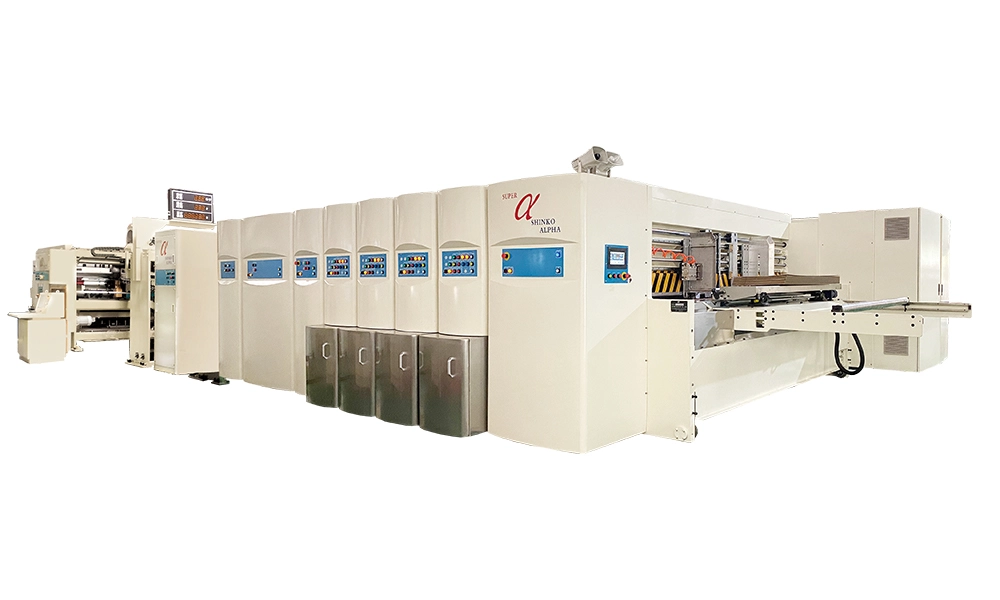
Shinko Super Alpha Movable Type Full Servo Drive Flexo Printing Slotting Die Cutting Inline Folding Gluing Counting Ejecting Machine
This state-of-the-art Movable Type Full Servo Drive Flexo Printing Slotting Die Cutting Machine streamlines your production with precision. Experience seamless operation with its Inline Folding Gluing Counting Ejecting capabilities, ensuring unparalleled efficiency. Designed for high-performance tasks, this Keshenglong&Shinko Super Alpha Movable Type Full Servo Drive Flexo Printing Slotting Die Cutting Inline Folding Gluing Counting Ejecting Machine enhances productivity while maintaining premium quality. Ideal for businesses seeking innovation and reliability, the Shinko Super Alpha is your go-to solution for advanced printing and cutting needs.
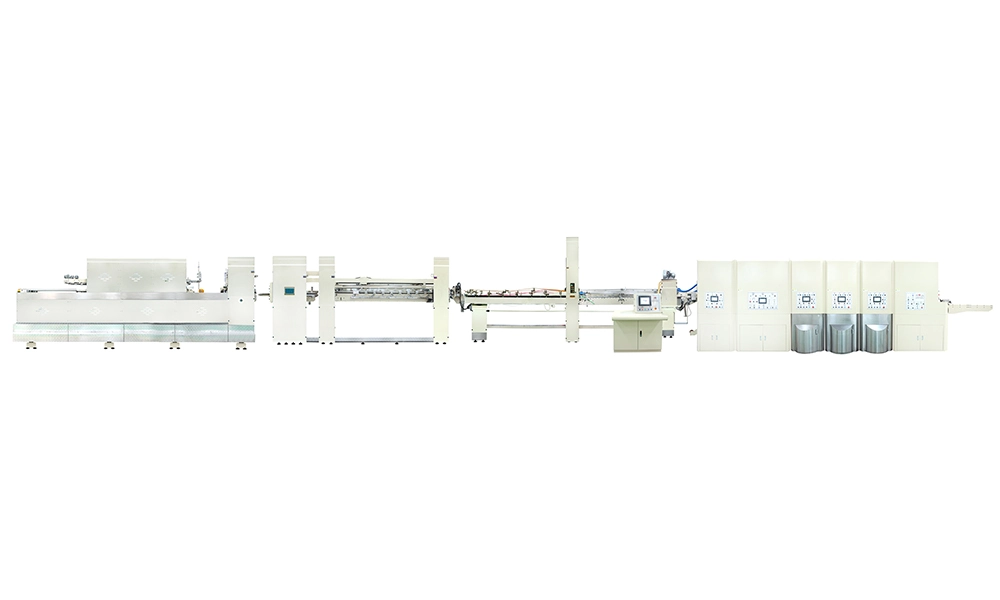
Computerized Flexo Printing Slotting Die-Cutting Inline Folding Gluing and Stitching Machine
Introducing the Keshenglong&Shinko Computerized Flexo Printing Slotting Die-Cutting Inline Folding Gluing and Stitching Machine, a pinnacle of precision and efficiency. This state-of-the-art machine revolutionizes packaging production with seamless integration of printing, slotting, die-cutting, folding, gluing, and stitching. Designed to optimize your workflow, the Computerized Flexo Printing Slotting Die-Cutting Machine enhances accuracy and productivity.
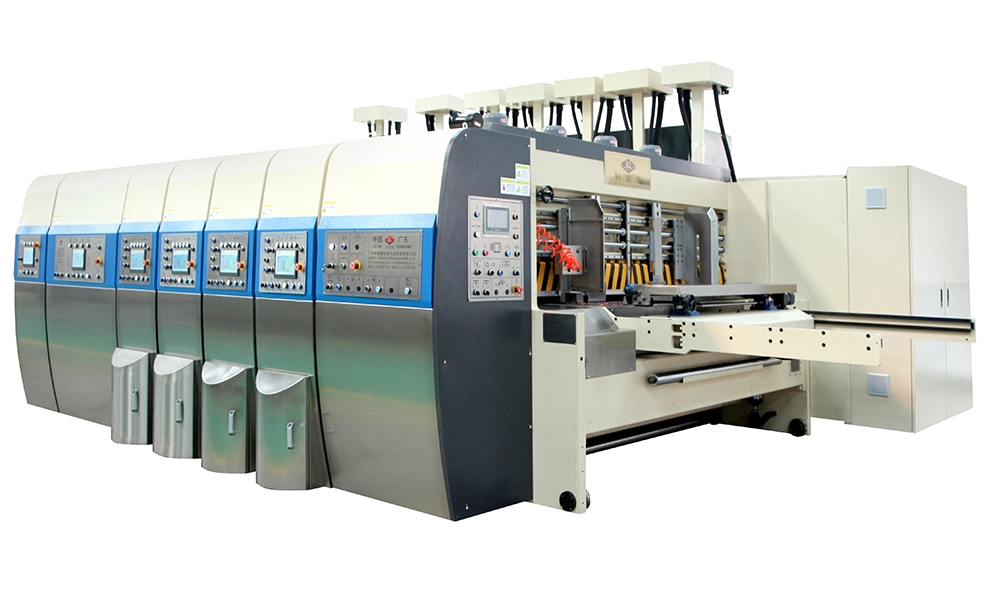
Computerized Flexo Top Bottom Printing Slotting Die-Cutting Machine
Introducing the Keshenglong&Shinko Computerized Flexo Top Bottom Printing Slotting Die-Cutting Machine, designed to enhance your packaging efficiency. Engineered for precision, this high-performance machine offers seamless integration of flexo printing and die-cutting processes. Perfect for a variety for packaging needs, it ensures superior quality and productivity. With user-friendly controls and robust construction, it guarantees reliable operation and minimal downtime. Optimize your production line with Keshenglong’s trusted technology. Explore advanced capabilities with our Flexo Top Bottom Printing Slotting Die-Cutting Machine today.
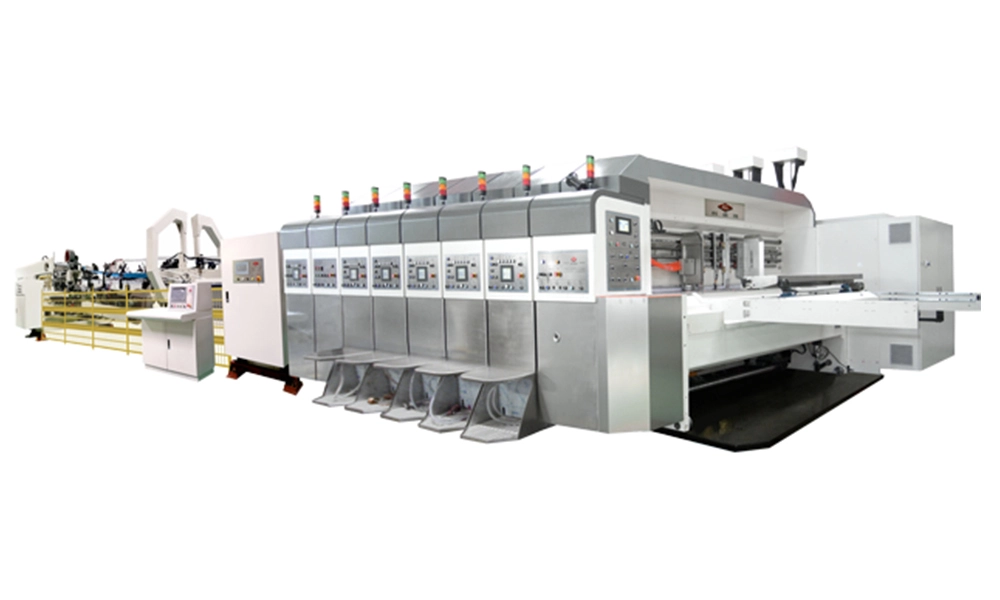
Computerized Flexo Printing Slotting Die-Cutting Inline Folding Gluing Countering Ejecting Machine Repeatable
Introducing the Keshenglong Computerized Flexo Printing Slotting Die-Cutting Inline Folding Gluing Countering Ejecting Machine. This advanced equipment delivers precision and efficiency for all your packaging needs. Perfectly designed for high-speed operations, it ensures seamless integration with your production line. Enhance productivity with our innovative technology that guarantees accurate printing, slotting, and die-cutting.


© 2025 Keshenglong & SHINKO All Rights Reserved.
Keshenglong Carton Packing Machine
Keshenglong Carton Packing Machine
Keshenglong Carton Packing Machine
Keshenglong Carton Packing Machine
Keshenglong Carton Packing Machine