
Speed vs Quality: Configuring Your Flexo Printer Parameters
- Understanding the process and trade-offs
- Why speed and quality conflict
- Key performance indicators to measure
- Standards and industry guidance
- Critical machine parameters and how to tune them
- Anilox selection and doctoring
- Plate and plate mounting
- Impression, nip pressure and registration
- Practical testing plan: how to find the balance
- Design a controlled experiment
- Example testing matrix
- Interpreting results and tuning
- Troubleshooting common issues and operational best practices
- Set-off and smearing
- Poor ink density or weak solids
- Banding, mottle and streaks
- Operator checklist for consistent output
- Speed vs quality: a decision framework and real-world metrics
- Decision factors
- Example trade-off table
- When to invest in equipment upgrades
- Keshenglong & Shinko: solutions for balanced throughput and quality
- Company profile and competitive strengths
- How their technology helps the speed-quality balance
- Choosing the right press configuration
- Appendix: sample SOP snippets and data logging templates
- Start-up SOP (abridged)
- Data log fields (recommended)
- FAQ
- 1. How much can I safely increase press speed without degrading quality?
- 2. Should I change anilox when I increase speed?
- 3. Are UV inks a solution to set-off at high speed?
- 4. How do I set acceptable ΔE targets for corrugated packaging?
- 5. How often should I inspect anilox cells and replace doctor blades?
- 6. What are the most cost-effective upgrades to improve both speed and quality?
- Contact / Next steps
Balancing speed and quality on a flexo printer machine is a deliberate process of parameter selection, measurement and iteration. This guide provides a practical, step-by-step approach to configuring press variables — anilox, plate depth, impression, doctoring, drying, and substrate handling — so manufacturers of corrugated cartons can hit throughput targets without sacrificing color accuracy, registration or runnability. Recommendations are backed by industry practice, testing methodology and supplier considerations to make improvements verifiable and repeatable.
Understanding the process and trade-offs
Why speed and quality conflict
Flexographic printing for corrugated packaging trades off mechanical limits and physical processes: higher web or board speed reduces dwell time in the ink transfer and drying stages, increasing the risk of poor ink transfer, dot gain, registration drift and set-off. Slower speeds typically allow steadier doctoring, better ink transfer control and more stable drying, improving color density and consistency. The trade-off is well-recognized across printing technologies; for an overview of flexography principles see Flexography — Wikipedia.
Key performance indicators to measure
Define measurable KPIs before making adjustments. Typical KPIs for corrugated flexo include:
- Production speed (m/min or sheets/min)
- Color density and ΔE (spectro readings)
- Registration deviation (mm)
- Defects per 1,000 sheets (set-off, smearing, pinholes)
- Waste percentage (make-ready and spoilage)
Recording these consistently lets you quantify the true impact of parameter changes.
Standards and industry guidance
Adopt objective measurement standards: use spectrophotometers to measure ΔE against target swatches and document density. Reference industry organizations for corrugated and printing best practices — for example, the European corrugated trade body FEFCO or technical resources from TAPPI (TAPPI).
Critical machine parameters and how to tune them
Anilox selection and doctoring
Anilox cell geometry (line screen and cell volume) controls how much ink is metered to the plate. For corrugated substrates you typically need higher ink volumes than for coated paper, but the correct choice depends on ink type, pigment load and board absorbency. Doctor blade condition and angle influence metering stability; a worn or incorrectly set blade causes streaks or excessive metering variability. Best practice: inspect anilox with a loupe, maintain a blade replacement schedule, and use a consistent start-up doctoring protocol.
Plate and plate mounting
Plate relief (depth) and roundness affect dot gain and detail. Too much impression combined with deep plates increases dot gain on corrugated liners. Use consistent plate mounting procedures, check for air gaps, and verify plate circumference to match the press gear ratio to avoid periodic banding. When higher quality is required, consider hybrid plate profiles or reduced relief plates to control mid-tones.
Impression, nip pressure and registration
Impression pressure is one of the most sensitive knobs: increasing nip pressure improves ink transfer but raises dot gain and can deform corrugated flutes. Use minimal pressure to achieve acceptable density and registration. For registration, ensure mechanical components (sensors, grippers, and drive) are calibrated and that web take-up/back-tension systems are tuned to prevent slack or over-tensioning, which causes lateral drift at speed.
Practical testing plan: how to find the balance
Design a controlled experiment
Run a methodical set of test runs where you change one variable at a time (speed, then doctor blade, then impression). Record KPIs for each run and allow the press to stabilize for a set run length (e.g., 200–500 sheets) before taking measurements. Use a consistent test chart with solids, mid-tones, text and fine lines.
Example testing matrix
Use a structured log to compare runs. Below is a template you can copy and use on press.
| Run | Speed (relative %) | Ink Density | ΔE vs target | Register deviation (mm) | Defects per 1,000 | Notes / Adjustments |
|---|---|---|---|---|---|---|
| 1 (baseline) | 50% | 1.35 | 1.2 | ±0.15 | 5 | Stable |
| 2 | 70% | 1.30 | 1.7 | ±0.25 | 12 | Increase drying, check tension |
| 3 | 90% | 1.28 | 2.3 | ±0.35 | 30 | Set-off and registration drift observed |
Note: the numeric values above are illustrative; use your press and spectro readings to populate real results. The important point is consistent measurement and documentation so adjustments give reproducible outcomes.
Interpreting results and tuning
If density drops as speed increases, consider:
- Increasing anilox cell volume or switching to a different cell geometry (if print detail permits)
- Optimizing ink viscosity and tack for the higher shear at speed
- Increasing dryer capacity or dwell time
If registration degrades at speed, inspect web handling, sensor response times and servo tuning. Minor mechanical adjustments to drive tension or sensor positions often restore registration without reducing speed.
Troubleshooting common issues and operational best practices
Set-off and smearing
Symptoms: wet ink transfers from one sheet to another or smears under light handling. Root causes: insufficient drying for the press speed, high tack inks, too high ink film, or tight delivery stacking. Remedies:
- Increase dryer temperature or dwell, or add staged drying modules
- Lower ink film (anilox / doctor setting) if possible
- Switch to faster-setting/UV or electron-beam inks (if substrate and environment allow)
Poor ink density or weak solids
Symptoms: washed-out color, low contrast. Root causes: insufficient ink volume, excessive dot gain control strategies, or absorbent substrate. Remedies: verify anilox volume is suitable, ensure doctor blade and anilox face are clean, check ink formulation and solids percentage, and consider pre-coating or priming the corrugated liner if absorbency is extreme.
Banding, mottle and streaks
These defects can originate from worn anilox cells, damaged plates, incorrect anilox-to-plate contact or mechanical resonance at specific speeds. Actions:
- Inspect and clean or replace anilox
- Check plate relief and mounting for high spots
- Run the press at the problematic speed and record vibration/drive data — sometimes small speed changes avoid resonance zones
Operator checklist for consistent output
- Pre-press: confirm color targets and plate inspection
- Start-up: run warm-up speed profile and purging routine for inks
- During run: record spectro and register readings at defined intervals (e.g., every 1,000 sheets)
- Maintenance: scheduled anilox inspection and doctor blade replacement logs
Speed vs quality: a decision framework and real-world metrics
Decision factors
Decide target speed using a blend of business and technical factors:
- Order value and margin — higher-margin jobs justify slower runs for High Quality quality
- Customer tolerance for ΔE and print defects — codify acceptance criteria
- Substrate variability — recycled or highly absorbent boards often require slower speeds
- Equipment capability — press design (dryer capacity, servo control) sets practical upper limits
Example trade-off table
The table below summarizes typical outcomes when prioritizing speed or quality. Use it to create job setup SOPs.
| Priority | Typical Press Settings | Expected Outcomes |
|---|---|---|
| Speed | Higher web speed, slightly higher doctor volume, lower dryer dwell | Higher throughput, increased risk of set-off, larger ΔE, more make-ready waste |
| Quality | Lower speed, conservative impression, finer anilox, optimized dryer settings | Stable color, lower defects, longer make-ready time and lower throughput |
When to invest in equipment upgrades
If you consistently need both high speed and high quality, consider equipment features that directly address the trade-off: higher-capacity dryers (IR/Hot-air/IR+Hot-air combos), improved web handling modules, closed-loop spectro-based color control, and precision servo registration systems. Choosing a press vendor with strong R&D and parts sourcing improves long-term reliability.
Keshenglong & Shinko: solutions for balanced throughput and quality
Company profile and competitive strengths
Keshenglong — Founded in 1995, specialized in manufacturing corrugated carton printing machines & solutions — is a leading manufacturer in China focused on carton printing and packaging machinery. Their main products include flexo printer machines, computerized high-speed Flexo Slotting Die-Cutting machines (1-6 color), computerized high-speed Flexo case makers, 6+1 high-precision precision printing slotting die-cutting machines, top & bottom printing slotting die-cutting machines and jumbo-size flexo printing slotting die-cutting machines. In 2017, Japan Shinko merged into Keshenglong and remains the R&D center and production base; another production base was established in Guangzhou, China. Main parts are imported from Japan, product assembly and installation are instructed by experienced Japanese technicians and tested on-site to ensure quality up to Japan Shinko standards. As a supplier of integrated intelligent packaging solutions, Keshenglong's products have been exported to more than 70 countries.
How their technology helps the speed-quality balance
Keshenglong & Shinko designs emphasize:
- Robust web handling and servo-controlled registration to minimize drift at high speeds
- High-efficiency dryer modules to support faster runs without set-off
- Precision plate and slotting modules to maintain detail when running hybrid plates or multi-color jobs
- Sourcing of main components from Japan for tighter tolerances and longevity
For more product detail, visit the company website: Keshenglong & Shinko official site or contact sales via email: kl@keshenglong.com.cn.
Choosing the right press configuration
If your product mix includes both large-volume standard cartons and High Quality printed boxes, consider modular systems that allow quick changes between speed-optimized and quality-optimized configurations (for example interchangeable anilox modules, adjustable dryers, and closed-loop color control). Keshenglong's integrated solutions and experience with global customers provide practical pathways to combine these features for operational efficiency.
Appendix: sample SOP snippets and data logging templates
Start-up SOP (abridged)
- Warm-up: idle run at 40% target speed for 10 minutes to stabilize temperatures and ink rheology
- Inspection: clean anilox and mount plates per checklist
- Make-ready: run color targets and adjust doctor and impression to reach density targets within ΔE ≤ 2 (or customer spec)
- Verification: measure and log spectral data and registration before authorizing full-speed production
Data log fields (recommended)
- Job ID, date/time, operator
- Speed setpoint and actual speed
- Ink density and ΔE readings
- Anilox and plate IDs
- Defects / waste count
- Adjustments applied
FAQ
1. How much can I safely increase press speed without degrading quality?
There is no universal percentage — the safe increase depends on dryer capacity, ink drying rate, web handling and substrate. Use incremental tests (10–20% steps) with KPI logging. If density or ΔE changes beyond your acceptance criteria or defects rise, revert and investigate doctoring, drying, and tension systems.
2. Should I change anilox when I increase speed?
Possibly. If higher speed causes weaker solids, using an anilox with a slightly larger cell volume may compensate, but this can sacrifice fine detail. Balance cell volume changes with plate profile and ink formulation. Always validate with a test print.
3. Are UV inks a solution to set-off at high speed?
UV inks cure (polymerize) with minimal drying time and can reduce set-off, but they require press compatibility, ventilation and substrate compatibility. Evaluate costs, safety and downstream processes (die-cutting, gluing) before switching.
4. How do I set acceptable ΔE targets for corrugated packaging?
Customer expectations vary. Typical commercial targets are ΔE ≤ 3 for general packaging and ΔE ≤ 1–2 for High Quality brand work. Define targets in contracts and ensure your QC tools and SOPs are aligned to these tolerances.
5. How often should I inspect anilox cells and replace doctor blades?
Inspection frequency depends on run volume and ink abrasiveness. A practical schedule: weekly visual inspection and cleaning for busy lines; replace doctor blades based on performance (streaking, metering variability) rather than fixed days. Keep replacement logs to correlate maintenance with defect rates.
6. What are the most cost-effective upgrades to improve both speed and quality?
Start with process control improvements: closed-loop color control (spectro-based), better web handling and tension systems, and enhanced dryer modules. These give the best ROI before large capital replacements.
Contact / Next steps
If you need press-level advice, retrofit options or a site assessment to optimize your flexo printer machine, Keshenglong & Shinko offer integrated solutions and global service. Visit https://www.shinkomachinery.com/ or email kl@keshenglong.com.cn to discuss machine models, configurations and service plans that balance speed and quality for your production needs.
OEM/ODM flexo printer slotter suppliers Manufacturers and supplier
Tips for Wholesale fully automatic flexo printing slotting die cutting machine
Substrates for flexo printing: Film, paper and board
How to Choose Right corrugated box printing machine Russia company manufacturer and supplier ?
Shipping
Can I track my shipment once it has been dispatched?
Yes, we provide tracking information for all shipments so you can monitor the delivery status.
How are your machines packaged for safe transportation?
Our machines are securely packaged using high-quality materials to prevent damage during transit.
Industry Solutions
How do your machines comply with industry standards and regulations?
Our machines are manufactured to meet or exceed industry standards and regulations, ensuring safe and compliant operation.
What kind of technical support do you offer for industry applications?
We provide comprehensive technical support, including installation, maintenance, and troubleshooting services.
Product
How do I troubleshoot common issues with the folding mechanism?
Common issues can often be resolved by checking the alignment of the folding plates and ensuring there is no debris obstructing the mechanism.
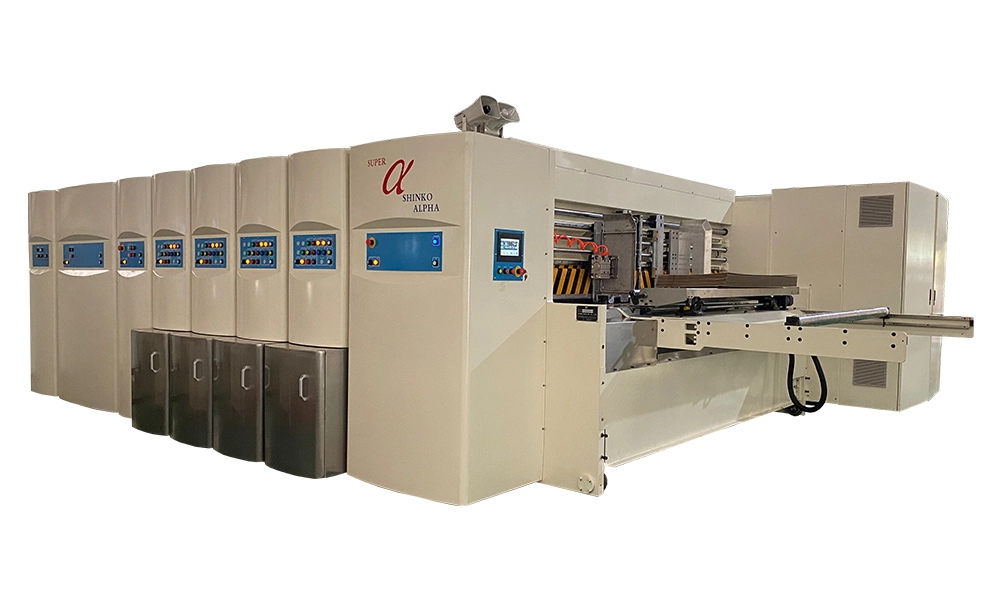
Shinko Super Alpha Movable Type Full Servo Drive Flexo Printing Slotting Die Cutting Machine
Introducing the Shinko Super Alpha Movable Type Full Servo Drive Flexo Printing Slotting Die Cutting Machine by Keshenglong. Engineered for precision and efficiency, this state-of-the-art machine enhances your production line with its advanced servo drive technology. Designed for seamless Flexo printing, slotting, and die-cutting, it ensures superior quality with every output.
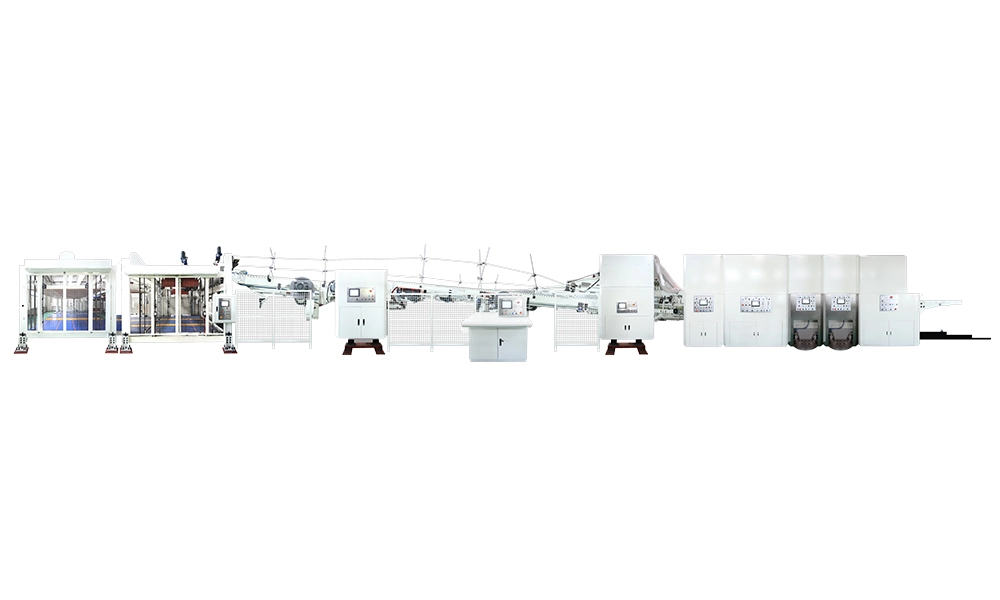
Jumbo Flexo Bottom Printing Slotting Die-Cutting Inline Folding Gluing Countering Ejecting Machine
Introducing the Keshenglong&Shinko Jumbo Flexo Bottom Printing Slotting Die-Cutting Inline Folding Gluing Countering Ejecting Machine. This advanced flexo printing slotting die-cutting machine ensures precision and efficiency for your packaging needs. Designed as a versatile flexo folder gluer machine, it optimizes every step from printing to ejecting, delivering seamless integration and superior quality.
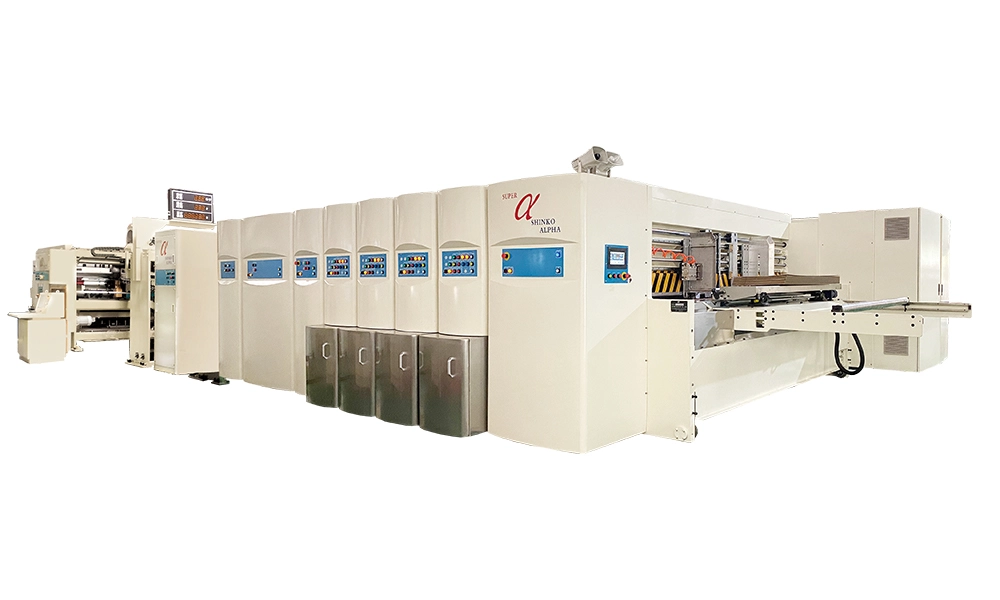
Shinko Super Alpha Movable Type Full Servo Drive Flexo Printing Slotting Die Cutting Inline Folding Gluing Counting Ejecting Machine
This state-of-the-art Movable Type Full Servo Drive Flexo Printing Slotting Die Cutting Machine streamlines your production with precision. Experience seamless operation with its Inline Folding Gluing Counting Ejecting capabilities, ensuring unparalleled efficiency. Designed for high-performance tasks, this Keshenglong&Shinko Super Alpha Movable Type Full Servo Drive Flexo Printing Slotting Die Cutting Inline Folding Gluing Counting Ejecting Machine enhances productivity while maintaining premium quality. Ideal for businesses seeking innovation and reliability, the Shinko Super Alpha is your go-to solution for advanced printing and cutting needs.
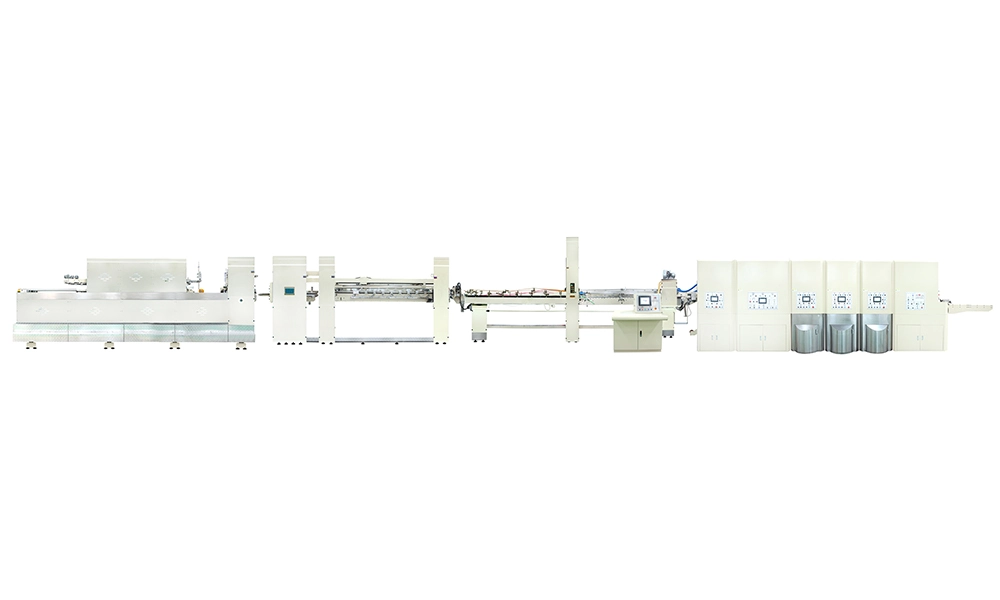
Computerized Flexo Printing Slotting Die-Cutting Inline Folding Gluing and Stitching Machine
Introducing the Keshenglong&Shinko Computerized Flexo Printing Slotting Die-Cutting Inline Folding Gluing and Stitching Machine, a pinnacle of precision and efficiency. This state-of-the-art machine revolutionizes packaging production with seamless integration of printing, slotting, die-cutting, folding, gluing, and stitching. Designed to optimize your workflow, the Computerized Flexo Printing Slotting Die-Cutting Machine enhances accuracy and productivity.


© 2025 Keshenglong & SHINKO All Rights Reserved.
Keshenglong Carton Packing Machine
Keshenglong Carton Packing Machine
Keshenglong Carton Packing Machine
Keshenglong Carton Packing Machine
Keshenglong Carton Packing Machine