
Substrates for flexo printing: Film, paper and board
- How substrate choice affects flexo printer performance
- Understanding substrate categories for flexo printer applications
- Key substrate parameters that affect flexo print output
- Film substrates: recommendations for flexo printer setups
- Printability factors for film on a flexo printer
- Paper substrates: coated and uncoated options for flexo printer use
- Preparation and process control for paper on a flexo printer
- Corrugated board: direct flexo printing and preprint considerations
- Challenges for corrugated substrates on a flexo printer
- Comparative table: film vs paper vs corrugated board for flexo printer use
- Surface treatment, primers and inks — practical guidance for flexo printer operators
- Quality control and testing methods for substrate compatibility with flexo printer process
- Troubleshooting common substrate-related issues on a flexo printer
- How to select substrates when buying a new flexo printer
- Keshenglong & Shinko: corrugated flexo printing and integrated solutions
- Checklist: substrate specs to confirm before a production run
- FAQ — common questions about substrates and flexo printer use
- 1. What substrates can a flexo printer print on?
- 2. How do I prepare film substrates for flexo printing?
- 3. Can flexo print directly on corrugated board with retail-quality graphics?
- 4. What surface treatment is required for films on a flexo printer?
- 5. How do I reduce dot gain on uncoated paper and corrugated board?
- 6. What tests should I run to approve a substrate before full production?
- 7. How does Keshenglong help converters choose substrates for corrugated flexo printing?
- Contact & product inquiry
- References
How substrate choice affects flexo printer performance
Flexo printing remains a workhorse for packaging—especially for corrugated cartons, flexible films and folding cartons—because it balances speed, cost and substrate versatility. Choosing the right substrate for your flexo printer is critical: substrate chemistry, surface energy, porosity and dimensional stability directly determine ink adhesion, color consistency and finishing success. This guide unpacks film, paper and board substrates, how they behave in flexo processes, practical preparation and testing steps, and how to choose equipment and consumables to achieve repeatable results.
Understanding substrate categories for flexo printer applications
Substrates used in flexography broadly fall into three families: films (plastic sheets), paper (coated and uncoated), and corrugated board (liner + fluting). Each family contains multiple grades with distinct printing behaviors. For a flexo printer operator, the core factors to evaluate are surface energy (dyne level), ink absorbency, dimensional stability (hygroscopic or thermoplastic behavior), and finish (gloss/roughness).
Key substrate parameters that affect flexo print output
- Surface energy: determines wetting and ink adhesion; measured in dyne/cm.
- Porosity / absorption: influences dot gain and ink penetration on paperboard.
- Dimensional stability: thermal expansion (films) or moisture-driven expansion (paper/board) impacts registration.
- Surface chemistry and coatings: pre-coatings, primers or corona treatments control adhesion on plastics.
- Finish and caliper: roughness, basis weight, and thickness affect anilox transfer and impression settings.
Film substrates: recommendations for flexo printer setups
Common films in flexo packaging include PET (polyethylene terephthalate), BOPP (biaxially oriented polypropylene), PE (polyethylene) and CPP (cast polypropylene). Films are popular in flexible packaging and labels because of barrier properties and clarity.
Printability factors for film on a flexo printer
Films are non-porous and low-surface-energy; they require surface treatment (typically corona or plasma) to raise dyne level to >38 dynes/cm for reliable water-based or UV flexo inks. Solvent and UV flexo inks generally have better adhesion on untreated films but environmental, regulatory and process considerations favor surface treatment.
- Corona/plasma treatment improves wettability; treat strips must be tested regularly.
- Primers: for difficult films, primer coats or specially formulated inks improve adhesion and scuff resistance.
- Drying: films need controlled IR/UV curing to avoid thermal distortion or blocking.
Paper substrates: coated and uncoated options for flexo printer use
Paper grades used in flexo include uncoated kraft, SBS (solid bleached sulfate) folding box board, coated recycled board (CRB), and testliner. Paper’s porosity and surface sizing determine ink absorption and color density. Coated papers give more vibrant, consistent color with less dot gain; uncoated and kraft are more absorbent and show higher gain and lower gloss.
Preparation and process control for paper on a flexo printer
Key controls when printing paper:
- Moisture control in the pressroom: keep RH stable to avoid curl and registration issues.
- Anilox selection: higher line screens for coated stock; lower volume for absorbent uncoated papers.
- Ink formulation: use tack and viscosity optimized for absorption rate to prevent picking.
Corrugated board: direct flexo printing and preprint considerations
Corrugated packaging is a primary application for flexo printers. Corrugated board has three layers—liner, fluting and liner—and is available as single-face, single-wall (3-ply), double-wall, etc. Printing directly on corrugated (direct-to-board flexo) is cost-effective for many carton converters, while preprinting liners before corrugation is used for higher graphic needs.
Challenges for corrugated substrates on a flexo printer
- Surface roughness and porosity: require higher ink volumes and lower line screens to obtain solid coverage.
- Compression and spring-back: board compresses under pressure; impression roll settings and plate thickness must compensate.
- Ink rub and scuff resistance: often need overprint varnish or lamination for retail packaging.
Comparative table: film vs paper vs corrugated board for flexo printer use
| Property | Film (PET/BOPP/PE) | Paper (coated/uncoated) | Corrugated board |
|---|---|---|---|
| Surface energy (typical) | Low (<30 dyne untreated); needs corona/plasma | Medium (sized/coated higher) | Low-medium; rough liner surface |
| Ink absorption | Non-absorbent (surface film) | Absorbent (uncoated) to low (coated) | Highly absorbent/porous |
| Dimensional stability | High thermal expansion risk; tension control needed | Moisture-sensitive | Moisture-sensitive and compressible |
| Common inks | Solvent, UV, water-based (with treatment/primer) | Water-based, UV | Water-based, soy, UV |
| Typical applications | Flexible packaging, labels | Folding cartons, labels, inserts | Corrugated shipping cartons, point-of-sale |
Sources: industry material datasheets and surface treatment literature (refs below).
Surface treatment, primers and inks — practical guidance for flexo printer operators
Best practice to ensure adhesion and consistency:
- Measure substrate dyne level daily on film stocks and after any roll change.
- Use corona or plasma treatment where necessary; integrate in-line treatment for high-speed runs.
- When printing films, evaluate primer trials and do adhesion (cross-hatch) and tape tests on final cured inks.
- Choose ink system by substrate and downstream finishing: UV inks for non-porous substrates offer fast cure; water-based systems are common for corrugated and coated paper.
Quality control and testing methods for substrate compatibility with flexo printer process
Implement these standard tests before production and in regular QC cycles:
- Dyne/wettability test strips for films (contact angle/dyne pens).
- Adhesion tests (cross-cut and tape pull per ASTM D3359 or similar).
- Rub resistance and block testing after curing (TABER, rub testers).
- Colorimetric checks and spectrophotometer measurements for color consistency (Delta E).
- Printability trials: scales for dot gain and density using standardized test forms.
Adopting documented run cards per substrate grade helps maintain repeatability across shifts and orders.
Troubleshooting common substrate-related issues on a flexo printer
Operators frequently encounter these substrate-driven problems and solutions:
- Ghosting or mottling on films: reduce nip pressure, check impression roll hardness, and verify drying/curing profile to avoid re-wetting.
- Poor adhesion or delamination: raise surface energy by corona/plasma, add primer or switch to an ink with better wetting.
- Excessive dot gain on uncoated board: switch to higher-line-screen anilox or reduce ink tack/viscosity.
- Pick and set-off on coated papers: improve drying and reduce ink film thickness; consider anti-setoff powders or UV curing.
How to select substrates when buying a new flexo printer
If you are specifying a new flexo printer, align machine capability with your substrate mix:
- For films: choose a press with accurate tension control, in-line corona/plasma options and UV/IR curing modules.
- For paper and folding cartons: look for stable registration, variable anilox modules, and chill/infrared drying control.
- For corrugated: robust impression controls, wider plate and board handling capabilities, and integration with slotting/die-cutting if finishing in-line.
Keshenglong & Shinko: corrugated flexo printing and integrated solutions
Keshenglong, founded in 1995 and merged with Japan Shinko in 2017 (Shinko retained as R&D and production base), is a leading Chinese manufacturer focused on corrugated carton printing and packaging machinery. Their product range—particularly designed for corrugated flexo printing—includes:
- Flexo printer (corrugated carton flexo printing machine)
- Computerized high-speed Flexo Slotting Die-Cutting machines (1-6 color)
- Computerized high-speed Flexo case makers
- 6+1 high-precision Precision Printing Slotting Die-Cutting machines
- Top & Bottom Printing Slotting Die-Cutting machines
- Jumbo-size Flexo Printing Slotting Die-Cutting machines
- Flexo printing slotting die-cutting and stacker machines
Advantages and differentiators of Keshenglong & Shinko integration:
- Japanese R&D and component sourcing combined with Chinese manufacturing yield high technical standards at competitive cost.
- On-site installation and testing with Japanese technicians ensure machine setups meet original design tolerances.
- Comprehensive line solutions for corrugated printing + finishing (printing, slotting, die-cutting, stacking) reduce logistics and improve registration control.
- Export footprint to 70+ countries indicates broad field validation and after-sales networks.
For converters focused on corrugated packaging, Keshenglong’s machines are designed to handle a range of board grades, provide in-line treatment/cure modules, and integrate with finishing lines to deliver high-speed, high-quality flexo printing production.
Checklist: substrate specs to confirm before a production run
- Substrate grade and manufacturer datasheet (caliper, grammage, recommended dyne level).
- Recent dyne/wettability test (for films).
- Expected print mode (direct-to-board, preprint liner, flexible film packaging).
- Required finishing (varnish, lamination) and downstream adhesion needs.
- Drying/curing profile matched to substrate thermal limits.
FAQ — common questions about substrates and flexo printer use
1. What substrates can a flexo printer print on?
Flexo printers can print on a wide spectrum: plastic films (PET, BOPP, PE, CPP), coated and uncoated paper, folding carton boards (SBS, CRB) and corrugated board. The key is to match ink, surface treatment and press settings to the substrate.
2. How do I prepare film substrates for flexo printing?
Measure surface energy and apply corona or plasma treatment to raise dyne level (typically >38). Consider primer coats for difficult polymers and validate adhesion via cross-cut/tape tests after full cure.
3. Can flexo print directly on corrugated board with retail-quality graphics?
Direct flexo printing on corrugated can deliver very good results for many applications, especially with optimized plate anilox combinations and ink systems. For highest graphical fidelity and fine detail, preprint liners before corrugation or use high-resolution flexo presses and appropriate finishing (varnish/lamination).
4. What surface treatment is required for films on a flexo printer?
Corona or plasma treatment is standard to increase surface energy. For long-run or high-adhesion requirements, primers or specialized inks may be necessary.
5. How do I reduce dot gain on uncoated paper and corrugated board?
Use lower-volume anilox rollers, increase line screen where possible, optimize ink tack/viscosity, and control impression pressure. Pre- and post-press moisture control also helps minimize spreading.
6. What tests should I run to approve a substrate before full production?
Perform dyne tests (films), adhesion (cross-hatch), rub resistance, and a short press proof for color density and dot gain. Record spectrophotometer readings (Delta E) for color targets.
7. How does Keshenglong help converters choose substrates for corrugated flexo printing?
Keshenglong supplies machines and consulting that align press capabilities (tension control, treatment, drying and finishing integration) with substrate grades. Their combined R&D with Japan Shinko ensures practical testing and setup guidance on-site.
Contact & product inquiry
If you want assistance selecting substrates or configuring a corrugated flexo printing line, contact Keshenglong for product specifications, on-site testing or demonstrations of corrugated carton flexo printing machines and integrated slotting/die-cutting solutions. Request product brochures or a technical consultation to match your substrate mix with the optimal flexo printer model.
References
- Flexography — Wikipedia. https://en.wikipedia.org/wiki/Flexography (accessed 2025-12-16)
- Corona treatment — Wikipedia. https://en.wikipedia.org/wiki/Corona_treatment (accessed 2025-12-16)
- Biaxially oriented polypropylene (BOPP) — Wikipedia. https://en.wikipedia.org/wiki/Biaxially-oriented_polypropylene (accessed 2025-12-16)
- Polyethylene terephthalate (PET) — Wikipedia. https://en.wikipedia.org/wiki/Polyethylene_terephthalate (accessed 2025-12-16)
- FEFCO — European Federation of Corrugated Board Manufacturers. https://www.fefco.org/ (accessed 2025-12-16)
- ASTM D3359 – Standard Test Methods for Rating Adhesion by Tape Test. https://www.astm.org/Standards/D3359.htm (accessed 2025-12-16)
- Keshenglong company and product information (provided by client materials): company history and product list (founded 1995; merged with Japan Shinko 2017). Internal/marketing materials (accessed 2025-12-16)
For detailed product specs, machine case studies, or to schedule an on-site substrate compatibility trial, contact Keshenglong sales or local representative.
OEM/ODM flexo printer slotter machine Manufacturers and supplier
What is flexo-printer
Eco-Friendly Flexo Printing Machine Manufacturer for Sustainable Game Packaging
Keshenglong&Shinko Best professional flexo printer manufacturers and supplier brands
Industry Solutions
How can your machines improve my production workflow?
By automating carton production, our machines streamline your workflow, increase output, and reduce downtime.
Can your machines be integrated with digital printing technology?
Yes, our machines are compatible with digital printing systems for custom, high-quality printing on cartons.
What kind of technical support do you offer for industry applications?
We provide comprehensive technical support, including installation, maintenance, and troubleshooting services.
Shipping
Do you offer international shipping for your machines?
Yes, we offer international shipping and can handle all necessary customs documentation.
Can I track my shipment once it has been dispatched?
Yes, we provide tracking information for all shipments so you can monitor the delivery status.
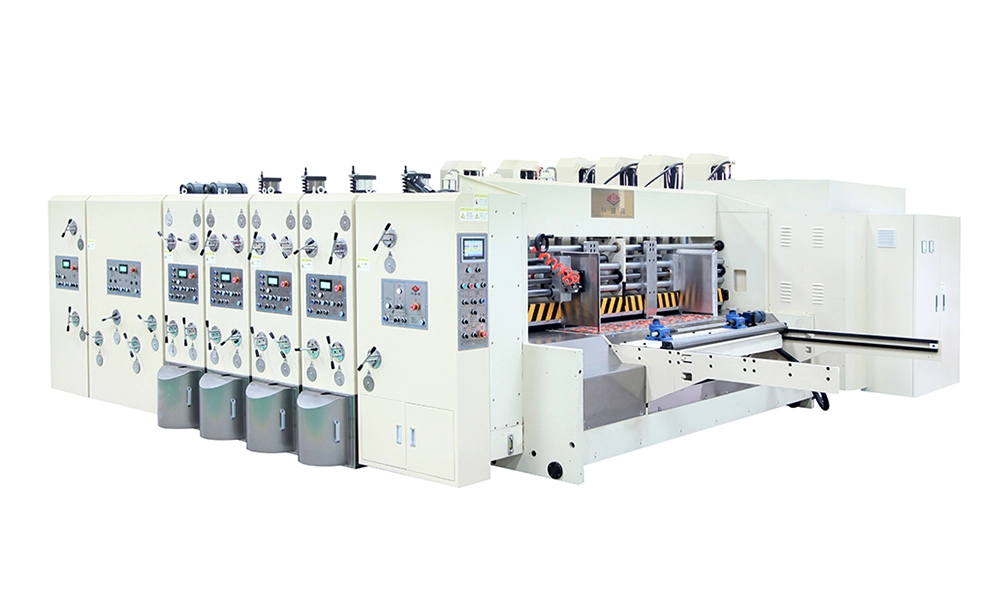
Computerzied Semi Auto Flexo Printing Slotting Die-Cutting Machine
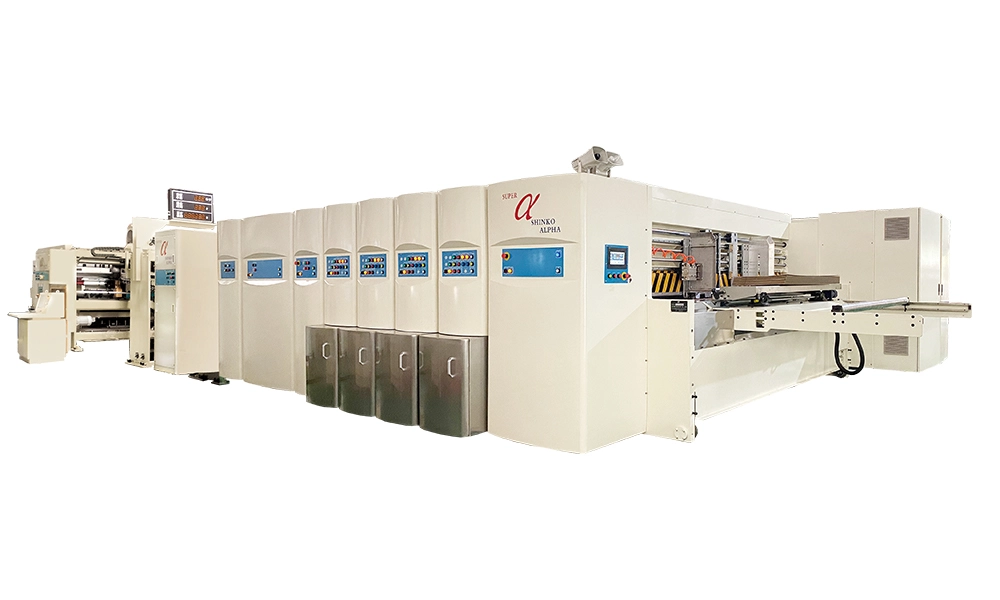
Shinko Super Alpha Movable Type Full Servo Drive Flexo Printing Slotting Die Cutting Inline Folding Gluing Counting Ejecting Machine
This state-of-the-art Movable Type Full Servo Drive Flexo Printing Slotting Die Cutting Machine streamlines your production with precision. Experience seamless operation with its Inline Folding Gluing Counting Ejecting capabilities, ensuring unparalleled efficiency. Designed for high-performance tasks, this Keshenglong&Shinko Super Alpha Movable Type Full Servo Drive Flexo Printing Slotting Die Cutting Inline Folding Gluing Counting Ejecting Machine enhances productivity while maintaining premium quality. Ideal for businesses seeking innovation and reliability, the Shinko Super Alpha is your go-to solution for advanced printing and cutting needs.
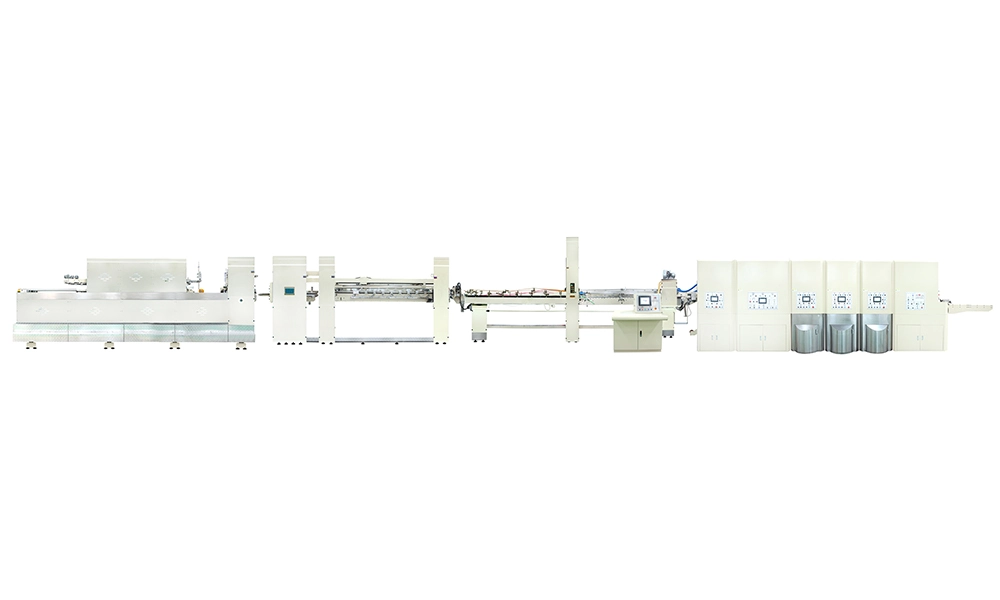
Computerized Flexo Printing Slotting Die-Cutting Inline Folding Gluing and Stitching Machine
Introducing the Keshenglong&Shinko Computerized Flexo Printing Slotting Die-Cutting Inline Folding Gluing and Stitching Machine, a pinnacle of precision and efficiency. This state-of-the-art machine revolutionizes packaging production with seamless integration of printing, slotting, die-cutting, folding, gluing, and stitching. Designed to optimize your workflow, the Computerized Flexo Printing Slotting Die-Cutting Machine enhances accuracy and productivity.
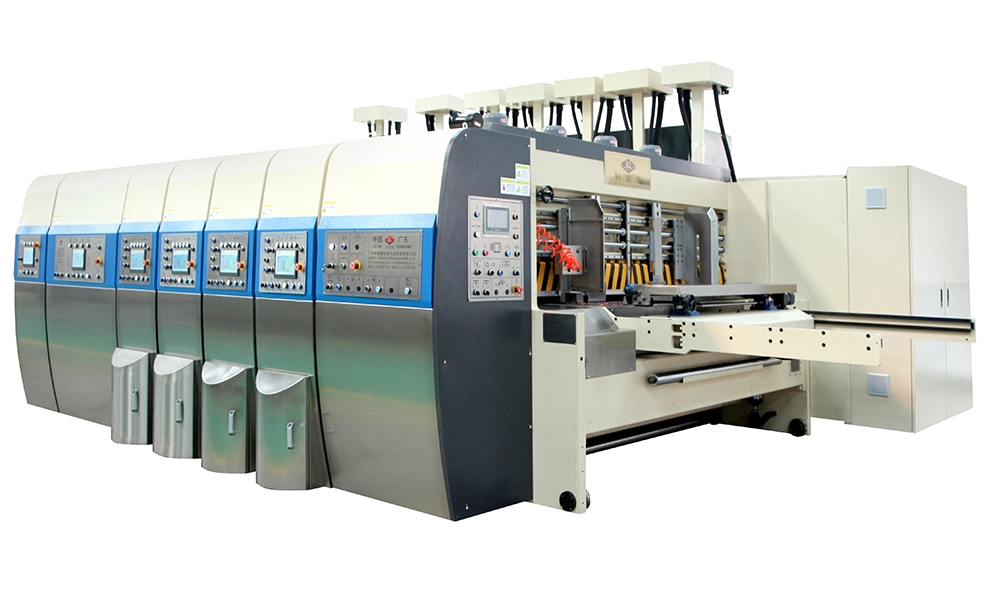
Computerized Flexo Top Bottom Printing Slotting Die-Cutting Machine
Introducing the Keshenglong&Shinko Computerized Flexo Top Bottom Printing Slotting Die-Cutting Machine, designed to enhance your packaging efficiency. Engineered for precision, this high-performance machine offers seamless integration of flexo printing and die-cutting processes. Perfect for a variety for packaging needs, it ensures superior quality and productivity. With user-friendly controls and robust construction, it guarantees reliable operation and minimal downtime. Optimize your production line with Keshenglong’s trusted technology. Explore advanced capabilities with our Flexo Top Bottom Printing Slotting Die-Cutting Machine today.


© 2025 Keshenglong & SHINKO All Rights Reserved.
Keshenglong Carton Packing Machine
Keshenglong Carton Packing Machine
Keshenglong Carton Packing Machine
Keshenglong Carton Packing Machine
Keshenglong Carton Packing Machine