
Optimizing Color Accuracy on Flexographic Printer Machines
- Why color accuracy matters for flexo printer machine operations
- Business impact: brand fidelity and waste reduction
- Technical challenge: variability in substrate and process
- : what this article delivers
- Measurement and color management fundamentals
- Key measurement tools and when to use them
- Color targets and tolerances
- Color management workflows and ICC profiles
- Process variables and optimization steps
- Substrate selection and pre-treatment
- Ink formulation and anilox matching
- Plate making, screening and dot shape
- On-press control, calibration and troubleshooting
- Press make-ready and inking strategy
- Drying, humidity and environmental control
- Common color defects and corrective actions
- Quality systems, data, and automation
- Inline color control and closed-loop systems
- Data-driven continuous improvement
- Training, SOPs and stakeholder alignment
- Keshenglong & Shinko: integrated solutions for corrugated flexo printing
- Company profile and technical strengths
- Competitive advantages and offerings
- Recommended models for color-critical packaging
- Checklist — actionable steps to improve color accuracy today
- Frequently Asked Questions (FAQ)
- 1. What ΔE tolerance should I set for corrugated packaging?
- 2. Should I use a spectrophotometer or densitometer on my flexo printer machine?
- 3. How often should anilox rollers be replaced to maintain color accuracy?
- 4. Can ICC profiles fully solve color shift problems?
- 5. Is closed-loop inline color control worth the investment?
- Contact and next steps
- References
Why color accuracy matters for flexo printer machine operations
Business impact: brand fidelity and waste reduction
Reliable color reproduction on a flexo printer machine directly affects brand integrity and commercial margins. Packaging with inaccurate colors leads to reprints, rejected orders, and damaged client relationships. For brand owners, a mis-tinted logo or inconsistent spot color across runs can trigger costly corrective actions and tarnish shelf impact.
Technical challenge: variability in substrate and process
Flexography prints across diverse substrates (corrugated boards, coated/uncoated papers, films) and uses anilox rolls, flexible plates, and liquid inks. This combination produces more variables than sheetfed offset. Achieving repeatable color requires process control across material, ink transfer, screening, drying, and press mechanics.
: what this article delivers
This article gives press managers, production engineers, and packaging buyers actionable procedures to calibrate, control, and troubleshoot color on flexo printer machines. It covers metrology, targets (ΔE tolerances), process adjustments, quality workflows, and case-specific recommendations for corrugated carton flexo printing machines.
Measurement and color management fundamentals
Key measurement tools and when to use them
Accurate measurement starts with the right instruments. The three most common tools are spectrophotometers, densitometers, and colorimeters. Each serves a role in a flexo pressroom:
| Instrument | What it measures | Typical use on flexo press |
|---|---|---|
| Spectrophotometer | Full spectral data, L*a*b*, ΔE (CIEDE2000) | Profile creation, color matching, spot color evaluation, press audits |
| Densitometer | Optical density of inks | Quick inking checks, tone reproduction monitoring |
| Colorimeter | Tristimulus values approximating human vision | Simple QC on stable substrates when speed matters |
Recommendation: implement spectrophotometers as the primary QC instrument for flexo printer machine color control; use densitometers for rapid density checks during make-ready.
Color targets and tolerances
Set realistic ΔE targets based on customer requirements and substrate variability. Typical tolerances:
| Application | ΔE00 target |
|---|---|
| Critical brand colors / proof-to-press | ≤ 2.0 |
| Commercial packaging (corrugated) | ≤ 3.0–4.0 |
| Large-format or coarse corrugated runs | ≤ 4.0–5.0 |
These values reflect industry practice—stricter values are achievable with stable substrates and tight process control. Use CIEDE2000 (ΔE00) as the preferred metric for perceptual accuracy.
Color management workflows and ICC profiles
For consistent results, implement ICC-based color management from prepress to press. Create substrate- and ink-specific profiles with a spectrophotometer and RIP software. Maintain a library of profiles for each corrugated board type, ink set, and anilox configuration so the flexo printer machine uses the correct transform every run.
Process variables and optimization steps
Substrate selection and pre-treatment
Substrate porosity, color, brightness, and surface treatment change ink absorption and dot gain. For corrugated cartons, measure baseboard whiteness and EBC (electronic brightness). Use consistent suppliers, specify surface sizing or coating where needed, and consider a primer or corona treatment for films to improve ink laydown.
Ink formulation and anilox matching
Ink opacity and viscosity must match the anilox cell volume for predictable tonal reproduction. Lower anilox volumes yield finer highlights; higher volumes deepen solids. Calibrate curves (tone value increase, TVI) by producing step wedges and measuring them. Typical TVI in flexo runs between 10–40% depending on substrate—document and control it.
Plate making, screening and dot shape
Modern flexo plates (photopolymer, HD plates) and screening systems (AM/FM hybrid) produce better midtones and smoother transitions. Choose screens and plate settings to minimize edge rag and dot gain. Maintain consistent plate mounting, tension, and registration on the flexo printer machine to avoid ghosting and color shifts.
On-press control, calibration and troubleshooting
Press make-ready and inking strategy
During make-ready, follow a structured sequence: set mechanical registration, set anilox/ink balance, run color bars and measure, then adjust ink keys from tail to head while measuring densitometer and spectro patches. Always warm up press to nominal operating speed and temperature before final measurements.
Drying, humidity and environmental control
Ink drying and substrate dimension changes (gain/loss) are affected by pressroom temperature and relative humidity. Track environmental conditions; for corrugated flexo printing, keep stable RH (typically 45–60%) and temperature (20–25°C) to minimize substrate movement and ink drying variability.
Common color defects and corrective actions
Typical issues and remedies:
- Too dark/too light: check anilox wear, ink viscosity, and film build; adjust anilox or reduce/add solvents.
- Color shift mid-run: verify ink feed system, check for plate wear or contamination, and re-check registration.
- Spot color mismatch: re-measure ink pigment concentrations and use spectro-based spot color recipes or Pantone-to-spot matches in RIP.
Quality systems, data, and automation
Inline color control and closed-loop systems
Automated inline spectro systems can measure color bars and adjust ink keys in near real-time, reducing make-ready time and waste. For high-volume corrugated carton flexo printing machines, inline control often reduces waste by 20–50% compared to manual adjustments.
Data-driven continuous improvement
Log color metrics (ΔE, densities, TVI) per job and substrate. Analyze trends to predict maintenance: rising ΔE can indicate anilox wear or plate degradation. Use SPC charts to set action thresholds and schedule preventative maintenance before quality is impacted.
Training, SOPs and stakeholder alignment
Ensure operators, prepress, and quality teams share SOPs: standardized sample locations, measurement routines, and acceptance criteria. Regular training on instrument calibration and awareness of factors like press speed and temperature will keep color consistent across shifts.
Keshenglong & Shinko: integrated solutions for corrugated flexo printing
Company profile and technical strengths
Keshenglong, founded in 1995, is a leading Chinese manufacturer specializing in corrugated carton printing and packaging machinery. The company’s core lineup includes flexo printer machines, computerized high-speed flexo slotting die-cutting machines (1–6 color), computerized flexo case makers, 6+1 precision printing slotting die-cutting machines, top & bottom printing slotting die-cutting machines, and jumbo-size flexo systems. Since merging with Japan Shinko in 2017, Keshenglong has kept Shinko as its R&D center and production base while expanding manufacturing in Guangzhou, China. Main parts are imported from Japan, and experienced Japanese technicians guide installation and testing to meet high quality standards.
Competitive advantages and offerings
Keshenglong & Shinko combine Japanese design and quality control with Chinese manufacturing scalability. Key differentiators include:
- Integrated intelligent packaging solutions: machines paired with automation (stackers, feeders, die-cutters) for end-to-end lines.
- High-precision registration and advanced plate/roller handling suitable for demanding color accuracy on corrugated substrates.
- Export footprint to 70+ countries, supporting global standards and local service networks.
- Use of imported components and Japanese technical instruction to raise reliability and reduce downtime.
Recommended models for color-critical packaging
For buyers seeking superior color consistency, consider Keshenglong’s corrugated carton flexo printing machines and flexo printing slotting die-cutting & stacker machine combinations. Their 6+1 high-precision solutions and computerized high-speed flexo lines help reduce make-ready times and maintain tighter ΔE control across long runs.
Checklist — actionable steps to improve color accuracy today
- Calibrate spectrophotometers daily and keep calibration tiles clean.
- Create ICC profiles for each substrate/ink/anilox combination and store in RIP.
- Set per-job ΔE00 targets and TVI curves; document them in job tickets.
- Standardize plate-making procedures and maintain plate banks.
- Monitor anilox wear and replace before transfer variability exceeds tolerance.
- Stabilize pressroom environment and log temperature/RH during critical jobs.
- Deploy inline or nearline spectro systems for high-volume, color-critical lines.
Frequently Asked Questions (FAQ)
1. What ΔE tolerance should I set for corrugated packaging?
A realistic target is ΔE00 ≤ 3.0 for most corrugated packaging. For critical brand colors, aim for ΔE00 ≤ 2.0. Adjust targets based on substrate variability—coarse corrugated may require a looser tolerance (≤ 4–5).
2. Should I use a spectrophotometer or densitometer on my flexo printer machine?
Use a spectrophotometer as your primary QC tool for color matching and profiling. Densitometers are useful for quick ink density checks during make-ready, but they don’t capture full colorimetric information.
3. How often should anilox rollers be replaced to maintain color accuracy?
Anilox replacement frequency depends on usage and substrate abrasiveness. Monitor transferred volume and print quality; replace when transfer variability or dot gain deviations exceed established SPC limits. Typical preventive replacement intervals vary widely—track wear via baseline measurements.
4. Can ICC profiles fully solve color shift problems?
ICC profiles standardize color transforms but cannot correct mechanical issues such as worn anilox, damaged plates, or inconsistent substrate. Use profiles alongside strict process control and routine maintenance.
5. Is closed-loop inline color control worth the investment?
For high-volume, color-critical production, inline closed-loop solutions reduce make-ready time and waste, often providing rapid ROI. For occasional or small runs, nearline spectro and disciplined manual control can suffice.
Contact and next steps
For consultations on optimizing your flexo printer machine line or to evaluate Keshenglong & Shinko integrated solutions for corrugated carton printing, contact your local Keshenglong representative or request a product demo. Assess your current QC metrics (ΔE, TVI, density) and request a tailored action plan to reduce waste and improve color consistency.
References
- International Color Consortium (ICC) — ICC Profile Specification. https://www.color.org (accessed 2026-01-11)
- Idealliance — G7 Methodology for process control and gray balance in print production. https://www.idealliance.org (accessed 2026-01-11)
- X-Rite — Spectrophotometers and color workflow solutions for packaging. https://www.xrite.com (accessed 2026-01-11)
- Fogra — Research on printing process control and measurement. https://www.fogra.org (accessed 2026-01-11)
- Technical papers and industry guidelines on flexographic printing and TVI: Packaging industry whitepapers and pressroom best practices (various manufactures). Example resource: https://www.flexo.org (accessed 2026-01-11)
Data and recommended tolerances reflect industry best practices and vendor guidance as cited above.
The B2B Buyer’s Guide to flexo slotting machine
Top 5 flexo printer Company List and Products Compared
Top 10 flexo printer equipment Manufacturers and Supplier Brands
Tips for Wholesale high defination flexo printer machine
Shipping
Do you provide installation services upon delivery?
Yes, we offer on-site installation and training services to ensure your machine is set up correctly.
What should I do if my machine arrives damaged?
If your machine arrives damaged, please contact our customer service immediately to arrange for repairs or replacement.
Can you ship to remote or difficult-to-access locations?
Yes, we can arrange shipping to remote locations, though additional charges and time may apply.
Product
How can I integrate your machines into my existing production line?
Our technical team can assist with integrating our machines into your current production setup, ensuring a seamless operation.
Industry Solutions
Do you offer solutions for environmentally friendly packaging?
Yes, our machines can produce cartons from recyclable and biodegradable materials, supporting sustainable packaging solutions.
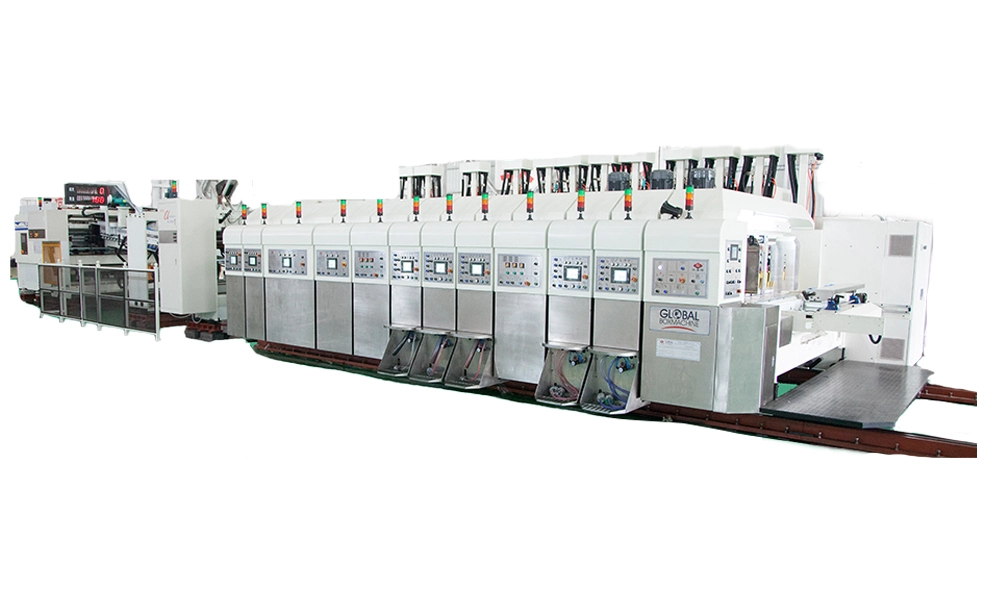
Computerized Flexo Printing Slotting Die-Cutting Inline Folding Gluing Countering Ejecting Machine
Introducing the Keshenglong&Shinko Computerized Flexo Printing Slotting Die-Cutting Inline Folding Gluing Countering Ejecting Machine. Engineered for precision, this advanced machine streamlines your packaging production with integrated Flexo Printing Slotting Die-Cutting functionalities. Seamlessly perform inline folding, gluing, countering, and ejecting—all in one efficient system. Designed for optimal performance, it enhances productivity while reducing downtime.
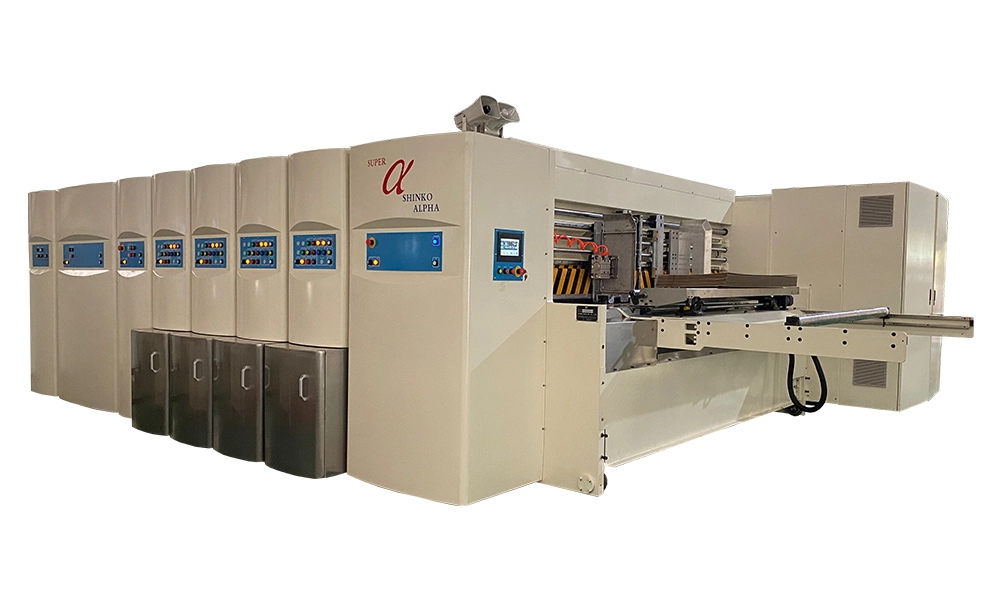
Shinko Super Alpha Movable Type Full Servo Drive Flexo Printing Slotting Die Cutting Machine
Introducing the Shinko Super Alpha Movable Type Full Servo Drive Flexo Printing Slotting Die Cutting Machine by Keshenglong. Engineered for precision and efficiency, this state-of-the-art machine enhances your production line with its advanced servo drive technology. Designed for seamless Flexo printing, slotting, and die-cutting, it ensures superior quality with every output.
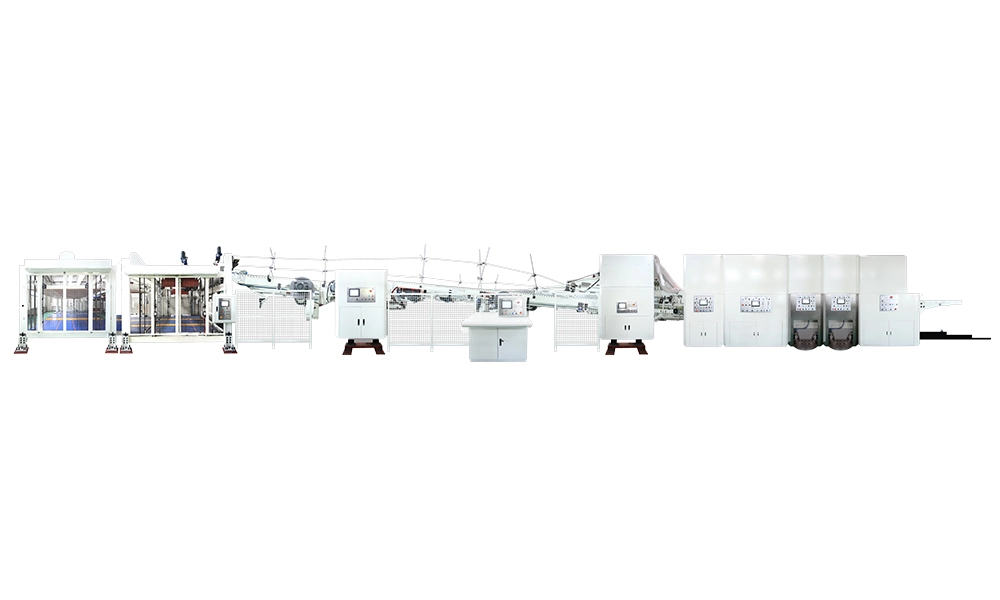
Jumbo Flexo Bottom Printing Slotting Die-Cutting Inline Folding Gluing Countering Ejecting Machine
Introducing the Keshenglong&Shinko Jumbo Flexo Bottom Printing Slotting Die-Cutting Inline Folding Gluing Countering Ejecting Machine. This advanced flexo printing slotting die-cutting machine ensures precision and efficiency for your packaging needs. Designed as a versatile flexo folder gluer machine, it optimizes every step from printing to ejecting, delivering seamless integration and superior quality.
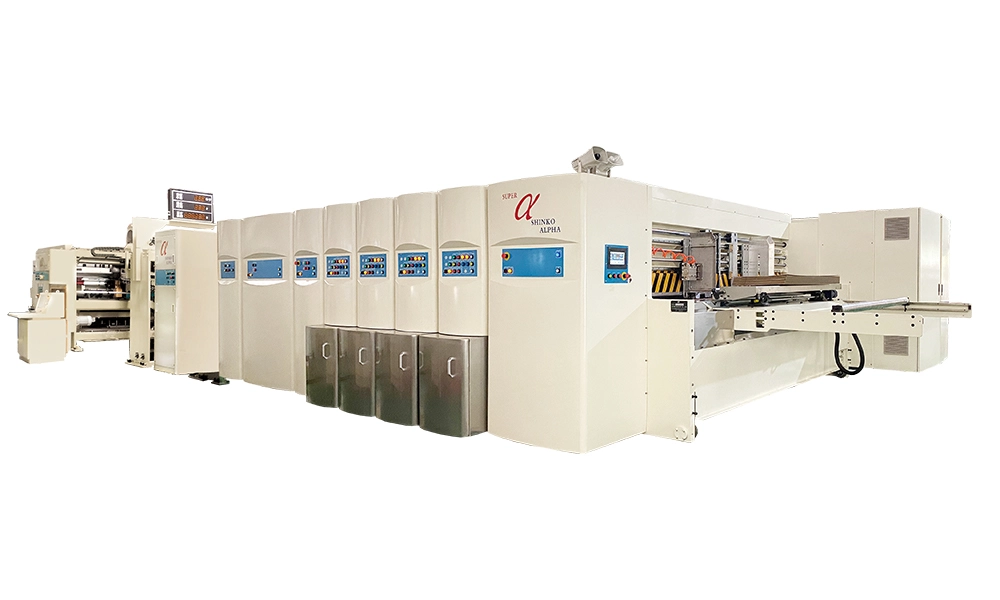
Shinko Super Alpha Movable Type Full Servo Drive Flexo Printing Slotting Die Cutting Inline Folding Gluing Counting Ejecting Machine
This state-of-the-art Movable Type Full Servo Drive Flexo Printing Slotting Die Cutting Machine streamlines your production with precision. Experience seamless operation with its Inline Folding Gluing Counting Ejecting capabilities, ensuring unparalleled efficiency. Designed for high-performance tasks, this Keshenglong&Shinko Super Alpha Movable Type Full Servo Drive Flexo Printing Slotting Die Cutting Inline Folding Gluing Counting Ejecting Machine enhances productivity while maintaining premium quality. Ideal for businesses seeking innovation and reliability, the Shinko Super Alpha is your go-to solution for advanced printing and cutting needs.


© 2025 Keshenglong & SHINKO All Rights Reserved.
Keshenglong Carton Packing Machine
Keshenglong Carton Packing Machine
Keshenglong Carton Packing Machine
Keshenglong Carton Packing Machine
Keshenglong Carton Packing Machine