
Key Specifications to Compare When Buying a Flexo Press
- How to Choose the Right Corrugated Printing Solution
- Common buyer goals and
- How this guide is organized
- Core Machine Types and Mechanical Specs to Compare
- Press configuration and printing method
- Cylinder systems and repeat length
- Registration and mechanical precision
- Print Quality, Drying, and Color Control
- Number of color stations and color gamut
- Drying system: hot-air, IR, or UV
- Color management and inline inspection
- Production Performance, Automation and Integration
- Speed, throughput, and uptime
- Automation, HMI and Industry 4.0 readiness
- Integration with slotting/die-cutting/stacking
- Serviceability, Safety, and Total Cost of Ownership
- Maintenance, spare parts, and local service
- Energy consumption and environmental controls
- Safety, operator ergonomics and training
- Specification Comparison Table
- How to Prioritize Specs Based on Your Business Needs
- Short runs / many SKUs
- High-volume single SKUs
- High-color or High Quality graphic work
- Keshenglong & Japan Shinko — Manufacturer Profile and Competitive Advantages
- Why consider Keshenglong & Japan Shinko for corrugated flexo presses
- How those features map to buying criteria
- Checklist to Use When Requesting Quotes
- FAQ
- 1. What is the difference between a corrugated flexo press and a narrow-web flexo press?
- 2. How many color stations do I need on a corrugated flexo press?
- 3. Should I buy an integrated printing-slotting-die-cutting line or separate machines?
- 4. How important is anilox roll specification?
- 5. What should I expect in terms of maintenance and spare parts?
- 6. How do I estimate total cost of ownership (TCO)?
- Contact & Next Steps
- References
How to Choose the Right Corrugated Printing Solution
Buying a flexo printing machine for corrugated carton production is a capital decision that impacts print quality, throughput, operating cost, and business flexibility for years. This guide distills the essential specifications you should compare across vendors and models so you can make an evidence-based purchase that matches your run lengths, substrates, and automation goals. The content reflects practical, industry-proven considerations used by OEMs, print buyers, and plant managers.
Common buyer goals and
Most buyers are looking to answer one or more of these: Which press gives the throughput I need? What will deliver repeatable color and registration? How much automation is required to reduce labor and waste? How do I evaluate total cost of ownership (TCO) rather than just purchase price? This article addresses those questions with actionable comparisons and checklists.
How this guide is organized
We cover core mechanical and electrical specifications, print-quality factors, production-speed and drying systems, integration with finishing (slotting/die-cutting), automation & controls, maintenance/serviceability, and commercial considerations such as footprint and energy. Later we profile a supplier, Keshenglong & Japan Shinko, to show how spec decisions map to vendor capabilities.
Core Machine Types and Mechanical Specs to Compare
Press configuration and printing method
Identify whether the machine is designed for corrugated board (sheet-fed or roll-fed) and whether it is a simple flexo-printing-only press or an integrated flexo printing + slotting/die-cutting solution. Corrugated flexo presses are engineered for thickness, board flute types, and the high-tension handling required for heavy substrates. Choose machines whose feed system and impression stations are explicitly rated for the corrugated board basis weights and flute profiles you run.
Cylinder systems and repeat length
Compare plate cylinder diameters, anilox roll selection (line counts and cell volumes), and maximum repeat length. Smaller repeats and smaller plate cylinders suit short-run, many-SKU environments. Larger central cylinders offer stability for long repeats and high-speed runs. Ask manufacturers about repeat-changeover time and plate-mounting systems.
Registration and mechanical precision
Registration accuracy (typically quoted in mm or microns) is critical for multi-color jobs and when integrating printing with slotting/die-cutting. Look for servo-driven registration with closed-loop feedback and guaranteed lateral/longitudinal registration tolerances. Higher-precision mechanical assemblies, preloaded bearings, and hardened shafts reduce drift over long runs.
Print Quality, Drying, and Color Control
Number of color stations and color gamut
Decide how many ink colors you need. More color stations allow extended gamut printing and spot colors without ink changes. However, additional colors increase complexity and cost. Consider inline mixing, quick-change ink systems, and the ability to mount special stations for varnish or aqueous coatings if needed.
Drying system: hot-air, IR, or UV
Drying method affects line speed, energy use, and substrate compatibility. Hot-air systems are common for corrugated inks; IR and UV systems can increase speed or enable special inks but require substrate and ink compatibility checks. Compare dryer wattage, zone control, and service access. Efficient drying reduces set-off and improves run consistency.
Color management and inline inspection
Inline spectrophotometers, closed-loop color control, and web cameras for registration/print defects reduce waste and speed make-ready. Ask about the press's compatibility with ICC profiles and MIS integration for job scheduling and color targets.
Production Performance, Automation and Integration
Speed, throughput, and uptime
Base purchasing decisions on required throughput (m/min or sheets/hr) including realistic uptime factors and average job-change frequency. Higher peak speeds are less valuable if changeover times are long. Evaluate quick job-change features such as pre-registered plate modules, digital plate positioning, and automatic tension control.
Automation, HMI and Industry 4.0 readiness
Modern presses offer servo controls, recipe-based job recall, automated plate loading, automatic tension and nip control, and remote diagnostics. These features reduce operator dependency, shorten make-ready, and improve repeatability. Check for OPC-UA or other protocols for MIS/ERP connectivity and vendor remote support capabilities.
Integration with slotting/die-cutting/stacking
For corrugated box manufacturers, integrated flexo printing + slotting and die-cutting lines reduce handling and increase throughput. Compare the inline registration accuracy between the printing unit and the slitter/slotter/die-cutter, and whether the stacker/feeder supports your desired downstream operations (gluing, stitching, palletizing).
Serviceability, Safety, and Total Cost of Ownership
Maintenance, spare parts, and local service
Service network and availability of spare parts significantly affect TCO. Ask for mean time between failures (MTBF) data if available, recommended preventive maintenance schedules, and average downtime figures from existing customers. Clarify who supplies key wear parts such as anilox rolls, doctor blades, and bearings.
Energy consumption and environmental controls
Compare energy ratings for motors, dryers, and vacuum systems. Consider VOC capture if solvent-based inks are used. Energy-efficient drives and variable-speed fans reduce operating expense over the machine lifetime.
Safety, operator ergonomics and training
Ensure the machine complies with local machine safety standards and includes guards, emergency stops, and safe-access design. Evaluate training packages and whether the vendor provides on-site commissioning and operator training as part of the purchase.
Specification Comparison Table
The table below summarizes pragmatic comparison points you should gather from suppliers. Values are typical ranges or qualitative notes; precise figures will vary by model and vendor.
| Specification | What to compare | Typical / Notes |
|---|---|---|
| Press type | Sheet-fed vs roll-fed; standalone vs integrated slotting/die-cutting | Corrugated sheet-fed and roll-fed flexo presses common; integrated units reduce handling |
| Max printable width | Maximum board width handled | From 800 mm to jumbo widths 2500+ mm depending on model |
| Color stations | Number of print units (1-10+) | Typical 1-6 for corrugated; extra units for varnish/spot colors |
| Registration accuracy | Lateral and longitudinal tolerance | High-precision models offer sub-0.5 mm repeatable accuracy |
| Drying system | Hot-air, IR, UV — zones and power | Hot-air common; UV/IR available for special inks or higher speeds |
| Max line speed | m/min or sheets/hr | Varies by press and job; corrugated lines prioritize steady throughput over peak speed |
| Automation | Servo control, recipe recall, inline inspection | Higher automation lowers labor and waste; important for high-mix environments |
| Integration | Inline slotting/die-cutting, stacking | Integrated systems reduce handling, require precise registration control |
| Footprint & weight | Factory floor space, foundations | Plan for service access and material handling around the machine |
| Warranty & service | Warranty period, local service availability | Critical for minimizing TCO; ask for references |
How to Prioritize Specs Based on Your Business Needs
Short runs / many SKUs
Prioritize fast make-ready, automated plate-change, recipe recall, and smaller repeats. A highly automated press with inline inspection will reduce per-job downtime and waste.
High-volume single SKUs
Focus on sustained throughput, reliable anilox selection for ink laydown, heavy-duty transport for corrugated flutes, and energy-efficient drying to reduce operating expense across long runs.
High-color or High Quality graphic work
Choose more color stations, higher-line-count anilox rolls, superior registration systems, and top-tier drying and color-management systems.
Keshenglong & Japan Shinko — Manufacturer Profile and Competitive Advantages
Keshenglong, Founded in 1995, Specialized in Manufacturing Corrugated Carton Printing Machine & Solutions is a leading manufacturer in China, specializing in the manufacturing of carton printing and packaging machinery. Our main products are flexo printer, Computerized high-speed Flexo Slotting Die-Cutting machines (1-6 color), Computerized high-speed Flexo case makers, 6+1 high-precision Precision Printing Slotting Die-Cutting machines, Top & Bottom Printing Slotting Die-Cutting machines, jumbo-size Flexo Printing Slotting Die-Cutting machines, etc. Merged into Keshenglong in 2017, Japan Shinko kept as the R&D center and production base and set up another production base in Guangzhou, China. Main parts are imported from Japan, instructed by experienced Japanese technicians, and installed and tested on-site to ensure quality up to the same standard as Japan Shinko. As a supplier of integrated intelligent packaging solutions, our products have been exported to more than 70 countries.
Why consider Keshenglong & Japan Shinko for corrugated flexo presses
- Integrated solutions — printing plus slotting/die-cutting and stacking reduce line integration risk and material handling costs.
- Hybrid manufacturing model — Japanese R&D and component sourcing combined with Chinese production creates competitive pricing without compromising critical part quality.
- Range of products — from single-color flexo printers to 6+1 high-precision integrated machines suitable for high-quality graphic work.
- Global footprint — experience exporting to 70+ countries indicates maturity in logistics, spare parts provisioning, and after-sales support.
How those features map to buying criteria
If your priority is an integrated production line for corrugated boxes with reliable registration between printing and slotting/die-cutting, Keshenglong's combined product portfolio and Japan Shinko's R&D advantage are strong differentiators. Importantly, ask for on-site installation, commissioning logs, spare-parts lead times, and customer references in similar production contexts.
Checklist to Use When Requesting Quotes
- List target substrates (flute types, board grammage), maximum sheet or web width, and typical job repeat lengths.
- Specify required color count and any special stations (varnish, cold foil, aqueous coating).
- Request detailed specifications: cylinder diameters, anilox cell counts and volumes, dryer type and power, servo system vendor, tolerances for registration.
- Ask for measured make-ready times, typical throughput for specified jobs, and sample job run reports.
- Confirm warranty, recommended spare-parts inventory, service response time, and training packages.
- Request reference customers with similar production profiles and ask about actual uptime and TCO over the first 3–5 years.
FAQ
1. What is the difference between a corrugated flexo press and a narrow-web flexo press?
Corrugated flexo presses are engineered for heavy substrates, larger plate cylinders or gap between rollers, stronger feed and conveyor systems, and dryers tuned for thicker boards. Narrow-web flexo presses are optimized for thin, flexible substrates and typically achieve higher line speeds for labels and flexible packaging.
2. How many color stations do I need on a corrugated flexo press?
For basic branding and single-color jobs, 1–2 stations suffice. For full-color process printing or extended-gamut work, 4–6 color stations (plus varnish) are common. Choose based on your SKU color complexity and whether you plan to use spot colors.
3. Should I buy an integrated printing-slotting-die-cutting line or separate machines?
Integrated lines reduce handling, improve registration, and lower footprint and labor costs. However, they can be more expensive upfront and may be less flexible for varied process flows. Consider integrated systems when high throughput and consistent registration between print and finishing are priorities.
4. How important is anilox roll specification?
Very important. Anilox cell count and volume determine ink transfer and, consequently, color density and dot gain. Match anilox specifications to your ink viscosity, desired ink film thickness, and substrate absorption. Ask vendors for recommended anilox charts for common jobs.
5. What should I expect in terms of maintenance and spare parts?
Expect routine items like doctor blades, bearings, anilox roll servicing, and drive belts as typical consumables. Verify lead times from the vendor for critical spares and whether local stocking is available. Preventive maintenance contracts reduce unexpected downtime and extend machine life.
6. How do I estimate total cost of ownership (TCO)?
TCO should include purchase price, installation, training, spare parts, energy consumption (especially dryers), anticipated waste during make-ready, maintenance labor, and expected uptime over years. Request sample TCO calculations or case studies from vendors and compare on a per-unit-produced basis.
Contact & Next Steps
If you need help matching specifications to your production profile or want to review Keshenglong & Japan Shinko's corrugated flexo printing machine solutions, contact the supplier for machine datasheets, sample run reports, and a factory acceptance test (FAT) schedule. For custom advice, share your production targets (substrate spec, daily throughput, color requirements) and we can recommend specific machine configurations and expected ROI.
Call or email to request a quote, schedule an on-site consultation, or arrange machine demonstrations. Invest time in vendor comparisons using the checklist above to ensure your flexo printing machine purchase supports long-term growth.
References
- Flexography — Wikipedia. https://en.wikipedia.org/wiki/Flexography (accessed 2026-01-04)
- Flexographic Technical Association — Flexography resources. https://flexography.org/ (accessed 2026-01-04)
- Packaging World — Industry overview and press technologies. https://www.packworld.com/ (accessed 2026-01-04)
- Statista — Corrugated packaging market insights. https://www.statista.com/ (accessed 2026-01-04)
- Keshenglong corporate profile and product information (provided by requester) (accessed 2026-01-04)
Keshenglong&Shinko best professional flexo corrugated carton flexo printing slotting machine Manufacturers and supplier brand in China
Common Defects and Troubleshooting in Corrugated Printing
Tips for Wholesale corrugated flexo printing slotting die cutting machine
Top corrugated box flexo printing machine Manufacturers and Suppliers in us
Shipping
Do you provide installation services upon delivery?
Yes, we offer on-site installation and training services to ensure your machine is set up correctly.
Product
What is the maximum speed of your folding carton machines?
Our machines can operate at speeds of up to 150 cartons per minute, depending on the model and carton complexity.
Do your machines support automated quality control checks?
Yes, our machines can be equipped with automated quality control systems to ensure consistent production quality.
What materials are compatible with your folding carton machines?
Our machines are compatible with a wide range of materials including cardboard, corrugated board, and paperboard.
Industry Solutions
How can your machines improve my production workflow?
By automating carton production, our machines streamline your workflow, increase output, and reduce downtime.
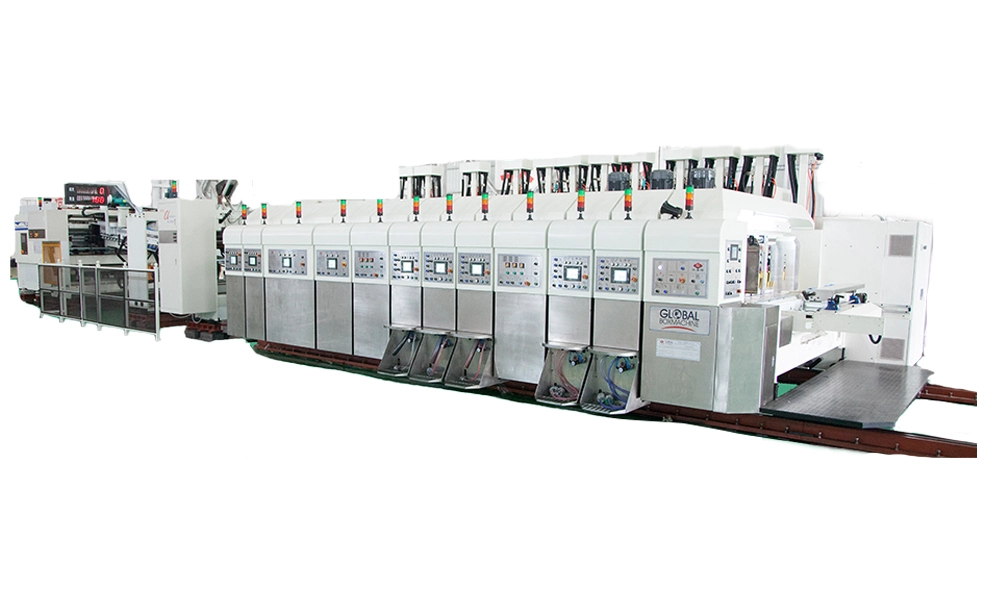
Computerized Flexo Printing Slotting Die-Cutting Inline Folding Gluing Countering Ejecting Machine
Introducing the Keshenglong&Shinko Computerized Flexo Printing Slotting Die-Cutting Inline Folding Gluing Countering Ejecting Machine. Engineered for precision, this advanced machine streamlines your packaging production with integrated Flexo Printing Slotting Die-Cutting functionalities. Seamlessly perform inline folding, gluing, countering, and ejecting—all in one efficient system. Designed for optimal performance, it enhances productivity while reducing downtime.
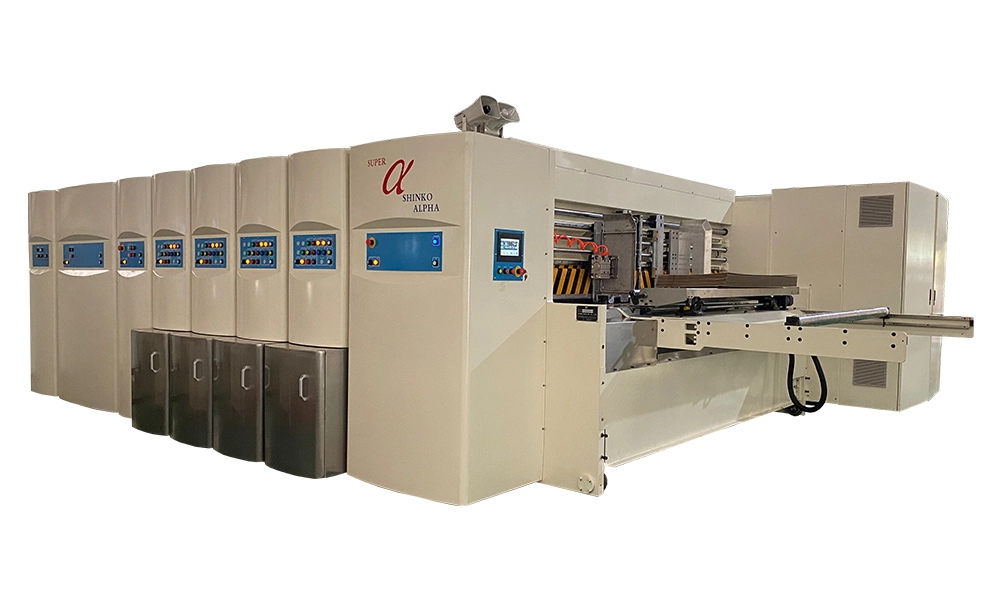
Shinko Super Alpha Movable Type Full Servo Drive Flexo Printing Slotting Die Cutting Machine
Introducing the Shinko Super Alpha Movable Type Full Servo Drive Flexo Printing Slotting Die Cutting Machine by Keshenglong. Engineered for precision and efficiency, this state-of-the-art machine enhances your production line with its advanced servo drive technology. Designed for seamless Flexo printing, slotting, and die-cutting, it ensures superior quality with every output.
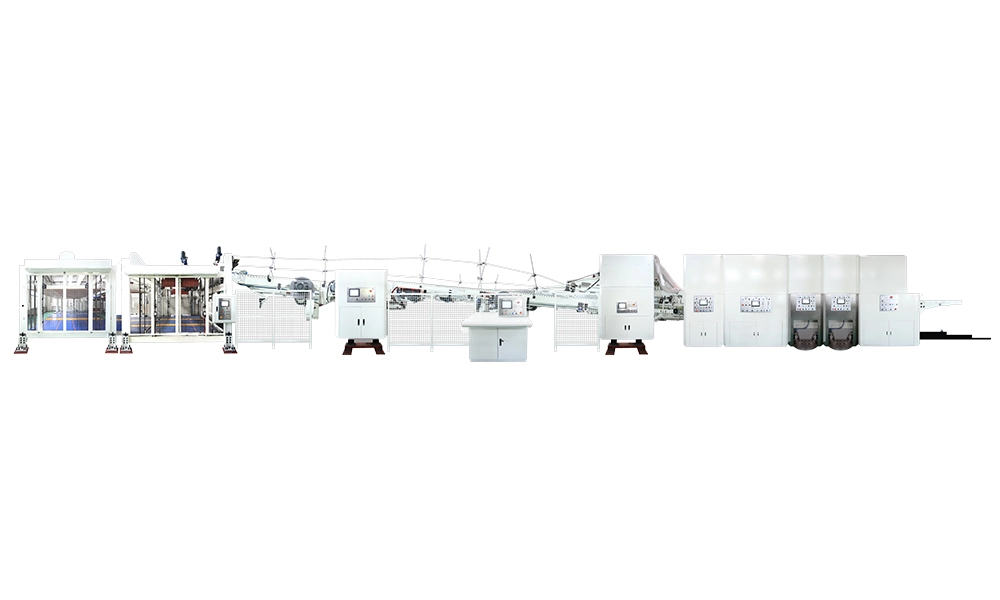
Jumbo Flexo Bottom Printing Slotting Die-Cutting Inline Folding Gluing Countering Ejecting Machine
Introducing the Keshenglong&Shinko Jumbo Flexo Bottom Printing Slotting Die-Cutting Inline Folding Gluing Countering Ejecting Machine. This advanced flexo printing slotting die-cutting machine ensures precision and efficiency for your packaging needs. Designed as a versatile flexo folder gluer machine, it optimizes every step from printing to ejecting, delivering seamless integration and superior quality.
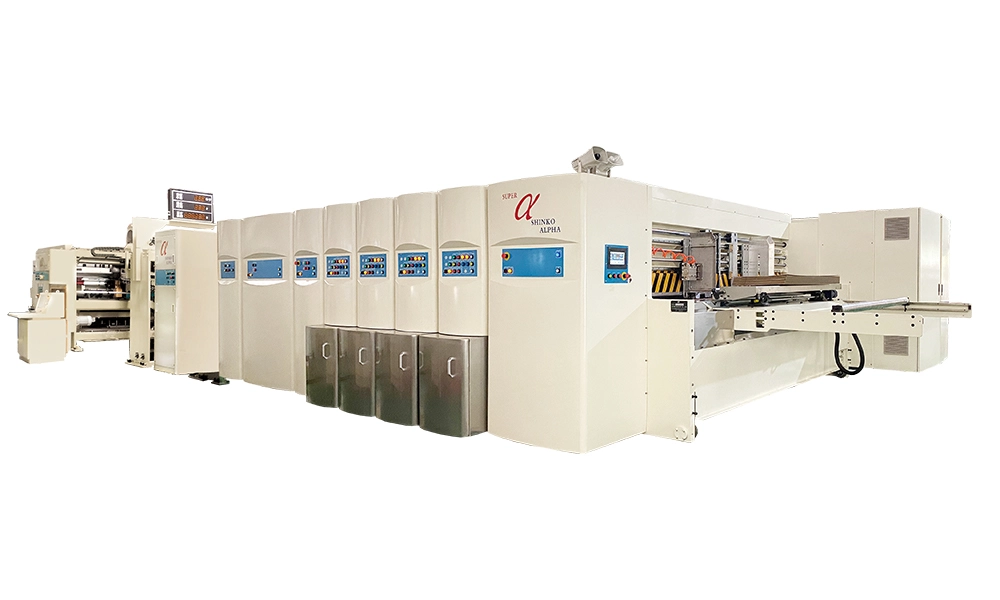
Shinko Super Alpha Movable Type Full Servo Drive Flexo Printing Slotting Die Cutting Inline Folding Gluing Counting Ejecting Machine
This state-of-the-art Movable Type Full Servo Drive Flexo Printing Slotting Die Cutting Machine streamlines your production with precision. Experience seamless operation with its Inline Folding Gluing Counting Ejecting capabilities, ensuring unparalleled efficiency. Designed for high-performance tasks, this Keshenglong&Shinko Super Alpha Movable Type Full Servo Drive Flexo Printing Slotting Die Cutting Inline Folding Gluing Counting Ejecting Machine enhances productivity while maintaining premium quality. Ideal for businesses seeking innovation and reliability, the Shinko Super Alpha is your go-to solution for advanced printing and cutting needs.


© 2025 Keshenglong & SHINKO All Rights Reserved.
Keshenglong Carton Packing Machine
Keshenglong Carton Packing Machine
Keshenglong Carton Packing Machine
Keshenglong Carton Packing Machine
Keshenglong Carton Packing Machine