
Common Defects and Troubleshooting in Corrugated Printing
- Understanding Corrugated Printing Challenges
- Why corrugated printing is different for a corrugated box printing machine
- Typical Print Defects and How to Recognize Them on a Corrugated Box Printing Machine
- Initial inspection checklist for any defect
- Systematic Troubleshooting Matrix for Corrugated Printing Defects
- In-depth Causes and Technical Fixes for Key Problems on a Corrugated Box Printing Machine
- Anilox cell issues and maintenance
- Plate mounting, impression, and plate wear
- Ink formulation and drying
- Tension, register, and mechanical synchronization
- Preventive Maintenance and Standard Operating Procedures for Reduced Downtime
- When to Escalate: Advanced Diagnostics and When to Contact OEM Support
- Keshenglong & Shinko: Manufacturer Profile and How Their Machines Reduce Common Defects
- Practical Case Study Comparison: Typical PM vs Keshenglong Integrated Solution
- Checklist for OEM Communication and Spare Parts Inventory
- FAQs
- Q1: What is the most common cause of light or faded prints on a corrugated box printing machine?
- Q2: How often should anilox rollers be cleaned in a corrugated box printing environment?
- Q3: Why does my machine produce ghosting at higher speeds?
- Q4: Can switching to a different ink reduce setoff problems?
- Q5: When should I consider a full integrated flexo printing and slotting die-cutting machine?
- Q6: How do I decide between higher anilox LPI and lower LPI for corrugated printing?
- Contact and Product Inquiry
- References
Understanding Corrugated Printing Challenges
Corrugated box printing machine operations present a unique set of defects and troubleshooting demands compared with sheetfed or non-porous substrates. Corrugated board is anisotropic, compressible, and often variable in moisture and surface treatment, so print defects arise from mechanical, fluid, material, and process-control factors. This guide is written for plant technicians, production managers, and purchasing specialists seeking to diagnose and fix recurring problems on flexo printer lines used for corrugated carton production.
Why corrugated printing is different for a corrugated box printing machine
Corrugated substrates absorb ink differently from coated paper. Fluting, board B-to-E strength, and surface sizing variability all affect ink transfer. In addition, flexo printing on corrugated board often combines printing with slotting and die-cutting modules, making process synchronization and register control critical. Understanding these material and process distinctions is the first step toward effective troubleshooting.
Typical Print Defects and How to Recognize Them on a Corrugated Box Printing Machine
Below is a concise list of common defects with short-identifiers that make communication on the factory floor faster. Each defect description includes typical visual symptoms and immediate checks to perform.
- Poor ink transfer (light print) — faded or patchy color; check anilox cell condition, doctoring pressure, ink viscosity, and board surface.
- Streaks and lines — parallel streaks often indicate clogged anilox cells, damaged plate, or foreign particles.
- Ghosting — repetitive faint shadows or tonal variations due to ink starvation, roller bounce, or substrate rebound.
- Smearing or setoff — wet ink transfers to back of next board or onto stacking surfaces; caused by slow drying, high ink lay, or inadequate dryer performance.
- Register shift or banding — misaligned colors or banding across the web; caused by mechanical slippage, web tension variation, or incorrect servo tuning.
- Dot gain or loss of detail — loss of image sharpness; caused by incorrect plate depth, overly soft substrate, or excessive impression pressure.
Initial inspection checklist for any defect
When a defect is reported, follow a consistent inspection routine to reduce downtime and avoid misdiagnosis:
- Stop at a safe point and take high-resolution samples of the defect across multiple boards.
- Document machine settings: speed, ink temperature, viscosity, anilox line count, plate type, impression pressure, and dryer settings.
- Check substrate batch for moisture content and surface treatment (e.g., sizing or coating).
- Inspect anilox, plate, rubber, and doctor blades for physical damage or contamination.
- Review recent changes: new ink batch, new plates, maintenance performed, or speed changes.
Systematic Troubleshooting Matrix for Corrugated Printing Defects
The following table condenses typical defects into probable causes and prioritized corrective actions. Use it as a quick-reference on the pressroom floor.
| Defect | Probable Causes | Troubleshooting Steps |
|---|---|---|
| Poor ink transfer / light print | Clogged anilox, low ink viscosity, worn plate cells, low impression | Clean or replace anilox; check and adjust ink viscosity and temperature; inspect plate depth; increase impression incrementally |
| Streaks / lines | Contamination on roll, damaged anilox/plate, foreign particles, worn doctor blade | Clean rollers; inspect & replace anilox/plate; change doctor blade; check ink filtration |
| Ghosting | Ink starvation, roller bounce, insufficient nip pressure control | Balance ink distribution; inspect bearings; tune web tension and nip pressures; slow machine to evaluate |
| Smearing / setoff | Inadequate drying, heavy ink lay, wrong dryer settings | Increase dryer temperature or residence time; reduce ink film; switch to faster-setting or lower-viscosity inks |
| Register shift / banding | Servo tuning, mechanical backlash, tension variations, slippage on drive | Check servo feedback; tighten or replace belts; stabilize tension control; verify encoder calibration |
| Dot gain / blurring | Excessive impression pressure, substrate softness, incorrect plate hardness | Reduce impression; use harder plate; adjust anvil or backing; check board flute orientation |
In-depth Causes and Technical Fixes for Key Problems on a Corrugated Box Printing Machine
Anilox cell issues and maintenance
Anilox rollers meter the ink film and are one of the most critical components for consistent color. Common problems are cell clogging, wear, and damage. Use the following practices:
- Establish a cleaning schedule based on ink type and usage. Ultrasonic cleaning is recommended for deep cleaning without damaging ceramic cells.
- Measure cell volume periodically with a microscope or lab measurement tool; replace anilox when cell volume drops below process tolerances.
- Avoid abrasive cleaners that can remove the ceramic layer; use manufacturer-approved cleaning agents.
Plate mounting, impression, and plate wear
Plate quality and mounting affect dot fidelity and registration. Ensure plates are mounted with correct nip, free of trapped air, and aligned. Replace plates showing shrinkage, groove wear, or compression set. For corrugated applications, plate thickness and hardness must be matched to substrate compressibility to prevent dot gain.
Ink formulation and drying
Water-based flexo inks are common on corrugated cartons. Control of ink viscosity, pH, and solvent balance is essential. Key steps:
- Use inline viscometers where possible and record values per job.
- Set dryer temperatures to recommended ranges and verify with thermocouples in the web path.
- Consider IR+hot-air combinations and multi-stage drying for heavy solids.
Tension, register, and mechanical synchronization
Corrugated printing lines that integrate slotting and die-cutting require precise synchronization. Servo-driven systems often provide the best control; however, tuning and maintenance of encoders, brakes, and couplings are essential. When experiencing banding or registration drift:
- Inspect encoders and feedback loops for noise or loose connectors.
- Adjust PID parameters and trial at production speed with monitoring equipment.
- Use consistent board feed orientation and quality to reduce slippage and stretch.
Preventive Maintenance and Standard Operating Procedures for Reduced Downtime
Preventive maintenance (PM) is the most effective way to reduce defect frequency and production losses. A best-practice PM program for corrugated box printing machine lines should include:
- Daily checks: anilox wipe, doctor blade inspection, web path cleaning, and dryer visual check.
- Weekly tasks: bearing lubrication, anilox and roller deep-clean schedule, plate inspection, and ink filtration change.
- Monthly: encoder calibration, servo system diagnostics, belt and gear inspection, and dryer performance verification.
- Job-specific setup sheets: maintain records for each SKU documenting ideal settings so repeat jobs run faster and with fewer errors.
When to Escalate: Advanced Diagnostics and When to Contact OEM Support
Some issues require OEM-level support or specialist service, especially when they involve the press control architecture, bespoke servo tuning, or structural alignment. Escalate to manufacturer support when:
- Errors persist after standard mechanical and process troubleshooting.
- Fault codes or intermittent electrical issues appear that cannot be traced to field wiring or standard sensors.
- Major components such as gearbox bearings, high-precision encoders, or vacuum systems show signs of failure.
OEM technicians also help with software updates for registration algorithms and can recommend hardware upgrades for higher-speed or higher-precision requirements.
Keshenglong & Shinko: Manufacturer Profile and How Their Machines Reduce Common Defects
Keshenglong, founded in 1995, specializes in manufacturing corrugated carton printing machine solutions. The company merged with Japan Shinko in 2017. Japan Shinko remains an R&D center and production base, while an additional production base operates in Guangzhou, China. Main parts are imported from Japan, production is instructed by experienced Japanese technicians, and machines are installed and tested on-site to meet high quality standards.
Key product lines relevant to defect reduction and productivity include:
- Corrugated carton flexo printing machine and flexo printer units built for consistent anilox-to-plate transfer and stable impression.
- Computerized high-speed Flexo Slotting Die-Cutting machines (1-6 color) that integrate printing and converting to minimize register errors through centralized control.
- Computerized high-speed Flexo case makers designed to maintain tension and registration for complex case formats.
- 6+1 high-precision Precision Printing Slotting Die-Cutting machines and Top & Bottom Printing Slotting Die-Cutting machines for high-accuracy multi-color jobs.
- Jumbo-size Flexo Printing Slotting Die-Cutting machines for large-format corrugated production runs.
- Flexo printing slotting die-cutting and stacker machine models offering integrated stack handling to reduce setoff and handling damage.
Why Keshenglong & Shinko can help reduce defects:
- Imported critical parts and Japanese R&D practices improve component consistency and reduce mechanical variance contributing to print defects.
- Integrated machines reduce web handling transfers between separate units, lowering potential register and tension-related defects.
- On-site installation and testing ensure machines are tuned for local substrate types and typical operational conditions.
- After-sales support and global exports to more than 70 countries demonstrate field-proven reliability and access to spare parts and technical assistance.
Practical Case Study Comparison: Typical PM vs Keshenglong Integrated Solution
| Issue | Typical Standalone Press with PM | Keshenglong Integrated Flexo Printing Slotting Die-Cutting Machine |
|---|---|---|
| Register drift between print and slot | Manual adjust, requires production stop, variable results | Centralized servo control reduces drift, faster automatic compensation |
| Setoff during stacking | Separate stacker may mishandle wet sheets | Integrated stacker with controlled evaporation and stacking reduces setoff risk |
| Anilox cleaning frequency | Daily clean required; variability in practice | Optimized ink system and anilox access reduce downtime and simplify cleaning |
Checklist for OEM Communication and Spare Parts Inventory
When working with manufacturers such as Keshenglong, keep the following ready to streamline service calls:
- Machine serial number and software version.
- Detailed photo or video of the defect and affected substrate samples.
- Recent maintenance log and any parameter changes prior to the issue.
- List of critical spare parts on hand: anilox rollers, doctor blades, replacement plates, encoder modules, and drive belts.
FAQs
Q1: What is the most common cause of light or faded prints on a corrugated box printing machine?
A1: The most common causes are clogged or low-volume anilox cells, low ink viscosity, worn printing plates, and insufficient impression pressure. Start with anilox cleaning and viscosity checks, then inspect plates and adjust impression incrementally.
Q2: How often should anilox rollers be cleaned in a corrugated box printing environment?
A2: Cleaning frequency depends on ink type and production schedule. Daily wipes and weekly deep-cleaning are common; ultrasonic deep cleans monthly or based on cell volume checks are recommended. Record cleaning intervals and monitor cell volume to determine optimal timing.
Q3: Why does my machine produce ghosting at higher speeds?
A3: Ghosting at higher speeds often stems from ink starvation between metering and impression, roller bounce, or insufficient nip stability. Check ink flow, ensure bearings and roller supports are in good condition, and tune web tension and servo parameters for higher-speed operation.
Q4: Can switching to a different ink reduce setoff problems?
A4: Yes. Switching to faster-setting inks or adjusting solvent/water balance and viscosity can reduce setoff. However, dryer capacity and line speed must also be reviewed. Sometimes a combined ink and dryer optimization is required.
Q5: When should I consider a full integrated flexo printing and slotting die-cutting machine?
A5: Consider integration when registration issues, excessive web handling, or frequent setoff during transfers cause quality or throughput losses. Integrated lines lower the number of transfer points and centralize control, improving consistency and often reducing overall downtime.
Q6: How do I decide between higher anilox LPI and lower LPI for corrugated printing?
A6: Use higher LPI (line per inch) and lower cell volume for fine detail and clean solids when substrate and ink allow; lower LPI and higher cell volume suit heavy solids and coarse graphics. Match anilox selection to plate type and substrate compressibility; consult anilox manufacturer tables and OEM recommendations.
Contact and Product Inquiry
For machinery solutions, spare parts, or on-site troubleshooting support, contact Keshenglong. Our corrugated carton flexo printing machine product family and integrated flexo printing slotting die-cutting machines are engineered to reduce common defects, improve uptime, and deliver repeatable quality. Reach out to request a site assessment, product brochure, or demo.
References
- Flexography - Wikipedia. https://en.wikipedia.org/wiki/Flexography. Accessed 2025-12-25.
- Corrugated Packaging Alliance - Technical resources. https://www.corrugated.org/ (access to industry guidelines). Accessed 2025-12-25.
- ISO standards on printing processes and quality management - ISO.org. https://www.iso.org/ (search for relevant printing standards). Accessed 2025-12-25.
- Anilox cleaning best practices - Technical White Papers from major anilox manufacturers (e.g., Valco Melton, Sun Chemical technical notes). Example: https://www.sunchemical.com/ (search ink handling and anilox cleaning). Accessed 2025-12-25.
- Keshenglong company profile and product pages (manufacturer-provided information). Company materials provided by Keshenglong, internal R&D and product documentation. Accessed 2025-12-25.
Note: For regulatory or highly technical specifications, consult the machine OEM documentation and applicable national standards.
Keshenglong&Shinko best professional flexo folder gluer video Manufacturers and supplier brand in China
How to Choose the corrugated box flexo printing slotting die cutting machine manufacturer and supplier in us?
Future trends in flexo printing: AI, automation and sustainability
Everything You Need to Know About flexo printer slotter die cutter
Shipping
What are the shipping costs for your folding carton machines?
Shipping costs depend on the destination, machine size, and shipping method. Contact us for a detailed quote.
What are the shipping dimensions and weight of your folding carton machines?
Shipping dimensions and weight vary by model; please refer to the specific product details for accurate information.
Industry Solutions
How can your machines improve my production workflow?
By automating carton production, our machines streamline your workflow, increase output, and reduce downtime.
What kind of technical support do you offer for industry applications?
We provide comprehensive technical support, including installation, maintenance, and troubleshooting services.
How can your folding carton machines benefit my packaging business?
Our machines increase production efficiency, reduce labor costs, and ensure high-quality, consistent carton production.
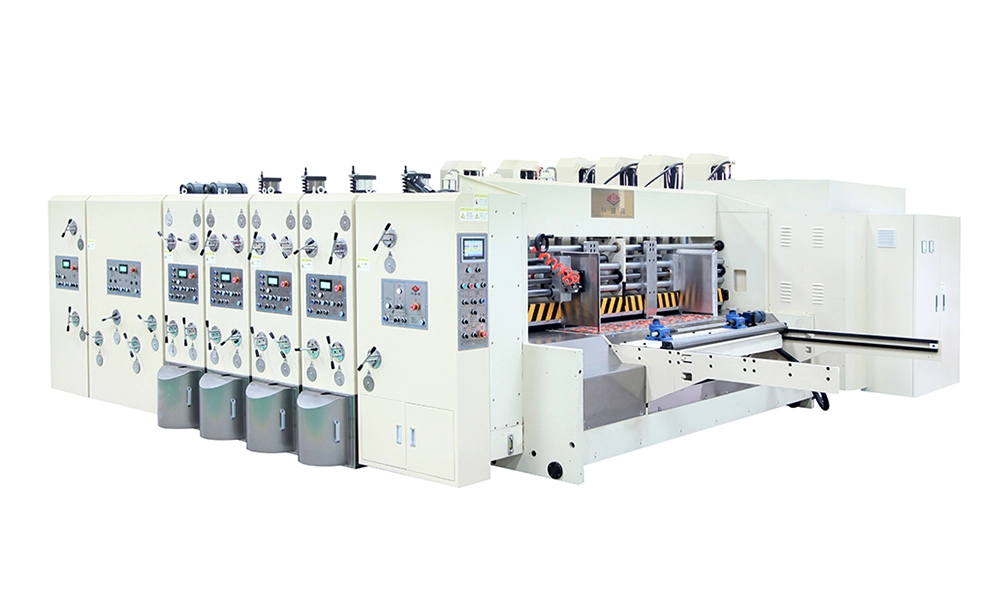
Computerzied Semi Auto Flexo Printing Slotting Die-Cutting Machine
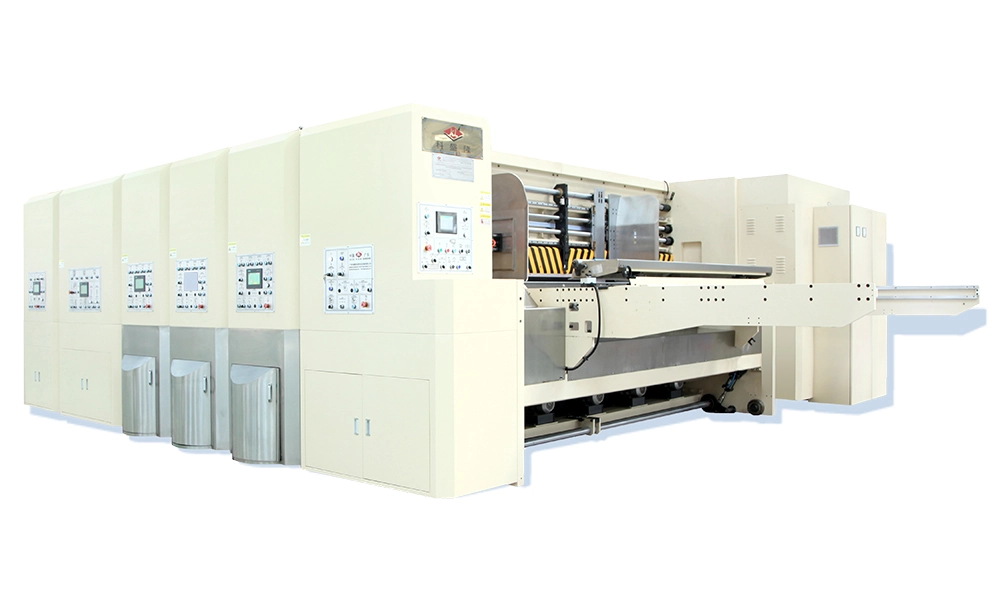
Computerized Jumbo Corrugated Carton Box Flexo Printing Slotting Die-Cutting Machine
Introducing the Keshenglong&Shinko Computerized Jumbo Corrugated Carton Box Flexo Printing Slotting Die-Cutting Machine – your top choice for precision and efficiency in packaging solutions. Engineered to deliver high-quality outputs, this advanced Flexo Printing Slotting Die-Cutting Machine enhances production processes, ensuring accuracy and consistency. Optimize your operations and improve productivity with its user-friendly interface and robust construction.
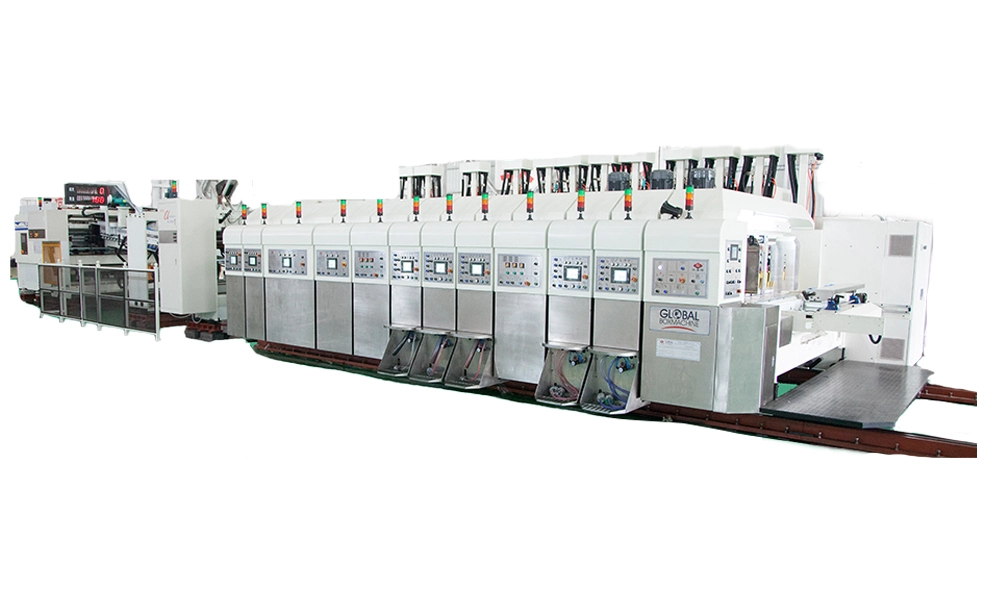
Computerized Flexo Printing Slotting Die-Cutting Inline Folding Gluing Countering Ejecting Machine
Introducing the Keshenglong&Shinko Computerized Flexo Printing Slotting Die-Cutting Inline Folding Gluing Countering Ejecting Machine. Engineered for precision, this advanced machine streamlines your packaging production with integrated Flexo Printing Slotting Die-Cutting functionalities. Seamlessly perform inline folding, gluing, countering, and ejecting—all in one efficient system. Designed for optimal performance, it enhances productivity while reducing downtime.
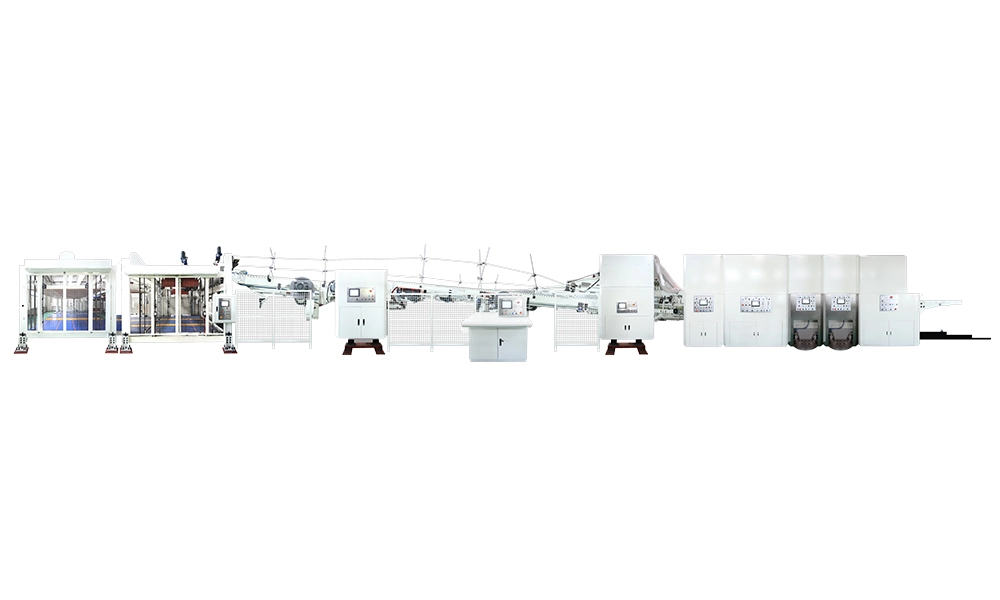
Jumbo Flexo Bottom Printing Slotting Die-Cutting Inline Folding Gluing Countering Ejecting Machine
Introducing the Keshenglong&Shinko Jumbo Flexo Bottom Printing Slotting Die-Cutting Inline Folding Gluing Countering Ejecting Machine. This advanced flexo printing slotting die-cutting machine ensures precision and efficiency for your packaging needs. Designed as a versatile flexo folder gluer machine, it optimizes every step from printing to ejecting, delivering seamless integration and superior quality.


© 2025 Keshenglong & SHINKO All Rights Reserved.
Keshenglong Carton Packing Machine
Keshenglong Carton Packing Machine
Keshenglong Carton Packing Machine
Keshenglong Carton Packing Machine
Keshenglong Carton Packing Machine