
Flexo Printer Maintenance Checklist to Reduce Downtime
- Understanding Common Causes of Flexo Downtime
- Typical failure modes in flexo press systems
- Why downtime matters: OEE and production impact
- Root-cause patterns specific to corrugated carton flexo printing
- Practical Maintenance Checklist (Daily to Annual)
- Daily operator checks (5–15 minutes)
- Weekly preventive tasks
- Monthly and quarterly inspections
- Annual overhaul and spare parts review
- Troubleshooting Flows and Predictive Techniques
- Structured troubleshooting: a decision-tree approach
- Using predictive maintenance and condition monitoring
- Data-driven KPIs to track maintenance effectiveness
- Maintenance Strategy Comparison and Spare Parts Planning
- Comparing reactive, preventive, and predictive maintenance
- Spare parts strategy (critical spares and stocking levels)
- Cost-benefit approach to maintenance investments
- Keshenglong & Shinko: Integrated Solutions and Service Advantages
- Company overview and manufacturing strengths
- Technical advantages and competitive differentiators
- Service, parts, and aftermarket support
- Implementing the Checklist: Site Rollout and Training
- Operator empowerment and skill development
- Documentation, logs, and continuous improvement
- Sample quick-start implementation plan (90 days)
- FAQ — Common Questions About Flexo Printer Maintenance
- 1. How often should anilox rolls be cleaned or reconditioned?
- 2. What are the fastest ways to reduce registration-related downtime?
- 3. Which spare parts are critical to keep on hand for a flexo printer machine?
- 4. Can predictive maintenance be retrofitted to older flexo presses?
- 5. How should maintenance tasks be prioritized during short production windows?
- 6. What documentation or standards should guide a flexo maintenance program?
Summary for : This article outlines a practical, field-tested maintenance checklist for a flexo printer machine to reduce downtime, improve OEE, and protect print quality. It covers daily, weekly, monthly and annual tasks, predictive-monitoring recommendations, spare-part strategies, and troubleshooting flows designed for corrugated carton flexo printing applications. Actionable steps are suitable for floor operators, maintenance teams, and plant managers focused on minimizing production interruptions and maximizing throughput.
Understanding Common Causes of Flexo Downtime
Typical failure modes in flexo press systems
Flexo press downtime often originates from mechanical wear, plate or anilox issues, ink/system contamination, incorrect press settings, electrical/control failures, and human error. For corrugated carton flexo printing, common pain points include web handling issues (skew, tracking), anilox roll damage or contamination, and registration drift from cylinder wear or gearbox backlash.
Why downtime matters: OEE and production impact
Unplanned downtime reduces machine availability and overall equipment effectiveness (OEE). Improving maintenance can directly increase availability and reduce scrap. For background on OEE and its role in manufacturing performance, see the Wikipedia overview on Overall Equipment Effectiveness: https://en.wikipedia.org/wiki/Overall_equipment_effectiveness.
Root-cause patterns specific to corrugated carton flexo printing
Corrugated applications experience additional challenges: variable board properties, high web tension, dust from corrugated fluting, and heavy inks. These factors accelerate wear on bearings, gears, and ink system seals. A checklist that targets these areas prevents many repeat stoppages.
Practical Maintenance Checklist (Daily to Annual)
Daily operator checks (5–15 minutes)
- Startup warm-up and visual inspection: check for leaks (ink, hydraulic), unusual noises, and oil levels.
- Web path and tension: confirm proper tracking, tension gauges in range, and no material debris.
- Clean anilox contact areas and wiping systems as per ink type—avoid abrasive cleaning methods that damage engraved cells.
- Quick registration check: print a short test and confirm color registration and print quality.
Weekly preventive tasks
- Lubrication points: follow OEM lubrication schedule; inspect bearings and chains for slack or contamination.
- Inspect drive belts, couplings, and shafts for wear and alignment; tighten fasteners to torque specs.
- Clean ink fountains, doctor blades, and filters; replace disposable filters.
- Calibrate tension and registration sensors as necessary.
Monthly and quarterly inspections
- Anilox roll inspection: check cell condition under magnification or use a cell-count profile scan; clean or recondition as needed.
- Roller and cylinder runout and surface condition checks; measure with dial indicator where applicable.
- Electrical cabinet inspection: verify cooling, clean dust, check connectors, and review fault logs from PLC/HMI.
- Hydraulic and pneumatic system checks: filter changes, leak tests, and pressure verification.
Annual overhaul and spare parts review
- Comprehensive gearbox & bearing inspection; oil analysis and replacement if contaminants detected.
- Replace wear parts: doctor blades, seals, gaskets, straps, and drive belts on schedule.
- Review spare parts inventory and lead times—critical for long lead items like custom cylinders or gearboxes.
- Operator and technician refresher training, focusing on common root causes and preventive tasks.
Troubleshooting Flows and Predictive Techniques
Structured troubleshooting: a decision-tree approach
Create simple flowcharts for frequent stoppages. Example: if registration drift occurs, verify (1) web tension, (2) plate mounting & cylinder runout, (3) servo/drive alarms, (4) mechanical backlash. This reduces diagnosis time and avoids unnecessary parts replacement.
Using predictive maintenance and condition monitoring
Predictive maintenance (PdM) techniques—vibration analysis, oil analysis, thermal imaging, and sensor-based condition monitoring—can identify problems before failure. For an introduction to predictive maintenance concepts, see https://en.wikipedia.org/wiki/Predictive_maintenance. Many plants achieve measurable uptime improvements by integrating simple PdM tools with operator rounds.
Data-driven KPIs to track maintenance effectiveness
Focus on measurable KPIs: Mean Time Between Failures (MTBF), Mean Time To Repair (MTTR), downtime minutes per shift, and first-time-fix rate. Tracking these over time validates the maintenance program and justifies investments in spare parts and sensors.
Maintenance Strategy Comparison and Spare Parts Planning
Comparing reactive, preventive, and predictive maintenance
Below is a concise comparison to help decide resource allocation. Sources for maintenance strategy definitions: Preventive maintenance - Wikipedia and Predictive maintenance - Wikipedia.
| Strategy | Downtime Risk | Cost Profile | Implementation Complexity | Best for |
|---|---|---|---|---|
| Reactive (run-to-failure) | High | Low short-term, high long-term due to emergency repairs | Low | Non-critical machines with low production impact |
| Preventive (time-based) | Medium | Predictable maintenance costs; moderate spare parts use | Medium | Critical production equipment with known wear patterns |
| Predictive (condition-based) | Low | Higher upfront sensor/analytics cost, lower downtime cost | High | High-throughput, high-value assets (e.g., corrugated flexo lines) |
Use this comparison to justify moving critical flexo lines toward predictive methods—especially where a single stoppage costs thousands in lost production and extra setup time.
Spare parts strategy (critical spares and stocking levels)
Develop a critical-spare parts list for the flexo printer machine, including: drive belts, bearings, hydraulic seals, doctor blades, anilox reconditioning options, and PLC/servo spare modules if downtime cost justifies stocking. Use an ABC analysis (high, medium, low criticality) to set stocking levels and preferred suppliers to reduce lead times.
Cost-benefit approach to maintenance investments
When proposing investments (e.g., vibration sensors or anilox inspection equipment), calculate potential reduction in downtime and scrap, then compare against purchase and labor costs. Document baseline KPIs (current MTTR, downtime hours) to show ROI. Even modest reductions in unplanned downtime can pay back sensors within months on high-volume lines.
Keshenglong & Shinko: Integrated Solutions and Service Advantages
Company overview and manufacturing strengths
Keshenglong (founded in 1995) is a leading manufacturer in China specializing in corrugated carton printing and packaging machinery. Their main products include corrugated carton flexo printing machine, flexo printing slotting die-cutting machine, flexo printing slotting die-cutting and stacker machine, flexo printer, and corrugated box printing machine. Merged into Keshenglong in 2017, Japan Shinko has been retained as the R&D center and production base, with an additional production base in Guangzhou, China. Many main parts are imported from Japan, and machines are installed and tested on-site under guidance from experienced Japanese technicians to ensure consistent quality with Japan Shinko standards.
Technical advantages and competitive differentiators
Keshenglong/Shinko emphasizes integrated intelligent packaging solutions with technologies suited for high-speed flexo printing slotting die-cutting lines. Key differentiators include:
- Japanese-guided R&D and production processes for precision and reliability.
- Imported critical components for long-life performance on high-throughput corrugated lines.
- Comprehensive product range from single-color flexo printers to high-precision 6+1 systems and jumbo-size integrations.
- Global export footprint: products shipped to more than 70 countries, indicating field-proven designs and international service capability.
Service, parts, and aftermarket support
Keshenglong provides installation, commissioning, and on-site testing with Japanese-trained technicians. Their after-sales network and supplied spare parts strategy reduce lead times and help customers implement the maintenance checklists described earlier. For inquiries or technical support, contact: kl@keshenglong.com.cn
Implementing the Checklist: Site Rollout and Training
Operator empowerment and skill development
Train operators to perform first-line checks and to use simple PdM tools (e.g., contact thermometers, vibration handhelds). Empowering operators reduces minor stoppages and ensures issues are reported early.
Documentation, logs, and continuous improvement
Maintain digital logs for downtime events, repairs, and parts used. Use these records to perform monthly reviews that feed into continuous-improvement (CI) actions. Simple CMMS (Computerized Maintenance Management System) implementations often pay back via reduced stockouts and improved planning.
Sample quick-start implementation plan (90 days)
- Days 0–14: Baseline current downtime and MTTR; create tailored checklists for each shift.
- Days 15–45: Train operators and technicians on new checklists; implement daily and weekly routines.
- Days 46–90: Add targeted PdM (e.g., vibration checks) and optimize spare-part stocking based on data.
FAQ — Common Questions About Flexo Printer Maintenance
1. How often should anilox rolls be cleaned or reconditioned?
Anilox cleaning frequency depends on ink type (water-based vs. solvent), production cycles, and board dust. For corrugated carton flexo printing, perform light cleaning daily and full ultrasonic or chemical cleaning monthly or when cell-fill-related defects appear. Regular inspection under magnification helps determine the appropriate schedule.
2. What are the fastest ways to reduce registration-related downtime?
Ensure correct plate mounting, check cylinder runout, verify servo tuning, and maintain consistent web tension. Standardized job presets and operator training on quick checks reduce setup time and registration drift.
3. Which spare parts are critical to keep on hand for a flexo printer machine?
Critical spares include bearings, drive belts, doctor blades, anilox reconditioning arrangements, seals, and common electrical modules (PLC/servo). Perform an ABC analysis to prioritize spending based on downtime cost when the part is unavailable.
4. Can predictive maintenance be retrofitted to older flexo presses?
Yes. Many PdM sensors (vibration sensors, temperature sensors, current-monitoring clamps) can be retrofitted without major modifications. Start with one or two critical measurement points to validate value before scaling up.
5. How should maintenance tasks be prioritized during short production windows?
Prioritize tasks that directly prevent unplanned stoppages: lubrication, web-path cleaning, and quick inspection of drive components. Schedule more invasive preventive or predictive checks during planned maintenance windows or low-production periods.
6. What documentation or standards should guide a flexo maintenance program?
Use manufacturer manuals as the primary reference, supplemented by general standards for maintenance planning and quality such as ISO 9001 for process control and documented procedures. For preventive maintenance concepts, see: Preventive maintenance - Wikipedia.
Contact & Product Inquiry: For integrated corrugated carton flexo printing solutions, machine specifications, or aftermarket support, visit Keshenglong & Shinko: https://www.shinkomachinery.com/ or email kl@keshenglong.com.cn. Keshenglong offers a full range of corrugated carton flexo printing machine, flexo printing slotting die-cutting machine, flexo printing slotting die-cutting and stacker machine, and flexo printing slotting die-cutting machines with proven installation and Japanese-guided quality control.
Implementing the checklist and strategies above will reduce unplanned downtime, improve print consistency for corrugated carton jobs, and increase return on investment from your flexo printer machine. Start small, measure results, and scale predictive tools where they show clear impact.
Top 5 flexo printing Company List and Products Compared
UV vs water-based flexo inks: Performance comparison
Tips for Wholesale flexo printer slotter die cutter carton box
Top 10 flexo printing Manufacturers and Supplier Brands
Industry Solutions
Do you offer solutions for environmentally friendly packaging?
Yes, our machines can produce cartons from recyclable and biodegradable materials, supporting sustainable packaging solutions.
What kind of technical support do you offer for industry applications?
We provide comprehensive technical support, including installation, maintenance, and troubleshooting services.
Do you offer customized solutions for unique production needs?
Yes, we work closely with clients to develop customized solutions that meet their specific production requirements.
How can your folding carton machines benefit my packaging business?
Our machines increase production efficiency, reduce labor costs, and ensure high-quality, consistent carton production.
Product
What is the maximum speed of your folding carton machines?
Our machines can operate at speeds of up to 150 cartons per minute, depending on the model and carton complexity.
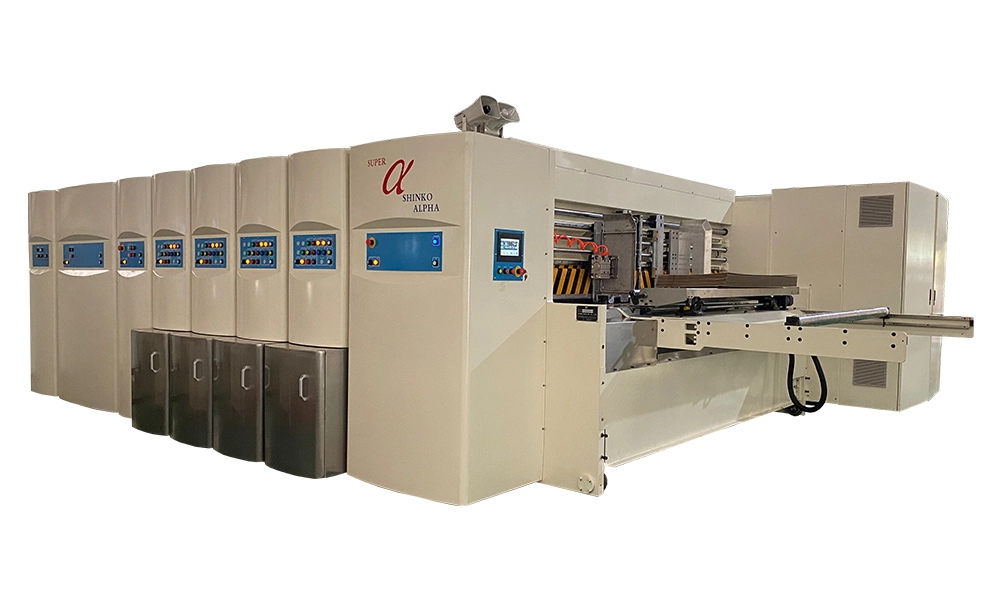
Shinko Super Alpha Movable Type Full Servo Drive Flexo Printing Slotting Die Cutting Machine
Introducing the Shinko Super Alpha Movable Type Full Servo Drive Flexo Printing Slotting Die Cutting Machine by Keshenglong. Engineered for precision and efficiency, this state-of-the-art machine enhances your production line with its advanced servo drive technology. Designed for seamless Flexo printing, slotting, and die-cutting, it ensures superior quality with every output.
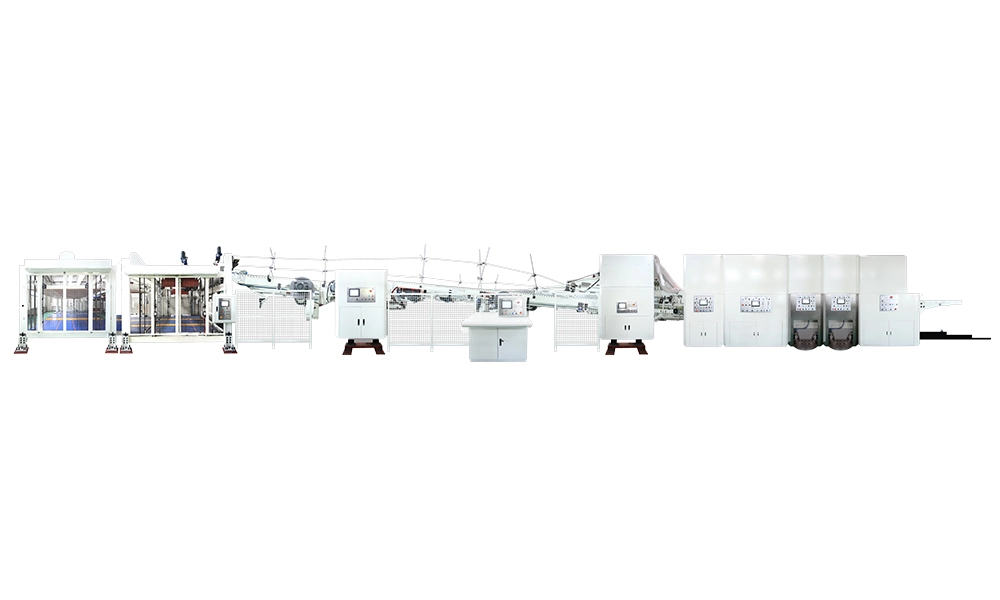
Jumbo Flexo Bottom Printing Slotting Die-Cutting Inline Folding Gluing Countering Ejecting Machine
Introducing the Keshenglong&Shinko Jumbo Flexo Bottom Printing Slotting Die-Cutting Inline Folding Gluing Countering Ejecting Machine. This advanced flexo printing slotting die-cutting machine ensures precision and efficiency for your packaging needs. Designed as a versatile flexo folder gluer machine, it optimizes every step from printing to ejecting, delivering seamless integration and superior quality.
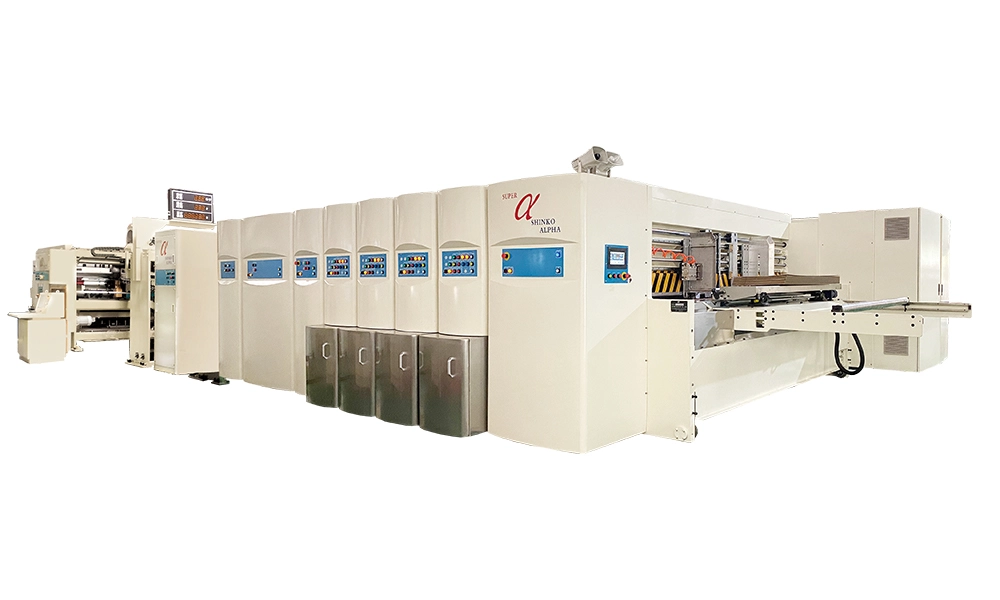
Shinko Super Alpha Movable Type Full Servo Drive Flexo Printing Slotting Die Cutting Inline Folding Gluing Counting Ejecting Machine
This state-of-the-art Movable Type Full Servo Drive Flexo Printing Slotting Die Cutting Machine streamlines your production with precision. Experience seamless operation with its Inline Folding Gluing Counting Ejecting capabilities, ensuring unparalleled efficiency. Designed for high-performance tasks, this Keshenglong&Shinko Super Alpha Movable Type Full Servo Drive Flexo Printing Slotting Die Cutting Inline Folding Gluing Counting Ejecting Machine enhances productivity while maintaining premium quality. Ideal for businesses seeking innovation and reliability, the Shinko Super Alpha is your go-to solution for advanced printing and cutting needs.
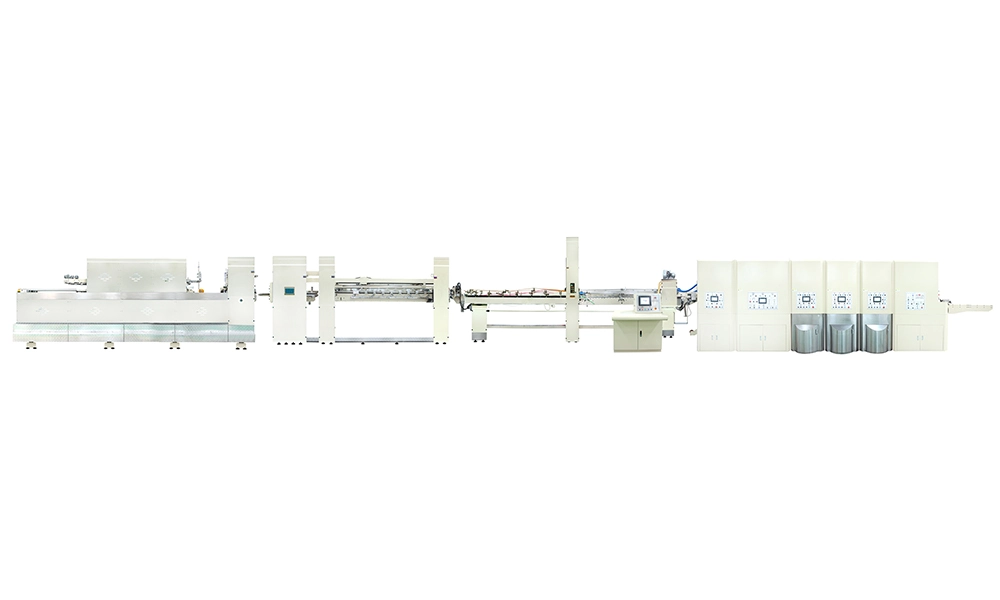
Computerized Flexo Printing Slotting Die-Cutting Inline Folding Gluing and Stitching Machine
Introducing the Keshenglong&Shinko Computerized Flexo Printing Slotting Die-Cutting Inline Folding Gluing and Stitching Machine, a pinnacle of precision and efficiency. This state-of-the-art machine revolutionizes packaging production with seamless integration of printing, slotting, die-cutting, folding, gluing, and stitching. Designed to optimize your workflow, the Computerized Flexo Printing Slotting Die-Cutting Machine enhances accuracy and productivity.


© 2025 Keshenglong & SHINKO All Rights Reserved.
Keshenglong Carton Packing Machine
Keshenglong Carton Packing Machine
Keshenglong Carton Packing Machine
Keshenglong Carton Packing Machine
Keshenglong Carton Packing Machine