
UV vs water-based flexo inks: Performance comparison
- Choosing the Right Ink for Your Flexo Printer: Key Considerations
- Understanding UV and Water-Based Ink Chemistry (flexo printer)
- How UV and Water-Based Inks Perform on Corrugated Substrates (flexo printer)
- Production Efficiency: Speed, Curing, and Pressroom Layout (flexo printer)
- Print Quality: Color Gamut, Dot Reproduction, and Finish (flexo printer)
- Environmental, Health and Regulatory Considerations (flexo printer)
- Operational Costs and Total Cost of Ownership for a Flexo Printer (flexo printer)
- Which Ink Suits Your Market? Use Cases and Decision Matrix (flexo printer)
- Keshenglong & Shinko: Integrated Solutions for Corrugated Flexo Printers (flexo printer)
- How Keshenglong machines support UV and water-based flexo printer configurations
- Conclusion and Practical Recommendations (flexo printer)
- FAQ (Frequently Asked Questions)
- 1. Can I run both UV and water-based inks on the same flexo printer?
- 2. Are UV inks safe for food-contact corrugated packaging?
- 3. Which ink has lower operating energy costs: UV or water-based?
- 4. How do ink choices affect press speed?
- 5. What maintenance differences should I expect between UV and water-based systems?
- 6. How should converters validate a change from water-based to UV inks?
- References
Choosing the Right Ink for Your Flexo Printer: Key Considerations
When selecting ink systems for a flexo printer, manufacturers must balance print quality, production throughput, substrate compatibility, environmental compliance, and total cost of ownership. This article compares two widely used ink technologies—UV-curable and water-based—focused on real-world performance on corrugated and paperboard packaging. The goal is to give printing managers, packaging engineers, and procurement teams actionable guidance to optimize their flexo printer operations.
Understanding UV and Water-Based Ink Chemistry (flexo printer)
UV-curable inks are formulated from oligomers, monomers and photoinitiators that polymerize rapidly when exposed to ultraviolet light. Curing is essentially a chemical conversion from liquid to solid by crosslinking, producing dry, robust films almost instantly at the point of cure. Water-based inks rely on water as the primary carrier; film formation occurs through water evaporation and coalescence of binders (resins). The mechanisms produce different handling, drying/curing needs and material properties.
How UV and Water-Based Inks Perform on Corrugated Substrates (flexo printer)
Corrugated board (single-face, double-wall, and linerboards) is a dominant substrate for flexo printers in packaging. The table below summarizes key performance attributes that affect real-world corrugated printing.
| Performance Metric | UV Inks | Water-Based Inks |
|---|---|---|
| Drying/Curing Time | Instant (<1 sec) via UV lamps; allows very high press speeds | Drying via hot-air/IR ovens; requires dwell time and effective ventilation |
| Substrate Penetration & Absorption | Low penetration; sits on surface—good for high-opacity jobs but may reduce adhesion on highly porous corrugated without surface treatment | Designed for porosity; can penetrate fibers for good adhesion on uncoated corrugated |
| Print Quality (dot gain, sharpness) | Excellent dot stability, high gloss, tight trap; better for vibrant, high-resolution graphics | Improving but typically more dot gain on rough corrugated; matte finish common |
| Adhesion & Rub Resistance | High abrasion and chemical resistance after cure; excellent for demanding logistic handling | Good to very good with correct formulation; may require post-treatment or coatings for heavy-duty use |
| Press Speed Potential | Very high—limited by mechanical handling, not drying | Moderate—oven length and ventilation are limiting factors |
| Environmental / VOC Profile | Low VOC vs solvent inks; contains reactive monomers—worker safety and migration must be managed | Very low VOC; considered more favorable for food-contact packaging after appropriate formulation |
| Initial Equipment Cost | Higher: requires UV lamps (LED or mercury), safety enclosures, and electrical capacity | Lower: requires dryer systems (hot air/IR) and humidification/ventilation; simpler electrical needs |
| Operational Complexity | Requires UV safety and maintenance (lamp aging, reflectors); formulations can be sensitive to oxygen inhibition unless LED/controlled atmosphere used | Requires moisture and oven control; risk of clogging/anilox buildup if not maintained |
Data sources: industry technical guides and supplier datasheets (references listed below).
Production Efficiency: Speed, Curing, and Pressroom Layout (flexo printer)
For packaging converters chasing throughput, curing method dictates press layout. UV curing eliminates long oven sections and large dryer footprints, enabling compact, high-speed lines and fewer turns to prevent setoff. In practice, UV-equipped flexo printers can run at higher linear speeds (subject to substrate handling constraints). Water-based systems require longer dryer zones, energy for hot air and infrared, and attention to humidity control to avoid slow drying or tacky boards.
Print Quality: Color Gamut, Dot Reproduction, and Finish (flexo printer)
UV inks deliver higher gloss and often wider color gamut due to denser pigment packing and lack of vehicle absorption. Tight dot gain and better trapping are advantages for decorated folding cartons and high-end graphics. Water-based systems have closed the gap—modern formulations and anilox engineering improve detail reproduction—but on coarse corrugated liners UV often gives crisper visuals.
Environmental, Health and Regulatory Considerations (flexo printer)
Environmental performance is a key driver. Compared to solvent-based inks, both UV and water-based inks offer low VOC emissions; however, the regulatory and safety profiles differ:
- Water-based inks: low VOC, perceived favorable for food-contact packaging after appropriate testing and migration controls; require wastewater/ventilation management for dryers.
- UV inks: very low or negligible VOCs, but contain reactive components and photoinitiators—worker exposure (skin, inhalation) and potential migration of residual monomers must be managed. UV LED inks reduce ozone and heat generation compared with older mercury lamps.
Regulatory bodies (e.g., EU regulations on food contact, national labor safety rules) and customer expectations often determine permissible systems. Always verify specific ink migration declarations and compliance certificates for food-contact use.
Operational Costs and Total Cost of Ownership for a Flexo Printer (flexo printer)
Comparing ink cost per kilo alone is misleading. Consider the total cost of ownership (TCO): ink cost, press speed (throughput), energy consumption, maintenance, consumables (anilox cleaning, lamps), waste/reject rates, and packaging certification costs. Typical patterns observed in industry case studies:
- UV systems: higher capex, potentially lower waste and higher throughput—leading to favorable TCO on long runs and High Quality graphics work.
- Water-based systems: lower capex, lower consumable cost in some cases, but potentially higher space and energy use for drying—well suited to high-volume corrugated preprint with moderate graphics.
Which Ink Suits Your Market? Use Cases and Decision Matrix (flexo printer)
Use the following decision matrix to match ink technology to market requirements.
| Market Need | Recommended Ink System | Why (short rationale) |
|---|---|---|
| High-end retail packaging, sharp graphics, short lead times | UV | Instant cure, superior gloss and color fidelity; supports high-speed finishing |
| Large-volume corrugated shipping boxes, cost-sensitive | Water-based | Good adhesion on porous liners, lower capital cost, established for corrugated preprint |
| Food-contact packaging with strict migration limits | Water-based (or certified low-migration UV) | Water-based inks often easier to certify; certain UV inks are certified but require documentation |
| Environmentally sensitive markets demanding low energy/low emissions | Depends—water-based with efficient dryers or UV-LED | Both can be engineered for low emissions; UV-LED minimizes ozone and heat |
Keshenglong & Shinko: Integrated Solutions for Corrugated Flexo Printers (flexo printer)
Keshenglong (founded in 1995) is a leading manufacturer in China specializing in corrugated carton printing and packaging machinery. After merging with Japan Shinko in 2017, Keshenglong retained Shinko as the R&D center and a production base, while opening an additional production site in Guangzhou. Main components are imported from Japan, and experienced Japanese technicians guide assembly and on-site testing to ensure Japanese-equivalent quality.
Key products and solutions relevant to choosing ink systems and maximizing flexo printer performance include:
- Corrugated carton flexo printing machines (1–6 color) designed for either UV or water-based inks
- Computerized high-speed Flexo Slotting Die-Cutting machines integrated with printing units
- 6+1 high-precision Precision Printing Slotting Die-Cutting machines
- Top & Bottom Printing Slotting Die-Cutting machines and jumbo-size Flexo Printing Slotting Die-Cutting machines
- Flexo printing slotting die-cutting and stacker machine lines for end-to-end converting
Advantages and differentiators of Keshenglong & Shinko:
- Technical depth from Japanese R&D combined with Chinese volume manufacturing—balancing innovation and cost-effectiveness.
- Imported critical parts and Japanese assembly/instruction for consistent machine performance and uptime.
- Integrated solutions approach: printing, slotting, die-cutting and stacking lines engineered to minimize setoff and optimize curing/drying sequences for chosen ink systems.
- Export footprint to 70+ countries demonstrates global service and application experience across different substrates, regulations and market expectations.
For converters evaluating UV vs water-based ink strategies, choosing an integrated supplier like Keshenglong can simplify line engineering: matching pressline length, lamination/varnish stations, oven or UV-LED modules, and post-press to the chosen ink chemistry helps achieve targeted throughput and quality while controlling capital and operational costs.
How Keshenglong machines support UV and water-based flexo printer configurations
- Flexible print stations compatible with UV-LED modules or extended dryer sections for water-based inks.
- Automation and registration control to reduce makeready times and waste—critical when switching ink types or colors.
- On-site testing and commissioning guided by Japanese technicians to ensure optimal curing/drying parameters and consistent print results.
Conclusion and Practical Recommendations (flexo printer)
No single ink system is best for every flexo printer application. Strategic selection should consider substrate, desired print quality, environmental requirements, available capital, and production volumes. Practical recommendations:
- For High Quality graphics, fast turnaround and highest throughput, evaluate UV (prefer LED UV) with appropriate migration-tested formulations.
- For high-volume corrugated packaging with porous liners and cost sensitivity, water-based remains a strong, proven choice.
- If switching inks or adding new capabilities, engage machine manufacturers (e.g., Keshenglong) early to design presslines that meet curing/drying, ventilation, and handling requirements.
- Always validate inks with substrate-specific tests: adhesion, rub resistance, scuff, food-contact migration (if relevant), and accelerated aging under expected logistical conditions.
FAQ (Frequently Asked Questions)
1. Can I run both UV and water-based inks on the same flexo printer?
Yes, but it requires careful line design and changeover procedures. Some presses are configurable to accept UV-LED modules or longer dryer sections for water-based inks. Effective cleaning protocols, anilox management, and operator training are essential to avoid contamination when switching chemistries.
2. Are UV inks safe for food-contact corrugated packaging?
Some UV inks are formulated and certified for direct or indirect food contact, but certification and migration testing are required. Water-based inks are often simpler to certify, so the choice depends on specific formulation, regulatory context and customer requirements.
3. Which ink has lower operating energy costs: UV or water-based?
It depends. UV-LED systems can be energy-efficient because curing is instantaneous and ovens are not needed. Traditional mercury-arc UV lamps consume more energy and generate heat/ozone. Water-based dryers can consume significant energy for hot air and dehumidification. A full energy audit of the specific line is recommended.
4. How do ink choices affect press speed?
UV curing typically allows higher mechanical line speeds because curing is immediate. Water-based systems are limited by dryer length and effective evaporation rates. However, substrate handling and web stability ly cap speed regardless of ink type.
5. What maintenance differences should I expect between UV and water-based systems?
UV: maintain lamps/LEDs, reflectors, and ensure proper shielding and worker safety equipment. Water-based: maintain dryers, ventilation, and humidity control; anilox cleaning routines may be more frequent to prevent buildup. Both require strict color management and cleaning protocols.
6. How should converters validate a change from water-based to UV inks?
Conduct a phased validation: substrate adhesion tests, print quality trials, rub/scuff/chemical resistance tests, migration testing for food contact if relevant, production runs to measure makeready, waste and throughput, and a TCO analysis including energy, maintenance and consumables. Work with ink suppliers and your machine OEM to optimize settings.
Contact us to discuss machine configurations, trials or to request product details and quotations. For integrated corrugated flexo printing and converting lines tailored for UV or water-based inks, see Keshenglong’s solutions or request an on-site consultation.
References
- Flexographic Technical Association (FTA) — flexography and ink technology overview. https://flexography.org/ (accessed 2025-12-18)
- Wikipedia — UV curing. https://en.wikipedia.org/wiki/UV_curing (accessed 2025-12-18)
- European Printing Ink Association (EuPIA) — guidance on printing ink safety and food contact. https://www.eupia.org/ (accessed 2025-12-18)
- US EPA — Volatile Organic Compounds (VOCs) information. https://www.epa.gov/indoor-air-quality-iaq/technical-development-ozone (accessed 2025-12-18)
- Sun Chemical — Technical resources on UV and water-based inks (manufacturer guidance). https://www.sunchemical.com/ (accessed 2025-12-18)
- Keshenglong company information (manufacturer profile and product lines) — internal product materials and export documentation (company data provided). (accessed 2025-12-18)
How to Choose the Flexographic Printing Machine manufacturer and supplier ?
Keshenglong&Shinko best professional corrugated carton box printing slotting machine Manufacturers and supplier brand in China
What are the application scenarios of corrugated carton flexo printing machine?
OEM/ODM corrugated carton box flexo printer Manufacturers and supplier
Product
How can I integrate your machines into my existing production line?
Our technical team can assist with integrating our machines into your current production setup, ensuring a seamless operation.
Industry Solutions
What industries typically use your folding carton machines?
Our machines are used in various industries including food and beverage, pharmaceuticals, cosmetics, and electronics.
Do you offer customized solutions for unique production needs?
Yes, we work closely with clients to develop customized solutions that meet their specific production requirements.
Shipping
What are the shipping dimensions and weight of your folding carton machines?
Shipping dimensions and weight vary by model; please refer to the specific product details for accurate information.
What should I do if my machine arrives damaged?
If your machine arrives damaged, please contact our customer service immediately to arrange for repairs or replacement.
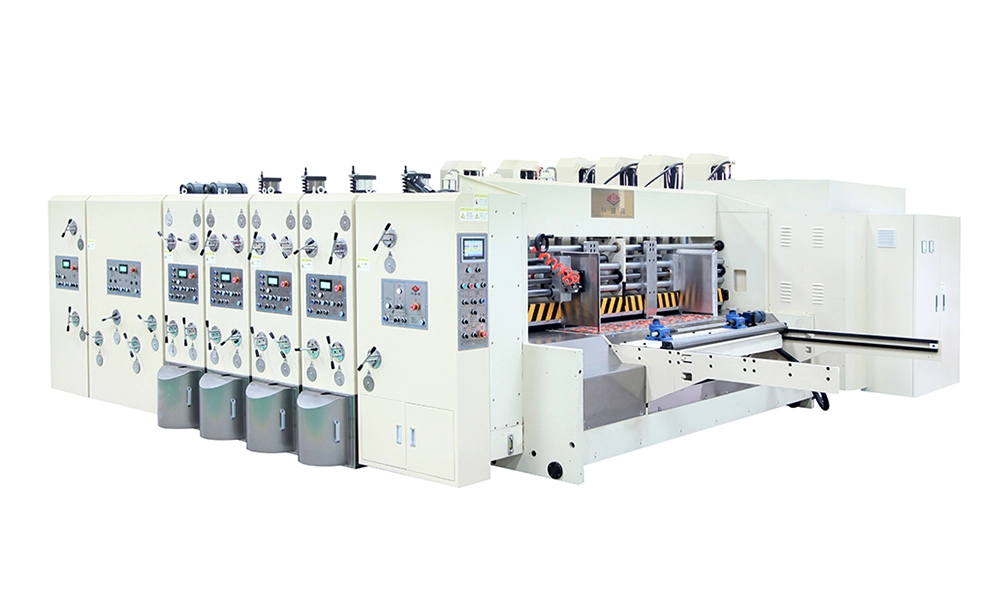
Computerzied Semi Auto Flexo Printing Slotting Die-Cutting Machine
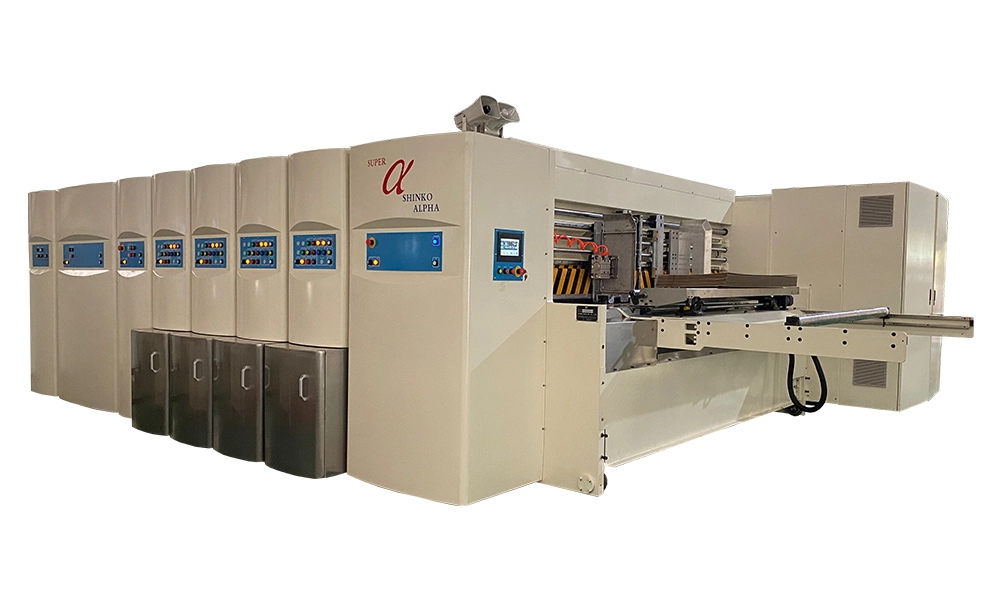
Shinko Super Alpha Movable Type Full Servo Drive Flexo Printing Slotting Die Cutting Machine
Introducing the Shinko Super Alpha Movable Type Full Servo Drive Flexo Printing Slotting Die Cutting Machine by Keshenglong. Engineered for precision and efficiency, this state-of-the-art machine enhances your production line with its advanced servo drive technology. Designed for seamless Flexo printing, slotting, and die-cutting, it ensures superior quality with every output.
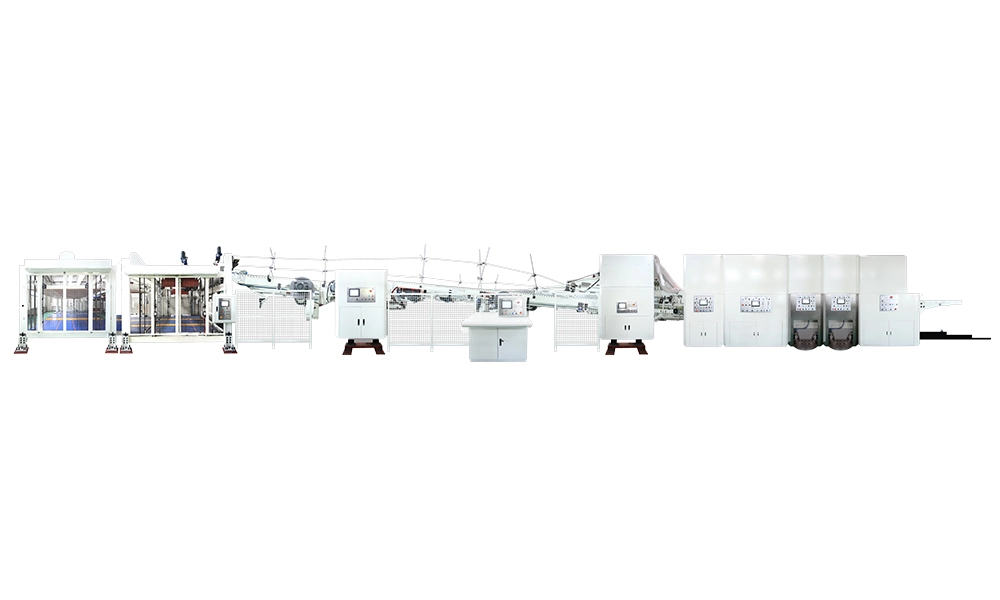
Jumbo Flexo Bottom Printing Slotting Die-Cutting Inline Folding Gluing Countering Ejecting Machine
Introducing the Keshenglong&Shinko Jumbo Flexo Bottom Printing Slotting Die-Cutting Inline Folding Gluing Countering Ejecting Machine. This advanced flexo printing slotting die-cutting machine ensures precision and efficiency for your packaging needs. Designed as a versatile flexo folder gluer machine, it optimizes every step from printing to ejecting, delivering seamless integration and superior quality.
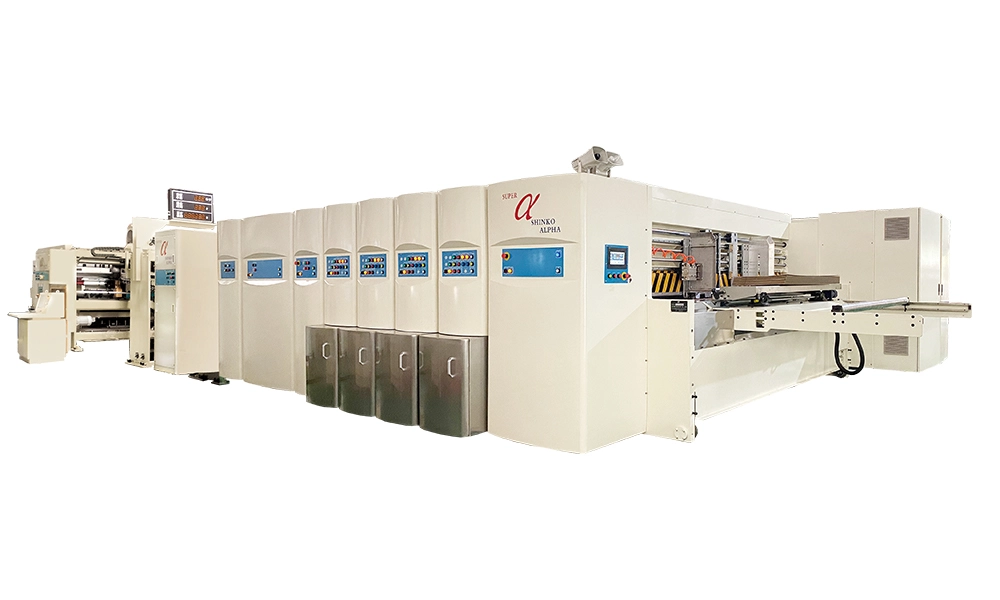
Shinko Super Alpha Movable Type Full Servo Drive Flexo Printing Slotting Die Cutting Inline Folding Gluing Counting Ejecting Machine
This state-of-the-art Movable Type Full Servo Drive Flexo Printing Slotting Die Cutting Machine streamlines your production with precision. Experience seamless operation with its Inline Folding Gluing Counting Ejecting capabilities, ensuring unparalleled efficiency. Designed for high-performance tasks, this Keshenglong&Shinko Super Alpha Movable Type Full Servo Drive Flexo Printing Slotting Die Cutting Inline Folding Gluing Counting Ejecting Machine enhances productivity while maintaining premium quality. Ideal for businesses seeking innovation and reliability, the Shinko Super Alpha is your go-to solution for advanced printing and cutting needs.


© 2025 Keshenglong & SHINKO All Rights Reserved.
Keshenglong Carton Packing Machine
Keshenglong Carton Packing Machine
Keshenglong Carton Packing Machine
Keshenglong Carton Packing Machine
Keshenglong Carton Packing Machine