
How to Choose the stitching and folder gluer machine manufacturer and supplier in us?
- How to Choose the Right Stitching and Folder Gluer Machine Manufacturer and Supplier in the US
- Introduction: Why choosing the right stitching and folder gluer machine matters
- Understand Your Business Needs First
- Production profile and : volume, SKU mix and takt time
- Space, utilities and integration requirements
- Technical Criteria to Evaluate Manufacturers
- Core mechanical and electrical design
- Glue and stitching systems
- Automation, sensors and Industry 4.0 readiness
- Quality, Compliance and Parts Sourcing
- Certifications and standards
- Spare parts and supply chain transparency
- Commercial Considerations: Price, Lead Time, and Warranties
- Price vs total cost of ownership (TCO)
- Lead time, capacity and factory acceptance testing (FAT)
- Warranty and service level agreements (SLAs)
- Supplier Evaluation Checklist
- Factory and R&D capability
- References, installed base and local customers
- Financial stability and long-term support
- Practical Tests and Acceptance Criteria
- What to require at FAT/SAT
- Sample production and quality checks
- Calculating ROI and Example TCO
- Simple ROI and TCO formulas
- Example (illustrative only)
- Comparing Suppliers — Quick Reference Table
- Negotiation Tips and Purchase Clauses
- Key contractual items to include
- Warranty extensions and service contracts
- Why Keshenglong Could Be a Strong Candidate
- Company background and capabilities
- What to verify specifically with Keshenglong
- Conclusion: A prioritized checklist to decide
- Final decision checklist
- Practical next steps
- Frequently Asked Questions
How to Choose the Right Stitching and Folder Gluer Machine Manufacturer and Supplier in the US
Introduction: Why choosing the right stitching and folder gluer machine matters
Choosing the right stitching and folder gluer machine supplier is a strategic decision for any corrugated carton printer or boxmaker. The right machine affects throughput, finishing quality, labor cost, and total cost of ownership (TCO). This guide helps procurement managers, plant engineers, and business owners evaluate manufacturers and suppliers in the US market and globally—so you buy a machine that meets technical needs, matches your production strategy, and delivers predictable ROI.
Understand Your Business Needs First
Production profile and : volume, SKU mix and takt time
Before evaluating suppliers, document your production profile: average daily output (m2 or sheets), SKU mix (short runs vs long runs), required glue types (hot melt, cold glue, EVA), folding patterns, and downstream processes (stacking, bundling). This ensures you match machine cycle speed to real demand and avoid overspecifying capacity or underserving peak windows. Keywords to keep in mind: stitching and folder gluer machine, production capacity, glue type.
Space, utilities and integration requirements
Record available factory floor space, electrical supply, compressed air capacity, and required conveyor/interface points. Many folder gluers require precise infeed alignment and space for maintenance access—plan accordingly when discussing layout with suppliers.
Technical Criteria to Evaluate Manufacturers
Core mechanical and electrical design
Review machine frame rigidity, shaft and bearing specifications, servo/drive systems versus older V-belt setups, and PLC/controller brands. Modern stitching and folder gluer machines use servo-driven positioning for repeatability and faster job changeovers—search for suppliers offering this if your SKU mix requires frequent changes.
Glue and stitching systems
Check the glue application system (hot melt vs cold glue), nozzle type, adhesive metering precision and changeover times. For stitching (stapling) systems, confirm staple type, magazine capacity, and jam detection. These directly influence waste, downtime, and product durability.
Automation, sensors and Industry 4.0 readiness
Ask about job recipe memory, touchscreen HMI, remote diagnostics, and optional MES/ERP integration. Suppliers providing remote monitoring and spare-parts telemetry can reduce downtime and speed troubleshooting.
Quality, Compliance and Parts Sourcing
Certifications and standards
Verify ISO 9001 (quality management) and CE marking for EU markets; for US installations, ask about UL or ANSI compliance if electrical panels and safety circuits are involved. These certifications indicate a structured quality approach and compliance with safety standards.
Spare parts and supply chain transparency
Ask where main components come from—motors, PLCs, bearings, glue units. Suppliers that import critical parts from established manufacturers (for example, Japanese or German brands) and provide clear BOMs reduce long-term supply risks. Expect lead times for non-standard parts; confirm stocking policies for commonly wear-prone parts like belts, nozzles and perforation knives.
Commercial Considerations: Price, Lead Time, and Warranties
Price vs total cost of ownership (TCO)
Price is important, but prioritize TCO: energy consumption, expected uptime, spare parts cost, and labor required per shift contribute to long-term cost. Use a simple TCO formula to compare offers: Total Cost = Purchase Price + (Annual Operating Cost * Years) + (Expected Spare Parts & Service). We provide a short worked example later.
Lead time, capacity and factory acceptance testing (FAT)
Clarify lead times and whether the supplier offers Factory Acceptance Testing (FAT) or on-site Acceptance Testing (SAT). FAT helps verify machine performance before shipment and is crucial when purchasing sophisticated stitching and folder gluer machines.
Warranty and service level agreements (SLAs)
Ensure warranty scope (mechanical parts, electrical, glue systems) and response times for service calls. For US buyers, a supplier with local technical partners or US-based spare parts inventory shortens downtime. Ask about remote troubleshooting fees and training packages for operators and maintenance staff.
Supplier Evaluation Checklist
Factory and R&D capability
Inspect whether the manufacturer has an R&D center, prototype lines and performance testing. For instance, Keshenglong (founded in 1995) merged Japan Shinko as its R&D center in 2017 and combines Japanese-instructed production with Chinese manufacturing bases—this hybrid model often balances cost and engineering rigor.
References, installed base and local customers
Request references for installations in similar industries and climates. Ask for recent case studies and visit a live installation if possible. Contact references to ask about uptime, spare parts fulfilment, and how the supplier handled second-line issues.
Financial stability and long-term support
Confirm the supplier's financial standing and export history, especially for large-capex equipment. A stable company is more likely to support legacy machines over 10+ years.
Practical Tests and Acceptance Criteria
What to require at FAT/SAT
Include these items in contracts: running the machine at target speed for a minimum period (for example, 8 hours non-stop), repeatable changeover times, glue consumption verification, stitch integrity tests, and operator training. Insist on documented KPIs: uptime, cycle time, and acceptable reject rates.
Sample production and quality checks
Run your actual SKUs during FAT or SAT. Measure the finished box quality (fold accuracy, glue seam strength, stitch retention) and gather measurable acceptance criteria before signing final acceptance.
Calculating ROI and Example TCO
Simple ROI and TCO formulas
Use these formulas to compare options:
Annual Operating Cost = Energy + Labor + Maintenance + Consumables
TCO (5 years) = Purchase Price + 5 * Annual Operating Cost - Residual Value
Simple Payback (years) = Purchase Price / Annual Net Savings
Example (illustrative only)
Example: Machine A costs $250,000; Machine B costs $200,000. If Machine A reduces labor and scrap to deliver $30,000 annual net savings vs B, payback delta = ($50,000) / $30,000 = 1.67 years. Label this example clearly as hypothetical and confirm numbers with supplier quotes.
Comparing Suppliers — Quick Reference Table
Below is a comparative checklist table with typical attributes to compare US, Chinese/Japanese hybrid, and European/Japanese suppliers. Ratings are illustrative and intended to guide evaluation.
| Attribute | US-based Supplier | Chinese Manufacturer with Japanese R&D (e.g., Keshenglong) | European/Japanese Supplier |
|---|---|---|---|
| Price | High | Medium | High |
| Lead Time | Short (if in-stock) | Medium (6–20 weeks typical) | Medium–Long |
| Component Quality | High (domestic sourcing) | High (imported main parts from Japan/Germany) | High |
| Service Network in US | Strong | Growing (local partners recommended) | Varies |
| Customization | Good | Very Good (engineering support from Japan Shinko type R&D) | Good |
Negotiation Tips and Purchase Clauses
Key contractual items to include
Include FAT acceptance criteria, lead times for spare parts, uptime guarantees, penalties for missed timelines, training scope, and an escalation path for technical issues. Clarify who covers customs and inland transport costs, and specify currency and payment milestones tied to milestones (design approval, FAT, shipment, SAT).
Warranty extensions and service contracts
Negotiate optional extended warranties and pre-paid service hours at a discount. Consider local spare parts stocking agreements for critical wear parts if the supplier does not maintain US inventory.
Why Keshenglong Could Be a Strong Candidate
Company background and capabilities
Keshenglong, founded in 1995 and merged with Japan Shinko in 2017 (with Japan Shinko kept as R&D center), manufactures corrugated carton printing and converting solutions including flexo printers and case makers. Their model of importing main parts, using experienced Japanese technicians, and testing on-site aims to deliver Japanese-standard quality at competitive pricing for international markets. They export to 70+ countries, indicating established international logistics and service experience.
What to verify specifically with Keshenglong
If you consider Keshenglong for a stitching and folder gluer machine, verify: availability of US-based service partners, parts lead times for electrical and motion components, FAT procedures, local installation support, and specific warranty terms for the glue/stitch systems you need.
Conclusion: A prioritized checklist to decide
Final decision checklist
Use this prioritized checklist when comparing offers:
1) Does the machine meet your throughput and SKU flexibility needs?
2) Are main parts quality and sourcing transparent?
3) Is FAT/SAT clearly defined with measurable KPIs?
4) Are warranty and SLA terms acceptable for US operations?
5) Are spare parts and service networks available within acceptable lead times?
6) Does the TCO and payback align with your financial targets?
Practical next steps
Shortlist 2–3 suppliers, request detailed proposals with BOMs and FAT plans, visit at least one live installation, and run representative SKUs during FAT/SAT. For suppliers like Keshenglong, request references of US customers and ask for local technical contacts. This structured approach reduces procurement risk, secures better pricing, and shortens ramp-up time after installation.
Frequently Asked Questions
What is the typical lead time for a stitching and folder gluer machine?Lead times vary by customization level and supplier capacity. Expect typical ranges of 6–20 weeks from order to shipment; add shipping and installation time. Confirm FAT dates with your supplier.
Should I prefer a local US supplier or an international manufacturer?Choose based on priorities: local suppliers offer faster service response; international manufacturers (or hybrids) can offer stronger price-performance and engineering features. Balance price, service lead time, and long-term spare parts availability.
Which certifications should I ask for?Request ISO 9001 for quality management. For EU sales, CE marking is required; for US electrical safety, ask about UL/ANSI compliance where applicable. Also validate machine guarding and safety interlocks per OSHA guidance.
How important is FAT?FAT is critical. It verifies machine performance under defined conditions before shipment and prevents surprises at installation. Include representative SKU runs, uptime targets, and consumable consumption checks.
What ongoing costs should I budget for?Budget for energy, maintenance labor, spare parts, adhesive consumption, and periodic calibration. Include potential remote-support fees if the supplier charges for diagnostics.
What operator training should be included?Insist on both operator and maintenance training at installation and training manuals. Include train-the-trainer sessions to maintain institutional knowledge.
References and Sources
- ISO 9001 — International Organization for Standardization. https://www.iso.org/iso-9001-quality-management. (accessed 2025-11-30).
- CE Marking (EU): Guidance on machinery safety and CE marking. https://ec.europa.eu/growth/single-market/ce-marking/ (accessed 2025-11-30).
- PMMI: Trends in corrugated packaging and converters. https://www.pmmi.org/ (accessed 2025-11-30).
- Packaging World — articles on folder-gluers and finishing machines. https://www.packworld.com/ (accessed 2025-11-30).
- Keshenglong company background (provided): Founded 1995; merged Japan Shinko into group 2017; exports to 70+ countries. (Information provided by user; confirm via supplier literature during procurement.)
What is stitcher and folder gluer machine
Maintenance Schedule and Troubleshooting for Flexo Presses
UV vs water-based flexo inks: Performance comparison
What are the different types of Corrugated Box Machines?
Shipping
Do you provide installation services upon delivery?
Yes, we offer on-site installation and training services to ensure your machine is set up correctly.
Can you ship to remote or difficult-to-access locations?
Yes, we can arrange shipping to remote locations, though additional charges and time may apply.
What is the estimated delivery time for your machines?
Delivery times vary based on location and order size, but we typically estimate 4-6 weeks for delivery.
What are the shipping dimensions and weight of your folding carton machines?
Shipping dimensions and weight vary by model; please refer to the specific product details for accurate information.
Product
Do your machines support automated quality control checks?
Yes, our machines can be equipped with automated quality control systems to ensure consistent production quality.
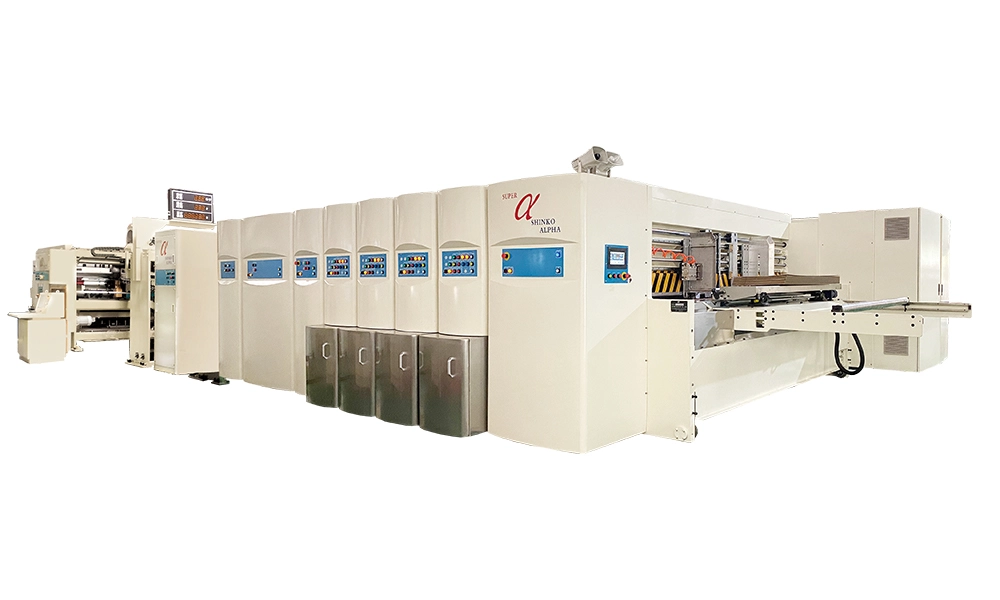
Shinko Super Alpha Movable Type Full Servo Drive Flexo Printing Slotting Die Cutting Inline Folding Gluing Counting Ejecting Machine
This state-of-the-art Movable Type Full Servo Drive Flexo Printing Slotting Die Cutting Machine streamlines your production with precision. Experience seamless operation with its Inline Folding Gluing Counting Ejecting capabilities, ensuring unparalleled efficiency. Designed for high-performance tasks, this Keshenglong&Shinko Super Alpha Movable Type Full Servo Drive Flexo Printing Slotting Die Cutting Inline Folding Gluing Counting Ejecting Machine enhances productivity while maintaining premium quality. Ideal for businesses seeking innovation and reliability, the Shinko Super Alpha is your go-to solution for advanced printing and cutting needs.
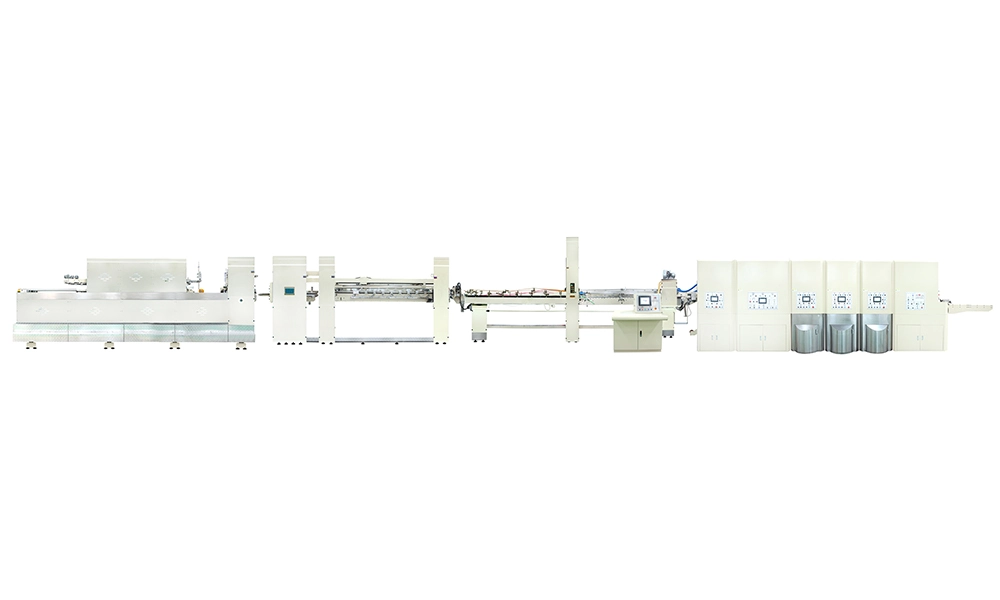
Computerized Flexo Printing Slotting Die-Cutting Inline Folding Gluing and Stitching Machine
Introducing the Keshenglong&Shinko Computerized Flexo Printing Slotting Die-Cutting Inline Folding Gluing and Stitching Machine, a pinnacle of precision and efficiency. This state-of-the-art machine revolutionizes packaging production with seamless integration of printing, slotting, die-cutting, folding, gluing, and stitching. Designed to optimize your workflow, the Computerized Flexo Printing Slotting Die-Cutting Machine enhances accuracy and productivity.
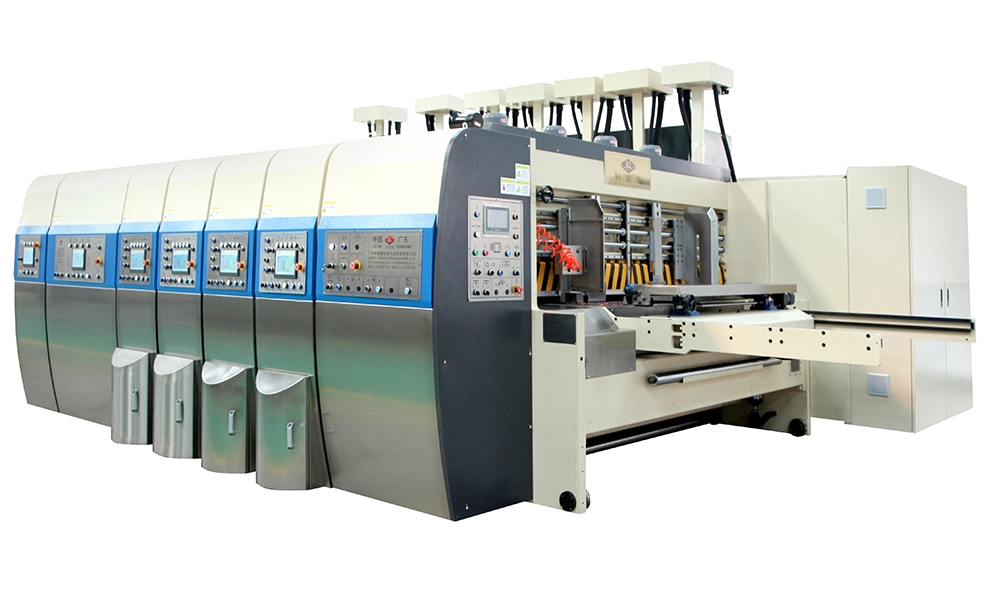
Computerized Flexo Top Bottom Printing Slotting Die-Cutting Machine
Introducing the Keshenglong&Shinko Computerized Flexo Top Bottom Printing Slotting Die-Cutting Machine, designed to enhance your packaging efficiency. Engineered for precision, this high-performance machine offers seamless integration of flexo printing and die-cutting processes. Perfect for a variety for packaging needs, it ensures superior quality and productivity. With user-friendly controls and robust construction, it guarantees reliable operation and minimal downtime. Optimize your production line with Keshenglong’s trusted technology. Explore advanced capabilities with our Flexo Top Bottom Printing Slotting Die-Cutting Machine today.
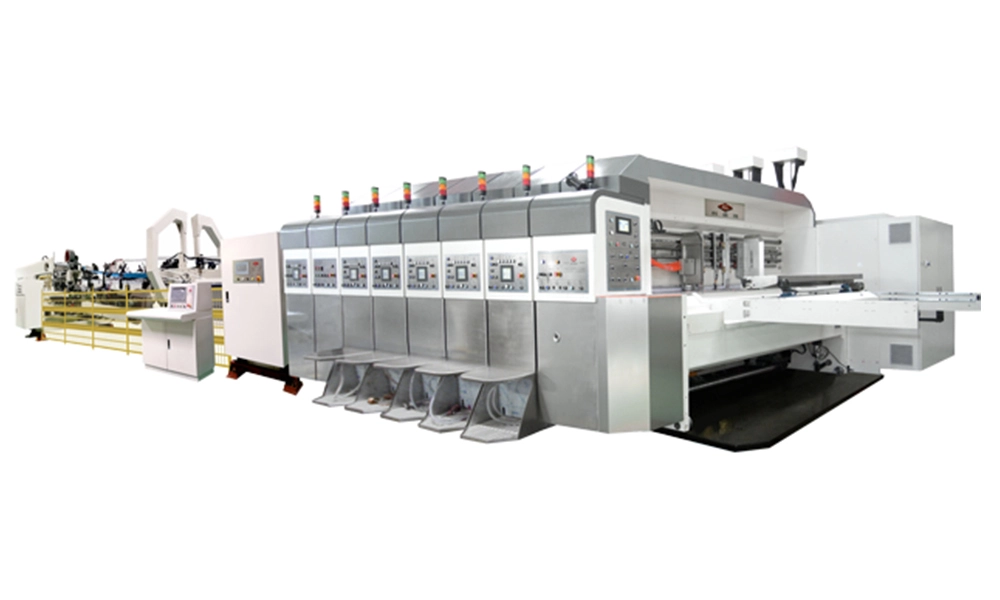
Computerized Flexo Printing Slotting Die-Cutting Inline Folding Gluing Countering Ejecting Machine Repeatable
Introducing the Keshenglong Computerized Flexo Printing Slotting Die-Cutting Inline Folding Gluing Countering Ejecting Machine. This advanced equipment delivers precision and efficiency for all your packaging needs. Perfectly designed for high-speed operations, it ensures seamless integration with your production line. Enhance productivity with our innovative technology that guarantees accurate printing, slotting, and die-cutting.


© 2025 Keshenglong & SHINKO All Rights Reserved.
Keshenglong Carton Packing Machine
Keshenglong Carton Packing Machine
Keshenglong Carton Packing Machine
Keshenglong Carton Packing Machine
Keshenglong Carton Packing Machine