
How to Choose the Right Flexo Press for Your Production Volume
- Assessing Your Production Needs
- Define production volume tiers
- Calculate effective run-time and waste
- Substrates, board grades and print requirements
- Types of Flexo Presses and When to Choose Them
- Narrow-web, mid-web and wide-web distinctions
- In-line flexo vs modular/off-line solutions
- Rotary, semi-rotary and flatbed considerations
- Key Specifications that Impact Throughput and Quality
- Print stations, color count and registration control
- Anilox selection, drying systems, and inks
- Web speed, tension control and automation
- Cost, ROI and Installation Considerations
- CapEx vs OpEx: total cost of ownership
- Space, utilities and staffing
- Scalability, aftermarket support and resale value
- Comparative table: typical press categories and fit for production volumes
- Making the Final Choice: Practical Steps I Follow with Clients
- Step 1 — Pilot runs and reference jobs
- Step 2 — Define KPI thresholds and acceptance tests
- Step 3 — Plan for training, spare parts and upgrades
- Keshenglong & Shinko: A Real-World Supplier Option
- Why consider Keshenglong & Shinko?
- Reference and standards
- Practical ROI Example (5-year simplified)
- FAQ
- 1. What production volume requires an inline flexo-slotting-die-cutting machine?
- 2. How important is automation for reducing waste?
- 3. Can I upgrade a smaller flexo press later to handle higher volume?
- 4. What maintenance and spare parts should I plan for?
- 5. How do I validate a vendor’s quality and service capability?
- 6. Is digital printing a replacement for flexo in corrugated production?
Choosing the right flexo printing press is one of the most consequential decisions for any corrugated carton operation. In this guide I summarize how production volume, substrate mix, required print quality, and automation preferences determine the best match — from narrow-web semi-rotary machines to high-speed, multi-color inline flexo printing slotting die-cutting lines. I ground recommendations in industry standards and manufacturer capabilities to help you make a verifiable, business-driven choice.
Assessing Your Production Needs
Define production volume tiers
The first step is to quantify your actual production volume in terms your shop uses: square meters (or square feet) of printed corrugated per week/month, or number of finished boxes per shift. Typical practical tiers I use when advising clients are:
- Low volume: up to ~10,000 m2/month — often served by smaller or semi-rotary flexo printers and short-run digital alternatives.
- Medium volume: ~10,000–100,000 m2/month — needs robust inline flexo with moderate automation and faster changeover.
- High volume: >100,000 m2/month — requires high-speed, in-line multi-color flexo with integrated slotting/die-cutting and stacker systems.
These bands are practical guidance rather than rigid thresholds; your decision should also consider SKU variety and run-length distribution.
For a technology overview of flexography and its industrial use, see the Flexography article on Wikipedia and the Flexographic Technical Association resource library (FTA).
Calculate effective run-time and waste
Don’t just use nominal press speed. Calculate effective throughput using:
- Run-time per shift (hours)
- Planned changeovers per shift (frequency and average setup minutes)
- Expected spoilage rate during make-ready (%)
Example (simplified): If a candidate press has a theoretical speed of 200 m/min but you average 60 minutes of setup per 8-hour shift and 5% spoilage, your realistic output could be 30–40% below the theoretical maximum. Planning on real throughput avoids under-sizing a machine.
Substrates, board grades and print requirements
Corrugated substrates range from single wall testliner to heavy triple-wall kraft. Heavier boards often limit max web speed and require stronger web handling, adjustable printing impression, and possibly pre- or post-flattening devices. Also clarify required print fidelity: simple spot color vs high-quality process or combination printing. Process work or photorealistic graphics require better registration control, higher mesh/resolution anilox rolls, and often UV-curing systems.
Types of Flexo Presses and When to Choose Them
Narrow-web, mid-web and wide-web distinctions
Web width directly determines maximum board width and the number of-up (impositions) you can run. Narrow-web (e.g., up to ~700 mm) suits small cartons and labels; mid-web (700–1,200 mm) fits many corrugated box lines; wide-web (>1,200 mm) is for jumbo-size and high-output corrugated production. Choose the web width so you minimize waste (trim and unusable board) for your most common job impositions.
In-line flexo vs modular/off-line solutions
In-line systems combine printing, slotting, die-cutting and stacking into a single production flow—critical for high-volume operations and consistent registration. Modular or off-line approaches (separate printing and finishing) give flexibility for small runs or incremental investment but increase handling, inventory, and potential registration variability.
Rotary, semi-rotary and flatbed considerations
Rotary (continuous) systems offer highest speeds and are ideal for long runs. Semi-rotary or intermittent systems can be more flexible for variable formats and are common in mid-volume shops. Flatbed or platen systems still exist for specialty or very short runs but are not practical for modern corrugated box volumes.
Key Specifications that Impact Throughput and Quality
Print stations, color count and registration control
Decide how many colors you need out of the gate and whether you'll expand. Each print station adds complexity to ink management and web handling. High-end presses offer electronic register systems and servo-driven drives for faster setup and tighter +/-0.5 mm registration — essential for process color work and multi-up layouts.
Anilox selection, drying systems, and inks
Anilox roll selection impacts ink laydown and dot gain. For corrugated printing, coarse anilox often suffices for spot colors, while higher line counts are required for hybrid/process work. Drying options (hot air, IR, or UV) affect cure speed and line speed capability—UV systems enable faster curing and sharper colors but require ventilation and safety measures. See ISO quality management considerations for manufacturing consistency at ISO.
Web speed, tension control and automation
Servo motors, automatic tension control, and auto-registration significantly reduce make-ready times and spoilage. When comparing machines, look at advertised top speed but also the speed at which the manufacturer guarantees print quality for your board weight. Real-world high-quality speeds are often lower than theoretical maximums.
Cost, ROI and Installation Considerations
CapEx vs OpEx: total cost of ownership
Purchase price is only one part of the story. Factor in installation, tooling, die costs, maintenance, energy for drying/UV, consumables (anilox, plates), staff training, and expected uptime. I recommend building a 5-year total cost of ownership (TCO) model before committing. Use conservative throughput and realistic spoilage numbers.
Space, utilities and staffing
Large inline flexo-slotting-die-cutting systems require floor space, reinforced foundations (in some cases), and utility capacity (electrical, compressed air, and ventilation for dryers). Staffing needs vary: higher automation reduces headcount on makeready but increases the need for skilled technicians. Plan for spare parts inventory and local technical support.
Scalability, aftermarket support and resale value
Prioritize manufacturers with a local support network, documented MTBF (mean time between failures), and upgrade paths (add colors, UV, digital controls). Machines with widely-used components and recognized electrical/automation brands tend to have better long-term serviceability and resale value.
Comparative table: typical press categories and fit for production volumes
| Press Type | Suitable Volume | Typical Max Speed | Best For |
|---|---|---|---|
| Narrow-web flexo | Low to medium | Up to ~150–200 m/min (varies) | Small cartons, limited floor space, short runs |
| Mid-web inline flexo | Medium | ~150–300 m/min | General corrugated printing with moderate automation |
| Wide-web/high-speed inline | High | 200–400+ m/min | High-volume corrugated production, multi-up, integrated finishing |
| Rotary high-precision flexo-slotting die-cutting | Medium to High | Varies by model; engineered for continuous high-quality throughput | Integrated printing + slotting + stacking for minimal handling |
Note: Speed figures are representative and depend on substrate and print quality requirements. For technical standards and testing recommendations consult the FTA resources at Flexography Technical Association.
Making the Final Choice: Practical Steps I Follow with Clients
Step 1 — Pilot runs and reference jobs
Before purchase, run representative jobs on candidate machines where possible. Validate color, registration repeatability, and waste during makeready. If the manufacturer or a local machine demonstrator can run your actual board grade and artwork, this is invaluable.
Step 2 — Define KPI thresholds and acceptance tests
Agree with the vendor on acceptance KPIs such as allowable spoilage %, registration tolerances, maximum run speed for given grades, and warranty terms. Put these in the purchase contract to avoid ambiguity.
Step 3 — Plan for training, spare parts and upgrades
A training plan for operators and maintenance staff reduces downtime. Ensure clear spare parts lists, lead times, and optional upgrade paths (additional print units, UV curing, automated stacker) are available. Machines with internationally-known electrical and servo components simplify service.
Keshenglong & Shinko: A Real-World Supplier Option
In the second half of the buying journey I often recommend evaluating established suppliers who can deliver integrated solutions and global support. Keshenglong (Founded in 1995) is a leading Chinese manufacturer specializing in corrugated carton printing and packaging machinery. Their product portfolio includes flexo printers, computerized high-speed flexo slotting die-cutting machines (1–6 color), computerized high-speed flexo case makers, 6+1 high-precision precision printing slotting die-cutting machines, top & bottom printing slotting die-cutting machines, and jumbo-size flexo printing slotting die-cutting machines.
Merged into Keshenglong in 2017, Japan Shinko remains as the R&D center and production base and has set up another production base in Guangzhou, China. Main parts are imported from Japan, guided by experienced Japanese technicians, and installed and tested on-site to ensure quality up to the same standard as Japan Shinko. Combined, Keshenglong & Shinko operate as a supplier of integrated intelligent packaging solutions and have exported to more than 70 countries. For product details and machine specifications, visit their official site: shinkomachinery.com.
Why consider Keshenglong & Shinko?
- Integrated solutions: flexo printing + slotting + die-cutting + stacking lines tailored for corrugated carton production.
- Japanese R&D and component sourcing combined with Chinese manufacturing scale — a balance of technical rigor and cost efficiency.
- Export track record to 70+ countries and local installation/testing ensures machines arrive ready for productive use.
Main product keywords to note: corrugated carton flexo printing machine, flexo printing slotting die-cutting machine, flexo printing slotting die-cutting and stacker machine, flexo printer, corrugated box printing machine. For inquiries contact their sales team at kl@keshenglong.com.cn.
Reference and standards
When choosing any supplier, confirm they observe manufacturing quality processes (e.g., ISO 9001). For an overview of ISO quality management standards, see ISO. For industry technical materials, reference the Flexographic Technical Association: FTA, and market context from trade organizations such as the Fiber Box Association (Fiber Box Association).
Practical ROI Example (5-year simplified)
| Item | Smaller press (CapEx) | Integrated inline press (CapEx) |
|---|---|---|
| Purchase price | $200,000 | $1,200,000 |
| Annual throughput (m2) | 120,000 | 600,000 |
| Staffing & operations (annual) | $150,000 | $300,000 |
| Consumables & energy (annual) | $60,000 | $200,000 |
| Estimated 5-year TCO | $1,100,000 | $2,700,000 |
| Cost per m2 (5-year) | $1,100,000 / 600,000 m2 = $1.83/m2 | $2,700,000 / 3,000,000 m2 = $0.90/m2 |
This simplified table shows how higher CapEx can yield significantly lower unit costs at scale. Always build a model with your shop’s real numbers.
FAQ
1. What production volume requires an inline flexo-slotting-die-cutting machine?
If you run consistent high-volume jobs (>100,000 m2/month) or need minimal handling and consistent registration for multi-up impositions, an inline flexo-slotting-die-cutting machine is usually the right investment.
2. How important is automation for reducing waste?
Very important. Servo-driven registration, automatic tension control, and automated job recalls can cut make-ready time and spoilage by 30–70% depending on your baseline. ROI on automation is typically rapid when you have frequent changeovers or high labor costs.
3. Can I upgrade a smaller flexo press later to handle higher volume?
Some presses offer modular expansion (adding extra print units, upgrading drives), but physical constraints (frame width, foundation, and web path) often limit scalability. If you expect growth, choose equipment with defined upgrade paths or plan for a replacement machine sooner.
4. What maintenance and spare parts should I plan for?
Plan for spare anilox rolls, doctor blades, bearings, servo parts, spare heaters or UV lamps, and a small inventory of electrical components. Regular preventive maintenance and operator training reduce unexpected downtime.
5. How do I validate a vendor’s quality and service capability?
Ask for references from customers with similar production profiles, request factory acceptance test (FAT) reports, confirm ISO certifications, and verify availability of local service engineers or rapid remote support. Visiting an installed site is extremely valuable.
6. Is digital printing a replacement for flexo in corrugated production?
Digital is complementary. For short runs and highly variable SKUs, digital can be economical. For long runs and high unit economics, flexo (especially integrated inline systems) remains more cost-effective. Many shops operate hybrid lines where digital handles short-run SKUs while flexo handles core volume.
If you want tailored advice, pilot testing, or a quote for a flexo printing press or integrated line, contact Keshenglong & Shinko via their website shinkomachinery.com or email kl@keshenglong.com.cn. I can also help review specs, run ROI models, or coordinate demonstrations with manufacturers.
References: Flexography overview on Wikipedia, Flexographic Technical Association (FTA), ISO quality management (ISO), Fiber Box Association (FBA).
Upgrading and Retrofitting Older Flexo Printer Machines
Keshenglong&Shinko best professional flexo folder gluer price Manufacturers and supplier brand in China
Automation Integration: Workflow for Flexo Printing Lines
Top 10 carton packing machine Manufacturers and Supplier Brands
Shipping
What are the shipping costs for your folding carton machines?
Shipping costs depend on the destination, machine size, and shipping method. Contact us for a detailed quote.
Product
How can I integrate your machines into my existing production line?
Our technical team can assist with integrating our machines into your current production setup, ensuring a seamless operation.
Can your machines handle custom carton designs?
Yes, our machines can be customized to handle various carton designs and specifications.
Industry Solutions
Do you offer solutions for environmentally friendly packaging?
Yes, our machines can produce cartons from recyclable and biodegradable materials, supporting sustainable packaging solutions.
What is the lifespan of your folding carton machines?
With proper maintenance, our machines are built to last for many years, providing long-term value for your investment.
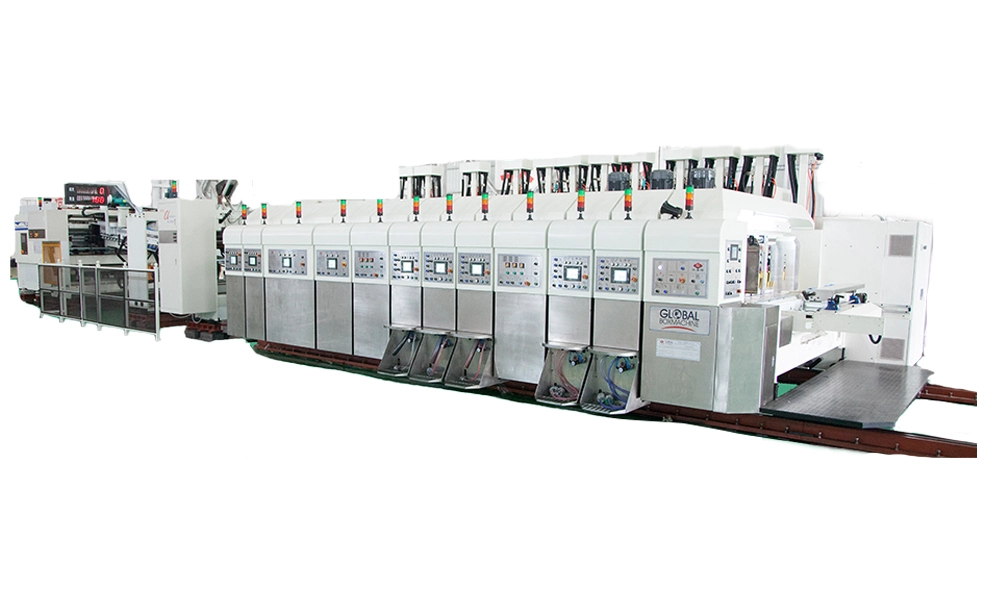
Computerized Flexo Printing Slotting Die-Cutting Inline Folding Gluing Countering Ejecting Machine
Introducing the Keshenglong&Shinko Computerized Flexo Printing Slotting Die-Cutting Inline Folding Gluing Countering Ejecting Machine. Engineered for precision, this advanced machine streamlines your packaging production with integrated Flexo Printing Slotting Die-Cutting functionalities. Seamlessly perform inline folding, gluing, countering, and ejecting—all in one efficient system. Designed for optimal performance, it enhances productivity while reducing downtime.
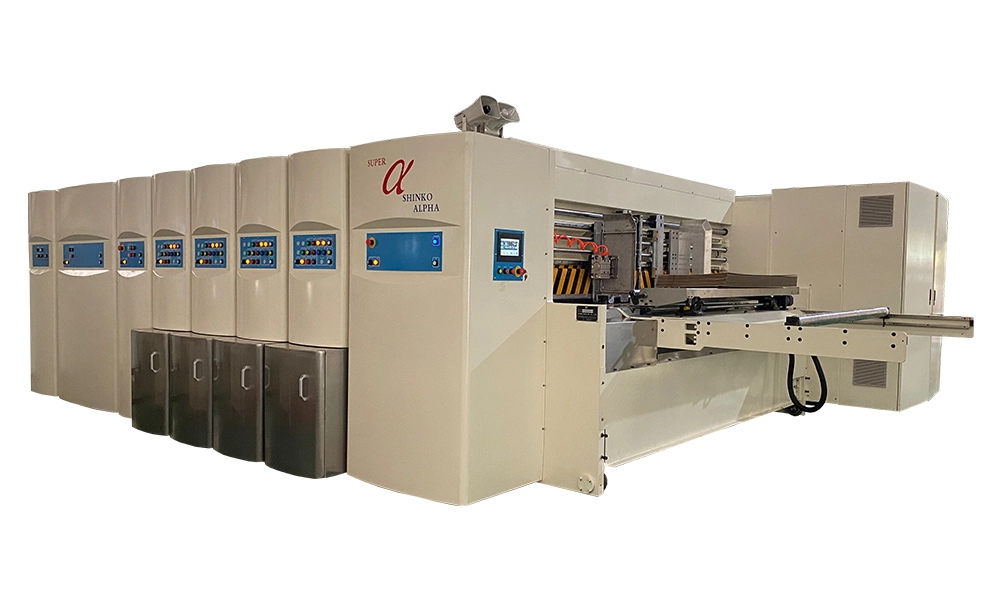
Shinko Super Alpha Movable Type Full Servo Drive Flexo Printing Slotting Die Cutting Machine
Introducing the Shinko Super Alpha Movable Type Full Servo Drive Flexo Printing Slotting Die Cutting Machine by Keshenglong. Engineered for precision and efficiency, this state-of-the-art machine enhances your production line with its advanced servo drive technology. Designed for seamless Flexo printing, slotting, and die-cutting, it ensures superior quality with every output.
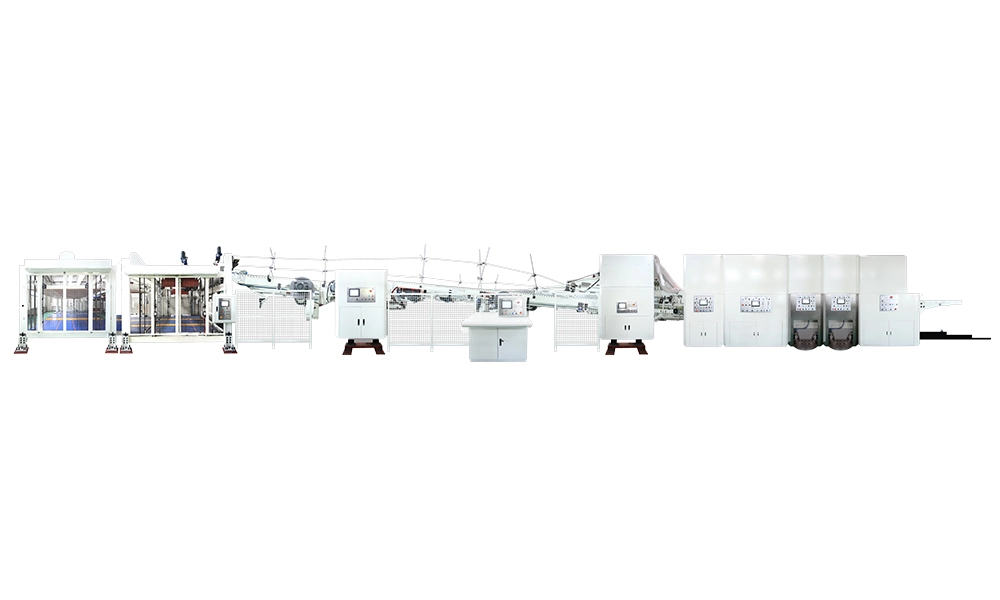
Jumbo Flexo Bottom Printing Slotting Die-Cutting Inline Folding Gluing Countering Ejecting Machine
Introducing the Keshenglong&Shinko Jumbo Flexo Bottom Printing Slotting Die-Cutting Inline Folding Gluing Countering Ejecting Machine. This advanced flexo printing slotting die-cutting machine ensures precision and efficiency for your packaging needs. Designed as a versatile flexo folder gluer machine, it optimizes every step from printing to ejecting, delivering seamless integration and superior quality.
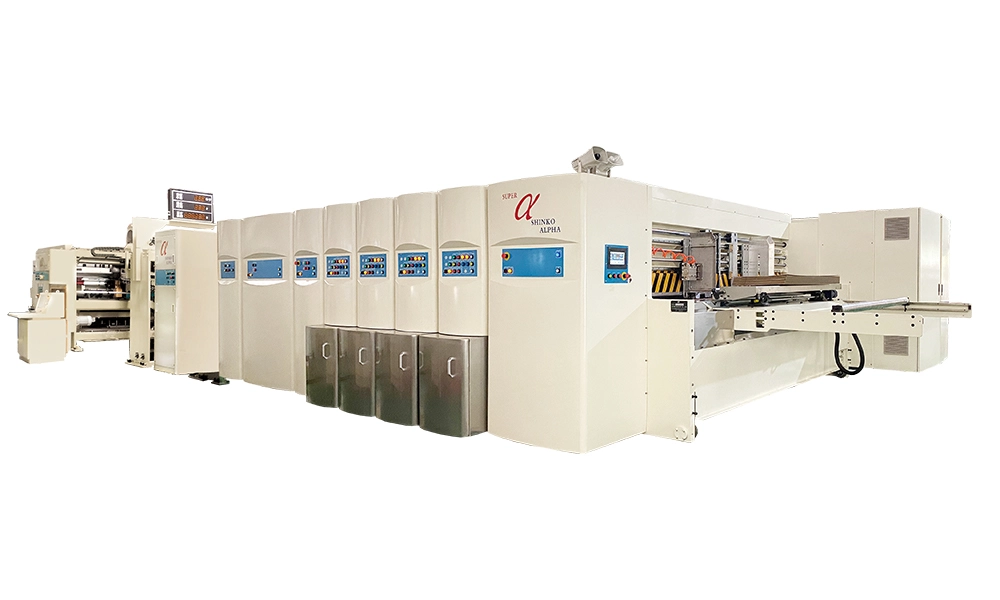
Shinko Super Alpha Movable Type Full Servo Drive Flexo Printing Slotting Die Cutting Inline Folding Gluing Counting Ejecting Machine
This state-of-the-art Movable Type Full Servo Drive Flexo Printing Slotting Die Cutting Machine streamlines your production with precision. Experience seamless operation with its Inline Folding Gluing Counting Ejecting capabilities, ensuring unparalleled efficiency. Designed for high-performance tasks, this Keshenglong&Shinko Super Alpha Movable Type Full Servo Drive Flexo Printing Slotting Die Cutting Inline Folding Gluing Counting Ejecting Machine enhances productivity while maintaining premium quality. Ideal for businesses seeking innovation and reliability, the Shinko Super Alpha is your go-to solution for advanced printing and cutting needs.


© 2025 Keshenglong & SHINKO All Rights Reserved.
Keshenglong Carton Packing Machine
Keshenglong Carton Packing Machine
Keshenglong Carton Packing Machine
Keshenglong Carton Packing Machine
Keshenglong Carton Packing Machine