
Upgrading and Retrofitting Older Flexo Printer Machines
- Why upgrade an older corrugated press?
- Market drivers and business cases
- Typical pain points of aging flexo machines
- When to retrofit vs replace
- Key retrofitting options for flexo printer machines
- Drive and registration systems (servo, encoders, PLC)
- Drying and curing upgrades (UV/LED)
- Ink transfer, anilox and plate system improvements
- Engineering, integration and ROI considerations
- Mechanical and structural assessment
- Control systems, workflow and Industry 4.0
- Cost, downtime and ROI comparison
- Keshenglong & Shinko — partner profile for corrugated flexo upgrades
- Company background and combined strengths
- Main products applicable to retrofit and upgrade projects
- Competitive differentiators and technical credibility
- Practical retrofit checklist and implementation roadmap
- Assessment and specifications
- Pilot upgrades and verification
- Installation, validation and training
- Frequently Asked Questions (FAQ)
- 1. How much does a typical servo retrofit cost for a flexo printer machine?
- 2. Can I retrofit my existing press to achieve near-offset print quality?
- 3. Will upgrading dryers to LED-UV reduce my energy bill?
- 4. How long does a retrofit installation typically take?
- 5. What are the risks of retrofitting vs buying new?
- 6. How do I choose between retrofit vendors?
Upgrading and retrofitting older flexo printer machines can extend asset life, improve print quality, reduce waste and energy use, and enable digital workflows for corrugated carton production. This article outlines pragmatic retrofit strategies for flexo printer machines—covering mechanical, electrical, and process upgrades—so plant managers, maintenance engineers and procurement leaders can decide whether to retrofit or replace. It emphasizes measurable outcomes (registration accuracy, waste reduction, throughput, energy savings), provides a comparative ROI framework, and points to trusted industry references for validation.
Why upgrade an older corrugated press?
Market drivers and business cases
Demand for higher print quality, shorter runs, faster changeovers and variable data printing is reshaping corrugated packaging. Customers expect near-offset visuals, precise color control and shorter lead times—requirements often beyond the capability of legacy flexo presses. Upgrading a flexo printer machine to improve registration, color consistency and automation can preserve capital, shorten payback and keep capacity in-house.
Typical pain points of aging flexo machines
Common problems that justify retrofits include poor registration (lead edge and cross-machine), frequent make-ready waste, unreliable servo or clutch systems, outdated plate mounting and anilox handling, insufficient drying/curing (causing ink set or bleed), and weak PLC/HMI interfaces that block integration with MIS/ERP. Addressing these reduces waste, downtime, and customer complaints.
When to retrofit vs replace
Decision criteria should be pragmatic: mechanical frame condition, remaining structural life, shaft straightness, gearbox wear, spare parts availability, and the cost/time to reach target performance. If the press frame and print stations are sound, targeted retrofits often deliver 60-80% of the performance of a new machine at a fraction of the cost. If fundamental geometry, safety systems or compliance are obsolete, replacement may be the better long-term investment.
Key retrofitting options for flexo printer machines
Drive and registration systems (servo, encoders, PLC)
Retrofitting clutch-to-servo conversions and closed-loop registration systems is one of the highest-impact upgrades. Modern servo drives plus high-resolution encoders and updated PLC/HMI typically reduce registration error from millimeter-level to sub-0.2 mm (depending on substrate and tension control). Upgrading to digital motion control also enables electronic job recall, faster job changeovers, and integration with MIS systems for barcode-driven setup. For standards and best practices, see the International Flexographic Technical Association guidance at IFTA.
Drying and curing upgrades (UV/LED)
Older dryers often limit press speed and create inconsistent cure. Converting to modern UV or LED-UV curing systems improves ink adhesion, reduces energy consumption and enables higher line speeds. LED curing offers advantages such as instant on/off, reduced footprint, and lower heat load—beneficial when corrugated liners are heat-sensitive. For general energy-efficiency context, refer to the U.S. Department of Energy resources on industrial energy savings: U.S. DOE - Energy Efficiency.
Ink transfer, anilox and plate system improvements
Replacing worn anilox rolls, upgrading to higher-resolution sleeves, and moving to closed, controlled ink supply systems (CI/SIS) reduce metering variability and color shifts. Modern anilox specifications matched to ink type and screen ruling significantly improve solid fill and vignettes. Plate mounting accuracy (digital pre-press, sleeve mounting systems) also directly impacts print repeatability.
Engineering, integration and ROI considerations
Mechanical and structural assessment
Before specifying any retrofit, perform a measured survey: check bed flatness, shaft runout, gearbox backlash, web path alignment, and bearing wear. Straightness and torsion of main shafts cannot be corrected by electronics alone. A detailed mechanical inspection separates cost-effective electronic upgrades from costly mechanical rebuilds.
Control systems, workflow and Industry 4.0
Upgrading the PLC and HMI layer enables job recipes, predictive maintenance telemetry and integration with MIS for automated job ticketing and material tracking. Adding sensors for tension, web-break detection, and in-line color measurement enables closed-loop process control. These modernizations convert a flexo printer machine into a node within a digital production line.
Cost, downtime and ROI comparison
The table below outlines typical ranges and trade-offs when choosing retrofit versus full replacement. Ranges are industry-typical estimates and will vary by machine age, market region and scope; always obtain vendor quotes and perform a site-specific cost-benefit analysis.
| Metric | Targeted Retrofit | Full Replacement |
|---|---|---|
| Typical capital cost (% of new) | 20%–50% of new machine cost | 100% (new machine) |
| Typical downtime for installation | 1–4 weeks (depends on scope) | 8–20 weeks (delivery & commissioning) |
| Expected performance gain | 50%–80% of new-machine capability | 100% (modern capability) |
| Payback period | 6–36 months (improved waste, speed, energy) | 24–72 months (higher output & features) |
| Risk | Lower initial spend; performance limited by frame condition | Higher capital; longest-term performance & warranty |
Sources: aggregated industry experience and retrofit case studies (vendor quotes vary). For baseline technology context see Flexography - Wikipedia and corrugated packaging context at Corrugated box - Wikipedia.
Keshenglong & Shinko — partner profile for corrugated flexo upgrades
Company background and combined strengths
Keshenglong, founded in 1995, specializes in manufacturing corrugated carton printing machines and packaging solutions. In 2017 Keshenglong merged with Japan Shinko, keeping Shinko as the R&D center and production base while adding a production facility in Guangzhou, China. Main parts are imported from Japan; experienced Japanese technicians lead R&D and commissioning to ensure quality consistent with Japan Shinko standards. As a supplier of integrated intelligent packaging solutions, products have been exported to more than 70 countries.
Main products applicable to retrofit and upgrade projects
The company offers a portfolio relevant to modernizing corrugated production lines: corrugated carton flexo printing machines, flexo printing slotting die-cutting machines, flexo printing slotting die-cutting and stacker machines, flexo printer units, and corrugated box printing machines. Their range includes computerized high-speed flexo slotting die-cutting machines (1–6 color), computerized high-speed flexo case makers, 6+1 high-precision machines, top & bottom printing slotting die-cutting machines, and jumbo-size flexo printing slotting die-cutting machines—equipment families that can replace or complement retrofitted assets depending on plant strategy.
Competitive differentiators and technical credibility
Keshenglong & Shinko differentiates by combining Japanese R&D and quality control with Chinese production scalability. This hybrid model supports: reliable access to imported main parts, on-site Japanese technical instruction for installation and commissioning, and global service reach for spare parts. For printers considering retrofits, working with a supplier that provides both retrofit components (servo packs, PLC/HMI, UV/LED modules) and full-machine options can simplify scope decisions and supply-chain logistics.
Practical retrofit checklist and implementation roadmap
Assessment and specifications
Start with a measured condition audit: frame geometry, web path, rollers, shafts, gearboxes, bearings, electrical cabinets, and control wiring. Define target KPIs (registration tolerance, waste reduction %, throughput increase). Map legacy interfaces and confirm spare-parts availability. This creates objective criteria for vendor proposals.
Pilot upgrades and verification
When possible, perform a staged upgrade: begin with a single-station registration conversion or a drive upgrade and validate results against KPIs. Use in-line color measurement (spectrophotometer or densitometer) and run material-specific trials. A pilot reduces risk before committing to full-press retrofits.
Installation, validation and training
Plan installation during slow production windows. Ensure mechanical alignment, balancing, and safety interlocks meet local standards. Provide operational and maintenance training for operators and technicians. Successful retrofits require updated maintenance practices and spare parts lists to sustain the new performance level.
Frequently Asked Questions (FAQ)
1. How much does a typical servo retrofit cost for a flexo printer machine?
Costs vary by station count and complexity. A single-station clutch-to-servo conversion (drive, encoder, PLC integration) might range from a few thousand to tens of thousands of USD. Full-press conversions scale accordingly. Obtain site-specific quotes; perform ROI modeling based on waste reduction, speed gains and labor savings.
2. Can I retrofit my existing press to achieve near-offset print quality?
You can significantly improve visual quality with upgrades to anilox, plates, registration, and drying/curing. However, structural limits (frame stiffness, copy-to-copy repeatability) may cap quality. For applications demanding absolute near-offset equivalence, new-generation presses may be necessary.
3. Will upgrading dryers to LED-UV reduce my energy bill?
LED-UV systems generally consume less energy than older mercury-UV units and reduce heat loads on substrates. Actual savings depend on duty cycle, normalized line speed and local electricity costs. For general energy-efficiency guidance, see the U.S. Department of Energy: Energy Efficiency.
4. How long does a retrofit installation typically take?
Smaller electronic upgrades may be completed in days to weeks. Comprehensive retrofits that include mechanical work, drying replacements and full control-system swaps usually require 1–4 weeks of downtime plus commissioning. Plan for testing and operator training after mechanical installation.
5. What are the risks of retrofitting vs buying new?
Retrofit risks include discovering deeper mechanical wear that increases cost, limited future upgradeability, and residual performance gaps. Replacement risks are higher capital expenditure and longer lead times. A measured audit reduces retrofit risk and clarifies when replacement is preferable.
6. How do I choose between retrofit vendors?
Choose vendors with proven experience in corrugated flexo presses, demonstrable references, service footprint, and spare-parts availability. A supplier that can both retrofit and offer new machines (like Keshenglong & Shinko) provides flexible options and continuity across lifecycle decisions.
If you want a tailored retrofit plan or a quotation for a flexo printer machine upgrade, contact Keshenglong & Shinko for technical consultation, detailed site audits and product demonstrations. Reach out to their sales and engineering teams to request case studies, on-site surveys, and ROI calculations tailored to your fleet.
Why choose Keshenglong&Shinko flexo printer manufacturer in china manufacturer
How to Choose the corrugated box flexo printing machine manufacturer and supplier in us?
The 10 Key Factors in flexo folder gluer That Affect Cost
Wholesale corrugated paper flexo printing slotting die cutting machine manufacturer and supplier in China
Industry Solutions
Can your machines handle high-volume production demands?
Yes, our machines are designed for high-volume production, ensuring reliable and efficient operation.
Product
Are there safety features integrated into your machines?
Yes, our machines come equipped with multiple safety features including emergency stop buttons and safety guards.
Do your machines support automated quality control checks?
Yes, our machines can be equipped with automated quality control systems to ensure consistent production quality.
Can your machines handle custom carton designs?
Yes, our machines can be customized to handle various carton designs and specifications.
Shipping
Can you ship to remote or difficult-to-access locations?
Yes, we can arrange shipping to remote locations, though additional charges and time may apply.
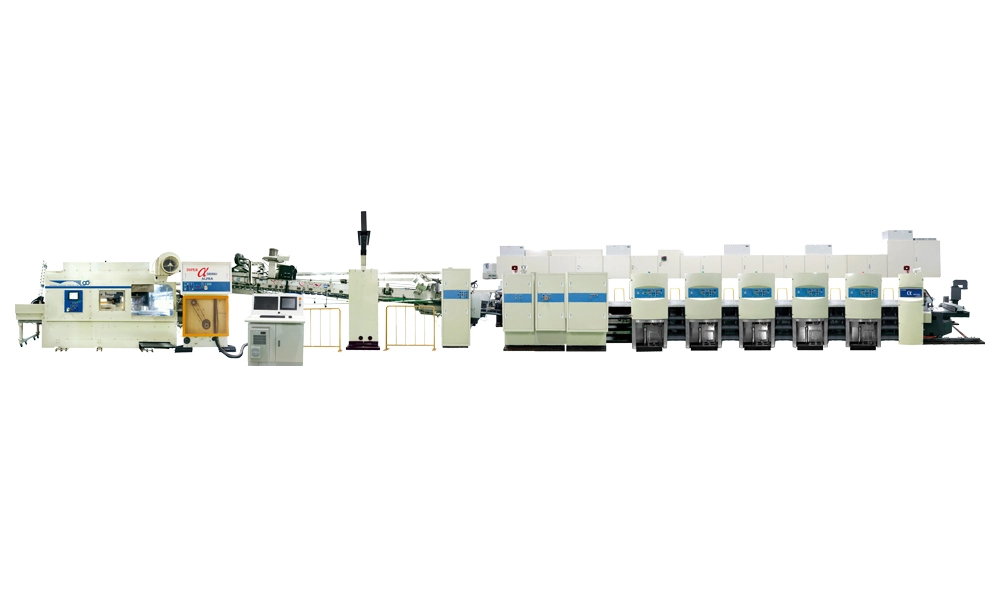
High-grade Full Automatic Flexo Printing Slotting Die Cutting Inline Folding Gluing and Countering Ejectoring Machine
Discover the Keshenglong&Shinko High-grade Full Automatic Flexo Printing Slotting Die Cutting Inline Folding Gluing and Countering Ejectoring Machine, the epitome of precision and efficiency. Ideal for modern packaging needs, this advanced machine streamlines operations by seamlessly integrating printing, slotting, die-cutting, folding, gluing, and ejecting processes. Elevate your production line with Keshenglong's innovative solution, designed to enhance productivity and deliver exceptional results.
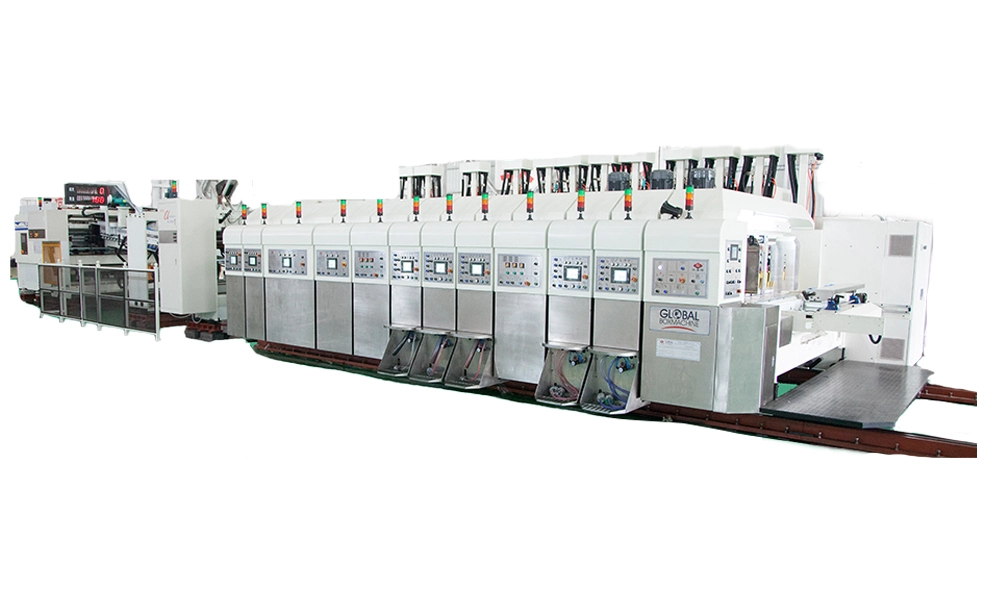
Computerized Flexo Printing Slotting Die-Cutting Inline Folding Gluing Countering Ejecting Machine
Introducing the Keshenglong&Shinko Computerized Flexo Printing Slotting Die-Cutting Inline Folding Gluing Countering Ejecting Machine. Engineered for precision, this advanced machine streamlines your packaging production with integrated Flexo Printing Slotting Die-Cutting functionalities. Seamlessly perform inline folding, gluing, countering, and ejecting—all in one efficient system. Designed for optimal performance, it enhances productivity while reducing downtime.
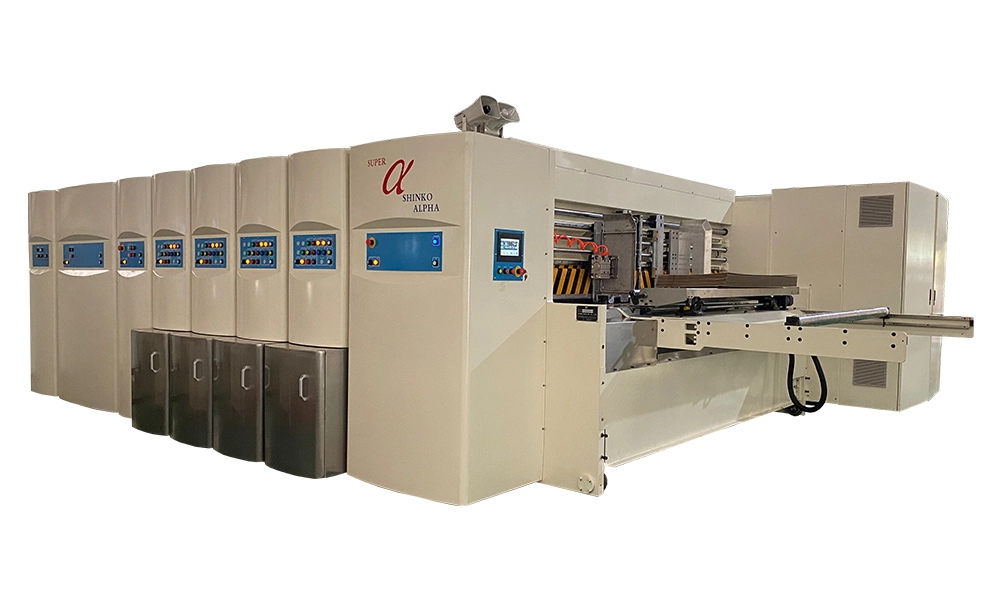
Shinko Super Alpha Movable Type Full Servo Drive Flexo Printing Slotting Die Cutting Machine
Introducing the Shinko Super Alpha Movable Type Full Servo Drive Flexo Printing Slotting Die Cutting Machine by Keshenglong. Engineered for precision and efficiency, this state-of-the-art machine enhances your production line with its advanced servo drive technology. Designed for seamless Flexo printing, slotting, and die-cutting, it ensures superior quality with every output.
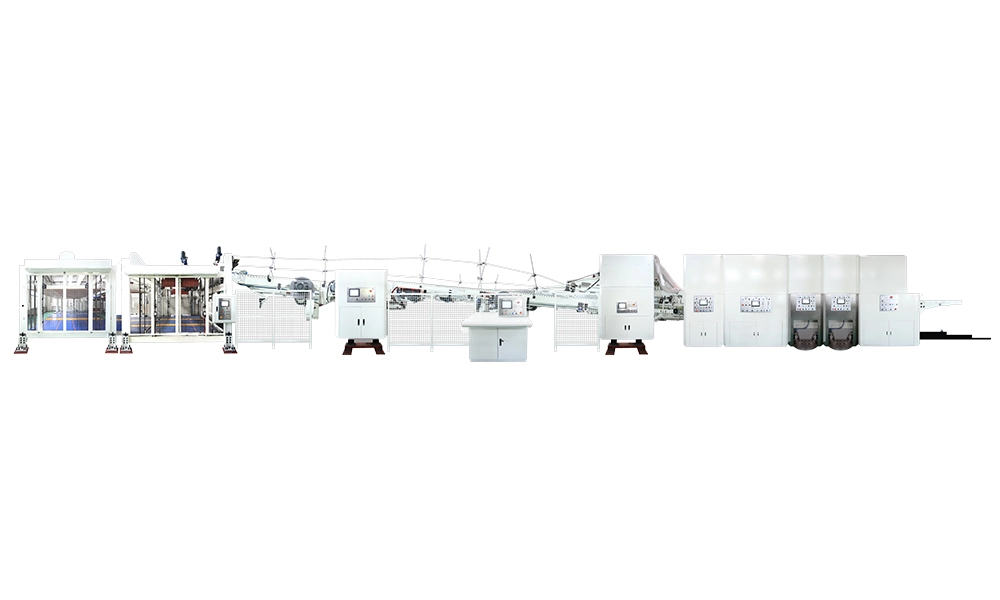
Jumbo Flexo Bottom Printing Slotting Die-Cutting Inline Folding Gluing Countering Ejecting Machine
Introducing the Keshenglong&Shinko Jumbo Flexo Bottom Printing Slotting Die-Cutting Inline Folding Gluing Countering Ejecting Machine. This advanced flexo printing slotting die-cutting machine ensures precision and efficiency for your packaging needs. Designed as a versatile flexo folder gluer machine, it optimizes every step from printing to ejecting, delivering seamless integration and superior quality.


© 2025 Keshenglong & SHINKO All Rights Reserved.
Keshenglong Carton Packing Machine
Keshenglong Carton Packing Machine
Keshenglong Carton Packing Machine
Keshenglong Carton Packing Machine
Keshenglong Carton Packing Machine