
Best Substrates for Flexo Printing Machine: Paper, Film, Board
- Why substrate choice matters in flexo
- How substrate properties affect ink transfer and final appearance
- Typical failure modes tied to substrate selection
- Measuring the substrate: what to test and why
- Detailed comparison: Paper, Film, and Board
- Paper (coated and uncoated)
- Films (BOPP, PET, PE and others)
- Board (corrugated and solid fiberboard)
- Quick comparison table
- Practical setup & process adjustments for each substrate
- Anilox selection and ink system
- Plate durometer, impression settings and tension control
- Surface treatment, primers and coatings
- Quality control, testing and standards
- Process control and color consistency
- Pre‑run tests and laboratory checks
- Environmental and regulatory considerations
- Keshenglong & Shinko: integrated solutions for corrugated flexo printing
- Why I recommend Keshenglong
- Main products and technical strengths
- Competitive differentiators
- Practical checklist: selecting substrate for your next run
- Before the trial run
- On press setup
- Post‑press checks
- FAQ — Frequently asked questions
- 1. Which substrate gives the sharpest print on a flexo press?
- 2. How do I know if my film needs corona treatment?
- 3. Can I print directly on corrugated without pre‑coating?
- 4. What ink system should I choose for high‑speed flexo on films?
- 5. Are there standards or associations I should follow for flexo best practices?
- 6. How do I reduce dot gain on soft corrugated liners?
- Contact & next steps
As a consultant and hands‑on practitioner in flexo, I know that the substrate you choose for a Flexo Printing Machine is often the single biggest determinant of printing yield, color stability and downstream conversion performance. This piece summarizes substrate characteristics for paper, film and board, shows practical adjustments for each material class, and provides verifiable references so you can apply the right controls to get repeatable, high‑quality flexographic results.
Why substrate choice matters in flexo
How substrate properties affect ink transfer and final appearance
Flexographic printing is a contact process: an anilox transfers ink to a polymer plate which then contacts the substrate. Surface energy, porosity, caliper and compressibility determine how ink spreads, penetrates and sets. On absorbent papers, inks penetrate and may appear duller; on non‑porous films, inks sit on the surface and require proper drying or curing. These interactions affect color density, dot gain, and perceived sharpness.
Typical failure modes tied to substrate selection
Common issues I see in production include poor adhesion on untreated films, mottling on porous boards, excessive dot gain on soft paperboards, and set‑off or blocking when inks are not cured. Understanding the root cause lets you choose surface treatment (e.g., corona), different ink chemistries (water‑based vs. solvent vs. UV), or adjust anilox cell volume and plate durometer to compensate.
Measuring the substrate: what to test and why
I always recommend measuring:
- Surface energy (dyne/cm) — predicts wetting and adhesion.
- Basis weight / grammage (g/m²) and caliper — informs impression and ink load.
- Porosity/air permeance — affects ink absorption and drying.
- Compressibility — affects dot gain on impression.
Organizations like TAPPI (Technical Association of the Pulp and Paper Industry) publish standard test methods for many of these properties; see TAPPI for test standards.
Detailed comparison: Paper, Film, and Board
Paper (coated and uncoated)
Paper offers a wide range: from lightweight coated folding boxboard to heavy uncoated kraft. Coated grades give better surface smoothness and ink holdout, improving dot sharpness and gloss. Uncoated papers absorb more ink and need higher ink densities or different anilox choices to achieve the same optical density.
Films (BOPP, PET, PE and others)
Plastic films are non‑porous and often low‑surface‑energy; they require surface treatment (corona or plasma), primers, or solvent/UV systems for durable adhesion. Films deliver high gloss and sharp detail when properly prepared, making them ideal for labels and flexible packaging. Typical films include BOPP and PET — see general material descriptions at BOPP and PET.
Board (corrugated and solid fiberboard)
Corrugated board presents a special case: it combines an outer liner and fluted medium with variable caliper and surface quality. Corrugated surfaces are compressible and often textured; top liners can be coated testliners or kraft. When printing directly on corrugated, consider pre‑coating or preprinting liners before corrugation. For background on corrugated construction and standard liners, see Corrugated fiberboard.
Quick comparison table
| Substrate | Typical basis weight / thickness | Surface energy (typical) | Ink considerations | Common applications |
|---|---|---|---|---|
| Coated paperboard | 150–400 g/m²; caliper 0.3–1.0 mm | ~38–45 dyne/cm (good coating) | Low absorption, good holdout; mid‑low anilox for solids; water/UV/solvent | Folding cartons, labels, retail packaging |
| Uncoated paper | 60–200 g/m² | ~30–38 dyne/cm | Higher absorption → higher ink consumption; use finer screens for detail | Shopping bags, labels, some cartons |
| BOPP / PET film | 12–50 µm | Untreated ~28–32 dyne/cm; after corona >38 dyne/cm | Non‑porous: requires corona/primer; UV or solvent good for adhesion | Flexible packaging, pouches, pressure‑sensitive labels |
| PE (polyethylene) | 15–100 µm (films); liners thicker | Untreated low; similar corona needs | Prone to low adhesion; primer often needed | Co-extruded films, sacks |
| Corrugated board (liner) | Test liner 100–300 g/m²; corrugated caliper 2–7 mm | Varies with liner coating; often 30–40 dyne/cm | Compressible; consider preprint liners, stronger inks or primers | Shipping boxes, point-of-purchase displays |
Notes: surface energy ranges and basis weights are industry typical ranges and can vary by grade and supplier; consult TAPPI for specific test methods (TAPPI).
Practical setup & process adjustments for each substrate
Anilox selection and ink system
One of the first levers I adjust is the anilox roll. Higher ink volumes (larger cell volume) deliver more ink for solids but can cause ink piling or longer drying on non‑absorbent substrates. Films typically need lower anilox cell volume for crisp solids and to reduce drying time. Also match ink chemistry to substrate and production: water‑based inks work well for many papers and some coated boards when drying capacity is sufficient; solvent and UV systems are preferred for many films and for fast production lines that need instant curing.
Plate durometer, impression settings and tension control
Plate hardness affects dot gain: softer plates compress and give higher dot gain on compressible substrates like corrugated liners. On rigid coated paper you can use harder plates for better halftone control. Impression pressure should be minimized to the level that ensures ink transfer but avoids crushing texture or creating excessive dot gain. For web handling, consistent tension and stable registration systems on your Flexo Printing Machine are essential to avoid web elongation and registration drift, especially on thin films.
Surface treatment, primers and coatings
On films, corona treatment or plasma treatment raises surface energy and improves wetting and adhesion. Untreated polyolefins (PE) often require primers or special adhesives. For corrugated, pre‑coating liners or using a sealer coat can produce more uniform ink laydown and reduce mottling. For long runs, consider overprint varnish (OPV) or lamination to protect graphics.
Quality control, testing and standards
Process control and color consistency
I recommend statistical process control (SPC) for key metrics: density, dot percentage (AM/FM), and surface energy. Use spectrophotometers and densitometers for routine checks and maintain a print standard or GRACoL/ISO target. ISO 12647 series covers process control for offset; while flexo has different specifics, the principles of color management and proofing remain the same. For flexographic best practices, the Flexographic Technical Association (FTA) provides technical guidance.
Pre‑run tests and laboratory checks
Before production runs I perform adhesion tape tests, rub resistance, and bend/flex tests (for films). For corrugated end‑use, perform stacking and compression tests on finished boxes. For inks, perform migration and food‑contact testing if packaging is for food; follow local food safety regulations.
Environmental and regulatory considerations
Environmental factors (humidity, temperature) affect ink drying and substrate behavior — controlled ambient conditions are important for repeatability. Also be aware of VOC regulations if you use solvent inks and of food contact and migration standards when printing packaging intended for foodstuffs.
Keshenglong & Shinko: integrated solutions for corrugated flexo printing
Why I recommend Keshenglong
In my projects where high‑volume corrugated flexo printing and inline finishing were needed, I favored integrated suppliers who understand both the press and the converter workflow. Keshenglong (founded 1995) specializes in corrugated carton printing machinery and solutions. With the 2017 integration of Japan Shinko as R&D and a production base, Keshenglong combines Japanese machine design experience with China‑based manufacturing and global service.
Main products and technical strengths
Their portfolio includes flexo printers, computerized high‑speed flexo slotting die‑cutting machines (1–6 color), computerized case makers, 6+1 precision printing slotting die‑cutting machines, top & bottom printing slotting die‑cutting machines and jumbo flexo printing slotting die‑cutting systems. They import key parts from Japan, use experienced Japanese technicians for installation and testing, aiming to maintain standards consistent with Japan Shinko. Learn more at https://www.shinkomachinery.com/ or contact them at kl@keshenglong.com.cn.
Competitive differentiators
Keshenglong's strengths I have observed include: integrated inline finishing (reducing touches and registration errors), multiple‑color flexo capability with precise registration, and accessible after‑sales support in 70+ export markets. Their combined Japan/China approach means they can offer robust R&D input while keeping cost‑effective manufacturing and wide international distribution.
Practical checklist: selecting substrate for your next run
Before the trial run
- Obtain substrate sample and technical data sheet (TDS) with basis weight, caliper, surface energy and coating description.
- Test for surface energy (dyne test) and perform a small adhesion test with intended ink system.
- Decide ink chemistry and anilox ranges in collaboration with ink supplier.
On press setup
- Start with conservative impression pressure and increase until you attain reliable transfer.
- Control ambient conditions (temperature/humidity) for consistent drying.
- Confirm web tension stability and register behavior on film vs. board.
Post‑press checks
- Run adhesion, rub and stacking tests; perform color delta checks vs. proof.
- Inspect for set‑off and blocking; apply varnish or lamination if required.
FAQ — Frequently asked questions
1. Which substrate gives the sharpest print on a flexo press?
Generally, coated paperboard and certain treated films (e.g., corona‑treated PET) provide the best surface smoothness and holdout, resulting in sharp detail. However, correct anilox, plate hardness and ink selection are equally important.
2. How do I know if my film needs corona treatment?
Measure the surface energy with dyne pens or a test kit. Untreated films often register 28–32 dyne/cm; if your intended ink requires >38 dyne/cm for reliable adhesion, corona treatment is recommended. See corona basics at Corona treatment - Wikipedia.
3. Can I print directly on corrugated without pre‑coating?
Yes, but results depend on liner quality. For High Quality graphics I recommend pre‑coating or pre‑printing liners to achieve more uniform ink laydown and better color consistency across large runs.
4. What ink system should I choose for high‑speed flexo on films?
UV flexo inks are common for high‑speed non‑porous films because they cure instantly and provide high gloss and adhesion. Solvent inks are also used but carry VOC considerations. Work with your ink supplier and check regulatory requirements for food contact if applicable.
5. Are there standards or associations I should follow for flexo best practices?
Yes. The Flexographic Technical Association (FTA) is a leading body for technical guidance. For paper testing, see TAPPI. ISO standards on color management (e.g., ISO 12647 series) are useful references for process control.
6. How do I reduce dot gain on soft corrugated liners?
Use harder plates, reduce impression pressure, and lower anilox cell volume selected to minimize excessive ink laydown. Pre‑coating liners can also reduce substrate compressibility effects.
Contact & next steps
If you need help choosing substrates, optimizing press settings or selecting the right flexo line, I recommend discussing your typical SKUs, substrate specs and production speed with an equipment and ink specialist. For integrated corrugated flexo printing and inline finishing solutions, consider Keshenglong’s portfolio of flexo printers and computerized flexo slotting die‑cutting machines. Visit Keshenglong & Shinko to view product details, or email their team at kl@keshenglong.com.cn for a tailored consultation.
References and further reading:
Wholesale corrugated carton box printing slotting machine manufacturer and supplier in China
Why choose Keshenglong&Shinko flexo printer slotter 2 color machine manufacturer
Sustainability Practices for Flexographic Printing Operations
Corrugated Box Printing Machine: Keshenglong & Shinko
Shipping
Do you provide installation services upon delivery?
Yes, we offer on-site installation and training services to ensure your machine is set up correctly.
Can I track my shipment once it has been dispatched?
Yes, we provide tracking information for all shipments so you can monitor the delivery status.
Can you ship to remote or difficult-to-access locations?
Yes, we can arrange shipping to remote locations, though additional charges and time may apply.
Product
What is the maximum speed of your folding carton machines?
Our machines can operate at speeds of up to 150 cartons per minute, depending on the model and carton complexity.
Are there safety features integrated into your machines?
Yes, our machines come equipped with multiple safety features including emergency stop buttons and safety guards.
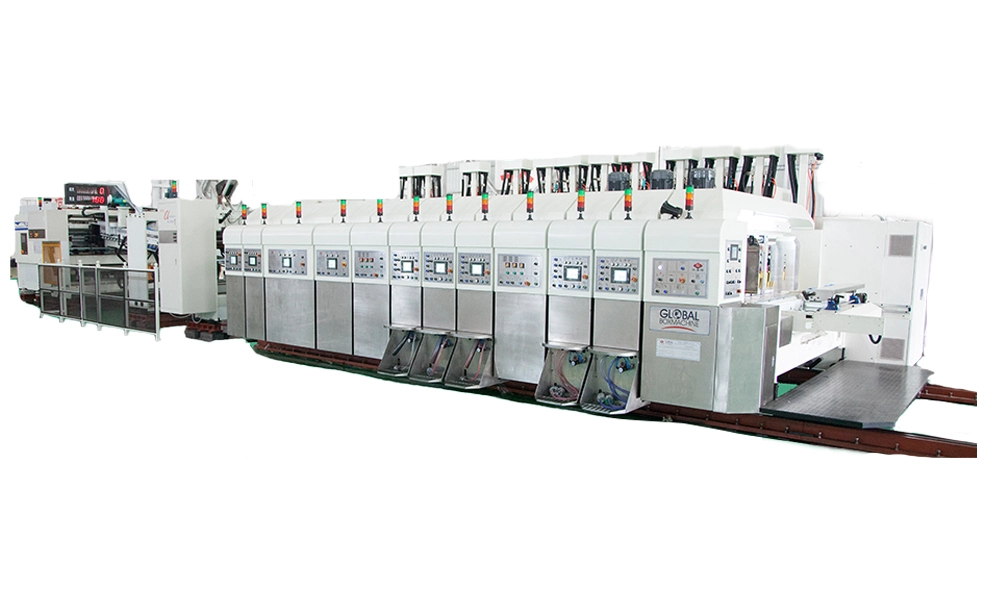
Computerized Flexo Printing Slotting Die-Cutting Inline Folding Gluing Countering Ejecting Machine
Introducing the Keshenglong&Shinko Computerized Flexo Printing Slotting Die-Cutting Inline Folding Gluing Countering Ejecting Machine. Engineered for precision, this advanced machine streamlines your packaging production with integrated Flexo Printing Slotting Die-Cutting functionalities. Seamlessly perform inline folding, gluing, countering, and ejecting—all in one efficient system. Designed for optimal performance, it enhances productivity while reducing downtime.
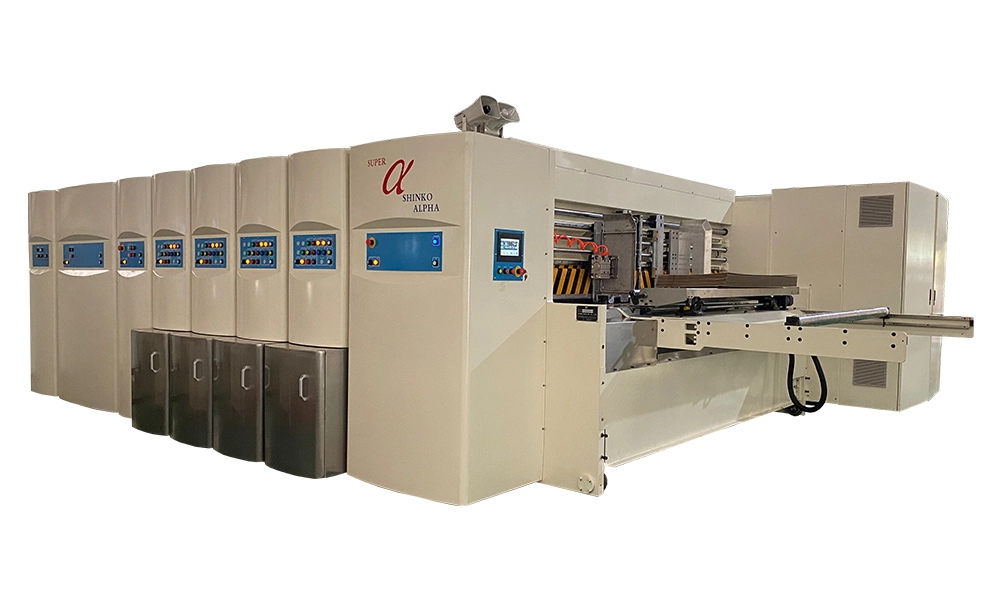
Shinko Super Alpha Movable Type Full Servo Drive Flexo Printing Slotting Die Cutting Machine
Introducing the Shinko Super Alpha Movable Type Full Servo Drive Flexo Printing Slotting Die Cutting Machine by Keshenglong. Engineered for precision and efficiency, this state-of-the-art machine enhances your production line with its advanced servo drive technology. Designed for seamless Flexo printing, slotting, and die-cutting, it ensures superior quality with every output.
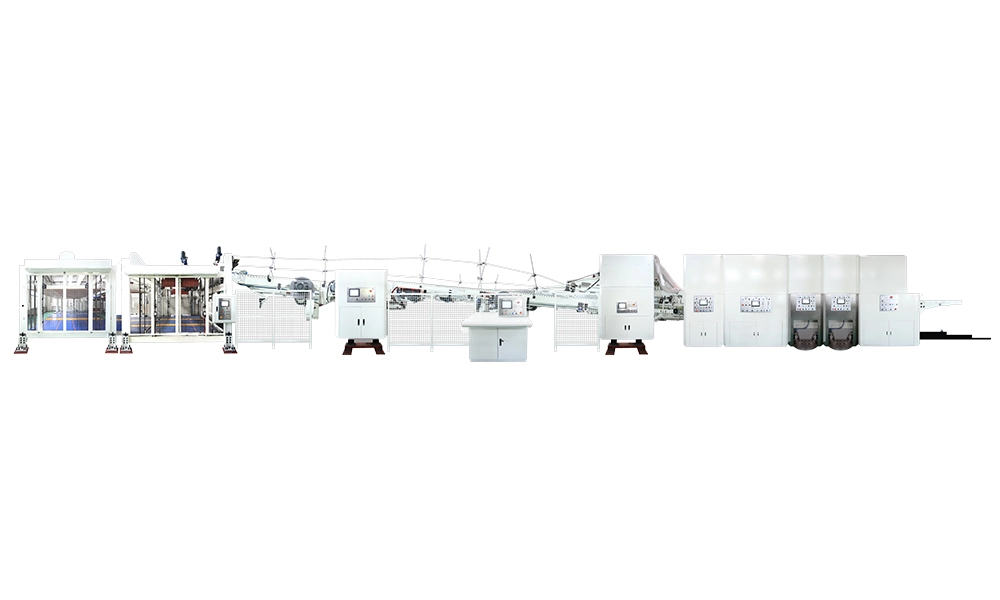
Jumbo Flexo Bottom Printing Slotting Die-Cutting Inline Folding Gluing Countering Ejecting Machine
Introducing the Keshenglong&Shinko Jumbo Flexo Bottom Printing Slotting Die-Cutting Inline Folding Gluing Countering Ejecting Machine. This advanced flexo printing slotting die-cutting machine ensures precision and efficiency for your packaging needs. Designed as a versatile flexo folder gluer machine, it optimizes every step from printing to ejecting, delivering seamless integration and superior quality.
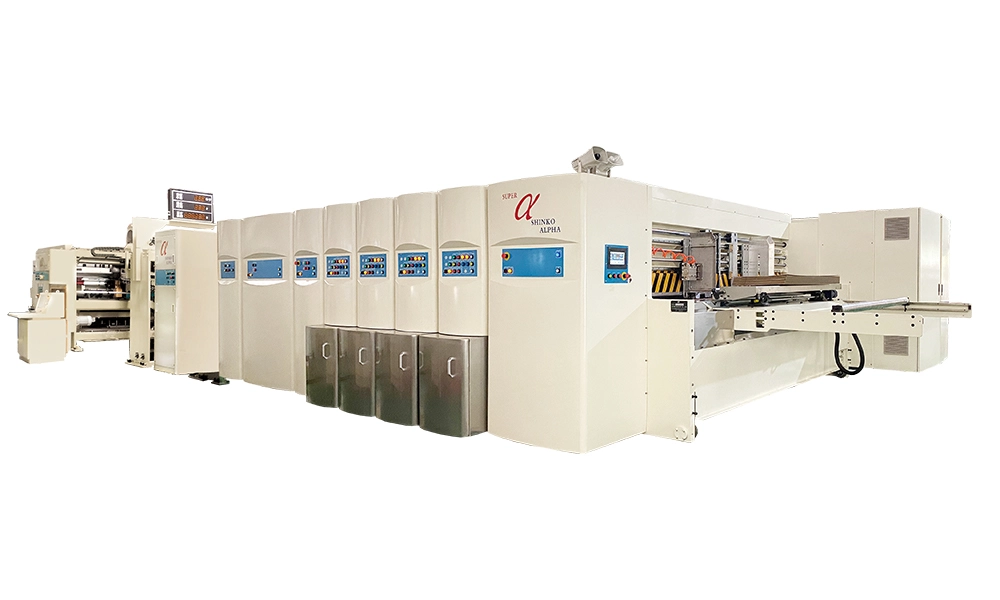
Shinko Super Alpha Movable Type Full Servo Drive Flexo Printing Slotting Die Cutting Inline Folding Gluing Counting Ejecting Machine
This state-of-the-art Movable Type Full Servo Drive Flexo Printing Slotting Die Cutting Machine streamlines your production with precision. Experience seamless operation with its Inline Folding Gluing Counting Ejecting capabilities, ensuring unparalleled efficiency. Designed for high-performance tasks, this Keshenglong&Shinko Super Alpha Movable Type Full Servo Drive Flexo Printing Slotting Die Cutting Inline Folding Gluing Counting Ejecting Machine enhances productivity while maintaining premium quality. Ideal for businesses seeking innovation and reliability, the Shinko Super Alpha is your go-to solution for advanced printing and cutting needs.


© 2025 Keshenglong & SHINKO All Rights Reserved.
Keshenglong Carton Packing Machine
Keshenglong Carton Packing Machine
Keshenglong Carton Packing Machine
Keshenglong Carton Packing Machine
Keshenglong Carton Packing Machine