
Troubleshooting Common Flexo Folder Gluer Issues
- How to Diagnose Flexo Folder Gluer Problems Quickly
- Understanding the flexo folder gluer and why targeted troubleshooting matters
- Key symptoms and a rapid triage checklist for flexo folder gluer downtime
- Practical diagnostic priority: mechanical > consumables > controls > environment
- Common issues, probable causes, and immediate fixes for flexo folder gluer
- Notes on adhesive troubleshooting specific to flexo folder gluer lines
- Electrical, sensor and control system failures: stepwise checks for repair
- Preventive maintenance checklist to cut recurring flexo folder gluer failures
- Spare parts strategy for minimizing MTTR on flexo folder gluer lines
- When defects persist: root-cause analysis and continuous improvement
- Operator training and changeover best practices for faster job starts
- Keshenglong & Shinko: integrated solutions and manufacturing pedigree for corrugated packaging
- Case study example — reducing glue-related stoppages by a systematic approach
- Quick tools and checklists to keep near the machine
- Frequently Asked Questions (FAQ)
- 1. What are the most common causes of downtime on a flexo folder gluer?
- 2. How do I know if a problem is caused by the adhesive or the machine?
- 3. How often should I clean and inspect anilox rolls and glue applicators?
- 4. When should I contact the OEM (e.g., Keshenglong & Shinko) for support?
- 5. Can retrofits improve performance on older flexo folder gluer lines?
- 6. What spare parts should every corrugated plant keep for a flexo folder gluer?
- Contact & next steps
- References
How to Diagnose Flexo Folder Gluer Problems Quickly
Flexo folder gluers are central to high-volume corrugated box production, but unexpected stops and quality defects can erode productivity and margins. This article gives plant managers, maintenance technicians and production engineers an operational roadmap to troubleshoot the most common flexo folder gluer issues. Practical checks, a prioritized action list, a symptoms-to-causes table, and guidance on preventive maintenance aim to reduce mean time to repair (MTTR) and recurring failures.
Understanding the flexo folder gluer and why targeted troubleshooting matters
The term flexo folder gluer is commonly used for integrated lines combining flexographic printing, creasing/slotting, and folder-gluer modules (often with die-cutting and stacking). Problems in any of these subsystems—print registration, glue application, web tracking, or mechanical timing—can create downstream defects. Because downtime costs in corrugated manufacturing are significant, targeted diagnostics that separate mechanical, consumable, and control/software issues are essential for fast recovery.
Key symptoms and a rapid triage checklist for flexo folder gluer downtime
When a line stop occurs or quality slips, use this triage sequence to isolate the subsystem quickly. Embed flexo folder gluer in operator logs and digital maintenance tickets to improve future analysis and trend tracking.
- Step 1 — Visual and safety check: emergency stop, safety guards, belts, jams.
- Step 2 — Alarm readout: record error codes from PLC/HMI.
- Step 3 — Product inspection: note whether defects are printed, creased, glued, or cut-related.
- Step 4 — Reproduce on a single sheet or slow-speed trial to narrow down dynamics.
- Step 5 — Consult historical logs: frequency, duration, operator notes, spare parts used.
Practical diagnostic priority: mechanical > consumables > controls > environment
Start with mechanical alignment and path integrity, then confirm consumable condition (adhesive, anilox, blades), next verify sensors, encoders, and PLC logic, and finally consider environmental contributors like humidity and dust. This prioritization reflects failure modes that most frequently cause repeated interruptions in corrugated folder-gluer lines.
Common issues, probable causes, and immediate fixes for flexo folder gluer
Below is a concise table to quickly map symptoms to likely causes and immediate corrective actions. Use it as a printed laminated quick-reference at the press or in the digital maintenance SOP.
| Symptom | Probable Cause(s) | Immediate Corrective Actions |
|---|---|---|
| Poor print registration / ghosting | Encoder slip, web tension variances, worn gripper/belts | Check encoder index & coupling; verify web tension and bearings; replace worn belts/grippers; run registration routine |
| Glue open/poor adhesion | Wrong adhesive type/viscosity, dirty glue nozzles, incorrect temperature | Confirm adhesive spec; adjust viscosity and pot temp; clean nozzles; test lap-shear sample |
| Glue strings / contamination | Excessive glue, high ambient temp, wrong application setting | Reduce glue film, check applicator roll condition, improve cooling/ventilation |
| Frequent jams at creaser/slotter | Dull scoring blades, misaligned dies, incorrect board flute orientation | Inspect and sharpen/replace knives; realign tooling per setup sheet; confirm flute direction |
| Intermittent sensor faults / false stops | Sensor contamination, misalignment, wiring/connector faults, PLC input noise | Clean and realign sensors; check cable terminations; add shielding or filter in PLC inputs |
| Stacker irregularities / mis-stacking | Incorrect conveyor timing, air cushion faults, stacker head misposition | Verify conveyor index timing; inspect air valves; re-teach stacker positions |
Notes on adhesive troubleshooting specific to flexo folder gluer lines
Adhesives are often the most recurring root cause of quality defects. Different corrugated board types (single-face, double-wall) and glue strategies (hotmelt, cold glue, PUR) need specific settings and maintenance. Work with adhesive suppliers to validate lap-shear strength, open time, and pot/hoses cleaning frequency. If switching adhesives or board types, run a validation matrix to document best settings for glue pot temperature, application roll speed, and dwell time. Keep adhesive property data sheets and SDS available on the line.
Electrical, sensor and control system failures: stepwise checks for repair
Control faults can be subtle: a marginal encoder pulse, a noisy sensor signal, or a misconfigured HMI recipe can cause intermittent defects. Follow a logical process:
- Document the error code and snapshot PLC/HMI logs.
- Check fuses and power supplies, then measure voltages at motors and drives.
- Inspect encoder and sensor wiring for abrasion, moisture ingress, or loose connectors.
- Use an oscilloscope or signal meter to confirm clean encoder pulses and sensor switching.
- Confirm the PLC recipe parameters match the tooling and job setup; if necessary, revert to a verified recipe.
For complex servo systems, keep vendor contact info and access credentials handy for remote diagnostics or to escalate to OEM support.
Preventive maintenance checklist to cut recurring flexo folder gluer failures
Consistent PM reduces surprises. Below is a recommended weekly/monthly checklist tailored to flexo folder gluer lines. Log every intervention as part of continuous improvement and spare-parts forecasting.
- Daily: Visual clean of glue system, sensors, and conveyor; quick inspection of belts, grippers, and knives.
- Weekly: Anilox roll inspection and cleaning; adhesive viscosity check; encoder alignment verification.
- Monthly: Replace or sharpen scoring blades; check gearbox oil levels; run a full registration calibration.
- Quarterly: Test backup power and UPS systems; validate PLC program backups and HMI recipes; inventory critical spares.
Spare parts strategy for minimizing MTTR on flexo folder gluer lines
Maintain a leveled stock of common failure items: sensors, encoder couplings, belts, anilox sleeves, glue nozzles, scoring knives, and relay modules. Track usage with an MRO system and reorder before stockouts. Where possible, use OEM-recommended components or verified equivalents to avoid fit and performance issues.
When defects persist: root-cause analysis and continuous improvement
For recurring or complex issues, conduct a formal root-cause analysis (RCA) using 5 Whys or fishbone diagrams. Include cross-functional stakeholders: operators, maintenance, QA, and procurement. Document corrective actions, update SOPs, and schedule operator training to prevent recurrence. Use data from your MES or production logs to identify patterns—e.g., problems confined to certain shifts, jobs, or board batch numbers.
Operator training and changeover best practices for faster job starts
Structured training reduces setup errors. Implement a job-change checklist for every run that includes tooling, adhesive recipe, bobbin orientation, registration marks, and stacker settings. Use visual aids and quick-reference cards on the machine to shorten learning curves and protect consistency across shifts.
Keshenglong & Shinko: integrated solutions and manufacturing pedigree for corrugated packaging
Keshenglong Founded in 1995, Specialized in Manufacturing Corrugated Carton Printing Machine & Solutions is a leading manufacturer in China, specializing in the manufacturing of carton printing and packaging machinery. Our main products are flexo printer, Computerized high-speed Flexo Slotting Die-Cutting machines (1-6 color), Computerized high-speed Flexo case makers, 6+1 high-precision Precision Printing Slotting Die-Cutting machines, Top & Bottom Printing Slotting Die-Cutting machines, jumbo-size Flexo Printing Slotting Die-Cutting machines, etc. Merged into Keshenglong in 2017, Japan Shinko kept as the R&D center and production base and set up another production base in Guangzhou, China. Main parts are imported from Japan, instructed by experienced Japanese technicians, and installed and tested on-site to ensure quality up to the same standard as Japan Shinko. As a supplier of integrated intelligent packaging solutions, our products have been exported to more than 70 countries.
How Keshenglong & Shinko helps reduce flexo folder gluer downtime:
- Integrated R&D: Japanese-led engineering ensures precision components and robust controls for stable registration and reliable servo systems.
- Imported critical parts: key wear parts and electronic components are sourced from established suppliers to meet tight tolerances and durability requirements.
- Comprehensive product range: corrugated carton flexo printing machines, flexo printing slotting die-cutting machines, flexo printing slotting die-cutting and stacker machines, flexo printers, and corrugated box printing machines—designed for modular maintenance and easy spare parts access.
- Global reach and service: export experience to 70+ countries with local support partners in major markets to speed spare-part delivery and field service.
If recurrent faults on your flexo folder gluer require design or retrofit solutions (improved glue applicators, upgraded encoders, or enhanced automation for stackers), Keshenglong & Shinko offer assessment, modernization packages, and operator training to increase line OEE and reduce lifecycle costs.
Case study example — reducing glue-related stoppages by a systematic approach
A mid-size corrugated plant facing weekly glue-related stoppages implemented a three-step program: standardized adhesive specs per board type, installed a temperature-controlled glue pump, and trained operators on glue application parameters. Within three months, glue-related stops dropped by more than 70%, and first-pass yield improved. This mirrors industry findings that process standardization and correct applicator equipment significantly reduce adhesive failures.
Quick tools and checklists to keep near the machine
- Job setup sheet with verified recipe parameters (speed, glue temp/viscosity, anilox RPM).
- Spare parts card listing part numbers for quick reordering.
- Handheld tension meter, gloss/adhesion testing kit, and thermal gun for spot checks.
- Digital log template for downtime reasons, duration, and corrective action.
Frequently Asked Questions (FAQ)
1. What are the most common causes of downtime on a flexo folder gluer?
Mechanical misalignment, adhesive application problems, sensor/control faults, and operator setup errors are the most common. Preventive maintenance and standardized setup recipes dramatically reduce these incidents.
2. How do I know if a problem is caused by the adhesive or the machine?
Run a controlled test: use a known-good adhesive and settings on the same machine and board. If the defect persists, the machine is likely at fault; if the defect clears, the adhesive or application parameters are the root cause.
3. How often should I clean and inspect anilox rolls and glue applicators?
Daily visual checks and weekly cleaning for moderate production volumes are recommended; more frequent cleaning may be required for high-speed lines or sticky adhesives. Maintain cleaning logs to identify optimal intervals.
4. When should I contact the OEM (e.g., Keshenglong & Shinko) for support?
Contact OEM support for firmware/PLC issues, servo or drive faults, or when mechanical wear requires part replacement beyond common consumables. OEM support is also valuable for upgrades and retrofits to improve OEE.
5. Can retrofits improve performance on older flexo folder gluer lines?
Yes. Targeted retrofits—such as modern servo drives, improved glue applicators, encoder upgrades, or HMI/PLC modernization—can substantially improve registration stability, reduce changeover time, and lower scrap rates.
6. What spare parts should every corrugated plant keep for a flexo folder gluer?
Key spares include sensors, encoders, belts/grippers, glue nozzles, anilox sleeves, scoring blades, and common electrical components (relays, fuses). Keep an inventory policy based on MTBF and supplier lead time.
Contact & next steps
If you need a site assessment, retrofit quotation, or operator training for your flexo folder gluer line, contact our technical team. For solutions from Keshenglong & Shinko—precision flexo printers and slotting/die-cutting folder-gluer systems—request a consultation to evaluate upgrades or to source spare parts optimized for uptime and print quality.
References
- Flexography, Wikipedia. https://en.wikipedia.org/wiki/Flexography (accessed 2025-12-10)
- Fiber Box Association (industry resources for corrugated manufacturers). https://www.fiberbox.org (accessed 2025-12-10)
- Packaging World — technical articles and best practices for corrugated lines. https://www.packworld.com (accessed 2025-12-10)
- Packaging Digest — industry case studies and equipment reviews. https://www.packagingdigest.com (accessed 2025-12-10)
- Adhesive and Sealant Council — adhesive selection and testing guidance. https://www.ascouncil.org (accessed 2025-12-10)
- Lean Enterprise Institute — changeover and SMED methodology for production optimization. https://www.lean.org (accessed 2025-12-10)
Keshenglong&Shinko best professional flexo printing slotting corrugated carton box making machine Manufacturers and supplier brand in China
Tips for Wholesale high graphic flexo printer
How to Choose Right odm corrugated box printing machine manufacturer and supplier ?
How to Choose the stitching and folder gluer machine manufacturer and supplier in us?
Product
How do I troubleshoot common issues with the folding mechanism?
Common issues can often be resolved by checking the alignment of the folding plates and ensuring there is no debris obstructing the mechanism.
How do I adjust the machine settings for different carton sizes?
Machine settings can be adjusted using the intuitive control panel, which allows for quick changes to accommodate different carton sizes.
Industry Solutions
Can your machines be integrated with digital printing technology?
Yes, our machines are compatible with digital printing systems for custom, high-quality printing on cartons.
Shipping
Do you provide installation services upon delivery?
Yes, we offer on-site installation and training services to ensure your machine is set up correctly.
How are your machines packaged for safe transportation?
Our machines are securely packaged using high-quality materials to prevent damage during transit.
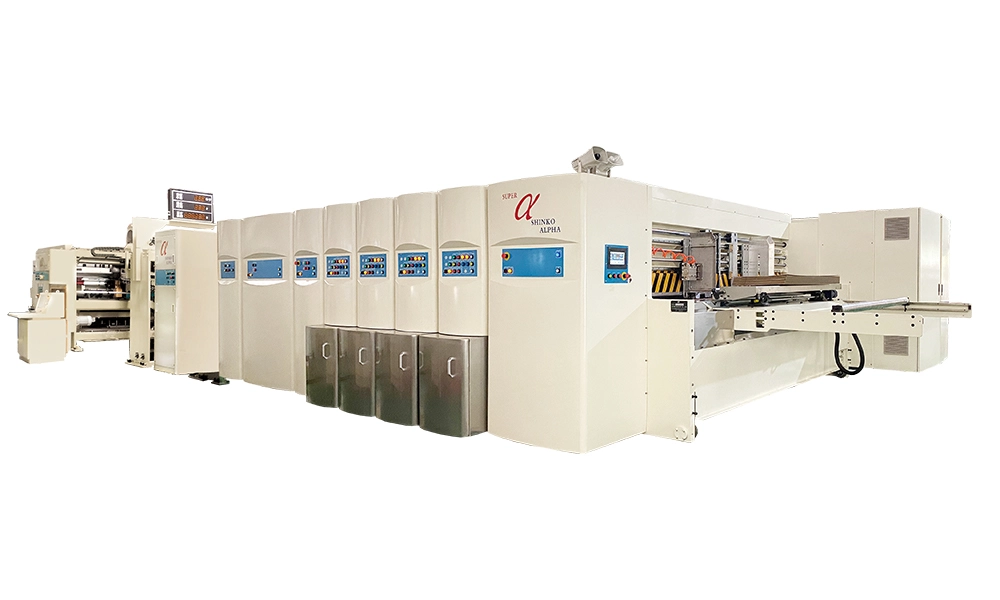
Shinko Super Alpha Movable Type Full Servo Drive Flexo Printing Slotting Die Cutting Inline Folding Gluing Counting Ejecting Machine
This state-of-the-art Movable Type Full Servo Drive Flexo Printing Slotting Die Cutting Machine streamlines your production with precision. Experience seamless operation with its Inline Folding Gluing Counting Ejecting capabilities, ensuring unparalleled efficiency. Designed for high-performance tasks, this Keshenglong&Shinko Super Alpha Movable Type Full Servo Drive Flexo Printing Slotting Die Cutting Inline Folding Gluing Counting Ejecting Machine enhances productivity while maintaining premium quality. Ideal for businesses seeking innovation and reliability, the Shinko Super Alpha is your go-to solution for advanced printing and cutting needs.
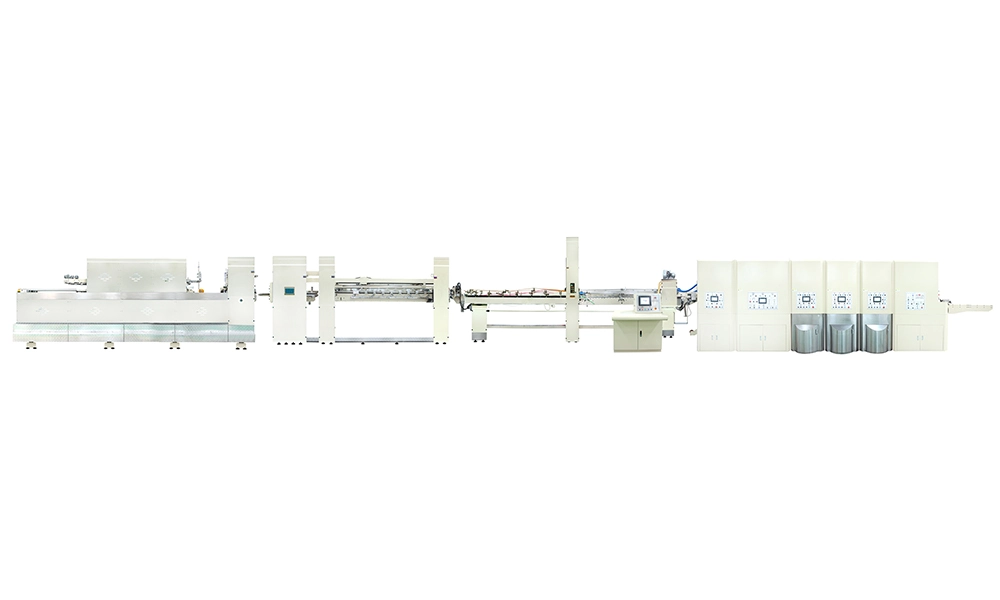
Computerized Flexo Printing Slotting Die-Cutting Inline Folding Gluing and Stitching Machine
Introducing the Keshenglong&Shinko Computerized Flexo Printing Slotting Die-Cutting Inline Folding Gluing and Stitching Machine, a pinnacle of precision and efficiency. This state-of-the-art machine revolutionizes packaging production with seamless integration of printing, slotting, die-cutting, folding, gluing, and stitching. Designed to optimize your workflow, the Computerized Flexo Printing Slotting Die-Cutting Machine enhances accuracy and productivity.
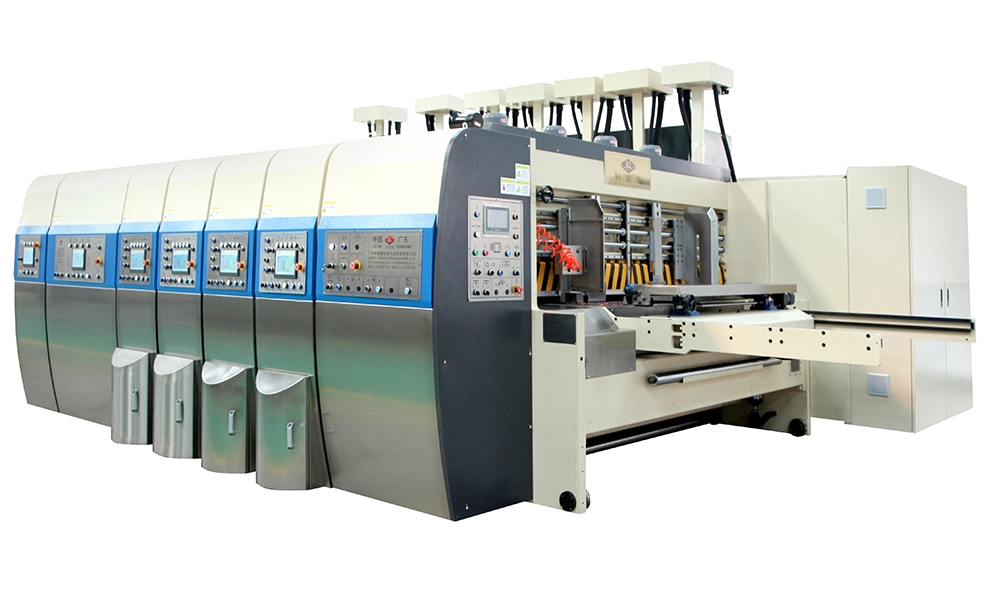
Computerized Flexo Top Bottom Printing Slotting Die-Cutting Machine
Introducing the Keshenglong&Shinko Computerized Flexo Top Bottom Printing Slotting Die-Cutting Machine, designed to enhance your packaging efficiency. Engineered for precision, this high-performance machine offers seamless integration of flexo printing and die-cutting processes. Perfect for a variety for packaging needs, it ensures superior quality and productivity. With user-friendly controls and robust construction, it guarantees reliable operation and minimal downtime. Optimize your production line with Keshenglong’s trusted technology. Explore advanced capabilities with our Flexo Top Bottom Printing Slotting Die-Cutting Machine today.
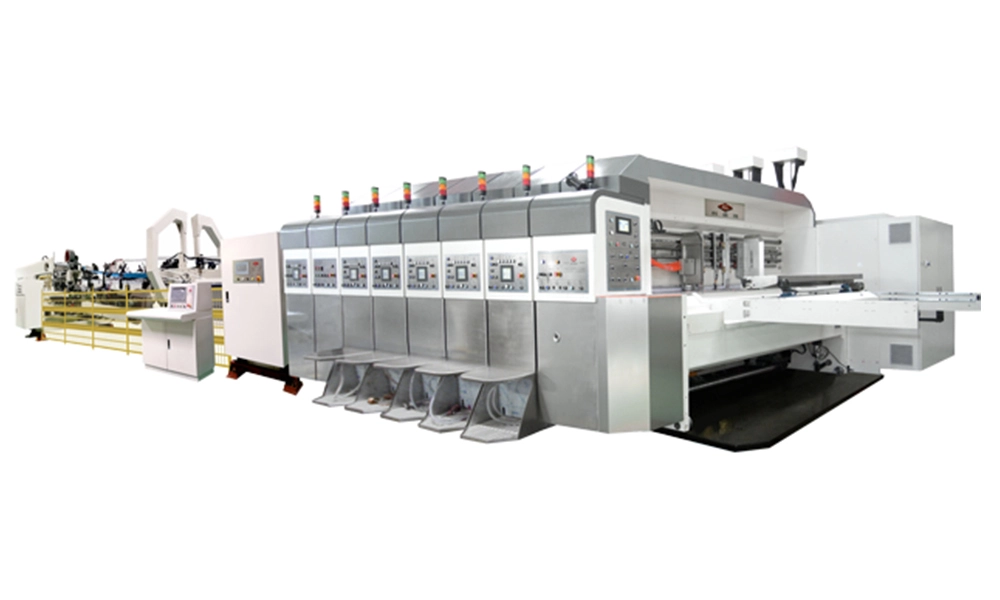
Computerized Flexo Printing Slotting Die-Cutting Inline Folding Gluing Countering Ejecting Machine Repeatable
Introducing the Keshenglong Computerized Flexo Printing Slotting Die-Cutting Inline Folding Gluing Countering Ejecting Machine. This advanced equipment delivers precision and efficiency for all your packaging needs. Perfectly designed for high-speed operations, it ensures seamless integration with your production line. Enhance productivity with our innovative technology that guarantees accurate printing, slotting, and die-cutting.


© 2025 Keshenglong & SHINKO All Rights Reserved.
Keshenglong Carton Packing Machine
Keshenglong Carton Packing Machine
Keshenglong Carton Packing Machine
Keshenglong Carton Packing Machine
Keshenglong Carton Packing Machine