
Substrate Guide: Best Materials for Flexo Printer Machines
- Choosing the Right Substrate for High-Performance Flexo Printing
- What ‘substrate’ means for flexo printer machines
- How substrate choice drives cost, quality and sustainability
- Core Substrate Families Used on Flexo Printer Machines
- Corrugated board (liners + medium)
- Folding cartonboard and solid board (SBS, FBB)
- Flexible films and foils (BOPP, PET, PE, metallized films)
- Technical Factors: What to Check When Selecting a Substrate
- Surface energy and treatment
- Porosity, ink absorption and dot gain
- Dimensional stability and web handling
- Substrate–Process Match: Recommendations and Settings
- Corrugated (single- and multi-color flexo)
- Folding carton and coated boards
- Films and metallized substrates
- Comparative Table: Typical Substrates and Practical Parameters
- Practical Troubleshooting: Common Substrate Issues & Fixes
- Excessive dot gain on uncoated liners
- Poor adhesion on films
- Mottling and uneven solids
- Environmental & Regulatory Considerations
- Recyclability and mono-material design
- Ink regulations and food-contact compliance
- Keshenglong & Shinko — Capabilities, Products and Why They Matter
- Company profile and manufacturing strengths
- How Keshenglong & Shinko advantages translate to better substrate handling
- Key product lines (how they map to substrate needs)
- Checklist: Preparing a New Substrate Run on Your Flexo Printer Machine
- Pre-press and test-run steps
- Monitoring during production
- FAQ — Frequently Asked Questions
- 1. Which substrate gives the best print quality on a flexo printer machine?
- 2. Can I print high-resolution graphics on corrugated board?
- 3. How do I choose anilox roll volume for a new substrate?
- 4. What surface treatment is required for BOPP or PE films?
- 5. How do sustainability requirements affect substrate choice?
- 6. What ink type is best for food-contact packaging?
- Contact & Purchase — Get Help Optimizing Substrate Choices
- References & Further Reading
Choosing the Right Substrate for High-Performance Flexo Printing
What ‘substrate’ means for flexo printer machines
In flexography, a substrate is any material onto which ink is transferred: corrugated board, folding cartonboard, paper, film, foil, or specialty laminates. The substrate’s surface energy, porosity, thickness and dimensional stability directly affect ink laydown, drying, and final print quality. Matching substrate properties to press parameters is the first step to repeatable results.
How substrate choice drives cost, quality and sustainability
Choosing the optimal substrate balances print quality, run speed and total cost of ownership (materials + press throughput + waste). For example, uncoated kraft liners are cost-efficient for large corrugated boxes but limit high-definition graphics; coated folding cartons enable High Quality graphics but increase material cost and may require different inks and drying systems. Sustainable sourcing (recycled content, FSC) is increasingly required by brands, so substrate selection must include recyclability and certification criteria.
Core Substrate Families Used on Flexo Printer Machines
Corrugated board (liners + medium)
Corrugated substrate is the backbone of packaging flexo. Typical constructions combine kraft liners and corrugated medium (flute). Common grammages: liners 90–180 g/m², medium 70–150 g/m², with flute types (B, C, E, F) affecting compression and printing surface. Corrugated boards are porous and absorb water-based inks readily; surface treatments (loading, primer, or clay coating) are used to improve dot gain and color density for graphics.
Folding cartonboard and solid board (SBS, FBB)
Solid bleached sulfate (SBS) and folding boxboard (FBB) are used for high-quality packaging (cosmetics, pharmaceuticals). These substrates are usually coated one- or two-side (C1S/C2S) which enables fine line reproduction and higher screen rulings. They require lower anilox volume and often solvent- or UV-curable inks for best optical density.
Flexible films and foils (BOPP, PET, PE, metallized films)
Flexible packaging uses polymer films: BOPP, PET, PE and metallized variants. Films are non-porous, low-surface-energy materials that need corona or plasma treatment and specific inks (solvent, UV or water-based with appropriate adhesion promoters). Films allow high-resolution graphics but require precise ink metering and curing (UV/EB frequently used).
Technical Factors: What to Check When Selecting a Substrate
Surface energy and treatment
Surface energy (measured in dyne/cm) determines ink wetting. Most untreated polyolefin films have surface energy below 36 dyne/cm and need corona or plasma treatment to reach 38–44 dyne/cm for reliable adhesion. Paperboards generally have higher surface energy but coated boards may need primer for optimal dot gain control.
Porosity, ink absorption and dot gain
Porous substrates (kraft liners, uncoated boards) absorb water-based inks causing higher dot gain and lower optical density. Coated boards reduce absorption, improving color accuracy. For high-precision work, measure Cobb value (water absorptiveness) and run test strips to set anilox volume and anilox cell type.
Dimensional stability and web handling
Films and lightweight boards are sensitive to web tension and humidity. Flexo presses must be configured with appropriate tension control, dancer rolls and chill/driven rollers to avoid registration drift. For corrugated case printing, flatbed or platen support and precise feeder/guides reduce skew and flutter.
Substrate–Process Match: Recommendations and Settings
Corrugated (single- and multi-color flexo)
Recommended inks: water-based flexo inks or UV-curable inks where high OD is needed. Anilox guidance: high-volume anilox (10–20 BCM) for heavy laydown on uncoated liners; lower volumes (6–12 BCM) for coated or primed corrugate. Typical challenges: high dot gain, mottling on recycled liners, and drying through corrugate structure—use forced-air dryers and controlled humidity environments.
Folding carton and coated boards
Recommended inks: water-based or UV flexo inks formulated for coated boards. Anilox guidance: fine screens with lower volumes (3–8 BCM) to achieve crisp edges and smooth solids. Pre-press: high-resolution plates (digital flexo) and tight anilox selection are essential. Drying method: IR and hot-air combined or UV for instant cure and handling speed.
Films and metallized substrates
Recommended inks: solvent-based, UV or specially formulated water-based inks with adhesion promoters. Anilox guidance: micro-cell anilox rolls (3–6 BCM) and chrome or ceramic surfaces for long life. Pre-treatment: corona or plasma; post-processing: lamination or varnish for barrier and abrasion resistance. Use chill rolls to manage heat-sensitive films during drying/curing.
Comparative Table: Typical Substrates and Practical Parameters
| Substrate | Typical Basis Weight / Thickness | Recommended Ink System | Anilox Volume (BCM) | Drying/Curing | Recyclability / Notes |
|---|---|---|---|---|---|
| Corrugated (liners + medium) | Liners 90–180 g/m²; medium 70–150 g/m² | Water-based flexo; UV where high OD needed | 10–20 (uncoated); 6–12 (coated) | Hot air / IR; UV optional | Widely recyclable; recycled content affects surface |
| Folding carton (SBS, FBB) | 200–450 g/m² (board) | Water-based or UV flexo | 3–8 | IR + hot air; UV for instant cure | High-quality graphics; recyclable if mono-material |
| BOPP / PET / PE films | 12–50 µm typical gauges | Solvent, UV, or treated water-based | 3–6 | UV/EB or IR with chill rolls | Require treatment; recycling depends on lamination |
| Metallized film / Foil | ~6–40 µm | UV or solvent with adhesion promoters | 3–6 | UV/EB | Lamination often reduces recyclability |
| Coated recycled board | 200–400 g/m² | Water-based flexo, UV for higher gloss | 4–10 | IR + hot air; UV optional | Cost-effective; variable surface quality |
Practical Troubleshooting: Common Substrate Issues & Fixes
Excessive dot gain on uncoated liners
Fixes: increase anilox line screen but reduce volume; use coarser screen with lower volume; apply primer or loading to the liner to reduce ink penetration; adjust drying to prevent over-penetration.
Poor adhesion on films
Fixes: measure surface energy and run corona/plasma treatment to >38 dyne/cm; use adhesion-promoting inks or primers; optimize curing (UV/EB) to fully polymerize the ink.
Mottling and uneven solids
Fixes: check anilox wear and clean; adjust ink viscosity and pH (for water-based systems); verify tension control and substrate flatness; consider changing to a more uniform coated substrate.
Environmental & Regulatory Considerations
Recyclability and mono-material design
Designing for recycling is increasingly central. Mono-material solutions (e.g., PE-only laminates) simplify downstream recycling. Corrugated fiberboard remains one of the most recycled packaging formats—supply chain certifications (FSC, PEFC) and recycled content declarations are frequently demanded by end customers.
Ink regulations and food-contact compliance
Food packaging has strict migration limits and requires inks and coatings compliant with local law (e.g., EU Regulation (EU) No 10/2011 for plastics or national FDA guidelines). Always verify ink certifications and consider barrier layers or functional coatings when printing on direct food-contact substrates.
Keshenglong & Shinko — Capabilities, Products and Why They Matter
Company profile and manufacturing strengths
Keshenglong, founded in 1995 and specialized in manufacturing corrugated carton printing machines & solutions, is a leading manufacturer in China. Their main products include flexo printers, computerized high-speed flexo slotting die-cutting machines (1-6 color), computerized high-speed flexo case makers, 6+1 high-precision precision printing slotting die-cutting machines, top & bottom printing slotting die-cutting machines, and jumbo-size flexo printing slotting die-cutting machines. In 2017 Keshenglong merged with Japan Shinko, keeping Shinko as the R&D center and production base, and added another production base in Guangzhou, China. Key parts are imported from Japan, and experienced Japanese technicians provide installation and on-site testing to ensure quality meeting Japanese standards. As a supplier of integrated intelligent packaging solutions, Keshenglong’s products have been exported to more than 70 countries.
How Keshenglong & Shinko advantages translate to better substrate handling
- Integrated R&D (Japan Shinko) ensures machines are designed with precise substrate handling for corrugated and folding cartons, reducing registration errors on thin or unstable stocks.
- Imported critical components and Japanese-standard assembly improve machine stability for demanding substrates such as films and metallized boards.
- Product range (from 1-6 color flexo to combined printing-slotting-die-cutting) enables inline workflows that minimize substrate handling and reduce damage/waste.
- Global installations and after-sales support across 70+ countries give operators real-world tuning data for many substrate types.
Key product lines (how they map to substrate needs)
Recommended Keshenglong machine choices:
- Corrugated carton flexo printing machines: for high-volume case printing on kraft liners—robust tension control and high-volume anilox capability.
- Flexo printing slotting die-cutting machine & stacker: ideal for inline finishing to protect substrate edges and ensure accurate die-cut and stacking.
- 6+1 precision machines and jumbo-size flexo machines: for high-graphic folding cartons and large-format corrugated boards where precise registration and low vibration are critical.
Checklist: Preparing a New Substrate Run on Your Flexo Printer Machine
Pre-press and test-run steps
- Obtain substrate spec sheet (basis weight, coating, surface energy, Cobb).
- Run surface energy test and apply corona/plasma if needed.
- Select anilox rolls based on target ink film thickness and substrate porosity.
- Set ink viscosity, pH and additives following the ink maker’s recommendations.
- Conduct a short proofing run, measure dot gain and color, then adjust anilox or plate parameters.
Monitoring during production
Continuously monitor registration, color density (in-line spectrophotometer if available), web tension, and drying temperature. Keep a log of settings per substrate for repeatability.
FAQ — Frequently Asked Questions
1. Which substrate gives the best print quality on a flexo printer machine?
Coated folding cartonboard (SBS or coated FBB) provides the best balance of smooth surface and dimensional stability for high-resolution flexo prints. For film applications, PET with proper surface treatment offers excellent quality.
2. Can I print high-resolution graphics on corrugated board?
Yes—using clay- or pigment-coated liners or by applying a primer loading to the liner. Use appropriate anilox volumes (lower for coated surfaces) and consider UV inks for higher optical density and faster curing.
3. How do I choose anilox roll volume for a new substrate?
Start with substrate porosity as your guide: high porosity (uncoated corrugate) needs higher volume (10–20 BCM); low porosity (coated board, film) needs low volume (3–8 BCM). Run test patches to fine-tune.
4. What surface treatment is required for BOPP or PE films?
Corona or plasma treatment is typically required to raise surface energy to >38 dyne/cm for reliable ink adhesion. Treatment levels/depth vary by film supplier and should be measured prior to press-up.
5. How do sustainability requirements affect substrate choice?
Brands often demand recycled content or certification (FSC). Mono-material solutions and recyclable coatings simplify end-of-life processing. Evaluate the trade-off between barrier/lamination needs and recyclability early in packaging design.
6. What ink type is best for food-contact packaging?
Food-contact packaging typically requires inks and varnishes with specific migration limits and certifications; consult ink suppliers and local regulations (e.g., EU, FDA) and consider functional barriers (primers or laminates) where necessary.
Contact & Purchase — Get Help Optimizing Substrate Choices
If you are ready to optimize substrate performance on your flexo printer machine or to evaluate inline flexo-printing-slotting-die-cutting solutions, contact Keshenglong for machine specifications, substrate compatibility testing, and on-site commissioning. For a consultation or to view Keshenglong product portfolios, request a quote or technical visit through their sales channels.
References & Further Reading
- Wikipedia — Flexography. https://en.wikipedia.org/wiki/Flexography (accessed 2026-01-09)
- Wikipedia — Corrugated fiberboard. https://en.wikipedia.org/wiki/Corrugated_fiberboard (accessed 2026-01-09)
- Flexographic Technical Association (FTA) — Anilox and cells guidance. https://flexography.org/ (accessed 2026-01-09)
- The Fibre Box Association — Corrugated packaging information. https://fibrebox.org/ (accessed 2026-01-09)
- Industry whitepaper: Ink-substrate interactions in flexography (technical articles and best practices). Example resource: Smithers reports and papers. https://www.smithers.com/ (accessed 2026-01-09)
- Food contact material regulations (EU) — Plastics and materials. https://ec.europa.eu/food/safety/food_contact_materials/ (accessed 2026-01-09)
For tailored recommendations, substrate trials, or machine demos, contact Keshenglong to align your flexo printer machine settings with the best substrate for your product and market.
Top 10 automatic carton packing machine Manufacturers and Supplier Brands
The 10 Key Factors in automatic inline flexo folder gluer That Affect Cost
Wholesale corrugated cardboard flexo printer manufacturer and supplier
Comprehensive Guide to Flexo Printing Slotting Die-Cutting Machines | Keshenglong & Shinko
Product
What maintenance is required for optimal machine performance?
Regular lubrication, cleaning of the folding units, and checking for worn parts are essential for maintaining optimal performance.
How do I troubleshoot common issues with the folding mechanism?
Common issues can often be resolved by checking the alignment of the folding plates and ensuring there is no debris obstructing the mechanism.
Are there safety features integrated into your machines?
Yes, our machines come equipped with multiple safety features including emergency stop buttons and safety guards.
Shipping
What are the shipping costs for your folding carton machines?
Shipping costs depend on the destination, machine size, and shipping method. Contact us for a detailed quote.
Can you ship to remote or difficult-to-access locations?
Yes, we can arrange shipping to remote locations, though additional charges and time may apply.
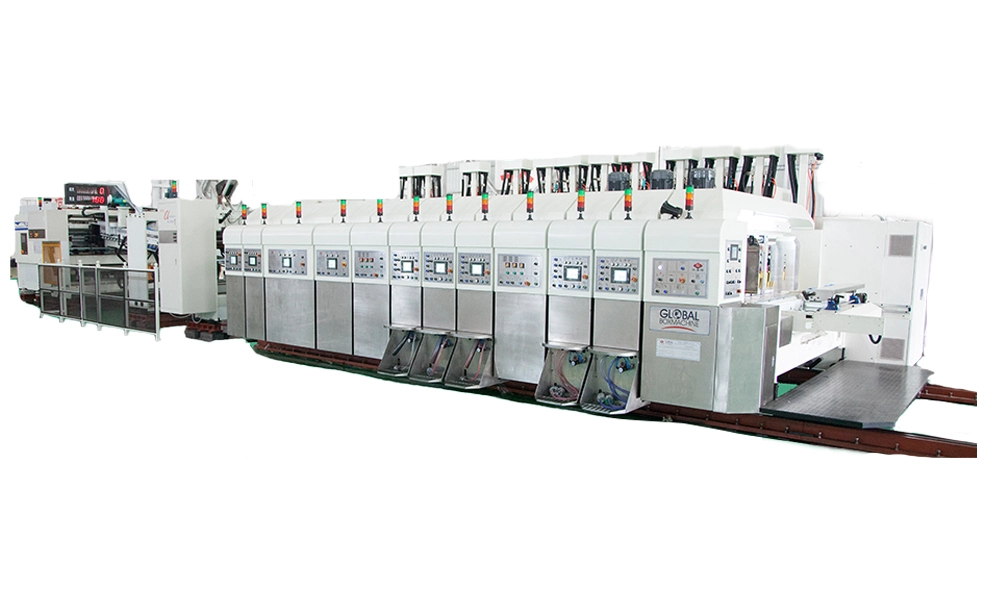
Computerized Flexo Printing Slotting Die-Cutting Inline Folding Gluing Countering Ejecting Machine
Introducing the Keshenglong&Shinko Computerized Flexo Printing Slotting Die-Cutting Inline Folding Gluing Countering Ejecting Machine. Engineered for precision, this advanced machine streamlines your packaging production with integrated Flexo Printing Slotting Die-Cutting functionalities. Seamlessly perform inline folding, gluing, countering, and ejecting—all in one efficient system. Designed for optimal performance, it enhances productivity while reducing downtime.
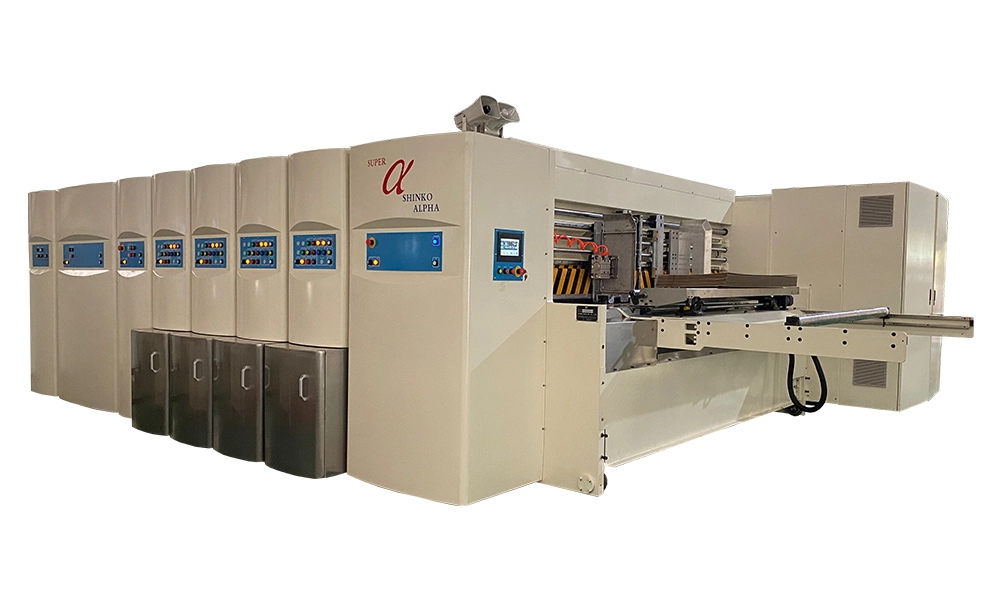
Shinko Super Alpha Movable Type Full Servo Drive Flexo Printing Slotting Die Cutting Machine
Introducing the Shinko Super Alpha Movable Type Full Servo Drive Flexo Printing Slotting Die Cutting Machine by Keshenglong. Engineered for precision and efficiency, this state-of-the-art machine enhances your production line with its advanced servo drive technology. Designed for seamless Flexo printing, slotting, and die-cutting, it ensures superior quality with every output.
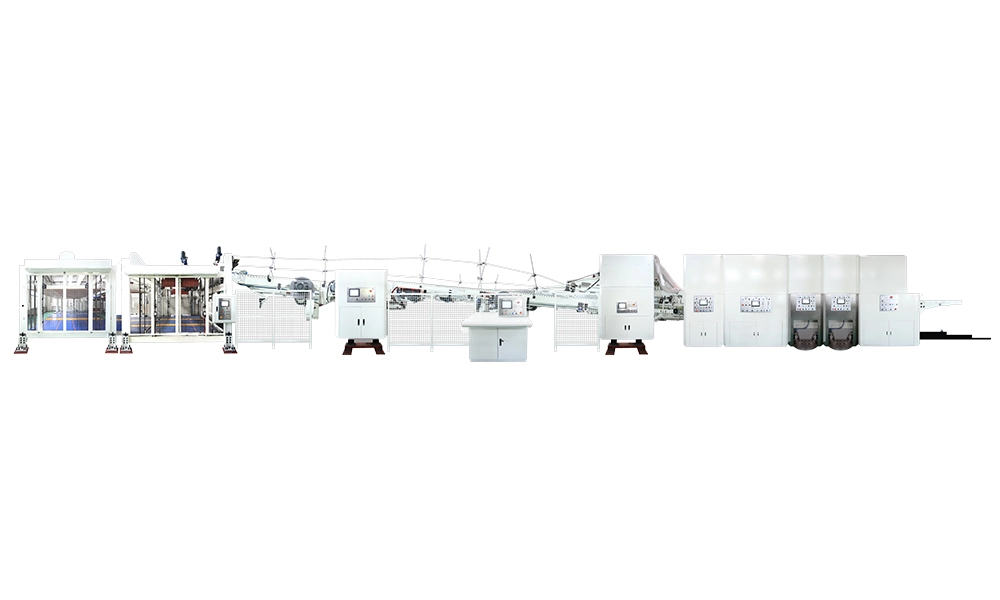
Jumbo Flexo Bottom Printing Slotting Die-Cutting Inline Folding Gluing Countering Ejecting Machine
Introducing the Keshenglong&Shinko Jumbo Flexo Bottom Printing Slotting Die-Cutting Inline Folding Gluing Countering Ejecting Machine. This advanced flexo printing slotting die-cutting machine ensures precision and efficiency for your packaging needs. Designed as a versatile flexo folder gluer machine, it optimizes every step from printing to ejecting, delivering seamless integration and superior quality.
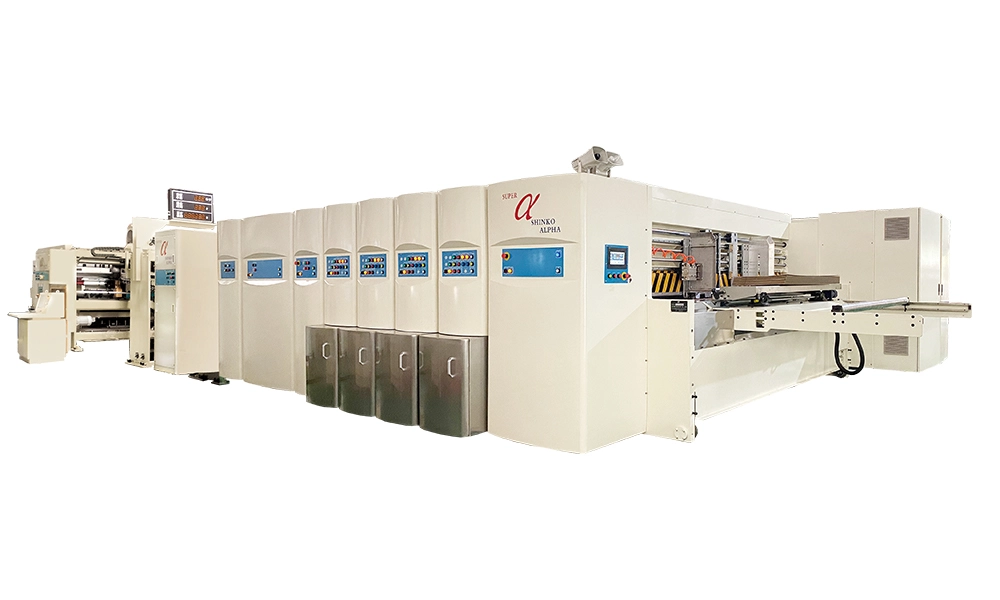
Shinko Super Alpha Movable Type Full Servo Drive Flexo Printing Slotting Die Cutting Inline Folding Gluing Counting Ejecting Machine
This state-of-the-art Movable Type Full Servo Drive Flexo Printing Slotting Die Cutting Machine streamlines your production with precision. Experience seamless operation with its Inline Folding Gluing Counting Ejecting capabilities, ensuring unparalleled efficiency. Designed for high-performance tasks, this Keshenglong&Shinko Super Alpha Movable Type Full Servo Drive Flexo Printing Slotting Die Cutting Inline Folding Gluing Counting Ejecting Machine enhances productivity while maintaining premium quality. Ideal for businesses seeking innovation and reliability, the Shinko Super Alpha is your go-to solution for advanced printing and cutting needs.


© 2025 Keshenglong & SHINKO All Rights Reserved.
Keshenglong Carton Packing Machine
Keshenglong Carton Packing Machine
Keshenglong Carton Packing Machine
Keshenglong Carton Packing Machine
Keshenglong Carton Packing Machine