
Substrate Compatibility: Films, Paper, Labels on Flexo Presses
- Understanding Substrate Behavior on Flexo Presses
- Why substrate matters in flexography
- Key substrate properties to evaluate
- Films: Plastics, Barrier Films and Running Strategies
- Surface energy and pre-treatment
- Ink choice and drying
- Handling and web tension
- Paper and Corrugated Boards: Absorbency, Coatings, and Printability
- Coated vs uncoated paper behavior
- Corrugated flexo considerations
- Environmental and storage impacts
- Labels and Pressure-Sensitive Stocks: Adhesives, Primers, and Release Liners
- Adhesive-substrate interactions
- Release liner and die-cutting
- Specialty labels (shrinking, wet-glue, tamper-evident)
- Practical Comparison: Films vs Paper vs Labels
- Troubleshooting and Optimization on Flexo Printing Machines
- Common failures and fixes
- Key process control parameters
- Testing and validation
- Keshenglong & Japan Shinko: Equipment and Solutions for Substrate Versatility
- Why choose Keshenglong & Japan Shinko solutions
- Product highlights and competitive strengths
- How the machinery addresses substrate pain points
- Implementation Roadmap: From Substrate Selection to Production Scale
- Phase 1 — Lab and Pilot Testing
- Phase 2 — Parameterization and SOPs
- Phase 3 — Scale Up and Continuous Improvement
- Frequently Asked Questions (FAQ)
- 1. How do I know if my film needs corona treatment?
- 2. Can I print the same job on paper and film without press changes?
- 3. What inks work best for metallized films?
- 4. How do I reduce label adhesive issues after printing?
- 5. What environmental conditions should I maintain in the pressroom?
- Contact & Next Steps
- References
- Company & Product Note
Understanding Substrate Behavior on Flexo Presses
Flexo printing machine operators and packaging specifiers often face the same question: which substrates will run reliably without sacrificing print quality, speed, or cost? This article explains how films, paper, and pressure-sensitive label stocks interact with flexographic processes — including material properties, required pre-treatments, ink/drying considerations, and common failure modes. Practical guidance is provided for press setup, troubleshooting, and substrate selection to help reduce spoilage and improve first-time-right yields.
Why substrate matters in flexography
Substrate selection directly impacts ink adherence, color consistency, register, and machine uptime on any flexo printing machine. Properties such as surface energy, porosity, thickness, and stiffness determine whether a substrate needs corona treatment, primer, or specialized inks. Getting substrate compatibility right reduces waste, shortens makeready, and enables higher press speeds.
Key substrate properties to evaluate
For a reliable substrate assessment, measure or obtain data for: surface energy (dyne/cm), caliper (μm or gsm), printable side treatments, coefficient of friction (COF), elongation/tensile strength, and moisture sensitivity. These factors dictate ink wetting, drying behavior, and mechanical handling on the flexo press.
Films: Plastics, Barrier Films and Running Strategies
Films (BOPP, BOPET, CPP, PE, metallized films) are widely used on flexo printing machines for flexible packaging. Each film has unique adhesion and handling challenges that require tailored process controls.
Surface energy and pre-treatment
Most polymer films have low surface energy (typically 28–36 mN/m) and require corona or plasma treatment to raise surface energy above the ink's wetting threshold (generally ≥38–42 dynes for water-based inks). Test with dyne pens or surface energy meters before printing to decide treatment level and frequency. Over-treatment may cause ink over-wetting or adhesive-related issues during lamination.
Ink choice and drying
Water-based flexo inks are increasingly common for films but demand efficient drying systems (hot air, RTO, or IR) because films retain heat differently than paper. Solvent-based and UV inks can offer faster cure but require solvent handling or UV systems appropriate for the flexo printing machine. Adhesion promoters or primers may be required for metallized or low-energy films.
Handling and web tension
Films stretch and transverse shrink differently than paper. Correct web tension, dancer control, and nip settings are essential to maintain register and avoid telescoping or wrinkles. Use edge guides, static control systems, and appropriate chill rollers for heat-sensitive films.
Paper and Corrugated Boards: Absorbency, Coatings, and Printability
Paper substrates span uncoated and coated grades and corrugated liners/boards used for folding cartons or shipping cases. Their porosity and fiber composition change how they accept flexo inks.
Coated vs uncoated paper behavior
Uncoated papers are porous and absorb ink, which can improve adhesion but reduce ink gloss and crispness. Coated papers (silk, gloss) provide a smooth, less-absorbent surface for higher dot gain control and sharper details. Paper moisture content and caliper variance affect register and die-cutting performance on combined flexo slotting die-cutting machines.
Corrugated flexo considerations
Corrugated printing (linerboard and single/multi-wall boards) requires inks with higher pigment loading and fast tack development to prevent dot gain and fluting damage. When printing corrugated boxes with a flexo printing slotting die-cutting machine, blade pressure, anvil hardness, and stack handling must be tuned to board bursting strength and flute type.
Environmental and storage impacts
Paper and corrugated substrates are sensitive to humidity. Store in controlled conditions (relative humidity 45–55%) to avoid dimensional changes that cause registration drift on the flexo press. Conditioning sheets before printing reduces spoilage during long runs.
Labels and Pressure-Sensitive Stocks: Adhesives, Primers, and Release Liners
Label stocks bring additional constraints: adhesive compatibility, liner release characteristics, and die-cutting tolerance. Flexo presses handling labels must consider rewind/lay-flat and finishing operations.
Adhesive-substrate interactions
Adhesive tack and open time are affected by ink choice and surface energy. Solvent migration from inks or primers can compromise pressure-sensitive adhesives. Use label-compatible inks and test laminate aging (72-hour minimum) to verify bond strength and shelf stability.
Release liner and die-cutting
Release liner surface energy and caliper determine die cut ejection and web handling. Thicker liners increase stiffness and can improve register but raise material costs. Calibrate die-cutting depth, anvil, and pileer settings on flexo printing slotting die-cutting and stacker machines to avoid liner tearing or matrix retention.
Specialty labels (shrinking, wet-glue, tamper-evident)
Shrink sleeves require inks and primers that survive tunnel temperatures without blocking. Tamper-evident or security labels may need cold foil, hot stamp, or varnish operations integrated into the flexo press. Ensure finishing equipment matches the substrate behavior for high-speed production.
Practical Comparison: Films vs Paper vs Labels
| Property | Films (BOPP/BOPET/CPP/PE) | Paper & Corrugated | Labels (PSA & Linered) |
|---|---|---|---|
| Surface Energy (typical) | ~28–36 mN/m (needs corona/plasma) | ~38–55 mN/m (varies by coating) | Varies; liners often low-energy; face stocks treated |
| Absorbency | Non-absorbent | Absorbent (uncoated) to low-absorbent (coated) | Low to moderate (depends on face) |
| Pre-treatment | Corona/plasma; primers | Usually none; coatings may be present | Face treatment + adhesive compatibility needed |
| Drying/Curing | Critical (IR, hot air, UV options) | Less intensive; moisture management needed | Fast cure preferred; solvent migration concerns |
| Handling challenges | Static, stretch, telescoping | Moisture swelling, dust | Matrix wind, die-cut precision, adhesive transfer |
Sources for typical surface energy ranges and material behavior include material data sheets, industry publications, and testing standards (see references).
Troubleshooting and Optimization on Flexo Printing Machines
Many substrate problems are solvable through measurement and controlled adjustments on the flexo press. The following checklist helps diagnose issues quickly.
Common failures and fixes
- Ink not adhering on films: verify corona level (dyne test), switch to higher-energy primer or appropriate ink, reduce ink film thickness.
- Feathering on paper: reduce tack or solvent content, change anilox volume, improve ink viscosity control.
- Label adhesive softening after ink: test solvent migration, change ink formulation, allow extended drying/aging.
- Register drift: stabilize web tension, use tension feedback controls, condition substrates before printing.
Key process control parameters
Effective control requires monitoring: dryer temperature profile, IR/UV power settings, web tension setpoints, nip pressures, and environmental conditions (RH/temperature). Implement standard operating procedures (SOPs) for substrate changeovers and maintain an ink schedule for each substrate/ink pairing on your flexo printing machine.
Testing and validation
Run pre-production trials with sample rolls. Use peel adhesion tests (for labels), rub test (for scuff resistance), cross-hatch adhesion (for coatings), and accelerated aging to validate long-term compatibility. Keep a substrate registry with test results linked to press setups and job notes.
Keshenglong & Japan Shinko: Equipment and Solutions for Substrate Versatility
Keshenglong, founded in 1995 and merged with Japan Shinko in 2017, offers integrated flexo printing equipment and solutions engineered for a wide range of substrates. Their offerings include corrugated carton flexo printing machines, computerized high-speed flexo slotting die-cutting machines (1-6 color), and combined flexo printing slotting die-cutting and stacker machines — all designed to optimize handling of films, paper, and label stocks on high-speed lines.
Why choose Keshenglong & Japan Shinko solutions
- R&D and production influenced by Japan Shinko technologies and experienced Japanese technicians to ensure high precision and reliability.
- Main parts sourced from Japan to maintain consistent component quality and long-term serviceability.
- Specialized equipment lines for corrugated carton printing, enabling combined printing, slotting, die-cutting, and stacking to reduce material handling and improve first-pass yields when processing paperboards.
Product highlights and competitive strengths
Key products: corrugated carton flexo printing machine, flexo printing slotting die-cutting machine, flexo printing slotting die-cutting and stacker machine, flexo printer, corrugated box printing machine. Competitive advantages include precision mechanical design for register control, modular drying and corona treatment integration for films, and high-speed computerized controls for minimizing makeready times on multi-substrate jobs. Keshenglong's machines are exported to over 70 countries, reflecting global adoption and service infrastructure.
How the machinery addresses substrate pain points
Integrated pre-treatment modules, programmable tension and nip controls, and in-line drying/UV curing options are tailored to handle low-energy films and moisture-sensitive paper. For corrugated carton production, specialized slotting and die-cutting modules ensure clean cuts without board damage, and stacker options reduce manual handling for higher throughput and consistent packing quality.
Implementation Roadmap: From Substrate Selection to Production Scale
Phase 1 — Lab and Pilot Testing
Characterize substrates (dyne tests, caliper, moisture content). Run ink adhesion and migration tests. Trial-sample print runs on a press representative of your production flexo printing machine to gather real-world data.
Phase 2 — Parameterization and SOPs
Define anilox volumes, doctor blade settings, dryer profiles, and tension curves per substrate. Document the setup as a job file for repeatability. Record expected makeready times and spoilage benchmarks.
Phase 3 — Scale Up and Continuous Improvement
Monitor first-pass yield and run-to-run variation. Implement corrective actions for recurring issues and update substrate registry. Invest in operator training focused on substrate-specific handling tips to reduce human error.
Frequently Asked Questions (FAQ)
1. How do I know if my film needs corona treatment?
Use a dyne pen test: values below ~38 mN/m generally indicate treatment is required for most water-based inks. Check the film supplier data sheet for recommended dyne levels and conduct ink abrasion tests after treatment.
2. Can I print the same job on paper and film without press changes?
Generally no. Different substrates need different anilox volumes, inks, drying profiles, and tension settings. Switching between paper and film usually requires a changeover procedure to adjust these parameters on the flexo printing machine.
3. What inks work best for metallized films?
Specialty inks formulated for low-energy surfaces or primers are recommended. Solvent-based, UV-curable, or primer-applied water-based systems often provide better adhesion on metallized substrates; test per application.
4. How do I reduce label adhesive issues after printing?
Minimize solvent migration by using low-migration inks/primers, ensure thorough drying or curing, and perform adhesive compatibility testing. Allow adequate dwell time in slitting/rewind before adhesive use.
5. What environmental conditions should I maintain in the pressroom?
Maintain stable temperature (20–25°C) and relative humidity (45–55%) for paper and corrugated substrates. Films are less hygroscopic but benefit from stable temperature and dust control to reduce static.
Contact & Next Steps
If you need equipment capable of handling a diverse substrate mix at production speeds, or want a consulting trial for substrate qualification on your flexo printing machine, contact Keshenglong for solutions and demonstrations. Their combined experience with Japan Shinko-backed R&D, imported parts, and global installations can support substrate-specific machine configurations and onsite commissioning. Request a consultation or product brochure to match the right flexo press and finishing line to your substrate portfolio.
References
- Flexography — Wikipedia. https://en.wikipedia.org/wiki/Flexography (accessed 2025-12-30)
- Flexible Packaging Association — Surface Energy and Printing. https://flexpack.org/ (accessed 2025-12-30)
- MatWeb Material Property Data — Polymer Film Properties. https://www.matweb.com/ (accessed 2025-12-30)
- FEFCO — Corrugated Packaging and Flute Types. https://fefco.org/ (accessed 2025-12-30)
- Standards and tests: ASTM D257 (surface resistivity) and dyne testing guidelines (various industry sources). Example overview: https://www.printindustry.com/ (accessed 2025-12-30)
Company & Product Note
Keshenglong — Founded in 1995, specialized in manufacturing corrugated carton printing machine & solutions. Main products include flexo printer, computerized high-speed flexo slotting die-cutting machines (1-6 color), computerized high-speed flexo case makers, 6+1 high-precision precision printing slotting die-cutting machines, top & bottom printing slotting die-cutting machines, jumbo-size flexo printing slotting die-cutting machines, and more. Merged into Keshenglong in 2017, Japan Shinko remains the R&D center and production base with another production base in Guangzhou, China. Main parts are imported from Japan, instructed by experienced Japanese technicians, and installed and tested onsite to ensure quality up to the same standard as Japan Shinko. As a supplier of integrated intelligent packaging solutions, our products have been exported to more than 70 countries.
For procurement, technical consultation, or to arrange a demonstration of flexo printing machines optimized for films, paper, and label substrates, contact Keshenglong sales and service teams.
Custom best flexo folder gluer Manufacturers and suppliers in China
Wholesale carton box making machine manufacturer and supplier
Keshenglong&Shinko Best professional box printer machine manufacturers and supplier brands
OEM/ODM gluing corrugated box printing machine producer Manufacturers and supplier
Product
Are there safety features integrated into your machines?
Yes, our machines come equipped with multiple safety features including emergency stop buttons and safety guards.
What should I do if the machine jams during operation?
In case of a jam, immediately stop the machine, remove any obstructions, and check for any damage before restarting.
Industry Solutions
What industries typically use your folding carton machines?
Our machines are used in various industries including food and beverage, pharmaceuticals, cosmetics, and electronics.
Shipping
Do you offer international shipping for your machines?
Yes, we offer international shipping and can handle all necessary customs documentation.
Do you provide installation services upon delivery?
Yes, we offer on-site installation and training services to ensure your machine is set up correctly.
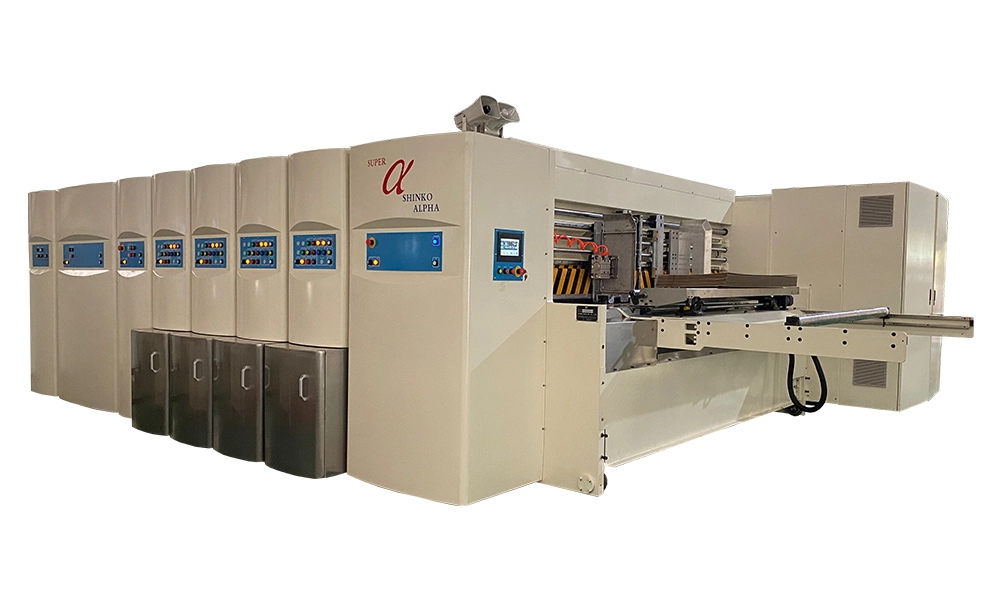
Shinko Super Alpha Movable Type Full Servo Drive Flexo Printing Slotting Die Cutting Machine
Introducing the Shinko Super Alpha Movable Type Full Servo Drive Flexo Printing Slotting Die Cutting Machine by Keshenglong. Engineered for precision and efficiency, this state-of-the-art machine enhances your production line with its advanced servo drive technology. Designed for seamless Flexo printing, slotting, and die-cutting, it ensures superior quality with every output.
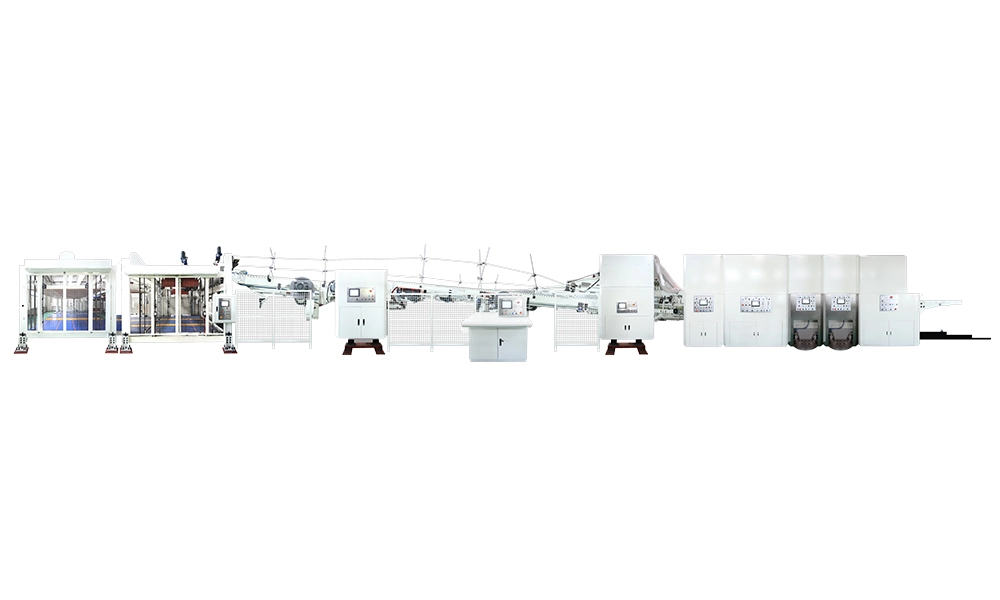
Jumbo Flexo Bottom Printing Slotting Die-Cutting Inline Folding Gluing Countering Ejecting Machine
Introducing the Keshenglong&Shinko Jumbo Flexo Bottom Printing Slotting Die-Cutting Inline Folding Gluing Countering Ejecting Machine. This advanced flexo printing slotting die-cutting machine ensures precision and efficiency for your packaging needs. Designed as a versatile flexo folder gluer machine, it optimizes every step from printing to ejecting, delivering seamless integration and superior quality.
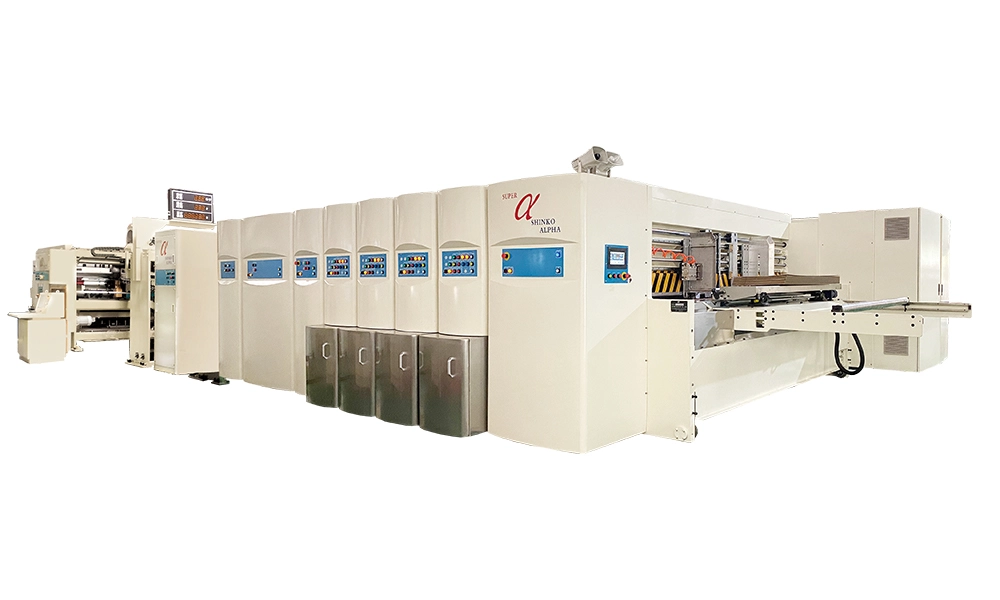
Shinko Super Alpha Movable Type Full Servo Drive Flexo Printing Slotting Die Cutting Inline Folding Gluing Counting Ejecting Machine
This state-of-the-art Movable Type Full Servo Drive Flexo Printing Slotting Die Cutting Machine streamlines your production with precision. Experience seamless operation with its Inline Folding Gluing Counting Ejecting capabilities, ensuring unparalleled efficiency. Designed for high-performance tasks, this Keshenglong&Shinko Super Alpha Movable Type Full Servo Drive Flexo Printing Slotting Die Cutting Inline Folding Gluing Counting Ejecting Machine enhances productivity while maintaining premium quality. Ideal for businesses seeking innovation and reliability, the Shinko Super Alpha is your go-to solution for advanced printing and cutting needs.
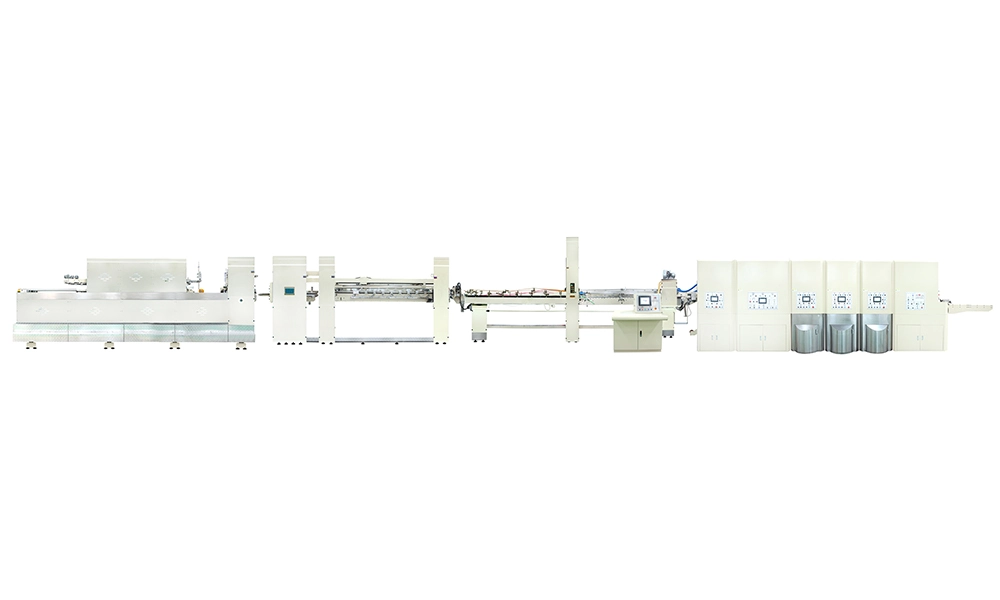
Computerized Flexo Printing Slotting Die-Cutting Inline Folding Gluing and Stitching Machine
Introducing the Keshenglong&Shinko Computerized Flexo Printing Slotting Die-Cutting Inline Folding Gluing and Stitching Machine, a pinnacle of precision and efficiency. This state-of-the-art machine revolutionizes packaging production with seamless integration of printing, slotting, die-cutting, folding, gluing, and stitching. Designed to optimize your workflow, the Computerized Flexo Printing Slotting Die-Cutting Machine enhances accuracy and productivity.


© 2025 Keshenglong & SHINKO All Rights Reserved.
Keshenglong Carton Packing Machine
Keshenglong Carton Packing Machine
Keshenglong Carton Packing Machine
Keshenglong Carton Packing Machine
Keshenglong Carton Packing Machine