
Speed vs Quality: Setting Corrugated Printing Parameters
- Balancing Throughput and Print Fidelity in Corrugated Printing
- Understanding the trade-off on a corrugated box printing machine
- Why the trade-off exists: substrate and process realities
- Key parameters to tune on your corrugated box printing machine
- Practical setup ranges and an actionable comparison table for speed vs quality
- How to approach make-ready: an operator checklist for corrugated box printing machine runs
- Measuring quality: metrics, tools, and acceptable tolerances
- Common mistakes that degrade quality when chasing speed
- Automation and closed-loop control on corrugated box printing machine
- Production scenarios: choosing the right balance
- Keshenglong & Shinko: Solutions for balancing speed and quality on corrugated box printing machine
- Decision checklist for purchasing or upgrading a corrugated box printing machine
- Conclusion: A pragmatic framework to set parameters
- FAQ
- 1. What is the best starting line speed for make-ready on a corrugated box printing machine?
- 2. How do I choose anilox volume for corrugated printing?
- 3. Can I run UV inks at high speeds on corrugated board?
- 4. What inline tools give the best return for quality control?
- 5. How often should plates and anilox rolls be inspected or replaced?
- 6. When should I prioritize speed over print quality?
- References
Balancing Throughput and Print Fidelity in Corrugated Printing
Understanding the trade-off on a corrugated box printing machine
When a corrugated box printing machine is pushed for maximum line speed, compromises often appear in ink transfer consistency, dot integrity, register stability, and overall color fidelity. Conversely, prioritizing High Quality print quality usually means reducing speed, increasing drying time, refining ink and anilox selection, and investing in tighter process control. The right balance depends on product requirements, substrate grade, customer tolerance, and overall cost-per-piece constraints.
Why the trade-off exists: substrate and process realities
Corrugated board is a porous, anisotropic substrate. Its flute structure, liners, and variable surface energy create challenges distinct from folding carton or label printing. The corrugated box printing machine must deposit sufficient ink to achieve color while avoiding excessive dot gain, mottling, or show-through. Key physical causes of the speed-quality trade-off include:
- Ink transfer dynamics: at higher nip speeds, less time and pressure are available for ink to transfer and level.
- Drying constraints: solvent or water-based inks need contact or hot-air curing; insufficient drying at high speeds increases set-off and downstream problems.
- Mechanical vibrations and register shift: higher speeds amplify web dynamics leading to misregister and ghosting.
Key parameters to tune on your corrugated box printing machine
Every corrugated box printing machine has a set of controllable variables. Optimizing these systematically reduces trial-and-error and minimizes waste. Include these in your setup protocol:
- Anilox selection: cell volume and line count determine ink film thickness. Corrugated typically needs higher volume anilox than folding carton to overcome substrate absorption.
- Plate depth and durometer: deeper plates or softer plates deposit more ink; shallow plates and harder durometers deliver finer detail but less ink.
- Impression pressure: too high increases dot gain; too low reduces ink transfer leading to weak color.
- Ink formulation and viscosity: adjust for transfer, drying, and adhesion on liners and flutes.
- Drying and curing capacity: hot-air, infrared, or UV cure must match line speed and ink type.
- Web tension and handling: stable tension prevents register shift and structural distortion at speed.
- Registration control and mechanical condition: accurate shafts, bearings, and servos reduce speed-dependent registration errors.
Practical setup ranges and an actionable comparison table for speed vs quality
The table below presents typical parameter directions for a corrugated box printing machine when prioritizing speed or quality. Values are industry-typical ranges and should be validated with samples and inline measurements.
| Parameter | Speed-Focused Setup (typical) | Quality-Focused Setup (typical) | Effect on Output |
|---|---|---|---|
| Line speed | 90–200 m/min | 20–90 m/min | Higher throughput vs more controlled ink transfer and drying |
| Anilox volume | 12–20 BCM (higher volume) | 6–12 BCM (moderate volume) | Higher volume supports ink laydown at speed; lower volumes improve detail |
| Plate depth / relief | 1.4–1.8 mm relief, medium durometer | 0.8–1.4 mm relief, higher durometer for fine detail | Shallower plates improve dot definition; deeper plates add ink |
| Impression pressure | Light to moderate | Moderate to careful, fine-tuned | Too much causes dot gain; optimal setting balances transfer and definition |
| Ink viscosity | Lower viscosity for faster transfer and leveling | Higher viscosity to control spread and dot gain | Viscosity directly affects dot gain and drying need |
| Drying/curing | High-capacity inline dryers, staged drying | Lower speed with moderate drying or UV cure for instant set | Insufficient drying causes set-off; over-drying can affect inks |
| Register control | Closed-loop sensors, moderate correction bandwidth | High-precision servo control with frequent micro-adjustments | Better control reduces color shift and misregister |
Note: BCM = billion cubic microns per square inch, a common anilox volume measure. These ranges reflect typical industry practice but must be validated per press model, ink system, and substrate.
How to approach make-ready: an operator checklist for corrugated box printing machine runs
- Start with a purpose: set target line speed and acceptable visual/spec tolerances (e.g., Delta E ≤ 3 for brand colors).
- Choose anilox and plate combination based on expected ink coverage and dot percentage.
- Set preliminary impression pressure, then run short trials and measure optical density and dot gain across the board.
- Adjust ink viscosity and add slow/fast reducers as needed; document exact recipes.
- Verify drying by fold tests and set-off checks; increase dryer output in stages rather than a single large jump.
- Stabilize web tension and test at target speed; measure register stability over 1000 cycles.
- Use inline spectrophotometer or color sensor to close the loop if available.
Measuring quality: metrics, tools, and acceptable tolerances
Relying on human sight alone is inconsistent. Invest in objective measurement:
- Spectrophotometer: measures L*a*b* and Delta E for color accuracy. Typical tolerances for primary brand colors are Delta E ≤ 2–4 depending on customer expectations.
- Density meter: controls solid ink density; use target Dmax per ink brand.
- Dot gain profiler: measures percent dot gain to ensure tone reproduction is within acceptable range.
- High-speed camera/inspection: detects streaks, missing ink, and registration faults at speed.
Documented tolerances should be in the job ticket. For B2B retail packaging, tighter tolerances are common; for utility shipping boxes, priorities shift to adhesion and legibility.
Common mistakes that degrade quality when chasing speed
- Underinvesting in drying capacity: leads to set-off and blocking during stacking.
- Improper anilox choice: too low volume causes thin ink; too high causes mottling and waste.
- Ignoring plate wear or contamination: reduces repeatability and increases waste.
- Insufficient inline monitoring: small drifts become big problems by the time they are noticed manually.
Automation and closed-loop control on corrugated box printing machine
Modern corrugated box printing machine systems increasingly integrate automation to raise both speed and quality simultaneously:
- Closed-loop color control uses inline spectrophotometers to adjust anilox metering or ink pump rates automatically.
- Automatic register correction (servo-driven) reduces make-ready time and keeps multi-color jobs tighter at higher speeds.
- Predictive maintenance sensors detect bearing wear and drive anomalies that would otherwise cause register drift at speed.
Production scenarios: choosing the right balance
Two typical use cases illustrate the decisions:
- High-volume e-commerce cases: Tolerance for minor color variance is higher. Optimize for throughput (higher anilox volume, robust drying, lighter impression) to hit low cost-per-box targets.
- High Quality retail folding cartons and shelf-ready packaging: Brand-critical colors require lower speeds, finer anilox, careful plate selection, and active color control to meet tight Delta E specs.
Keshenglong & Shinko: Solutions for balancing speed and quality on corrugated box printing machine
Keshenglong Founded in 1995, Specialized in Manufacturing Corrugated Carton Printing Machine & Solutions is a leading manufacturer in China, specializing in the manufacturing of carton printing and packaging machinery. Our main products are flexo printer, Computerized high-speed Flexo Slotting Die-Cutting machines (1-6 color), Computerized high-speed Flexo case makers, 6+1 high-precision Precision Printing Slotting Die-Cutting machines, Top & Bottom Printing Slotting Die-Cutting machines, jumbo-size Flexo Printing Slotting Die-Cutting machines, etc. Merged into Keshenglong in 2017, Japan Shinko kept as the R&D center and production base and set up another production base in Guangzhou, China. Main parts are imported from Japan, instructed by experienced Japanese technicians, and installed and tested on-site to ensure quality up to the same standard as Japan Shinko. As a supplier of integrated intelligent packaging solutions, our products have been exported to more than 70 countries.
How this helps your balance:
- Proven press platforms: Keshenglong's flexo printers and integrated slotting die-cutting machines are designed to maintain register and stability at higher speeds through rigid frames and precise servo controls.
- R&D and parts quality from Shinko: Japanese-sourced main parts and an R&D backbone provide higher repeatability and durability—reducing variation that often forces speed reductions.
- Range of products: from high-speed flexo slotting die-cutting machines to 6+1 precision presses, enabling customers to choose equipment matched to their quality and throughput targets.
- Global footprint: export experience across 70+ countries indicates a service and parts supply chain that supports uptime, an essential factor when running high-speed production.
For operations seeking both throughput and brand-grade quality, evaluate Keshenglong models with closed-loop registration, enhanced drying modules, and support for higher-precision anilox/plate combinations. Their combined Japanese R&D input helps bridge the performance divide often encountered in high-speed corrugated printing.
Decision checklist for purchasing or upgrading a corrugated box printing machine
- Does the press offer closed-loop color and register control?
- Are drying and curing modules scalable to your target speeds?
- What is the recommended anilox and plate range from the supplier?
- Is spare parts and service available locally to minimize downtime?
- Can the press accommodate both high-volume and high-fidelity work via modular adjustments?
Conclusion: A pragmatic framework to set parameters
To optimize your corrugated box printing machine, adopt a data-driven setup process: define job tolerances, choose anilox/plate/ink combinations accordingly, set conservative impression and speed targets, and iterate using spectrophotometric and visual metrics. Invest in adequate drying and closed-loop controls; these often deliver the best return when trying to raise both speed and quality. Finally, align equipment selection (e.g., Keshenglong & Shinko platforms) with your product mix—modular, serviceable, and well-supported machines give you the most flexibility to meet diverse customer needs.
FAQ
1. What is the best starting line speed for make-ready on a corrugated box printing machine?
Start at a conservative speed (often 25–50% of your maximum rated speed) to dial in impression, anilox, and ink viscosity. Once density and dot gain are stable, increase speed in steps while re-measuring color and registration.
2. How do I choose anilox volume for corrugated printing?
Choose higher anilox volumes for heavier ink coverage and faster runs (typical corrugated ranges are roughly 6–20 BCM depending on coverage). Evaluate the visual outcome on the actual substrate rather than relying solely on lab charts.
3. Can I run UV inks at high speeds on corrugated board?
Yes, UV-curable inks can allow higher speeds because of near-instant cure. However, substrate heat sensitivity, adhesion, and ink formulation compatibility must be assessed; some corrugated liners require pre-treatment or specific primers.
4. What inline tools give the best return for quality control?
Inline spectrophotometers, color cameras, and automatic register systems typically offer the fastest ROI by reducing waste and make-ready time. Pair them with a robust job database to recall settings quickly.
5. How often should plates and anilox rolls be inspected or replaced?
Inspect plates and anilox rolls daily for build-up or damage. Replace based on wear indicators: compromised dot structure, repeated re-lamination, or failure to achieve target density despite correct machine settings. Preventive cleaning and scheduled maintenance usually extend life and maintain quality.
6. When should I prioritize speed over print quality?
Prioritize speed when the product is a transit/shipping box with low visual demands, when margins depend on throughput, or when downstream processes (e.g., lamination) dominate final appearance. Always confirm acceptable tolerances with the customer.
If you want tailored advice for a specific product mix, substrate, or production goal, contact us to review your job specs and machine configuration.
Contact / View Products: To explore corrugated carton flexo printing machine solutions, flexo printing slotting die-cutting machines, and integrated systems from Keshenglong & Shinko, request a consultation or product brochure. Our technical team can recommend press models, anilox and plate pairings, and workflow strategies optimized for your line speed and quality targets.
References
- Flexography (Wikipedia) — https://en.wikipedia.org/wiki/Flexography (accessed 2025-12-27)
- Flexographic Technical Association (FTA) — https://flexography.org/ (accessed 2025-12-27)
- TAPPI – Technical Association for the Pulp and Paper Industry — https://tappi.org/ (accessed 2025-12-27)
- ISO standards overview for printing processes — https://www.iso.org/ (search: ISO 12647 ) (accessed 2025-12-27)
- Industry guides and manufacturer technical notes on flexo anilox and plate selection (manufacturer application notes and whitepapers; consult supplier datasheets for validated ranges) (accessed 2025-12-27)
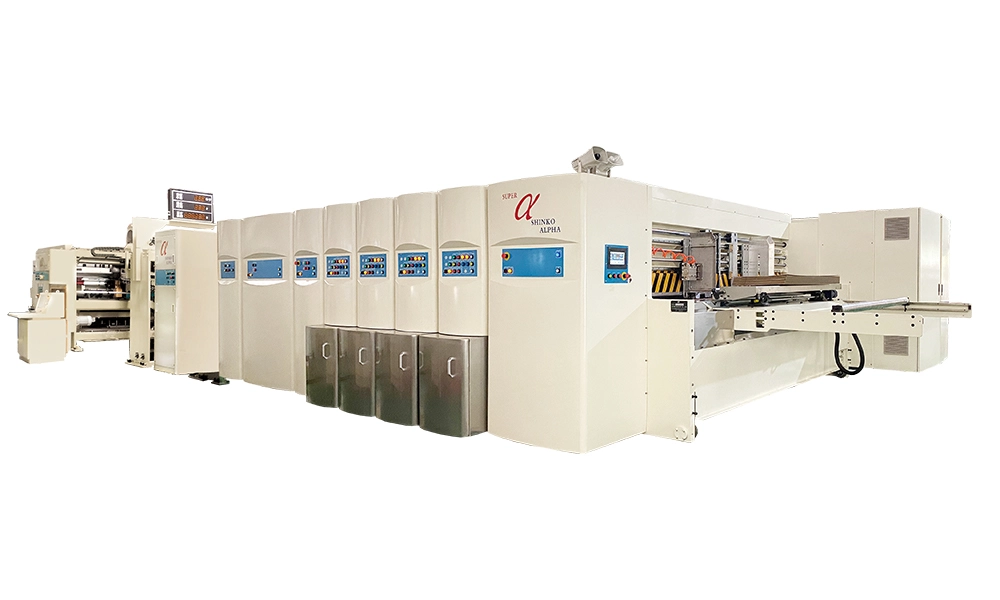
Shinko Super Alpha vs Competitors: Movable-Type Flexo Comparison
Wholesale fully automatic flexo printer slotter machine manufacturer and supplier
How to Choose Right flexo printing slotter folder gluer machine manufacturer and supplier ?
Everything You Need to Know About semi-auto corrugated carton flexo printing machine
Shipping
What should I do if my machine arrives damaged?
If your machine arrives damaged, please contact our customer service immediately to arrange for repairs or replacement.
Product
What is the maximum speed of your folding carton machines?
Our machines can operate at speeds of up to 150 cartons per minute, depending on the model and carton complexity.
How can I integrate your machines into my existing production line?
Our technical team can assist with integrating our machines into your current production setup, ensuring a seamless operation.
What materials are compatible with your folding carton machines?
Our machines are compatible with a wide range of materials including cardboard, corrugated board, and paperboard.
Industry Solutions
What is the lifespan of your folding carton machines?
With proper maintenance, our machines are built to last for many years, providing long-term value for your investment.
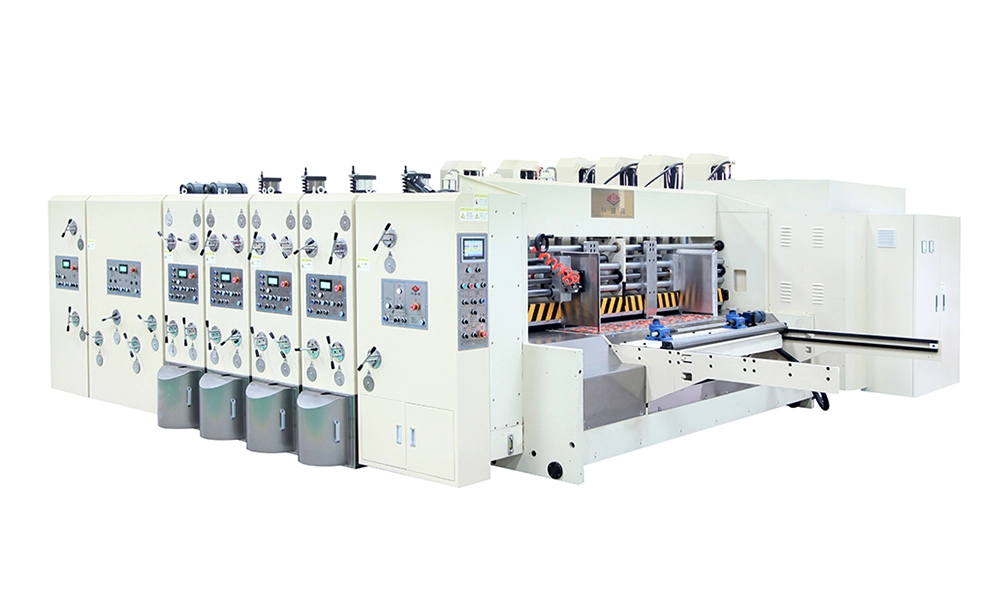
Computerzied Semi Auto Flexo Printing Slotting Die-Cutting Machine
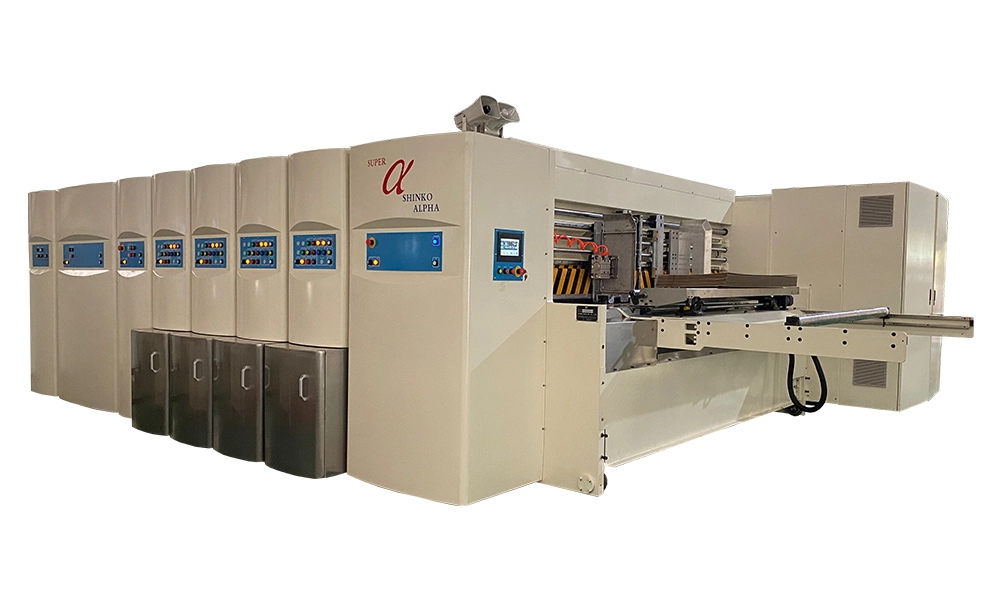
Shinko Super Alpha Movable Type Full Servo Drive Flexo Printing Slotting Die Cutting Machine
Introducing the Shinko Super Alpha Movable Type Full Servo Drive Flexo Printing Slotting Die Cutting Machine by Keshenglong. Engineered for precision and efficiency, this state-of-the-art machine enhances your production line with its advanced servo drive technology. Designed for seamless Flexo printing, slotting, and die-cutting, it ensures superior quality with every output.
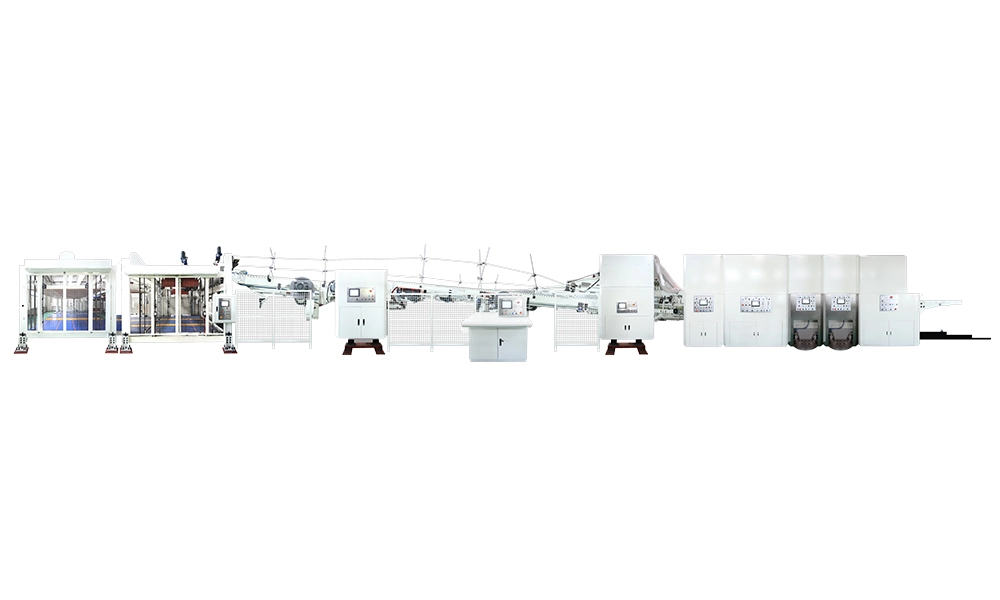
Jumbo Flexo Bottom Printing Slotting Die-Cutting Inline Folding Gluing Countering Ejecting Machine
Introducing the Keshenglong&Shinko Jumbo Flexo Bottom Printing Slotting Die-Cutting Inline Folding Gluing Countering Ejecting Machine. This advanced flexo printing slotting die-cutting machine ensures precision and efficiency for your packaging needs. Designed as a versatile flexo folder gluer machine, it optimizes every step from printing to ejecting, delivering seamless integration and superior quality.
Shinko Super Alpha Movable Type Full Servo Drive Flexo Printing Slotting Die Cutting Inline Folding Gluing Counting Ejecting Machine
This state-of-the-art Movable Type Full Servo Drive Flexo Printing Slotting Die Cutting Machine streamlines your production with precision. Experience seamless operation with its Inline Folding Gluing Counting Ejecting capabilities, ensuring unparalleled efficiency. Designed for high-performance tasks, this Keshenglong&Shinko Super Alpha Movable Type Full Servo Drive Flexo Printing Slotting Die Cutting Inline Folding Gluing Counting Ejecting Machine enhances productivity while maintaining premium quality. Ideal for businesses seeking innovation and reliability, the Shinko Super Alpha is your go-to solution for advanced printing and cutting needs.


© 2025 Keshenglong & SHINKO All Rights Reserved.
Keshenglong Carton Packing Machine
Keshenglong Carton Packing Machine
Keshenglong Carton Packing Machine
Keshenglong Carton Packing Machine
Keshenglong Carton Packing Machine