
Selecting Inks and Plates for Your Flexo Printing Machine
- Understanding Your Substrates and Production Goals
- Know the substrate: corrugated board, liner, or film?
- Define production priorities: speed, durability, or visual impact?
- Set measurable targets (density, dot gain, adhesion)
- Choosing the Right Flexographic Inks
- Ink chemistry overview: water-based, solvent-based, and UV
- Comparing ink types: key metrics and when to choose which
- Practical QA: viscosity, tack, and color measurement
- Selecting Flexo Plates and Fastness Considerations
- Plate types: photopolymer, rubber, and hybrid plates
- Selecting plate durometer and surface detail
- Plate finishing: surface treatment, mounting, and exposure
- Integration with Equipment and Workflow
- Anilox selection and ink transfer
- Drying/curing capacity and press configuration
- Workflow: testing protocol and cost modeling
- Comparisons and Data: Ink Consumption, Plate Life, and Cost
- Typical ranges (example benchmark table)
- Case study (anonymized)
- Keshenglong & Shinko: Manufacturer Spotlight and Why This Matters
- Company overview and capabilities
- Competitive advantages and technical strengths
- How their machines support ink & plate optimization
- Implementation Checklist and Troubleshooting
- Pre-press checklist
- Pressroom setup and trial steps
- Common problems and fixes
- FAQ
- 1. How do I choose between water-based and UV inks for corrugated boxes?
- 2. What anilox cell volume should I use for fine halftones on corrugated?
- 3. How often should I replace flexo plates on continuous runs?
- 4. Are there regulatory considerations when switching ink chemistries?
- 5. Can I use digital flexo plates with my existing press?
- 6. How do I validate color consistency across multiple production sites?
- Contact & Next Steps
I’ve worked with corrugated carton and packaging converters for decades, specifying flexo inks, plates, and press configurations for high-speed production and specialty runs. Selecting the right combination for your flexo printing machine determines color quality, press uptime, waste, and regulatory compliance. In this guide I explain how to evaluate substrates, match ink chemistry to process, choose plates and anilox cell volumes, and integrate changes into your workflow so you hit quality targets without unnecessary cost.
Understanding Your Substrates and Production Goals
Know the substrate: corrugated board, liner, or film?
The first technical decision is the substrate. Corrugated carton stocks (single-face, single-wall, test liner, kraft liner) absorb ink and show surface texture differently from coated papers or films. I always start by testing the actual corrugated board you’ll run on the press—not a lab sample—because flute type, liner basis weight and surface sizing change ink laydown and dot gain significantly. For non-porous films (BOPP, PE, PVC), solvent or UV-curable inks are often required to achieve adhesion and fast solvent/IR/UV curing.
Define production priorities: speed, durability, or visual impact?
Your priorities—maximum throughput, long-term outdoor durability, or high-fidelity graphics—drive ink and plate choices. For example, high-speed case-making lines may favor fast-drying water-based or UV inks coupled with harder plates to resist wear. Retail-grade packaging focused on color precision may need softer photopolymer plates and tighter anilox control to reduce haloing and improve wet-trapping.
Set measurable targets (density, dot gain, adhesion)
Before changing inks or plates, set numeric targets: target solid density (e.g., 1.55 for PANTONE solids), max allowable dot gain (e.g., 25–30% for corrugated), and adhesion criteria (cross-hatch or rub tests). Standards like ISO 2846 (color and transparency requirements for printing inks) provide reference points for ink behavior: ISO 2846.
Choosing the Right Flexographic Inks
Ink chemistry overview: water-based, solvent-based, and UV
Flexo inks fall into three main chemistries with distinct behavior:
- Water-based (aqueous): Lower VOCs, good for porous substrates like corrugated; require heat-assisted drying or IR/air systems.
- Solvent-based: Fast dry and good adhesion to many substrates, but higher VOCs and stricter environmental controls.
- UV-curable: Instant cure via UV lamps, excellent adhesion to non-porous substrates, high gloss, and low VOCs—but require proper lamp and conveyor setup and can be costlier.
Authoritative industry guidance on flexography and process selection can be found at the Flexographic Technical Association (FTA): flexography.org, which discusses process choices and best practices.
Comparing ink types: key metrics and when to choose which
| Ink Type | Best for | Typical VOC | Drying/Curing | Pros / Cons |
|---|---|---|---|---|
| Water-based | Corrugated, coated board | Low (varies by formulation) | Hot air/IR/forced convection | Low VOC; good for food-contact grades with proper formulation; slower dry at high speeds |
| Solvent-based | Films, high-speed lines | High (regulated) | Evaporation + IR | Fast drying; strong adhesion; environmental controls needed |
| UV-curable | Films, labels, high-gloss packaging | Very low | UV lamp (instant) | Instant cure; excellent opacity and gloss; higher capital cost and safety considerations |
Data on VOC and environmental guidance for printing can be referenced from the U.S. Environmental Protection Agency guidance on printing industry emissions: EPA - Printing Industry.
Practical QA: viscosity, tack, and color measurement
Operationally, measure ink viscosity (using a Zahn cup or viscometer), tack (for wet-trapping), and density (spectrophotometer). I recommend implementing a press-side check protocol: measure incoming ink density, adjust anilox cell volume by selecting correct anilox and roll speed, and proof a press sheet for target L*a*b* values. Equipment like spectrophotometers and densitometers from X-Rite help quantify color; consult manufacturer guidance when calibrating devices.
Selecting Flexo Plates and Fastness Considerations
Plate types: photopolymer, rubber, and hybrid plates
Most modern flexo applications use photopolymer plates (solvent-wash or processless). Rubber plates still exist for certain specialty applications, and hybrid or digital flexo plates are growing. Photopolymers offer predictable relief, fine-line reproduction, and compatibility with plate mounters and imaging systems. For wide-run corrugated work, harder durometer plates give longer life but can reduce highlight reproduction.
Selecting plate durometer and surface detail
Durometer (shore hardness) matters: softer plates (lower durometer) reproduce highlights and screens better because they compress more on press, but they wear faster and produce higher dot gain. Harder plates resist wear and give crisper solids. My rule: for high-graphic retail corrugated use a medium-soft plate for up to 20,000 linear meters; for continuous case-making lines exceeding that, consider hard or hybrid plates and schedule more frequent plate rotation.
Plate finishing: surface treatment, mounting, and exposure
Good plate finishing reduces press setup time and improves consistency. Use the following checklist:
- Confirm plate exposure and relief depth with manufacturer specs.
- Use a calibrated plate mounter and eliminate air with vacuum mounting.
- Consider post-exposure or thermal finishing steps as recommended by the plate maker.
Integration with Equipment and Workflow
Anilox selection and ink transfer
Anilox cell volume and line screen are critical to control ink laydown. For corrugated flexo I typically recommend anilox volumes between 8–30 cm3/m2 (B/cm3/m2 units vary by region) depending on ink type and expected dot levels; high-coverage solids need lower cell volumes for halftones and higher for solids—matching cell geometry to plate relief is essential. For anilox basics and selection I often refer to technical resources from the FTA and anilox manufacturers; see general process guidance at the FTA site: FTA.
Drying/curing capacity and press configuration
Your press dryer (hot air, IR, or UV) must match ink chemistry and line speed. A common mistake is switching ink types without adjusting dryer capacity and web speed, which causes set-off, smearing, or insufficient cure. If you move to UV inks, inspect and test lamp intensity regularly and ensure proper shielding and ventilation for operator safety.
Workflow: testing protocol and cost modeling
Introduce a stepwise validation: lab proof -> pilot run at reduced speed -> full-speed validation. Track waste, make-ready time, and ink consumption (g/m2) during trials. I use simple cost-per-carton modeling to compare alternatives—factoring ink cost, downtime, VOC handling, plate life, and customer-rejection rates. Accurate data makes ROI decisions defensible to management.
Comparisons and Data: Ink Consumption, Plate Life, and Cost
Typical ranges (example benchmark table)
| Metric | Water-based | Solvent-based | UV-curable |
|---|---|---|---|
| Ink coverage (g/m2) - corrugated | 4–10 | 3–8 | 2–6 |
| Typical plate life (linear m) | 5,000–30,000 (depends on durometer) | 10,000–40,000 | 8,000–35,000 |
| Capital investment (press add-ons) | Moderate (drying required) | Moderate–High (VOC controls) | High (UV lamps & safety) |
These benchmarks are indicative; real figures depend on press model, substrate, and formulation. For industry process references see the FTA and ISO documentation: FTA, Flexography overview (Wikipedia).
Case study (anonymized)
I advised a mid-size converter transitioning from solvent to UV inks for a high-gloss folding carton SKU. We performed a pilot: switched to UV-curable inks, upgraded to LED UV modules, tightened anilox cell selection and changed to medium-hard plates. Results: 12% reduction in make-ready time, 20% lower overall ink consumption per job, and elimination of solvent VOC controls—payback of the UV conversion in 18 months. This real-world outcome underlines the importance of integrated assessment (ink chemistry + dryer + plates).
Keshenglong & Shinko: Manufacturer Spotlight and Why This Matters
Company overview and capabilities
Keshenglong, founded in 1995 and merged with Japan Shinko in 2017, is a leading Chinese manufacturer specializing in corrugated carton printing and packaging machinery. Their product range includes flexo printers, computerized high-speed flexo slotting die-cutting machines (1–6 color), computerized high-speed flexo case makers, 6+1 high-precision precision printing slotting die-cutting machines, top & bottom printing slotting die-cutting machines, jumbo-size flexo printing slotting die-cutting machines, and integrated stacker solutions. Shinko continues as the R&D center and production base with another factory in Guangzhou. Main parts are imported from Japan and assembly is supervised by experienced Japanese technicians to ensure quality parity with Japanese standards.
Competitive advantages and technical strengths
What sets Keshenglong & Shinko apart in my experience is their combined technical lineage and export footprint. Key points I emphasize to clients:
- Japanese-guided R&D and assembly practices yield consistent machine tolerances and long-term reliability.
- Wide product portfolio—machines tailored for corrugated flexo printing slotting die-cutting and end-of-line automation—support integrated workflow upgrades.
- Export experience to over 70 countries indicates mature after-sales and parts supply networks—critical when validating new ink/plate combinations across multiple sites.
How their machines support ink & plate optimization
Keshenglong flexo printers and slotting die-cutting machines are engineered to allow precise anilox control, modular drying/UV options, and robust registration systems—features I consider essential for implementing new ink chemistries or plate types. If you plan to test water-based versus UV on the same line, machines that accept modular dryers and have strong web-control systems save validation time and reduce risk.
Implementation Checklist and Troubleshooting
Pre-press checklist
- Confirm substrate batch and request manufacturer specification sheet.
- Define target print metrics: density, dot gain, adhesion test method.
- Confirm plate exposure and durometer per press run length.
- Specify anilox cell volume for each color and solid requirements.
Pressroom setup and trial steps
- Mount plates using calibrated equipment; validate registration points.
- Conduct a pilot run at 50% speed to validate drying/curing and ink transfer.
- Measure spectral densities and adjust ink viscosity/tack as needed.
- Document make-ready time, spoilage, and ink consumption for ROI modeling.
Common problems and fixes
- Ghosting/halo: reduce anilox volume or increase plate durometer; check impression pressure.
- Poor adhesion on films: switch to solvent or UV inks and run adhesion tests (cross-hatch, tape).
- Insufficient cure with UV: measure lamp intensity and ensure correct conveyor speed; consider LED vs mercury lamp differences.
FAQ
1. How do I choose between water-based and UV inks for corrugated boxes?
Choose water-based if you prioritize low VOC and your corrugated substrate is porous and your press has adequate hot-air drying. Choose UV if you need instant cure, higher gloss, or must print on non-porous films. Run small trials to confirm adhesion and cost impact.
2. What anilox cell volume should I use for fine halftones on corrugated?
Fine halftones generally require moderate anilox volumes; a common starting point is mid-range volumes appropriate to your plate relief—trial three anilox rolls around the expected volume and measure dot gain. Consult your anilox supplier and the FTA guidance for more precise calibration: FTA.
3. How often should I replace flexo plates on continuous runs?
Plate life varies by durometer, ink type, and abrasive load. For heavy-duty case-making expect tens of thousands of linear meters; for high-graphic retail runs expect shorter plate life. Monitor visual wear and run length data and rotate plates proactively to avoid quality drift.
4. Are there regulatory considerations when switching ink chemistries?
Yes. Solvent inks have VOC regulations and may require capture/abatement systems. Food-contact packaging inks must meet regional regulations (EU, FDA). Always consult ink supplier declarations and regulatory documentation and perform migration testing if necessary.
5. Can I use digital flexo plates with my existing press?
Often yes—digital photopolymer plates are designed to be compatible with standard flexo presses, but check plate thickness, mounting requirements, and exposure characteristics. Proper mounting and plate mounting equipment are critical to exploit the higher detail of digital plates.
6. How do I validate color consistency across multiple production sites?
Use standardized color measurement (spectrophotometers), set target Lab values, and implement ICC profiles where appropriate. Document ink batch numbers, plate production IDs, and anilox roll IDs to ensure repeatability. Consider sending master calibration proofs between sites.
Contact & Next Steps
If you’d like help evaluating inks, plates, or a retrofit for your flexo printing machine, I can assist with hands-on trials, ROI analysis, and vendor coordination. For machine procurement, Keshenglong & Shinko offer a range of corrugated carton flexo printing machines and integrated solutions. Visit https://www.shinkomachinery.com/ or email sales at kl@keshenglong.com.cn to discuss equipment tailored to your ink and plate strategy.
References: Flexography overview (Wikipedia): https://en.wikipedia.org/wiki/Flexography; Flexographic Technical Association: https://www.flexography.org/; ISO 2846 reference: https://www.iso.org/standard/52520.; EPA printing industry guidance: https://www.epa.gov/air-emissions-standards-printing-and-publishing/printing-industry; DuPont Cyrel: https://www.dupont.com/brands/cyrel..
The B2B Buyer’s Guide to rotary die cutting equipment
Why choose Keshenglong&Shinko flexo printer folder gluer manufacturer
How to Choose the corrugated box flexo printing slotting die cutting machine manufacturer and supplier in us?
Tips for Wholesale flexo printing slotting and die cutting machine
Industry Solutions
What kind of technical support do you offer for industry applications?
We provide comprehensive technical support, including installation, maintenance, and troubleshooting services.
What is the lifespan of your folding carton machines?
With proper maintenance, our machines are built to last for many years, providing long-term value for your investment.
Can your machines handle high-volume production demands?
Yes, our machines are designed for high-volume production, ensuring reliable and efficient operation.
Shipping
How are your machines packaged for safe transportation?
Our machines are securely packaged using high-quality materials to prevent damage during transit.
Product
What maintenance is required for optimal machine performance?
Regular lubrication, cleaning of the folding units, and checking for worn parts are essential for maintaining optimal performance.
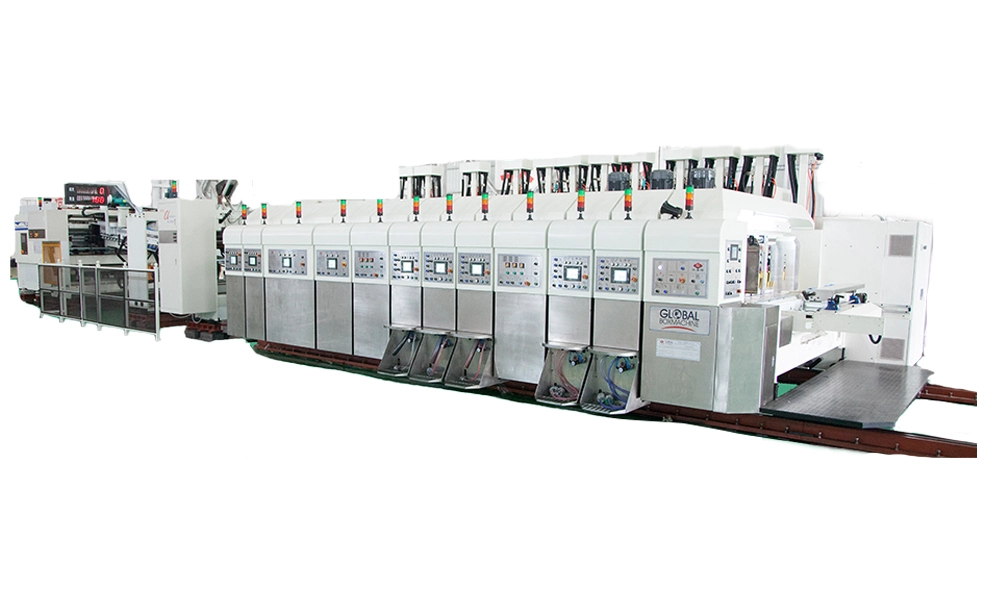
Computerized Flexo Printing Slotting Die-Cutting Inline Folding Gluing Countering Ejecting Machine
Introducing the Keshenglong&Shinko Computerized Flexo Printing Slotting Die-Cutting Inline Folding Gluing Countering Ejecting Machine. Engineered for precision, this advanced machine streamlines your packaging production with integrated Flexo Printing Slotting Die-Cutting functionalities. Seamlessly perform inline folding, gluing, countering, and ejecting—all in one efficient system. Designed for optimal performance, it enhances productivity while reducing downtime.
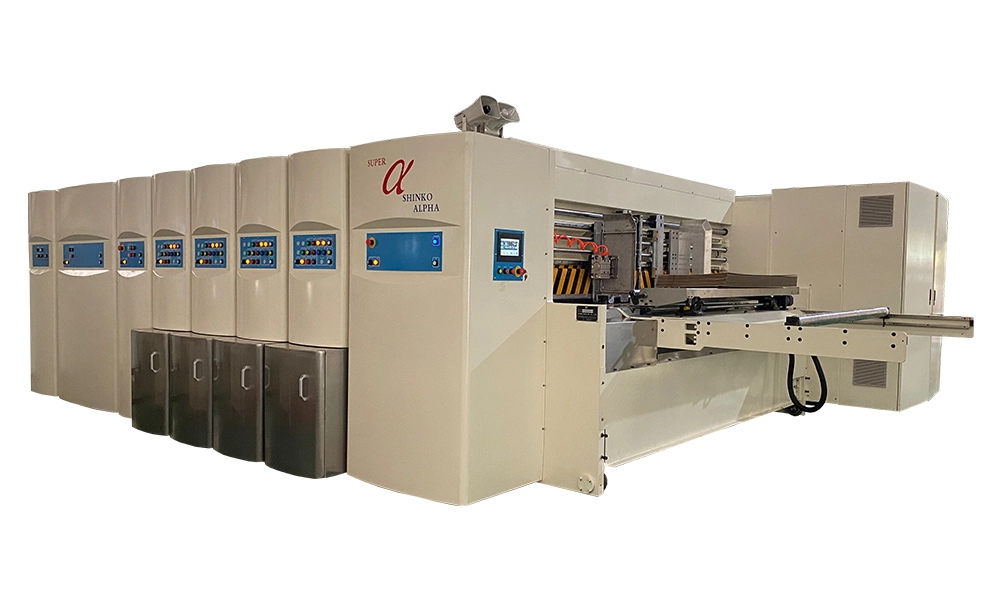
Shinko Super Alpha Movable Type Full Servo Drive Flexo Printing Slotting Die Cutting Machine
Introducing the Shinko Super Alpha Movable Type Full Servo Drive Flexo Printing Slotting Die Cutting Machine by Keshenglong. Engineered for precision and efficiency, this state-of-the-art machine enhances your production line with its advanced servo drive technology. Designed for seamless Flexo printing, slotting, and die-cutting, it ensures superior quality with every output.
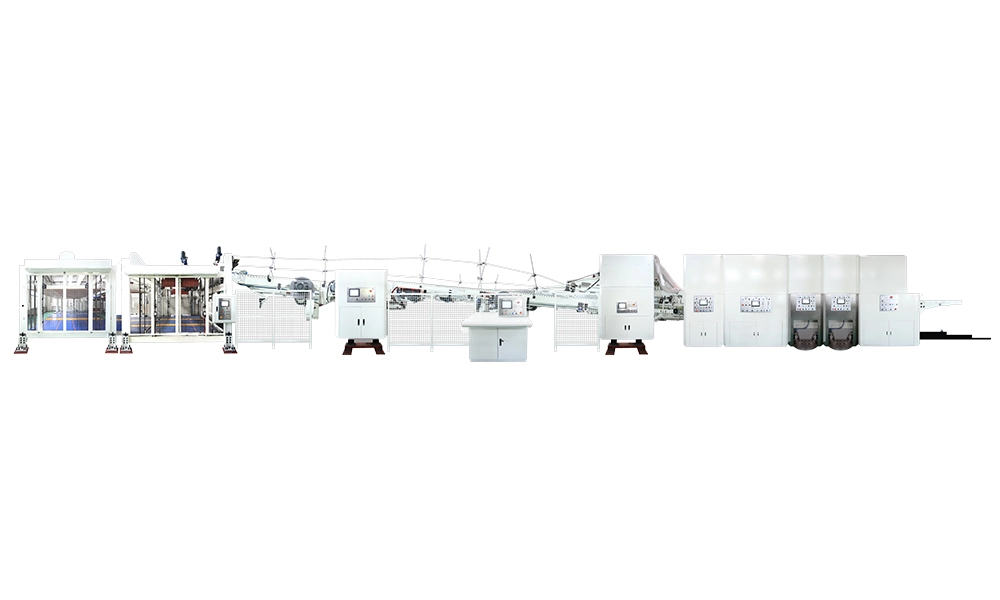
Jumbo Flexo Bottom Printing Slotting Die-Cutting Inline Folding Gluing Countering Ejecting Machine
Introducing the Keshenglong&Shinko Jumbo Flexo Bottom Printing Slotting Die-Cutting Inline Folding Gluing Countering Ejecting Machine. This advanced flexo printing slotting die-cutting machine ensures precision and efficiency for your packaging needs. Designed as a versatile flexo folder gluer machine, it optimizes every step from printing to ejecting, delivering seamless integration and superior quality.
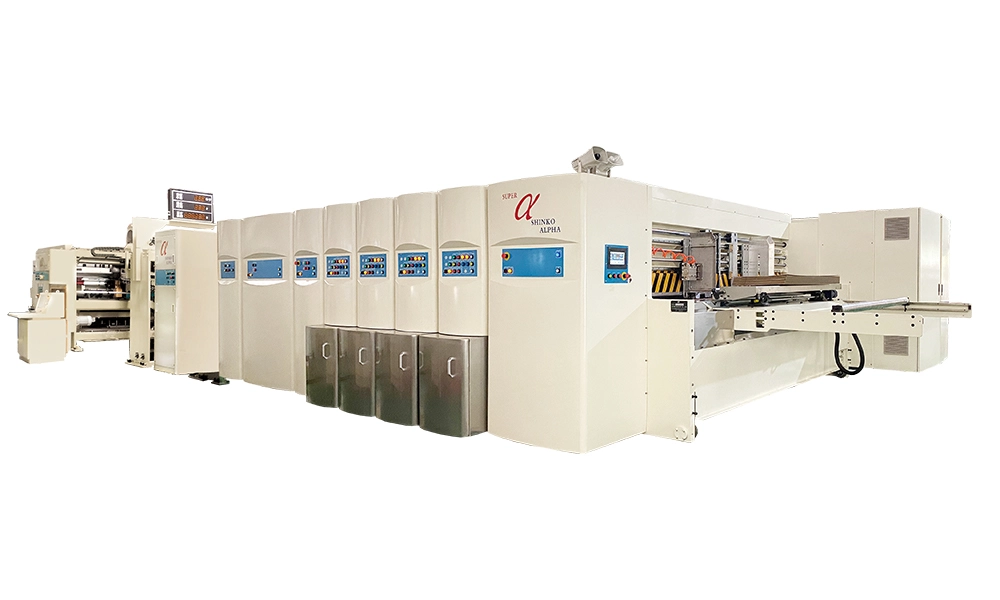
Shinko Super Alpha Movable Type Full Servo Drive Flexo Printing Slotting Die Cutting Inline Folding Gluing Counting Ejecting Machine
This state-of-the-art Movable Type Full Servo Drive Flexo Printing Slotting Die Cutting Machine streamlines your production with precision. Experience seamless operation with its Inline Folding Gluing Counting Ejecting capabilities, ensuring unparalleled efficiency. Designed for high-performance tasks, this Keshenglong&Shinko Super Alpha Movable Type Full Servo Drive Flexo Printing Slotting Die Cutting Inline Folding Gluing Counting Ejecting Machine enhances productivity while maintaining premium quality. Ideal for businesses seeking innovation and reliability, the Shinko Super Alpha is your go-to solution for advanced printing and cutting needs.


© 2025 Keshenglong & SHINKO All Rights Reserved.
Keshenglong Carton Packing Machine
Keshenglong Carton Packing Machine
Keshenglong Carton Packing Machine
Keshenglong Carton Packing Machine
Keshenglong Carton Packing Machine