
Quality Control: Color Management and Inspection for Flexo
- Practical Color Control for Corrugated Packaging
- Understanding Visual vs. Instrumental Color Requirements
- Substrate and Ink Interactions
- Establishing Baseline Color Targets
- Measurement Tools and Process Control
- Spectrophotometers vs. Densitometers
- Inline and 100% Inspection Systems
- Calibration, Profiling and G7/GMI Methods
- Common Quality Issues and Troubleshooting on Flexo Machines
- Issue: Color Shift During Run
- Issue: Unstable Dot Gain
- Issue: Registration and Print Defects
- Inspection Strategies and ROI of Automation
- Sampling vs. 100% Inspection
- Cost-Benefit Table: Manual QC vs. Inline Automation
- Workflow Integration and MIS Connectivity
- Standards, Metrics, and Practical Targets
- Key Metrics to Track
- Practical Tolerance Example
- Documenting and Communicating Targets
- Integrating Supplier Solutions: Keshenglong & Japan Shinko Advantage
- Keshenglong Product Portfolio Relevant to Color & Inspection
- Competitive Strengths and Technical Differentiators
- Practical Implementation Checklist
- FAQ — Quality Control: Color Management and Inspection for Flexo
- 1. What is an acceptable ΔE for corrugated flexo printing?
- 2. Should I use inline spectrophotometers or offline sampling?
- 3. How often should instruments be calibrated?
- 4. Can G7 be applied to flexo corrugated printing?
- 5. What are the top causes of color variability in flexo printing?
- Contact & Call to Action
- References and Further Reading
Practical Color Control for Corrugated Packaging
In corrugated carton production, consistent color reproduction is central to brand integrity and customer satisfaction. For manufacturers using a flexo printing machine, controlling color requires a system-level approach: standardized substrates and inks, reliable measurements, robust process controls, and effective inspection. This section outlines the foundation for predictable color on corrugated materials and how to translate requirements into operational targets.
Understanding Visual vs. Instrumental Color Requirements
Customers often describe color requirements visually (“match the sample”) but production must convert that into measurable targets. Instrumental targets use metrics like ΔE (Delta E, color difference) and specific density or CIELab values. For corrugated packaging, acceptable production tolerances typically range from ΔE ≤ 2–4 depending on brand expectations, substrate variability, and print process stability. Translating visual standards into ΔE and density targets lets quality teams set actionable control limits for the flexo printing machine.
Substrate and Ink Interactions
Corrugated substrates vary in absorbency, surface sizing, and color (e.g., brown kraft vs. bleached liner). These factors directly influence ink film thickness, dot gain, and perceived color. To minimize variability, standardize liner grades where possible, keep supplies from approved lots, and use inks formulated for corrugated flexo applications. Implement ink drawdown tests and measure color on the intended substrate rather than paper proofs.
Establishing Baseline Color Targets
Start with a certified proof or press signature as the master. Create measurement targets (CIELab coordinates or density values) and acceptable tolerances. Document these in a job recipe for your flexo printing machine so operators, prepress, and quality control teams work from the same reference.
Measurement Tools and Process Control
Accurate instruments and real-time process controls are the backbone of repeatable color on flexo printers. Selecting the right tools, calibrating them, and integrating feedback loops improves first-run accuracy and reduces waste.
Spectrophotometers vs. Densitometers
Spectrophotometers measure spectral color and compute CIELab values and ΔE; densitometers measure optical density and are faster for routine checks. Use spectrophotometers for initial profiling, proof checks, and complex color matching; use densitometers for quick on-press control checks. Where possible, use the same measurement geometry and instruments across shifts to avoid inter-instrument variance.
Inline and 100% Inspection Systems
Modern flexo printing machine configurations often include inline color measurement and vision inspection systems. Inline spectrophotometers can read patches on a printed web and provide closed-loop control to adjust ink keys or anilox settings. Vision systems detect registration errors, missing print areas, and gross color shifts. For higher-value packaging, 100% camera-based inspection with color analysis reduces escapes and rework.
Calibration, Profiling and G7/GMI Methods
Regular instrument calibration is mandatory — daily or shift-based depending on production volume. Profiling establishes device link profiles between digital artwork and press behavior. Methods like Idealliance G7 (neutral tone curve alignment) help achieve visual consistency across devices and jobs. For corrugated flexo, adopt a press-specific profile and review it quarterly or when significant substrate or ink changes occur.
Common Quality Issues and Troubleshooting on Flexo Machines
Identifying root causes quickly is essential. This section lists common failure modes, diagnostic steps, and corrective actions applicable to flexo printing machines used for corrugated cartons.
Issue: Color Shift During Run
Symptoms: Gradual drift in hue or density over a production run. Diagnosis: Check ink temperature and viscosity, anilox volume consistency, web tension and moisture content. Action: Stabilize ink temperature, verify anilox cleanliness and wear, confirm compressor/dryer performance, and reprofile if necessary.
Issue: Unstable Dot Gain
Symptoms: Inconsistent tonal reproduction and poor highlight detail. Diagnosis: Check anilox wear, doctor blade condition, plate mounting pressure, and substrate absorbency variations. Action: Replace or reclad worn anilox rolls, adjust doctor blade, re-evaluate plate mounting and impression settings.
Issue: Registration and Print Defects
Symptoms: Misregistration, ghosting, or banding. Diagnosis: Check mechanical components (drive chains, gears, servo controls), web path stability, and drying system. Action: Undertake mechanical maintenance, re-tune registration servos, and verify drying capacity to prevent ink set-off or smearing.
Inspection Strategies and ROI of Automation
Inspection strategy must balance cost of defects versus investment in automation. For many corrugated packaging producers, targeted automation—inline spectrophotometry combined with camera inspection—delivers measurable ROI by cutting waste and reducing deliveries with color issues.
Sampling vs. 100% Inspection
Sampling quality checks are cost-efficient for low-value or tolerant jobs. High-value brand packaging often demands 100% inspection to avoid costly recall or reprint. The decision should be based on defect cost, rework expense, and customer penalty clauses.
Cost-Benefit Table: Manual QC vs. Inline Automation
| Metric | Manual QC (Sampling) | Inline Automation (Spectro + Vision) |
|---|---|---|
| Initial Investment | Low | High |
| Defect Detection Rate | Medium (80–95%) | High (95–99.9%) |
| Typical Reduction in Waste | 10–30% | 30–70%+ |
| Operator Intervention | High | Low to Medium |
| Payback Period (Example) | Longer | 6–24 months (depending on volume) |
Data note: The ranges above reflect typical industry experience; specific ROI depends on job mix and defect cost. See references for instrumentation vendors and case studies.
Workflow Integration and MIS Connectivity
To maximize inspection value, connect inline measurement data to your MIS/ERP and press controls. Automated job recipes can be loaded for repeat jobs on the flexo printing machine, and measurement logs provide traceability for customer claims and continuous improvement.
Standards, Metrics, and Practical Targets
Using commonly accepted standards simplifies communication with clients and suppliers. This section summarizes practical metrics and how to define them for corrugated flexo printing.
Key Metrics to Track
- ΔE (CIELab) — color difference vs. master
- Density and dot gain — tonal control
- Registration accuracy — mm tolerance
- Defect rate — ppm or % of units
- First-pass yield — % of accepted units without rework
Practical Tolerance Example
Typical industry guidance for corrugated flexo printing (practical, not normative):
- Brand-critical solids: ΔE ≤ 2–3
- General packaging prints: ΔE ≤ 3–5
- Density stability: ±0.05–0.10 OD
- Registration: ±0.5–1.0 mm (depends on box size and artwork)
Documenting and Communicating Targets
Include targets in job tickets and digital job recipes for the flexo printing machine. When clients require tighter tolerances, document the acceptance criteria, sample location, and measurement instrument to avoid disputes.
Integrating Supplier Solutions: Keshenglong & Japan Shinko Advantage
Keshenglong, founded in 1995 and specialized in corrugated carton printing and packaging machinery, offers integrated solutions that combine manufacturing experience and Japanese R&D excellence. Since merging Japan Shinko into Keshenglong in 2017, the company uses Shinko as its R&D center and maintains a production base in Guangzhou, China. Key parts are imported from Japan and assembly/integration are supervised by experienced Japanese technicians, ensuring quality levels consistent with Japan Shinko’s standards.
Keshenglong Product Portfolio Relevant to Color & Inspection
Main products include:
- Flexo printer (various color configurations)
- Computerized high-speed Flexo Slotting Die-Cutting machines (1–6 color)
- Computerized high-speed Flexo case makers
- 6+1 high-precision Precision Printing Slotting Die-Cutting machines
- Top & Bottom Printing Slotting Die-Cutting machines
- Jumbo-size Flexo Printing Slotting Die-Cutting machines
- Flexo printing slotting die-cutting and stacker machines
These machines are designed for corrugated carton production lines where color consistency, registration precision, and reliable die-cutting integration are required.
Competitive Strengths and Technical Differentiators
Keshenglong combines long manufacturing experience (since 1995) with Japanese engineering input from Japan Shinko. Advantages include:
- Imported key components and Japanese assembly standards for improved mechanical stability and longevity
- Integrated flexo printing machine lines that reduce web handling and registration variability
- Customizable configurations (1–6 colors, top & bottom printing, jumbo sizes) to match complex packaging jobs
- Export experience to more than 70 countries, demonstrating field-proven reliability and service capability
For companies seeking an end-to-end corrugated carton solution where color management and inline inspection are required, partnering with a supplier offering experienced mechanical design, local support, and Japanese R&D input presents a strong value proposition.
Practical Implementation Checklist
Use this checklist when configuring or upgrading a flexo printing machine for corrugated carton color control and inspection:
- Standardize substrate grades and maintain approved lots
- Define ΔE and density targets in the job recipe
- Install inline spectrophotometer and camera inspection where defect cost justifies it
- Calibrate measurement instruments daily and profile quarterly
- Connect measurement systems to MIS for traceability
- Train operators on color theory, measurement practice, and reaction protocols
- Schedule preventative maintenance for anilox, plates, and web path
FAQ — Quality Control: Color Management and Inspection for Flexo
Below are frequently asked questions from corrugated packaging producers and flexo operators.
1. What is an acceptable ΔE for corrugated flexo printing?
Acceptable ΔE depends on brand requirements. A practical range is ΔE ≤ 2–3 for brand-critical solids and ΔE ≤ 3–5 for general packaging. Agree targets with the customer and record the measurement instrument and geometry.
2. Should I use inline spectrophotometers or offline sampling?
Use inline spectrophotometers when job value and defect costs justify the investment—this gives fast feedback and closed-loop control. For lower-value or short-run jobs, a disciplined sampling approach with consistent instruments may be sufficient.
3. How often should instruments be calibrated?
Calibrate spectrophotometers daily or every shift depending on volume. Calibration before each critical job is recommended. Recalibrate after sensor cleaning or if measurements shift unexpectedly.
4. Can G7 be applied to flexo corrugated printing?
Yes. G7 (Idealliance) neutral tone curve methods help harmonize gray balance and visual appearance across devices. For corrugated substrates, apply G7 principles with substrate-specific profiles and validate visually and instrumentally.
5. What are the top causes of color variability in flexo printing?
Major causes include substrate variations, anilox wear or contamination, inconsistent ink viscosity/temperature, plate mounting and impression inconsistencies, and insufficient drying. Addressing each systematically reduces variability.
Contact & Call to Action
If you need help evaluating a flexo printing machine, specifying inline color measurement or inspecting systems, or want to explore integrated corrugated carton production lines, contact our solutions team. Learn more about Keshenglong flexo printing machines, flexo printing slotting die-cutting machines, and complete integrated lines that combine Japanese R&D quality with global service coverage. Request a consultation or view product details to find a configuration that matches your throughput and quality targets.
References and Further Reading
- Flexography — Wikipedia. https://en.wikipedia.org/wiki/Flexography (accessed 2026-01-01)
- Idealliance G7 Method. https://www.idealliance.org/g7/ (accessed 2026-01-01)
- X-Rite: Understanding Color Tolerances. https://www.xrite.com (knowledge articles) (accessed 2026-01-01)
- Flexographic Technical Association (FTA) resources. https://www.flexography.org (accessed 2026-01-01)
- Statista — Packaging market overview. https://www.statista.com/topics/1706/packaging/ (accessed 2026-01-01)
- Keshenglong company information and product offerings (company data provided). (accessed 2026-01-01)
Top 10 corrugated box printing machine manufacturers Manufacturers and suppliers brand
Wholesale flexo printer slotter machine manufacturer and supplier
Keshenglong&Shinko best professional flexo printer folder gluer Manufacturers and supplier brand in China
Top 5 carton printing machine Company List and Products Compared
Product
How do I adjust the machine settings for different carton sizes?
Machine settings can be adjusted using the intuitive control panel, which allows for quick changes to accommodate different carton sizes.
Can your machines handle custom carton designs?
Yes, our machines can be customized to handle various carton designs and specifications.
Shipping
Can I track my shipment once it has been dispatched?
Yes, we provide tracking information for all shipments so you can monitor the delivery status.
Industry Solutions
How do your machines comply with industry standards and regulations?
Our machines are manufactured to meet or exceed industry standards and regulations, ensuring safe and compliant operation.
What kind of technical support do you offer for industry applications?
We provide comprehensive technical support, including installation, maintenance, and troubleshooting services.
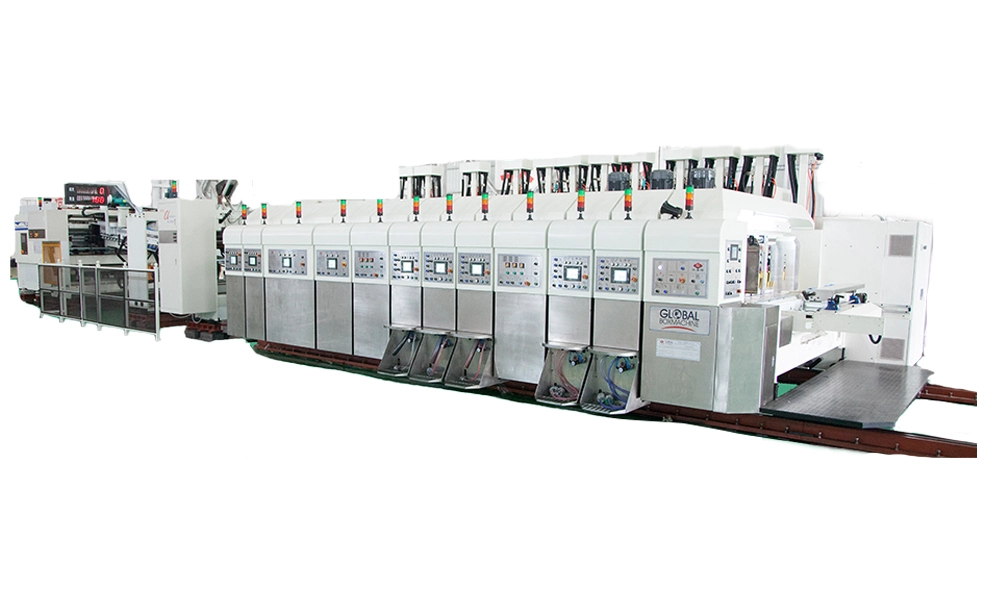
Computerized Flexo Printing Slotting Die-Cutting Inline Folding Gluing Countering Ejecting Machine
Introducing the Keshenglong&Shinko Computerized Flexo Printing Slotting Die-Cutting Inline Folding Gluing Countering Ejecting Machine. Engineered for precision, this advanced machine streamlines your packaging production with integrated Flexo Printing Slotting Die-Cutting functionalities. Seamlessly perform inline folding, gluing, countering, and ejecting—all in one efficient system. Designed for optimal performance, it enhances productivity while reducing downtime.
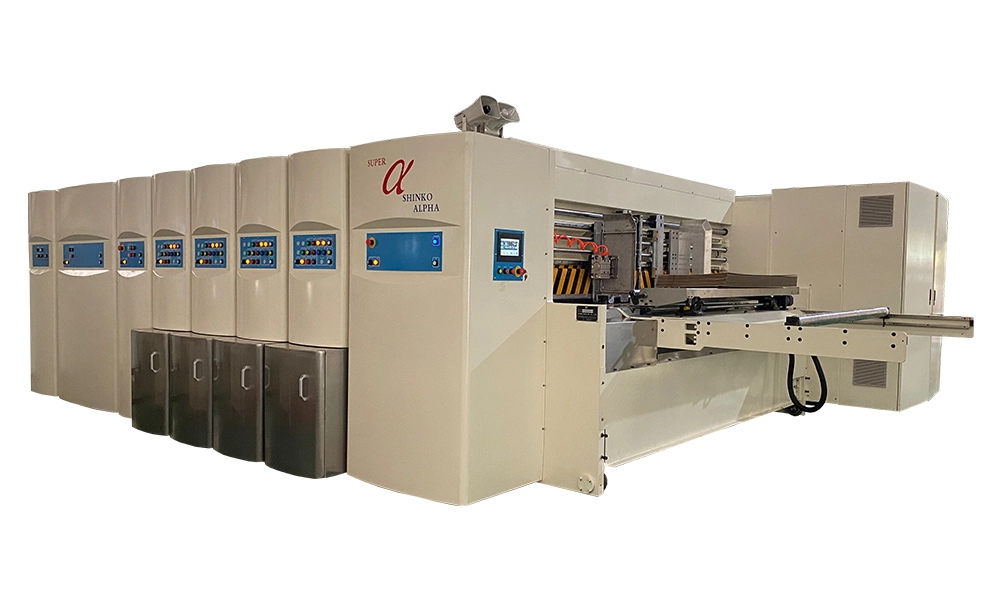
Shinko Super Alpha Movable Type Full Servo Drive Flexo Printing Slotting Die Cutting Machine
Introducing the Shinko Super Alpha Movable Type Full Servo Drive Flexo Printing Slotting Die Cutting Machine by Keshenglong. Engineered for precision and efficiency, this state-of-the-art machine enhances your production line with its advanced servo drive technology. Designed for seamless Flexo printing, slotting, and die-cutting, it ensures superior quality with every output.
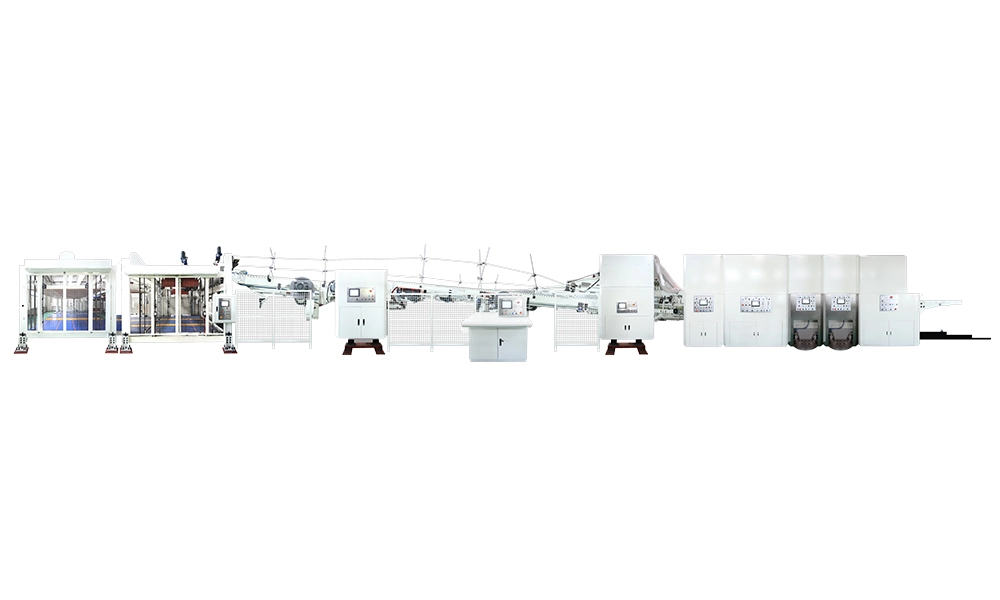
Jumbo Flexo Bottom Printing Slotting Die-Cutting Inline Folding Gluing Countering Ejecting Machine
Introducing the Keshenglong&Shinko Jumbo Flexo Bottom Printing Slotting Die-Cutting Inline Folding Gluing Countering Ejecting Machine. This advanced flexo printing slotting die-cutting machine ensures precision and efficiency for your packaging needs. Designed as a versatile flexo folder gluer machine, it optimizes every step from printing to ejecting, delivering seamless integration and superior quality.
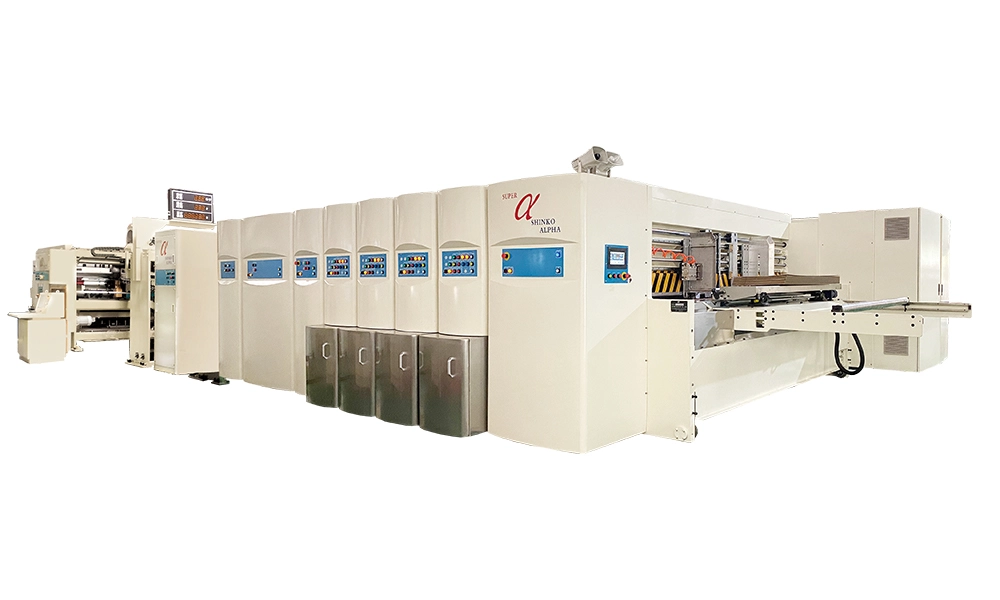
Shinko Super Alpha Movable Type Full Servo Drive Flexo Printing Slotting Die Cutting Inline Folding Gluing Counting Ejecting Machine
This state-of-the-art Movable Type Full Servo Drive Flexo Printing Slotting Die Cutting Machine streamlines your production with precision. Experience seamless operation with its Inline Folding Gluing Counting Ejecting capabilities, ensuring unparalleled efficiency. Designed for high-performance tasks, this Keshenglong&Shinko Super Alpha Movable Type Full Servo Drive Flexo Printing Slotting Die Cutting Inline Folding Gluing Counting Ejecting Machine enhances productivity while maintaining premium quality. Ideal for businesses seeking innovation and reliability, the Shinko Super Alpha is your go-to solution for advanced printing and cutting needs.


© 2025 Keshenglong & SHINKO All Rights Reserved.
Keshenglong Carton Packing Machine
Keshenglong Carton Packing Machine
Keshenglong Carton Packing Machine
Keshenglong Carton Packing Machine
Keshenglong Carton Packing Machine