
How a printing machine flexo is used in label production: full workflow
- Why flexo is chosen for labels and packaging
- Speed, substrate flexibility and economics
- Quality and color gamut improvements
- Sustainability and ink systems
- Pre-press and plate preparation
- Design, color separation and proofing
- Plate types and imaging
- Anilox selection and engraving
- Press setup and running (printing machine flexo in action)
- Press configuration and registration
- Inks, metering and drying
- Monitoring and inline inspection
- Finishing, converting and quality control
- Die-cutting, slitting and lamination
- Drying, curing and post-process treatment
- Quality metrics and inspection checkpoints
- Comparing printing methods: practical metrics
- Keshenglong & Shinko: integrated solutions for corrugated and label flexo
- Company background and capabilities
- Technical strength and international integration
- Export footprint and service
- Implementation tips I use when advising converters
- Match press features to product mix
- Invest in automation and inline quality tools
- Maintain a data-driven maintenance routine
- Frequently Asked Questions (FAQ)
- 1. What is a printing machine flexo and how does it differ from other presses?
- 2. Can flexo achieve high-resolution labels for High Quality brands?
- 3. What inks are best for food-contact labels?
- 4. How do I reduce make-ready time on my flexo press?
- 5. How does Keshenglong compare to other manufacturers for corrugated flexo?
- 6. What measurements should I track to ensure consistent label production?
I write from years of hands-on experience with flexographic equipment and label production. In this article I describe the end-to-end workflow for using a printing machine flexo in label production, focusing on practical choices, common pitfalls and verifiable references so you can optimize quality, throughput and cost. I reference industry-standard resources such as the Flexography entry on Wikipedia and best-practice guidance from the Flexographic Technical Association when relevant.
Why flexo is chosen for labels and packaging
Speed, substrate flexibility and economics
Flexo presses (printing machine flexo or flexo printer) are designed for high-speed runs and a wide range of substrates: film, paper, metallized films and corrugated liners. For most label converters I work with, the combination of high line speeds, fast job changeovers and relatively low tooling costs makes flexography the default for medium-to-large label runs. The Flexographic Technical Association outlines these advantages for corrugated and label markets (FTA).
Quality and color gamut improvements
Modern flexo achieves very good print quality using high-resolution photopolymer plates, fine anilox rolls and stochastic screening. With UV-curable inks and improved plate-making, color consistency and dot fidelity can rival other processes for many label applications. For corrugated cartons, flexo remains the primary industrial method due to ink adhesion and robustness (see Corrugated box).
Sustainability and ink systems
Water-based and UV-curable flexo inks reduce VOC emissions compared to solvent systems. Many brands are implementing LED-UV curing to save energy and increase uptime. These choices affect press setup and safety considerations in the workflow.
Pre-press and plate preparation
Design, color separation and proofing
I always start with the artwork prepared for flexo-specific constraints: solid trapping, proper overprint settings, and color separations for flexo inks (CMYK + spot if needed). Use industry-standard RIPs for screening and linearization; validate with digital proofs and, when possible, hard proofs. Accurate density and dot gain targets must be set before plate imaging.
Plate types and imaging
Photopolymer plates are the norm for label production. When choosing plate thickness and shore (durometer), consider substrate texture and the press impression. Modern direct-to-plate (DTP) imaging systems reduce variables and improve registration consistency. Keep plate-making logs: exposure schedules, washout times and post-exposure details — these parameters are repeatable and proveable quality controls.
Anilox selection and engraving
Anilox roll selection controls ink laydown. For labels requiring strong solids, select higher cell volume; for fine highlight detail, choose lower cell volume with finer cell line screens. In my projects I track anilox cell counts and volumes per job to ensure repeatability. The correlation between anilox volume and printed density is measurable and should be part of your production data.
Press setup and running (printing machine flexo in action)
Press configuration and registration
Before a run I verify mechanical registration systems, tension control and web paths. Modern flexo printers offer servo-driven registration and automated plate cylinders for fast make-ready. Proper nip settings and impression control are critical: too much impression causes dot gain; too little reduces ink transfer.
Inks, metering and drying
Ink selection (water-based, solvent, UV or EB) drives drying choices. UV/LED systems cure almost instantly; water-based systems require hot-air ovens and sometimes IR assist. Metering is controlled by anilox and doctor blade (if present) — monitor viscosity and temperature to keep densities within tolerance.
Monitoring and inline inspection
I recommend inline inspection cameras and color measurement (spectrophotometers) to detect registration shift, ink streaks or color drift. These systems reduce waste and help collect SPC (statistical process control) data. Inline inspection combined with automatic job recall is a major throughput multiplier in modern shops.
Finishing, converting and quality control
Die-cutting, slitting and lamination
After printing, labels may be die-cut, laminated, varnished or foil-stamped. For pressure-sensitive labels, converting accuracy is critical to ensure proper peel and liner alignment. For corrugated label applications, integrated slotting die-cutting combines printing and converting to reduce handling and errors.
Drying, curing and post-process treatment
Ensure cure verification for UV inks (e.g., tape tests, solvent rub tests) and check for residual solvents in water-based systems. For high-speed lines, drying capacity must match press output to avoid blocking or set-off. I use simple process checks such as MEK rubs and gloss measurements to verify post-press stability.
Quality metrics and inspection checkpoints
Key metrics I track: color density tolerances (ΔE), registration tolerance in mm, percentage of downtime per shift, waste per 1,000 meters, and adhesion test pass rate. These are quantifiable and can be benchmarked against industry averages; using inline data capture facilitates continuous improvement.
Comparing printing methods: practical metrics
Below is a concise comparison of flexo vs. offset and digital printing for label applications. Sources: Wikipedia: Flexography and industry guidance from FTA.
| Metric | Flexo (printing machine flexo) | Offset | Digital |
|---|---|---|---|
| Best run length | Medium to very long (cost-effective at high volumes) | Medium to long (better for paper substrates) | Short to medium (variable data) |
| Substrate range | Very wide (films, papers, corrugated) | Primarily paper-based | Wide but limited for some films/finishes |
| Make-ready time | Short to moderate (modern presses: fast) | Longer | Minimal |
| Color flexibility | Excellent with spot and process; good gamut with extended inks | Excellent for process color | Excellent, especially for short runs and personalization |
| Typical applications | Labels, flexible packaging, corrugated | Commercial printing, folding cartons | Short-run labels, customized runs |
Keshenglong & Shinko: integrated solutions for corrugated and label flexo
Company background and capabilities
I work closely with manufacturers to match equipment to production needs. Keshenglong (Founded in 1995) is a leading Chinese manufacturer specializing in corrugated carton printing and packaging machinery. The company produces a wide range of flexo printers and computerized high-speed flexo slotting die-cutting machines (1-6 color), flexo case makers, 6+1 precision printing slotting die-cutting machines, top & bottom printing slotting die-cutting machines, and jumbo-size flexo printing slotting die-cutting machines.
Technical strength and international integration
In 2017 Keshenglong merged with Japan Shinko, preserving Japan Shinko as the R&D center and production base. Another production base in Guangzhou supports increased capacity. Main parts are imported from Japan, equipment is instructed by experienced Japanese technicians, and installation and testing are carried out on-site to meet the same high standards as Japan Shinko. This combination improves mechanical precision, registration stability and long-term reliability — attributes I prioritize when recommending presses for demanding label jobs.
Export footprint and service
As a supplier of integrated intelligent packaging solutions, Keshenglong & Shinko products are exported to more than 70 countries. Their portfolio covers corrugated carton flexo printing machines, flexo printing slotting die-cutting machines, combined printing slotting die-cutting and stacker machines, and flexo printers for a variety of packaging needs. For direct inquiries, visit https://www.shinkomachinery.com/ or email kl@keshenglong.com.cn.
Implementation tips I use when advising converters
Match press features to product mix
If your label portfolio includes long runs on film and occasional corrugated work, choose a flexo printer with modular stations and fast plate-change systems. For mostly corrugated work, integrated slotting die-cutting solutions (as offered by Keshenglong) reduce handling and improve accuracy.
Invest in automation and inline quality tools
Automated plate changers, servo-driven registration and inline inspection pay back quickly on labor and waste. I quantify ROI by measuring job-change time reduction and waste savings across 3-6 months.
Maintain a data-driven maintenance routine
Track key consumables (anilox condition, plate life, doctor blade wear) and log press downtime. This shifts maintenance from reactive to predictive and improves overall OEE (Overall Equipment Effectiveness).
Frequently Asked Questions (FAQ)
1. What is a printing machine flexo and how does it differ from other presses?
A printing machine flexo (flexo printer) is a rotary relief printing press that uses flexible photopolymer plates wrapped around cylinders to transfer ink to substrates. It differs from offset and digital in plate type, ink transfer method and suitability for different substrates. For a technical overview see the Flexography article.
2. Can flexo achieve high-resolution labels for High Quality brands?
Yes. With modern high-line-screen anilox rolls, finely imaged photopolymer plates and UV curing, flexo can produce high-resolution labels suitable for High Quality branding. Proper pre-press and press setup are essential.
3. What inks are best for food-contact labels?
Food-contact regulations vary by region. Use inks and varnishes compliant with local regulations and follow migration testing requirements. Consult ink suppliers and regulatory guidance. For authoritative standards, check national food safety agencies and ISO guidelines where applicable.
4. How do I reduce make-ready time on my flexo press?
Use automated plate changers, maintain accurate plate and anilox logs, standardize make-ready parameters, and implement quick-mount systems. Training operators on a standard SOP also reduces variability.
5. How does Keshenglong compare to other manufacturers for corrugated flexo?
Keshenglong, merged with Japan Shinko for R&D and manufacturing expertise, offers machines with imported Japanese components and on-site technical support. Their integrated flexo printing slotting die-cutting lines and focus on quality make them competitive for corrugated carton and label converters seeking high throughput and reliability. See Shinko Machinery for details.
6. What measurements should I track to ensure consistent label production?
Track color density (ΔE), registration tolerances in mm, waste per job, downtime minutes, and adhesion test pass rates. These metrics are objective and help drive continuous improvement.
If you want to discuss how a printing machine flexo can be integrated into your label-production line, request equipment specifications, or schedule a demo, I invite you to contact Keshenglong & Shinko. Visit https://www.shinkomachinery.com/ or email kl@keshenglong.com.cn. I can also help you evaluate press options, estimate ROI and design an optimal workflow tailored to your substrates and order profile.
OEM/ODM flexo printer slotter die-cutter stacker machine Manufacturers and supplier
Wholesale flexo printing slotting rotary die-cutting machine manufacturer and supplier
Why choose Keshenglong&Shinko automatic flexo folder gluer manufacturer
Flexo vs Digital vs Gravure: Which Printing Tech Wins?
Product
What materials are compatible with your folding carton machines?
Our machines are compatible with a wide range of materials including cardboard, corrugated board, and paperboard.
How do I troubleshoot common issues with the folding mechanism?
Common issues can often be resolved by checking the alignment of the folding plates and ensuring there is no debris obstructing the mechanism.
Shipping
How are your machines packaged for safe transportation?
Our machines are securely packaged using high-quality materials to prevent damage during transit.
What are the shipping costs for your folding carton machines?
Shipping costs depend on the destination, machine size, and shipping method. Contact us for a detailed quote.
Industry Solutions
Do you offer solutions for environmentally friendly packaging?
Yes, our machines can produce cartons from recyclable and biodegradable materials, supporting sustainable packaging solutions.
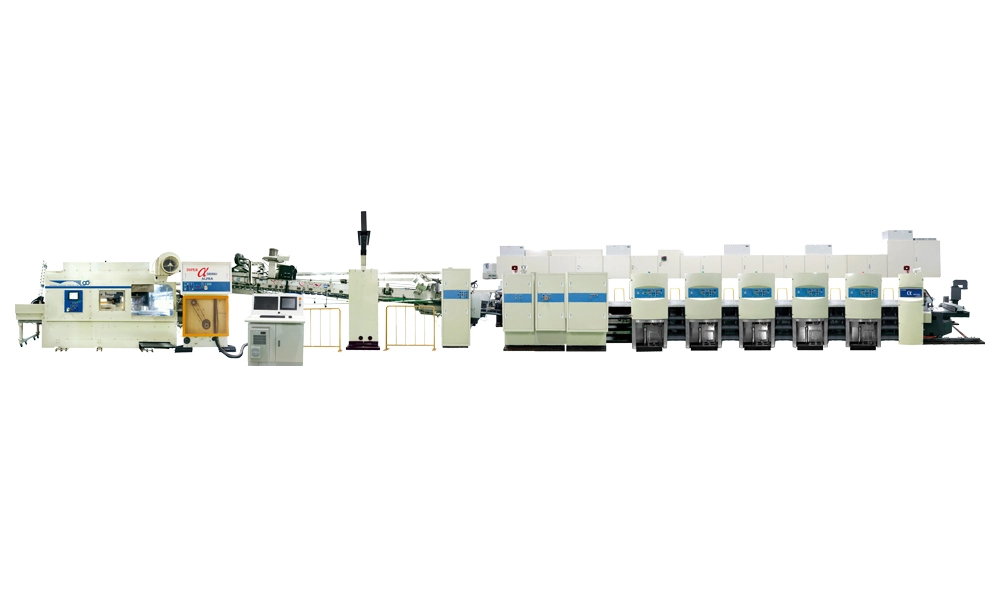
High-grade Full Automatic Flexo Printing Slotting Die Cutting Inline Folding Gluing and Countering Ejectoring Machine
Discover the Keshenglong&Shinko High-grade Full Automatic Flexo Printing Slotting Die Cutting Inline Folding Gluing and Countering Ejectoring Machine, the epitome of precision and efficiency. Ideal for modern packaging needs, this advanced machine streamlines operations by seamlessly integrating printing, slotting, die-cutting, folding, gluing, and ejecting processes. Elevate your production line with Keshenglong's innovative solution, designed to enhance productivity and deliver exceptional results.
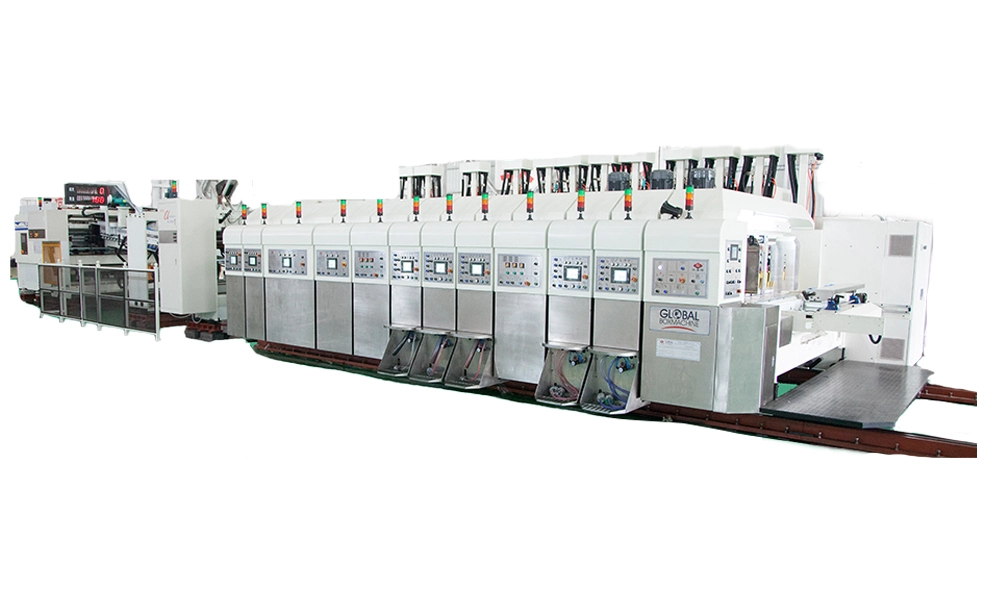
Computerized Flexo Printing Slotting Die-Cutting Inline Folding Gluing Countering Ejecting Machine
Introducing the Keshenglong&Shinko Computerized Flexo Printing Slotting Die-Cutting Inline Folding Gluing Countering Ejecting Machine. Engineered for precision, this advanced machine streamlines your packaging production with integrated Flexo Printing Slotting Die-Cutting functionalities. Seamlessly perform inline folding, gluing, countering, and ejecting—all in one efficient system. Designed for optimal performance, it enhances productivity while reducing downtime.
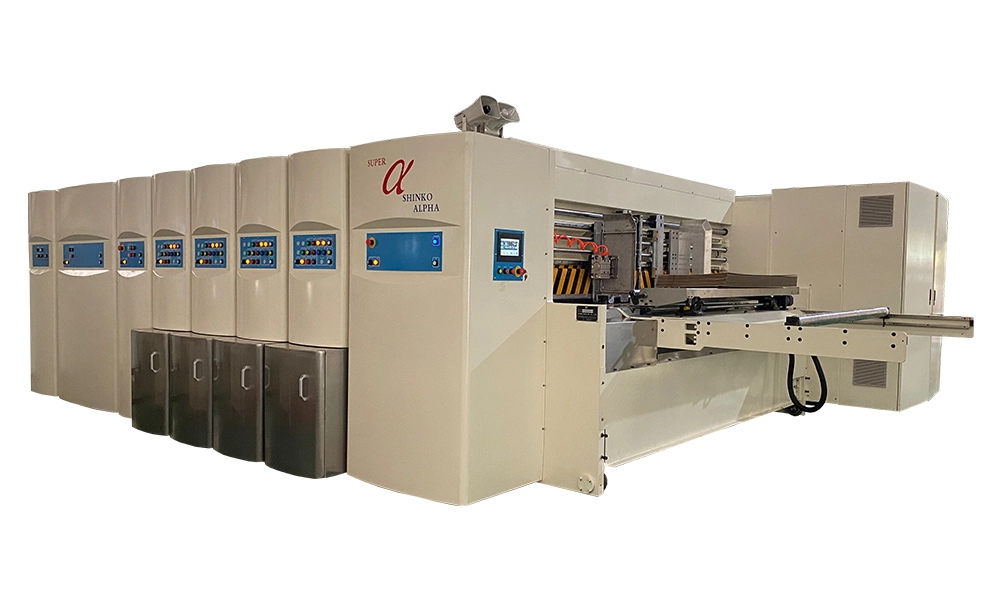
Shinko Super Alpha Movable Type Full Servo Drive Flexo Printing Slotting Die Cutting Machine
Introducing the Shinko Super Alpha Movable Type Full Servo Drive Flexo Printing Slotting Die Cutting Machine by Keshenglong. Engineered for precision and efficiency, this state-of-the-art machine enhances your production line with its advanced servo drive technology. Designed for seamless Flexo printing, slotting, and die-cutting, it ensures superior quality with every output.
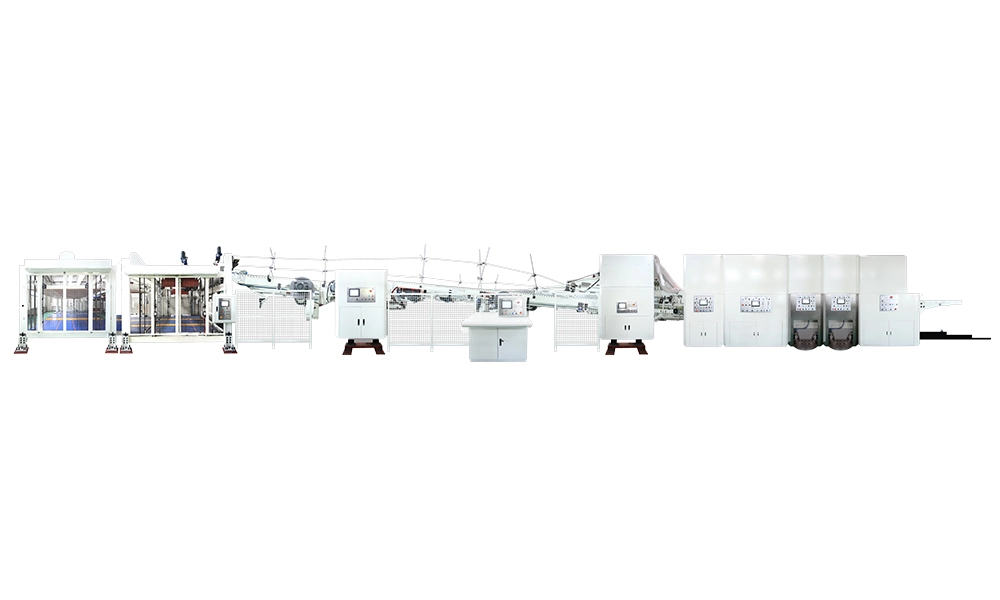
Jumbo Flexo Bottom Printing Slotting Die-Cutting Inline Folding Gluing Countering Ejecting Machine
Introducing the Keshenglong&Shinko Jumbo Flexo Bottom Printing Slotting Die-Cutting Inline Folding Gluing Countering Ejecting Machine. This advanced flexo printing slotting die-cutting machine ensures precision and efficiency for your packaging needs. Designed as a versatile flexo folder gluer machine, it optimizes every step from printing to ejecting, delivering seamless integration and superior quality.


© 2025 Keshenglong & SHINKO All Rights Reserved.
Keshenglong Carton Packing Machine
Keshenglong Carton Packing Machine
Keshenglong Carton Packing Machine
Keshenglong Carton Packing Machine
Keshenglong Carton Packing Machine