
Optimize Print Quality on Corrugated Box Machines
- Practical Guide to Improving Corrugated Printing Performance
- Understanding the challenge: why corrugated box printing machine optimization differs
- Prepress and artwork best practices for corrugated carton flexo printing machine
- Color management and measurement on corrugated box printing machine
- Anilox, plate and doctor blade selection for flexo printer optimization
- Press setup, registration and mechanical best practices for corrugated box printing machine
- Substrate handling and environmental control for corrugated box printing machine
- Troubleshooting table: common print defects on corrugated carton flexo printing machine
- Production control: sampling, SPC and run optimization on corrugated box printing machine
- Advantages of inline flexo printing slotting die-cutting machines and integrated solutions
- Why choose Keshenglong: corrugated carton flexo printing machine expertise and product strengths
- How to work with Keshenglong to optimize your print quality
- Practical checklist to implement in your plant this month
- Frequently Asked Questions (FAQ)
- Q1: What is the most common reason for color variation on corrugated boxes?
- Q2: How tight should my color tolerances be for corrugated packaging?
- Q3: What anilox characteristics work best on corrugated liners?
- Q4: Is inline printing and slotting die-cutting better for quality?
- Q5: Can we use standard desktop color profiles for corrugated flexo printing?
- Q6: How frequently should we measure and record color during a production run?
- Contact for consultation / view products
- References and further reading
Practical Guide to Improving Corrugated Printing Performance
Understanding the challenge: why corrugated box printing machine optimization differs
Corrugated board is a complex substrate: varying flute profiles, liner porosity, compressibility and surface sizing make repeatable print results harder than on solid board or coated papers. A corrugated box printing machine (especially flexo printers used for cartons) must manage ink laydown, dot gain, and mechanical registration against a moving, semi-compressible substrate. The first step to better output is understanding the variables you can control — artwork, consumables (plates, anilox, inks), machine settings, and environment — and the variables you must monitor (substrate variability and operator practice).
Prepress and artwork best practices for corrugated carton flexo printing machine
Good prints start before the press. For corrugated packaging, the following prepress controls reduce press make-ready time and improve first-run quality:
- Artwork setup: supply vector logos and spot colors when possible; avoid fine hairlines and small type smaller than 6 pt after trapping on coarse flutes.
- Trapping and knockouts: use conservative traps (0.3–0.5 mm) where colors abut to avoid gaps from registration drift.
- Rasterization: use screening appropriate for flexo on corrugated — coarser screens (lower LPI) and robust dot structures reduce mottling on textured liners. Typical screening choices are set to balance ink laydown and surface roughness.
- Use correct bleed and fold allowances: account for die-cut and creasing tolerances to avoid graphics loss at folds and corners.
- Proofing: produce press-and-substrate-specific proofs where possible and validate key colors with a spectrophotometer on the actual liner.
Color management and measurement on corrugated box printing machine
Consistent color on corrugated requires measurement tools and realistic targets. Invest in a spectrophotometer and adopt a simple measurement protocol:
- Measure density and color (CIELab) on the actual liner using the same illuminant and geometry each check.
- Adopt a reasonable ΔE target. For most corrugated box work, ΔE (CIEDE2000) ≤ 3 is a practical, customer-acceptable goal; High Quality brand work may require ΔE ≤ 2. Use CIEDE2000 calculation methods to report color difference consistently.
- Implement press curves: build ink-to-substrate lookup curves and use them in your RIP or color management workflow to predict dot gain and required ink film thickness.
- Standardize inks: use inks with stable pigments and rheology designed for corrugated flexo; document pigment strength and viscosity on a per-batch basis.
Anilox, plate and doctor blade selection for flexo printer optimization
Anilox selection and plate quality directly determine ink transfer and tonal range. Recommendations to improve print quality on a corrugated box printing machine include:
- Select anilox cell volume appropriate to the job: coarser corrugated often requires higher cell volume to achieve solid density; smoother liners benefit from finer cells for halftone detail. Maintain a clean anilox with routine ultrasonic or bead cleaning.
- Use high-quality photopolymer plates with stable relief and consistent shore hardness to minimize dot distortion when the plate deforms on harder impression.
- Tune doctor blades and metering systems to avoid score lines, streaks or air entrapment — consistent blade angle and pressure reduce streaking.
- Monitor anilox wear and replace or re-ceramic when cell walls erode; worn anilox produce uneven ink film and loss of density.
Press setup, registration and mechanical best practices for corrugated box printing machine
Mechanical precision is essential for multi-color corrugated printing. Key controls and checks:
- Tension control: stabilize web or sheet tension to avoid registration drift and panel distortion. Use zoned tension control and check tension across the web width to avoid skew.
- Registration systems: optical or mechanical registration must be calibrated at warm-up and after speed changes; consider closed-loop systems where feasible for long runs.
- Impression settings: use minimum necessary impression to transfer ink without crushing the flute structure; too much impression causes fluting crush and print mottling.
- Speed ramping: avoid sudden speed changes. Ramp up to target speed in stages and confirm color stability at each step.
Substrate handling and environmental control for corrugated box printing machine
Corrugated substrates absorb and release moisture; environmental control reduces variability:
- Condition stock before printing: stabilize board in the print room for 12–24 hours where practical, especially in dry or humid climates.
- Maintain stable relative humidity (RH) in the press area, typically between 45–65% RH, to minimize dimensional changes and static.
- Use anti-static bars and proper guiding to reduce misfeeds and static-related ink attraction.
Troubleshooting table: common print defects on corrugated carton flexo printing machine
| Problem | Likely Cause | Immediate Fix |
|---|---|---|
| Banding (horizontal streaks) | Anilox contamination, worn anilox, inconsistent doctor blade pressure, plate damage | Clean or replace anilox, check doctor blade alignment/pressure, inspect plates |
| Loss of density/washed-out colors | Low anilox volume, thin ink viscosity, high press speed, porous liner | Increase cell volume or slow speed, adjust ink viscosity, apply primer if necessary |
| Registration drift | Tension fluctuation, web handling, incorrect registration setup | Stabilize tension, recalibrate registration system, inspect rollers/guides |
| Ghosting / tone disturbance | Ink starvation, pulsing metering, anilox cell plugging | Check metering system, clean anilox, balance ink distribution |
| Ink smearing or rub-off | Insufficient drying/curing, too high ink film, incompatibility with coatings | Improve dryer settings/UV cure, reduce ink film, test ink/coating compatibility |
Production control: sampling, SPC and run optimization on corrugated box printing machine
Move from reactive fixes to preventive control through sampling and simple SPC:
- First-article checks: always run a calibrated sample and measure density and ΔE before releasing a run.
- Use control charts for key parameters: density, dot gain, and registration drift. Establish warning and action limits (e.g., ±2% density or ΔE thresholds) and enforce immediate corrections when charts show trends.
- Optimize make-ready time: maintain standardized make-ready checklists per job, including anilox, plate, doctor blade, tension, and ink batch number.
- Waste reduction: document ramp-up length and progressively shorten by improving repeatability of prepress and settings.
Advantages of inline flexo printing slotting die-cutting machines and integrated solutions
Converting to integrated inline solutions (printing + slotting + die-cutting + stacking) reduces handling, improves registration accuracy between print and cut, and shortens lead times. Inline machines lower the number of transfer points where misregistration and handling damage occur. For high-volume brand packaging requiring consistent print-to-cut registration, inline corrugated carton flexo printing machine solutions are often the most efficient path to consistent quality.
Why choose Keshenglong: corrugated carton flexo printing machine expertise and product strengths
Keshenglong, founded in 1995 and specialized in manufacturing corrugated carton printing machines and integrated packaging solutions, offers a portfolio that directly addresses the optimization topics above. Key facts and competitive advantages:
- Product range: flexo printer, computerized high-speed flexo slotting die-cutting machines (1–6 color), computerized high-speed flexo case makers, 6+1 high-precision precision printing slotting die-cutting machines, top & bottom printing slotting die-cutting machines, and jumbo-size flexo printing slotting die-cutting machines, as well as combined slotting and stacker machines.
- Technical integration: in 2017 Keshenglong merged Japan Shinko (maintained as R&D center and production base). Main parts are imported from Japan, guided by experienced Japanese technicians; another production base is located in Guangzhou, China. Machines are installed and tested on-site to meet Japan Shinko engineering standards.
- Quality assurance: use of high-quality imported components, dedicated R&D, and on-site commissioning helps deliver repeatable press performance, reduced make-ready time and long-term stability — critical for maintaining tight ΔE and registration targets on corrugated jobs.
- Global footprint: as a supplier of integrated intelligent packaging solutions, Keshenglong products have been exported to more than 70 countries, supporting multi-regional production requirements and spare-part logistics.
Choosing Keshenglong machines provides a pathway to fewer process variables through integrated production lines, higher automation for registration control and online inspection options, and vendor-backed service with Japanese-trained technicians.
How to work with Keshenglong to optimize your print quality
When considering equipment or upgrades, assess these points as part of vendor evaluation:
- Service and commissioning scope: on-site installation, operator training, and process parameter transfer from vendor to your shop-floor team.
- Parts and consumables availability: tenure of critical spare parts (anilox, plates, bearings) and guaranteed lead-times for your region.
- Upgradability: options for inline inspection, closed-loop color control, and modular additions (stackers, slitters) that reduce handoffs and improve reproducibility.
Practical checklist to implement in your plant this month
- Introduce a prepress checklist for corrugated jobs (files, traps, proofs).
- Buy or calibrate a spectrophotometer; define ΔE acceptance limits for common customers.
- Audit your anilox cleaning schedule and log cell volumes per job.
- Stabilize press-room RH (target 45–65%) and monitor daily.
- Start simple SPC charts for density and registration for one pilot SKU and iterate to other SKUs.
Frequently Asked Questions (FAQ)
Below are common questions brands and converters search for when optimizing corrugated print quality.
Q1: What is the most common reason for color variation on corrugated boxes?
A1: The most common causes are substrate variability (different liner batches), inconsistent anilox transfer (contamination or wear), and uncontrolled press-room humidity. Addressing substrate conditioning, anilox cleaning/replacement and environmental control solves most variation.
Q2: How tight should my color tolerances be for corrugated packaging?
A2: Practical tolerances are typically ΔE (CIEDE2000) ≤ 3 for general packaging. High Quality brands may require ΔE ≤ 2. Choose a tolerancing level that matches brand expectations and your lab's measurement repeatability.
Q3: What anilox characteristics work best on corrugated liners?
A3: Corrugated printing generally requires higher cell volume than coated papers to deposit sufficient ink on porous liners. Exact cell counts and volumes depend on flute type, ink solids and desired density — consult with anilox suppliers and record successful cell volumes as part of your job specs.
Q4: Is inline printing and slotting die-cutting better for quality?
A4: Yes — inline integration reduces handling and transfer points, improving print-to-cut registration and reducing damage. It often shortens lead time and reduces overall waste, but assess through ROI analysis since capital cost is higher.
Q5: Can we use standard desktop color profiles for corrugated flexo printing?
A5: No — desktop or offset profiles usually do not account for the high dot gain and substrate absorption of corrugated board. Build press-and-substrate-specific profiles and curves based on measured press trials on the actual liner.
Q6: How frequently should we measure and record color during a production run?
A6: Measure at first-article, after major speed changes, and at regular intervals defined by your SPC plan (for example, every 15–30 minutes during steady-state runs or every 1000 sheets). For critical jobs, use online color measurement if available.
Contact for consultation / view products
If you need help implementing these recommendations or want to evaluate machines designed for high-quality corrugated production, contact Keshenglong for consultation and product details. Keshenglong offers flexo printers, flexo printing slotting die-cutting machines, flexo printing slotting die-cutting and stacker machines and integrated corrugated packaging solutions with Japan-standard components and on-site technical support.
References and further reading
- FEFCO (European Corrugated Packaging Association) – technical guidance and industry resources. https://www.fefco.org/ (accessed 2025-12-22)
- Wikipedia – Corrugated fiberboard overview. https://en.wikipedia.org/wiki/Corrugated_fiberboard (accessed 2025-12-22)
- CIEDE2000 color-difference formula overview. https://en.wikipedia.org/wiki/Color_difference (accessed 2025-12-22)
- ISO – standards on graphic technology and printing process control (see ISO 12647 series for print process control principles). https://www.iso.org/standard/52121. (accessed 2025-12-22)
- Keshenglong company information (manufacturer background and product lines supplied in brief by the company materials provided for this article) (accessed 2025-12-22)
Flexo vs Digital Printing: Which Is Better for Labels?
How to Operate a Flex Printing Machine: Expert Guide | Keshenglong
Keshenglong&Shinko best professional flexo folder gluer factories Manufacturers and supplier brand in China
Top 10 cardboard box making machine Manufacturers and Supplier Brands
Industry Solutions
Do you offer solutions for environmentally friendly packaging?
Yes, our machines can produce cartons from recyclable and biodegradable materials, supporting sustainable packaging solutions.
How can your machines improve my production workflow?
By automating carton production, our machines streamline your workflow, increase output, and reduce downtime.
Shipping
What are the shipping dimensions and weight of your folding carton machines?
Shipping dimensions and weight vary by model; please refer to the specific product details for accurate information.
What are the shipping costs for your folding carton machines?
Shipping costs depend on the destination, machine size, and shipping method. Contact us for a detailed quote.
Do you offer international shipping for your machines?
Yes, we offer international shipping and can handle all necessary customs documentation.
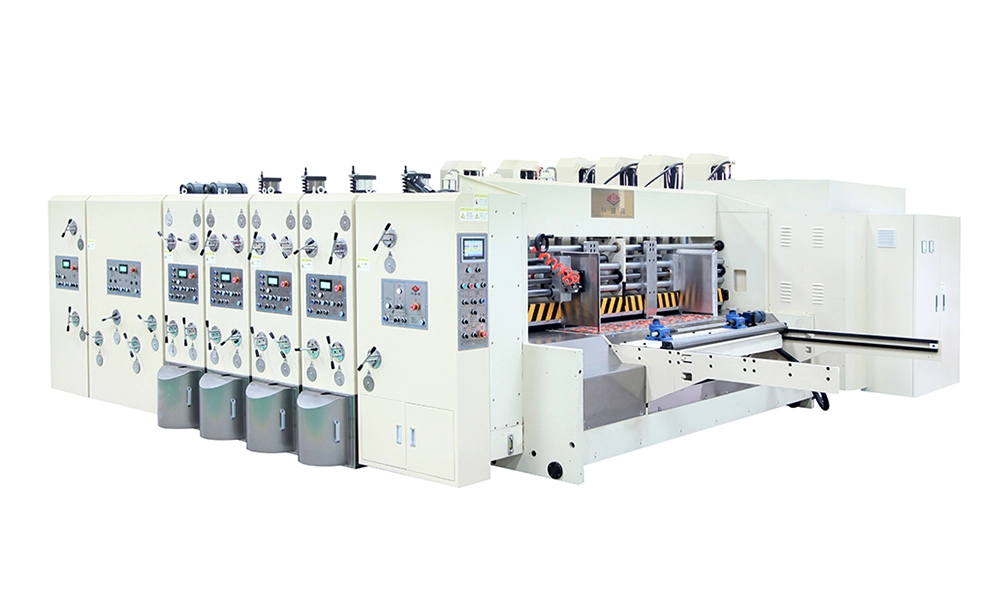
Computerzied Semi Auto Flexo Printing Slotting Die-Cutting Machine
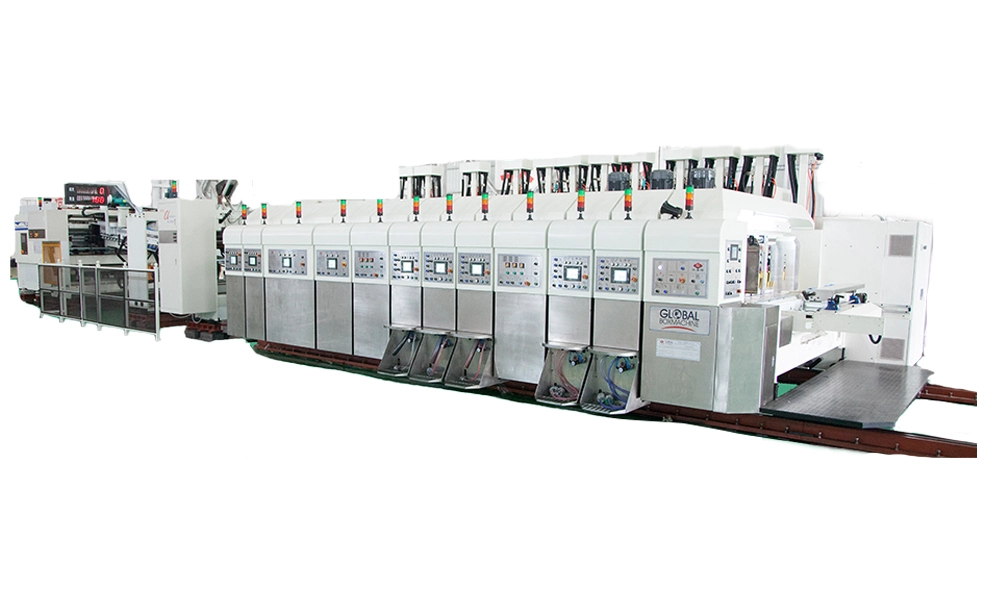
Computerized Flexo Printing Slotting Die-Cutting Inline Folding Gluing Countering Ejecting Machine
Introducing the Keshenglong&Shinko Computerized Flexo Printing Slotting Die-Cutting Inline Folding Gluing Countering Ejecting Machine. Engineered for precision, this advanced machine streamlines your packaging production with integrated Flexo Printing Slotting Die-Cutting functionalities. Seamlessly perform inline folding, gluing, countering, and ejecting—all in one efficient system. Designed for optimal performance, it enhances productivity while reducing downtime.
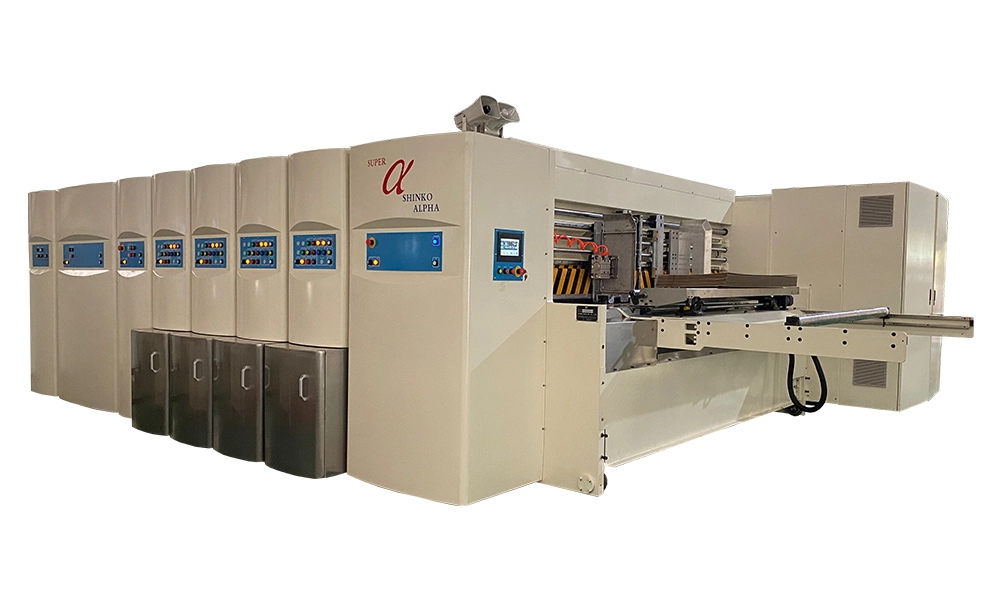
Shinko Super Alpha Movable Type Full Servo Drive Flexo Printing Slotting Die Cutting Machine
Introducing the Shinko Super Alpha Movable Type Full Servo Drive Flexo Printing Slotting Die Cutting Machine by Keshenglong. Engineered for precision and efficiency, this state-of-the-art machine enhances your production line with its advanced servo drive technology. Designed for seamless Flexo printing, slotting, and die-cutting, it ensures superior quality with every output.
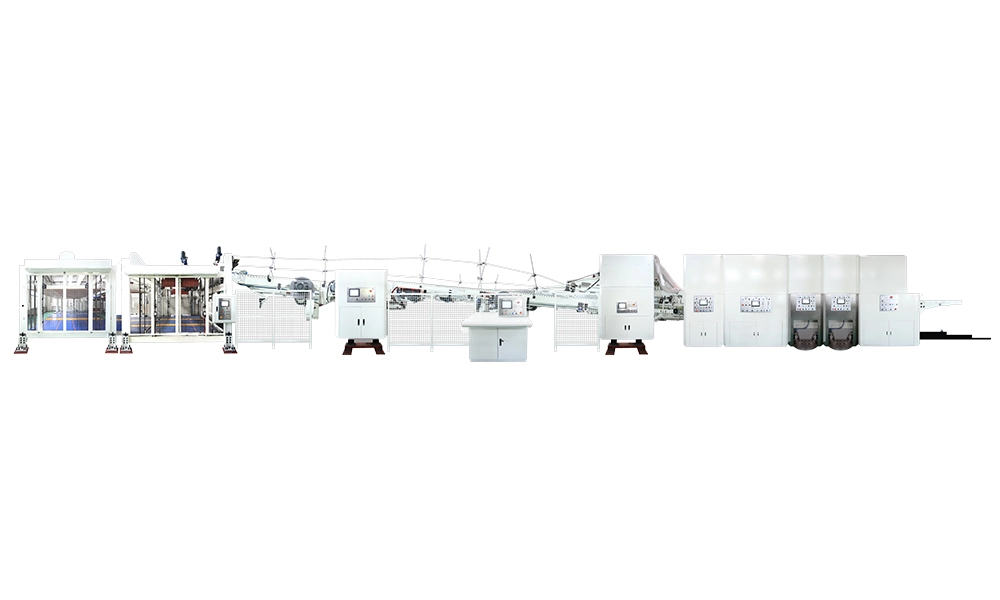
Jumbo Flexo Bottom Printing Slotting Die-Cutting Inline Folding Gluing Countering Ejecting Machine
Introducing the Keshenglong&Shinko Jumbo Flexo Bottom Printing Slotting Die-Cutting Inline Folding Gluing Countering Ejecting Machine. This advanced flexo printing slotting die-cutting machine ensures precision and efficiency for your packaging needs. Designed as a versatile flexo folder gluer machine, it optimizes every step from printing to ejecting, delivering seamless integration and superior quality.


© 2025 Keshenglong & SHINKO All Rights Reserved.
Keshenglong Carton Packing Machine
Keshenglong Carton Packing Machine
Keshenglong Carton Packing Machine
Keshenglong Carton Packing Machine
Keshenglong Carton Packing Machine