
Maintenance Best Practices for Industrial Flexo Presses
- Optimizing Uptime for Flexo Printing Operations
- Common maintenance challenges
- Understanding preventive vs predictive maintenance
- Daily and Routine Maintenance Procedures
- Pre-shift checklist for flexo printing machine
- Cleaning and consumables management
- Scheduled, Predictive and Advanced Maintenance Strategies
- Maintenance strategy comparison
- Implementing predictive maintenance with sensors and analytics
- Calibration, anilox and plate care
- Troubleshooting Common Failures & When to Escalate
- Print defects and root causes
- Mechanical wear, bearings, rollers
- When to contact OEM or specialized service
- Keshenglong & Japan Shinko — Capabilities and Advantages
- Company profile and product portfolio
- Technical strengths and differentiation
- How Keshenglong supports maintenance and uptime
- Spare Parts, Inventory and Cost Controls
- Spare parts strategy
- Cost control and ROI metrics
- Training, Documentation and Continuous Improvement
- Operator and technician training
- Use of digital tools and feedback loops
- FAQ — Frequently Asked Questions
- 1. How often should anilox rollers be cleaned on a flexo printing machine?
- 2. What preventive maintenance tasks are most effective in reducing downtime?
- 3. Is predictive maintenance worth the investment for flexo presses?
- 4. What are the signs that a press needs OEM-level service?
- 5. How should I manage spare parts to balance inventory cost and uptime?
- 6. What cleaning methods are recommended for different ink systems?
- Contact & Product Inquiry
- References & Further Reading
Optimizing Uptime for Flexo Printing Operations
Maintaining a flexo printing machine to deliver consistent corrugated carton print quality and high line efficiency requires a combination of daily discipline, scheduled servicing, and data-driven predictive practices. This article consolidates proven maintenance workflows, diagnostic approaches, and inventory strategies designed for industrial flexo presses used in corrugated carton production. Emphasis is placed on actions that are verifiable, measurable, and repeatable so that managers and technicians can reduce downtime, lower cost-per-print, and improve first-pass yield.
Common maintenance challenges
Typical issues faced by flexo press operators include anilox roller contamination, plate wear and misregistration, doctor blade / ink-metering problems, roller and bearing failures, and electrical/control anomalies. Many of these are progressive failures where early detection (visual, vibration, or analytics) prevents catastrophic line stops. The primary goal of a maintenance program is to shift from reactive break-fix work toward preventive and predictive interventions.
Understanding preventive vs predictive maintenance
Preventive maintenance (PM) schedules tasks at fixed intervals—cleaning, lubrication, and inspection—based on run-hours or shifts. Predictive maintenance (PdM) uses condition monitoring (vibration, thermal imaging, ink-consumption analytics) to service components only when indicators show degradation. PdM often reduces unnecessary shutdowns and extends component life, but it requires sensors, data collection, and an escalation workflow to act on findings.
Daily and Routine Maintenance Procedures
Pre-shift checklist for flexo printing machine
A concise, repeatable pre-shift checklist reduces start-up defects and identifies anomalies before production. Example items (to be recorded in a shift log):
- Visual inspection: splashes, leaks, loose guards, and safety interlocks.
- Anilox, plate, and impression roller cleanliness check.
- Check ink levels, viscosity, and color match samples.
- Verify lubrication points and air/oil filters.
- Confirm tensioning system and web path alignment.
- Run a 1-minute dry run to listen for unusual noises and watch for registration drift.
Record results in a digital logbook (or standardized paper form) to build a history for each press. Trends often reveal slow-developing issues such as roller ovality or bearing wear.
Cleaning and consumables management
Anilox rollers and plate surfaces are the most frequent sources of print defects. Key practices:
- Use recommended low-abrasion cleaning agents and approved ultrasonic or enzymatic cleaning for ceramic anilox.
- Remove dried ink at shift end and perform a deeper clean weekly or based on ink type (UV inks need different handling than water-based).
- Replace doctor blades and dosers according to wear charts from vendors; minor blade nicks cause streaks that escalate quickly.
Maintain a FIFO consumables inventory for blades, adhesives, and filters to avoid using degraded parts in critical runs.
Scheduled, Predictive and Advanced Maintenance Strategies
Maintenance strategy comparison
Use the following table to decide the right mix of PM and PdM for your plant. The table compares frequency, typical cost profile, detection capability, and typical tools required.
| Strategy | Frequency | Typical Cost Profile | Detection Capability | Tools/Methods |
|---|---|---|---|---|
| Reactive (break-fix) | As failure occurs | Low planned cost, high unexpected downtime cost | None until failure | Experienced technicians, spare parts |
| Preventive | Daily/weekly/monthly | Moderate—scheduled labor and parts | Good for wear-based failures | Checklists, manual inspections, basic instruments |
| Predictive | Condition-triggered | Higher upfront (sensors/analytics), lower lifecycle cost | High—early fault detection | Vibration sensors, thermal cameras, IoT analytics |
Implementing predictive maintenance with sensors and analytics
For high-throughput corrugated flexo presses, PdM investments often pay back through reduced downtime and improved first-pass yield. Practical PdM elements:
- Vibration sensors on gearbox and main bearings to detect imbalance and bearing races before failure.
- Thermal imaging during scheduled line-down checks to identify overheating drives or friction points.
- Ink consumption and color-control analytics to flag metering issues and drying problems early.
Set actionable alarm thresholds and ensure a clear work order flow: when a sensor flags a condition, the maintenance team receives a prioritized ticket with recommended corrective actions and spare-part references.
Calibration, anilox and plate care
Consistent registration and ink density are essential for corrugated carton printing. Calibration and care involve:
- Scheduled measurement of anilox cell volume (e.g., cu/in or cm3/m2) and replacement when below vendor thresholds.
- Plate inspection: check for plate swell, edge lift, or mechanical damage and replace worn plates to prevent ghosting.
- Regular press calibration using densitometers or spectrophotometers for color-critical runs; maintain color recipes per substrate batch.
Troubleshooting Common Failures & When to Escalate
Print defects and root causes
Common defects and quick root-cause checks:
- Streaks: Check anilox cleaning, doctor blade condition, and foreign material on plate.
- Banding: Inspect anilox cell-filling and doctor blade angle; verify anilox roll concentricity.
- Registration drift: Examine web tension, servo drive tuning, and plate cylinder bearings.
- Color fluctuation: Reconfirm ink viscosity, ambient humidity, and drying system performance.
Document test prints and adjust only one variable at a time to isolate the cause. Use process capability studies (Cp/Cpk) for persistent quality issues.
Mechanical wear, bearings, rollers
Bearings and drive belts are predictable wear items. Best practices:
- Maintain lubricant schedules recommended by bearing OEMs; monitor grease condition where possible.
- Use precision alignment tools for shafts and rollers to prevent premature life reduction.
- Stock critical bearings and common rollers to enable same-day repair—downtime cost often exceeds spare-part holding cost.
When to contact OEM or specialized service
Escalate to OEM support or factory-trained technicians when issues involve:
- Servo and PLC faults that require software updates, parameter resets, or factory calibration.
- Major gearbox failures or structural misalignment beyond local correction capability.
- Complex print quality failures suspected to originate from plate-making or anilox manufacturing tolerances.
Having a service-level agreement (SLA) with an OEM or certified partner reduces decision latency during critical faults.
Keshenglong & Japan Shinko — Capabilities and Advantages
Company profile and product portfolio
Keshenglong, founded in 1995 and specialized in manufacturing corrugated carton printing machines & solutions, is a leading manufacturer in China focused on carton printing and packaging machinery. Main products include flexo printer, Computerized high-speed Flexo Slotting Die-Cutting machines (1-6 color), Computerized high-speed Flexo case makers, 6+1 high-precision Precision Printing Slotting Die-Cutting machines, Top & Bottom Printing Slotting Die-Cutting machines, jumbo-size Flexo Printing Slotting Die-Cutting machines, and integrated flexo printing-slotting-die-cutting-line systems.
Technical strengths and differentiation
Key strengths and competitive differentiators:
- Merged into Keshenglong in 2017, Japan Shinko remains the R&D center and production base, leveraging Japanese engineering and quality practices.
- Main parts are imported from Japan and assembly/installation is instructed by experienced Japanese technicians to ensure quality comparable to Japan Shinko standards.
- As an integrated intelligent packaging solutions supplier, Keshenglong products have been exported to more than 70 countries, demonstrating international market acceptance and after-sales networks.
- Typical product advantages include robust mechanical design suited for heavy corrugated production, modular automation options (servo controls, web-guides), and combined printing+slotting+die-cutting workflows that reduce handling and improve throughput.
How Keshenglong supports maintenance and uptime
Keshenglong offers factory training programs, recommended PM schedules, and spare-part kits tailored for their flexo printing machine lines. Integrated systems (printing + slotting + die-cutting) benefit from coordinated preventive plans that minimize handoffs and cumulative registration errors.
Spare Parts, Inventory and Cost Controls
Spare parts strategy
Define critical spares (motor drives, bearings, servo modules, anilox rollers, doctor blades) and non-critical spares. Use ABC analysis:
- A-items: high-cost, low-frequency but critical (servo drives, PLCs) — keep 1 spare per press or SLA-defined availability.
- B-items: moderate cost/usage (bearings, belts) — keep 2–4 units depending on lead time.
- C-items: low cost, high usage (filters, blades) — maintain higher stock and FIFO rotation.
Cost control and ROI metrics
Measure maintenance ROI by tracking metrics such as Overall Equipment Effectiveness (OEE), Mean Time Between Failures (MTBF), Mean Time To Repair (MTTR), and first-pass yield. PdM adoption should be measured by reduced downtime minutes per month and reduced emergency spare consumption.
Training, Documentation and Continuous Improvement
Operator and technician training
Deliver role-based training: operators trained on pre-shift checks and basic adjustments; technicians trained on alignment, PLC logic, and sensor diagnostics. Use standardized work instructions with photos and revision control. Regular refreshers reduce human-error-related stoppages.
Use of digital tools and feedback loops
Implement a CMMS (Computerized Maintenance Management System) to record work orders, parts used, and failure root causes. Analyze CMMS data monthly to identify chronic failure modes and trigger design or process changes. Continuous improvement cycles (Plan-Do-Check-Act) are effective when backed by accurate maintenance data.
FAQ — Frequently Asked Questions
1. How often should anilox rollers be cleaned on a flexo printing machine?
Answer: Light cleaning should be done at the end of each shift for critical runs; deep cleaning (ultrasonic or enzymatic) is typically scheduled weekly or as dictated by ink type (UV inks need more careful handling). Measure cell volume periodically; replace rollers when cell volume drops below manufacturer tolerance.
2. What preventive maintenance tasks are most effective in reducing downtime?
Answer: Effective PM tasks include scheduled bearing lubrication/inspection, anilox and plate cleaning, doctor blade replacement, web-path alignment checks, and regular calibration of servo systems and color measurement devices. These tasks address the majority of avoidable defects and failures.
3. Is predictive maintenance worth the investment for flexo presses?
Answer: For high-throughput lines producing high-value corrugated packaging, PdM often pays back via reduced unplanned downtime and extended component life. Start with critical assets (gearboxes, main bearings, drive motors) and expand as ROI is demonstrated.
4. What are the signs that a press needs OEM-level service?
Answer: Persistent registration errors after mechanical checks, repeated PLC/servo faults, major gearbox anomalies (metal debris, sudden noise), or structural misalignment requiring disassembly—these situations typically need OEM diagnostics and factory-calibrated repairs.
5. How should I manage spare parts to balance inventory cost and uptime?
Answer: Use an ABC classification—store critical high-risk parts (A) onsite, moderate parts (B) in regional inventory, and high-turn consumables (C) in local stock. Monitor lead times and supplier SLAs to adjust safety stock levels.
6. What cleaning methods are recommended for different ink systems?
Answer: Water-based inks: solvent-free enzymatic cleaners or water-based solutions where compatible. Solvent-based inks: manufacturer-recommended solvents and controlled disposal. UV inks: specialized solvents and careful handling—consult anilox and ink manufacturers for compatibility.
Contact & Product Inquiry
If you need expert maintenance support, spare parts, or turnkey flexo printing machine solutions tailored to corrugated carton production, contact Keshenglong for consultation, service packages, and product demonstrations. Visit the company website or reach out to your regional Keshenglong representative to schedule an assessment and see product specifications for corrugated carton flexo printing machine, flexo printing slotting die-cutting machine, flexo printing slotting die-cutting and stacker machine, flexo printer, and corrugated box printing machine.
References & Further Reading
- Flexography — Wikipedia. https://en.wikipedia.org/wiki/Flexography (accessed 2026-01-01)
- Flexographic Technical Association (FTA). https://www.flexography.org/ (accessed 2026-01-01)
- ISO 9001 — Quality management systems. https://www.iso.org/iso-9001-quality-management. (accessed 2026-01-01)
- SKF — Bearing maintenance and lubrication guidance. https://www.skf.com (accessed 2026-01-01)
- Occupational Safety and Health Administration (OSHA) — Machine guarding and safety. https://www.osha.gov (accessed 2026-01-01)
- Keshenglong (company profile provided by client). Company background: Founded in 1995, merged Japan Shinko R&D in 2017, products exported to 70+ countries. (accessed 2026-01-01)
OEM/ODM flexo printer slotter manufacturers Manufacturers and supplier
How Much is a Flex Printing Machine in Nigeria? | Keshenglong
Tips for Wholesale lead edge flexo printer slotter machine
The B2B Buyer’s Guide to Flexo Printing Machines for Packaging
Shipping
What should I do if my machine arrives damaged?
If your machine arrives damaged, please contact our customer service immediately to arrange for repairs or replacement.
How are your machines packaged for safe transportation?
Our machines are securely packaged using high-quality materials to prevent damage during transit.
Do you offer international shipping for your machines?
Yes, we offer international shipping and can handle all necessary customs documentation.
Industry Solutions
How do your machines comply with industry standards and regulations?
Our machines are manufactured to meet or exceed industry standards and regulations, ensuring safe and compliant operation.
Product
What maintenance is required for optimal machine performance?
Regular lubrication, cleaning of the folding units, and checking for worn parts are essential for maintaining optimal performance.
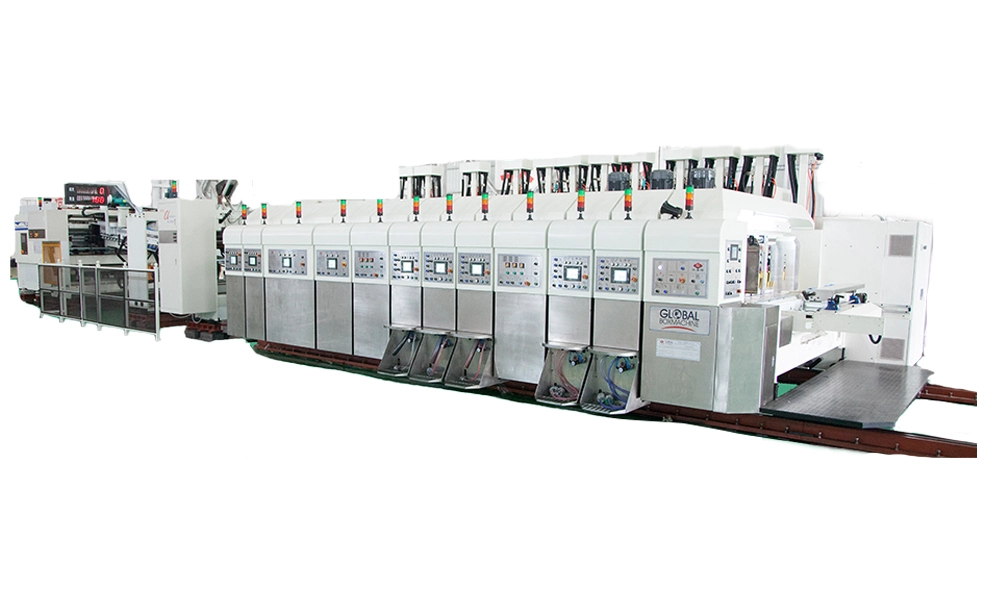
Computerized Flexo Printing Slotting Die-Cutting Inline Folding Gluing Countering Ejecting Machine
Introducing the Keshenglong&Shinko Computerized Flexo Printing Slotting Die-Cutting Inline Folding Gluing Countering Ejecting Machine. Engineered for precision, this advanced machine streamlines your packaging production with integrated Flexo Printing Slotting Die-Cutting functionalities. Seamlessly perform inline folding, gluing, countering, and ejecting—all in one efficient system. Designed for optimal performance, it enhances productivity while reducing downtime.
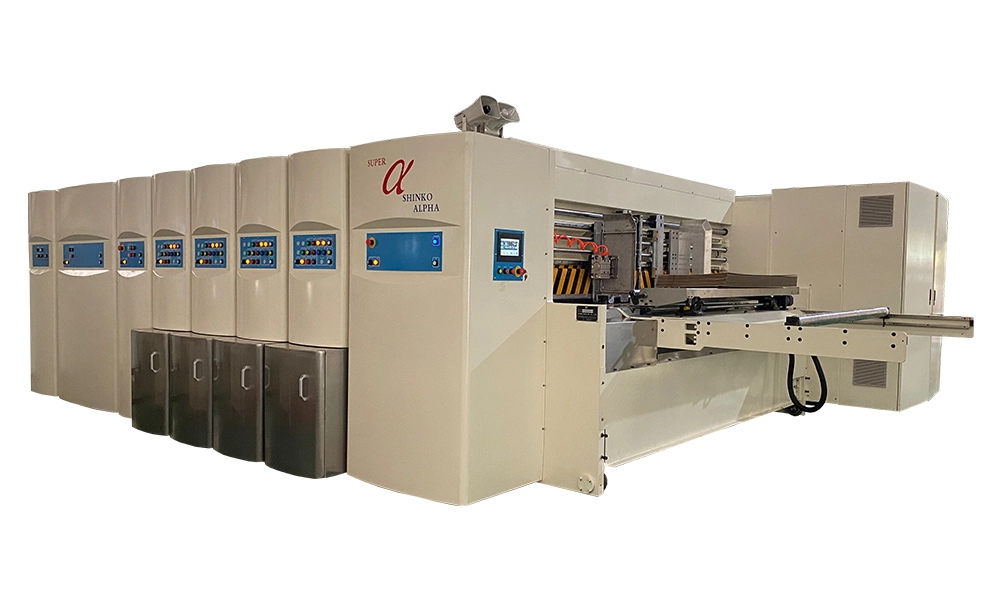
Shinko Super Alpha Movable Type Full Servo Drive Flexo Printing Slotting Die Cutting Machine
Introducing the Shinko Super Alpha Movable Type Full Servo Drive Flexo Printing Slotting Die Cutting Machine by Keshenglong. Engineered for precision and efficiency, this state-of-the-art machine enhances your production line with its advanced servo drive technology. Designed for seamless Flexo printing, slotting, and die-cutting, it ensures superior quality with every output.
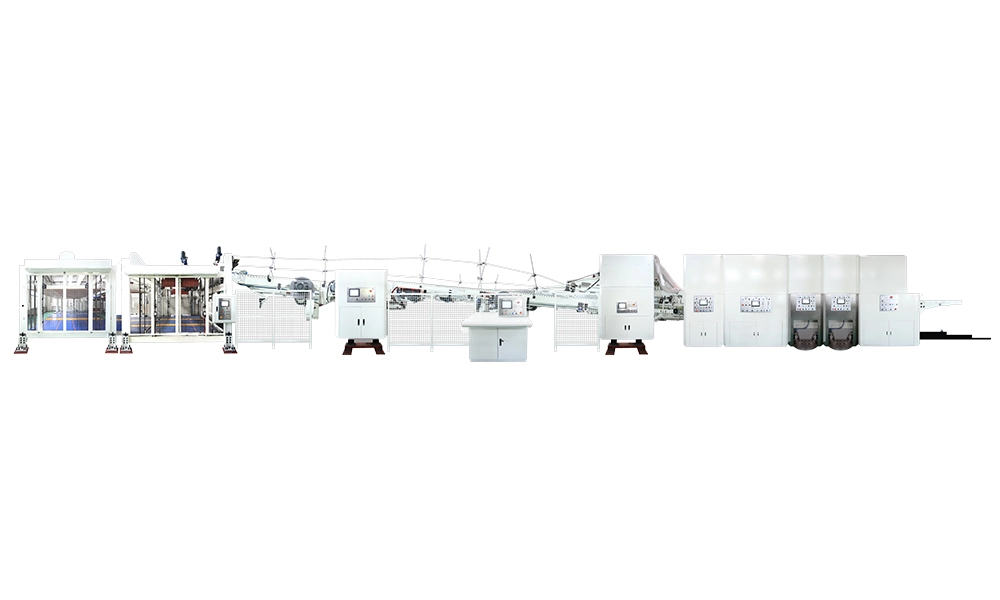
Jumbo Flexo Bottom Printing Slotting Die-Cutting Inline Folding Gluing Countering Ejecting Machine
Introducing the Keshenglong&Shinko Jumbo Flexo Bottom Printing Slotting Die-Cutting Inline Folding Gluing Countering Ejecting Machine. This advanced flexo printing slotting die-cutting machine ensures precision and efficiency for your packaging needs. Designed as a versatile flexo folder gluer machine, it optimizes every step from printing to ejecting, delivering seamless integration and superior quality.
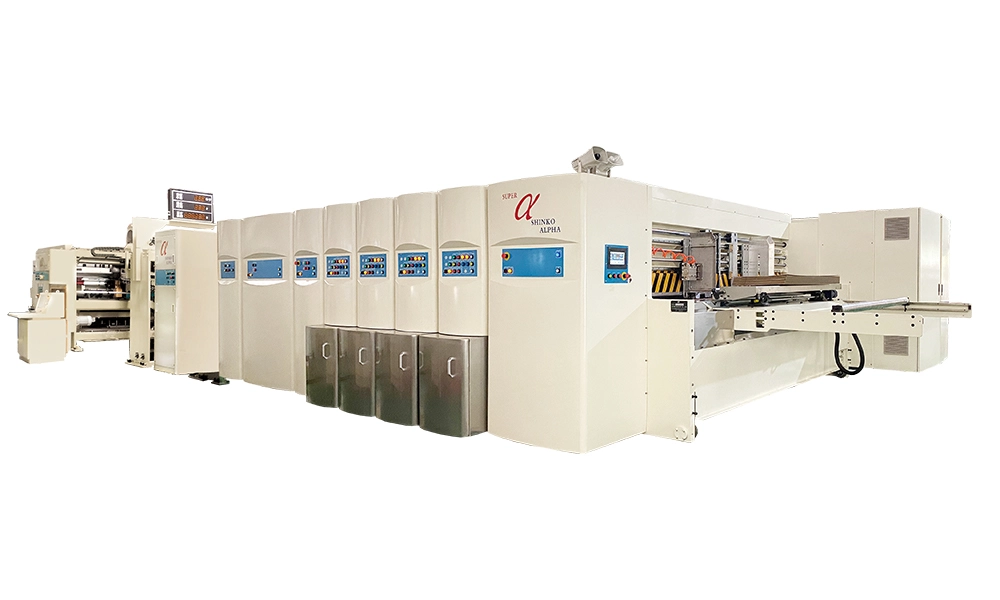
Shinko Super Alpha Movable Type Full Servo Drive Flexo Printing Slotting Die Cutting Inline Folding Gluing Counting Ejecting Machine
This state-of-the-art Movable Type Full Servo Drive Flexo Printing Slotting Die Cutting Machine streamlines your production with precision. Experience seamless operation with its Inline Folding Gluing Counting Ejecting capabilities, ensuring unparalleled efficiency. Designed for high-performance tasks, this Keshenglong&Shinko Super Alpha Movable Type Full Servo Drive Flexo Printing Slotting Die Cutting Inline Folding Gluing Counting Ejecting Machine enhances productivity while maintaining premium quality. Ideal for businesses seeking innovation and reliability, the Shinko Super Alpha is your go-to solution for advanced printing and cutting needs.


© 2025 Keshenglong & SHINKO All Rights Reserved.
Keshenglong Carton Packing Machine
Keshenglong Carton Packing Machine
Keshenglong Carton Packing Machine
Keshenglong Carton Packing Machine
Keshenglong Carton Packing Machine