
Improving ROI with High-Speed Flexo Printing Automation
- Why High-Speed Flexo Printing Automation Matters for ROI
- Industrial context and business drivers
- Common operational bottlenecks
- Key Automation Technologies and How They Improve ROI
- Automated register and servo-driven controls
- Integrated prepress and workflow automation
- Inline inspection and automated defect management
- Measuring ROI: KPIs, Metrics and a Practical ROI Model
- Essential KPIs to track
- Example ROI model (illustrative)
- Calculating payback
- Procurement and Implementation Best Practices
- Specify outcomes, not features
- Integration and data strategy
- Training, maintenance and change management
- Comparing Options: In-House Retrofit vs New Automated Lines
- Retrofit advantages and limits
- New machines and turnkey automation
- Decision checklist
- Keshenglong & Japan Shinko: Solutions That Bridge Performance and Reliability
- Company background and capabilities
- Shinko integration and production quality
- Competitive strengths
- Real-world Considerations and Risk Mitigation
- Common pitfalls to avoid
- How to validate vendor claims
- Frequently Asked Questions (FAQ)
- 1. How much can automation reduce make-ready time on a flexo printer machine?
- 2. Will high-speed automation increase my energy costs?
- 3. Can retrofits deliver similar ROI to a new automated flexo line?
- 4. How quickly can I expect to recover the investment in automation?
- 5. What role does inline inspection play in reducing customer returns?
- 6. How important is vendor local support when choosing a high-speed flexo printer machine?
- Contact / Request a Demo
- References
Why High-Speed Flexo Printing Automation Matters for ROI
Industrial context and business drivers
In corrugated carton production, the flexo printer machine is the central workhorse for applying high-quality graphics and functional inks at speed. Market pressures—shorter runs, more SKUs, rising labor costs, and sustainability targets—mean manufacturers must squeeze more throughput and quality from existing floor space. Automation addresses these pressures by reducing non-productive time, improving first-pass yield, and enabling faster job changeovers.
Common operational bottlenecks
Typical bottlenecks that reduce ROI include long make-ready and makeready setup times, manual quality checks, waste from trial-and-error color setup, and inconsistent web handling at high speed. Identifying which bottleneck dominates production is the first step to selecting automation investments that deliver measurable ROI.
Key Automation Technologies and How They Improve ROI
Automated register and servo-driven controls
Modern high-speed flexo printing automation integrates servo-driven plate cylinders, closed-loop register systems, and camera-based inspection. These reduce setup time, maintain register across long production runs, and lower spoilage. For converters, improved register stability directly translates into fewer reprints and higher usable yield.
Integrated prepress and workflow automation
Prepress automation—digital imposition, standardized color profiles, and job-retrieval systems—reduces human error and dramatically shortens makeready. With a connected workflow, press operators can call up previous jobs, pre-load parameters, and run with minimal intervention.
Inline inspection and automated defect management
Automated inspection systems detect color variation, print defects, and registration issues in real time. Inline rejection or automatic marking systems reduce the need for manual inspection and lower customer returns. Over time, defect-trend data enables continuous process improvement and waste reduction.
Measuring ROI: KPIs, Metrics and a Practical ROI Model
Essential KPIs to track
- Overall Equipment Effectiveness (OEE): availability × performance × quality.
- First-pass yield (percentage of good boards without rework).
- Make-ready time and changeover frequency.
- Waste rate (kg or m per 1,000 boards).
- Throughput (m/min and finished cartons/hr).
- Labor hours per shift and per 1,000 cartons.
Example ROI model (illustrative)
The following table shows a hypothetical ROI comparison between a conventional flexo printer machine line and one upgraded with high-speed automation. These numbers are illustrative; please adapt to your shop’s real metrics for accurate ROI planning.
| Metric | Conventional Line | Automated High-Speed Line | Impact |
|---|---|---|---|
| Throughput (m/min) | 150 | 300 | +100% (higher output) |
| Make-ready time (min/job) | 45 | 12 | -73% (faster changeover) |
| First-pass yield | 85% | 95% | +10 pp (less waste) |
| Labor per shift (operators) | 4 | 2 | -50% |
| Estimated annual waste reduction | 100 tons | 35 tons | -65 tons |
How to read the table: increase in throughput and yield reduces unit production cost, while reduced make-ready and labor lower operating expenses. An investment in automation that costs X may pay back in months rather than years depending on utilization and pricing.
Calculating payback
Basic payback calculation:
Payback (months) = Capital Cost of Automation / Monthly Net Benefit
Where Monthly Net Benefit = (Incremental contribution from extra throughput + labor savings + material waste savings + quality/returns reduction) - incremental operating expenses (maintenance, energy).
Companies should perform scenario analysis (conservative, expected, optimistic) and include sensitivity to utilization, ink costs, and scrap rates.
Procurement and Implementation Best Practices
Specify outcomes, not features
Procure with performance-based requirements: target OEE, acceptable color deviation tolerances, and maximum make-ready times. Avoid buying features you won’t use; instead, require vendor validation with on-site trials or remote simulations using your JOBS.
Integration and data strategy
Automation is most valuable when integrated into plant systems (ERP, MES, prepress). Specify open APIs, standardized job ticketing (JDF/JMF where appropriate), and remote diagnostics. Data access enables continuous improvement and remote serviceability that lowers lifecycle costs.
Training, maintenance and change management
Invest in operator training and maintenance programs. The best machines lose value if staff cannot use automation features. Define service-level agreements (SLA), spare-part lead times, and local support availability as part of procurement evaluation.
Comparing Options: In-House Retrofit vs New Automated Lines
Retrofit advantages and limits
Retrofits can be cost-effective for improving register, adding inline inspection, or upgrading web transport. They often have lower capital costs and shorter downtime. However, retrofits are limited by the mechanical life and design constraints of the base machine.
New machines and turnkey automation
New high-speed flexo printing systems offer cohesive designs for high throughput, ergonomics, and integrated automation (plate-less or quick-change systems, inline converting). Total cost of ownership (TCO) may be lower in high-utilization shops despite higher upfront spend due to higher energy efficiency, lower waste, and longer life.
Decision checklist
- Production profile: run lengths, print complexity, job frequency.
- Utilization forecast: hours per day and days per year.
- Available floor space and utilities.
- Spare parts and service network proximity.
- Return-on-investment threshold and payback target.
Keshenglong & Japan Shinko: Solutions That Bridge Performance and Reliability
Company background and capabilities
Keshenglong, founded in 1995 and specialized in manufacturing corrugated carton printing machine & solutions, is a leading Chinese manufacturer of carton printing and packaging machinery. Main products include flexo printer machines, computerized high-speed flexo slotting die-cutting machines (1–6 color), computerized high-speed flexo case makers, 6+1 high-precision printing-slotting-die-cutting machines, top & bottom printing slotting die-cutting machines, and jumbo-size flexo printing slotting die-cutting machines.
Shinko integration and production quality
Merged into Keshenglong in 2017, Japan Shinko remains the R&D center and production base, with another production base established in Guangzhou, China. Main parts are imported from Japan, and assembly is instructed by experienced Japanese technicians. On-site installation and testing ensure quality aligns with Japan Shinko standards.
Competitive strengths
- Comprehensive product portfolio covering corrugated carton flexo printing machines and fully integrated slotting and die-cutting lines.
- International sourcing of critical components and Japanese technical guidance for higher reliability and precision.
- Export footprint to over 70 countries and capability as an integrated intelligent packaging solutions supplier.
For packaging converters looking to improve ROI through automation, Keshenglong’s flexo printer machines and combined printing-slotting-die-cutting lines offer a path to reduce makeready, raise throughput, and centralize support under a single vendor—useful when measuring lifecycle costs and simplifying integration.
Real-world Considerations and Risk Mitigation
Common pitfalls to avoid
- Underestimating change management: think beyond hardware—consider SOPs, training and incentives.
- Not validating performance with site trials using representative substrates and inks.
- Ignoring spare parts and service logistics, especially for high-speed components under heavy wear.
How to validate vendor claims
Request OEE baselines, witness factory acceptance tests (FAT), and demand customer references with similar production profiles. Use short acceptance tests on your substrate and jobs to validate print quality and cycle times before final acceptance.
Frequently Asked Questions (FAQ)
1. How much can automation reduce make-ready time on a flexo printer machine?
It varies by machine and workflow, but modern automation (servo controls, automated plate change, prepress job recall) can reduce make-ready by a large margin—often cutting time by 50% or more compared to manual procedures. Actual improvement depends on operator practices and job complexity.
2. Will high-speed automation increase my energy costs?
High-speed machines may consume more instantaneous power, but they frequently improve energy per unit produced due to higher throughput and shorter production times. Energy efficiency should be evaluated as part of total cost of ownership.
3. Can retrofits deliver similar ROI to a new automated flexo line?
Retrofits can deliver good ROI when the base machine is mechanically sound and the retrofit targets specific bottlenecks (register, inspection, or web handling). For shops requiring radical throughput increases or advanced inline converting, a new machine may be more cost-effective long-term.
4. How quickly can I expect to recover the investment in automation?
Payback periods typically range from several months to a few years depending on utilization, incremental throughput, labor savings, and waste reduction. A formal ROI calculation using conservative assumptions is essential before purchase.
5. What role does inline inspection play in reducing customer returns?
Inline inspection catches defects in real time, preventing defective cartons from shipping. This reduces customer complaints, rework, and returns. Over time, defect analytics also help identify root causes and prevent recurrence.
6. How important is vendor local support when choosing a high-speed flexo printer machine?
Local support is critical—rapid access to spare parts, trained technicians, and responsive service reduces unplanned downtime and protects ROI. Evaluate vendor service networks during procurement.
Contact / Request a Demo
If you want to evaluate high-speed flexo printing automation for your plant or calculate a customized ROI model using your production data, contact our sales and engineering team to schedule a plant audit or on-site demo. Review the Keshenglong product line for corrugated carton flexo printing machines and integrated slotting-die-cutting solutions to find models that match your throughput and quality requirements.
References
- Flexography — Wikipedia. https://en.wikipedia.org/wiki/Flexography (accessed 2026-01-09).
- Flexographic Technical Association (FTA) — Flexography basics and industry resources. https://flexography.org (accessed 2026-01-09).
- Grand View Research — Flexographic Printing Machines Market Report. https://www.grandviewresearch.com/industry-analysis/flexographic-printing-machines-market (accessed 2026-01-09).
- Esko — Workflow & Automation for Packaging. https://www.esko.com (accessed 2026-01-09).
- Smithers — Packaging market trends and automation analysis. https://www.smithers.com (accessed 2026-01-09).
Note: Data and numerical examples in this article are illustrative. For precise ROI projections, supply your shop’s real production metrics for a tailored analysis.
The latest trends for flexo printing machines
Advanced Flexo Printing Machines: Innovations by Keshenglong & Shinko
Wholesale corrugated carton box printing machine manufacturer and supplier in China
The B2B Buyer’s Guide to rotary die cutting equipment
Product
How can I integrate your machines into my existing production line?
Our technical team can assist with integrating our machines into your current production setup, ensuring a seamless operation.
How do I troubleshoot common issues with the folding mechanism?
Common issues can often be resolved by checking the alignment of the folding plates and ensuring there is no debris obstructing the mechanism.
Are there safety features integrated into your machines?
Yes, our machines come equipped with multiple safety features including emergency stop buttons and safety guards.
Shipping
What are the shipping costs for your folding carton machines?
Shipping costs depend on the destination, machine size, and shipping method. Contact us for a detailed quote.
Industry Solutions
What kind of technical support do you offer for industry applications?
We provide comprehensive technical support, including installation, maintenance, and troubleshooting services.
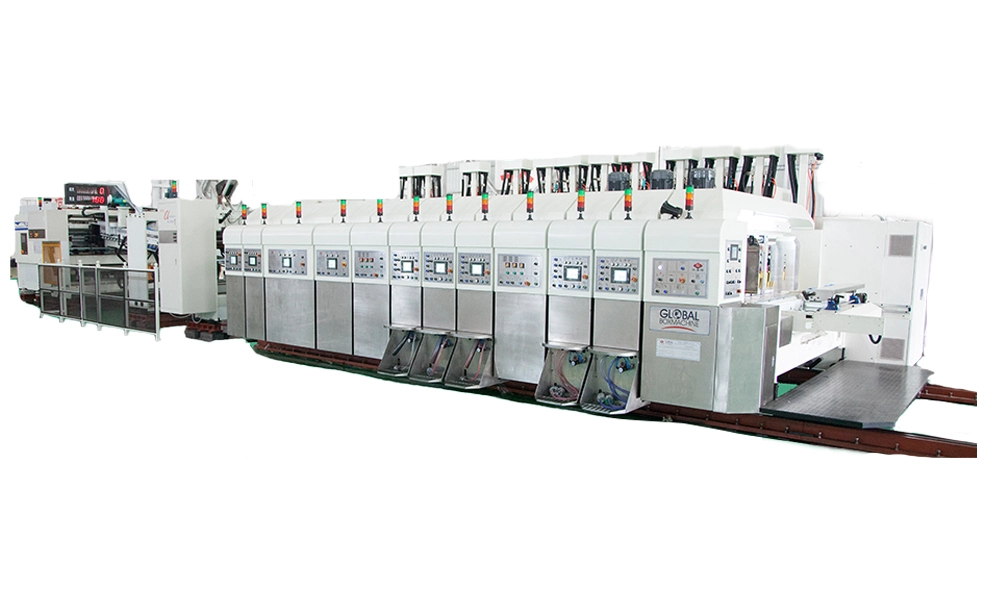
Computerized Flexo Printing Slotting Die-Cutting Inline Folding Gluing Countering Ejecting Machine
Introducing the Keshenglong&Shinko Computerized Flexo Printing Slotting Die-Cutting Inline Folding Gluing Countering Ejecting Machine. Engineered for precision, this advanced machine streamlines your packaging production with integrated Flexo Printing Slotting Die-Cutting functionalities. Seamlessly perform inline folding, gluing, countering, and ejecting—all in one efficient system. Designed for optimal performance, it enhances productivity while reducing downtime.
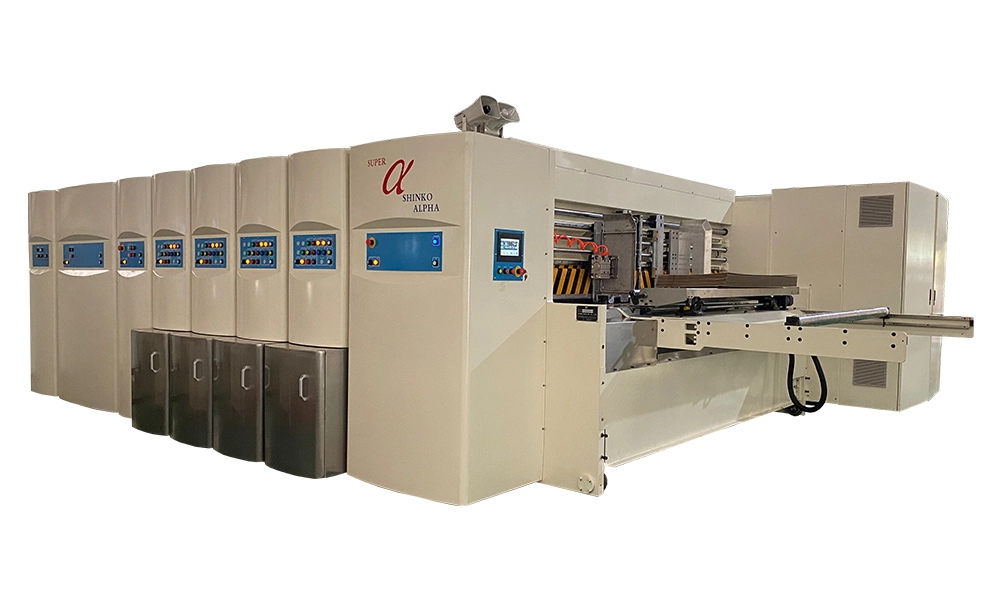
Shinko Super Alpha Movable Type Full Servo Drive Flexo Printing Slotting Die Cutting Machine
Introducing the Shinko Super Alpha Movable Type Full Servo Drive Flexo Printing Slotting Die Cutting Machine by Keshenglong. Engineered for precision and efficiency, this state-of-the-art machine enhances your production line with its advanced servo drive technology. Designed for seamless Flexo printing, slotting, and die-cutting, it ensures superior quality with every output.
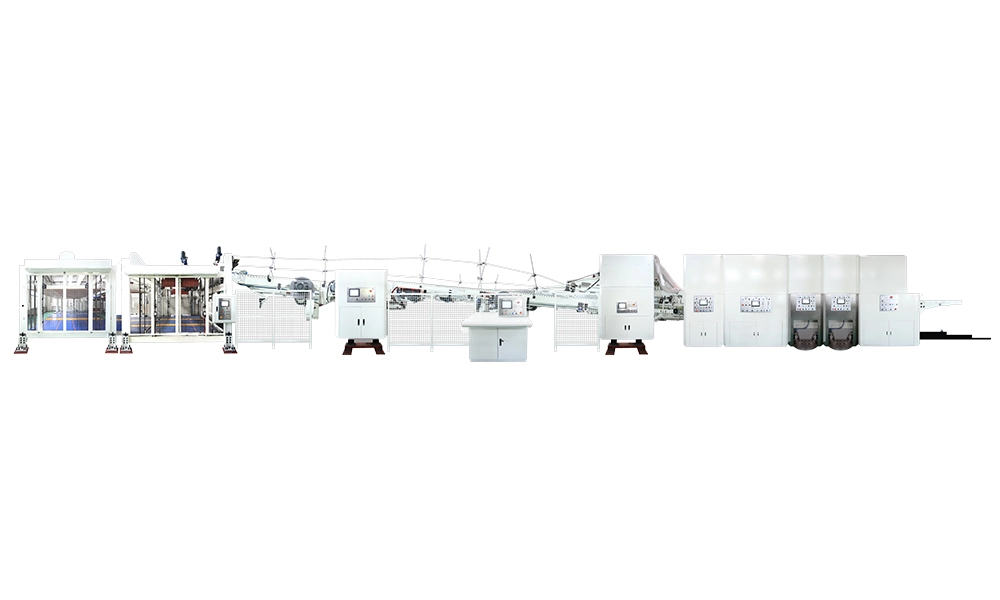
Jumbo Flexo Bottom Printing Slotting Die-Cutting Inline Folding Gluing Countering Ejecting Machine
Introducing the Keshenglong&Shinko Jumbo Flexo Bottom Printing Slotting Die-Cutting Inline Folding Gluing Countering Ejecting Machine. This advanced flexo printing slotting die-cutting machine ensures precision and efficiency for your packaging needs. Designed as a versatile flexo folder gluer machine, it optimizes every step from printing to ejecting, delivering seamless integration and superior quality.
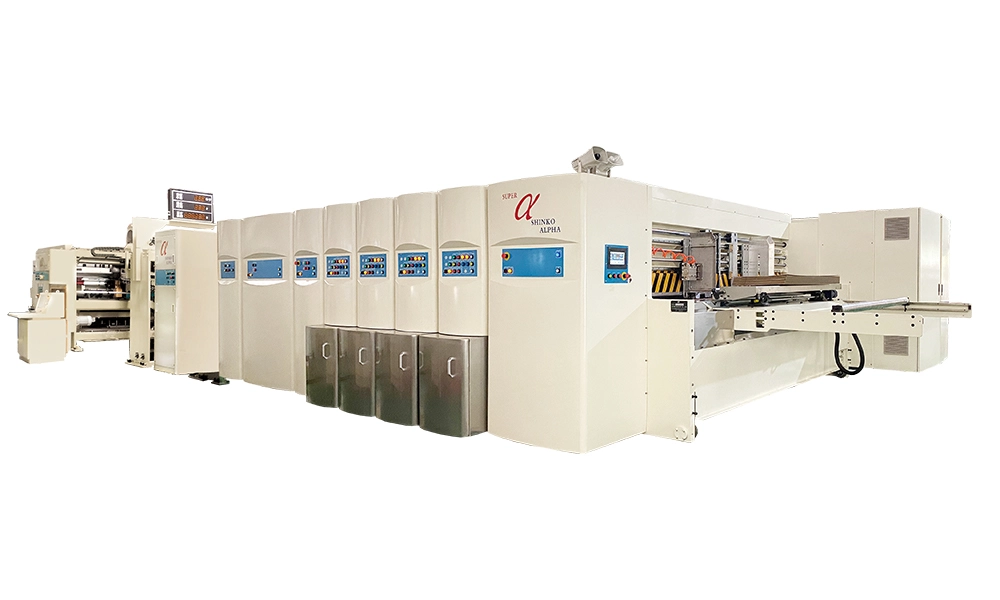
Shinko Super Alpha Movable Type Full Servo Drive Flexo Printing Slotting Die Cutting Inline Folding Gluing Counting Ejecting Machine
This state-of-the-art Movable Type Full Servo Drive Flexo Printing Slotting Die Cutting Machine streamlines your production with precision. Experience seamless operation with its Inline Folding Gluing Counting Ejecting capabilities, ensuring unparalleled efficiency. Designed for high-performance tasks, this Keshenglong&Shinko Super Alpha Movable Type Full Servo Drive Flexo Printing Slotting Die Cutting Inline Folding Gluing Counting Ejecting Machine enhances productivity while maintaining premium quality. Ideal for businesses seeking innovation and reliability, the Shinko Super Alpha is your go-to solution for advanced printing and cutting needs.


© 2025 Keshenglong & SHINKO All Rights Reserved.
Keshenglong Carton Packing Machine
Keshenglong Carton Packing Machine
Keshenglong Carton Packing Machine
Keshenglong Carton Packing Machine
Keshenglong Carton Packing Machine