
Flexo vs Digital Printing: Cost Analysis for Packaging Buyers
- Comparing Total Cost of Ownership: Flexo vs Digital for Packaging
- What packaging buyers really want to know
- How cost categories affect the choice
- Key performance indicators (KPIs) to model
- Cost Components — Deep Dive
- Fixed / CAPEX: buying a flexo printing machine vs a digital press
- Prepress and setup: plates, CI mounting, color management
- Variable costs: ink, substrate, consumables and waste
- Practical Cost Comparison — Table and Example
- Side-by-side cost categories
- Sample break-even calculation (illustrative)
- When to Choose Flexo (and when to buy a flexo printing machine)
- Best-fit use cases for flexo
- Benefits of owning a flexo printing machine
- Risks and mitigation
- When Digital Printing Is the Right Choice
- Best-fit use cases for digital
- Operational and commercial advantages
- Limitations to consider
- Keshenglong & Japan Shinko: Integrated Solutions for Corrugated Printing (Manufacturer Profile)
- Company background and strengths
- Main products and competitive advantage
- Why choose Keshenglong & Japan Shinko technology
- Decision Framework and Next Steps for Buyers
- A quick checklist to choose between flexo and digital
- How to run a tailored cost model
- Outsource vs buy: hybrid strategies
- FAQ — Common Questions Packaging Buyers Ask
- 1. What run length makes a flexo printing machine cost-effective versus digital?
- 2. How much do flexo plates cost?
- 3. Can digital printing match flexo quality for corrugated boxes?
- 4. Is it better to outsource printing or buy equipment?
- 5. How should I include finishing costs (slotting, die-cutting) in my analysis?
- 6. How can Keshenglong help my business make the switch?
- Contact & Call to Action
- References & Sources
Comparing Total Cost of Ownership: Flexo vs Digital for Packaging
What packaging buyers really want to know
Packaging buyers focus on three practical questions: total cost per unit, time-to-market, and print quality consistency. The decision to use a flexo printing machine or a digital press should be driven by those metrics, not by marketing alone. This section sets the framework for cost-based decision-making: separate fixed/setup costs from variable/unit costs, and calculate break-even run lengths that reflect your SKU mix and forecasted volumes.
How cost categories affect the choice
Costs fall into four buckets: capital expenditure (CAPEX), setup and prepress (plates, mounting, makeready), variable consumables (ink, substrate, anilox, maintenance), and labor/overhead. Flexo typically carries higher setup (plates, anilox) and CAPEX for inline finishing but lower variable cost per unit at scale. Digital presses have minimal setup and CAPEX (for lower-end machines), but higher consumable cost per unit and sometimes slower throughput for large-volume runs.
Key performance indicators (KPIs) to model
When analyzing cost, model these KPIs: run length (units/run), number of colors, board grade (single-face, single-wall), print repeat length (m or mm), press uptime/availability, and finishing integration (slotting, die-cutting, gluing). Use these to compute per-unit cost and break-even run length between flexo printing machine runs and digital prints.
Cost Components — Deep Dive
Fixed / CAPEX: buying a flexo printing machine vs a digital press
Buying a flexo printing machine (multi-color corrugated flexo press) is a significant CAPEX decision. Machines that include inline slotting/die-cutting and stackers cost more but reduce handling and labor downstream. Digital corrugated presses (e.g., single-pass inkjet) often have higher initial price per color for high-end models but lower for entry-level narrow-web digital. Factor depreciation, financing, and floor-space when comparing capital costs.
Prepress and setup: plates, CI mounting, color management
Flexo requires plates (photopolymer or polymeric), plate mounting, and often anilox roll management. Typical plate costs vary widely: from roughly $40–$250 per plate depending on size and vendor. Color changes and plate changes increase makeready time and cost. Digital printing eliminates plates and shortens makeready, enabling efficient multi-SKU short runs and rapid versioning (variable data, personalized packaging).
Variable costs: ink, substrate, consumables and waste
Digital inks (UV/aqueous/LED-curable) tend to cost more per printed square meter than flexo inks when volumes are large, but digital reduces spoilage from plate setup. Flexo inks and anilox systems are optimized for corrugated media; with stable process control, unit ink cost is lower at scale. Consumable life (e.g., anilox, blades, heads) and press yield must be included in per-unit calculations.
Practical Cost Comparison — Table and Example
Side-by-side cost categories
The table below summarizes typical relative cost behavior. Values are illustrative ranges; use your own quotes for precise budgeting.
| Cost Item | Flexo (corrugated) | Digital (corrugated/inkjet) |
|---|---|---|
| CAPEX (press) | High (USD 100k–1M+ depending on inline features) | Medium–High (USD 200k–1M+ for single-pass systems) |
| Prepress (plates) | Moderate–High (USD 40–250/plate) | Low (near-zero per-run) |
| Makeready time & waste | Higher (longer setup, more spoilage for short runs) | Lower (fast setup, low spoilage) |
| Ink/consumable cost per unit | Lower at volume | Higher per unit |
| Throughput (m/min) | High for industrial flexo | Variable; high-end single-pass is competitive |
| Design flexibility | Less flexible for personalization | Excellent (variable data & versioning) |
Sample break-even calculation (illustrative)
Method: compute total cost per run = (CAPEX amortized per run) + setup/prepress + (unit variable cost × units). Compare flexo vs digital across run lengths.
| Parameter | Flexo (example) | Digital (example) |
|---|---|---|
| Amortized CAPEX per run | $500 | $300 |
| Prepress / setup | $600 (plates & makeready) | $50 (file prep) |
| Variable cost per unit | $0.10 | $0.35 |
| Run length (units) | Example runs: 1,000; 5,000; 20,000 | |
| Total cost @ 1,000 units | $500 + $600 + 1,000×$0.10 = $1,200 → $1.20/unit | $300 + $50 + 1,000×$0.35 = $650 → $0.65/unit |
| Total cost @ 5,000 units | $500 + $600 + 5,000×$0.10 = $1,600 → $0.32/unit | $300 + $50 + 5,000×$0.35 = $1,900 → $0.38/unit |
| Total cost @ 20,000 units | $500 + $600 + 20,000×$0.10 = $2,100 → $0.105/unit | $300 + $50 + 20,000×$0.35 = $7,350 → $0.3675/unit |
Interpretation: given these assumptions, break-even is near ~4,000–7,000 units. Smaller runs favor digital; larger runs favor flexo. Your real break-even will depend on actual plate costs, ink usage, press uptime and labor rates. Always run this model with your quotes.
When to Choose Flexo (and when to buy a flexo printing machine)
Best-fit use cases for flexo
Choose flexo when you have high-volume SKUs, limited SKU churn, and a need for low per-unit cost at scale. Flexo is well-suited for long runs, large-area solids, and when downstream finishing (slotting, die-cutting, stacking) must be integrated inline to reduce handling.
Benefits of owning a flexo printing machine
Ownership offers full control over scheduling for large-volume work, potential margin improvement for large customers, and seamless integration with high-speed finishing lines. For converters and boxmakers serving stable volume clients, owning a corrugated flexo printing machine is often cost-effective in the medium–long term.
Risks and mitigation
Risks include large upfront investment, plate management complexity, and inefficiency for short runs. Mitigate with workflow automation (color management, prepress automation), hybrid workflows (digital for short runs), and flexible staffing.
When Digital Printing Is the Right Choice
Best-fit use cases for digital
Digital is ideal for short runs, versioning, personalization, rapid prototyping, and seasonal or promotional packaging. It enables reduced inventory through on-demand printing and faster time-to-market for differentiated SKUs.
Operational and commercial advantages
Digital reduces makeready waste and allows multiple SKUs in one run, improving responsiveness. For brands requiring variable data or frequent artwork changes, digital reduces lead time and avoids repeated plate costs.
Limitations to consider
Limitations include higher per-unit consumable cost at scale, potential color matching constraints for heavy solids, and differences in substrate handling. For very large runs, throughput constraints and per-unit costs may make digital less competitive.
Keshenglong & Japan Shinko: Integrated Solutions for Corrugated Printing (Manufacturer Profile)
Company background and strengths
Keshenglong, founded in 1995 and merged with Japan Shinko (R&D and production base) in 2017, is a leading Chinese manufacturer specialized in corrugated carton printing and packaging machinery. Keshenglong emphasizes Japanese technology integration: many main parts are imported from Japan, assembly and testing are instructed by experienced Japanese technicians, and production adheres to high-quality standards.
Main products and competitive advantage
Key products include flexo printer lines and Computerized high-speed Flexo Slotting Die-Cutting machines (1–6 color), flexo case makers, 6+1 high-precision Printing Slotting Die-Cutting machines, top & bottom printing slotting die-cutting machines, and jumbo-size flexo printing slotting die-cutting machines. These integrated machines reduce manual handling, lower total cost per box at scale, and are designed for high throughput and consistent print quality.
Why choose Keshenglong & Japan Shinko technology
Advantages include: experienced R&D backed by Japan Shinko, imported key components, on-site testing to match Japanese standards, and proven exports to 70+ countries. For packaging buyers evaluating a flexo printing machine, Keshenglong’s integrated flexo + slotting/die-cutting solution reduces floor space, shortens lead times, and improves quality control compared with disparate equipment.
Decision Framework and Next Steps for Buyers
A quick checklist to choose between flexo and digital
- Run lengths: mostly short & variable → digital; mostly long & stable → flexo.
- Artwork variability: frequent versioning → digital.
- Quality & color needs: heavy solids & consistent PMS matching → flexo with good color management.
- Lead time and inventory: on-demand / fast turnaround → digital or hybrid.
- Vertical integration: need inline finishing → favor flexo machines with slotting/die-cutting/stackers (e.g., Keshenglong offerings).
How to run a tailored cost model
- Collect quotes: plate cost per color, ink consumption per m2, press throughput, and consumables life.
- Estimate amortized CAPEX per run (depreciation + maintenance divided by expected runs).
- Model variable cost per unit and include spoilage for makeready.
- Calculate break-even run length and sensitivity to key variables (ink cost, plate cost, throughput).
Outsource vs buy: hybrid strategies
Many buyers use a hybrid strategy: outsource short, highly variable runs to digital providers and invest in a flexo printing machine (or partner with converters like Keshenglong customers) for high-volume SKUs. Hybrid models minimize risk and capital lock while capturing low unit costs for stable volumes.
FAQ — Common Questions Packaging Buyers Ask
1. What run length makes a flexo printing machine cost-effective versus digital?
It depends on plate costs, ink consumption, and your operational costs. Typical break-even ranges are often between ~3,000–10,000 units per SKU based on industry averages. Run your own model with supplier quotes for accuracy.
2. How much do flexo plates cost?
Flexo plate costs vary by size, thickness and vendor—commonly roughly $40–$250 per plate for corrugated. Larger repeats and specialty plates cost more. Consider plate durability and press-side handling when budgeting.
3. Can digital printing match flexo quality for corrugated boxes?
Digital has rapidly improved; single-pass UV inkjet presses can deliver excellent quality for graphics and versioning. However, for very heavy solids and exact Pantone matching at very large run lengths, flexo with color management may still be preferable.
4. Is it better to outsource printing or buy equipment?
Outsource if your volumes are low, variable, or you lack capital. Buy a flexo printing machine if you have consistent, high volumes that justify CAPEX and if vertical integration (inline finishing) will reduce per-unit cost and lead times.
5. How should I include finishing costs (slotting, die-cutting) in my analysis?
Always include finishing: per-unit costs for slotting/die-cutting, labor, and stacking. Buying an integrated flexo printing slotting die-cutting machine often lowers total cost per box due to reduced handling and higher throughput.
6. How can Keshenglong help my business make the switch?
Keshenglong offers integrated flexo printer + slotting/die-cutting and stacker solutions tailored for corrugated carton production. With Japan Shinko R&D and imported key parts, their machines are built for high reliability and consistent quality. Contact them for quotations, on-site demos, and tailored ROI models.
Contact & Call to Action
If you are evaluating a flexo printing machine or integrated corrugated packaging solution, request a customized cost model and demo from Keshenglong. For quotes, machine specifications, and ROI calculations tailored to your SKU mix, contact Keshenglong sales or visit the product pages to compare corrugated carton flexo printing machine, flexo printing slotting die-cutting machine, and stacker configurations.
References & Sources
- Flexography, Wikipedia — https://en.wikipedia.org/wiki/Flexography (accessed 2026-01-03)
- Digital printing, Wikipedia — https://en.wikipedia.org/wiki/Digital_printing (accessed 2026-01-03)
- EFI Nozomi product information (digital corrugated press examples) — https://www.efi.com/nozomi/ (accessed 2026-01-03)
- Keshenglong company and product information (manufacturer profile provided by client materials)
- Packaging industry analysis and market commentary — Packaging World and WhatTheyThink articles on flexo vs digital (general industry sources). Example overview: Packaging World — https://www.packworld.com (accessed 2026-01-03)
- Industry consulting & market reports (Smithers) — https://www.smithers.com (market reports on packaging print technology) (accessed 2026-01-03)
Note: Numerical examples are illustrative. For procurement decisions, request up-to-date quotes from equipment and consumable suppliers and run a tailored cost model for your production profile.
Tips for Wholesale corrugated flexo printing slotting die cutting machine
How to Choose the flexo folder gluer manufacturer and supplier in us?
Wholesale flexo printing slotting corrugated carton box making machine manufacturer and supplier in China
How to Choose Right stitcher and folder gluer machine manufacturer and supplier ?
Shipping
Do you offer international shipping for your machines?
Yes, we offer international shipping and can handle all necessary customs documentation.
Industry Solutions
How can your folding carton machines benefit my packaging business?
Our machines increase production efficiency, reduce labor costs, and ensure high-quality, consistent carton production.
How do your machines comply with industry standards and regulations?
Our machines are manufactured to meet or exceed industry standards and regulations, ensuring safe and compliant operation.
What is the lifespan of your folding carton machines?
With proper maintenance, our machines are built to last for many years, providing long-term value for your investment.
What kind of technical support do you offer for industry applications?
We provide comprehensive technical support, including installation, maintenance, and troubleshooting services.
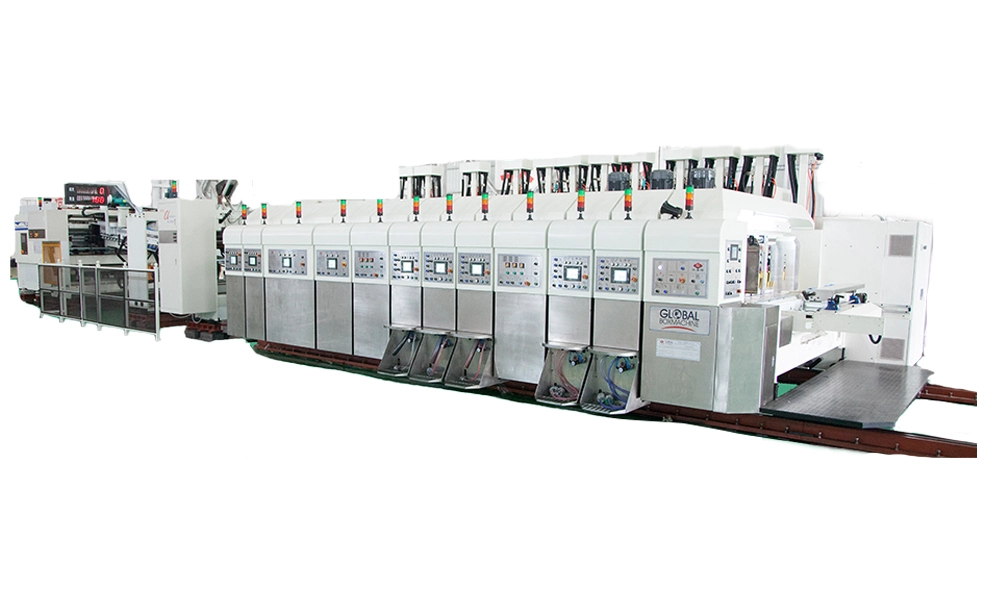
Computerized Flexo Printing Slotting Die-Cutting Inline Folding Gluing Countering Ejecting Machine
Introducing the Keshenglong&Shinko Computerized Flexo Printing Slotting Die-Cutting Inline Folding Gluing Countering Ejecting Machine. Engineered for precision, this advanced machine streamlines your packaging production with integrated Flexo Printing Slotting Die-Cutting functionalities. Seamlessly perform inline folding, gluing, countering, and ejecting—all in one efficient system. Designed for optimal performance, it enhances productivity while reducing downtime.
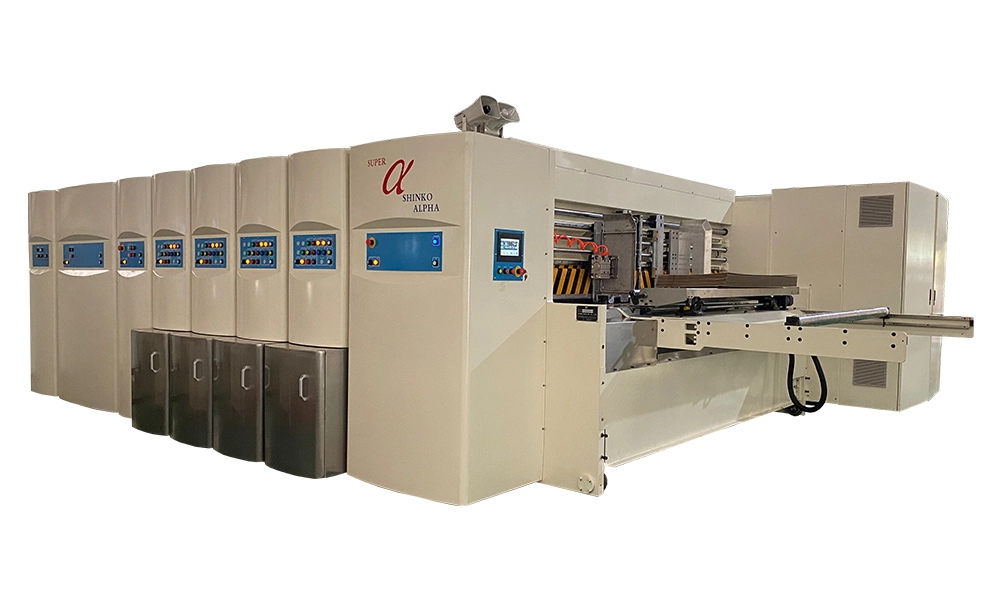
Shinko Super Alpha Movable Type Full Servo Drive Flexo Printing Slotting Die Cutting Machine
Introducing the Shinko Super Alpha Movable Type Full Servo Drive Flexo Printing Slotting Die Cutting Machine by Keshenglong. Engineered for precision and efficiency, this state-of-the-art machine enhances your production line with its advanced servo drive technology. Designed for seamless Flexo printing, slotting, and die-cutting, it ensures superior quality with every output.
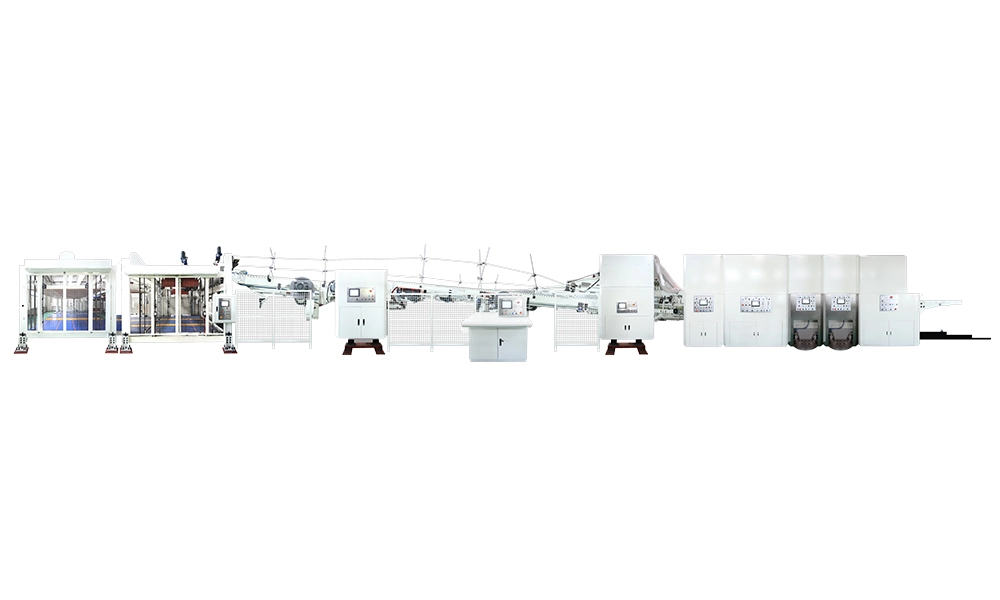
Jumbo Flexo Bottom Printing Slotting Die-Cutting Inline Folding Gluing Countering Ejecting Machine
Introducing the Keshenglong&Shinko Jumbo Flexo Bottom Printing Slotting Die-Cutting Inline Folding Gluing Countering Ejecting Machine. This advanced flexo printing slotting die-cutting machine ensures precision and efficiency for your packaging needs. Designed as a versatile flexo folder gluer machine, it optimizes every step from printing to ejecting, delivering seamless integration and superior quality.
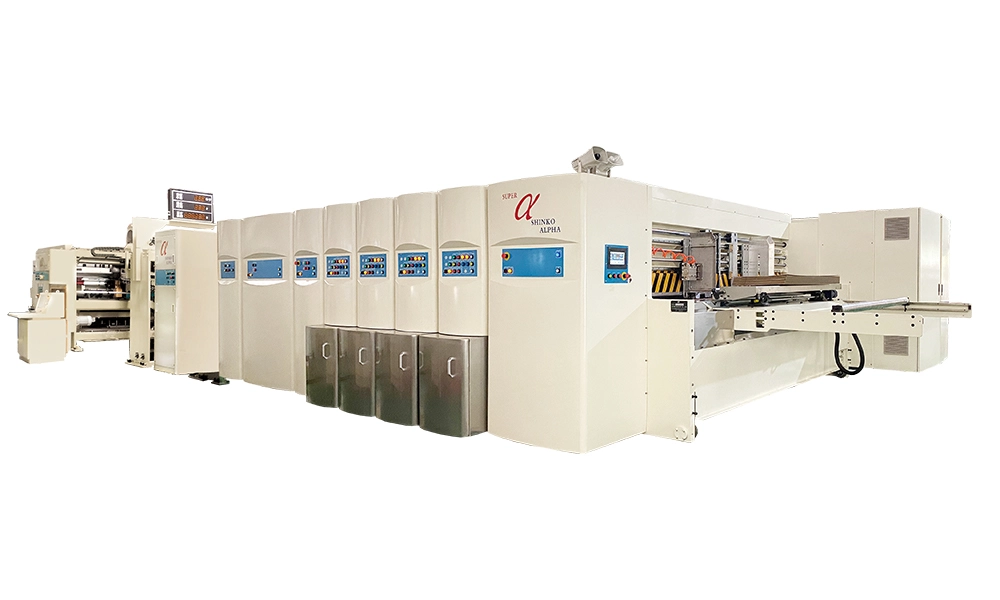
Shinko Super Alpha Movable Type Full Servo Drive Flexo Printing Slotting Die Cutting Inline Folding Gluing Counting Ejecting Machine
This state-of-the-art Movable Type Full Servo Drive Flexo Printing Slotting Die Cutting Machine streamlines your production with precision. Experience seamless operation with its Inline Folding Gluing Counting Ejecting capabilities, ensuring unparalleled efficiency. Designed for high-performance tasks, this Keshenglong&Shinko Super Alpha Movable Type Full Servo Drive Flexo Printing Slotting Die Cutting Inline Folding Gluing Counting Ejecting Machine enhances productivity while maintaining premium quality. Ideal for businesses seeking innovation and reliability, the Shinko Super Alpha is your go-to solution for advanced printing and cutting needs.


© 2025 Keshenglong & SHINKO All Rights Reserved.
Keshenglong Carton Packing Machine
Keshenglong Carton Packing Machine
Keshenglong Carton Packing Machine
Keshenglong Carton Packing Machine
Keshenglong Carton Packing Machine