
Flexo printing basics: How a flexo printer works
- Understanding corrugated carton printing technology
- What is a flexo printer and why it matters for packaging
- Core components of a flexo printer explained
- How ink transfer works on a flexo printer
- Types of inks and drying systems used by a flexo printer
- Press configurations: single-pass, tandem, and combination flexo printers
- Quality control: registration, color management, and defect reduction on flexo printers
- When to choose a flexo printer vs other printing methods for packaging
- Troubleshooting common flexo printer issues for corrugated carton production
- Choosing the right flexo printer and partner for corrugated carton manufacturing
- Key evaluation criteria when buying a flexo printer
- Keshenglong & Shinko: integrated solutions and why they matter for carton converters
- Competitive differentiators: technical strength and industry credibility
- Real-world case: how an integrated flexo printer line improves productivity
- FAQ — Frequently asked questions about flexo printer systems
- 1. What substrates can a flexo printer handle for corrugated packaging?
- 2. How many colors can a flexo printer print, and how does color registration work?
- 3. What is the typical run length where flexo printing becomes economical?
- 4. Can a flexo printer produce high-quality photographic graphics?
- 5. How should I maintain an anilox roll on a flexo printer?
- 6. What are the environmental considerations for flexo printing?
- Contact and product inquiry
- References and further reading
Understanding corrugated carton printing technology
What is a flexo printer and why it matters for packaging
A flexo printer is a high-speed rotary printing press that uses flexible relief plates and specially formulated inks to print on a wide range of substrates, most importantly corrugated board for carton production. Flexo printing combines speed, substrate versatility, and cost efficiency, making it the dominant choice for primary and secondary packaging, labels, and flexible packaging. For corrugated carton manufacturers, the flexo printer is often the backbone of production because it balances acceptable print quality with fast setup and low per-unit costs on medium to long runs.
Core components of a flexo printer explained
To understand how a flexo printer works, it's essential to know its main components and their functions. Each press type varies in configuration, but the following parts are standard on most flexo presses:
- Printing plate: flexible relief plate made from photopolymer. The image is raised like a stamp and transfers ink to the substrate.
- Anilox roll: a ceramic- or chrome-coated roll engraved with cells to meter a precise film of ink to the printing plate.
- Ink fountain and doctor blade: control ink supply to the anilox. The doctor blade scrapes excess ink from the anilox surface.
- Plate cylinder: holds and rotates the flexible plate, pressing it against the substrate or impression cylinder.
- Impression cylinder or backing: provides consistent pressure so the plate transfers ink onto the substrate evenly.
- Drying system: hot air, infrared, UV or electron-beam (EB) systems used to dry or cure ink between stations or after the final print.
- Register and tension controls: precision mechanisms to maintain accurate position (registration) and substrate tension at high speeds.
These elements work together in a continuous rotary process where substrate moves through color stations, each applying one color. Modern presses also integrate inline finishing, slotting, and die-cutting modules for corrugated production.
How ink transfer works on a flexo printer
The ink transfer in flexography is a two-step metering and stamping process: first the anilox roll meters a thin ink film and transfers it to the plate; then the raised image areas on the plate transfer the ink to the substrate. Key variables that determine print outcome include:
- Anilox line screen and cell volume — higher line screens and lower cell volume produce finer detail but lower ink laydown.
- Plate relief and durometer — plate thickness and hardness control contact and dot gain.
- Ink rheology and drying behavior — viscosity, solids, and cure mechanism affect print sharpness and adhesion.
- Press speed and nip pressure — faster speeds and incorrect pressures can increase dot gain or cause ghosting.
Understanding and controlling these variables is how operators optimize quality for corrugated substrates, which are more absorbent and textured than paper or film.
Types of inks and drying systems used by a flexo printer
Flexo inks vary by application and drying method. The common systems for corrugated carton printing include:
- Water-based inks: widely used for corrugated cartons due to low odor and cost; they require hot air or IR drying and good ventilation.
- Solvent-based inks: allow faster drying and better adhesion on some films, but are less common for food-contact cartons and require VOC controls.
- UV-curable inks: instant curing via UV lamps provides excellent adhesion, low dot gain, and high productivity; initial equipment cost is higher.
- Electron-beam inks: used in specialized high-speed lines for instant cure with deep penetration; less common due to capital expense.
Choosing the right ink and dryer depends on substrate, line speed, environmental regulations, and desired finish (matte, gloss, varnish). Modern corrugated flexo often favors UV systems for higher print consistency and faster inline finishing.
Press configurations: single-pass, tandem, and combination flexo printers
Flexo presses for corrugated cartons come in various configurations to match production needs:
- Single-pass inline presses: substrate passes each color station once. Good for high-speed production with precise registration.
- Tandem presses: multiple printing units in sequence allowing multi-color prints without multiple passes; common in corrugated lines that combine pre-print and post-print operations.
- Combination presses: integrate flexo printing with slotting, die-cutting, printing-creasing and stacking modules in one line to produce finished blanks or folded cases in a single run.
Combination presses are particularly valuable when reducing handling, improving registration, and shortening lead times are priorities for packaging converters.
Quality control: registration, color management, and defect reduction on flexo printers
For consistent packaging print quality, a flexo printer operator focuses on three areas:
- Registration control: automatic register systems (servo-driven) and vision cameras detect and correct lateral and longitudinal misregister at running speeds.
- Color management: densitometers, spectrophotometers, and standardized ink formulations (e.g., Pantone bridge) help reproduce brand colors reliably.
- Defect prevention: controlling substrate tension, nip pressure, and plate cleaning reduces common defects like hickeys, streaks, and ghosting.
Data-driven make-ready and inline process controls shorten job changeovers and lower waste—critical for cost-effective carton production.
When to choose a flexo printer vs other printing methods for packaging
Choosing flexo depends on run length, substrate, cost targets and required print quality. The table below compares flexo printer performance to offset, gravure, and digital printing for common packaging considerations.
| Characteristic | Flexo printer | Offset | Gravure | Digital |
|---|---|---|---|---|
| Best substrates | Corrugated, paperboard, film, labels | Paperboard, coated stocks | High-quality film, paper | Short runs, variable data on many substrates |
| Print quality | Good to very good (improves with anilox/plate tech) | Very good (high detail) | Excellent (rich solids, photographic) | Very good for many applications; variable by device |
| Typical run lengths | Medium to long | Medium | Very long (economies of scale) | Short to medium |
| Setup cost | Low to moderate | Moderate | High | Low |
| Speed | Very high (ideal for corrugated) | High | High | Varies; generally lower than analog presses |
Source synthesis: trade and technical references including industry associations and technical encyclopedias on print processes.
Troubleshooting common flexo printer issues for corrugated carton production
Common problems and practical remedies:
- Excessive dot gain: check plate relief, reduce nip pressure, use a harder plate or finer anilox, optimize ink viscosity.
- Streaks or banding: clean anilox roll, inspect doctor blade, check ink filtration and circulation.
- Poor adhesion: evaluate ink-substrate compatibility, consider a primer or switch to UV inks for better instant cure.
- Register problems at speed: calibrate servo register system and ensure stable tension control across web path.
Implementing standard operating procedures (SOPs) for plate mounting, anilox cleaning, and inline inspection will reduce downtime and scrap rates.
Choosing the right flexo printer and partner for corrugated carton manufacturing
Key evaluation criteria when buying a flexo printer
When selecting a flexo printer or integrated printing-slotting-die-cutting line, consider these factors:
- Production speed and uptime guarantees — measured in meters per minute and effective throughput for your substrates and inks.
- Registration accuracy — crucial for multi-color brand-critical cartons.
- Level of automation — plate handling, ink control, job memory reduce make-ready times.
- After-sales support and parts availability — local technical support shortens downtime.
- Compatibility with finishing modules — inline slotting, die-cutting, creasing and stacking save handling and improve registration.
Keshenglong & Shinko: integrated solutions and why they matter for carton converters
Keshenglong, founded in 1995 and specialized in manufacturing corrugated carton printing machines and integrated packaging solutions, offers multiple press configurations tailored for corrugated packaging. Following the 2017 merger with Japan Shinko (which continues as the R&D center and production base), Keshenglong combines Japanese engineering with Chinese manufacturing scale. Key product categories include:
- Corrugated carton flexo printing machines (1-6 color)
- Computerized high-speed flexo slotting die-cutting machines and case makers
- '6+1' high-precision precision printing slotting die-cutting machines
- Top & bottom printing slotting die-cutting machines and jumbo-size flexo printing slotting die-cutting machines
- Flexo printing slotting die-cutting and stacker machines
Keshenglong highlights include: main parts imported from Japan, on-site installation and testing under experienced Japanese technicians, and export to over 70 countries as a supplier of integrated intelligent packaging solutions. For converters seeking reduced handling, precise registration, and reliable after-sales support, Keshenglong+Shinko provide a combination of Japanese technical standards and China-based production efficiency.
Competitive differentiators: technical strength and industry credibility
What differentiates Keshenglong & Shinko in the corrugated flexo market:
- Proven R&D continuity via the Japan Shinko legacy, ensuring press design aligned with Japanese precision standards.
- Imported critical components to reduce variability and increase mean time between failures (MTBF).
- Integrated press solutions that combine printing, slotting and die-cutting in one line to improve throughput and reduce logistics.
- Global installation experience and local technical teams to minimize downtime and shorten commissioning cycles.
These attributes make Keshenglong a pragmatic choice for packaging converters aiming to scale production without sacrificing print quality or operational reliability.
Real-world case: how an integrated flexo printer line improves productivity
An integrated flexo printing-slotting-die-cutting and stacking line eliminates intermediate transport, reduces register error accumulation, and shortens total lead time. For a typical corrugated converter, combined inline systems can reduce make-ready waste by 20–40% and increase net throughput by 15–30% compared with standalone printing plus offline finishing—figures supported by industry case studies and conversion experiences in the packaging sector.
FAQ — Frequently asked questions about flexo printer systems
1. What substrates can a flexo printer handle for corrugated packaging?
Flexo printers handle single-wall and double-wall corrugated boards, linerboards, kraft, coated paperboard, and certain films. For corrugated cartons, water-based and UV systems are most common; substrate surface treatment may be required for optimal ink adhesion.
2. How many colors can a flexo printer print, and how does color registration work?
Flexo presses range from 1-color to 8-color or more theoretically. Typical corrugated carton presses are 1–6 colors. Registration uses servo motors, encoder feedback, and camera-based vision systems to adjust lateral and longitudinal position at run speed to within millimeter or sub-millimeter tolerances.
3. What is the typical run length where flexo printing becomes economical?
Flexo becomes economical for medium to long runs where setup costs are amortized. Exact break-even depends on ink costs, plate costs, substrate, and press efficiency; for corrugated packaging this commonly occurs at several thousand linear meters per job.
4. Can a flexo printer produce high-quality photographic graphics?
Modern flexo with high-line-screen aniloxes, fine photopolymer plates, and UV inks can produce near-photographic images suitable for High Quality cartons. However, gravure and high-end digital may still outperform flexo for photographic fidelity when tone reproduction is critical.
5. How should I maintain an anilox roll on a flexo printer?
Regular cleaning with appropriate solvent or ultrasonic cleaning removes dried ink and debris. Avoid abrasive cleaners that damage cell structure. Maintain proper storage and handle rolls to prevent nicks. Document cell volume measurements periodically to identify wear.
6. What are the environmental considerations for flexo printing?
Water-based inks reduce VOC emissions versus solvent systems; UV curing minimizes solvent use and offers instant cure with lower energy per finished unit in some cases. Proper ventilation, solvent recovery or abatement systems, and responsible ink disposal are important for regulatory compliance.
Contact and product inquiry
If you are evaluating corrugated carton flexo printing machines, slotting die-cutting lines, or integrated printing-slotting-die-cutting-stacker solutions, contact Keshenglong for technical consultations, machine specifications, site assessments, and demo scheduling. Keshenglong offers tailored solutions, installation by experienced technicians, and component quality aligned with Japanese standards through Shinko collaboration.
References and further reading
- Flexography article, Wikipedia. https://en.wikipedia.org/wiki/Flexography (accessed 2025-12-11)
- Flexographic Technical Association (FTA), official site. https://flexography.org/ (accessed 2025-12-11)
- Britannica — Printing technology overview. https://www.britannica.com/technology/printing (accessed 2025-12-11)
- Anilox roll encyclopedia, Wikipedia. https://en.wikipedia.org/wiki/Anilox (accessed 2025-12-11)
- Keshenglong company information and product portfolio (company-provided data integrated into this article). (accessed 2025-12-11)
For more detailed specification sheets, ROI calculations, or an on-site consultation to assess whether a flexo printer or an integrated Keshenglong solution fits your plant, request a quote or contact sales directly through the company website or local distributor channels.
How to Choose Right flexo folder gluer unit manufacturer and supplier ?
Keshenglong&Shinko best professional flexo printing slotting corrugated carton box making machine Manufacturers and supplier brand in China
Best Inks and Anilox Rolls for Flexo Printing Quality
The latest trends for flexo printing machines
Industry Solutions
Do you offer solutions for environmentally friendly packaging?
Yes, our machines can produce cartons from recyclable and biodegradable materials, supporting sustainable packaging solutions.
Can your machines handle high-volume production demands?
Yes, our machines are designed for high-volume production, ensuring reliable and efficient operation.
What is the lifespan of your folding carton machines?
With proper maintenance, our machines are built to last for many years, providing long-term value for your investment.
Product
Can your machines handle custom carton designs?
Yes, our machines can be customized to handle various carton designs and specifications.
How do I adjust the machine settings for different carton sizes?
Machine settings can be adjusted using the intuitive control panel, which allows for quick changes to accommodate different carton sizes.
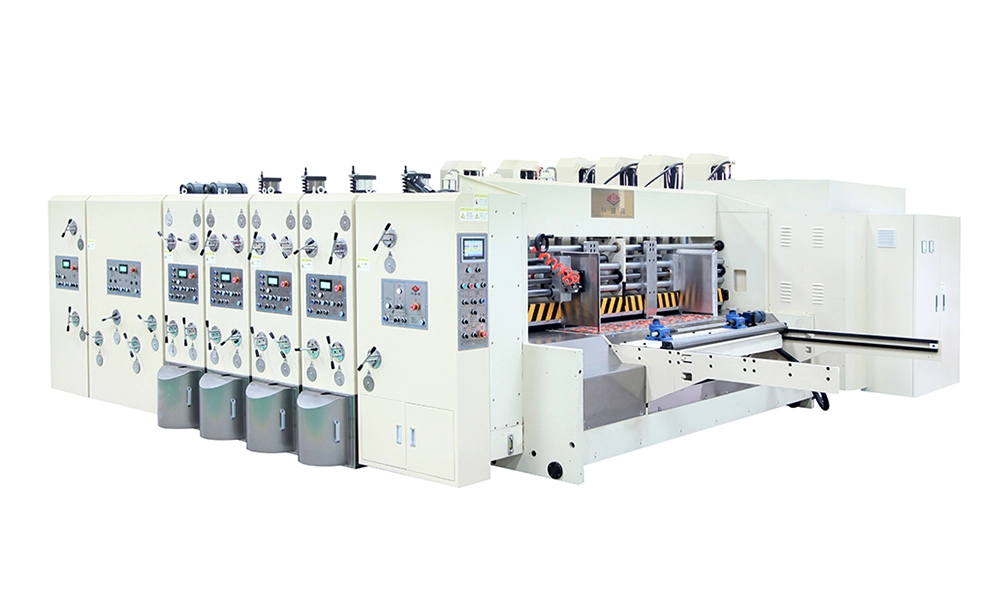
Computerzied Semi Auto Flexo Printing Slotting Die-Cutting Machine
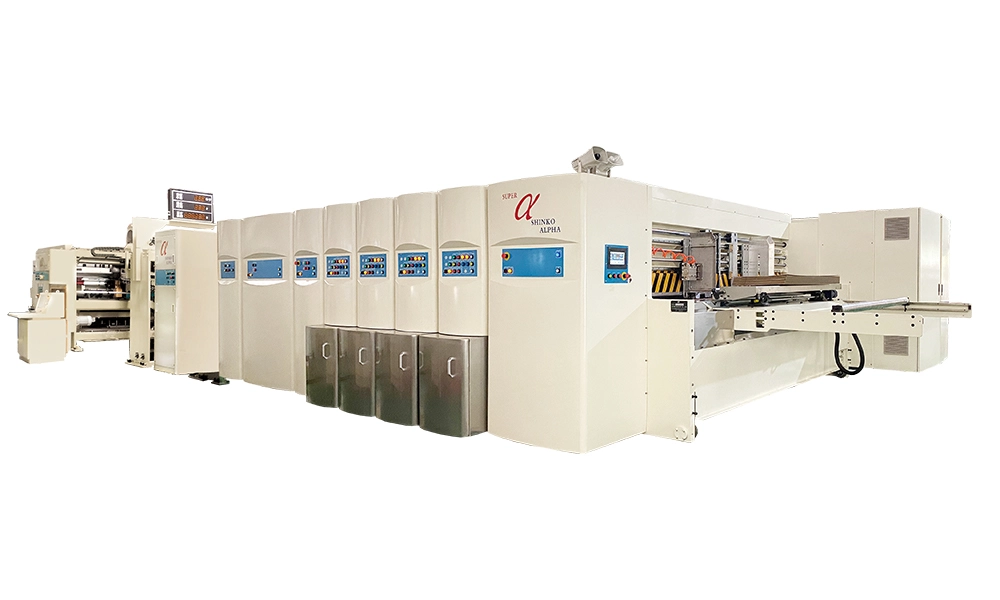
Shinko Super Alpha Movable Type Full Servo Drive Flexo Printing Slotting Die Cutting Inline Folding Gluing Counting Ejecting Machine
This state-of-the-art Movable Type Full Servo Drive Flexo Printing Slotting Die Cutting Machine streamlines your production with precision. Experience seamless operation with its Inline Folding Gluing Counting Ejecting capabilities, ensuring unparalleled efficiency. Designed for high-performance tasks, this Keshenglong&Shinko Super Alpha Movable Type Full Servo Drive Flexo Printing Slotting Die Cutting Inline Folding Gluing Counting Ejecting Machine enhances productivity while maintaining premium quality. Ideal for businesses seeking innovation and reliability, the Shinko Super Alpha is your go-to solution for advanced printing and cutting needs.
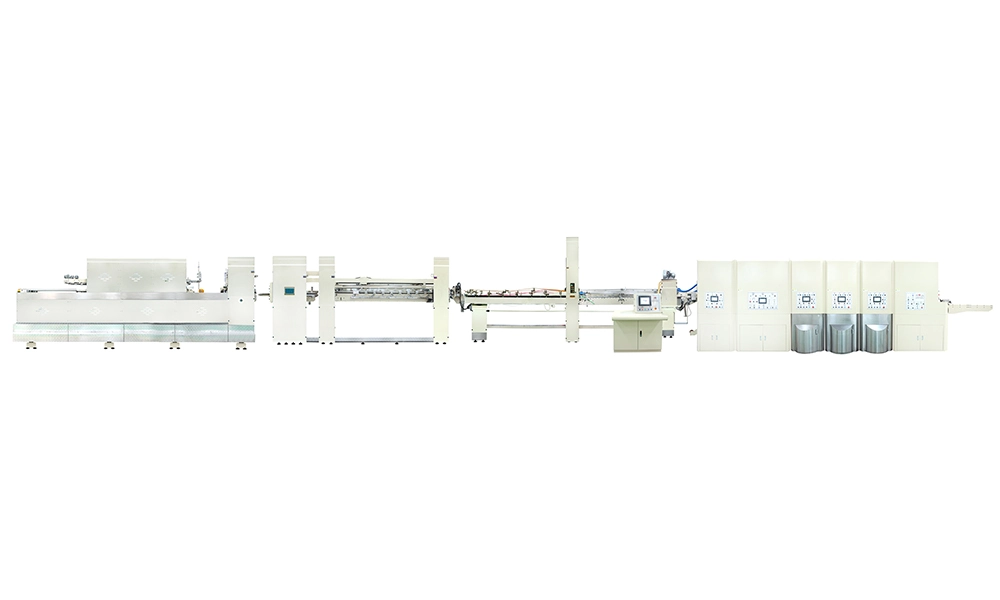
Computerized Flexo Printing Slotting Die-Cutting Inline Folding Gluing and Stitching Machine
Introducing the Keshenglong&Shinko Computerized Flexo Printing Slotting Die-Cutting Inline Folding Gluing and Stitching Machine, a pinnacle of precision and efficiency. This state-of-the-art machine revolutionizes packaging production with seamless integration of printing, slotting, die-cutting, folding, gluing, and stitching. Designed to optimize your workflow, the Computerized Flexo Printing Slotting Die-Cutting Machine enhances accuracy and productivity.
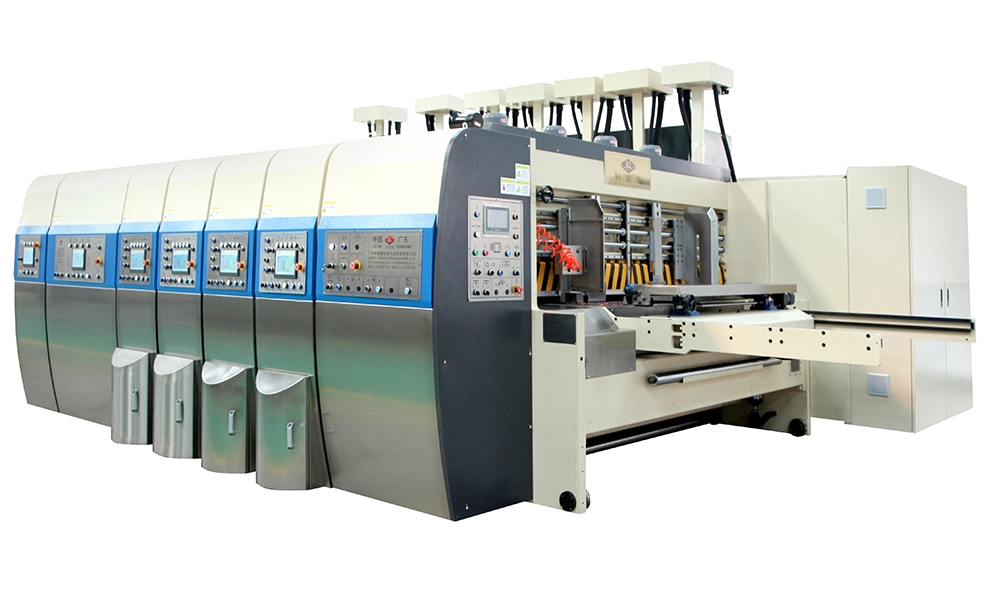
Computerized Flexo Top Bottom Printing Slotting Die-Cutting Machine
Introducing the Keshenglong&Shinko Computerized Flexo Top Bottom Printing Slotting Die-Cutting Machine, designed to enhance your packaging efficiency. Engineered for precision, this high-performance machine offers seamless integration of flexo printing and die-cutting processes. Perfect for a variety for packaging needs, it ensures superior quality and productivity. With user-friendly controls and robust construction, it guarantees reliable operation and minimal downtime. Optimize your production line with Keshenglong’s trusted technology. Explore advanced capabilities with our Flexo Top Bottom Printing Slotting Die-Cutting Machine today.


© 2025 Keshenglong & SHINKO All Rights Reserved.
Keshenglong Carton Packing Machine
Keshenglong Carton Packing Machine
Keshenglong Carton Packing Machine
Keshenglong Carton Packing Machine
Keshenglong Carton Packing Machine