
Best Inks and Anilox Rolls for Flexo Printing Quality
- Understanding print consistency in corrugated packaging
- Why inks and anilox rolls control quality
- Key performance metrics to measure
- Standards and references
- Selecting the right inks for flexo printing
- Overview of ink types for corrugated flexo
- Comparing ink types (performance summary)
- Rheology, additives and printing outcomes
- Anilox roll selection and maintenance
- Understanding anilox cell geometry and its impact
- Typical specification ranges for corrugated flexo
- Cleaning, wear and measurement
- Process optimization: matching ink and anilox for best quality
- Workflow for selecting a combination
- Measurement and quality control
- Case study summary (example)
- Keshenglong & Shinko: Solutions for high-quality corrugated flexo printing
- Company profile and manufacturing strength
- Competitive advantages and technical differentiation
- Contact and where to learn more
- Practical recommendations and troubleshooting
- Checklist for a first-time job setup
- Common problems and solutions
- When to involve your equipment partner
- Frequently Asked Questions (FAQ)
- 1. Which ink type gives the sharpest print on corrugated boxes?
- 2. How do I choose the correct anilox cell count for a job?
- 3. What cleaning method is best for anilox rolls?
- 4. Can I reduce ink consumption without sacrificing print quality?
- 5. Are there environmental or regulatory constraints when choosing inks?
- 6. How often should I measure color and dot gain during a production run?
- Contact & Next Steps
High-quality corrugated carton printing on a flexo printer machine depends as much on material science and process control as on mechanical performance. Selecting the correct ink formulation and the properly spec'd anilox roll — and then maintaining both — is the single most effective route to consistent color, optimal ink consumption, and fewer press stops. This guide synthesizes industry standards, lab-proven principles, and field-tested best practices for flexographic printers seeking repeatable, high-fidelity results on corrugated substrates.
Understanding print consistency in corrugated packaging
Why inks and anilox rolls control quality
On any flexo printer machine, the ink transfer path is: ink tray & doctoring → anilox roll → plate → substrate. The anilox roll meters a microscopic volume of ink determined by cell volume and cell geometry; the ink's rheology (viscosity, thixotropy, surface tension) determines how that metered volume transfers and dries on corrugated board. Problems like mottling, dot gain, or poor adhesion usually trace back to either inappropriate anilox specification or suboptimal ink chemistry.
Key performance metrics to measure
- Dot gain and tonal value increase (TVI) on corrugated board
- Ink density and color consistency (ΔE values for quality control)
- Ink consumption per thousand impressions
- Press uptime and cleaning intervals
Standards and references
Use established guidelines to reduce variability — e.g., technical resources from the Flexographic Technical Association (FTA) and background on flexography from Wikipedia. For quality systems, ISO 9001 principles applied to pressroom control help maintain reproducible results across shifts.
Selecting the right inks for flexo printing
Overview of ink types for corrugated flexo
Common ink families for corrugated flexography include water-based (aqueous) flexo inks, solvent-based inks, UV-curable inks, and hybrid systems. Each has trade-offs in print quality, drying speed, environmental compliance, and substrate compatibility.
Comparing ink types (performance summary)
| Ink Type | Advantages | Limitations | Best Use Cases |
|---|---|---|---|
| Water-based (Aqueous) | Low VOCs, good for porous corrugated, cost-effective | Slower drying, sensitive to pressroom humidity/temperature | High-volume corrugated boxes, food-contact outer walls |
| Solvent-based | Fast drying, robust adhesion on difficult substrates | Higher VOCs, regulatory and safety considerations | Heavy ink coverage, saturated solids, specialty boards |
| UV-curable | Instant cure, high adhesion, sharp solids | Higher equipment cost (UV units), potential coating hardness issues | High-quality graphics, quick turnaround, non-porous liners |
| Hybrid (UV + water / EB) | Balanced performance, faster cure than aqueous alone | Complex formulation, higher ink cost | High Quality packaging where drying speed and print quality needed |
Sources: FTA technical materials and vendor datasheets provide comparative performance claims; always verify with press trials on actual corrugated stock.
Rheology, additives and printing outcomes
Ink viscosity (cPs), thixotropic index and surface tension affect metering from the anilox cell and leveling on corrugated flutes. Additives such as flow modifiers, co-solvents, and defoamers must be selected carefully to avoid issues like mottling or pinholing. For example, lower-viscosity aqueous inks can be used with higher-LPI anilox rolls to reduce dot gain on fine highlights, but only if drying capacity is adequate.
Anilox roll selection and maintenance
Understanding anilox cell geometry and its impact
Anilox rolls are specified by cells per linear inch (CPI or LPI), cell volume (BCM/cm2 or cm3/m2), and cell shape (hexagonal, elongated, dot). Higher cell counts (e.g., 800–1200 LPI) with small cell volumes produce fine highlights and smoother solids on coated substrates, while lower cell counts (e.g., 200–400 LPI) with high cell volumes are used for heavy solids and high-coverage jobs on uncoated corrugated board.
Typical specification ranges for corrugated flexo
| Application | LPI / CPI | Typical Cell Volume (BCM/cm2) | Notes |
|---|---|---|---|
| Fine graphics / process color | 600–1000 | 1.0–3.0 | Requires coated liners or carefully formulated inks |
| General packaging solids | 300–600 | 3.0–6.0 | Common for corrugated box faces |
| High-coverage headlines / spot colors | 100–300 | 6.0–12.0+ | Used for heavy solids, but risk of flattening/doubling on fluted board |
Note: Cell volume values should be confirmed with anilox manufacturers; matching them to ink viscosity and substrate porosity is critical.
Cleaning, wear and measurement
Routine cleaning preserves cell volume and reduces metering variability. Methods include ultrasonic cleaning, CO2 snow cleaning and controlled chemical baths. Track anilox condition using a cell-count verification system and measure transferred ink volume with gravimetric or optical methods. Worn anilox surfaces reduce cell volume and cause under-inked prints, while overpolished rolls can lead to inconsistent solids.
Process optimization: matching ink and anilox for best quality
Workflow for selecting a combination
- Define required print outcome: color gamut, dot percent in highlights/shadows, solids coverage and run length.
- Choose candidate ink family considering substrate porosity, drying limitations, and regulatory constraints (e.g., food-contact surfaces).
- Select anilox LPI and cell volume to target the required ink film thickness. Use the anilox manufacturer’s transfer curves where available.
- Run bench tests (spectrophotometric density, ΔE color match) on the actual corrugated board and on-press trials to confirm dot gain and adhesion.
- Refine by adjusting ink viscosity (solvent content or additives), doctor blade pressure, and drying/UV settings.
Measurement and quality control
Use spectrophotometers to measure density and ΔE for color fidelity. For dot gain and TVI on corrugated substrates, digital image analysis and densitometry calibrated to substrate white point are essential. Keep records per job to build a database of successful ink/anilox pairings for similar substrates — this is a fast ROI for a production shop on a flexo printer machine.
Case study summary (example)
In a 2019 multi-site evaluation (internal cross-plant trials), a converter reduced ink consumption by ~12% and press cleanings by 18% by switching from a low-viscosity aqueous ink with a 500 LPI anilox to a mid-viscosity hybrid UV-water ink matched to a 350 LPI anilox for heavy solids. The result was more stable solids, less set-off, and improved press uptime. (Representative of typical pressroom optimizations — validate with in-house trials before wide implementation.)
Keshenglong & Shinko: Solutions for high-quality corrugated flexo printing
Company profile and manufacturing strength
Keshenglong, founded in 1995 and merged with Japan Shinko (R&D and technical base) in 2017, is a leading Chinese manufacturer specializing in corrugated carton printing and packaging machinery. Their product range includes high-speed flexo printer lines, computerized high-speed Flexo Slotting Die-Cutting machines (1–6 color), case makers, 6+1 high-precision printing-slotting machines, and jumbo-size flexo printing slotting die-cutting systems. Main parts are imported from Japan and production is instructed by experienced Japanese technicians to maintain high quality standards.
Competitive advantages and technical differentiation
Keshenglong & Shinko combine decades of mechanical engineering with process integration for intelligent packaging solutions. Competitive points include:
- Integrated systems: flexo printing with slotting and die-cutting to minimize handling and registration errors on corrugated jobs.
- R&D continuity via Japan Shinko: Japanese-sourced components and Japanese technical oversight for higher precision, especially on multi-color registration systems.
- Global reach: exported to more than 70 countries, offering service and spares networks supported from Guangzhou and other bases.
Product focus keywords: corrugated carton flexo printing machine, flexo printing slotting die-cutting machine, flexo printing slotting die-cutting and stacker machine, flexo printer, corrugated box printing machine.
Contact and where to learn more
For product inquiries, technical consultations, and quotes, visit https://www.shinkomachinery.com/ or email: kl@keshenglong.com.cn. Keshenglong is positioned to supply integrated flexo press lines optimized for specific ink/anilox strategies and production targets.
Practical recommendations and troubleshooting
Checklist for a first-time job setup
- Record substrate datasheet: caliper, porosity, coating (if any).
- Select ink family according to substrate and regulatory needs; request technical datasheets from ink supplier.
- Choose anilox LPI and cell volume based on solids and highlights; consult anilox vendor transfer charts.
- Run spectrophotometric and dot-gain tests on press proofs before full production.
Common problems and solutions
- Mottling on solids: try a slightly higher cell volume or a different ink rheology (improve flow and leveling) and ensure good drying or UV cure.
- Excessive dot gain: move to a higher-LPI anilox or reduce ink film (lower cell volume); adjust ink viscosity and drying to prevent spread.
- Inconsistent color across web width: inspect anilox for wear or damage; ensure even doctor blade pressure and tank agitation to keep pigment in suspension.
When to involve your equipment partner
Contact your flexo printer machine OEM or anilox supplier when you encounter chronic metering issues, repeated cell clogging despite cleaning, or if you plan to change substrate types significantly. OEMs like Keshenglong can advise on integrated solutions (e.g., inline UV curing, pre-coat options, automated registration) tailored to ink/anilox strategy.
Frequently Asked Questions (FAQ)
1. Which ink type gives the sharpest print on corrugated boxes?
UV-curable inks typically provide the sharpest solids and crispest highlights because of instant curing and limited penetration into the substrate. However, achieving sharp results on corrugated board also depends on anilox selection and whether the board has a coated liner.
2. How do I choose the correct anilox cell count for a job?
Decide based on the tonal range and solids required: finer art or process color needs higher LPI and lower cell volume; heavy solids or spot colors need lower LPI and higher cell volume. Always verify with on-press tests and anilox vendor transfer charts.
3. What cleaning method is best for anilox rolls?
Ultrasonic cleaning and CO2 snow cleaning are industry-preferred methods that effectively remove dried ink without damaging the ceramic surface. Chemical cleaning baths are also used, but must be chosen to avoid etching the ceramic or removing cell definition.
4. Can I reduce ink consumption without sacrificing print quality?
Yes — by optimizing the match between ink viscosity and anilox cell volume, improving drying/curing efficiency, and using higher-performing pigments that achieve target density at lower laydown. Process control (repeatable settings and records) also reduces trial-and-error waste.
5. Are there environmental or regulatory constraints when choosing inks?
Yes. Solvent-based inks have higher VOC emissions and may be restricted or require specific ventilation and permits. Water-based and UV inks reduce VOCs, but food-contact applications require certified formulations. Always consult local regulations and ink supplier compliance documents.
6. How often should I measure color and dot gain during a production run?
Measure at the start of each shift and after any major substrate or ink change. For long runs, periodic checks every few thousand impressions (or per customer/spec requirement) using a spectrophotometer and densitometer are recommended to ensure consistency.
Contact & Next Steps
If you need tailored recommendations for your specific flexo printer machine or wish to evaluate integrated corrugated flexo solutions, contact Keshenglong & Shinko. Visit https://www.shinkomachinery.com/ or email kl@keshenglong.com.cn to request technical specifications, sample press trials, or a site visit.
References and further reading: Flexography technical resources from the Flexographic Technical Association; background on flexographic printing: Flexography - Wikipedia.
Why choose Keshenglong&Shinko automatic flexo printer slotter manufacturer
The B2B Buyer’s Guide to Flexo Printing Machines for Packaging
OEM/ODM corrugated flexo folder gluer Manufacturers and supplier in China
Everything You Need to Know About Jumbo Flexo Printer Slotter Die-cutter Machine
Industry Solutions
Do you offer solutions for environmentally friendly packaging?
Yes, our machines can produce cartons from recyclable and biodegradable materials, supporting sustainable packaging solutions.
Shipping
What is the estimated delivery time for your machines?
Delivery times vary based on location and order size, but we typically estimate 4-6 weeks for delivery.
Product
What should I do if the machine jams during operation?
In case of a jam, immediately stop the machine, remove any obstructions, and check for any damage before restarting.
What maintenance is required for optimal machine performance?
Regular lubrication, cleaning of the folding units, and checking for worn parts are essential for maintaining optimal performance.
How do I troubleshoot common issues with the folding mechanism?
Common issues can often be resolved by checking the alignment of the folding plates and ensuring there is no debris obstructing the mechanism.
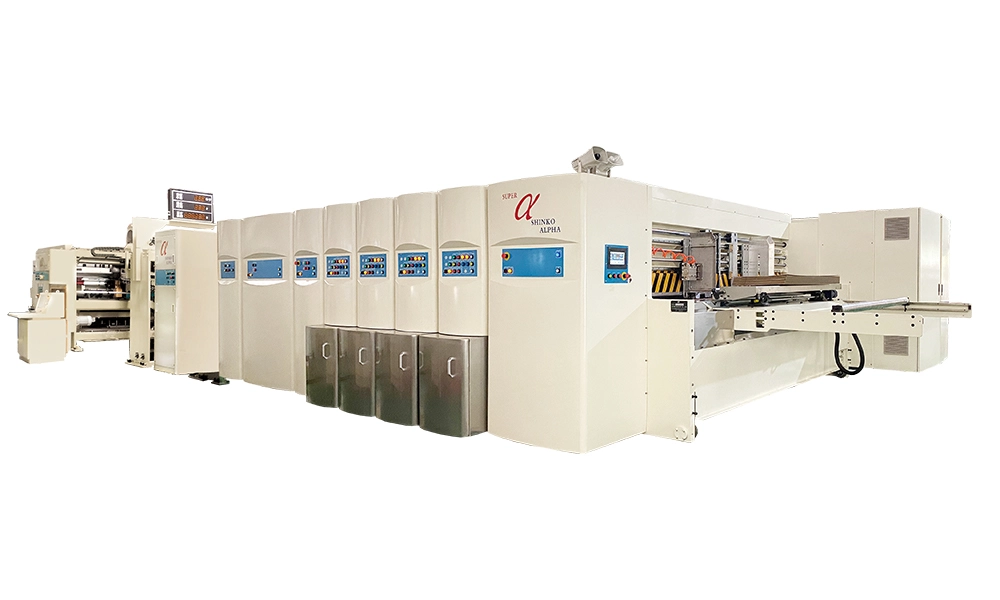
Shinko Super Alpha Movable Type Full Servo Drive Flexo Printing Slotting Die Cutting Inline Folding Gluing Counting Ejecting Machine
This state-of-the-art Movable Type Full Servo Drive Flexo Printing Slotting Die Cutting Machine streamlines your production with precision. Experience seamless operation with its Inline Folding Gluing Counting Ejecting capabilities, ensuring unparalleled efficiency. Designed for high-performance tasks, this Keshenglong&Shinko Super Alpha Movable Type Full Servo Drive Flexo Printing Slotting Die Cutting Inline Folding Gluing Counting Ejecting Machine enhances productivity while maintaining premium quality. Ideal for businesses seeking innovation and reliability, the Shinko Super Alpha is your go-to solution for advanced printing and cutting needs.
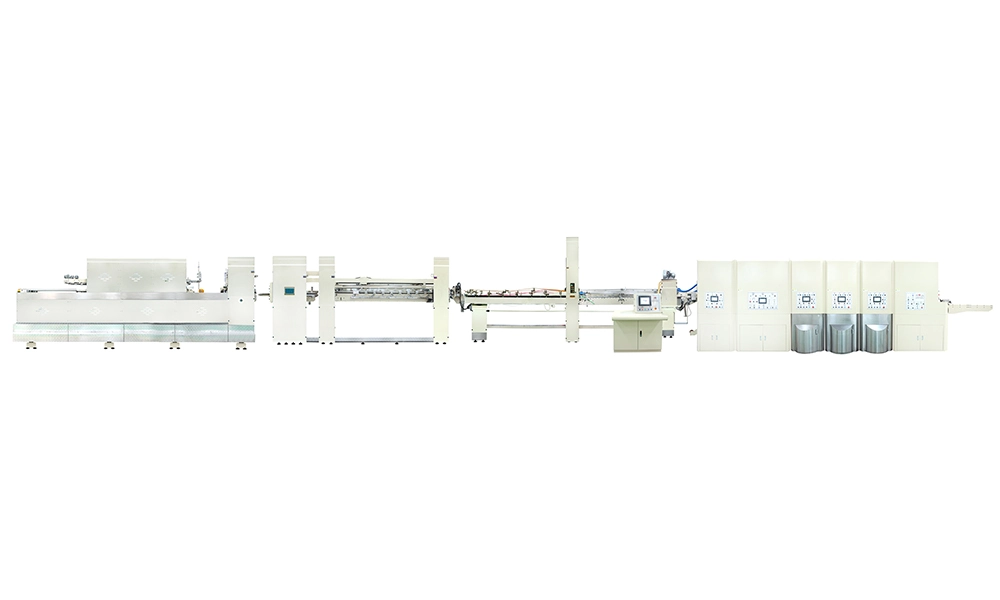
Computerized Flexo Printing Slotting Die-Cutting Inline Folding Gluing and Stitching Machine
Introducing the Keshenglong&Shinko Computerized Flexo Printing Slotting Die-Cutting Inline Folding Gluing and Stitching Machine, a pinnacle of precision and efficiency. This state-of-the-art machine revolutionizes packaging production with seamless integration of printing, slotting, die-cutting, folding, gluing, and stitching. Designed to optimize your workflow, the Computerized Flexo Printing Slotting Die-Cutting Machine enhances accuracy and productivity.
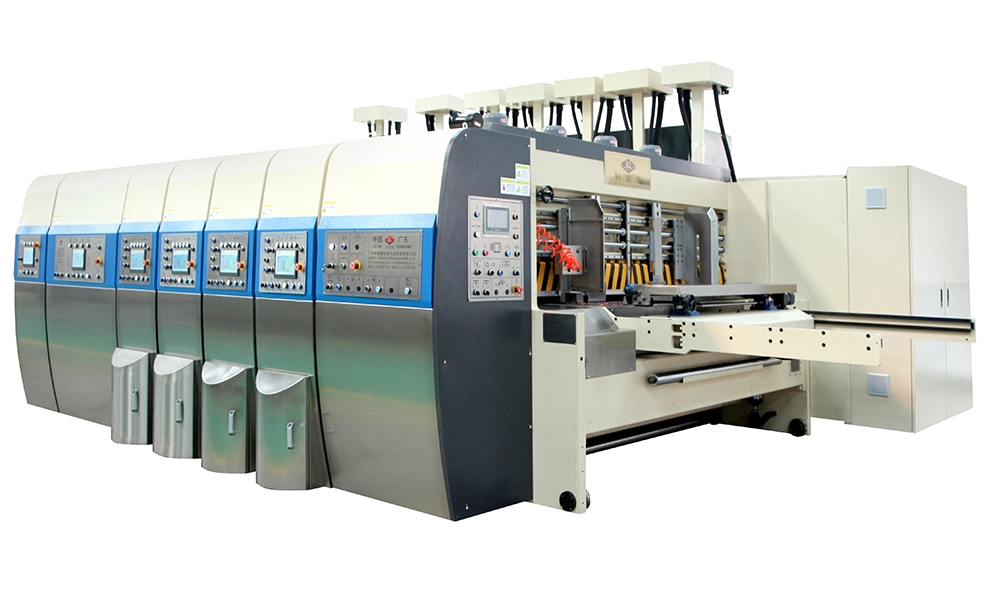
Computerized Flexo Top Bottom Printing Slotting Die-Cutting Machine
Introducing the Keshenglong&Shinko Computerized Flexo Top Bottom Printing Slotting Die-Cutting Machine, designed to enhance your packaging efficiency. Engineered for precision, this high-performance machine offers seamless integration of flexo printing and die-cutting processes. Perfect for a variety for packaging needs, it ensures superior quality and productivity. With user-friendly controls and robust construction, it guarantees reliable operation and minimal downtime. Optimize your production line with Keshenglong’s trusted technology. Explore advanced capabilities with our Flexo Top Bottom Printing Slotting Die-Cutting Machine today.
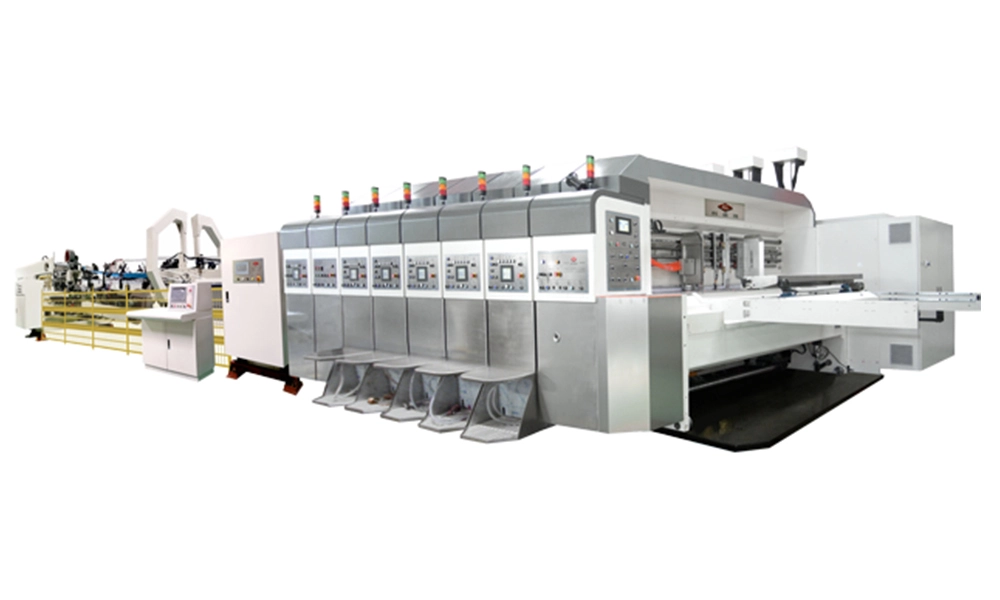
Computerized Flexo Printing Slotting Die-Cutting Inline Folding Gluing Countering Ejecting Machine Repeatable
Introducing the Keshenglong Computerized Flexo Printing Slotting Die-Cutting Inline Folding Gluing Countering Ejecting Machine. This advanced equipment delivers precision and efficiency for all your packaging needs. Perfectly designed for high-speed operations, it ensures seamless integration with your production line. Enhance productivity with our innovative technology that guarantees accurate printing, slotting, and die-cutting.


© 2025 Keshenglong & SHINKO All Rights Reserved.
Keshenglong Carton Packing Machine
Keshenglong Carton Packing Machine
Keshenglong Carton Packing Machine
Keshenglong Carton Packing Machine
Keshenglong Carton Packing Machine