
Flexo print inspection and quality control systems
- Ensuring Print Quality in Corrugated Flexo Production
- Why inspection matters for flexo printers and corrugated carton printing
- Common defects and their business impact
- Types of print inspection systems: choosing between inline, offline and hybrid approaches
- Key technologies in modern flexo print inspection
- Machine vision and defect detection
- Spectral measurement and color control
- Registration control and servo integration
- Metrics, KPIs and what to measure
- ROI and cost justification for inspection systems
- Integration: connecting inspection to production workflow and MIS
- Practical implementation steps and best practices
- Troubleshooting common issues with flexo print inspection
- Keshenglong & Shinko: integrated corrugated carton flexo printing solutions
- Selecting a vendor and specification checklist
- FAQ — Frequently asked questions
- 1. What defects can a modern inline inspection system detect on a flexo printer?
- 2. Can inline color measurement replace laboratory spectrophotometer checks?
- 3. How much does a typical inspection system cost for a corrugated flexo line?
- 4. Will inspection slow down my machine or increase downtime?
- 5. How do I validate an inspection system after installation?
- 6. Which is better for my plant: upgrading the flexo printer with inline inspection or buying a standalone inspection line?
- Contact, consultation and next steps
- References and further reading
Ensuring Print Quality in Corrugated Flexo Production
Quality control is not optional for converters using a flexo printer—it's a business driver. In corrugated carton production, print defects, color inconsistency, and registration problems directly increase waste, slow throughput, and damage brand reputation. This article breaks down the inspection and quality control systems that manufacturers and printers use to achieve reliable 100% print quality, reduce down-time, and maximize ROI.
Why inspection matters for flexo printers and corrugated carton printing
For plant managers and quality engineers operating a flexo printer, the goals are clear: meet customer color and print specifications, minimize rejects, and run at the highest sustainable speed. Unlike sheetfed processes, corrugated flexo often runs long webs, varying substrates, and complex finishing (slotting, die-cutting, gluing). Effective inspection systems detect defects early (before finishing) and enable corrective actions in real time.
keyword: flexo printer
Common defects and their business impact
- Color shifts and ink density variation — leads to customer complaints and rework.
- Registration errors — cause wasted die-cutting and stacking errors.
- Print voids, streaks, and smudges — reduce first-pass yield and increase manual inspection costs.
- Scoring and creasing misalignment — impacts box strength and assembly.
Types of print inspection systems: choosing between inline, offline and hybrid approaches
Inspection strategy should match production volumes, quality targets and budget. The three common approaches are:
- Inline 100% vision inspection integrated into the flexo printer or finishing line for continuous detection.
- Offline camera or scanner inspection after printing but before finishing for batch sampling or high-resolution checks.
- Hybrid systems combining inline coarse inspection with offline high-resolution verification for critical jobs.
keyword: corrugated carton flexo printing machine
| System | Best for | Detection scope | Typical cost | Pros / Cons |
|---|---|---|---|---|
| Inline 100% Vision | High-volume corrugated runs | Defects, registration, print presence | High | Pro: real-time; Con: higher initial cost, complex integration |
| Offline High-Res Scanner | Quality verification and proofs | Color accuracy, small defects | Medium | Pro: detailed analysis; Con: not 100% during production |
| Hybrid (Inline + Offline) | Converters balancing speed & accuracy | All of the above | Medium-High | Pro: cost-effective accuracy; Con: requires workflow coordination |
Key technologies in modern flexo print inspection
Understanding the technology helps you specify the right system for a flexo printer or flexo printing slotting die-cutting machine. The main components are machine vision, spectrophotometry, register control, and data analytics.
Machine vision and defect detection
Machine-vision inspection uses high-speed cameras, line-scan sensors and specialized lighting to detect defects (streaks, spots, pinholes) and registration deviations. Algorithms compare captured images to a reference and classify defects by size and severity. For corrugated surfaces, structured lighting and compensation algorithms are necessary to distinguish texture from true print faults.
Spectral measurement and color control
Spectrophotometers and inline color sensors measure ink density and color coordinates (e.g., ΔE). For brands requiring color consistency across batches, closed-loop control can adjust ink feed, anilox roll selection or ink formula based on real-time spectral data.
Registration control and servo integration
Accurate web registration is essential for slotting and die-cutting after printing. Vision-based register systems work with servo drives to adjust lateral and rotational positions automatically. Integration with the flexo printer’s control architecture reduces setup times and scrap.
Metrics, KPIs and what to measure
To evaluate system effectiveness, track measurable KPIs that link inspection to business outcomes:
- First-pass yield (FPY) — percentage of jobs that pass without rework.
- Defects per 1,000 meters — normalized defect frequency for process control.
- Make-ready time — time from job start to acceptable quality.
- Downtime caused by quality issues — minutes/hours per week.
- Return on investment (ROI) — cost savings from reduced waste and labor vs inspection system cost.
keyword: flexo print inspection
ROI and cost justification for inspection systems
When justifying a capital investment for a flexo printer inspection system, quantify direct savings: scrap reduction, reduced manual inspection labor, fewer customer returns, and faster make-ready. Typical payback periods for high-volume corrugated lines are often 12–30 months depending on current scrap rates and labor costs.
Example calculation (simplified): assume a 2,000 m/day line, current scrap 5%, material cost $0.10/m, operating 250 days/year. Annual scrap cost = 2,000*250*0.05*$0.10 = $2,500. If inspection reduces scrap to 1%, savings ~$2,000/year — combine this with labor savings and quality penalties avoided to estimate payback. Use your actual margins and volumes for accurate ROI.
Integration: connecting inspection to production workflow and MIS
Inspection is most valuable when connected to process controls and management information systems (MIS). Integrations to consider:
- PLC and drive integration for automatic adjustments (register, speed, tension).
- Job ticket and artwork integration to load references for vision systems.
- Data logging to MIS/ERP for traceability, SPC and customer reporting.
keyword: flexo printing slotting die-cutting machine
Practical implementation steps and best practices
Stepwise implementation reduces risk and increases buy-in:
- Assess failure modes: map typical defects and their root causes.
- Define acceptance criteria with customers (ΔE thresholds, allowable defects).
- Select appropriate technology (inline vs offline, camera resolution, color sensors).
- Integrate with drives and MIS; test on production jobs.
- Train operators on interpretation and corrective action.
- Set up SPC dashboards and continuous improvement loops.
Operator training and a clear escalation path (operator → supervisor → maintenance) are essential to avoid alarm fatigue and ensure the system drives meaningful corrective actions.
Troubleshooting common issues with flexo print inspection
Common implementation problems and remedies:
- False positives due to corrugated texture — use structured lighting and texture-filter algorithms.
- Color drift due to ink temperature or substrate variation — install inline spectrophotometry and environmental monitoring.
- Poor registration detection at high speeds — upgrade to high-frame-rate line-scan cameras and better web guides.
- Data overload — set tiered alarm thresholds and summary dashboards to focus on critical defects.
Keshenglong & Shinko: integrated corrugated carton flexo printing solutions
When selecting equipment, aligning machine capability with inspection needs is critical. Keshenglong, founded in 1995 and specialized in corrugated carton printing and packaging machinery, offers a portfolio designed for integrated production and QC. Merged with Japan Shinko in 2017 (Shinko retained as R&D center and production base), Keshenglong benefits from Japanese technical instruction, imported parts, and Guangzhou production scale. Their main products include flexo printer systems, computerized high-speed flexo slotting die-cutting machines (1–6 color), computerized high-speed flexo case makers, 6+1 high-precision printing slotting die-cutting machines, top & bottom printing slotting die-cutting machines, and jumbo-size flexo printing slotting die-cutting machines.
Key competitive advantages of Keshenglong & Shinko solutions:
- Integrated machine suites tuned for corrugated carton flexo printing and finishing, simplifying inline inspection integration.
- Japanese R&D and technical guidance with local manufacturing — balance of quality and cost-efficiency.
- Wide product range from single-color flexo printers to high-speed multi-color printing slotting die-cutting and stacker machines, enabling matched inspection strategies across the production line.
- Export experience to 70+ countries, indicating installed-base service capability and international standards compliance.
keywords: corrugated box printing machine, flexo printer
Selecting a vendor and specification checklist
When comparing vendors for inspection systems or machines with integrated inspection, evaluate the following:
- Detection performance: minimum detectable defect size and color ΔE sensitivity.
- Speed rating: compatible with your flexo printer line speeds.
- Ease of integration: APIs for PLC, MIS, and job ticketing systems.
- Support & spare parts: local service, training, and global reach (important for exporters).
- Proven references: ask for case studies in corrugated carton flexo printing.
FAQ — Frequently asked questions
1. What defects can a modern inline inspection system detect on a flexo printer?
Modern inline systems can detect registration errors, missing print elements, streaks, smudges, pinholes, color density deviations, and occasional substrate-related defects. Detection capability varies by camera resolution and lighting; specifying the minimum defect size you need to catch is essential.
2. Can inline color measurement replace laboratory spectrophotometer checks?
Inline color sensors provide continuous monitoring and are excellent for process control, but periodic lab spectrophotometer checks are still recommended for certification-level color matching and ICC profile creation.
3. How much does a typical inspection system cost for a corrugated flexo line?
Costs vary widely. Basic inline vision modules may start at tens of thousands USD, while full 100% inspection with color control and register integration for high-speed lines can be in the low to mid six figures. Calculate ROI considering reduced scrap, labor savings, and fewer returns.
4. Will inspection slow down my machine or increase downtime?
If properly specified and integrated, inspection systems run at full production speed. They may require short commissioning time and occasional maintenance, but they reduce unplanned downtime by catching problems early.
5. How do I validate an inspection system after installation?
Validation includes: running known-good and known-bad reference prints, measuring detection rates (true positives/false positives), calibrating color sensors against a lab spectrophotometer, and running pilot production jobs to fine-tune thresholds.
6. Which is better for my plant: upgrading the flexo printer with inline inspection or buying a standalone inspection line?
High-volume converters benefit most from integrated inline inspection due to reduced handling and immediate corrective capability. Standalone inspection can be cost-effective for lower-volume facilities or for high-resolution verification tasks. A hybrid approach often balances cost and quality.
Contact, consultation and next steps
If you operate a corrugated carton production line and want to evaluate inspection upgrades, Keshenglong offers integrated flexo printer and slotting die-cutting solutions that simplify inspection integration and improve first-pass yield. Contact Keshenglong to discuss machine specifications, inspection packages, and references suited to your production speed and quality targets.
keywords: flexo printer, flexo printing slotting die-cutting and stacker machine
References and further reading
- Flexography — Wikipedia. https://en.wikipedia.org/wiki/Flexography (accessed 2025-06-01)
- Flexographic Technical Association (FTA) — Industry resources and best practices. https://flexography.org/ (accessed 2025-06-01)
- Smithers — Market reports on print inspection and quality control trends. https://www.smithers.com/ (accessed 2025-06-01)
- Packaging World — Articles on inline inspection and automation in corrugated printing. https://www.packworld.com/ (accessed 2025-06-01)
- Keshenglong company information and product portfolio (provided by manufacturer). Internal product and corporate history provided by Keshenglong (accessed 2025-06-01)
Why choose Keshenglong&Shinko flexo printer slotter die-cutter machine manufacturer
Corrugated Box Printing Machine Cost and ROI Guide
Where to Buy Flexo Printing Slotting Die Cutting Machine in Chicago
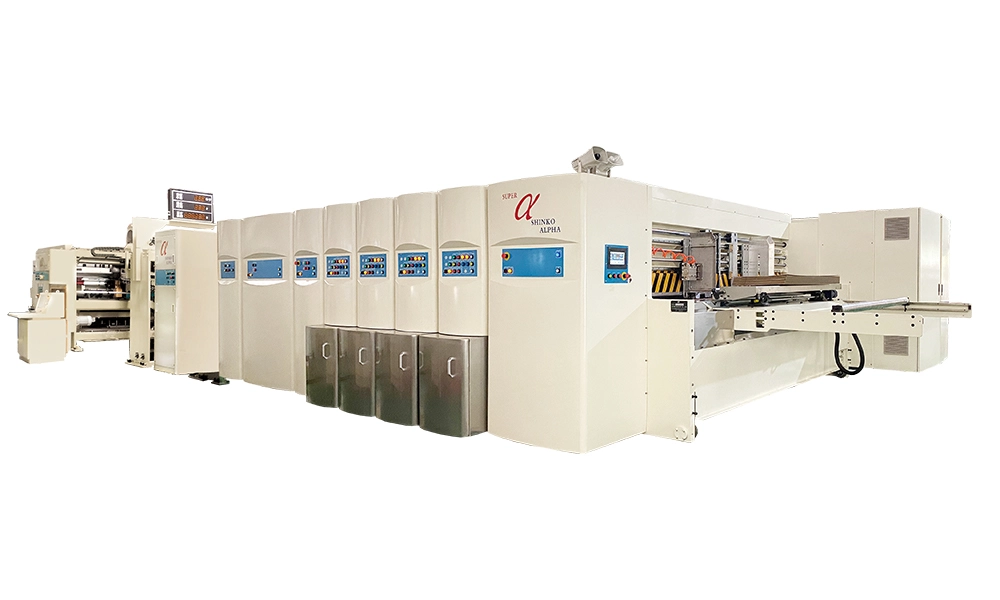
Maximize ROI: Inline Slotting, Die Cutting & Gluing Workflow
Industry Solutions
How can your machines improve my production workflow?
By automating carton production, our machines streamline your workflow, increase output, and reduce downtime.
How can your folding carton machines benefit my packaging business?
Our machines increase production efficiency, reduce labor costs, and ensure high-quality, consistent carton production.
What is the lifespan of your folding carton machines?
With proper maintenance, our machines are built to last for many years, providing long-term value for your investment.
Shipping
Can you ship to remote or difficult-to-access locations?
Yes, we can arrange shipping to remote locations, though additional charges and time may apply.
What are the shipping dimensions and weight of your folding carton machines?
Shipping dimensions and weight vary by model; please refer to the specific product details for accurate information.
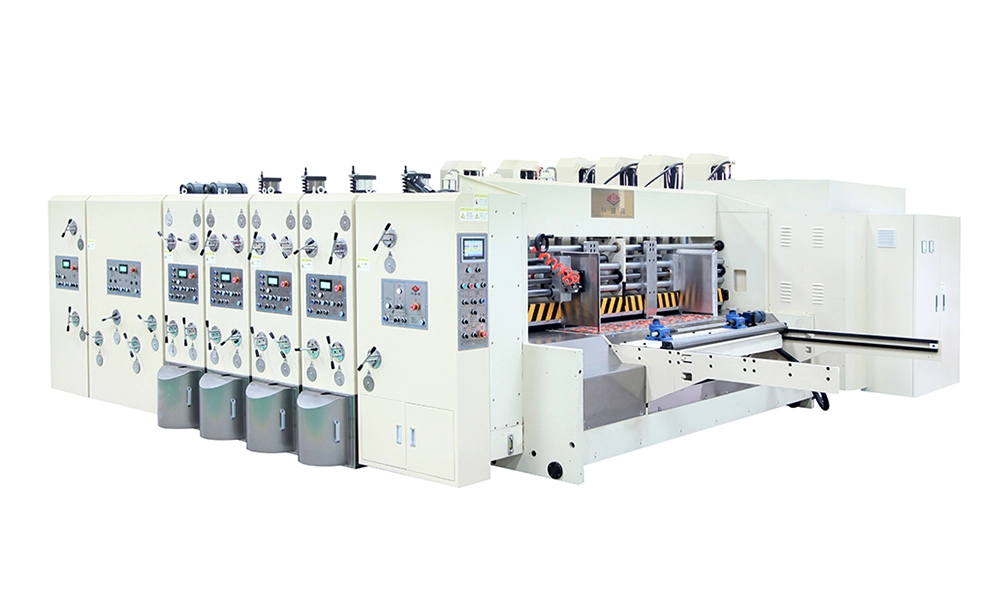
Computerzied Semi Auto Flexo Printing Slotting Die-Cutting Machine
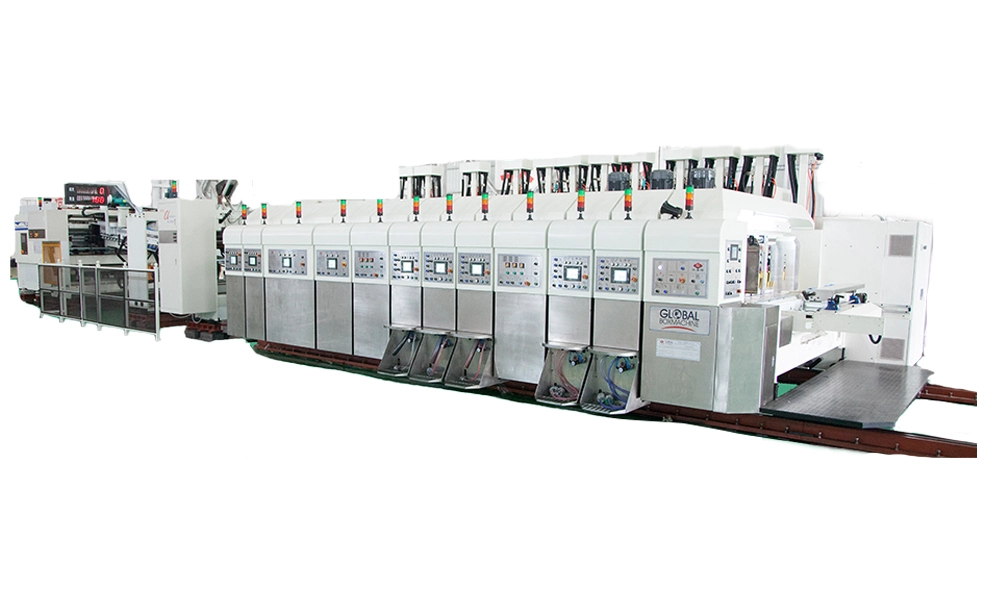
Computerized Flexo Printing Slotting Die-Cutting Inline Folding Gluing Countering Ejecting Machine
Introducing the Keshenglong&Shinko Computerized Flexo Printing Slotting Die-Cutting Inline Folding Gluing Countering Ejecting Machine. Engineered for precision, this advanced machine streamlines your packaging production with integrated Flexo Printing Slotting Die-Cutting functionalities. Seamlessly perform inline folding, gluing, countering, and ejecting—all in one efficient system. Designed for optimal performance, it enhances productivity while reducing downtime.
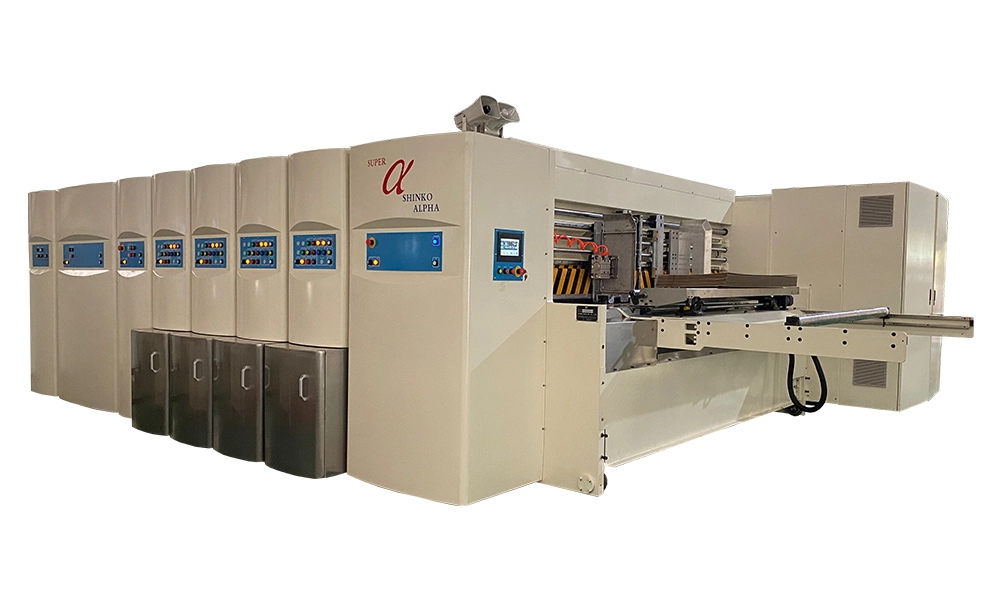
Shinko Super Alpha Movable Type Full Servo Drive Flexo Printing Slotting Die Cutting Machine
Introducing the Shinko Super Alpha Movable Type Full Servo Drive Flexo Printing Slotting Die Cutting Machine by Keshenglong. Engineered for precision and efficiency, this state-of-the-art machine enhances your production line with its advanced servo drive technology. Designed for seamless Flexo printing, slotting, and die-cutting, it ensures superior quality with every output.
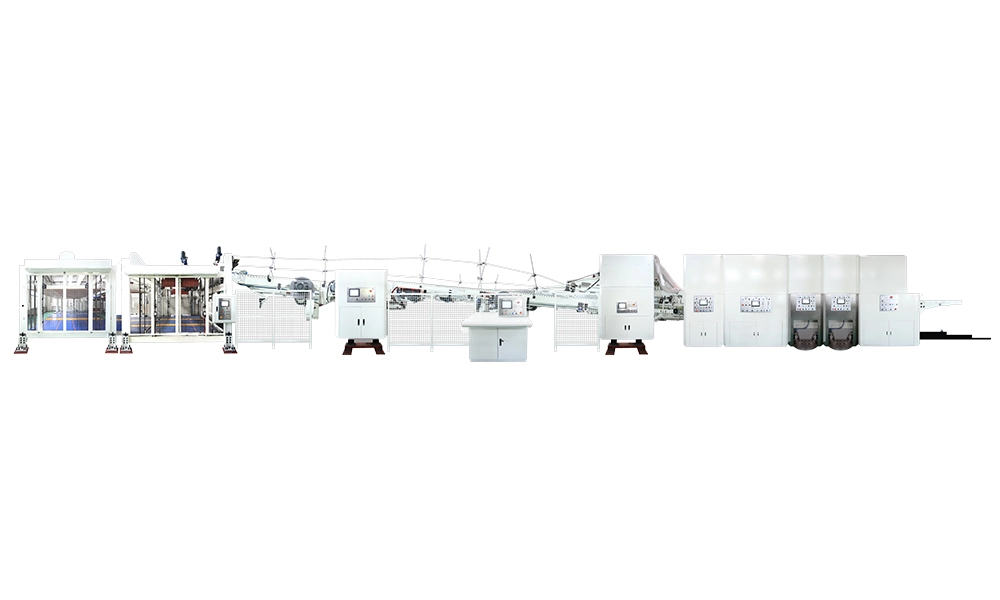
Jumbo Flexo Bottom Printing Slotting Die-Cutting Inline Folding Gluing Countering Ejecting Machine
Introducing the Keshenglong&Shinko Jumbo Flexo Bottom Printing Slotting Die-Cutting Inline Folding Gluing Countering Ejecting Machine. This advanced flexo printing slotting die-cutting machine ensures precision and efficiency for your packaging needs. Designed as a versatile flexo folder gluer machine, it optimizes every step from printing to ejecting, delivering seamless integration and superior quality.


© 2025 Keshenglong & SHINKO All Rights Reserved.
Keshenglong Carton Packing Machine
Keshenglong Carton Packing Machine
Keshenglong Carton Packing Machine
Keshenglong Carton Packing Machine
Keshenglong Carton Packing Machine