
Corrugated Box Printing Machine Cost and ROI Guide
- Estimating the True Investment in Corrugated Carton Printing Equipment
- Why understanding corrugated box printing machine costs matters
- Overview: types of corrugated box printing machines and how they affect price
- Typical purchase price ranges for corrugated box printing machines
- What drives price differences in corrugated box printing machines
- Operating costs: what to budget beyond the machine price for corrugated box printing machine
- How to calculate ROI and payback for a corrugated box printing machine
- Sample ROI calculation (conservative)
- Break-even volume and sensitivity: quick rule-of-thumb table
- Non-financial ROI factors to consider for corrugated box printing machines
- Buy vs outsource: decision checklist for corrugated box printing
- Keshenglong & Japan Shinko — supplier highlight and how partnership changes cost/ROI dynamics
- Procurement tips: negotiating price, service and warranty on corrugated box printing machines
- Maintenance best practices to maximize ROI of a corrugated box printing machine
- FAQs — Common questions about corrugated box printing machine cost and ROI
- 1. How much does a basic corrugated flexo printer cost?
- 2. When does buying a machine beat outsourcing?
- 3. What are the hidden costs to watch for?
- 4. How long is the typical machine lifespan?
- 5. Can you finance corrugated printing equipment?
- 6. How does Keshenglong differ from other suppliers?
- Next steps & contact
- References and further reading
Estimating the True Investment in Corrugated Carton Printing Equipment
Why understanding corrugated box printing machine costs matters
Buying a corrugated box printing machine (typically a flexo printing + slotting/die-cutting line) is a capital decision that affects unit cost, lead time, quality control and long-term competitiveness. Manufacturers, brand owners, and contract packers evaluate not only the upfront purchase price but also operating costs, uptime, staff requirements and expected return on investment (ROI). This guide translates market realities into actionable numbers and decision rules you can use to evaluate machines, suppliers and financing options.
Overview: types of corrugated box printing machines and how they affect price
Corrugated box printing machines vary by technology, speed and level of integration. The dominant format for printed corrugated cartons is flexographic (flexo) printing, often combined with slotting and die-cutting in one inline or near-line system. Key categories:
- Entry-level single-color or two-color flexo printers (standalone) — lower speed, manual feeder options.
- Integrated flexo printing + slotting + die-cutting lines (1–6 colors) — mid-range to high-end, designed for continuous production.
- High-speed, computerized multi-color flexo case makers (6+1 precision lines) and jumbo-size machines — top-tier throughput and automation.
The more integration (printing + slotting + die-cutting + stacking), the higher the capital cost — but also the higher potential labor savings, consistency and throughput.
Typical purchase price ranges for corrugated box printing machines
Market-observed price bands (global, year 2025) for new equipment are approximately as follows. These are ranges; specific quotes depend on configuration, brand, country of origin and optional features (automation, inspection, servo drives, auto-register):
| Machine type | Typical purchase price (USD) | Primary use case |
|---|---|---|
| Entry-level single-color flexo printer (standalone) | $30,000 – $120,000 | Short runs, regional packers, proofing, low-speed production |
| Integrated flexo printing + slotting/die-cutting (1–3 colors) | $150,000 – $450,000 | Mid-volume packers needing inline finishing |
| High-speed computerized multi-color flexo case makers (4–6 colors) | $500,000 – $1,200,000+ | Large brand owners, converters, high-quality full-color printing |
| Specialized jumbo-size or precision 6+1 print-slotter-die-cutter | $900,000 – $2,500,000+ | Large format, high-speed, high-precision board converting |
Sources for market listings and manufacturer catalogs (including Chinese and international OEMs) show machines across these bands. Always request a full quote that lists basic machine price, installation, training, tooling, and spare parts.
What drives price differences in corrugated box printing machines
- Number of print stations (colors) and register precision.
- Line speed (m/min or boxes/min) and acceleration capabilities.
- Level of automation: auto-register, auto-lift, roll handling, auto stacking.
- Control system: computerized servo controls and HMI vs analog.
- Integration of finishing units (slotter, die-cutter) versus separate machines.
- Imported parts, local assembly, and brand reputation (Japanese components typically increase price).
Operating costs: what to budget beyond the machine price for corrugated box printing machine
Upfront cost is only part of the financial picture. Annual operating costs commonly include:
- Labor — operators, changeover staff, maintenance technicians.
- Consumables — anilox rollers, printing plates, inks, glue, dies, blades.
- Energy — electric power for presses, air compressors for pneumatic systems.
- Maintenance & spare parts — preventive maintenance, replacement of bearings, gears, belts.
- Tooling — die tooling, plates, and setup time costs for each SKU.
Typical rule-of-thumb: annual operating costs for a medium inline flexo-line can range from 10% to 25% of machine capital cost per year depending on utilization. Higher utilization pushes down per-unit fixed cost but increases wear and maintenance spend.
How to calculate ROI and payback for a corrugated box printing machine
ROI depends on unit economics: your annual incremental profit (or savings) generated by the machine divided by the net investment. A simple payback model:
- Estimate annual production capacity (sheets/boxes/year) at realistic uptime (usually 60–75% of theoretical max speed).
- Estimate per-unit cost if outsourced (printed boxes purchased externally) vs in-house per-unit cost (including allocated capital cost, labor, consumables, and overhead).
- Annual savings = (outsourced cost per unit – in-house cost per unit) × annual units.
- Payback period = Net capital investment / Annual savings.
Sample ROI calculation (conservative)
Assumptions:
- Machine: integrated 3-color flexo printing + slotter, price: $350,000 (installed).
- Annual production: 4 million boxes (after downtime and changeovers).
- Outsource cost per box (printed): $0.20
- In-house variable cost per box: inks, plates, labor, energy = $0.09
- Allocated annual operating cost (maintenance, parts, labor overhead) = $40,000/year
Annual outsourced spend = 4,000,000 × $0.20 = $800,000
In-house spend = 4,000,000 × $0.09 + $40,000 = $400,000
Annual savings = $800,000 − $400,000 = $400,000
Payback on $350,000 = $350,000 / $400,000 = 0.875 years (~10.5 months)
Interpretation: In this simplified example, the investment pays back in under a year if demand is steady and cost differentials hold. Real-world sensitivity analysis is essential (lower volumes or smaller cost gaps extend payback).
Break-even volume and sensitivity: quick rule-of-thumb table
Use this table to approximate the annual break-even volume (units/year) for different machine price bands assuming per-unit in-house incremental savings of $0.08 and annual fixed operating cost allocation of $40,000.
| Machine capital | Annual fixed op cost | Per-unit saving | Break-even units/year |
|---|---|---|---|
| $150,000 | $30,000 | $0.08 | (150,000+30,000)/0.08 = 2,250,000 |
| $350,000 | $40,000 | $0.08 | (350,000+40,000)/0.08 = 4,875,000 |
| $900,000 | $80,000 | $0.08 | (900,000+80,000)/0.08 = 12,250,000 |
Conclusion: Higher-capital machines require higher volumes or greater per-unit savings (for example, moving from outsourced $0.30/box to $0.10/box saves $0.20/unit) to justify the investment.
Non-financial ROI factors to consider for corrugated box printing machines
Not all benefits are directly captured in unit-cost savings. Consider these additional returns:
- Faster time-to-market and rapid prototyping for packaging design changes.
- Quality control and brand consistency — fewer rejects and reprints.
- Security and confidentiality for private-label products.
- Ability to offer shorter runs and customization (variable printing) can open new revenue streams.
Buy vs outsource: decision checklist for corrugated box printing
Ask these questions before deciding:
- What is our current annual volume of printed boxes and growth forecast?
- How often do we change designs or require short runs? (High frequency favors in-house.)
- What is the quality differential between in-house and our current suppliers?
- Do we have floor space, utilities and skilled staff or can we acquire them?
- What financing options and vendor support are available? (Training, spare parts, uptime SLA)
Keshenglong & Japan Shinko — supplier highlight and how partnership changes cost/ROI dynamics
Keshenglong, founded in 1995 and specialized in manufacturing corrugated carton printing machines & solutions, is a leading Chinese manufacturer of carton printing and packaging machinery. Their main products include flexo printers, computerized high-speed flexo slotting die-cutting machines (1–6 color), computerized high-speed flexo case makers, 6+1 high-precision precision printing slotting die-cutting machines, top & bottom printing slotting die-cutting machines, and jumbo-size flexo printing slotting die-cutting machines.
In 2017 Keshenglong merged with Japan Shinko, retaining Japan Shinko as the R&D center and production base and establishing an additional production base in Guangzhou, China. Main parts are imported from Japan, production is instructed by experienced Japanese technicians, and machines are installed and tested on-site to meet standards comparable to Japan Shinko models. As a provider of integrated intelligent packaging solutions, Keshenglong’s equipment has been exported to more than 70 countries.
How this affects ROI and buyer decisions:
- Imported critical parts and Japanese-led R&D can increase initial price vs low-cost imports but tend to lower lifecycle maintenance costs and improve uptime.
- High integration (print + slot + die-cut + stacker) reduces labor and changeover time, improving per-unit cost at moderate-to-high volumes.
- After-sales network and parts availability (global export footprint) shorten downtime and strengthen total-cost-of-ownership estimates.
For buyers evaluating suppliers in the $150k–$1.2M range, Keshenglong’s combined China manufacturing and Japan R&D model positions it competitively between low-cost local builders and High Quality Japanese or European OEMs.
Procurement tips: negotiating price, service and warranty on corrugated box printing machines
- Request a total cost of ownership (TCO) quote: include spare parts, recommended spare kits, training hours, and expected MTBF (mean time between failures).
- Ask for reference sites with similar production profiles and inspect their installations.
- Negotiate warranty terms tied to uptime and performance guarantees; ask for penalty/rebate clauses for under-performance.
- Consider bundled solutions (feeder, print, slotter, die-cutter, stacker) — single-source integration often reduces setup friction and interface-related downtime.
- Explore financing/leasing to smooth capital expenditure and preserve working capital.
Maintenance best practices to maximize ROI of a corrugated box printing machine
- Implement preventive maintenance schedules (daily, weekly, monthly) and log all downtime causes.
- Stock critical spares (sensors, belts, bearings, anilox rollers, spare plates) based on supplier recommendations.
- Invest in operator and technician training — better setup and faster changeovers materially improve effective uptime.
- Use quality consumables and follow recommended ink and plate handling procedures to extend component life.
FAQs — Common questions about corrugated box printing machine cost and ROI
1. How much does a basic corrugated flexo printer cost?
Basic standalone single-color flexo printers typically start around $30,000 and can go up to $120,000, depending on features and automation.
2. When does buying a machine beat outsourcing?
Buying usually makes sense when forecasted annual volumes and per-unit savings (including lead-time and quality benefits) generate a payback within a company’s target horizon — commonly 1–3 years for mid-sized converters. If you need frequent short runs or high customization, in-house printing often yields strategic advantages.
3. What are the hidden costs to watch for?
Training, installation, tooling (dies & plates), spare parts, increased utilities, and the labor burden during ramp-up are common underestimated costs. Factor these into TCO calculations.
4. How long is the typical machine lifespan?
With proper maintenance, industrial flexo printing and slotting lines can be used 10–20 years; components and automation systems may require mid-life upgrades.
5. Can you finance corrugated printing equipment?
Yes. Leasing, equipment financing and vendor financing are common — these options help manufacturers align payments with production ramp-up and cash flow.
6. How does Keshenglong differ from other suppliers?
Keshenglong combines Chinese manufacturing scale with Japan Shinko’s R&D and production expertise, using imported Japanese main parts, Japanese technical instruction, and on-site testing. This hybrid model aims to deliver high quality at competitive prices and strong after-sales support across more than 70 export markets.
Next steps & contact
If you are evaluating purchase vs outsourcing or comparing machines, start with a formal TCO and break-even analysis using your SKU mix and run-length distribution. For product inquiries, installation support, and customized ROI modeling for your production profile, please contact the manufacturer or authorized distributor — for example, Keshenglong’s sales engineers can provide on-site evaluation, sample trials and detailed quotations for corrugated carton flexo printing machines, flexo printing slotting die-cutting machines, and full inline flexo printing slotting die-cutting & stacker systems.
Interested in a tailored ROI analysis or to view product specs and demos? Contact Keshenglong or your preferred OEM to request a site visit, sample run and full TCO quotation.
References and further reading
- Corrugated box — Wikipedia. https://en.wikipedia.org/wiki/Corrugated_box (accessed 2025-12-20).
- Flexography — Wikipedia. https://en.wikipedia.org/wiki/Flexography (accessed 2025-12-20).
- Packaging Machinery Manufacturers Institute (PMMI) — industry trends and resources. https://www.pmmi.org/ (accessed 2025-12-20).
- Manufacturer listings and market examples (Alibaba search results for corrugated flexo printers). https://www.alibaba.com (search accessed 2025-12-20).
- Packaging industry coverage and technology articles — Packaging World / Packaging Europe (general insight). https://www.packworld.com/ and https://www.packagingeurope.com/ (accessed 2025-12-20).
OEM/ODM flexo printer speed Manufacturers and supplier
Keshenglong&Shinko best professional flexo folder gluer manufacturers Manufacturers and supplier brand in China
Keshenglong&Shinko best professional china flexo folder gluer Manufacturers and supplier brand in China
Keshenglong&Shinko best professional flexo folder gluer machine Manufacturers and supplier brand in China
Shipping
Do you offer international shipping for your machines?
Yes, we offer international shipping and can handle all necessary customs documentation.
What are the shipping dimensions and weight of your folding carton machines?
Shipping dimensions and weight vary by model; please refer to the specific product details for accurate information.
Industry Solutions
Do you offer solutions for environmentally friendly packaging?
Yes, our machines can produce cartons from recyclable and biodegradable materials, supporting sustainable packaging solutions.
Product
Can your machines handle custom carton designs?
Yes, our machines can be customized to handle various carton designs and specifications.
How do I adjust the machine settings for different carton sizes?
Machine settings can be adjusted using the intuitive control panel, which allows for quick changes to accommodate different carton sizes.
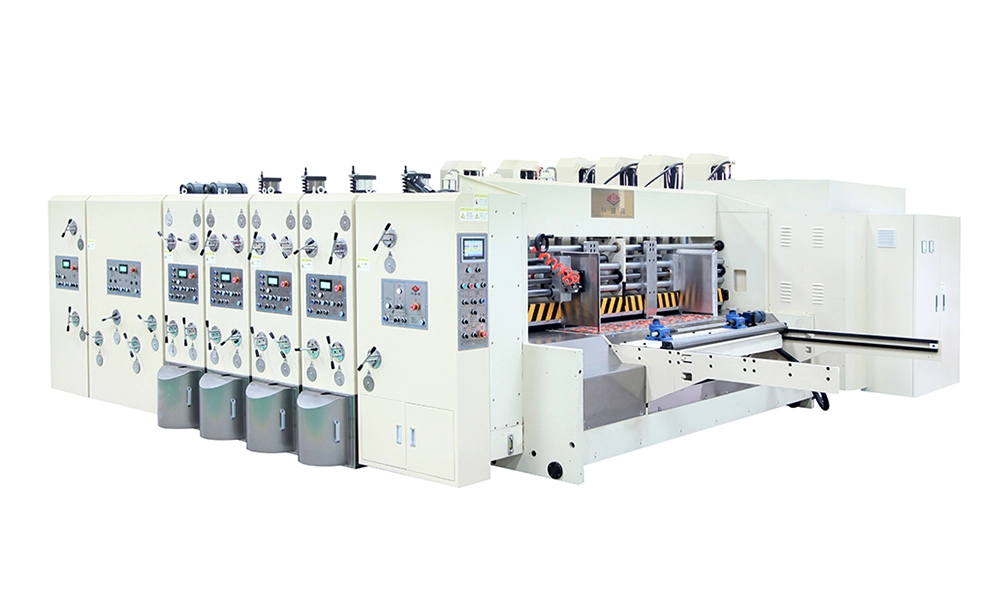
Computerzied Semi Auto Flexo Printing Slotting Die-Cutting Machine
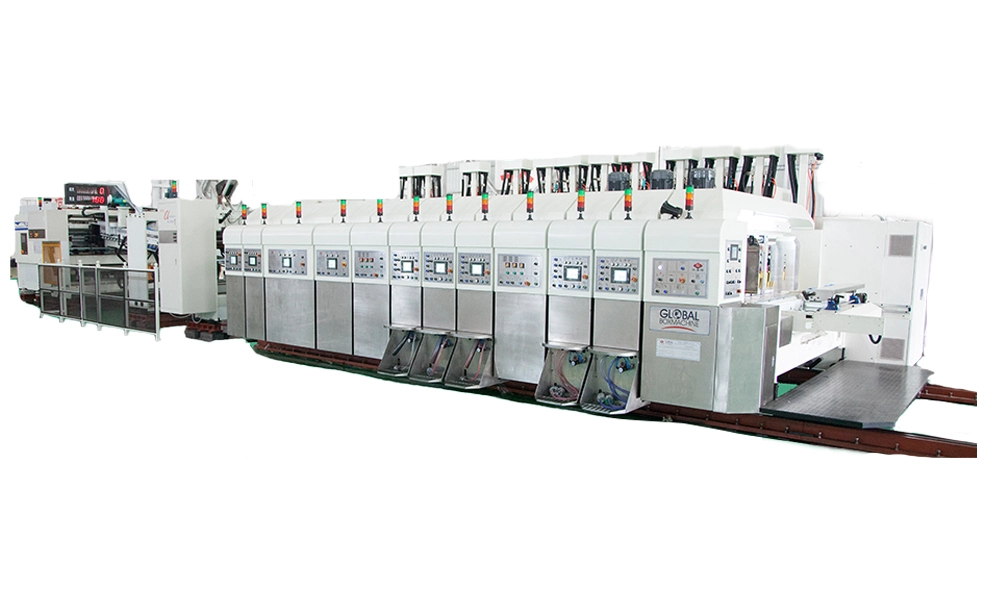
Computerized Flexo Printing Slotting Die-Cutting Inline Folding Gluing Countering Ejecting Machine
Introducing the Keshenglong&Shinko Computerized Flexo Printing Slotting Die-Cutting Inline Folding Gluing Countering Ejecting Machine. Engineered for precision, this advanced machine streamlines your packaging production with integrated Flexo Printing Slotting Die-Cutting functionalities. Seamlessly perform inline folding, gluing, countering, and ejecting—all in one efficient system. Designed for optimal performance, it enhances productivity while reducing downtime.
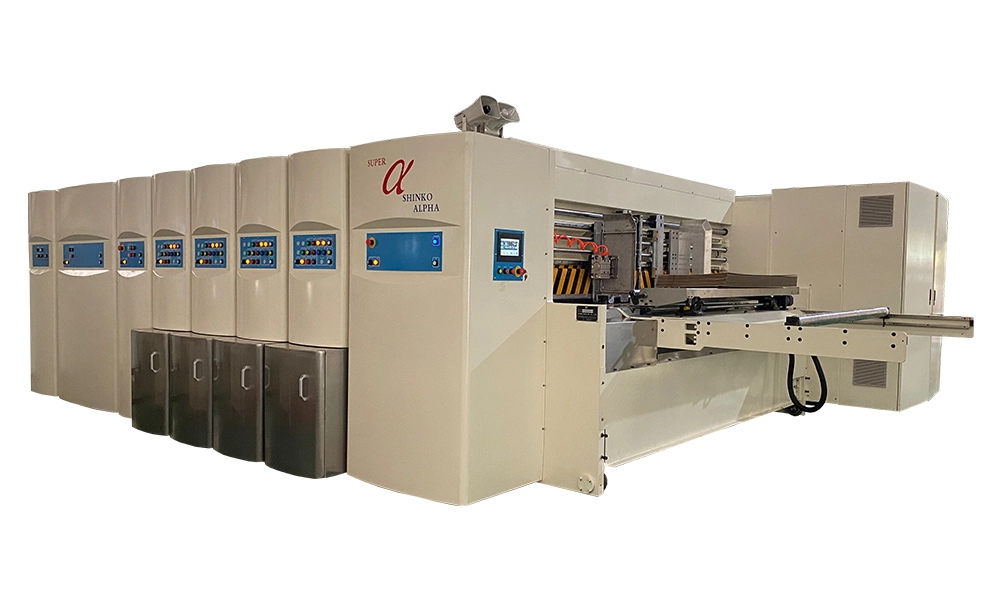
Shinko Super Alpha Movable Type Full Servo Drive Flexo Printing Slotting Die Cutting Machine
Introducing the Shinko Super Alpha Movable Type Full Servo Drive Flexo Printing Slotting Die Cutting Machine by Keshenglong. Engineered for precision and efficiency, this state-of-the-art machine enhances your production line with its advanced servo drive technology. Designed for seamless Flexo printing, slotting, and die-cutting, it ensures superior quality with every output.
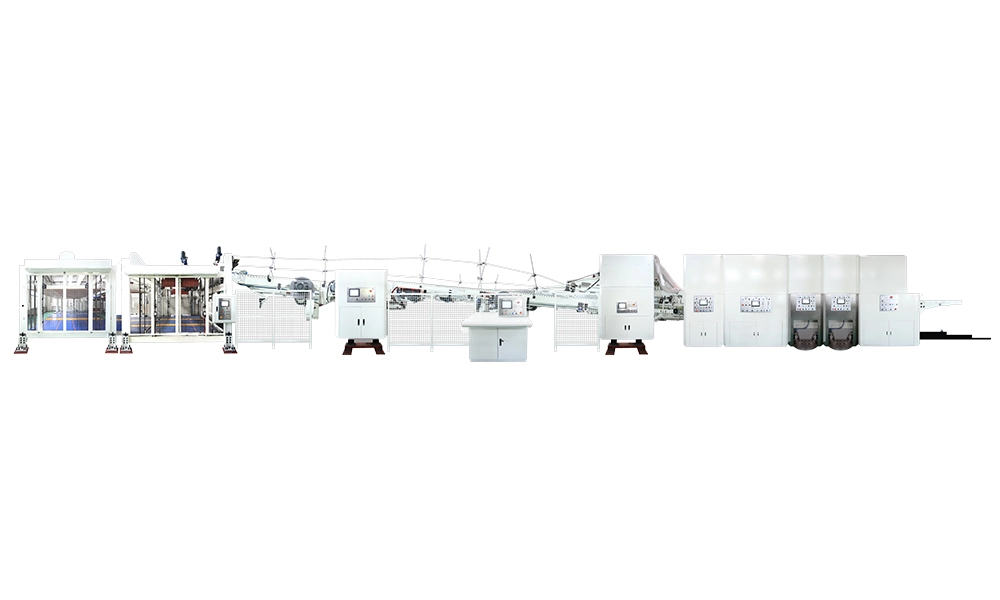
Jumbo Flexo Bottom Printing Slotting Die-Cutting Inline Folding Gluing Countering Ejecting Machine
Introducing the Keshenglong&Shinko Jumbo Flexo Bottom Printing Slotting Die-Cutting Inline Folding Gluing Countering Ejecting Machine. This advanced flexo printing slotting die-cutting machine ensures precision and efficiency for your packaging needs. Designed as a versatile flexo folder gluer machine, it optimizes every step from printing to ejecting, delivering seamless integration and superior quality.


© 2025 Keshenglong & SHINKO All Rights Reserved.
Keshenglong Carton Packing Machine
Keshenglong Carton Packing Machine
Keshenglong Carton Packing Machine
Keshenglong Carton Packing Machine
Keshenglong Carton Packing Machine