
Maintenance Tips for Corrugated Box Printing Machines
- How to Keep Your Corrugated Press Running at Peak Performance
- Understanding your corrugated box printing machine and why maintenance matters
- Daily maintenance checklist for corrugated box printing machine operators
- Weekly and monthly maintenance: the detailed care plan (includes recommended intervals)
- Consumables management and parts lifecycle for corrugated carton flexo printing machine
- Troubleshooting common defects and root-cause checks
- Calibration, alignment, and upgrade strategies
- Safety, documentation, and training
- Cost-benefit considerations and when to replace versus overhaul
- Keshenglong & Shinko: integrated solutions and how supplier choice affects maintenance
- Practical checklist for evaluating suppliers from a maintenance viewpoint
- Case example — measurable benefits from structured maintenance (illustrative)
- FAQ — Common questions about maintaining corrugated box printing machines
- 1. How often should I deep-clean anilox rollers on a corrugated carton flexo printing machine?
- 2. What is the expected service life of doctor blades and when should they be replaced?
- 3. Can retrofits improve uptime for older corrugated box printing machine lines?
- 4. How should I handle seasonal shutdowns to preserve equipment?
- 5. What are the top causes of registration problems on corrugated printing systems?
- 6. Is it worthwhile to implement condition monitoring (IoT) on corrugated presses?
- 7. How do I choose between machine overhaul and full replacement?
- Contact & product inquiry
- References
How to Keep Your Corrugated Press Running at Peak Performance
Corrugated box printing machines are mission-critical assets for packaging operations. Proper maintenance reduces downtime, improves print quality, extends equipment life, and lowers total cost of ownership. This guide offers actionable, experience-based maintenance tips targeted to owners, line supervisors, and maintenance technicians working with corrugated carton flexo printing machines and corrugated box printing machine systems.
Understanding your corrugated box printing machine and why maintenance matters
Before diving into routines, it helps to understand the principal subsystems of a corrugated carton flexo printing machine: the web handling (infeed/tension), flexo printing units (plate cylinder, anilox, doctor blade, ink system), drying/curing (hot-air or IR), slotting/die-cutting station, stacking/sorting, and the electrical/control systems. Each subsystem has distinct failure modes and maintenance needs. Neglect accelerates wear (e.g., anilox scoring, plate distortion, knife dulling), causes print defects (ghosting, streaks, registration errors), and can lead to unscheduled stops that cost hours or days in high-volume lines.
Daily maintenance checklist for corrugated box printing machine operators
Daily routines should be quick, repeatable, and assigned to a specific role (machine operator or line technician). Embedding these checks into shift handovers prevents small issues from escalating.
- Visual inspection of web path and tension indicators—look for misfeeds or debris.
- Clean ink trays, doctor blades, and immediate ink spills—prevent contamination and drying.
- Check registration marks during startup and after job changes—record deviations.
- Verify air pressure and vacuum systems for consistent suction (used for board handling).
- Confirm safety guards, emergency stops, and interlocks are functional.
- Log machine runtime, changeovers, and any minor adjustments—build history for trending.
Weekly and monthly maintenance: the detailed care plan (includes recommended intervals)
Weekly and monthly tasks address components that do not require daily attention but need regular service to avoid drift or wear. Use the table below for a quick-reference maintenance frequency guide tailored to corrugated box printing machine components.
| Component | Recommended Interval | Typical Task | Why it matters |
|---|---|---|---|
| Anilox roller | Weekly: clean; Quarterly: deep clean/inspect | Remove ink, inspect cell damage, ultrasonic or solvent cleaning as appropriate | Prevents clogged cells and print density loss |
| Doctor blades | Daily check; Monthly replace if worn | Inspect edge wear, alignment; replace dull blades | Maintains consistent ink metering and prevents scoring |
| Plate cylinder and plates | Monthly: inspect; After major jobs: re-mount/check | Check for plate lift, adhesive failure, printing defects | Ensures registration and reduces waste |
| Slotting/Die-cut knives | Weekly: inspect; As needed: sharpen/replace | Check wear and burrs; sharpen or replace per material | Maintains clean cuts and reduces board waste |
| Bearings, chains, gears | Weekly: visual; Monthly: lubrication; Yearly: inspection | Lubricate per manufacturer spec; check backlash and play | Reduces mechanical failures and improves uptime |
| Electrical cabinets & sensors | Monthly: clean; Quarterly: functional test | Remove dust, verify connectors, check encoder signals | Prevents false readings and unexpected stops |
| Heating/drying systems | Monthly: inspect; Annually: service | Check fans, heaters, flow rates, and thermocouples | Consistent drying prevents board warpage and ink defects |
| Tension control & rollers | Weekly: check; Quarterly: calibrate | Inspect roller surfaces, bearings, and tension sensors | Proper tension reduces wrinkles and registration loss |
Data note: intervals are best-practice starting points. Adjust frequency based on production hours, material abrasiveness, environmental conditions, and historical failure data from your own plant.
Consumables management and parts lifecycle for corrugated carton flexo printing machine
Consumables (plates, blades, inks, rotary dies) are cost drivers. Implement a FIFO inventory system, track part life in the CMMS (Computerized Maintenance Management System), and negotiate lead times with suppliers to prevent stockouts. For high-use components such as anilox rolls and blades, track usage by running meters rather than time. Many operators find replacing doctor blades after a fixed number of linear meters reduces print defects and waste more reliably than calendar-based replacement.
Troubleshooting common defects and root-cause checks
Quick root-cause workflows reduce time-to-repair:
- Streaks or banding: inspect anilox for clogged cells, doctor blade alignment, plate surface, and ink viscosity.
- Registration drift: check mechanical play in gearing, encoder signals, and plate mounting security.
- Poor ink density: verify anilox condition, ink make-up, pump pressure, and substrate variability.
- Die-cut tearing or miscuts: check knife sharpness, board flute compatibility, and die clearance.
- Electrical faults/false stops: examine sensor alignment, cable strain relief, and control software error logs.
Document each incident in a log with corrective action and time to restore. Over time this creates a Pareto of failures enabling targeted engineering or replacement decisions.
Calibration, alignment, and upgrade strategies
Periodic calibration keeps print repeatable. Use certified gauges and test boards to calibrate tension, registration, and color profiles. For color-critical corrugated box printing machine jobs, establish an ICC workflow and measure for ΔE values where applicable. Consider retrofits to extend machine life: automated plate registration systems, servo-driven tension controls, and improved drying modules often deliver quick ROI by reducing setup time and waste.
Safety, documentation, and training
Maintenance is only as good as the people doing it. Maintain up-to-date SOPs and lockout-tagout procedures accessible on the shop floor. Train operators for basic diagnostics and empower them to perform the daily checklist. Schedule periodic refreshers and capture tacit knowledge from skilled technicians in written manuals or short video clips. A culture that rewards proactive reporting reduces risky shortcuts and unplanned downtime.
Cost-benefit considerations and when to replace versus overhaul
Deciding between overhaul and replacement hinges on uptime cost, spare part availability, energy efficiency, and feature gaps (e.g., lack of automated registration). Use a simple 3-factor matrix: (1) annual downtime cost, (2) spare/maintenance cost per year, and (3) expected productivity gain from a new machine. If annual downtime + maintenance significantly exceed the cost amortized of a replacement across its useful life, replacement is justified.
Keshenglong & Shinko: integrated solutions and how supplier choice affects maintenance
Keshenglong, founded in 1995, is a leading Chinese manufacturer specializing in corrugated carton printing machine solutions. Their main products include flexo printers, computerized high-speed flexo slotting die-cutting machines (1–6 color), computerized high-speed flexo case makers, 6+1 high-precision printing slotting die-cutting machines, top & bottom printing slotting die-cutting machines, and jumbo-size flexo printing slotting die-cutting machines. Merged into Keshenglong in 2017, Japan Shinko remains the R&D center and production base; another production base operates in Guangzhou. Many main parts are imported from Japan, and experienced Japanese technicians provide on-site installation and testing to ensure quality consistent with Japan Shinko standards.
Why supplier selection matters for maintenance:
- Parts compatibility and original spares reduce mean time to repair—Keshenglong maintains parts distribution in over 70 countries.
- Technical support and training shorten startup and troubleshooting times—Shinko's retained R&D expertise supports advanced calibration and retrofit guidance.
- Design choices (servo drives, modular print units) influence preventive maintenance complexity and intervals.
In short, purchasing from a supplier with proven service, imported critical components, and local installation expertise (Keshenglong & Shinko) lowers lifecycle risk and simplifies maintenance planning for your corrugated box printing machine and flexo printing slotting die-cutting systems.
Practical checklist for evaluating suppliers from a maintenance viewpoint
- Availability and lead time of critical spares in your region.
- Local field service and accredited technicians.
- Documentation quality: spare parts lists, wiring diagrams, and service manuals.
- Training programs and OEM-led preventive maintenance schedules.
- Upgrade path for automation and IoT-based monitoring.
Case example — measurable benefits from structured maintenance (illustrative)
In multiple packaging plants that implemented a structured preventive maintenance program (daily checklist + CMMS + quarterly anilox program), typical outcomes included 20–40% reduction in unplanned downtime and a 10–25% reduction in waste during setup. Individual results vary; track your own KPIs (MTTR, MTBF, waste per 1,000 boards) to quantify gains.
FAQ — Common questions about maintaining corrugated box printing machines
1. How often should I deep-clean anilox rollers on a corrugated carton flexo printing machine?
Deep cleaning frequency depends on ink type and production volume; a typical baseline is once per quarter for moderate use and monthly for high-coverage or abrasive inks. Use ultrasonic cleaning or recommended solvents; avoid abrasive cleaning that damages cells.
2. What is the expected service life of doctor blades and when should they be replaced?
Doctor blade life varies by material and running meters. Track meters processed and look for edge wear or increased streaks. Many operations replace blades proactively after a defined linear meter threshold rather than waiting for visible defects.
3. Can retrofits improve uptime for older corrugated box printing machine lines?
Yes. Upgrades such as automated plate registration, servo tension control, and modern PLC/drive replacements can materially reduce setup time, registration errors, and mechanical wear—often with a rapid payback.
4. How should I handle seasonal shutdowns to preserve equipment?
For extended idles: clean all ink systems, flush solvent lines, protect anilox and plates from drying, lubricate bearings, disconnect batteries where applicable, and run a full inspection before restart including test runs and recalibration.
5. What are the top causes of registration problems on corrugated printing systems?
Common causes include mechanical backlash in gears, encoder or encoder mounting issues, plate mounting instability, tension variation, and thermal expansion in the web. Systematic checks of mechanical play and sensor signals usually locate the issue.
6. Is it worthwhile to implement condition monitoring (IoT) on corrugated presses?
Condition monitoring pays off if you operate multiple lines or have high uptime costs. Monitoring bearing vibration, motor currents, and temperature trends can predict failures before they cause stops. Work with vendors to define meaningful thresholds and avoid alarm fatigue.
7. How do I choose between machine overhaul and full replacement?
Compare total annualized downtime and maintenance cost against the amortized cost and expected productivity gains from a replacement. Consider spare part scarcity and technology gap (e.g., lack of automation) when deciding.
Contact & product inquiry
If you need tailored maintenance plans, spare parts, or want to evaluate Keshenglong corrugated carton flexo printing machine solutions (flexo printer, flexo printing slotting die-cutting machines, flexo printing slotting die-cutting and stacker machines, corrugated box printing machine systems), contact our sales and service team. For immediate assistance, request on-site audit, preventive maintenance contracts, or view product specifications and retrofit packages.
References
- Flexography — Wikipedia. https://en.wikipedia.org/wiki/Flexography (accessed 2025-12-22)
- Corrugated fiberboard — Wikipedia. https://en.wikipedia.org/wiki/Corrugated_fiberboard (accessed 2025-12-22)
- PMMI — The Association for Packaging and Processing Technologies — general machine maintenance resources. https://www.pmmi.org/ (accessed 2025-12-22)
- Paper & Packaging — industry insights and sustainability resources. https://www.paperandpackaging.org/ (accessed 2025-12-22)
- Practical maintenance recommendations informed by industry best practices and field experience, aggregated by Keshenglong technical teams (internal manuals and field service reports, 2018–2025).
Note: Specific intervals and procedures should be adapted to your machine model and operating environment. Always refer to the OEM manual for safety-critical tasks and unique servicing instructions.
Wholesale corrugated box printing machine price manufacturer and supplier in China
Top flexo printing slotting die-cutting and stacker machine Manufacturers and Suppliers in us
What is the Cost of a Flex Printing Machine? | Keshenglong
The B2B Buyer’s Guide to Box Folder Gluers
Product
What materials are compatible with your folding carton machines?
Our machines are compatible with a wide range of materials including cardboard, corrugated board, and paperboard.
Industry Solutions
What is the lifespan of your folding carton machines?
With proper maintenance, our machines are built to last for many years, providing long-term value for your investment.
Can your machines be integrated with digital printing technology?
Yes, our machines are compatible with digital printing systems for custom, high-quality printing on cartons.
Shipping
What should I do if my machine arrives damaged?
If your machine arrives damaged, please contact our customer service immediately to arrange for repairs or replacement.
Do you provide installation services upon delivery?
Yes, we offer on-site installation and training services to ensure your machine is set up correctly.
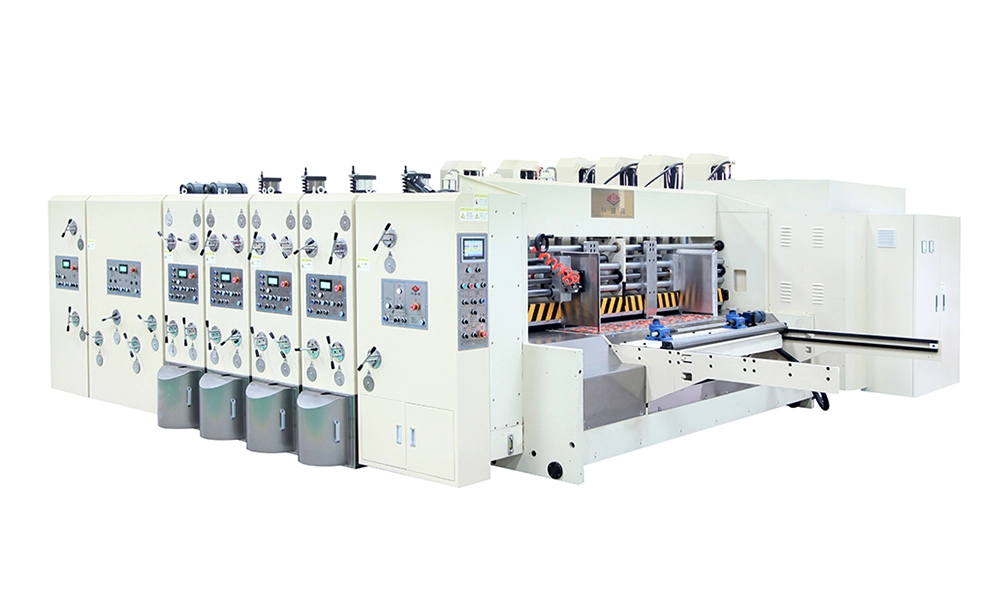
Computerzied Semi Auto Flexo Printing Slotting Die-Cutting Machine
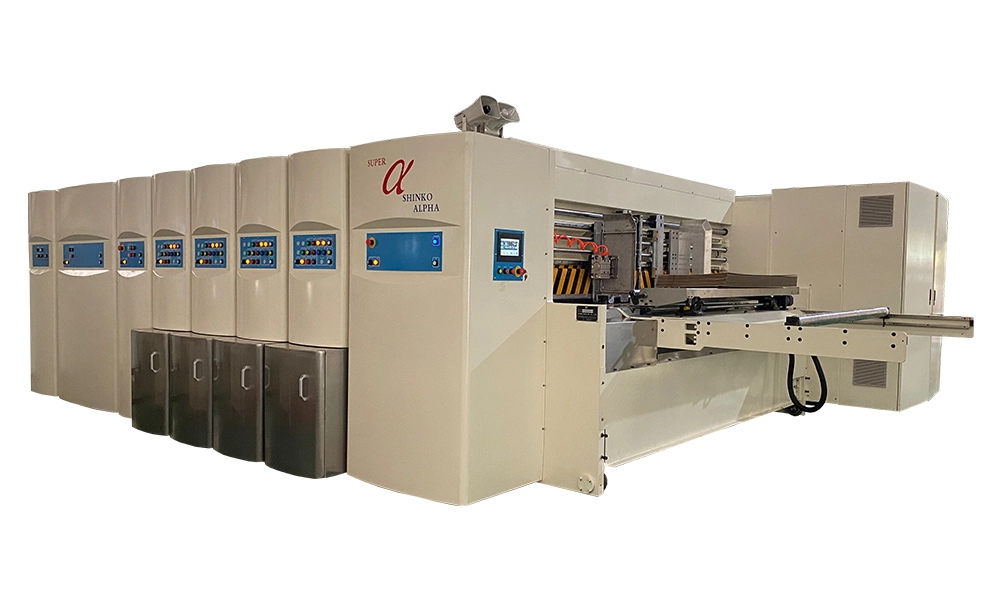
Shinko Super Alpha Movable Type Full Servo Drive Flexo Printing Slotting Die Cutting Machine
Introducing the Shinko Super Alpha Movable Type Full Servo Drive Flexo Printing Slotting Die Cutting Machine by Keshenglong. Engineered for precision and efficiency, this state-of-the-art machine enhances your production line with its advanced servo drive technology. Designed for seamless Flexo printing, slotting, and die-cutting, it ensures superior quality with every output.
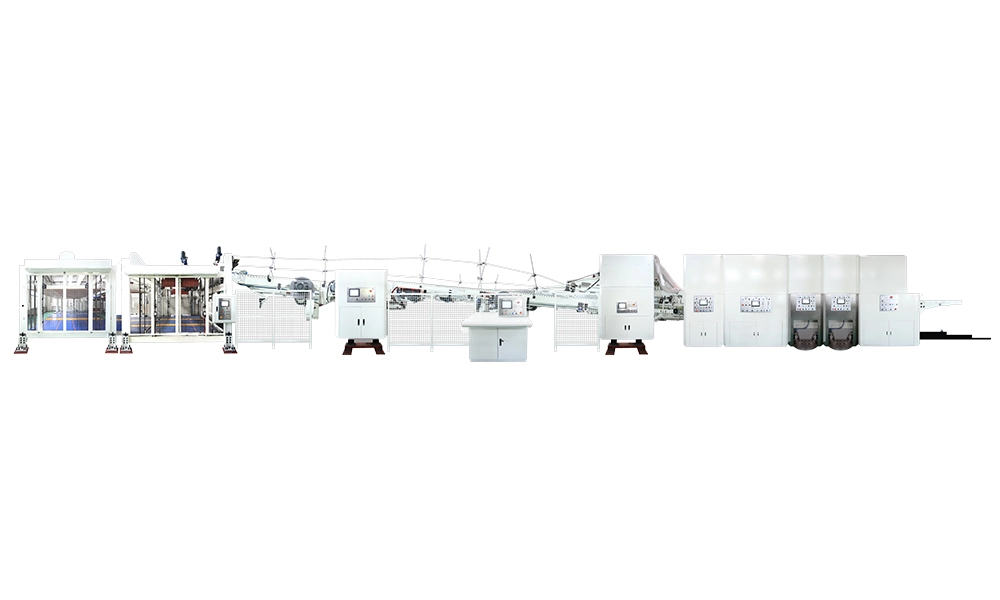
Jumbo Flexo Bottom Printing Slotting Die-Cutting Inline Folding Gluing Countering Ejecting Machine
Introducing the Keshenglong&Shinko Jumbo Flexo Bottom Printing Slotting Die-Cutting Inline Folding Gluing Countering Ejecting Machine. This advanced flexo printing slotting die-cutting machine ensures precision and efficiency for your packaging needs. Designed as a versatile flexo folder gluer machine, it optimizes every step from printing to ejecting, delivering seamless integration and superior quality.
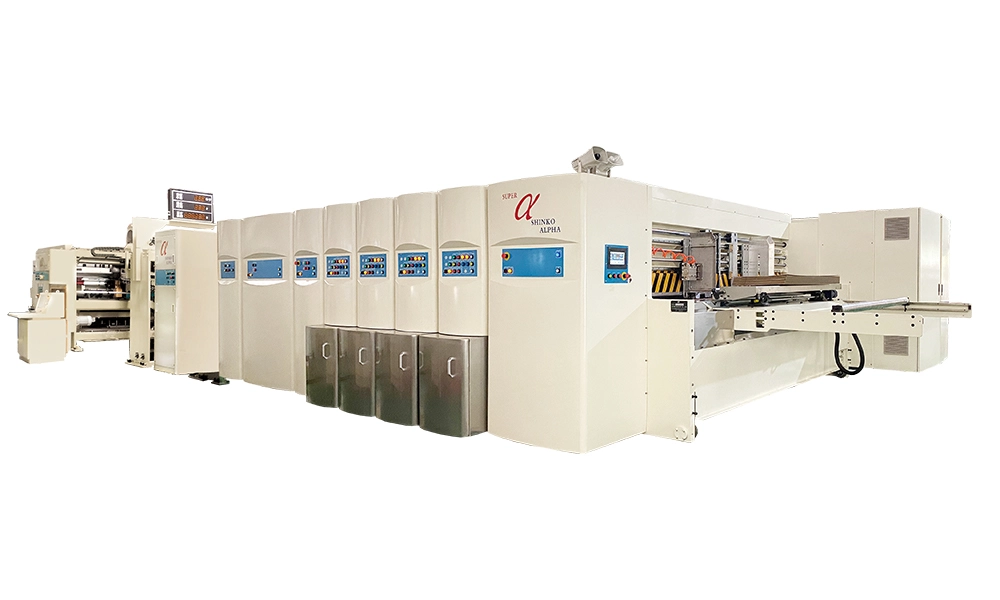
Shinko Super Alpha Movable Type Full Servo Drive Flexo Printing Slotting Die Cutting Inline Folding Gluing Counting Ejecting Machine
This state-of-the-art Movable Type Full Servo Drive Flexo Printing Slotting Die Cutting Machine streamlines your production with precision. Experience seamless operation with its Inline Folding Gluing Counting Ejecting capabilities, ensuring unparalleled efficiency. Designed for high-performance tasks, this Keshenglong&Shinko Super Alpha Movable Type Full Servo Drive Flexo Printing Slotting Die Cutting Inline Folding Gluing Counting Ejecting Machine enhances productivity while maintaining premium quality. Ideal for businesses seeking innovation and reliability, the Shinko Super Alpha is your go-to solution for advanced printing and cutting needs.


© 2025 Keshenglong & SHINKO All Rights Reserved.
Keshenglong Carton Packing Machine
Keshenglong Carton Packing Machine
Keshenglong Carton Packing Machine
Keshenglong Carton Packing Machine
Keshenglong Carton Packing Machine