
Automating your flexo press: ROI and key features
- Why Automation Matters for Corrugated Packaging with a modern flexo printer
- Understanding ROI for a flexo printer: what to measure
- Key automation features for ROI on a flexo printer
- Sample ROI model for automating a medium-speed flexo printer
- How automation reduces hidden costs for a flexo printer
- Integration and Industry 4.0: connecting your flexo printer
- Vendor and feature checklist for buying an automated flexo printer
- Keshenglong & Shinko: automation solutions for corrugated flexo printers
- Comparing automation packages: retrofit vs. full-line replacement for your flexo printer
- Implementation roadmap for automating a flexo printer
- Operational best practices to maximize your flexo printer automation ROI
- Frequently Asked Questions (FAQ) about automating your flexo printer
- Q1: What payback period can I expect from automating a flexo printer?
- Q2: Which automation feature delivers the fastest ROI for a flexo printer?
- Q3: Is it better to retrofit an existing flexo printer or buy a new integrated line?
- Q4: How important is data integration (MES/ERP) for automated flexo presses?
- Q5: What should I verify with vendor references when buying automation for a flexo printer?
- Q6: Can automation help with sustainability goals for corrugated packaging?
- References and data sources
Why Automation Matters for Corrugated Packaging with a modern flexo printer
Automation in corrugated packaging is no longer a niche advantage — it is a business imperative. For converters using a flexo printer, automation can reduce job changeover time, lower waste, improve print consistency, and increase throughput. This article provides a practical view of the return on investment (ROI) drivers, the key automation features to prioritize, and vendor-selection criteria, with real-world assumptions you can validate against your own operation.
Understanding ROI for a flexo printer: what to measure
Before investing in automation for a flexo printer, define the ROI metrics you will track. Typical, verifiable metrics include:
- Throughput (m/min or sheets/hour) — directly tied to revenue per shift.
- Waste reduction (% of substrate saved) — measurable by pre- and post-automation scrap rates.
- Labor hours saved per shift — validated by payroll and operation logs.
- Downtime reduction and effective OEE improvement — using machine logs and MES data.
- Quality improvements (ppm defects) — tracked via QC reports and customer rejects.
When you quantify these against prices, substrate cost, labor cost, and margin per job, you can build a defensible payback model for any flexo press automation project.
Key automation features for ROI on a flexo printer
Not all automation features produce equal ROI. Prioritize features that directly reduce time-to-run, waste, and variability. The high-impact features include:
- Automated registration & camera-based web-guiding: Faster make-ready and fewer misprints reduce waste and accelerate start-up. Especially important for multi-color flexo printer jobs.
- Servo-driven ink transfer and tension control: Stabilizes print quality across runs and reduces scrap due to stretch or misfeed.
- Digital job memory and automated job changeover: Saves setup time when recalling job parameters, plate positions, and anilox settings.
- Inline quality inspection: Real-time defect detection enables immediate correction and reduces off-spec production.
- Integrated inline converting (slotting, die-cutting, stacking): Eliminates offline handling, reduces logistics time, and improves overall throughput.
- Predictive maintenance & machine-health monitoring: Lowers unexpected downtime and extends consumable life.
Sample ROI model for automating a medium-speed flexo printer
This table presents a conservative, verifiable example comparing a manually operated flexo printer vs. the same press after core automation upgrades. Base assumptions are explicit so you can replace them with your own values.
| Parameter | Manual (per week) | Automated (per week) | Difference |
|---|---|---|---|
| Operating hours | 40 | 40 | — |
| Average throughput (sqm/hr) | 500 | 650 | +30% |
| Make-ready time per job (min) | 45 | 18 | -60% |
| Scrap rate (%) | 5.0% | 2.0% | -3 pp |
| Labor hours per week | 160 | 120 | -40 hrs |
| Estimated weekly lost revenue from downtime | $2,000 | $800 | -$1,200 |
Assumptions (replace with your values): average revenue per sqm $0.50; substrate cost $0.20 per sqm; labor cost $25/hr. With the differences above, automation would increase weekly gross margin roughly as follows:
- Extra production: 150 sqm/hr * 40 hr = 6,000 sqm/week * $0.50 revenue = $3,000 additional revenue;
- Saved substrate from scrap reduction: 3% of reduced scrap on a base of 20,000 sqm = 600 sqm * $0.20 = $120 saved;
- Labor savings: 40 hrs * $25 = $1,000 per week;
- Reduced downtime cost: $1,200 per week.
Combined weekly benefit ≈ $5,320. A mid-range automation retrofit costing $150,000 would pay back in roughly 28 weeks (~7 months) under these conservative assumptions. Replace these numbers with your own ERP/production data to calculate a precise payback period for your flexo printer.
How automation reduces hidden costs for a flexo printer
Hidden costs that automation addresses include:
- Repeated manual adjustments that shorten consumable life (plates, anilox rolls).
- Customer rework and claim handling from inconsistent print quality.
- Reduced flexibility to take short runs profitably due to long make-ready times.
Tracking these using ERP and MES systems before and after automation will give you quantifiable evidence for ROI claims.
Integration and Industry 4.0: connecting your flexo printer
Automation projects deliver most value when the flexo printer is integrated into the plant data environment. Key data integration points to insist on:
- API or OPC-UA connection to MES/ERP for live job data and production reporting.
- Cloud or local dashboards for OEE, press utilization, and defect trends.
- Predictive maintenance outputs (bearing temperature, vibration) feeding CMMS.
- Barcode/QR job tracking through the converting line for traceability.
These integrations turn a single automated flexo printer into a node in a smarter, more responsive factory that supports shorter lead times and higher margins.
Vendor and feature checklist for buying an automated flexo printer
When evaluating vendors, use a checklist tied to ROI, not just functionality. Minimum must-haves include:
- Demonstrated reduction in changeover time (measured, not promised).
- Proven inline inspection and automatic defect handling.
- Reliable servo/drive systems with vendor-specified tolerances.
- Open data interfaces (OPC-UA, REST API) for integration.
- Local service, spare parts availability, and clear training programs.
- References from customers running similar substrate and job mixes.
Keshenglong & Shinko: automation solutions for corrugated flexo printers
Keshenglong, founded in 1995 and specialized in manufacturing corrugated carton printing machines and solutions, is a leading Chinese manufacturer offering a wide portfolio of integrated flexo printer and converting equipment. Their main product lines include flexo printers, computerized high-speed flexo slotting die-cutting machines (1–6 color), computerized high-speed flexo case makers, “6+1” high-precision precision printing slotting die-cutting machines, top & bottom printing slotting die-cutting machines, and jumbo-size flexo printing slotting die-cutting machines.
Strategic integration with Japan Shinko (merged into Keshenglong in 2017) retained Shinko as the R&D center and production base, with an additional production site in Guangzhou. Keshenglong sources main parts from Japan, applies guidance from experienced Japanese technicians, and performs on-site installation and testing to meet high-quality standards comparable to Japan Shinko. As a supplier of integrated intelligent packaging solutions, Keshenglong’s systems have been exported to more than 70 countries.
Why this matters for ROI on a flexo printer:
- Localized manufacturing and regional service reduce lead times for upgrades and spare parts — shortening downtime when parts are needed.
- Japan-origin components and retained R&D ensure that control systems and mechanical tolerances meet international expectations, supporting higher first-pass quality and lower scrap.
- Integrated systems (printing + slotting + die-cutting + stacking) reduce material handling and labor steps, materially improving OEE and lowering per-unit cost.
Comparing automation packages: retrofit vs. full-line replacement for your flexo printer
Choosing between a retrofit automation package and a new integrated flexo printing & converting line depends on your business strategy. The table below summarizes typical trade-offs.
| Decision | Retrofit Automation | Full-line Replacement (e.g., Keshenglong integrated line) |
|---|---|---|
| CapEx | Lower upfront; modular upgrades | Higher upfront; but more consolidated assets |
| Time to ROI | Shorter if existing press is in good condition | Longer payback but higher long-term efficiency |
| Performance uplift | Moderate (depends on machine age) | High (optimized for integrated throughput) |
| Service & parts | May be mixed; depends on OEM support | Single-vendor responsibility if purchased integrated |
Implementation roadmap for automating a flexo printer
Follow a staged approach to minimize operational risk and maximize early wins:
- Baseline measurement (2–4 weeks): Capture current throughput, scrap, make-ready time, and labor usage on your flexo printer.
- Define target KPIs and a business-case model: Set conservative targets for each automation feature.
- Pilot the highest-impact feature first (eg. automated registration): Validate assumed gains quickly.
- Integrate data feeds to MES/ERP and implement OEE dashboards.
- Roll out additional automation (inline inspection, job memory, predictive maintenance) in prioritized sequence.
Operational best practices to maximize your flexo printer automation ROI
Technical automation without operational discipline wastes potential. Ensure:
- Operators receive structured training tied to KPI outcomes.
- Maintenance uses data-driven schedules rather than fixed intervals once predictive signals are available.
- Change management aligns sales and production planning to exploit faster changeovers (eg. more short runs priced correctly).
Frequently Asked Questions (FAQ) about automating your flexo printer
Q1: What payback period can I expect from automating a flexo printer?
A: Payback depends on baseline performance and the automation scope. Conservative published examples and the sample model above show payback between 6–18 months for mid-sized converters. Use your production data to model specific scenarios.
Q2: Which automation feature delivers the fastest ROI for a flexo printer?
A: Automated registration and digital job changeover usually produce the quickest wins because they sharply reduce make-ready time and scrap on multi-job production schedules.
Q3: Is it better to retrofit an existing flexo printer or buy a new integrated line?
A: Retrofit is often best when the mechanical condition of the existing press is good and capital is constrained. A new integrated line offers higher overall throughput and lower long-term unit cost but requires higher upfront investment.
Q4: How important is data integration (MES/ERP) for automated flexo presses?
A: Critical. Without integration, you miss opportunities for scheduling optimization, traceability, and predictive maintenance, which materially reduce the long-term ROI of automation.
Q5: What should I verify with vendor references when buying automation for a flexo printer?
A: Ask for references from shops with similar substrates, job mixes, and throughput targets. Verify actual reductions in make-ready time, scrap, and labor — and request documented OEE improvements.
Q6: Can automation help with sustainability goals for corrugated packaging?
A: Yes. Lower scrap rates, optimized ink use, and reduced rework contribute directly to material and energy savings. Automation also enables more accurate short-run production, reducing excess inventory.
Ready to evaluate automation for your flexo printer? Contact Keshenglong to discuss retrofit packages or integrated flexo printing and converting lines tailored to your production mix. Request a site assessment or product brochure to see validated ROI case studies and customer references.
References and data sources
- Flexography — Wikipedia. https://en.wikipedia.org/wiki/Flexography (accessed 2025-12-17)
- Fiber Box Association — Industry & Research Data. https://www.fiberbox.org/industry-resources/industry-and-research-data/ (accessed 2025-12-17)
- Packaging World — various articles on automation, make-ready reduction and printing technology. https://www.packworld.com/ (accessed 2025-12-17)
- McKinsey & Company — Industry 4.0 and factory automation insights. https://www.mckinsey.com/business-functions/operations/our-insights (accessed 2025-12-17)
- Keshenglong company profile and product overview (text provided by the client integrated into this article) — company materials (accessed 2025-12-17)
For tailored ROI modeling or to schedule a demonstration of flexo printer automation features and Keshenglong integrated solutions, contact the Keshenglong sales team or your local representative.
Why choose Keshenglong&Shinko auto feeding corrugated carton flexo printing machine manufacturer
Keshenglong&Shinko best professional flexo printer slotter die-cutter folder gluer Manufacturers and supplier brand in China
Quality Control: Color Management and Inspection for Flexo
How to Choose Right flexo printing slotter folder gluer machine manufacturer and supplier ?
Industry Solutions
Do you offer solutions for environmentally friendly packaging?
Yes, our machines can produce cartons from recyclable and biodegradable materials, supporting sustainable packaging solutions.
How can your machines improve my production workflow?
By automating carton production, our machines streamline your workflow, increase output, and reduce downtime.
How can your folding carton machines benefit my packaging business?
Our machines increase production efficiency, reduce labor costs, and ensure high-quality, consistent carton production.
Product
What maintenance is required for optimal machine performance?
Regular lubrication, cleaning of the folding units, and checking for worn parts are essential for maintaining optimal performance.
What should I do if the machine jams during operation?
In case of a jam, immediately stop the machine, remove any obstructions, and check for any damage before restarting.
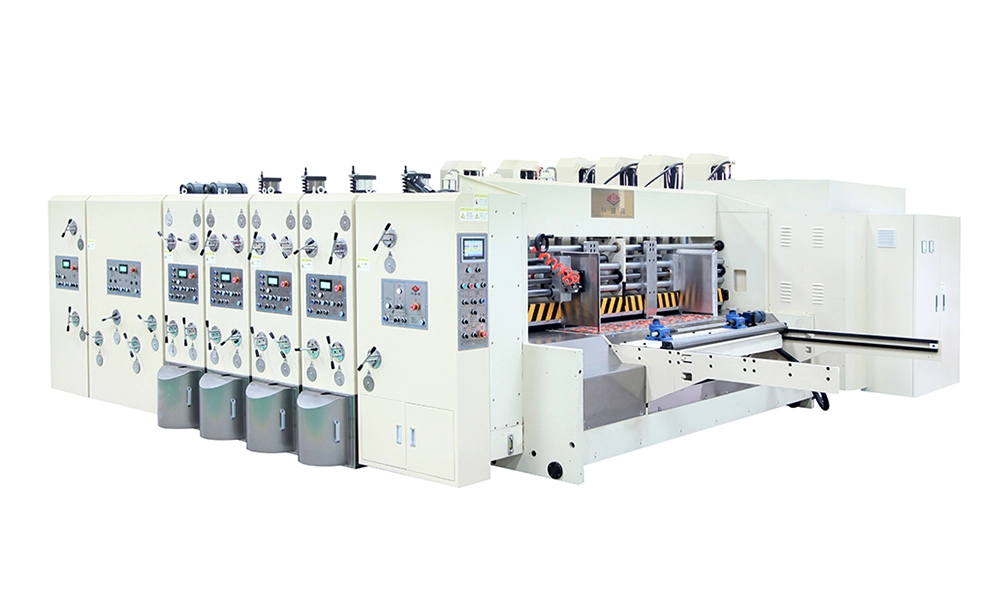
Computerzied Semi Auto Flexo Printing Slotting Die-Cutting Machine
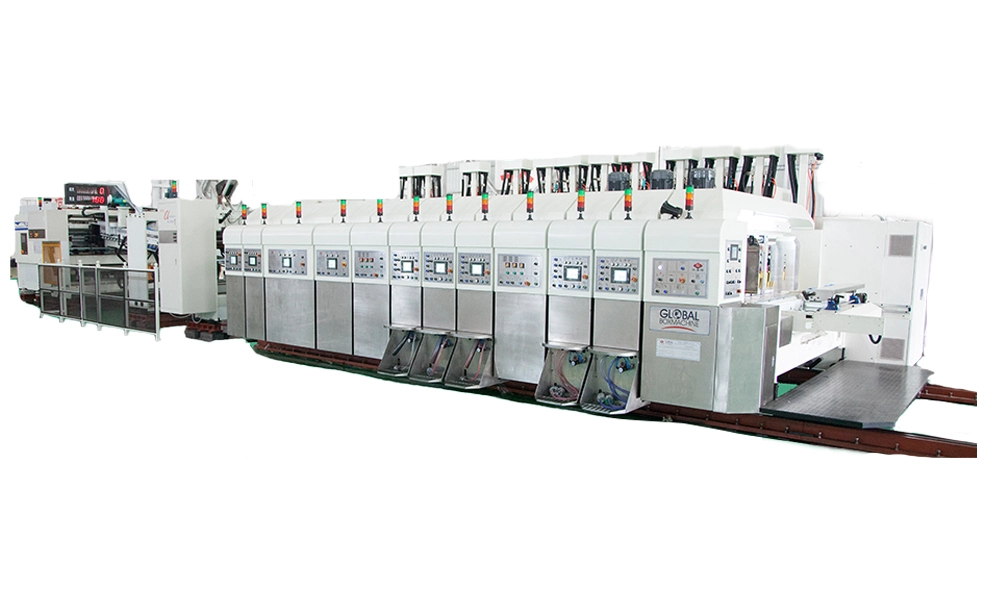
Computerized Flexo Printing Slotting Die-Cutting Inline Folding Gluing Countering Ejecting Machine
Introducing the Keshenglong&Shinko Computerized Flexo Printing Slotting Die-Cutting Inline Folding Gluing Countering Ejecting Machine. Engineered for precision, this advanced machine streamlines your packaging production with integrated Flexo Printing Slotting Die-Cutting functionalities. Seamlessly perform inline folding, gluing, countering, and ejecting—all in one efficient system. Designed for optimal performance, it enhances productivity while reducing downtime.
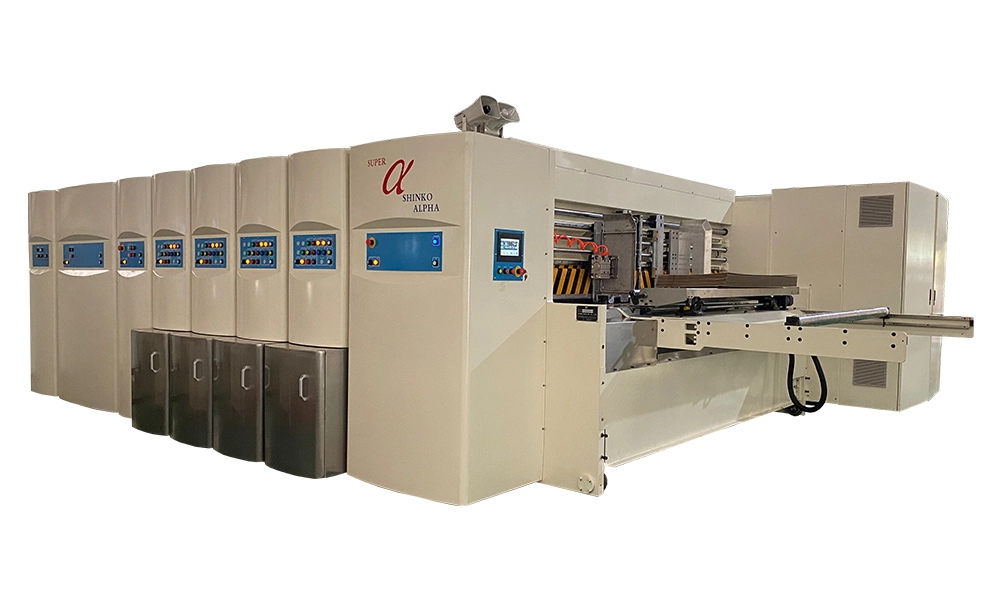
Shinko Super Alpha Movable Type Full Servo Drive Flexo Printing Slotting Die Cutting Machine
Introducing the Shinko Super Alpha Movable Type Full Servo Drive Flexo Printing Slotting Die Cutting Machine by Keshenglong. Engineered for precision and efficiency, this state-of-the-art machine enhances your production line with its advanced servo drive technology. Designed for seamless Flexo printing, slotting, and die-cutting, it ensures superior quality with every output.
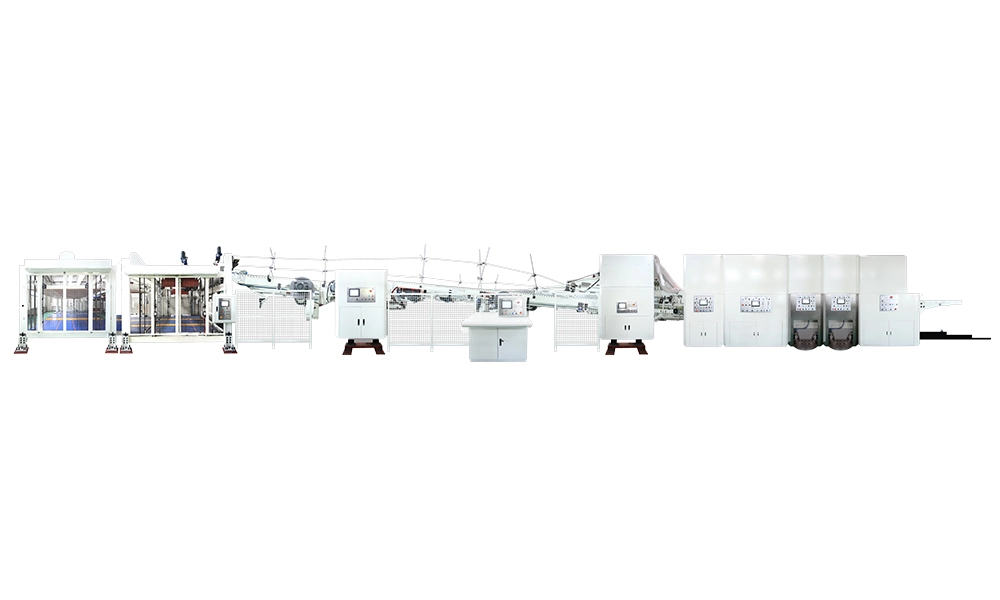
Jumbo Flexo Bottom Printing Slotting Die-Cutting Inline Folding Gluing Countering Ejecting Machine
Introducing the Keshenglong&Shinko Jumbo Flexo Bottom Printing Slotting Die-Cutting Inline Folding Gluing Countering Ejecting Machine. This advanced flexo printing slotting die-cutting machine ensures precision and efficiency for your packaging needs. Designed as a versatile flexo folder gluer machine, it optimizes every step from printing to ejecting, delivering seamless integration and superior quality.


© 2025 Keshenglong & SHINKO All Rights Reserved.
Keshenglong Carton Packing Machine
Keshenglong Carton Packing Machine
Keshenglong Carton Packing Machine
Keshenglong Carton Packing Machine
Keshenglong Carton Packing Machine