
After-Sales Support and Warranty for Flexo Printer Machines
- Understanding After-Sales Needs for Printing Equipment
- Why after-sales matters as much as machine specs
- Key stakeholders and their priorities
- Standards and industry guidance
- Warranty Types, Coverage & What to Negotiate
- Typical warranty types for flexo printer machines
- What a good warranty should explicitly cover
- Negotiable clauses to reduce risk
- Warranty comparison table
- Service Level Agreements (SLA) and Field Support Best Practices
- Designing meaningful SLAs
- Remote diagnostics and predictive maintenance
- Spare-part strategy and inventory
- Maintenance Programs, Training & Documentation
- Preventive vs predictive maintenance
- Operator and maintenance training
- Documentation and spare-parts lists
- Keshenglong & Shinko: After-Sales Strengths and Why It Matters
- How Keshenglong & Shinko approach after-sales
- When to choose a vendor like Keshenglong
- Cost-Benefit & Decision Framework
- Quantifying downtime and warranty value
- Checklist for procurement
- Example ROI scenario
- FAQ — Common Questions About After-Sales Support & Warranty for Flexo Printer Machines
- 1. What is typically not covered by a factory warranty?
- 2. How long should I keep spare parts on-site?
- 3. Can remote diagnostics reduce my SLA costs?
- 4. Are software updates covered under warranty?
- 5. How do I verify a supplier’s after-sales claims?
- 6. What are realistic SLA response times?
- 7. Should I buy an extended warranty right away?
- Final Thoughts and How I Can Help
I write from years of hands-on experience specifying, commissioning, and supporting flexo printer machines for corrugated carton production lines. After-sales support and warranty terms are often the decisive factors in total cost of ownership (TCO) and uptime for packaging operations. In this article I explain how warranties and service agreements for flexo printer machines typically work, which clauses to negotiate, how to measure SLA performance, and what preventive maintenance and spare-part strategies minimize unplanned downtime. I reference industry guidance and standards and show practical comparisons so you can make informed procurement and service decisions.
Understanding After-Sales Needs for Printing Equipment
Why after-sales matters as much as machine specs
When buyers evaluate a flexo printer machine, it’s natural to compare print quality, speed (m/min), and color capabilities. But the real business impact comes from availability: mean time between failures (MTBF), speed of repair, and cost of consumables and spare parts. A machine with excellent specs can still be costly if spare parts take weeks to arrive or field service visits are infrequent.
Key stakeholders and their priorities
From my experience, stakeholders include plant managers (uptime, yield), maintenance teams (spare parts, documentation), procurement (TCO), and finance (depreciation and warranty risk). Each wants different metrics; a robust after-sales program translates those into transparent SLAs, inventory plans, and predictable budgets.
Standards and industry guidance
Flexography as a technology is documented in public resources; see the overview on Flexography - Wikipedia. For quality and management systems, ISO 9001 provides a framework manufacturers use to ensure consistent production and service processes (ISO 9001). The Flexographic Technical Association (FTA) offers best practices and technical resources that I often reference when defining maintenance and operator training programs.
Warranty Types, Coverage & What to Negotiate
Typical warranty types for flexo printer machines
Manufacturers commonly offer a factory warranty (standard) and optional extended warranties or service contracts. Standard factory warranty duration is typically 12 months from commissioning, but this can vary. Extended packages can include multi-year coverage, advanced replacement of parts, or on-site preventive maintenance.
What a good warranty should explicitly cover
Insist on written terms that detail: parts coverage, labor, travel, turnaround time for major components, exclusions (consumables, wear items), and conditions (proper commissioning and operator training). Avoid vague phrases; request a Service Level Agreement (SLA) that sets measurable targets.
Negotiable clauses to reduce risk
- Response time and escalation matrix for critical failures.
- Spare parts consignment or guaranteed stock levels for critical items.
- On-site commissioning and training included in the warranty start.
- Performance acceptance tests (FAT/SAT) as a condition for warranty acceptance.
Warranty comparison table
| Coverage Type | Duration (typical) | Coverage | Response Time (SLA) | Best for |
|---|---|---|---|---|
| Standard Factory Warranty | 12 months | Major components; excludes routine wear/consumables | 48–72 hours | Short initial projects; low upfront cost |
| Extended Warranty | 2–5 years | Parts & labor for covered items; optional add-ons | 24–48 hours | High-utilization lines seeking predictability |
| Service Contract (SLA) | 1+ years (renewable) | Proactive maintenance, reduced response time, spare-part consignment | 4–24 hours (tiered) | Mission-critical operations |
Service Level Agreements (SLA) and Field Support Best Practices
Designing meaningful SLAs
A practical SLA should define: response time, fix time (where feasible), parts delivery targets, uptime targets, and penalties or service credits for missed targets. I recommend tiered response times: critical (production-stopping) incidents vs non-critical (degraded performance).
Remote diagnostics and predictive maintenance
Modern flexo printer machines increasingly include telemetry for remote diagnostics. Remote support reduces mean time to repair (MTTR) by enabling troubleshooting before a technician dispatch. Combining telemetry with scheduled condition-based maintenance can reduce unplanned downtime by identifying issues early—this aligns with best practices promoted by industry groups like the FTA (FTA).
Spare-part strategy and inventory
Stocking critical spares on-site or having a consignment stock with the supplier reduces downtime risk. Typical critical spares include drive belts, servo modules, print rollers, and electrical boards. I prefer a hybrid model: keep fast-moving consumables in-house and negotiate guaranteed lead times or consigned critical spares with the machine supplier.
Maintenance Programs, Training & Documentation
Preventive vs predictive maintenance
Preventive maintenance (scheduled intervals based on runtime) and predictive maintenance (condition-based, telemetry-driven) each have places. For high-speed corrugated flexo lines, I prioritize preventive maintenance aligned to manufacturer recommendations and back it up with predictive checks on bearings, motors, and ink systems.
Operator and maintenance training
Proper operator training reduces user errors that cause unnecessary warranty claims. A comprehensive training program should include: daily checks, basic troubleshooting, cleaning procedures, and correct setup for plate mounting and ink systems. Ensure training certificates are part of the commissioning package and retained as part of warranty compliance records.
Documentation and spare-parts lists
Ask for a clear spare-parts BOM (Bill of Materials) with part numbers, typical MTBF for major components, and an exploded parts manual. Documentation should include wiring diagrams, hydraulic/pneumatic schematics, and software/firmware versioning. This makes field repairs faster and prevents disputes about warranty coverage.
Keshenglong & Shinko: After-Sales Strengths and Why It Matters
Keshenglong, founded in 1995, is a leading manufacturer in China specializing in manufacturing corrugated carton printing and packaging machinery. Our main products include flexo printer machines, Computerized high-speed Flexo Slotting Die-Cutting machines (1-6 color), Computerized high-speed Flexo case makers, 6+1 high-precision Precision Printing Slotting Die-Cutting machines, Top & Bottom Printing Slotting Die-Cutting machines, and jumbo-size Flexo Printing Slotting Die-Cutting machines.
In 2017 Keshenglong merged with Japan Shinko: Japan Shinko remains as the R&D center and production base and we set up another production base in Guangzhou, China. Main parts are imported from Japan, instructed by experienced Japanese technicians, and installed and tested on-site to ensure quality up to the same standard as Japan Shinko.
As a supplier of integrated intelligent packaging solutions, Keshenglong has exported products to more than 70 countries. Our combined strengths mean quicker parts availability, bilingual service support, and a product line engineered to meet both Japanese precision and Chinese scale manufacturing.
Key competitive points I’ve verified through field deployments:
- Japanese-instructed R&D and production practices that raise assembly and QA standards.
- Imported critical components to maintain performance consistency across global installs.
- Multiple production bases enabling faster logistics and regional spare-part availability.
- Comprehensive product portfolio for corrugated carton lines allowing integrated solutions.
For inquiries or technical discussions, visit https://www.shinkomachinery.com/ or email kl@keshenglong.com.cn.
How Keshenglong & Shinko approach after-sales
In my interactions with their teams, Keshenglong emphasizes on-site commissioning, operator training, and clearly defined SLA options. They offer extended warranties and service contracts tailored to production intensity—important for plants running multiple shifts where uptime is critical.
When to choose a vendor like Keshenglong
If you need a corrugated carton flexo printing machine or integrated flexo printing & slotting solutions with demonstrable QA processes, Keshenglong’s combined Shinko lineage is compelling. Their footprint across 70+ countries also provides local references and spare-part pathways.
Cost-Benefit & Decision Framework
Quantifying downtime and warranty value
Calculate the cost of downtime per hour (lost production + labor + expedited parts + penalties). Compare that to the annualized cost of extended warranties or SLA fees. For high-throughput corrugated lines, even small reductions in downtime often justify higher service spend.
Checklist for procurement
- Request full SLA and warranty documents with measurable KPIs.
- Confirm spare-part lead times and options for consigned stock.
- Require commissioning, training, and acceptance test procedures.
- Ask for references from similar industries and operating conditions.
- Include software/firmware update terms and responsibilities.
Example ROI scenario
Imagine a plant where one hour of downtime costs $2,000. If an extended service plan costing $30,000/year reduces downtime by 20 hours annually (saving $40,000), the plan pays back and reduces risk. I recommend creating simple scenario models like this during procurement.
FAQ — Common Questions About After-Sales Support & Warranty for Flexo Printer Machines
1. What is typically not covered by a factory warranty?
Wear-and-tear items (doctor blades, belts, seals), consumables (inks, plates), damage from operator misuse, and unauthorized modifications are commonly excluded. Always check the exclusions section and keep training records to avoid disputes.
2. How long should I keep spare parts on-site?
Maintain at least 1–2 critical spares for high-failure-risk items (e.g., servo drivers, power modules) and a 3-month stock of consumables used daily. For mission-critical lines, negotiate consigned critical spares with the supplier.
3. Can remote diagnostics reduce my SLA costs?
Yes. Effective remote diagnostics can reduce dispatches and MTTR. Ask suppliers for remote-support capabilities as part of an SLA; ensure secure connectivity policies are in place.
4. Are software updates covered under warranty?
Basic firmware patches might be included for a warranty period, but major upgrades or new feature releases are often chargeable. Include update terms in the contract to avoid later disputes.
5. How do I verify a supplier’s after-sales claims?
Request field references, ask for SLA performance metrics from existing customers, and verify ISO 9001 or other quality certifications. Site visits and trial runs during FAT/SAT are invaluable.
6. What are realistic SLA response times?
Typical response targets: critical incidents within 4–24 hours (remote or on-site escalation), non-critical within 48–72 hours. Negotiate tiered response based on incident severity.
7. Should I buy an extended warranty right away?
Consider your utilization: if running multiple shifts or just-in-time production, an extended warranty or SLA is often justified. Evaluate via a downtime-cost model before deciding.
Final Thoughts and How I Can Help
After-sales support and warranty terms are not add-ons; they are central to the lifecycle value of a flexo printer machine. From my experience advising packaging operations, the right combination of commissioning, operator training, clear SLAs, and a sensible spare-parts strategy reduces risk and lowers TCO. When evaluating suppliers, insist on measurable SLAs, documented maintenance plans, and transparent spare-part logistics.
If you want to discuss a specific flexo printer machine procurement or get a second opinion on warranty and SLA documents, I welcome you to contact the manufacturer Keshenglong & Shinko: https://www.shinkomachinery.com/ or email kl@keshenglong.com.cn. Their product range includes corrugated carton flexo printing machines, flexo printing slotting die-cutting machines, flexo printing slotting die-cutting and stacker machines, and integrated corrugated box printing systems—built with Japanese-instructed quality and global service reach.
References and further reading: Flexography overview on Wikipedia, Flexographic Technical Association (FTA) https://www.flexography.org/, and ISO 9001 quality management https://www.iso.org/iso-9001-quality-management..
Contact us for a tailored warranty and service proposal that matches your production profile and risk tolerance.
Why choose Keshenglong&Shinko flexo printer slotter die-cutter machine manufacturer
Everything You Need to Know About flexo printer slotter machine for corrugated box
Improve Print Quality on Your Flexo Printing Machine: 10 Tips
What is Flex Printing Machine? Discover the Power of Keshenglong & Shinko
Product
What should I do if the machine jams during operation?
In case of a jam, immediately stop the machine, remove any obstructions, and check for any damage before restarting.
Can your machines handle custom carton designs?
Yes, our machines can be customized to handle various carton designs and specifications.
Are there safety features integrated into your machines?
Yes, our machines come equipped with multiple safety features including emergency stop buttons and safety guards.
Industry Solutions
How can your machines improve my production workflow?
By automating carton production, our machines streamline your workflow, increase output, and reduce downtime.
Shipping
What are the shipping costs for your folding carton machines?
Shipping costs depend on the destination, machine size, and shipping method. Contact us for a detailed quote.
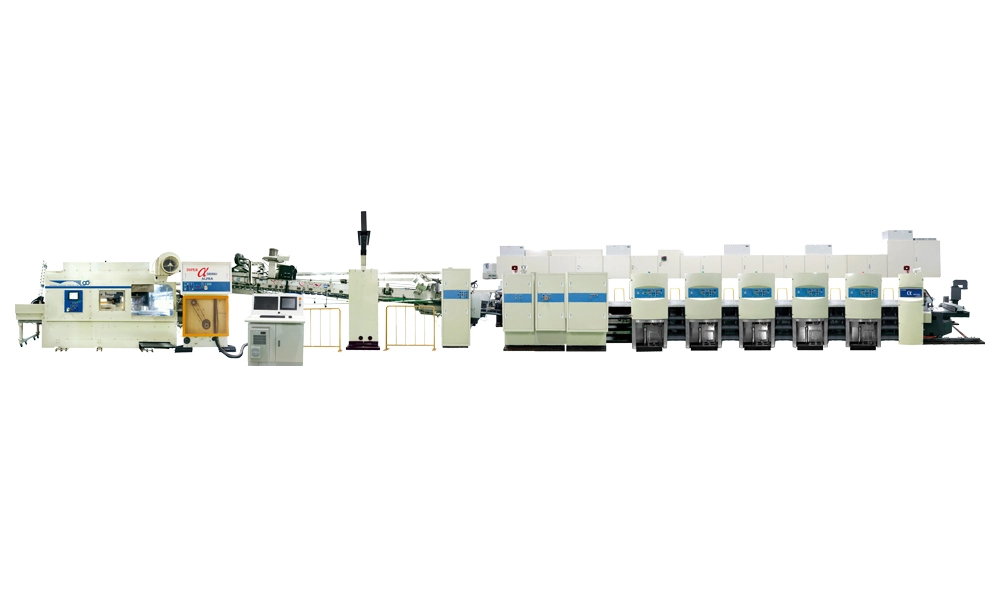
High-grade Full Automatic Flexo Printing Slotting Die Cutting Inline Folding Gluing and Countering Ejectoring Machine
Discover the Keshenglong&Shinko High-grade Full Automatic Flexo Printing Slotting Die Cutting Inline Folding Gluing and Countering Ejectoring Machine, the epitome of precision and efficiency. Ideal for modern packaging needs, this advanced machine streamlines operations by seamlessly integrating printing, slotting, die-cutting, folding, gluing, and ejecting processes. Elevate your production line with Keshenglong's innovative solution, designed to enhance productivity and deliver exceptional results.
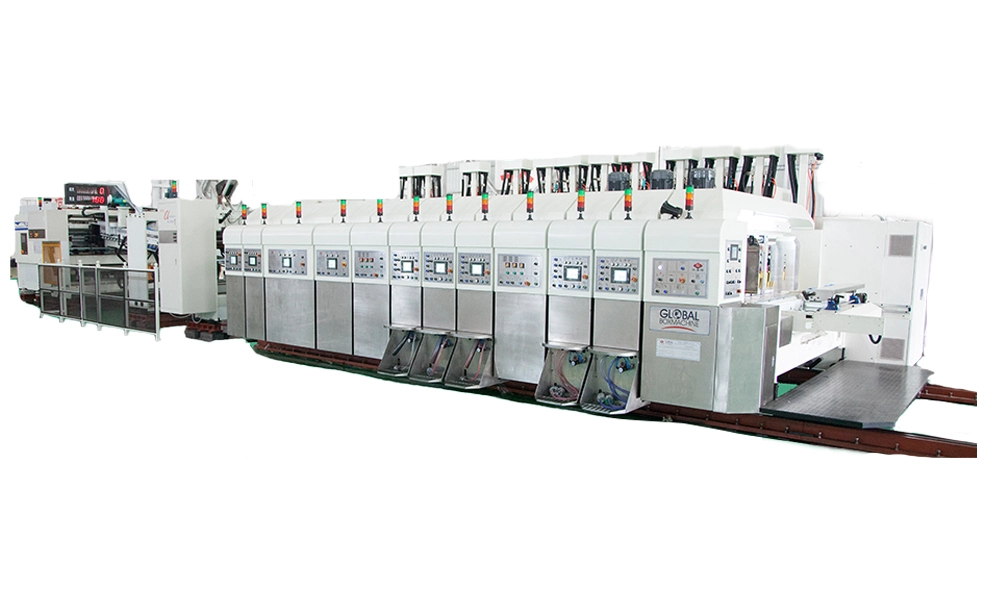
Computerized Flexo Printing Slotting Die-Cutting Inline Folding Gluing Countering Ejecting Machine
Introducing the Keshenglong&Shinko Computerized Flexo Printing Slotting Die-Cutting Inline Folding Gluing Countering Ejecting Machine. Engineered for precision, this advanced machine streamlines your packaging production with integrated Flexo Printing Slotting Die-Cutting functionalities. Seamlessly perform inline folding, gluing, countering, and ejecting—all in one efficient system. Designed for optimal performance, it enhances productivity while reducing downtime.
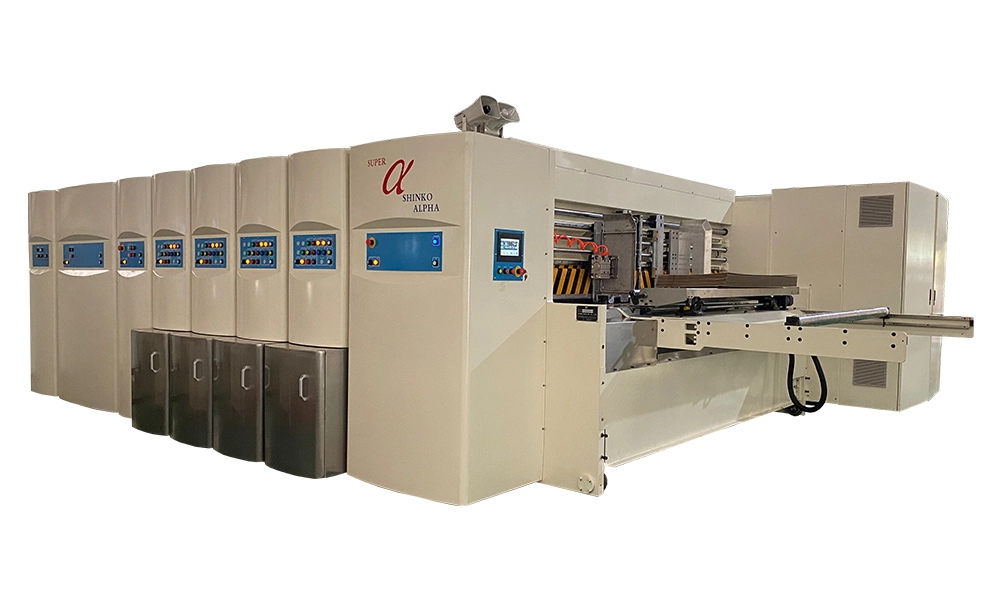
Shinko Super Alpha Movable Type Full Servo Drive Flexo Printing Slotting Die Cutting Machine
Introducing the Shinko Super Alpha Movable Type Full Servo Drive Flexo Printing Slotting Die Cutting Machine by Keshenglong. Engineered for precision and efficiency, this state-of-the-art machine enhances your production line with its advanced servo drive technology. Designed for seamless Flexo printing, slotting, and die-cutting, it ensures superior quality with every output.
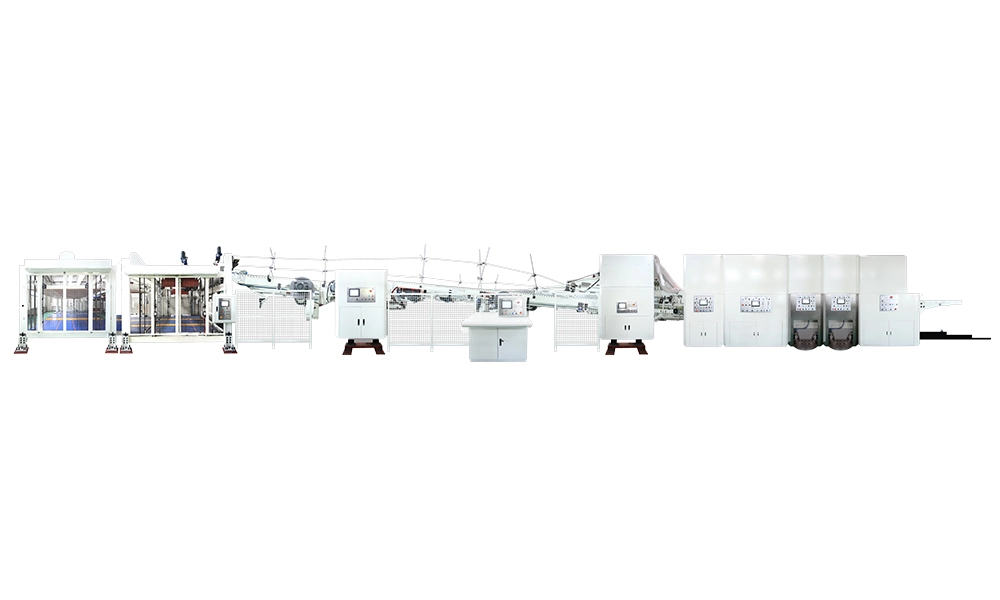
Jumbo Flexo Bottom Printing Slotting Die-Cutting Inline Folding Gluing Countering Ejecting Machine
Introducing the Keshenglong&Shinko Jumbo Flexo Bottom Printing Slotting Die-Cutting Inline Folding Gluing Countering Ejecting Machine. This advanced flexo printing slotting die-cutting machine ensures precision and efficiency for your packaging needs. Designed as a versatile flexo folder gluer machine, it optimizes every step from printing to ejecting, delivering seamless integration and superior quality.


© 2025 Keshenglong & SHINKO All Rights Reserved.
Keshenglong Carton Packing Machine
Keshenglong Carton Packing Machine
Keshenglong Carton Packing Machine
Keshenglong Carton Packing Machine
Keshenglong Carton Packing Machine