
Niche markets: short-run personalization on a printing machine flexo
- Market drivers for short-run personalization
- Why brands demand short runs and personalization
- What defines a viable niche production run
- Where short runs deliver maximum ROI
- Technical requirements for printing machine flexo in short runs
- Machine features that matter
- Plates, sleeves, and prepress workflow
- Inks, substrates and curing considerations
- Operational workflows and cost models
- Integrating variable data and personalization
- Estimating costs: makeready, run, and overhead
- Quality control and inspection
- Practical implementation: case studies and configurations
- Configuration A: Hybrid flexo + inkjet for regional campaigns
- Configuration B: Short-run cartons with quick sleeve changeover
- Performance metrics to monitor
- Keshenglong & Shinko: supplier capabilities for corrugated carton flexo
- Why supplier choice matters
- About Keshenglong & Shinko
- Competitive advantages and technical strengths
- Decision checklist: is flexo right for your short-run personalization?
- Key questions to evaluate
- When to choose flexo (and when not to)
- Implementation tips I recommend
- FAQ
- 1. Can a flexo printer handle true per-piece personalization?
- 2. What minimum run length makes a flexo short-run economical?
- 3. How fast can a flexo press change plates for different personalized designs?
- 4. Are UV inks recommended for short-run personalized corrugated boxes?
- 5. How do I choose between buying a new flexo press or outsourcing to a converter?
- Contact and next steps
As someone who has worked with packaging brands, converters and OEMs for decades, I often get asked whether a printing machine flexo can realistically handle short-run personalization for niche markets. The short answer: yes — when you choose the right machine configuration, inks, plate system, and production workflow. In this article I summarize actionable approaches to make short-run personalized corrugated packaging profitable, explain the technical constraints and trade-offs, compare flexo with alternative technologies, and show how an experienced supplier ecosystem (such as Keshenglong & Shinko) addresses these challenges.
Market drivers for short-run personalization
Why brands demand short runs and personalization
Brands pursue short-run personalization to increase relevance, improve shelf impact, and run regionally targeted campaigns without oversized inventory. Personalized packaging drives higher perceived value and conversion rates in promotions, direct-to-consumer launches, and limited editions. According to industry observers, consumer demand for customization and rapid product cycles has pushed packaging buyers to seek manufacturing flexibility — a trend evident across FMCG, e-commerce, and High Quality segments (Flexography - Wikipedia).
What defines a viable niche production run
For corrugated carton converters, a viable short run depends on changeover time, makeready costs, and unit economics. Runs from a few hundred to several thousand cartons can be profitable if plate change times, ink setup, and die-cutting are optimized. My rule of thumb: if you can reduce makeready and set up per-job overhead to a predictable, low figure, short-run personalization becomes scalable and repeatable.
Where short runs deliver maximum ROI
Short-run personalization is most effective for regional promotions, seasonal SKUs, e-commerce inserts, and limited collections. For applications that require variable text, batch-specific numbering, or discrete graphics per location, flexo combined with digital or hybrid workflows often delivers the best balance of speed, color fidelity, and cost.
Technical requirements for printing machine flexo in short runs
Machine features that matter
Not all flexo printers were designed for short-run personalization. Critical features include quick-change plate cylinders, servo-driven registers, in-line varnish/UV curing, and efficient unwinder/rewinder systems. A flexo printer with modular stations (1–6 color) and precise web handling reduces waste and shortens makeready.
Plates, sleeves, and prepress workflow
Choosing plate technology (photopolymer plates vs. polymer sleeves) greatly affects setup time. Sleeve systems, quick-mount plate carriers, and standardized mounting jigs reduce plate-change time to minutes rather than hours. Effective prepress automation (job imposition, colour separation, variable data imposition) is equally important to lower costs for personalized jobs.
Inks, substrates and curing considerations
Ink selection impacts drying time, ink transfer, and print quality on corrugated board. Water-based flexo inks, UV inks and hybrid systems each have trade-offs: UV offers faster curing and vibrant solids (beneficial for small runs), while water-based systems can be preferable for sustainability-conscious brands. Inline UV curing and top/bottom printing options expand personalization possibilities, especially for double-sided graphics on folding cartons and corrugated cases.
Operational workflows and cost models
Integrating variable data and personalization
Personalization can be implemented via pre-printed personalized liners, in-line variable printing (e.g., using narrow-web inkjet head integration), or post-print finishing (label application or digital print overlays). For many corrugated jobs I recommend a hybrid approach: base graphics printed on a flexo printer (for cost-effective solids and screening) while variable elements — codes, names, regional copy — are applied using an in-line digital or retrofit inkjet module.
Estimating costs: makeready, run, and overhead
Cost per unit in short runs is influenced most by makeready and setup labor. Below is a comparative table showing typical operational factors for flexo vs digital and offset for corrugated personalization. The qualitative values reflect typical trade-offs; adjust numbers to your local cost base.
| Attribute | Flexo (modern press) | Digital (inkjet/toner) | Offset |
|---|---|---|---|
| Makeready time | Low–Medium (with quick-change systems) | Very low (immediate) | High |
| Unit cost (small runs) | Medium | High–Medium | Low (for large runs) |
| Color fidelity / solids | Excellent (solids, varnish) | Good–Improving | Excellent |
| Variable data capability | Needs hybrid integration | Native (variable per piece) | Limited |
| Best use case | Short–medium runs with strong solids and varnish | Ultra-short runs / true personalization | Large-volume repeat jobs |
Sources noting the strengths of flexography for corrugated board include the Flexography overview (Wikipedia: Flexography) and industry association resources (FEFCO).
Quality control and inspection
Inline color control (closed-loop spectrophotometers), automatic register correction and web inspection cameras are essential when frequent short runs occur. These systems reduce waste, detect defects early, and ensure consistency across batches — critical if each batch is personalized and must match brand expectations.
Practical implementation: case studies and configurations
Configuration A: Hybrid flexo + inkjet for regional campaigns
I worked on a project where the main imagery and brand colors were printed on a 4-color flexo corrugated press; a narrow-web inkjet module applied regional text and unique QR codes inline. The result: high-quality solids from flexo combined with true per-unit personalization — makeready minimized and overall cost per personalized piece competitive against full digital runs.
Configuration B: Short-run cartons with quick sleeve changeover
For promotional cartons requiring frequent motif changes, a sleeve-based flexo system with quick-mount carriers reduced changeover to under 20 minutes. When combined with pre-matched ink recipes and color profiles, the production line achieved tight color tolerances across runs of 2,000–5,000 cartons.
Performance metrics to monitor
Track makeready minutes, waste percentage, units per hour, and color deviation (ΔE). A continuous improvement loop — using these KPIs — enables you to push the break-even point of personalization lower with each iteration.
Keshenglong & Shinko: supplier capabilities for corrugated carton flexo
Why supplier choice matters
Selecting a supplier that understands both mechanical design and regional production realities is crucial. Machine tolerances, electrical control systems, imported components and on-site commissioning all affect uptime and long-run quality. A supplier with proven export experience and strong R&D will shorten your learning curve.
About Keshenglong & Shinko
Keshenglong, founded in 1995, specializes in corrugated carton printing machines and integrated packaging solutions. After merging with Japan Shinko in 2017, Keshenglong retained Shinko as the R&D center and production base, and established a second production base in Guangzhou, China. Main parts are imported from Japan, production is instructed by experienced Japanese technicians, and machines are installed and tested on-site to meet rigorous quality standards.
Their main product lines include flexo printer, Computerized high-speed Flexo Slotting Die-Cutting machines (1–6 color), Computerized high-speed Flexo case makers, 6+1 high-precision Precision Printing Slotting Die-Cutting machines, Top & Bottom Printing Slotting Die-Cutting machines, and jumbo-size Flexo Printing Slotting Die-Cutting machines. As a supplier of integrated intelligent packaging solutions, Keshenglong's products have been exported to more than 70 countries.
Competitive advantages and technical strengths
Keshenglong & Shinko combine Japanese R&D discipline with Chinese manufacturing scale. Key advantages: imported precision parts, on-site Japanese technical guidance, modular press configurations suitable for short-run personalization, and integrated slotting/die-cutting that reduces handling and waste. For converters looking to add short-run personalized lines, these features shorten setup time and increase first-pass yield.
For more information, visit the company website: https://www.shinkomachinery.com/ or contact via email: kl@keshenglong.com.cn.
Decision checklist: is flexo right for your short-run personalization?
Key questions to evaluate
- What is your typical run length and acceptable unit cost?
- Do you require full per-piece variable data or batch-level personalization?
- How critical are heavy solids, varnish effects, or tactile finishes?
- Can your operations invest in inline inspection and quick-change tooling?
When to choose flexo (and when not to)
Choose a modern printing machine flexo when you need consistent solids, varnish capabilities, and medium-short runs where makeready can be amortized. Consider digital if every single item requires unique content or when run lengths are extremely small and cost per piece from digital is acceptable.
Implementation tips I recommend
- Start with hybrid pilot projects that combine flexo base printing and digital personalization.
- Invest in quick-mount sleeves and standardized ink recipes to cut makeready time.
- Use inline inspection and color control to minimize waste and ensure repeatability.
- Work closely with your machine OEM (e.g., Keshenglong & Shinko) for on-site commissioning and staff training.
FAQ
1. Can a flexo printer handle true per-piece personalization?
Not natively. Pure flexo is optimized for repeated imagery. For true per-piece personalization you should deploy a hybrid setup — flexo for the base graphics and an in-line or near-line digital inkjet module for variable data (names, codes, regional text). This balances cost and print quality.
2. What minimum run length makes a flexo short-run economical?
It depends on your makeready and labor costs. With modern quick-change systems, runs of 1,000–5,000 pieces can be economical for many corrugated jobs. Use the KPIs (makeready minutes, waste %, units/hour) to calculate your break-even point.
3. How fast can a flexo press change plates for different personalized designs?
With sleeve systems and quick-mount carriers, changeovers can be reduced to under 20 minutes. Traditional plate mounting may take longer. Investing in mounting aids and trained operators makes a big difference.
4. Are UV inks recommended for short-run personalized corrugated boxes?
UV inks cure instantly and provide vibrant solids, making them a good choice when fast throughput and strong color are priorities. However, evaluate substrate compatibility and environmental/sustainability requirements; water-based solutions may be preferred in some markets.
5. How do I choose between buying a new flexo press or outsourcing to a converter?
Consider volume consistency, desired control over quality/scheduling, and capital availability. If you have frequent short-run personalization needs and can amortize investment, purchasing a flexible flexo press (with hybrid capabilities) can be strategic. Otherwise, partner with a local converter — ideally one using modern flexo machines with hybrid personalization capabilities.
Contact and next steps
If you are evaluating printing machine flexo options for short-run personalization, I recommend a technical audit of your current workflow and a pilot project. Keshenglong & Shinko offer modular flexo printers and integrated slotting/die-cutting solutions well-suited for this purpose. Explore product lines and request a consultation at https://www.shinkomachinery.com/ or contact them directly at kl@keshenglong.com.cn.
Summary of Keshenglong & Shinko advantages: established since 1995, Japanese R&D integration, imported precision parts, modular corrugated carton flexo printing machines, flexo printing slotting die-cutting machines, and end-to-end intelligent packaging solutions exported to 70+ countries. Their product range includes corrugated carton flexo printing machine, flexo printing slotting die-cutting and stacker machine, flexo printer, corrugated box printing machine — well-positioned for converters targeting niche personalized runs.
If you'd like, I can prepare a short-run feasibility checklist tailored to your operation (including estimated makeready, expected waste, and suggested machine configurations). Email me the basic specs or contact Keshenglong & Shinko to schedule a demo.
Why choose Keshenglong&Shinko 4 colors flexo printer slotter machinery manufacturer
Prepress Workflow for Corrugated Box Printing
Top 5 flexo machine printing Company List and Products Compared
Top 10 flexo folder gluer machine Manufacturers and Supplier Brands
Shipping
Can you ship to remote or difficult-to-access locations?
Yes, we can arrange shipping to remote locations, though additional charges and time may apply.
Industry Solutions
What industries typically use your folding carton machines?
Our machines are used in various industries including food and beverage, pharmaceuticals, cosmetics, and electronics.
Product
Are there safety features integrated into your machines?
Yes, our machines come equipped with multiple safety features including emergency stop buttons and safety guards.
How can I integrate your machines into my existing production line?
Our technical team can assist with integrating our machines into your current production setup, ensuring a seamless operation.
What materials are compatible with your folding carton machines?
Our machines are compatible with a wide range of materials including cardboard, corrugated board, and paperboard.
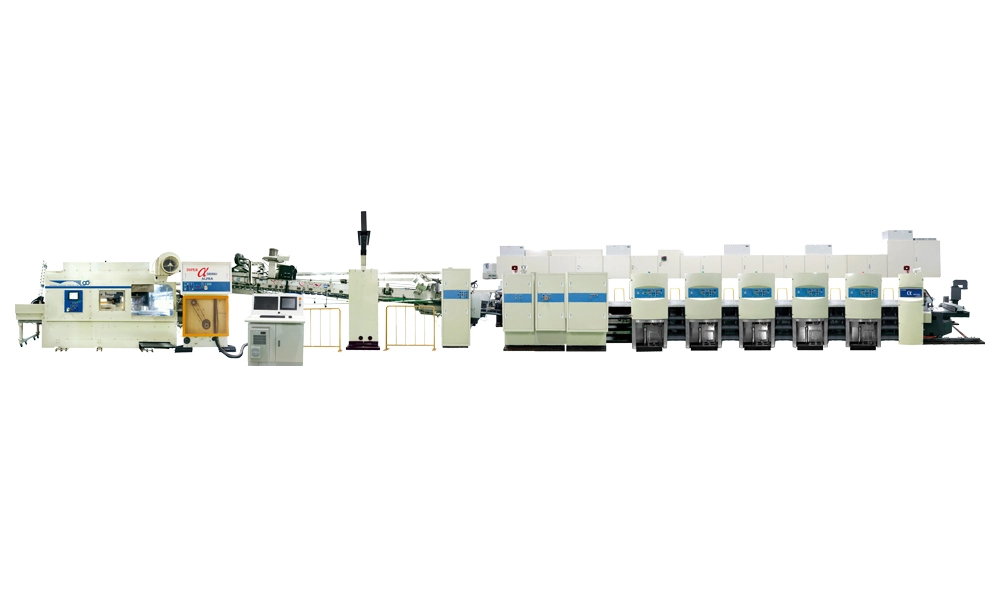
High-grade Full Automatic Flexo Printing Slotting Die Cutting Inline Folding Gluing and Countering Ejectoring Machine
Discover the Keshenglong&Shinko High-grade Full Automatic Flexo Printing Slotting Die Cutting Inline Folding Gluing and Countering Ejectoring Machine, the epitome of precision and efficiency. Ideal for modern packaging needs, this advanced machine streamlines operations by seamlessly integrating printing, slotting, die-cutting, folding, gluing, and ejecting processes. Elevate your production line with Keshenglong's innovative solution, designed to enhance productivity and deliver exceptional results.
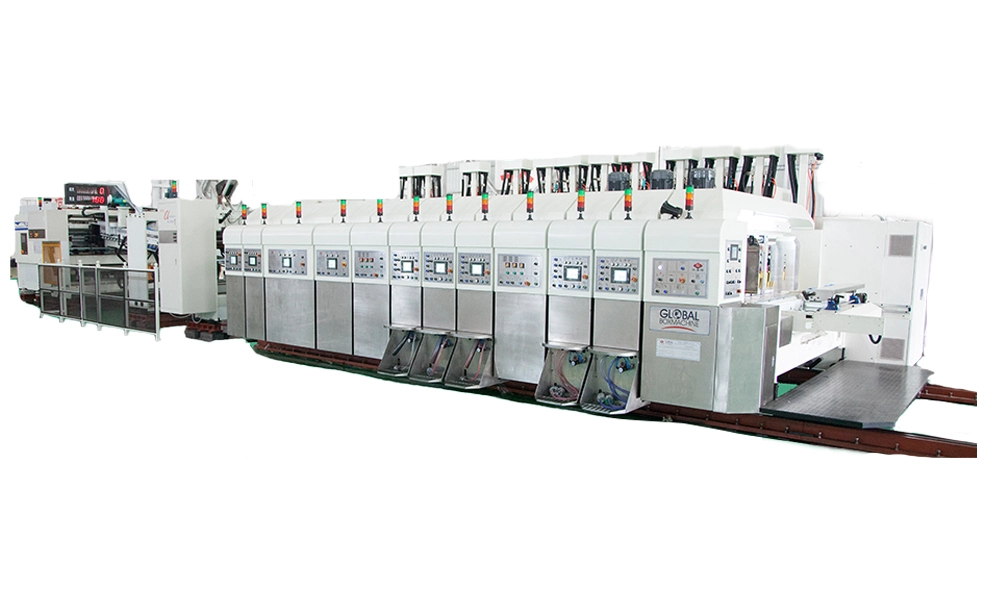
Computerized Flexo Printing Slotting Die-Cutting Inline Folding Gluing Countering Ejecting Machine
Introducing the Keshenglong&Shinko Computerized Flexo Printing Slotting Die-Cutting Inline Folding Gluing Countering Ejecting Machine. Engineered for precision, this advanced machine streamlines your packaging production with integrated Flexo Printing Slotting Die-Cutting functionalities. Seamlessly perform inline folding, gluing, countering, and ejecting—all in one efficient system. Designed for optimal performance, it enhances productivity while reducing downtime.
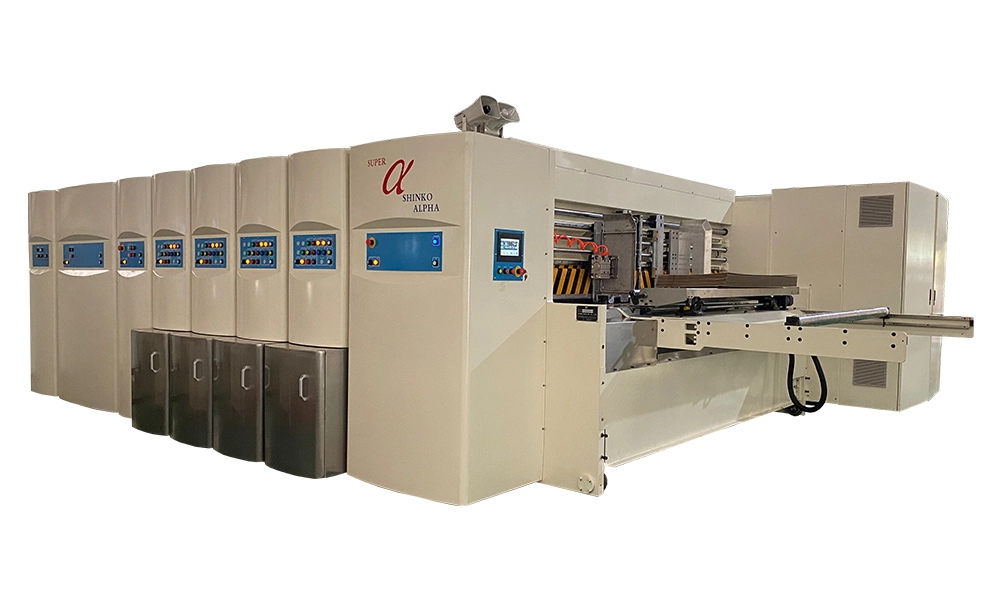
Shinko Super Alpha Movable Type Full Servo Drive Flexo Printing Slotting Die Cutting Machine
Introducing the Shinko Super Alpha Movable Type Full Servo Drive Flexo Printing Slotting Die Cutting Machine by Keshenglong. Engineered for precision and efficiency, this state-of-the-art machine enhances your production line with its advanced servo drive technology. Designed for seamless Flexo printing, slotting, and die-cutting, it ensures superior quality with every output.
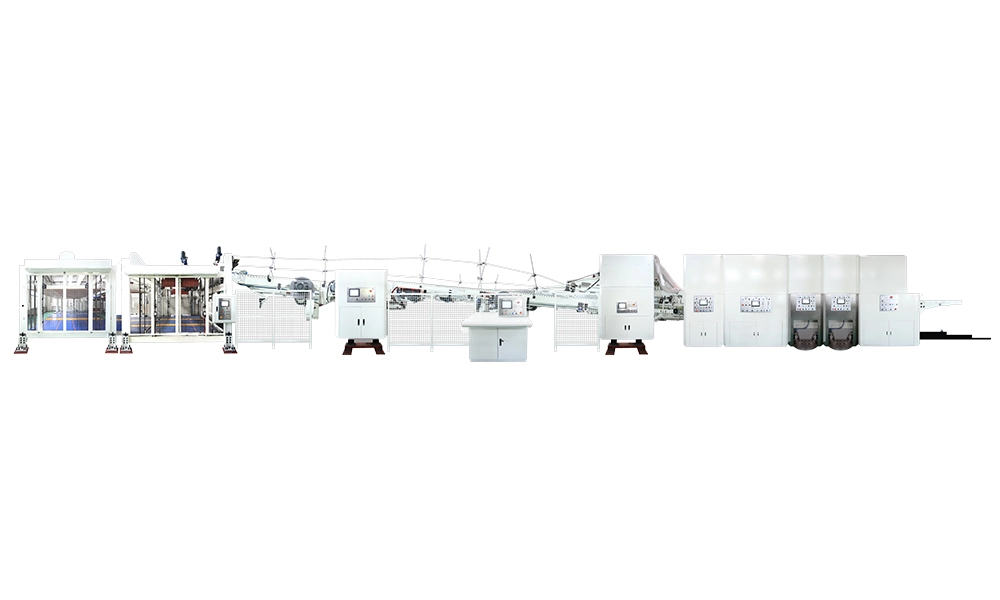
Jumbo Flexo Bottom Printing Slotting Die-Cutting Inline Folding Gluing Countering Ejecting Machine
Introducing the Keshenglong&Shinko Jumbo Flexo Bottom Printing Slotting Die-Cutting Inline Folding Gluing Countering Ejecting Machine. This advanced flexo printing slotting die-cutting machine ensures precision and efficiency for your packaging needs. Designed as a versatile flexo folder gluer machine, it optimizes every step from printing to ejecting, delivering seamless integration and superior quality.


© 2025 Keshenglong & SHINKO All Rights Reserved.
Keshenglong Carton Packing Machine
Keshenglong Carton Packing Machine
Keshenglong Carton Packing Machine
Keshenglong Carton Packing Machine
Keshenglong Carton Packing Machine