
Using a printing machine flexo for folding cartons — tips for converters
- Why flexo remains the top choice for corrugated folding cartons
- Speed, substrate versatility, and economics
- Quality improvements over the last decade
- Sustainability and materials compatibility
- Setting up your printing machine flexo for folding cartons
- Selecting the right press configuration
- Consumables: plates, anilox rolls, and inks
- Registration and tension control
- Common production challenges and how to solve them
- Ink transfer issues and mottling
- Registration drift across long runs
- Die-cutting and slotting accuracy
- Choosing equipment and supplier — practical comparisons
- Key decision criteria for converters
- Comparative table: press features and typical benefits
- Why service, parts, and R&D relationships matter
- Keshenglong & Shinko: a practical partner for corrugated flexo solutions
- Company capabilities and product range
- Competitive differentiators and global footprint
- How to evaluate if Keshenglong suits your needs
- Operational checklist: before you run a new job
- Prepress and artwork checks
- Mechanical readiness
- Operator training and KPIs
- Frequently Asked Questions (FAQ)
- 1. Is flexo suitable for short runs of folding cartons?
- 2. How do I reduce dot gain on corrugated substrates?
- 3. What maintenance prevents registration drift?
- 4. Can slotting and die-cutting be fully inline with a flexo press?
- 5. How important is an R&D-backed supplier?
- 6. What environmental considerations should converters keep in mind?
- Final thoughts and contact
In this article I summarize practical, actionable strategies for converters who want to maximize throughput, quality, and profitability when using a printing machine flexo for folding cartons. I draw on hands-on experience running high-speed corrugated carton production, published industry guidance, and vendor-grade engineering know-how to explain setup, consumables, press settings, troubleshooting, and procurement considerations. The goal is to give you a checklist and decision framework you can apply on the shop floor or in CAPEX evaluation.
Why flexo remains the top choice for corrugated folding cartons
Speed, substrate versatility, and economics
Flexographic printing using a printing machine flexo is designed for high-speed, long-run corrugated production. Compared with gravure or digital for bulk carton work, flexo offers a favorable balance of ink cost, plate life, and line speed that converters need. In my experience, a well-tuned corrugated flexo press will sustain productive speeds while keeping per-unit ink and plate costs low, especially on runs over several thousand sheets.
Quality improvements over the last decade
Modern flexo printer platforms, improved anilox engineering, laser-engraved ceramic rolls, and better plate materials have significantly reduced historical drawbacks like haloing and dot gain. Industry bodies such as the Flexographic Technical Association provide guidance and best practices to help converters reach consistent color and registration (see the FTA resources: https://flexography.org/).
Sustainability and materials compatibility
Flexo inks and water-based systems have evolved, enabling better adhesion on corrugated substrates and reduced VOC emissions. This benefits converters pursuing sustainable packaging programs and compliance with customer environmental requirements.
Setting up your printing machine flexo for folding cartons
Selecting the right press configuration
Choose a corrugated carton flexo printing machine that matches your product mix. For many converters, a 1-6 color flexo printer with inline slotting and die-cutting (flexo printing slotting die-cutting machine) offers the best balance of functionality and footprint. If you handle short-to-medium runs with frequent SKU changes, prioritize quick makeready features like tool-less plate mounting and fast anilox changers.
Consumables: plates, anilox rolls, and inks
Plate choice and modern laser-engraved anilox rolls are critical to control transfer and minimize dot gain. I recommend:
- Laser-engraved ceramic anilox rolls sized to the ink coverage—higher LPI anilox for fine solids and lower LPI for heavier laydowns.
- Photopolymer plates with proven dimensional stability for corrugated substrates.
- Water-based flexo inks formulated for corrugated absorption and fast drying.
Matching anilox cells to plate capability and ink rheology reduces mottling and improves tone reproduction. The Flexographic Technical Association publishes best practices that I use as a baseline for specifying anilox cell volumes (FTA).
Registration and tension control
Registration on corrugated is inherently challenging due to board swelling and variable caliper. Key controls: maintain consistent web or board tension, use servo-driven register systems, and integrate inline optical systems (cameras) to correct cross-register dynamically. For folder-gluers and stackers, proper buffer and lane balancing minimize skew entering the cutting/slotting units.
Common production challenges and how to solve them
Ink transfer issues and mottling
Mottling often stems from incorrect anilox selection, inappropriate ink viscosity, or uneven plate contact. My troubleshooting checklist:
- Confirm anilox cell volume matches the expected ink film thickness for the artwork.
- Measure ink viscosity on press and adjust with manufacturer-recommended solvents or additives—avoid guesswork.
- Inspect plate mounting uniformity and doctor blade alignment if present on the unit.
Registration drift across long runs
Registration drift can result from thermal expansion, humidity changes, or mechanical slippage. I recommend:
- Shorter heat zones or staged drying to reduce differential expansion.
- Periodic inline camera checks and automatic register correction to maintain cross-web alignment.
- Plan scheduled stops for critical long runs when substrate variations are likely.
Die-cutting and slotting accuracy
Slotting and die-cutting stages are where printed sheets become folding cartons. Even slight misalignment ruins downstream folding and gluing. Key points:
- Use robust positioning pins and precision tooling. For high-speed lines, invest in computerized flexo slotting die-cutting machines with closed-loop position feedback.
- Maintain tooling sharpness and flatness; dull or warped blades increase mechanical variance.
- Consider integrated stackers to reduce handling and maintain sheet order; flexo printing slotting die-cutting and stacker machines reduce manual touches and damage.
Choosing equipment and supplier — practical comparisons
Key decision criteria for converters
When selecting a corrugated box printing machine, weigh:
- Required throughput (sheets/min) and uptime reliability
- Ease and speed of makeready
- Compatibility with inline finishing (slotting, die-cutting, gluing, stacking)
- Availability of local service and genuine spare parts
- Energy consumption and sustainability credentials
Comparative table: press features and typical benefits
| Feature | Basic Flexo Press | High-speed Integrated Flexo (with slotter/die-cutter) | Fully Automated Line (stacker + inline finishing) |
|---|---|---|---|
| Typical speed | 30-80 m/min | 80-200 m/min | 80-200+ m/min |
| Makeready time | Longer | Reduced (quick-change systems) | Minimal (preset jobs) |
| Inline finishing | Optional add-ons | Integrated slotting/die-cutting | Integrated slotting/die-cutting + stacker |
| Best for | Small shops, low to medium runs | Medium to large converters | High-volume converters, just-in-time production |
Sources: my field benchmarking and vendor specifications; see manufacturer's technical sheets for exact figures.
Why service, parts, and R&D relationships matter
Equipment uptime is driven as much by after-sales support as by machine specification. I value suppliers who provide quick spare parts delivery, trained local technicians, and advanced R&D cooperation—this reduces hidden lifetime costs and shortens mean time to repair.
Keshenglong & Shinko: a practical partner for corrugated flexo solutions
Company capabilities and product range
Keshenglong, founded in 1995, is specialized in manufacturing corrugated carton printing machines and integrated packaging machinery. Their portfolio includes corrugated carton flexo printing machines, Computerized high-speed Flexo Slotting Die-Cutting machines (1-6 color), Computerized high-speed Flexo case makers, 6+1 high-precision Precision Printing Slotting Die-Cutting machines, Top & Bottom Printing Slotting Die-Cutting machines, and jumbo-size Flexo Printing Slotting Die-Cutting machines. Keshenglong merged with Japan Shinko in 2017, retaining Shinko as the R&D center and production base, and added a production site in Guangzhou, China. Main parts are imported from Japan and installations are guided by experienced Japanese technicians to ensure quality comparable to Japan Shinko standards.
Competitive differentiators and global footprint
From my assessments, Keshenglong & Shinko offer several competitive strengths:
- Integrated manufacturing and R&D with Japanese technical guidance, which raises machine precision and reliability.
- Comprehensive product range from single-color flexo printers to high-speed integrated flexo printing slotting die-cutting and stacker machines, enabling converters to scale from smaller runs to full-line automation.
- Export experience—Keshenglong’s solutions have been exported to more than 70 countries, supporting different regional requirements.
For more details on product lines and technical specs, visit the company website: https://www.shinkomachinery.com/. For direct sales or technical questions, contact: kl@keshenglong.com.cn.
How to evaluate if Keshenglong suits your needs
When considering Keshenglong & Shinko equipment, assess:
- Whether the offered inline configurations match your finishing needs (slotting, die-cutting, stacking).
- Spare parts lead times in your region and availability of local technicians.
- Evidence of installed performance—ask for references with similar products and production targets.
Operational checklist: before you run a new job
Prepress and artwork checks
Before running a job on your flexo printer, verify artwork color profiles, trap settings, and the expected ink coverage. For corrugated, avoid extreme small-type reversed areas and confirm dielines are in a dedicated layer. I always insist on a preflight that flags thin strokes and low-contrast reverses.
Mechanical readiness
Confirm plate mounts, anilox selection, doctor blade condition (if applicable), and drying zones are staged for the material and ink system. Run a short proofing sequence and measure color patches with a spectrophotometer to validate tone reproduction.
Operator training and KPIs
Invest in operator training on quick makeready, register correction, and preventive maintenance. Track KPIs such as first-pass yield, makeready time, and downtime to quantify process improvements after any change.
Frequently Asked Questions (FAQ)
1. Is flexo suitable for short runs of folding cartons?
Flexo excels on medium to long runs. For very short runs, modern digital printing may be more economical due to lower makeready, but flexo becomes cost-effective once plate and setup costs are amortized—generally beyond a few thousand cartons depending on complexity.
2. How do I reduce dot gain on corrugated substrates?
Control dot gain by selecting the correct anilox cell volume, using stable photopolymer plates, optimizing ink viscosity, and staging drying. Proof and measure with a spectrophotometer to iterate adjustments.
3. What maintenance prevents registration drift?
Regularly check web/board tension systems, maintain servo motors and encoder calibration, inspect sprockets and belts for wear, and ensure environmental controls (temperature/humidity) are stable near the press.
4. Can slotting and die-cutting be fully inline with a flexo press?
Yes. Integrated systems—flexo printing slotting die-cutting machines and stackers—allow inline finishing that reduces handling damage, improves throughput, and shortens lead times. Evaluate the matching of line speeds between printing and finishing units when specifying equipment.
5. How important is an R&D-backed supplier?
Highly important. Suppliers with R&D capabilities and local support can adapt solutions to your substrate mix and production challenges, reduce installation issues, and provide ongoing upgrades. The Keshenglong & Shinko collaboration is an example of R&D and on-site expertise aligned to production needs.
6. What environmental considerations should converters keep in mind?
Choose low-VOC water-based inks where possible, optimize drying energy usage, and consider waste reduction through improved makeready and clearer plate life management. Regulatory compliance and customer sustainability targets increasingly influence buyer decisions.
Final thoughts and contact
As a consultant and practitioner, my recommendation is to treat flexo not as a single technology but as a systems solution: the right printing machine flexo must be matched with appropriate anilox, plates, inks, drying, and inline finishing to achieve consistent folding carton quality. When planning capital investment, prioritize uptime, local service, and the supplier’s ability to provide integrated solutions and technical support. If you are evaluating a new corrugated carton flexo printing machine or want to optimize an existing line, Keshenglong & Shinko offer a broad, proven portfolio with Japanese-guided R&D and global installations that can meet high-volume converter needs.
For product inquiries and technical consultations, visit https://www.shinkomachinery.com/ or email kl@keshenglong.com.cn. I welcome direct questions about implementing these tips on your floor or help selecting the right flexo printer and inline finishing configuration.
How to Choose Right flexo printing slotting die-cutting vibrator and stacker machine Japan price manufacturer and supplier ?
Top 5 flexo printer Company List and Products Compared
How to Choose Right printing machine corrugated boxes manufacturer and supplier ?
Keshenglong&Shinko best professional jumbo flexo folder gluer Manufacturers and supplier brand in China
Industry Solutions
What is the lifespan of your folding carton machines?
With proper maintenance, our machines are built to last for many years, providing long-term value for your investment.
Do you offer solutions for environmentally friendly packaging?
Yes, our machines can produce cartons from recyclable and biodegradable materials, supporting sustainable packaging solutions.
Can your machines handle high-volume production demands?
Yes, our machines are designed for high-volume production, ensuring reliable and efficient operation.
How can your folding carton machines benefit my packaging business?
Our machines increase production efficiency, reduce labor costs, and ensure high-quality, consistent carton production.
Product
What materials are compatible with your folding carton machines?
Our machines are compatible with a wide range of materials including cardboard, corrugated board, and paperboard.
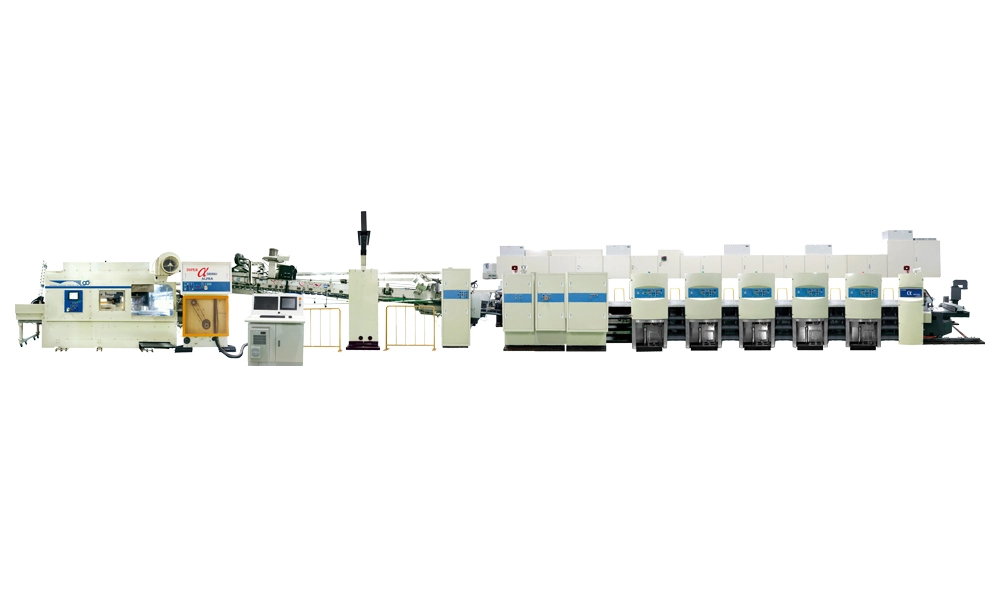
High-grade Full Automatic Flexo Printing Slotting Die Cutting Inline Folding Gluing and Countering Ejectoring Machine
Discover the Keshenglong&Shinko High-grade Full Automatic Flexo Printing Slotting Die Cutting Inline Folding Gluing and Countering Ejectoring Machine, the epitome of precision and efficiency. Ideal for modern packaging needs, this advanced machine streamlines operations by seamlessly integrating printing, slotting, die-cutting, folding, gluing, and ejecting processes. Elevate your production line with Keshenglong's innovative solution, designed to enhance productivity and deliver exceptional results.
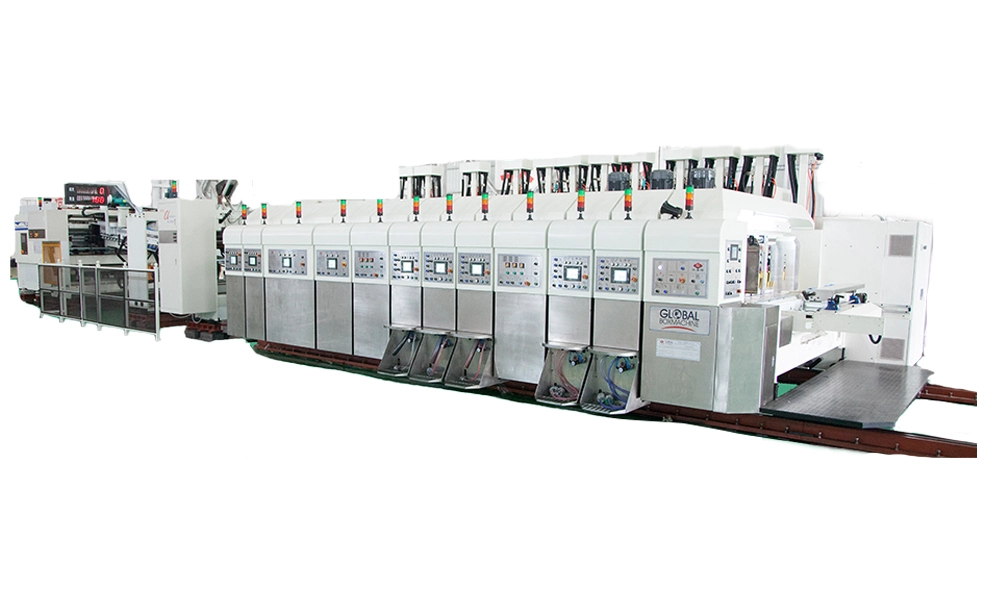
Computerized Flexo Printing Slotting Die-Cutting Inline Folding Gluing Countering Ejecting Machine
Introducing the Keshenglong&Shinko Computerized Flexo Printing Slotting Die-Cutting Inline Folding Gluing Countering Ejecting Machine. Engineered for precision, this advanced machine streamlines your packaging production with integrated Flexo Printing Slotting Die-Cutting functionalities. Seamlessly perform inline folding, gluing, countering, and ejecting—all in one efficient system. Designed for optimal performance, it enhances productivity while reducing downtime.
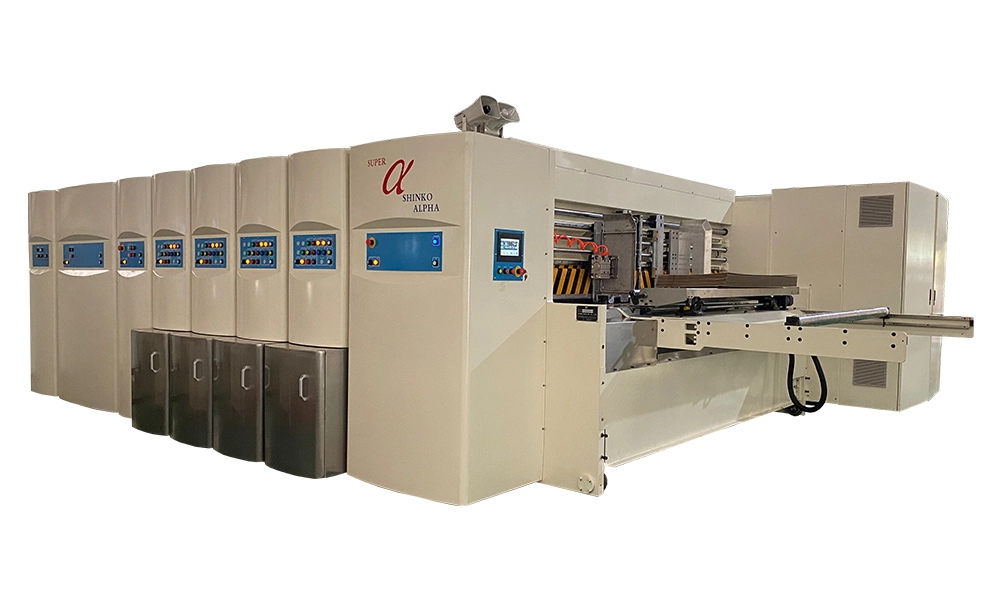
Shinko Super Alpha Movable Type Full Servo Drive Flexo Printing Slotting Die Cutting Machine
Introducing the Shinko Super Alpha Movable Type Full Servo Drive Flexo Printing Slotting Die Cutting Machine by Keshenglong. Engineered for precision and efficiency, this state-of-the-art machine enhances your production line with its advanced servo drive technology. Designed for seamless Flexo printing, slotting, and die-cutting, it ensures superior quality with every output.
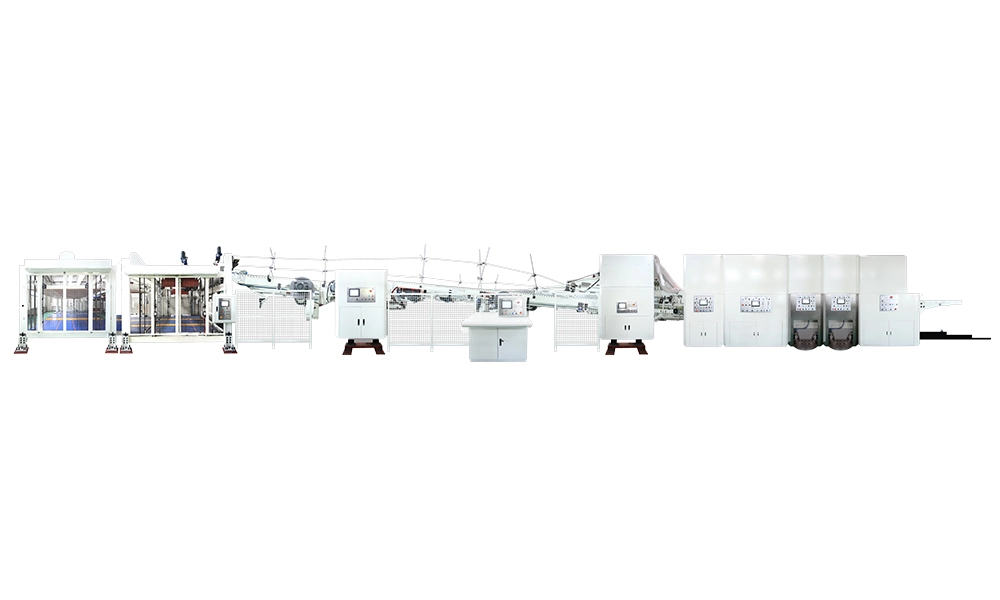
Jumbo Flexo Bottom Printing Slotting Die-Cutting Inline Folding Gluing Countering Ejecting Machine
Introducing the Keshenglong&Shinko Jumbo Flexo Bottom Printing Slotting Die-Cutting Inline Folding Gluing Countering Ejecting Machine. This advanced flexo printing slotting die-cutting machine ensures precision and efficiency for your packaging needs. Designed as a versatile flexo folder gluer machine, it optimizes every step from printing to ejecting, delivering seamless integration and superior quality.


© 2025 Keshenglong & SHINKO All Rights Reserved.
Keshenglong Carton Packing Machine
Keshenglong Carton Packing Machine
Keshenglong Carton Packing Machine
Keshenglong Carton Packing Machine
Keshenglong Carton Packing Machine