
Flexo plates: Processless, photopolymer and mounting tips
- Choosing the right flexo plate for your flexo printer: why it matters
- Understanding the business impact of plate selection on flexo printer performance
- What are photopolymer flexo plates?
- Photopolymer plates: tried-and-true option for flexo printer workflows
- Typical specifications and use-cases
- What are processless flexo plates?
- Processless plates: simplified prepress for modern flexo printer operations
- Considerations and limitations
- Direct comparison: processless vs photopolymer plates for flexo printers
- Head-to-head comparison to inform procurement and production choices
- How to choose the right plate for your flexo printer: decision framework
- Key factors to evaluate before switching plate types
- Plate mounting: why precise mounting transforms flexo printer consistency
- Mounting accuracy impacts registration, repeatability and ripple
- Step-by-step plate mounting best practices for flexo printer operators
- Practical checklist to improve first-pass success
- Troubleshooting common mounting issues on flexo printers
- Symptoms, root causes and corrective actions
- Quantifying benefits: typical savings and KPIs to track on flexo printer lines
- KPIs that improve after better plate selection and mounting
- Compatibility checklist: inks, substrates and plate chemistry for corrugated flexo printers
- Key tests to run before full-scale deployment
- Keshenglong & Shinko: advantages and product fit for corrugated carton flexo printer operations
- Why choose Keshenglong & Shinko machines for flexo printer corrugated carton production
- Practical implementation plan for switching plates on a flexo printer line
- Stepwise plan to test, validate and deploy new plate technology
- FAQ — Frequently Asked Questions about flexo plates and flexo printer operations
- 1. What is the main difference between processless plates and traditional photopolymer plates?
- 2. Will processless plates hold up for long corrugated runs on my flexo printer?
- 3. How can I reduce dot gain on corrugated substrates?
- 4. What mounting adhesive and tape should I use for best results?
- 5. How do I measure whether a plate change improved my flexo printer performance?
- 6. Can new mounting systems solve registration issues on older flexo printers?
- Contact & next steps
- Need a tailored recommendation for your flexo printer line?
- References
Choosing the right flexo plate for your flexo printer: why it matters
Understanding the business impact of plate selection on flexo printer performance
For manufacturers and converters using a flexo printer for corrugated carton printing, plate selection is not just a technical choice — it drives cost-per-impression, color consistency, press uptime and environmental footprint. The two principal categories you will encounter are photopolymer (conventional) flexo plates and processless photopolymer plates. Both work on UV-cured flexo printers and water- or solvent-based systems, but they differ in prepress workflow, handling, and lifecycle costs. This article explains the technical differences, compares performance, and provides practical mounting and troubleshooting tips to optimize your flexo printer production.
What are photopolymer flexo plates?
Photopolymer plates: tried-and-true option for flexo printer workflows
Photopolymer flexo plates are light-sensitive polymer plates that require a multi-step prepress process: exposure, washout (solvent or water), drying, and post-exposure. They are available in a variety of durometers and surface treatments to suit different inks and substrates. Key benefits include high run-length capability (with the correct plate grade), excellent tonal reproduction for halftones, and a broad user base with established handling protocols for flexo printers.
Typical specifications and use-cases
- Best for long runs where plate stability is critical.
- Good choice for converters needing high highlight and shadow control on coated and uncoated corrugated liners.
- Requires plate processor or outsourced prepress house, chemical handling, and drying space.
What are processless flexo plates?
Processless plates: simplified prepress for modern flexo printer operations
Processless photopolymer plates eliminate the washout step, substantially simplifying the prepress workflow: plates are imaged directly on a thermal CTP or laser exposure unit, relieved by exposure and then post-cured or cleaned with a simple plate cleaner in some systems. The perceived benefits include faster turnaround, reduced consumables (no solvents or washout chemistry), lower environmental footprint, and less specialized equipment in-house. They can be particularly attractive for short-to-medium runs and operations aiming to shrink make-ready time on the flexo printer.
Considerations and limitations
- Not all processless plates match the highest photopolymer run-lengths — choose grades with verified durability for heavy corrugated runs.
- Surface treatment may be different; testing on your flexo printer with your ink/substrate system is essential.
Direct comparison: processless vs photopolymer plates for flexo printers
Head-to-head comparison to inform procurement and production choices
| Attribute | Photopolymer (Conventional) | Processless Photopolymer |
|---|---|---|
| Prepress workflow | Exposure + washout + drying + post-exposure (requires processors/chemicals) | Exposure + minimal post-processing (no washout); faster turnarounds |
| Environmental impact | Uses washout solvents/chemicals; requires waste handling | Reduced chemical use; lower hazardous waste |
| Initial plate cost | Often lower per-plate for commodity types | Usually higher per-plate due to advanced chemistry |
| Run length & durability | Proven long-run performance for stiff corrugated jobs | Many products approach conventional run lengths; validation needed for heavy-duty corrugated work |
| Print quality (tone and solids) | Excellent with correct grade and finishing | Comparable in many use-cases; results depend on imaging system and plate grade |
| Cost of ownership (prepress + consumables) | Higher due to processors and chemistry, but lower plate cost sometimes balances out | Lower prepress consumable costs; plate cost may be higher |
Source: industry whitepapers and vendor technical data (see References).
How to choose the right plate for your flexo printer: decision framework
Key factors to evaluate before switching plate types
- Run length profile: If >50,000 linear metres per job are common, lean toward proven conventional photopolymer grades unless the processless plate is validated for high runs.
- Make-ready and lead time: If turnaround time is a bottleneck, processless can shorten plate delivery and press make-ready.
- Environmental and compliance goals: Processless reduces solvent use and hazardous waste, which can simplify permits and lower disposal costs.
- Prepress capabilities: Do you have a plate processor and trained operators? Processless reduces that burden.
- Substrate and ink compatibility: Verify dot gain, ink transfer and rub resistance on your corrugated liners and inks.
Plate mounting: why precise mounting transforms flexo printer consistency
Mounting accuracy impacts registration, repeatability and ripple
Even the best plate cannot compensate for poor mounting. Misaligned or unevenly mounted plates cause press vibration, banding, inconsistent registration, and variable ink film. For corrugated carton production on a flexo printer, where run lengths and speed are high, repeatable mounting practices improve uptime and reduce spoilage.
Step-by-step plate mounting best practices for flexo printer operators
Practical checklist to improve first-pass success
- Clean the cylinder or sleeve surface: remove dust, adhesive residues and oil. Use lint-free wipes and manufacturer-approved cleaning solutions.
- Check plate backing and punch/sleeve tolerances: ensure correct plate backing thickness and that any keying/dowel holes match the press specifications.
- Use precision mounting tape or an adhesive recommended by the plate supplier — maintain consistent tape width and edge-bead removal before mounting.
- Employ a vacuum or flatbed mounting table (or an automatic mounting system) for consistent pressure across the plate.
- Verify plate positioning with a light source or registration pins before final adhesion; start mounting from one edge and roll out to avoid trapped air.
- Control plate thickness and durometer consistency across the cylinder to ensure uniform impression and ink transfer.
- After mounting, let the adhesive ‘bed’ as per supplier recommendations before pre-press makeready—this helps stabilize registration.
Troubleshooting common mounting issues on flexo printers
Symptoms, root causes and corrective actions
- Ghosting or double image: Often due to plate slippage. Re-mount using correct adhesive and clamp tolerances; use mechanical registration.
- Banding or ripple: Caused by uneven mounting pressure or thickness variation. Use precision mounting equipment and measure plate thickness across width.
- Excessive dot gain: May be caused by over-compressed plates or inappropriate plate durometer. Select plate grade that matches the substrate compression in your flexo printer.
- Poor registration repeatability: Check sleeve datum points and ensure cylinder runout is within spec; consider upgrading to precision sleeves or repeatable locking systems.
Quantifying benefits: typical savings and KPIs to track on flexo printer lines
KPIs that improve after better plate selection and mounting
Track these to measure ROI:
- Spoilage rate (%) reduction per job
- Average makeready time (minutes)
- Plate cost per 1,000 impressions
- Press uptime (%) and Mean Time Between Failures (MTBF)
Example: converters that reduce makeready by 20–40% using processless plates and automated mounting report faster job changeovers and lower spoilage — test with pilot jobs and measure against your baseline using the KPIs above.
Compatibility checklist: inks, substrates and plate chemistry for corrugated flexo printers
Key tests to run before full-scale deployment
- Run a press trial with your production inks on target corrugated liners; evaluate color density, rub resistance and lightfastness.
- Perform wash tests for processless plates to make sure cleaning/maintenance is compatible with your press schedule.
- Check for electrostatic issues on high-speed flexo printer lines; some plate surfaces attract dust more than others.
- Validate finishing processes (slotting, die-cutting) to ensure plate relief and spot height do not interfere with downstream operations.
Keshenglong & Shinko: advantages and product fit for corrugated carton flexo printer operations
Why choose Keshenglong & Shinko machines for flexo printer corrugated carton production
Keshenglong, founded in 1995 and specialized in corrugated carton printing and packaging machinery, is a leading Chinese manufacturer offering integrated flexo printing and finishing solutions. Merged with Japan Shinko (R&D center and production base retained) in 2017, the combined organization brings Japanese technical guidance with Chinese manufacturing scale. Key competitive advantages include:
- Comprehensive product range tailored to corrugated carton production: flexo printer, computerized high-speed flexo slotting die-cutting machines (1–6 color), high-speed flexo case makers, “6+1” high-precision printing & slotting die-cutting machines, top & bottom printing slotting die-cutting machines, jumbo-size flexo printing slotting die-cutting machines, and integrated stacker systems.
- Quality control through imported main parts from Japan and technical instruction by experienced Japanese technicians — on-site installation and testing to meet high standards.
- Export footprint to over 70 countries, demonstrating reliability in diverse markets and regulatory environments.
For converters seeking a single-source provider for flexo printer and finishing integration, Keshenglong & Shinko’s combined strengths reduce integration friction, shorten commissioning time and support higher overall equipment effectiveness (OEE).
Practical implementation plan for switching plates on a flexo printer line
Stepwise plan to test, validate and deploy new plate technology
- Identify pilot jobs (short runs with representative substrates and inks).
- Obtain plate samples from vendors (processless and photopolymer variants) and schedule controlled press trials on your flexo printer.
- Measure KPIs (makeready time, spoilage, color density, dot gain) and capture operator feedback.
- Analyze TCO: plate cost, prepress consumables, waste treatment, and labor changes.
- Scale adoption in phases, train operators on mounting best practices and new maintenance routines.
FAQ — Frequently Asked Questions about flexo plates and flexo printer operations
1. What is the main difference between processless plates and traditional photopolymer plates?
Processless plates remove the washout/chemical processing step and are typically imaged and ready with minimal post-exposure finishing. Traditional photopolymer plates require washout, drying and post-exposure, which adds time and consumables.
2. Will processless plates hold up for long corrugated runs on my flexo printer?
Many processless plates today are formulated for medium to long runs, but durability varies by product. Validate with press trials and consult vendor run-length data; for ultra-long runs traditional photopolymer still has a performance edge in some environments.
3. How can I reduce dot gain on corrugated substrates?
Choose the correct plate durometer (hardness), optimize impression settings on the flexo printer, ensure consistent mounting thickness, and use screening and anilox selection that match the substrate’s absorbency.
4. What mounting adhesive and tape should I use for best results?
Use adhesive tapes recommended by your plate or press supplier that match your plate back and cylinder material. For repeatability, consider a single-vendor solution and standardize tape width and mounting procedures.
5. How do I measure whether a plate change improved my flexo printer performance?
Track makeready time, spoilage rate, color density repeatability, and plate cost per 1,000 impressions before and after trials. Operator feedback and reduced chemical handling are additional qualitative metrics.
6. Can new mounting systems solve registration issues on older flexo printers?
Often yes — precision sleeves, repeatable locking chucks and automated mounting systems improve registration and reduce make-ready, even on older presses. Evaluate mechanical condition and spindle runout as part of the upgrade decision.
Contact & next steps
Need a tailored recommendation for your flexo printer line?
For consultation, pilot trials, or to view corrugated carton flexo printing machine models, contact Keshenglong. Our solutions combine Japan Shinko R&D expertise with global delivery and on-site commissioning to optimize your flexo printer performance. Reach out to request case studies or arrange a machine demonstration to validate plate options on your substrates and inks.
References
- Flexography — Wikipedia. https://en.wikipedia.org/wiki/Flexography (accessed 2025-12-13)
- Flexographic Technical Association (FTA). https://www.flexography.org/ (accessed 2025-12-13)
- Grand View Research — Flexographic Printing Market Overview. https://www.grandviewresearch.com/industry-analysis/flexographic-printing-market (accessed 2025-12-13)
- Kodak Flexcel and flexo plate resources. https://www.kodak.com/en/print/flexo/plates (accessed 2025-12-13)
- DuPont Printing & Packaging — Flexographic solutions. https://www.dupont.com/printing-inks-and-solutions/flexographic-solutions. (accessed 2025-12-13)
- Esko — prepress and mounting solutions for packaging. https://www.esko.com/ (accessed 2025-12-13)
For more information or to schedule a consultation, contact Keshenglong sales and service team to discuss flexo printer solutions, plate trials and integrated finishing systems.
What is flexo corrugated box printing machine
How to Choose Right semi-auto corrugated box printing die cutting machine manufacturer and supplier ?
Everything You Need to Know About flexo printer slotter die cutter
Best professional flexo printer manufacturers and supplier brands
Product
What maintenance is required for optimal machine performance?
Regular lubrication, cleaning of the folding units, and checking for worn parts are essential for maintaining optimal performance.
What materials are compatible with your folding carton machines?
Our machines are compatible with a wide range of materials including cardboard, corrugated board, and paperboard.
How do I adjust the machine settings for different carton sizes?
Machine settings can be adjusted using the intuitive control panel, which allows for quick changes to accommodate different carton sizes.
What is the maximum speed of your folding carton machines?
Our machines can operate at speeds of up to 150 cartons per minute, depending on the model and carton complexity.
Industry Solutions
Do you offer customized solutions for unique production needs?
Yes, we work closely with clients to develop customized solutions that meet their specific production requirements.
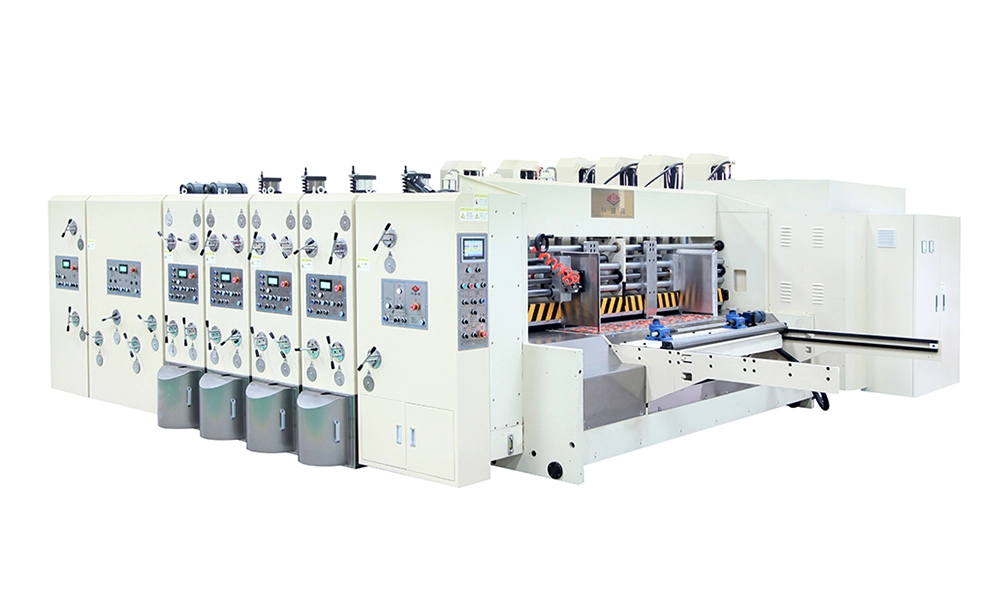
Computerzied Semi Auto Flexo Printing Slotting Die-Cutting Machine
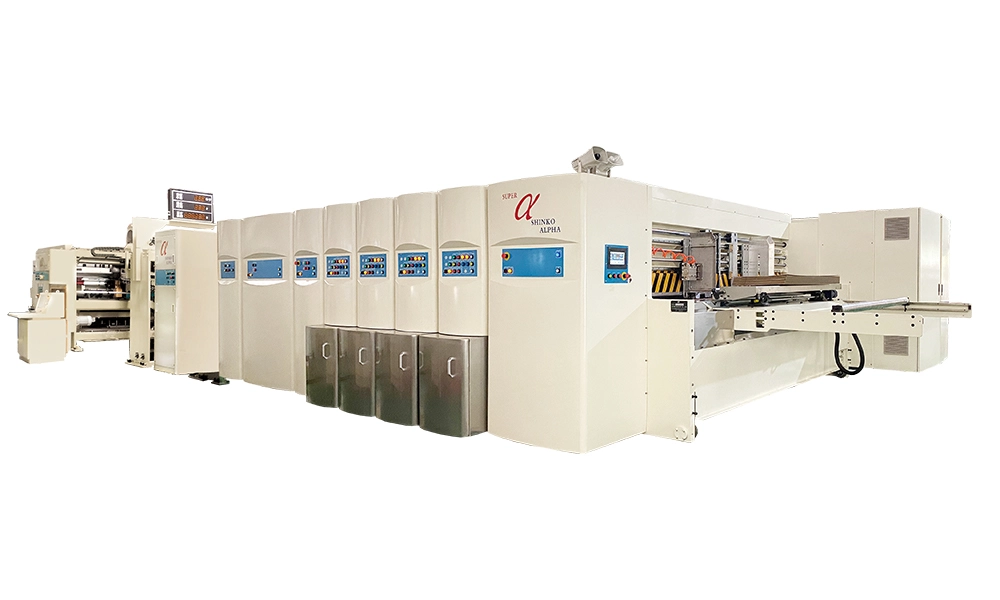
Shinko Super Alpha Movable Type Full Servo Drive Flexo Printing Slotting Die Cutting Inline Folding Gluing Counting Ejecting Machine
This state-of-the-art Movable Type Full Servo Drive Flexo Printing Slotting Die Cutting Machine streamlines your production with precision. Experience seamless operation with its Inline Folding Gluing Counting Ejecting capabilities, ensuring unparalleled efficiency. Designed for high-performance tasks, this Keshenglong&Shinko Super Alpha Movable Type Full Servo Drive Flexo Printing Slotting Die Cutting Inline Folding Gluing Counting Ejecting Machine enhances productivity while maintaining premium quality. Ideal for businesses seeking innovation and reliability, the Shinko Super Alpha is your go-to solution for advanced printing and cutting needs.
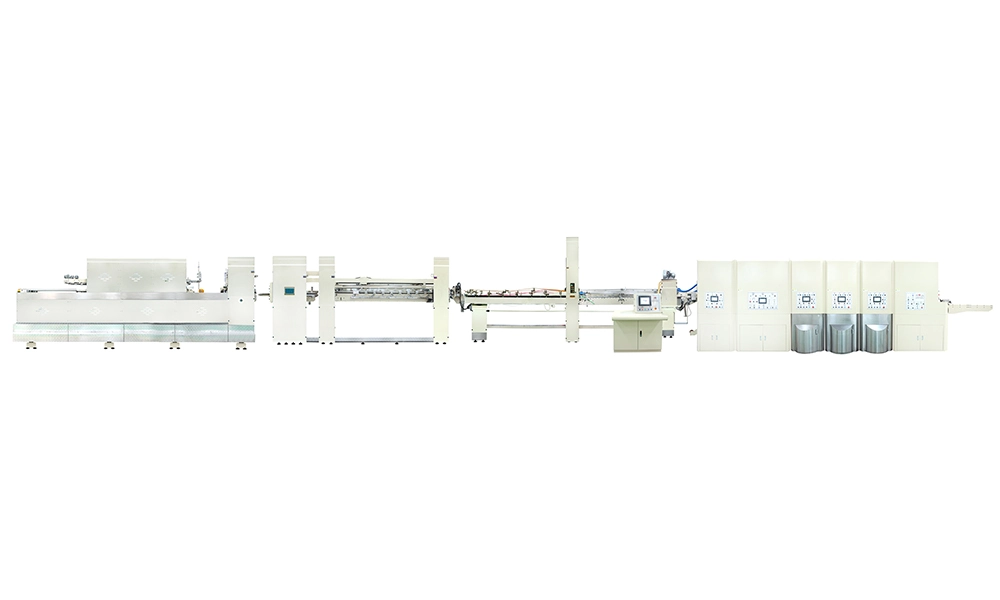
Computerized Flexo Printing Slotting Die-Cutting Inline Folding Gluing and Stitching Machine
Introducing the Keshenglong&Shinko Computerized Flexo Printing Slotting Die-Cutting Inline Folding Gluing and Stitching Machine, a pinnacle of precision and efficiency. This state-of-the-art machine revolutionizes packaging production with seamless integration of printing, slotting, die-cutting, folding, gluing, and stitching. Designed to optimize your workflow, the Computerized Flexo Printing Slotting Die-Cutting Machine enhances accuracy and productivity.
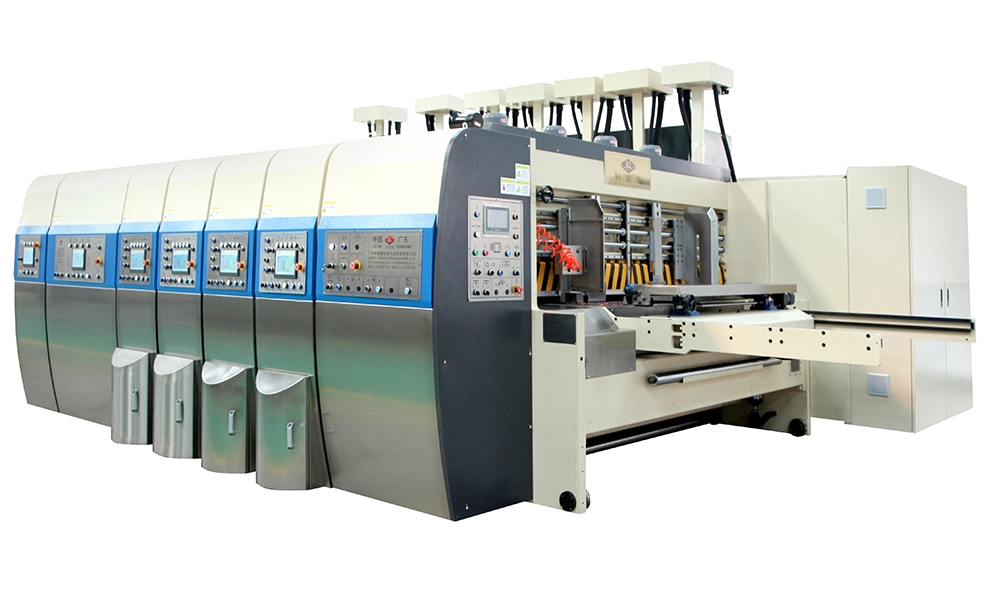
Computerized Flexo Top Bottom Printing Slotting Die-Cutting Machine
Introducing the Keshenglong&Shinko Computerized Flexo Top Bottom Printing Slotting Die-Cutting Machine, designed to enhance your packaging efficiency. Engineered for precision, this high-performance machine offers seamless integration of flexo printing and die-cutting processes. Perfect for a variety for packaging needs, it ensures superior quality and productivity. With user-friendly controls and robust construction, it guarantees reliable operation and minimal downtime. Optimize your production line with Keshenglong’s trusted technology. Explore advanced capabilities with our Flexo Top Bottom Printing Slotting Die-Cutting Machine today.


© 2025 Keshenglong & SHINKO All Rights Reserved.
Keshenglong Carton Packing Machine
Keshenglong Carton Packing Machine
Keshenglong Carton Packing Machine
Keshenglong Carton Packing Machine
Keshenglong Carton Packing Machine