
Flexographic plate mounting and registration techniques
- Optimizing Plate Mounting for Accurate Flexographic Registration
- Why precise plate mounting matters for the flexo printer
- Prepress: artwork, plate selection, and relief considerations
- Key prepress checks for the flexo printer
- Mounting surfaces and tools: vacuum tables, sleeves, and tapes
- Mounting equipment and tooling checklist
- Step-by-step plate mounting technique for consistent registration
- Recommended mounting sequence
- Registration marks, camera systems, and manual alignment tactics
- Design and placement tips
- Quality control: measurement, tolerance targets, and SPC
- Suggested SPC metrics for the flexo printer
- Common registration problems and practical troubleshooting for flexo printers
- Common issues and fixes
- Comparing mounting methods: performance and practical trade-offs
- Advanced systems: automation, digital recipes, and remote monitoring
- When to invest in automation for a flexo printer
- Keshenglong & Shinko: integrated solutions for corrugated carton flexo printing
- Keshenglong & Shinko advantages for flexo printers
- Best practices checklist for plate mounting and registration
- FAQ — Common questions about flexographic plate mounting and registration
- 1. What is the single biggest factor that affects registration on a flexo printer?
- 2. How precise do my mounting tapes and sleeves need to be?
- 3. Can older flexo printers achieve modern registration tolerances?
- 4. How much time does automation save on makeready?
- 5. What measurement tools should a flexo printer keep on hand?
- 6. How do I handle registration for long repeats on jumbo-size flexo printers?
- Contact & next steps
- References
Optimizing Plate Mounting for Accurate Flexographic Registration
Why precise plate mounting matters for the flexo printer
Registration accuracy is a primary driver of print quality, waste reduction, and customer satisfaction in corrugated carton flexo printing. For any flexo printer, poor plate mounting leads to color misregistration, increased make-ready time, higher board spoilage, and difficulty achieving tight tolerances on multicolor jobs. This article provides a practical, experience-based playbook — from prepress through post-press inspection — to help pressrooms achieve reliable registration on flexo press platforms used for corrugated carton, folded cases, and packaging applications.
Prepress: artwork, plate selection, and relief considerations
Start at the source. A well-prepared flexo plate and accurate artwork separation reduce downstream registration headaches. For corrugated carton flexo printing, choose photopolymer plates with relief and shore hardness matched to your ink, substrate, and anilox combination. When designing plates, include clear registration targets and consistent traps: keep traps conservative (typically 0.15–0.30 mm for corrugated applications) where substrate board thickness and flute profile can produce misalignment.
Key prepress checks for the flexo printer
- Confirm plate exposure and washout parameters to ensure consistent dot shape and highlight retention.
- Validate plate thickness and shore ratings versus press recommendations to control impression variability.
- Embed registration marks in digital layouts in all four corners and repeat every repeat length for long-run corrugated jobs.
Mounting surfaces and tools: vacuum tables, sleeves, and tapes
Choosing the proper mounting method is fundamental for any flexo printer. There are three common approaches: direct cylinder mounting, sleeve mounting, and tape-on anilox/plate cylinder systems. Each method impacts registration stability, ease of adjustment, and setup time.
Mounting equipment and tooling checklist
- Vacuum mounting table or flatbed punch system for flat die mounting and proofing.
- Precision plate mounting tapes with known compression characteristics and layered shear resistance.
- Sleeves with certified runout tolerances (expressed in microns) and properly balanced hubs.
- Micrometers, dial indicators, and high-resolution camera registration readers for measurement.
Step-by-step plate mounting technique for consistent registration
Follow a repeatable workflow to minimize variability. The same steps apply whether your flexo printer uses cylinder-mounted plates, sleeves, or hybrid systems.
Recommended mounting sequence
- Clean: Wipe cylinders/sleeves, remove ink residues, and ensure the surface is free of dust and oils.
- Measure: Verify cylinder runout and sleeve concentricity with precision gauges; record baseline readings.
- Prime: Use manufacturer-recommended primers for tapes or plate adhesives; avoid solvents that alter tape tack.
- Index: Place the key/locator on the cylinder and use mechanical stops for consistent angular registration.
- Mount: Start with the most critical color (commonly the keyline or darkest color) and mount sequentially. For corrugated carton, mounting the varnish or black plate first often provides a stable anchor for visual registration.
- Float & tack: Use temporary tacking methods to permit micro-adjustment before final pressure is applied.
- Compress & cure: Apply even compression for tape adhesive and allow cure/dwell time as recommended by tape/plate suppliers.
- Verify: Use camera-based registration readers or a high-resolution camera to confirm targets before ink-up.
Registration marks, camera systems, and manual alignment tactics
Registration marks are the pressroom’s language. For a modern flexo printer, combining clear marks with an automated camera registration system reduces make-ready time and repeat errors.
Design and placement tips
- Use crosshair targets with a minimum surrounding clear area equal to 3 times the maximum dot size expected on press.
- Place targets on repeat boundaries and at least two transverse positions across the web to detect skew.
- Consider both lead-edge and trail-edge marks for long sheet paths common on jumbo-size flexo slotting die-cutting machines.
Quality control: measurement, tolerance targets, and SPC
Quality metrics help define success. For corrugated flexo printing, practical registration tolerances depend on end-use and converting steps; tighter tolerances are required where printing aligns to die-cut or gluing operations. Implement Statistical Process Control (SPC) around a few core measurements.
Suggested SPC metrics for the flexo printer
- Cross-direction registration variation (mm or microns)
- Machine-direction registration drift per 1000 m
- Dot gain and tonal stability at target screen rulings
Typical achievable registration accuracy on modern, well-maintained presses ranges from ±50 to ±150 microns (0.05–0.15 mm) for high-end systems; conventional production lines often see ±100–300 microns. Results depend on press architecture, substrate variability, and operator technique (sources: industry best practices and manufacturer specifications).
Common registration problems and practical troubleshooting for flexo printers
Problems fall into mechanical, material, and process categories. Identifying the root cause quickly reduces waste.
Common issues and fixes
- Progressive MD drift: Check web tension control, lay-on roller wear, and cylinder thermal expansion. Reduce friction points and balance tension zones.
- Skew across board: Verify sleeve seating, check for uneven tape compression, and confirm paper path guides are square.
- Intermittent registration jumps: Inspect for inadequate adhesive cure, slipping tape layers, or contaminant particles under plates.
- Color trapping inconsistencies: Re-evaluate trap sizes in artwork and ensure consistent impression across the board surface.
Comparing mounting methods: performance and practical trade-offs
Below is a concise comparison table summarizing typical performance attributes for mounting methods used by a flexo printer in corrugated carton production. Values are representative industry ranges; real-world performance depends on equipment condition and operator control.
| Mounting Method | Typical Registration Accuracy | Setup Time | Reusability / Adjustability | Best Use Case |
|---|---|---|---|---|
| Direct Cylinder with Mounting Tape | ±0.08–0.25 mm | Medium | Low–Medium (tape replacement required) | Short-to-medium runs; budget presses |
| Sleeve Mounting (Precision Sleeves) | ±0.03–0.12 mm | Short (fast changeover) | High (repeatable sleeve swaps) | High-speed production, tight registration |
| Laser/Camera Assisted Automated Mounting | ±0.01–0.08 mm | Shortest (automated) | Very High (digital recipes) | Critical multicolor work; large runs |
Advanced systems: automation, digital recipes, and remote monitoring
Modern flexo printers adopt automated registration systems that integrate cameras, servo-driven micro-adjustments, and stored digital recipes for repeat jobs. These systems drastically reduce make-ready time and make it easier to meet demanding tolerances for corrugated box printing, slotting, and die-cutting combinations. Remote monitoring and IoT-enabled press analytics can alert teams to drift and schedule preventive maintenance before quality issues arise.
When to invest in automation for a flexo printer
- High mix / high volume operations seeking to reduce makeready by more than 30%.
- When customer specs demand sub-0.1 mm registration for multiple colors tied to die-cut edges.
- To stabilize quality across multiple shifts and reduce operator variability.
Keshenglong & Shinko: integrated solutions for corrugated carton flexo printing
Keshenglong, founded in 1995 and specialized in manufacturing corrugated carton printing machine & solutions, is a leading Chinese manufacturer whose main products include flexo printer systems for corrugated carton production. Since merging with Japan Shinko in 2017, Keshenglong retained Shinko as the R&D center and production base, added a Guangzhou production site, and imports critical components from Japan. Experienced Japanese technicians participate in installation and on-site testing to align product quality with Shinko standards.
Keshenglong & Shinko advantages for flexo printers
- Product portfolio tailored to corrugated carton needs: corrugated carton flexo printing machine, flexo printing slotting die-cutting machine, flexo printing slotting die-cutting and stacker machine, jumbo-size flexo systems, and integrated high-speed solutions.
- Combined Japanese R&D and manufacturing know-how, with imported critical parts and on-site engineering support.
- Focus on integrated intelligent packaging solutions with exports to over 70 countries, supporting global service and spare parts availability.
- Competitive differentiation: a balance of high-precision components, localized manufacturing cost advantages, and experienced technical instruction from Japanese engineers.
Best practices checklist for plate mounting and registration
Use this checklist on the pressroom floor to minimize variability and improve first-pass yield on a flexo printer:
- Standardize plate thickness and shore hardness across jobs where possible.
- Use sleeves for frequent repeats and precision-critical jobs.
- Adopt camera-based registration for multicolor work tied to die-cut edges.
- Maintain an SPC program for registration and dot gain; review weekly.
- Train operators on a single, documented mounting procedure and audit adherence monthly.
FAQ — Common questions about flexographic plate mounting and registration
1. What is the single biggest factor that affects registration on a flexo printer?
The combined effect of substrate variability and mechanical runout. Corrugated board thickness and flute uniformity create shifting contact points; when paired with cylinder or sleeve runout beyond tolerance, registration shifts are amplified. Addressing both substrate handling (tension, guides) and equipment precision yields the largest gains.
2. How precise do my mounting tapes and sleeves need to be?
Use mounting tapes with consistent compression characteristics and minimal shear creep. For high-precision work, sleeves and tapes that guarantee low compression set and documented micrometer tolerances are recommended. Precision sleeves with runout below 50 microns are typical for tight-registration jobs.
3. Can older flexo printers achieve modern registration tolerances?
Yes, to an extent. Upgrading to precision sleeves, improving web handling, adopting camera registration systems, and enforcing strict mounting procedures can significantly improve results on legacy presses. However, mechanical limits such as worn bearings and structural play may ly cap achievable precision.
4. How much time does automation save on makeready?
Automated mounting and camera registration systems commonly reduce makeready time by 30–70% depending on job complexity and prior manual capability. The payback period depends on run lengths, mix, and labor costs.
5. What measurement tools should a flexo printer keep on hand?
Essential tools include a calibrated micrometer for plate thickness, dial indicators for runout checks, a handheld densitometer for color consistency, and a camera-based registration reader or high-resolution camera for precise target alignment.
6. How do I handle registration for long repeats on jumbo-size flexo printers?
Use multiple registration targets across the web, control web tension zones carefully, and verify that sleeve and cylinder balancing are within spec. Automated, distributed camera systems that monitor multiple points along the repeat are particularly effective for long-repeat stability.
Contact & next steps
If you are evaluating upgrades or need an integrated solution for corrugated carton production, contact Keshenglong for product details, site evaluations, and demonstration of flexo printer lines and flexo printing slotting die-cutting machines. Their combined Keshenglong & Shinko capability offers precision equipment, Japanese-guided R&D, and wide export experience to support quality, uptime, and ROI improvements.
Get in touch: Contact your local Keshenglong representative to request a machine specification sheet, factory acceptance test protocol, or an on-site consultation to assess registration performance opportunities.
References
- Flexography — Wikipedia. https://en.wikipedia.org/wiki/Flexography (accessed 2025-12-19)
- Flexographic Technical Association (FTA) — Official site. https://www.flexography.org/ (accessed 2025-12-19)
- Keshenglong Company Background — company materials provided by client text (product and merger summary) (accessed 2025-12-19)
Wholesale china flexo printer slotter die cutter manufacturers manufacturer and supplier
OEM/ODM corrugated box printing die cutting machine Manufacturers and supplier in China
What are the application scenarios of corrugated carton box flexo printer?
Why choose Keshenglong&Shinko flexo printer slotter die-cutting stacker manufacturer
Product
How do I troubleshoot common issues with the folding mechanism?
Common issues can often be resolved by checking the alignment of the folding plates and ensuring there is no debris obstructing the mechanism.
What materials are compatible with your folding carton machines?
Our machines are compatible with a wide range of materials including cardboard, corrugated board, and paperboard.
Shipping
Do you offer international shipping for your machines?
Yes, we offer international shipping and can handle all necessary customs documentation.
What are the shipping dimensions and weight of your folding carton machines?
Shipping dimensions and weight vary by model; please refer to the specific product details for accurate information.
Can I track my shipment once it has been dispatched?
Yes, we provide tracking information for all shipments so you can monitor the delivery status.
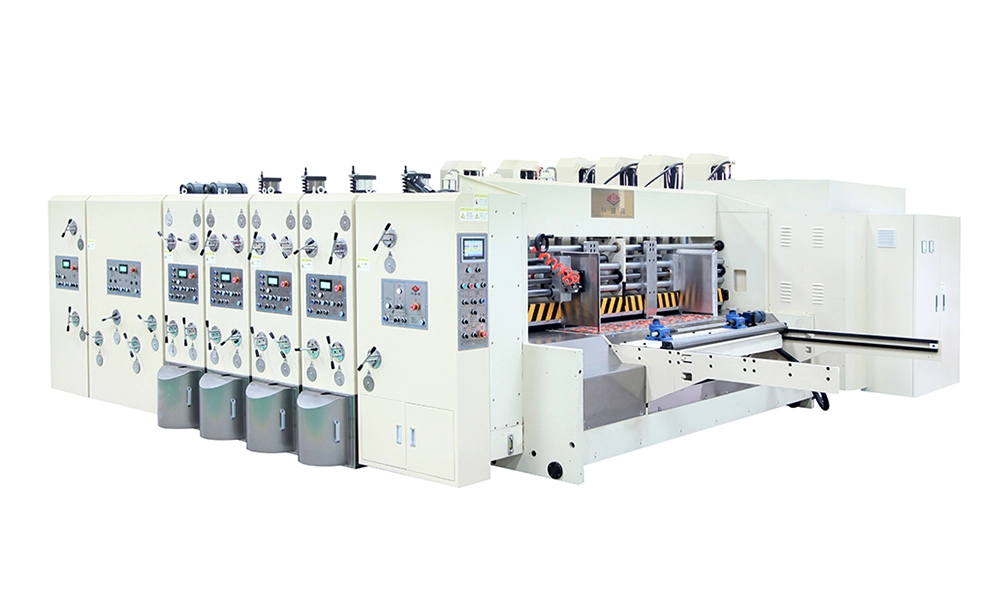
Computerzied Semi Auto Flexo Printing Slotting Die-Cutting Machine
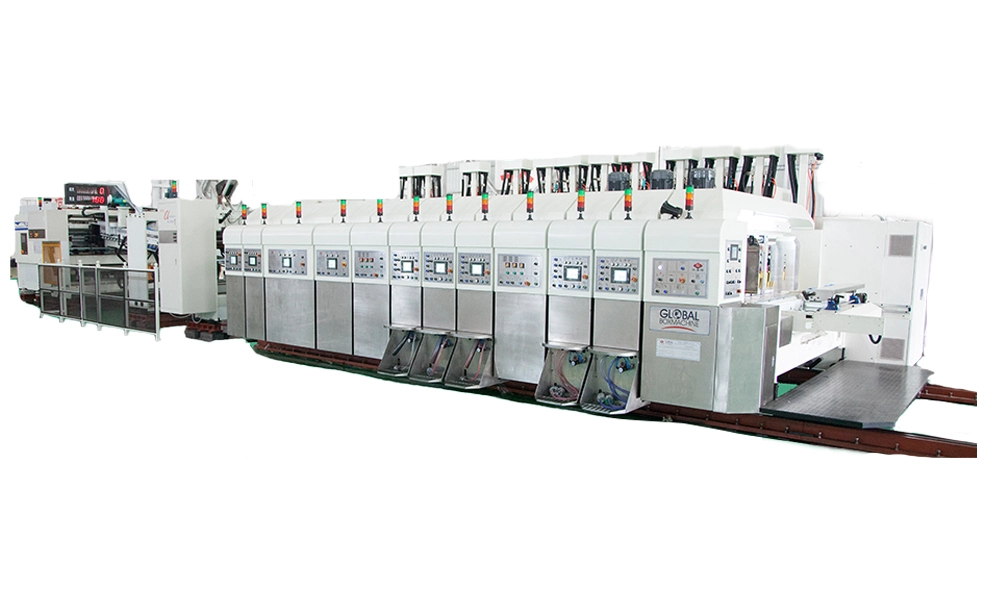
Computerized Flexo Printing Slotting Die-Cutting Inline Folding Gluing Countering Ejecting Machine
Introducing the Keshenglong&Shinko Computerized Flexo Printing Slotting Die-Cutting Inline Folding Gluing Countering Ejecting Machine. Engineered for precision, this advanced machine streamlines your packaging production with integrated Flexo Printing Slotting Die-Cutting functionalities. Seamlessly perform inline folding, gluing, countering, and ejecting—all in one efficient system. Designed for optimal performance, it enhances productivity while reducing downtime.
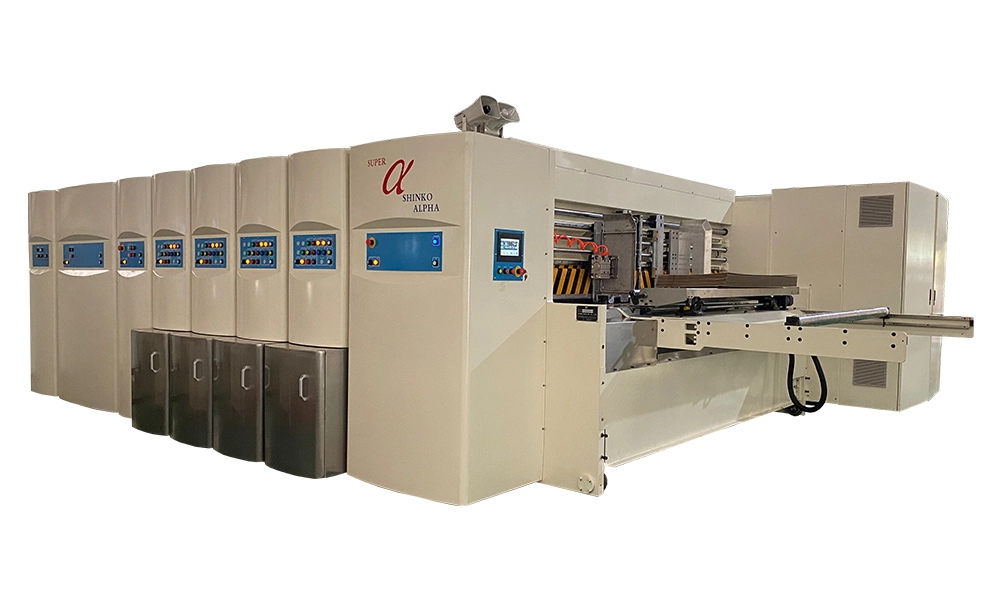
Shinko Super Alpha Movable Type Full Servo Drive Flexo Printing Slotting Die Cutting Machine
Introducing the Shinko Super Alpha Movable Type Full Servo Drive Flexo Printing Slotting Die Cutting Machine by Keshenglong. Engineered for precision and efficiency, this state-of-the-art machine enhances your production line with its advanced servo drive technology. Designed for seamless Flexo printing, slotting, and die-cutting, it ensures superior quality with every output.
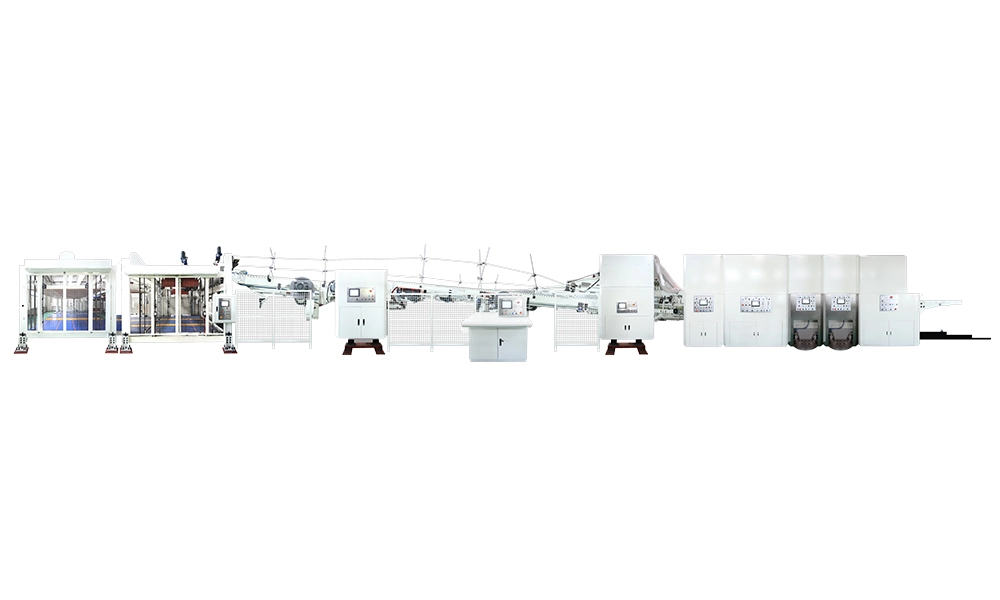
Jumbo Flexo Bottom Printing Slotting Die-Cutting Inline Folding Gluing Countering Ejecting Machine
Introducing the Keshenglong&Shinko Jumbo Flexo Bottom Printing Slotting Die-Cutting Inline Folding Gluing Countering Ejecting Machine. This advanced flexo printing slotting die-cutting machine ensures precision and efficiency for your packaging needs. Designed as a versatile flexo folder gluer machine, it optimizes every step from printing to ejecting, delivering seamless integration and superior quality.


© 2025 Keshenglong & SHINKO All Rights Reserved.
Keshenglong Carton Packing Machine
Keshenglong Carton Packing Machine
Keshenglong Carton Packing Machine
Keshenglong Carton Packing Machine
Keshenglong Carton Packing Machine