
Compact Flexo Machines for Converters and Mid-Size Shops
- Why Compact Flexo Machines Matter for Production Efficiency
- Matching machine size to shop needs
- Space, utility and workflow advantages
- Throughput vs. quality trade-offs
- How to Select a Compact Flexo Press: Technical Checklist
- Primary specifications to evaluate
- Automation, controls and ease of use
- Consumables, maintenance and spare parts availability
- Cost, ROI and Business Case for Converters
- Calculating Total Cost of Ownership (TCO)
- Run length and SKU strategy impact on ROI
- Financing, leasing and upgrade paths
- Operational Best Practices and Quality Controls
- Makeready optimization and job setup
- Quality assurance and inspection
- Maintenance routines to minimize downtime
- Compact Flexo Models: Comparative Overview
- Keshenglong & Shinko: Compact Flexo Solutions for Converters
- Company profile and product lineup
- Technology strengths and competitive differentiators
- Export footprint and service network
- Case Scenarios: Choosing the Right Compact Flexo Path
- Scenario A — High SKU variety, short runs
- Scenario B — Moderate run lengths, brand-critical color
- Scenario C — Converter scaling toward higher throughput
- Reliable Sources and Further Reading
- FAQ — Compact Flexo Machines for Converters and Mid-Size Shops
- 1. What is the main difference between a compact flexo machine and a full-size flexo press?
- 2. How many colors do compact flexo presses typically support?
- 3. Can compact flexo machines handle corrugated board printing reliably?
- 4. What is a realistic payback period for a compact flexo investment?
- 5. How important is local service and spare parts availability?
- 6. Are there environmental or regulatory factors to consider?
- Contact and Next Steps
Compact flexo printer machines are increasingly the preferred choice for converters and mid-size corrugated shops seeking a balance of footprint, print quality, and throughput. For buyers and plant managers in Asia, Europe, and North America evaluating equipment, this guide unpacks decision drivers—technical specs, substrate handling, color capability, automation, and total cost of ownership—so teams can match a compact flexo solution to real production needs and growth plans.
Why Compact Flexo Machines Matter for Production Efficiency
Matching machine size to shop needs
Mid-size converters often face fluctuating run lengths and SKU complexity. A compact flexo printer machine optimizes floor space while offering adequate web widths (commonly 600–1400 mm) and speeds (typical operating speeds 80–250 m/min depending on configuration). Selecting an appropriately sized machine reduces capital outlay and improves machine utilization because changeovers are faster and easier for smaller-format runs. For background on flexography fundamentals, see the Flexography overview on Wikipedia and technical resources at the Flexographic Technical Association (FTA).
Space, utility and workflow advantages
Compact flexo systems have lower utility demands (electricity, compressed air, floor loading) than large inline lines and can be placed close to converting cells, reducing material handling and lead times. For shops with tight real estate, compact lines enable decentralized printing islands for specialized SKUs, improving responsiveness while preserving capital for complementary automation like die-cutting and stackers.
Throughput vs. quality trade-offs
Smaller machines may limit maximum web width or sheet size but modern compact flexo presses incorporate high-quality anilox rolls, precise registration, and servo-driven controls to deliver near full-line print quality at mid-range speeds. Understanding the quality metrics relevant to your customers—color vibrancy, dot gain, registration tolerances—guides whether to prioritize press features (e.g., closed-loop color controls, UV/EB curing) over raw speed.
How to Select a Compact Flexo Press: Technical Checklist
Primary specifications to evaluate
When evaluating a flexo printer machine, specify: maximum printable width, maximum line speed (m/min), number of colors (1–6 typical for compact machines), substrate thickness range (E, B, C flute corrugated), printing technology (water-based, UV, EB), and registration accuracy (mm). These parameters directly affect capability to meet order specifications and future-proofing.
Automation, controls and ease of use
Servo-driven register systems, automated plate mounting, quick-change anilox and chill units reduce makeready time and operator dependence. For mid-size shops where skilled press operators may be limited, prioritize intuitive HMI, recipe storage, and remote diagnostics. Integration with MIS for job tickets and order routing improves end-to-end efficiency.
Consumables, maintenance and spare parts availability
Assess anilox availability, cylinder sizes, and commonly wearing parts. Sourcing parts from reliable manufacturers (or from an integrated supplier with international distribution) reduces downtime risk. Verify local technical support or remote troubleshooting capability to minimize interruptions to production.
Cost, ROI and Business Case for Converters
Calculating Total Cost of Ownership (TCO)
TCO includes purchase price, installation, tooling/plates, consumables (inks, anilox sleeves), utilities, training, and maintenance. For compact flexo machines, lower initial capital is often offset by slightly higher per-unit labor if automation is minimal. Use a 3–5 year horizon when calculating ROI for most mid-size operations.
Run length and SKU strategy impact on ROI
Short runs and high SKU counts favor flexible, fast-change presses. Example: A converter that shifts from 5000 sqm/month to 10,000 sqm with diverse SKUs benefits from an automated compact flexo press that reduces makeready from hours to minutes. Conversely, very long runs may be better served by wider inline presses for maximum throughput.
Financing, leasing and upgrade paths
Consider leasing or phased purchases, starting with a compact press and adding complementary equipment (slotters, die-cutters, stackers) as demand grows. Modular designs allow investment to be staged while preserving compatibility across the production line.
Operational Best Practices and Quality Controls
Makeready optimization and job setup
Standardize job recipes (ink settings, anilox selection, plate tension) in the press HMI. Use prepress color proofing and press profiles to minimize trial runs. Training operators on consistent substrate feeding and tension control reduces common defects like banding or registration shift.
Quality assurance and inspection
Implement inline inspection where possible and conduct statistical process control (SPC) on color density and registration. For corrugated box printing, inspect glue line compatibility and die-cut tolerances to ensure downstream processing is not compromised.
Maintenance routines to minimize downtime
Schedule predictive maintenance for bearings, servo systems, and ink pumps. Keep a small critical spares kit and log downtime causes to identify recurring failure modes. Remote monitoring features offered by modern presses help service teams diagnose issues before they escalate.
Compact Flexo Models: Comparative Overview
The following table provides a high-level comparison of representative compact flexo press characteristics typically found across manufacturers (values indicative; verify specific machine data sheets for exact figures).
| Feature | Small-format Compact Press | Mid-format Compact Press | High-spec Compact Press |
|---|---|---|---|
| Max Web Width | 600–850 mm | 850–1100 mm | 1100–1400 mm |
| Colors | 1–3 | 1–4 | 1–6 |
| Top Speed | 80–150 m/min | 120–200 m/min | 150–250 m/min |
| Typical Footprint (L×W) | 6–9 m × 2–3 m | 9–12 m × 2.5–3.5 m | 12–18 m × 3–5 m |
| Suitable for | Small converters, sampling | Mid-size shops, varied SKUs | Converters needing higher quality & speed |
Data sources and general specifications can be validated using manufacturer product pages and industry references such as the Flexographic Technical Association and manufacturer catalogs like Shinko / Keshenglong.
Keshenglong & Shinko: Compact Flexo Solutions for Converters
Company profile and product lineup
Keshenglong, founded in 1995, is a leading Chinese manufacturer specializing in carton printing and packaging machinery. After merging with Japan Shinko in 2017, the combined organization retained Shinko as an R&D center and maintains production bases in China and Japan. Their main products include flexo printer machines, computerized high-speed flexo slotting die-cutting machines (1–6 color), computerized high-speed flexo case makers, 6+1 precision printing slotting die-cutting machines, top & bottom printing slotting die-cutting machines, and jumbo-size flexo printing slotting die-cutting machines. Full product details are available on the company site: https://www.shinkomachinery.com/.
Technology strengths and competitive differentiators
Keshenglong & Shinko emphasize a hybrid advantage: Japanese-sourced main parts and technical instruction (ensuring high precision and durability) combined with Chinese manufacturing scale for competitive pricing. Key differentiators include:
- R&D continuity via Japan Shinko: retains Japanese engineering standards and testing protocols.
- Imported critical components: for core reliability (motors, PLCs, servo systems), reducing early-life failures and ensuring consistent print performance.
- Integrated solutions: modular configurations that combine flexo printing, slotting and die-cutting with stackers for compact, end-to-end lines—ideal for converters seeking small footprints with high functionality.
Export footprint and service network
As a supplier of integrated intelligent packaging solutions, Keshenglong has exported machines to more than 70 countries. For inquiries, the company lists direct contact: kl@keshenglong.com.cn. This wide export presence supports availability of parts and field service in many regions—an important consideration for mid-size shops balancing cost and uptime.
Case Scenarios: Choosing the Right Compact Flexo Path
Scenario A — High SKU variety, short runs
Requirements: fast makeready, strong color consistency, moderate throughput. Recommendation: compact flexo with 1–4 colors, servo automatic register, recipe management, and quick-change anilox. Benefit: reduces make-ready time and labor cost per SKU.
Scenario B — Moderate run lengths, brand-critical color
Requirements: tight color tolerances for retail clients, repeatability across batches. Recommendation: compact press with closed-loop color control, higher-spec anilox rolls, UV curing option, and plate quality control. Benefit: improved color stability and customer satisfaction.
Scenario C — Converter scaling toward higher throughput
Requirements: growth to longer runs and wider jobs. Recommendation: modular investment: start with a compact flexo printer and add a computerized flexo slotting die-cutting machine and stacker (Keshenglong offers integrated configurations). This staged approach preserves cash flow while supporting expansion.
Reliable Sources and Further Reading
Authoritative references used in preparation of this guide include industry resources such as the Flexographic Technical Association (https://flexography.org/) and general technology overview at Wikipedia. For machine-specific specs and service contacts, consult manufacturer documentation such as Keshenglong/Shinko’s product pages: https://www.shinkomachinery.com/.
FAQ — Compact Flexo Machines for Converters and Mid-Size Shops
1. What is the main difference between a compact flexo machine and a full-size flexo press?
Compact presses are designed with smaller footprints, narrower maximum web widths, and modular features prioritizing flexibility and lower capital cost. Full-size presses target maximum throughput and wider web widths for very large-volume runs. Compact presses balance quality and speed to suit converters and mid-size shops.
2. How many colors do compact flexo presses typically support?
Most compact flexo models support between 1 and 6 colors. Mid-market machines commonly offer 1–4 colors, while higher-spec compact presses can accommodate up to 6 colors plus additional stations for coatings or special inks.
3. Can compact flexo machines handle corrugated board printing reliably?
Yes. Modern compact flexo machines are engineered for corrugated substrates with flute compensation, adjustable impression settings, and appropriate drying/curing (UV or IR) options. For corrugated box production, ensure the press handles your flute type and flute-to-flute tolerances.
4. What is a realistic payback period for a compact flexo investment?
Payback depends on utilization, run lengths, and labor savings. Typical payback windows range from 18 to 48 months for converters who optimize job scheduling and reduce external print outsourcing. Building a conservative business case using actual order data is essential.
5. How important is local service and spare parts availability?
Critical. Local or regionally available service reduces Mean Time To Repair (MTTR). Suppliers with global export footprints (like Keshenglong’s presence in 70+ countries) and local distribution partners provide faster parts and technical support, minimizing downtime.
6. Are there environmental or regulatory factors to consider?
Certain ink systems (UV vs. water-based) have different VOC and recycling considerations. Verify local environmental regulations and choose ink and curing systems that meet compliance while fitting production needs.
Contact and Next Steps
If you are evaluating compact flexo printer machines for conversion lines or mid-size corrugated shops, Keshenglong & Shinko provide modular, Japan-standard engineered solutions with international service coverage. Visit their website for product catalogs and technical data: https://www.shinkomachinery.com/. For direct consultation and quote requests, contact: kl@keshenglong.com.cn.
Interested in an equipment assessment or ROI model tailored to your production? Contact Keshenglong for a site evaluation, sample runs, and a customized proposal—including options for computerized high-speed flexo slotting die-cutting machines and integrated stacker solutions.
Everything You Need to Know About flexo printing slotting corrugated carton box making machine
Keshenglong&Shinko best professional flexo folder gluer machine Manufacturers and supplier brand in China
Retrofitting Older Presses for Corrugated Printing
The 10 Key Factors in corrugated carton flexo printer machine That Affect Cost
Industry Solutions
How do your machines comply with industry standards and regulations?
Our machines are manufactured to meet or exceed industry standards and regulations, ensuring safe and compliant operation.
Product
Can your machines handle custom carton designs?
Yes, our machines can be customized to handle various carton designs and specifications.
How can I integrate your machines into my existing production line?
Our technical team can assist with integrating our machines into your current production setup, ensuring a seamless operation.
Do your machines support automated quality control checks?
Yes, our machines can be equipped with automated quality control systems to ensure consistent production quality.
What maintenance is required for optimal machine performance?
Regular lubrication, cleaning of the folding units, and checking for worn parts are essential for maintaining optimal performance.
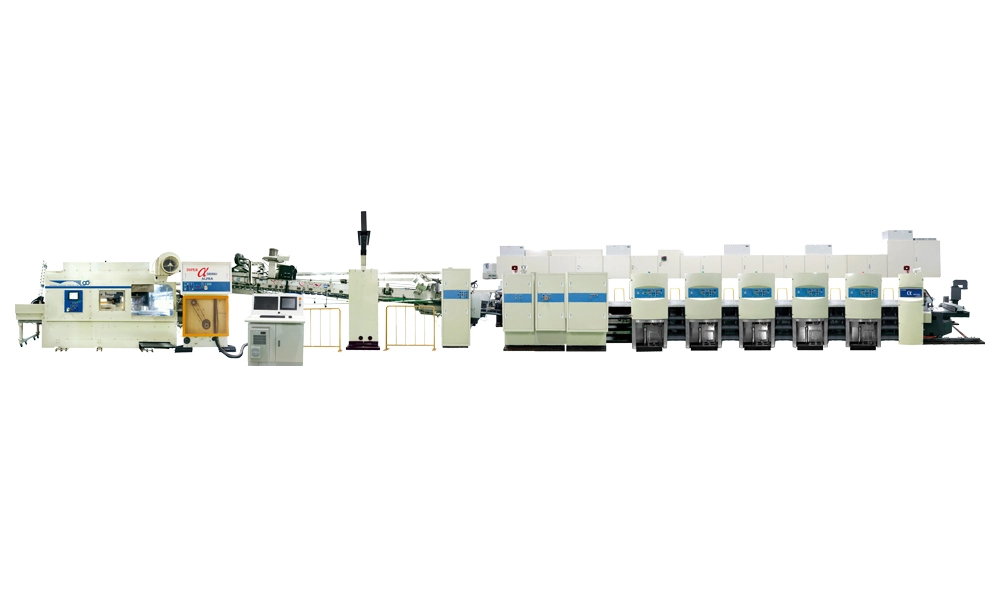
High-grade Full Automatic Flexo Printing Slotting Die Cutting Inline Folding Gluing and Countering Ejectoring Machine
Discover the Keshenglong&Shinko High-grade Full Automatic Flexo Printing Slotting Die Cutting Inline Folding Gluing and Countering Ejectoring Machine, the epitome of precision and efficiency. Ideal for modern packaging needs, this advanced machine streamlines operations by seamlessly integrating printing, slotting, die-cutting, folding, gluing, and ejecting processes. Elevate your production line with Keshenglong's innovative solution, designed to enhance productivity and deliver exceptional results.
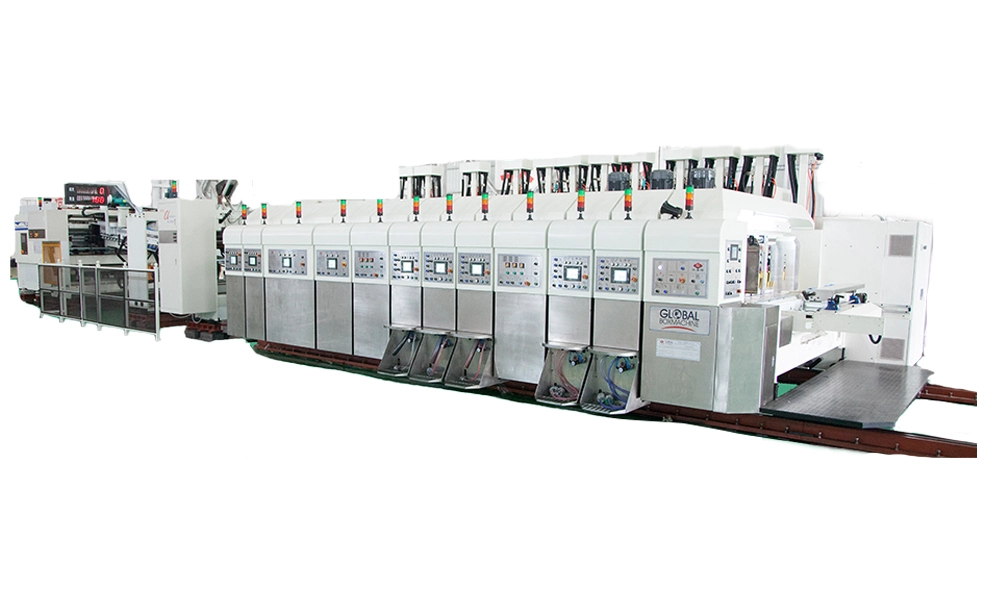
Computerized Flexo Printing Slotting Die-Cutting Inline Folding Gluing Countering Ejecting Machine
Introducing the Keshenglong&Shinko Computerized Flexo Printing Slotting Die-Cutting Inline Folding Gluing Countering Ejecting Machine. Engineered for precision, this advanced machine streamlines your packaging production with integrated Flexo Printing Slotting Die-Cutting functionalities. Seamlessly perform inline folding, gluing, countering, and ejecting—all in one efficient system. Designed for optimal performance, it enhances productivity while reducing downtime.
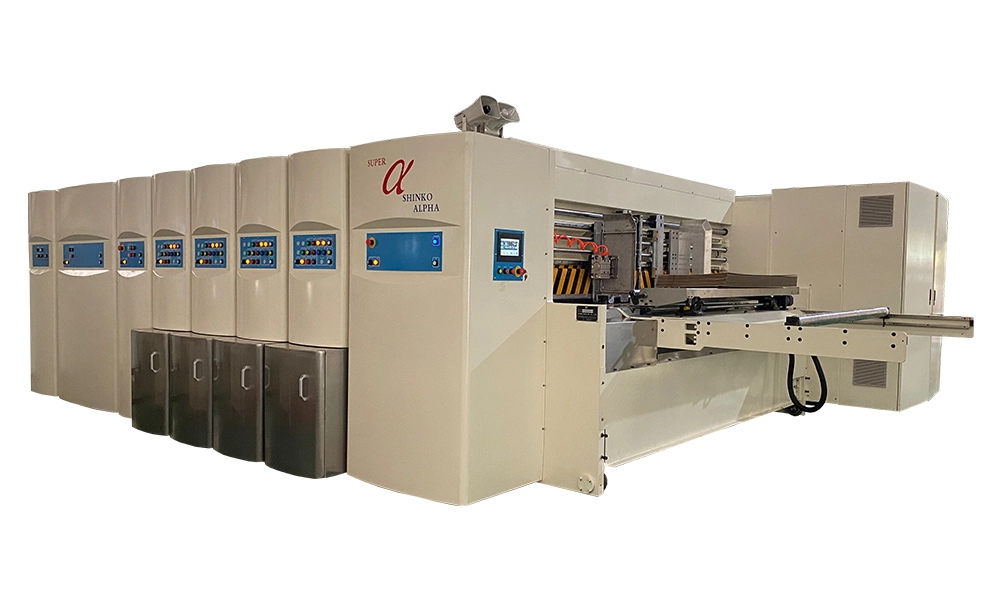
Shinko Super Alpha Movable Type Full Servo Drive Flexo Printing Slotting Die Cutting Machine
Introducing the Shinko Super Alpha Movable Type Full Servo Drive Flexo Printing Slotting Die Cutting Machine by Keshenglong. Engineered for precision and efficiency, this state-of-the-art machine enhances your production line with its advanced servo drive technology. Designed for seamless Flexo printing, slotting, and die-cutting, it ensures superior quality with every output.
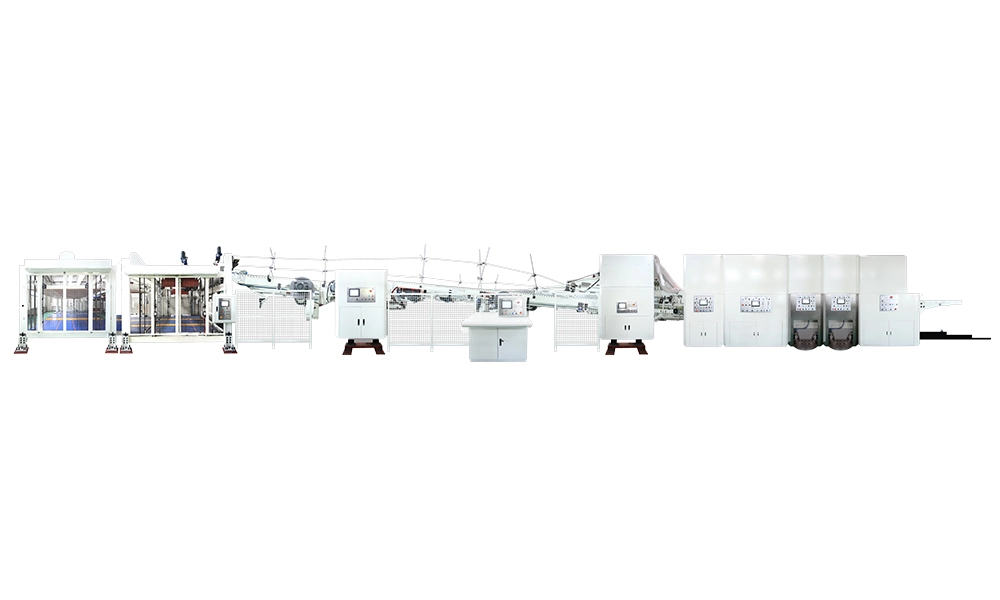
Jumbo Flexo Bottom Printing Slotting Die-Cutting Inline Folding Gluing Countering Ejecting Machine
Introducing the Keshenglong&Shinko Jumbo Flexo Bottom Printing Slotting Die-Cutting Inline Folding Gluing Countering Ejecting Machine. This advanced flexo printing slotting die-cutting machine ensures precision and efficiency for your packaging needs. Designed as a versatile flexo folder gluer machine, it optimizes every step from printing to ejecting, delivering seamless integration and superior quality.


© 2025 Keshenglong & SHINKO All Rights Reserved.
Keshenglong Carton Packing Machine
Keshenglong Carton Packing Machine
Keshenglong Carton Packing Machine
Keshenglong Carton Packing Machine
Keshenglong Carton Packing Machine