
Common flexo printing problems and troubleshooting guide
- Fixing pressroom bottlenecks in corrugated flexo printing
- Why this guide matters to flexo printer operators and plant managers
- Common print defects, causes and immediate fixes for flexo printers
- How to prioritize troubleshooting (production-first approach)
- In-depth: anilox-related problems and maintenance best practices for a flexo printer
- Inspection and cleaning protocol
- When to recondition vs replace
- Registration, plate mounting, and mechanical accuracy for corrugated flexo printing
- Plate mounting checklist for reliable registration
- Ink chemistry, drying and substrate compatibility on a flexo printer
- Practical checks for ink and dryer tuning
- Web handling, tension control and its effect on quality and waste
- Simple field methods to diagnose tension problems
- When to upgrade: buying considerations for a new flexo printer
- Sample comparison: retrofit vs new flexo press features
- Keshenglong & Shinko: supplier profile and why their flexo printer solutions matter
- Keshenglong & Shinko key products and competitive advantages
- How Keshenglong addresses common flexo printer pain points
- Preventive maintenance plan (30/90/365 day checklist) for flexo printers
- FAQ — Common questions operators and buyers search for
- Q1: What is the most common failure on a flexo printer?
- Q2: How often should an anilox roll be cleaned or replaced?
- Q3: Can I retrofit automation to my existing flexo printer to improve registration?
- Q4: What are best practices for drying/curing on corrugated board?
- Q5: How do I choose the right anilox line-screen and cell volume for my job?
- Q6: What training should operators have to reduce pressroom defects?
- Contact and product information
- References
Fixing pressroom bottlenecks in corrugated flexo printing
Why this guide matters to flexo printer operators and plant managers
If you run a corrugated carton production line or manage a printroom, downtime and quality rework from a flexo printer translate directly into cost overruns and missed delivery windows. This guide draws on industry best practices and years of pressroom troubleshooting to help you identify the root causes of common flexo printing problems, implement practical fixes, and establish preventive routines that improve first-pass yield. It is designed for operators, maintenance teams, prepress staff and procurement specialists evaluating new flexo equipment.
Common print defects, causes and immediate fixes for flexo printers
Below is a focused troubleshooting table you can use at the press to quickly diagnose faults. Keep this checklist on the pressroom wall or in a digital SOP.
| Defect | Likely cause(s) | Quick inspection checklist | Troubleshooting steps / Fix |
|---|---|---|---|
| Weak print / mottling | Insufficient ink transfer (anilox wear or wrong cell volume), incorrect ink viscosity, doctor blade issue | Check anilox cell line-screen, measure viscosity, inspect doctor blade contact | Replace/clean anilox, adjust viscosity (±2–5s Zahn cup depending on ink), align doctor blade; do a density sweep and compare to target. |
| Streaks / hickeys | Contamination on plate/anilox, dried ink debris, foreign particle on substrate | Inspect plates and anilox under magnification, roll substrate path for debris | Clean anilox and plates, use anilox cleaner & ultrasonic cleaning for stubborn build-up, implement substrate cleaning brushes. |
| Poor registration / ghosting | Imprecise plate mounting, sleeve/cylinder backlash, web tension variation | Check plate alignment marks, measure web tension across width, inspect gear/backlash | Re-mount plates with calibrated tools, reduce tension spikes, service drive components, use closed-loop registration control. |
| Ink rub-off / scuffing | Improper drying/curing, incompatible inks vs coating, too high ink film thickness | Touch-dry test, check dryer settings and conveyor speed | Increase dryer temperature or dwell time, switch to faster-curing inks, reduce anilox volume or speed to decrease laydown. |
| Banding / tone banding | Anilox cell patterns, press speed resonance, uneven anilox wear | Rotate print sample, change speed slightly, swap anilox roll if available | Replace/conditionally recondition anilox, avoid resonance speeds, consider different cell geometry. |
How to prioritize troubleshooting (production-first approach)
When multiple defects appear, use this triage: 1) safety and containment (stop if substrate jams or fire risk); 2) defects that cost most per meter (registration on printed logos, color density on key panels); 3) root causes affecting multiple stations (web tension, anilox condition). Fix the cross-cutting root cause first—this often resolves several visible issues.
In-depth: anilox-related problems and maintenance best practices for a flexo printer
The anilox roll controls ink film volume and uniformity—arguably the most critical component for print consistency on a flexo printer. Symptoms like mottling, streaks, or banding often trace back to the anilox.
Inspection and cleaning protocol
Routine: visual inspection each shift, tactile check for raised debris, and weekly ultrasonic cleaning for ceramic aniloxes in medium-to-high-use environments. Avoid metallic brushes that can damage ceramic cell walls. For hardened build-up use approved chemical cleaners followed by ultrasonic treatment. Track cell counts and measure line-screen wear; replace when cell volume is reduced beyond acceptable tolerance for your job.
When to recondition vs replace
Reconditioning can restore limited wear but may not recover original cell geometry. Replace anilox rolls that show fractured cells, deep scratches, or permanent glaze that cannot be removed by chemical/ultrasonic cleaning. Keep spare aniloxes with common cell counts for your most frequent jobs to reduce downtime.
Registration, plate mounting, and mechanical accuracy for corrugated flexo printing
Corrugated substrates magnify registration errors due to board flexibility and variation in flute. Mechanical accuracy—stability of sleeve/cylinder, correct backlash compensation, and precision plate mounting—determine whether your flexo printer can hold tight tolerances.
Plate mounting checklist for reliable registration
- Use calibrated mounting fixtures and laser alignment if available.
- Allow plates to relax after storage and condition them to pressroom temperature.
- Use registration marks and perform step-and-repeat checks at each mounting.
- For sleeve systems, ensure axial positioning repeatability is within your spec (typically <0.1 mm for high-precision jobs).
Ink chemistry, drying and substrate compatibility on a flexo printer
Wrong ink choice or poor drying is a major cause of scuffing, tack, and adhesion problems. Water-based, solvent-based and UV flexo inks each have operational differences and drying requirements.
Practical checks for ink and dryer tuning
- Measure ink viscosity and tack prior to printing and adjust with recommended reducers or additives; document target values for each job.
- Perform a cross-hatch adhesion test on the finished board; it helps detect substrate-incompatibility early.
- Balance dryer temperature, IR intensity and conveyor speed to ensure ink reaches proper film formation without overheating corrugated board (which causes warp and delamination).
Web handling, tension control and its effect on quality and waste
Uneven tension creates registration shifts, wrinkles and print repeats. Modern flexo printer designs use segmented pull rolls, dancer systems and web steering to stabilize the web. If your production line lacks closed-loop tension control, consider retrofitting tension sensors and PLC control to reduce waste.
Simple field methods to diagnose tension problems
- Run the press at a reduced speed and observe for lateral movement; use temporary edge guides to test behavior.
- Check roller bearings for play and worn journals—these show as cyclical registration errors.
- Measure tension across the web width using a handheld tension meter at multiple points.
When to upgrade: buying considerations for a new flexo printer
If recurring issues cost more in downtime and rework than the capital investment, it’s time to evaluate new equipment. Consider the following commercial-intent criteria while selecting a flexo printer supplier:
- Repeatability of sleeve/cylinder positioning and registration systems
- Anilox handling and indexing features
- Automation level for plate mounting, ink control, and web tension
- After-sales service footprint and spare parts availability
Sample comparison: retrofit vs new flexo press features
| Feature | Retrofit (cost-effective) | New flexo printer (higher CAPEX) |
|---|---|---|
| Registration accuracy | Improved but limited by base mechanics | High: servo-driven closed-loop systems |
| Automation | Partial: add-on systems | Full: plate loader, ink feed, diagnostics |
| Downtime reduction | Moderate | High |
| ROI timeline | Shorter term (if targeted) | Long-term with consistent high throughput |
Keshenglong & Shinko: supplier profile and why their flexo printer solutions matter
Keshenglong, founded in 1995, specializes in corrugated carton printing and packaging machinery and has become a leading Chinese manufacturer of flexo printing solutions. Merged into Keshenglong in 2017, Japan Shinko continues as the R&D center and production base, while a second production base operates in Guangzhou. Main parts are imported from Japan, production is guided by experienced Japanese technicians, and equipment is installed and tested on-site to maintain high standards originally established by Japan Shinko. As an integrated intelligent packaging solutions supplier, Keshenglong's products have been exported to more than 70 countries.
Keshenglong & Shinko key products and competitive advantages
- Product range: corrugated carton flexo printing machine, flexo printing slotting die-cutting machine, flexo printing slotting die-cutting & stacker machine, flexo printer, corrugated box printing machine.
- Technical strengths: combination of Japanese R&D precision and local manufacturing scale; main parts imported from Japan to ensure durability and accuracy.
- Unique offers: high-speed computerized flexo slotting die-cutting (1–6 color), 6+1 high-precision printing and slotting machines, top & bottom printing slotting die-cutting solutions and jumbo-size machines for large formats.
- Service footprint: on-site installation, testing and instruction supported by Japanese technicians, global export experience to 70+ countries, and integrated solutions for corrugated carton production lines.
How Keshenglong addresses common flexo printer pain points
Keshenglong machines focus on mechanical precision (minimizing registration drift), robust anilox handling and integrated automation for plate mounting and die-cutting—areas that directly reduce run-in waste and rework. Their combined flexo printing and slotting die-cutting lines reduce material handling errors between separate operations, lowering the chance of mis-registration and cumulative defects.
Preventive maintenance plan (30/90/365 day checklist) for flexo printers
Implementing a documented preventive maintenance schedule reduces unplanned downtime and extends the life of consumables:
- Daily: visual inspection, anilox wipe, doctor blade check, quick registration test.
- Monthly (30 days): measure anilox cell volume, inspect bearings and belts, clean dryer conveyors, calibration check for registration sensors.
- Quarterly (90 days): ultrasonic clean aniloxes, full ink system flush, software backup, servo and encoder inspection.
- Annually (365 days): full press rebuild checklist, replace high-wear parts, re-validate slitters and die-cutting tooling, comprehensive training refresh for operators.
FAQ — Common questions operators and buyers search for
Q1: What is the most common failure on a flexo printer?
A1: The most frequent issues are ink transfer problems due to anilox wear or contamination, and registration errors caused by plate mounting or web handling instability.
Q2: How often should an anilox roll be cleaned or replaced?
A2: Light cleaning daily or per shift is common; ultrasonic cleaning weekly or bi-weekly depending on usage. Replace when cell volume loss degrades print quality beyond acceptable tolerance—typically measured and tracked with a cell volume test.
Q3: Can I retrofit automation to my existing flexo printer to improve registration?
A3: Yes. Many dies and sleeve machines can be retrofitted with closed-loop registration systems, servo drives and tension control—though mechanical limitations of the base frame will cap maximum achievable accuracy.
Q4: What are best practices for drying/curing on corrugated board?
A4: Use staged drying combining IR and hot air to minimize board overheating. Tune dryer settings for ink type and board thickness; perform adhesion and scuff tests before full production runs.
Q5: How do I choose the right anilox line-screen and cell volume for my job?
A5: Match line-screen and cell volume to required ink laydown and dot reproduction. Fine screens (e.g., 400–1000 lpi) for high-resolution graphics, lower lpi/higher cell volume for solid laydowns. Consult ink supplier and anilox manufacturer for recommended pairings.
Q6: What training should operators have to reduce pressroom defects?
A6: Operators should be trained in plate mounting, anilox inspection and cleaning, basic rheology (viscosity/tack), web tension diagnostics and use of registration tools. Regular refreshers and problem-based drills reduce human error significantly.
Contact and product information
If you need tailored troubleshooting support, spare parts, or want to evaluate corrugated carton flexo printing machines and integrated slotting die-cutting solutions, contact Keshenglong. Their product portfolio—including flexo printers, computerized high-speed flexo slotting die-cutting machines (1–6 color), flexo case makers, 6+1 precision machines and top & bottom printing slotting die-cutting machines—covers small to jumbo-size corrugated production lines. Keshenglong provides on-site installation and testing, with Japanese R&D and key imported components to ensure consistent quality.
For consultation, machine demos or spare parts inquiries: reach out to Keshenglong sales or your local distributor to schedule an on-site assessment and ROI analysis tailored to your production profile.
References
- Flexography - Wikipedia. https://en.wikipedia.org/wiki/Flexography (accessed 2025-12-13)
- Anilox roll - Wikipedia. https://en.wikipedia.org/wiki/Anilox_roll (accessed 2025-12-13)
- Flexographic Technical Association (FTA) – Resources. https://flexography.org/resources/ (accessed 2025-12-13)
- FINAT – Technical Guidelines for Label Converters. https://www.finat.com/ (accessed 2025-12-13)
- Packaging Europe – Articles and industry insight on corrugated printing. https://www.packagingeurope.com/ (accessed 2025-12-13)
For deeper technical training or a site-specific troubleshooting plan, contact Keshenglong for machine specifications and service options.
Everything You Need to Know About flexo printer slotter die cutter
Top flexo corrugated box printing slotting die cutting machine Manufacturers and Suppliers in us
Top 5 flexo machine printing Company List and Products Compared
Where to Buy Cardboard Folding Gluing Machine in Manchester
Industry Solutions
Do you offer solutions for environmentally friendly packaging?
Yes, our machines can produce cartons from recyclable and biodegradable materials, supporting sustainable packaging solutions.
Shipping
How are your machines packaged for safe transportation?
Our machines are securely packaged using high-quality materials to prevent damage during transit.
Product
What is the maximum speed of your folding carton machines?
Our machines can operate at speeds of up to 150 cartons per minute, depending on the model and carton complexity.
How can I integrate your machines into my existing production line?
Our technical team can assist with integrating our machines into your current production setup, ensuring a seamless operation.
Can your machines handle custom carton designs?
Yes, our machines can be customized to handle various carton designs and specifications.
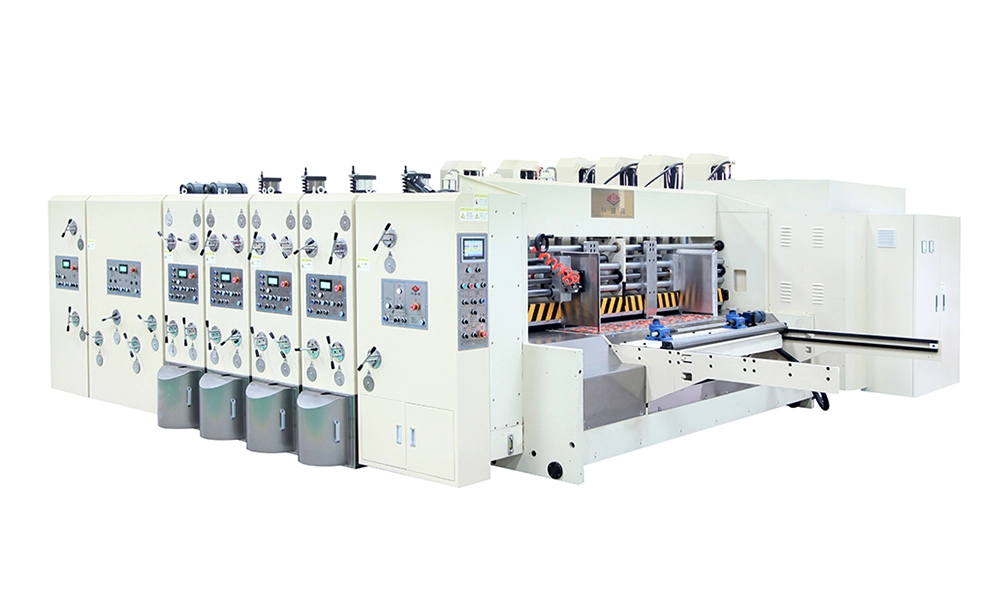
Computerzied Semi Auto Flexo Printing Slotting Die-Cutting Machine
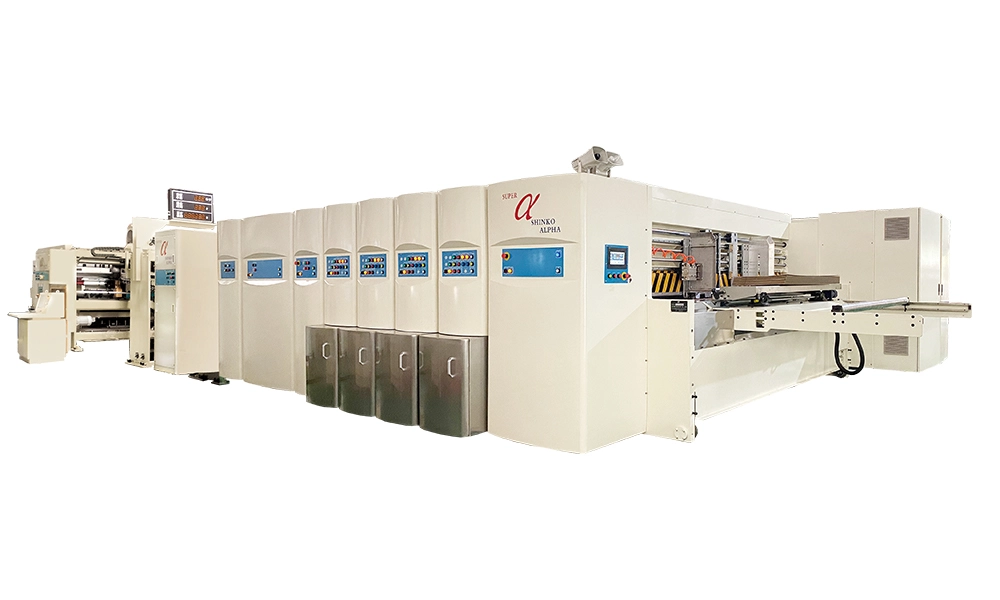
Shinko Super Alpha Movable Type Full Servo Drive Flexo Printing Slotting Die Cutting Inline Folding Gluing Counting Ejecting Machine
This state-of-the-art Movable Type Full Servo Drive Flexo Printing Slotting Die Cutting Machine streamlines your production with precision. Experience seamless operation with its Inline Folding Gluing Counting Ejecting capabilities, ensuring unparalleled efficiency. Designed for high-performance tasks, this Keshenglong&Shinko Super Alpha Movable Type Full Servo Drive Flexo Printing Slotting Die Cutting Inline Folding Gluing Counting Ejecting Machine enhances productivity while maintaining premium quality. Ideal for businesses seeking innovation and reliability, the Shinko Super Alpha is your go-to solution for advanced printing and cutting needs.
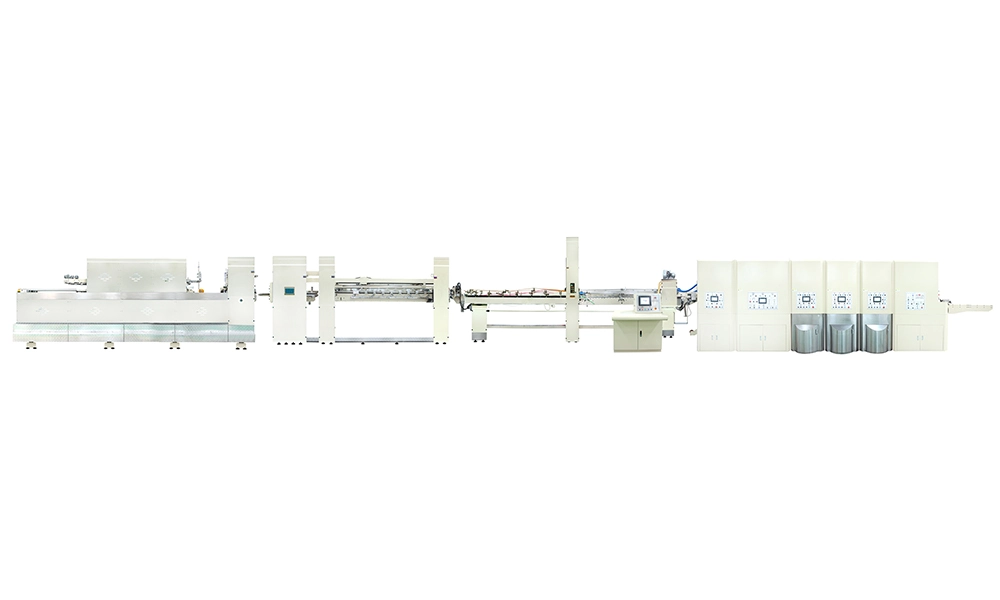
Computerized Flexo Printing Slotting Die-Cutting Inline Folding Gluing and Stitching Machine
Introducing the Keshenglong&Shinko Computerized Flexo Printing Slotting Die-Cutting Inline Folding Gluing and Stitching Machine, a pinnacle of precision and efficiency. This state-of-the-art machine revolutionizes packaging production with seamless integration of printing, slotting, die-cutting, folding, gluing, and stitching. Designed to optimize your workflow, the Computerized Flexo Printing Slotting Die-Cutting Machine enhances accuracy and productivity.
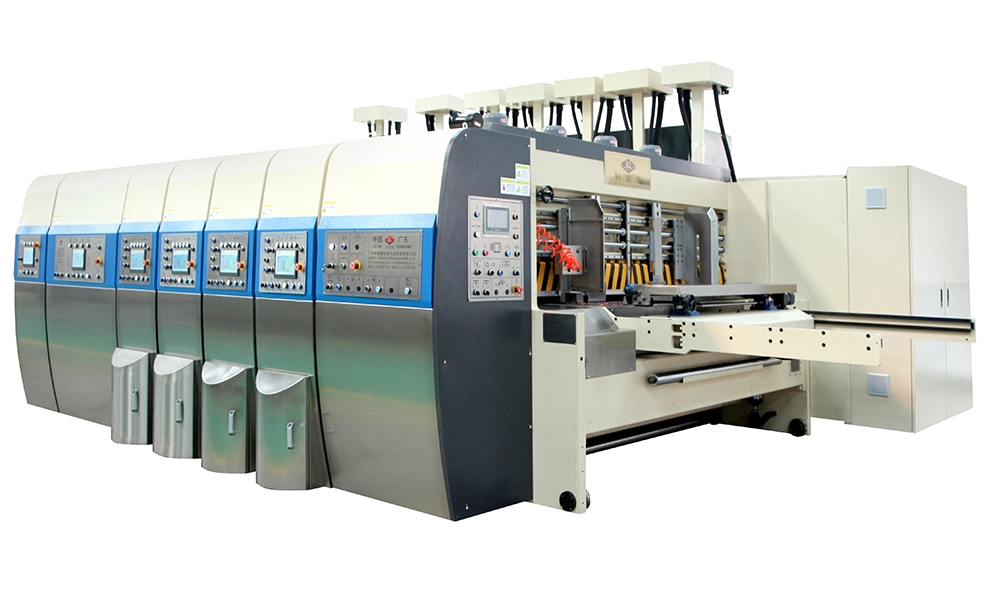
Computerized Flexo Top Bottom Printing Slotting Die-Cutting Machine
Introducing the Keshenglong&Shinko Computerized Flexo Top Bottom Printing Slotting Die-Cutting Machine, designed to enhance your packaging efficiency. Engineered for precision, this high-performance machine offers seamless integration of flexo printing and die-cutting processes. Perfect for a variety for packaging needs, it ensures superior quality and productivity. With user-friendly controls and robust construction, it guarantees reliable operation and minimal downtime. Optimize your production line with Keshenglong’s trusted technology. Explore advanced capabilities with our Flexo Top Bottom Printing Slotting Die-Cutting Machine today.


© 2025 Keshenglong & SHINKO All Rights Reserved.
Keshenglong Carton Packing Machine
Keshenglong Carton Packing Machine
Keshenglong Carton Packing Machine
Keshenglong Carton Packing Machine
Keshenglong Carton Packing Machine