
Choosing Flexo Inks: Water-based vs UV vs Solvent
- Key factors when selecting inks for corrugated flexo printing
- Production goals and print quality
- Substrate and coating compatibility
- Regulatory, environmental and customer requirements
- Performance comparison: Water-based vs UV vs Solvent
- Overview of each chemistry
- Direct performance trade-offs
- Comparison table
- Operational and environmental considerations for your flexo printer machine
- Drying, ventilation and plant layout
- Worker safety, regulations and compliance
- Lifecycle and sustainability metrics
- Choosing the right ink for your job mix and press fleet
- Match ink chemistry to your job profile
- Process controls and prepress considerations
- Testing and supplier qualification
- Keshenglong & Shinko: capabilities, strengths and product fit
- Company profile and integration
- Why Keshenglong matters for ink selection and press performance
- Competitive differentiators and technical credibility
- Practical selection checklist for your converters and production managers
- Operational checklist
- Technical checklist
- Commercial checklist
- Frequently Asked Questions (FAQ)
- 1. Which ink type is best for high-speed corrugated production?
- 2. Are water-based inks suitable for high-quality retail graphics?
- 3. How do VOC regulations affect my choice?
- 4. Will UV inks harm recyclability of corrugated board?
- 5. What are the safety considerations for switching to solvent-based inks?
- 6. How should I evaluate an equipment supplier for ink compatibility?
Choosing the right ink chemistry for your flexo printer machine is one of the most consequential decisions for print quality, throughput, regulatory compliance, and total cost of ownership. This article compares water-based, UV-curable, and solvent (solvent-borne) flexo inks across performance, environmental impact, substrate compatibility, and operational considerations. Throughout, I draw on industry references and operational experience to give practical, verifiable guidance for corrugated carton and box makers looking to optimize their flexo printing lines.
Key factors when selecting inks for corrugated flexo printing
Production goals and print quality
Start with output requirements: are you prioritizing high-definition graphics, fast throughput, or low running cost? For corrugated carton flexo printing, the balance between print sharpness and cost often determines whether converters choose water-based, UV, or solvent-based inks. A flexo printer machine running 1–6 colors for short runs will have different needs than a high-speed inline finishing line producing thousands of boxes per hour.
Substrate and coating compatibility
Uncoated kraft, clay-coated (C1S/C2S) and coated testliners react differently to each ink type. Water-based inks penetrate and bond well on uncoated kraft but can cause board swelling or set-off if not dried correctly. UV inks form a surface film and are often preferred for coated liners or when high gloss and rub resistance are needed. Solvent inks can improve adhesion on challenging substrates but carry higher VOC burdens.
Regulatory, environmental and customer requirements
Environmental regulations (VOC limits, worker exposure) and end-customer sustainability demands increasingly influence ink choice. Many brands now specify low-VOC or near-zero VOC chemistry for packaging. Review regional rules (for example, EPA guidance in the US and VOC directives in the EU) and your buyers' sustainability standards before choosing a chemistry.
Performance comparison: Water-based vs UV vs Solvent
Overview of each chemistry
Water-based flexo inks use water as the primary carrier and film-forming polymers like acrylics. UV-curable inks rely on oligomers and monomers that crosslink under ultraviolet light, producing near-instant cure. Solvent-borne inks use organic solvents as carriers and dry by evaporation.
Direct performance trade-offs
Key trade-offs are drying/curing speed, VOC emissions, rub/scuff resistance, and substrate flexibility. UV inks typically give the highest instant tack resistance and gloss; water-based inks can be economical and environmentally preferred when properly set up; solvent inks often offer best initial adhesion on difficult substrates but at the cost of emissions and ventilation requirements.
Comparison table
| Property | Water-based | UV-curable | Solvent-borne |
|---|---|---|---|
| Drying / Curing | Evaporation + IR/air ovens; moderate speed, needs correct oven length and airflow | Instant cure under UV lamps; virtually immediate handling | Evaporation; moderate to fast depending on solvent and ventilation |
| Typical VOC (typical ranges) | Low to moderate (<50 g/L common with good formulations) | Near-zero to negligible VOCs (UV does not rely on solvent evaporation) | High (often 200–800 g/L depending on formulation) |
| Print quality | Good for solid coverage; slightly lower dot sharpness vs UV | Excellent dot definition, high gloss, superb scuff resistance | Good coverage and adhesion; variable gloss |
| Substrate suitability | Excellent for uncoated kraft and paperboard when dried correctly | Best for coated liners, films, and when immediate handling/stacking needed | Versatile on difficult substrates but requires ventilation |
| Equipment implications | Requires well-designed drying ovens and tension control on flexo printer machine | Needs UV lamp banks, proper shielding, and ventilation for ozone (if mercury lamps) | Requires solvent handling, explosion-proof equipment, VOC controls |
| Total cost considerations | Lower ink cost; higher utility/drying energy and possible throughput impact | Higher ink cost but faster line speeds and reduced rework | Higher regulatory and safety costs; mid-range ink pricing |
Sources: general flexography overview and UV-curing technology descriptions found on Wikipedia - Flexography and Wikipedia - Ultraviolet curing.
Operational and environmental considerations for your flexo printer machine
Drying, ventilation and plant layout
Water-based systems require sufficient oven length, correct airflow patterns, and sometimes IR preheat to avoid board warp and set-off. UV systems need lamp arrays (LED or mercury) and shielding; older mercury lamps also generate ozone and require extraction. Solvent systems mandate explosion-proof fans, solvent recovery or incineration systems, and strict storage rules. Plan press lines and finishing in the context of your facility’s HVAC and environmental controls.
Worker safety, regulations and compliance
Solvent inks bring worker exposure and solvent management responsibilities; follow local guidance such as the US EPA and OSHA requirements. Water-based and LED-UV reduce VOC exposure, but PPE and training remain essential. For regulatory background on printing VOCs and relevant controls, see the EPA guidance and industry resources such as the European Printing Ink Association (EuPIA).
Lifecycle and sustainability metrics
Assessing sustainability should include cradle-to-grave analysis: raw material sourcing, VOC emissions, energy consumption for drying/curing, and end-of-life recyclability. UV-cured inks can complicate recycling if they affect fiber bonding in corrugated recycling streams; however, many modern formulations are designed to be recyclable—check supplier compliance and test for repulpability where packaging recyclability is important to your customers.
Choosing the right ink for your job mix and press fleet
Match ink chemistry to your job profile
For short-run, high-graphic retail boxes where quick turnaround and high gloss are required, UV-curable inks on a high-speed flexo printer machine (often with inline finishing) are a strong choice. For commodity corrugated shipments where cost and recyclability matter, water-based inks on a conventional press may be optimal. Solvent inks remain a solution when adhesion to difficult substrates or outdoor durability is essential and regulatory controls are in place.
Process controls and prepress considerations
Ink selection impacts anilox roll choice, screening and dot gain compensation, and anilox cell volume. UV inks typically require lower tack for high-definition reproduction and precise anilox selection to control ink film thickness. Work with suppliers and your prepress team to profile press curves using a target press profile standard and to verify color and dot gain on the actual corrugated board you run.
Testing and supplier qualification
Always run pilot trials with your flexo printer machine and the exact substrates and board flute structure you use. Check adhesion, scuff, slip, stackability, and repulpability if relevant. Request technical data sheets (TDS) and safety data sheets (SDS) from ink suppliers, and verify claims such as VOC levels, migration/food-contact compliance, and repulpability. Industry references and standards (for example, guidelines from Flexography resources) help establish test protocols.
Keshenglong & Shinko: capabilities, strengths and product fit
Company profile and integration
Keshenglong, founded in 1995, specializes in manufacturing corrugated carton printing machines and end-to-end packaging solutions. Their portfolio includes flexo printer machines, computerized high-speed flexo slotting die-cutting machines (1–6 color), flexo case makers, precision '6+1' printing slotting die-cutting machines, and jumbo-size machines. After merging with Japan Shinko in 2017, Keshenglong retained Shinko as the R&D center and production base while expanding a production base in Guangzhou, China. Main parts are imported from Japan and assembly is guided by experienced Japanese technicians to align quality with Japanese standards.
Why Keshenglong matters for ink selection and press performance
Keshenglong’s integrated approach—matching corrugated box machinery with compatible ink handling, drying/curing systems, and finishing—helps converters optimize ink choice for their flexo printer machine. Their product range (corrugated carton flexo printing machine, flexo printing slotting die-cutting machine, flexo printing slotting die-cutting and stacker machine, flexo printer, corrugated box printing machine) allows customers to evaluate complete line performance when choosing between water-based, UV, and solvent inks.
Competitive differentiators and technical credibility
Key competitive advantages include long industry history, Japanese R&D integration (Shinko) for precision components, and export footprint to over 70 countries. The combination of imported main parts, Japanese technical instruction, and local production yields a balance of global quality standards with competitive cost structures—especially relevant when specifying UV lamp systems, drying ovens, or solvent handling options for a new flexo printer machine line.
Practical selection checklist for your converters and production managers
Operational checklist
- Define end-use: retail display (high graphics) vs bulk corrugated (cost sensitive).
- Audit existing plant for oven length, UV capability (LED vs mercury), and ventilation/VOC controls.
- Confirm substrate types, coatings, and buyer requirements (recyclability, food contact).
Technical checklist
- Run press trials on the actual flexo printer machine and substrate.
- Collect TDS/SDS and third-party migration or recycling test reports.
- Verify anilox selection, tack control, and curing/drying parameters with ink supplier.
Commercial checklist
- Compare total landed cost: ink price, energy, ventilation, waste handling, and throughput effects.
- Negotiate test quantities and technical support from ink and equipment suppliers (e.g., Keshenglong).
- Document standard operating procedures for changeovers and maintenance.
Frequently Asked Questions (FAQ)
1. Which ink type is best for high-speed corrugated production?
UV-curable inks generally enable the highest effective throughput because of instant cure and rapid inline finishing. However, this requires investment in UV lamp banks (LED or mercury) and validation for substrate recyclability if that is a customer requirement.
2. Are water-based inks suitable for high-quality retail graphics?
Water-based inks can produce excellent solids and acceptable graphics on many boards, but they typically show slightly less dot crispness and slower drying times than UV systems. With proper oven configuration and prepress compensation, water-based systems remain a cost-effective option for many retail cartons.
3. How do VOC regulations affect my choice?
Regulations vary by jurisdiction. Solvent inks have the highest VOC footprint and may trigger permit requirements, VOC caps, or add-on controls (e.g., thermal oxidizers). UV (especially LED-UV) and modern water-based formulations can minimize VOC obligations. Consult local authorities and the EuPIA or national EPA guidance for specifics.
4. Will UV inks harm recyclability of corrugated board?
Some UV formulations can impact repulpability if they form an impermeable film. Many modern UV inks are designed for corrugated recycling; always request repulpability test data from the ink supplier and conduct your own repulp tests with your board.
5. What are the safety considerations for switching to solvent-based inks?
Switching to solvent inks requires explosion-proof equipment, solvent storage and handling protocols, air monitoring for worker exposure, and potential installation of VOC abatement systems. These factors increase capital and operating costs and must be balanced against adhesion and durability benefits.
6. How should I evaluate an equipment supplier for ink compatibility?
Ask suppliers like Keshenglong about their experience integrating UV lamps, drying ovens, solvent handling modules, and their recommendations for anilox/doctoring systems optimized for each ink chemistry. Verify references and ask for trial support on your actual flexo printer machine and substrate.
If you need tailored advice for your line, trials, or want to see compatible flexo printer machines and slotting die-cutting solutions, contact our team. For integrated intelligent packaging solutions and machines tested to Japanese standards, consider Keshenglong (merged with Japan Shinko). Our product line includes corrugated carton flexo printing machines, flexo printing slotting die-cutting and stacker machines, and high-precision '6+1' systems—designed for reliable performance on a full range of ink chemistries.
Contact us to request a consultation, on-site audit, or machine demo: sales@keshenglong.com. View product details and solutions portfolio on our website or request a tailored ROI and implementation plan for your flexo printer machine line.
Flexo vs digital printing: Which is best for packaging?
Everything You Need to Know About flexo printer slotter die cutter
Tips for Wholesale 4 color flexo printing slotting die cutting
Best professional flexo machine for packing industry manufacturers and supplier brands
Product
How do I troubleshoot common issues with the folding mechanism?
Common issues can often be resolved by checking the alignment of the folding plates and ensuring there is no debris obstructing the mechanism.
What materials are compatible with your folding carton machines?
Our machines are compatible with a wide range of materials including cardboard, corrugated board, and paperboard.
Are there safety features integrated into your machines?
Yes, our machines come equipped with multiple safety features including emergency stop buttons and safety guards.
Industry Solutions
What industries typically use your folding carton machines?
Our machines are used in various industries including food and beverage, pharmaceuticals, cosmetics, and electronics.
Shipping
What are the shipping dimensions and weight of your folding carton machines?
Shipping dimensions and weight vary by model; please refer to the specific product details for accurate information.
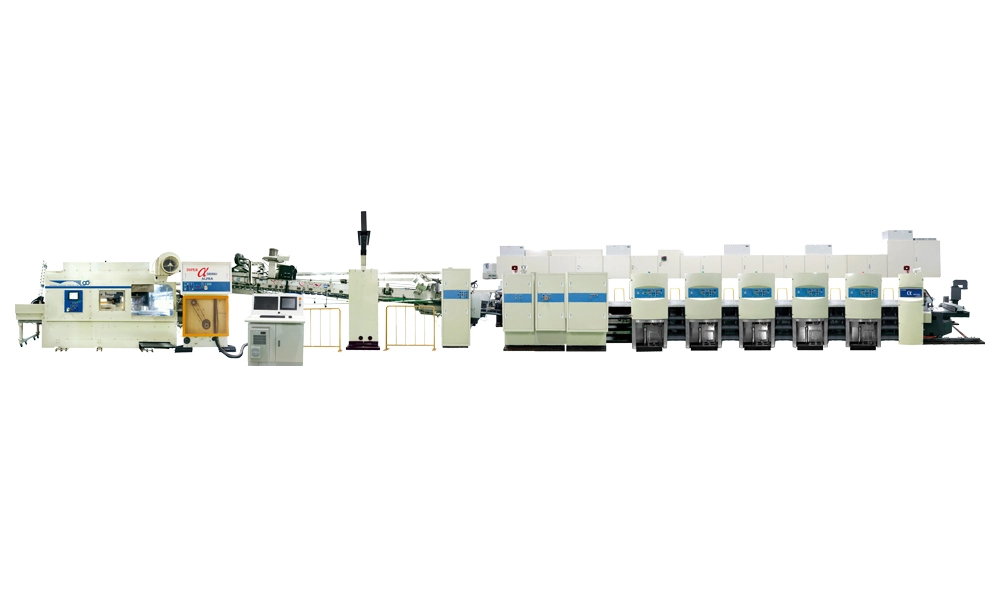
High-grade Full Automatic Flexo Printing Slotting Die Cutting Inline Folding Gluing and Countering Ejectoring Machine
Discover the Keshenglong&Shinko High-grade Full Automatic Flexo Printing Slotting Die Cutting Inline Folding Gluing and Countering Ejectoring Machine, the epitome of precision and efficiency. Ideal for modern packaging needs, this advanced machine streamlines operations by seamlessly integrating printing, slotting, die-cutting, folding, gluing, and ejecting processes. Elevate your production line with Keshenglong's innovative solution, designed to enhance productivity and deliver exceptional results.
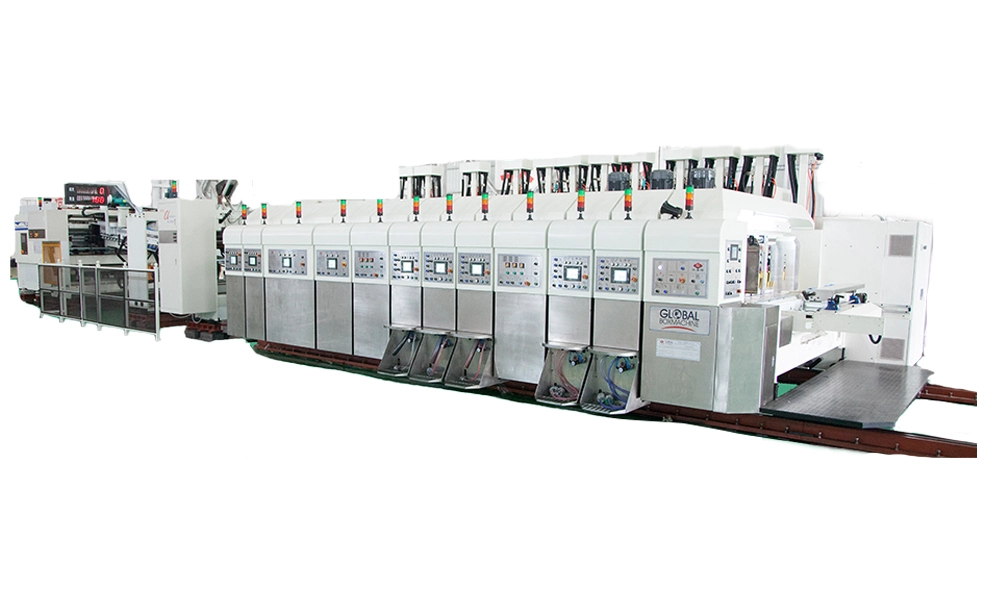
Computerized Flexo Printing Slotting Die-Cutting Inline Folding Gluing Countering Ejecting Machine
Introducing the Keshenglong&Shinko Computerized Flexo Printing Slotting Die-Cutting Inline Folding Gluing Countering Ejecting Machine. Engineered for precision, this advanced machine streamlines your packaging production with integrated Flexo Printing Slotting Die-Cutting functionalities. Seamlessly perform inline folding, gluing, countering, and ejecting—all in one efficient system. Designed for optimal performance, it enhances productivity while reducing downtime.
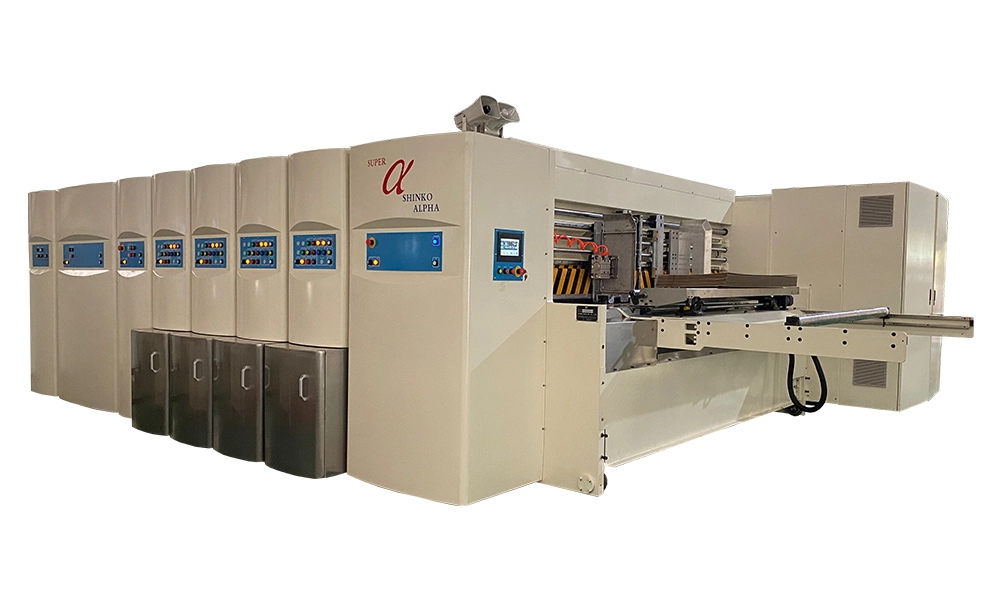
Shinko Super Alpha Movable Type Full Servo Drive Flexo Printing Slotting Die Cutting Machine
Introducing the Shinko Super Alpha Movable Type Full Servo Drive Flexo Printing Slotting Die Cutting Machine by Keshenglong. Engineered for precision and efficiency, this state-of-the-art machine enhances your production line with its advanced servo drive technology. Designed for seamless Flexo printing, slotting, and die-cutting, it ensures superior quality with every output.
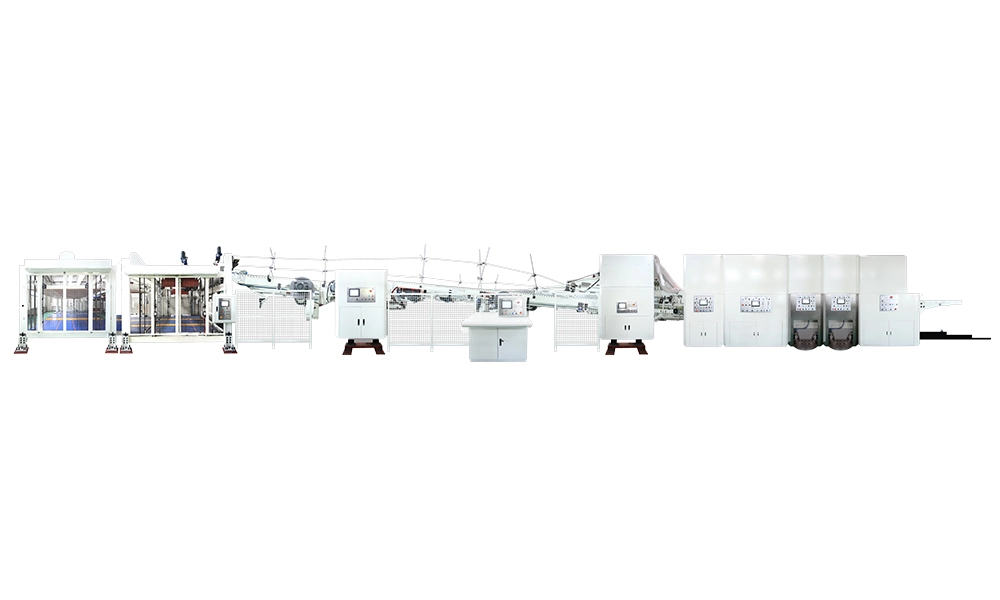
Jumbo Flexo Bottom Printing Slotting Die-Cutting Inline Folding Gluing Countering Ejecting Machine
Introducing the Keshenglong&Shinko Jumbo Flexo Bottom Printing Slotting Die-Cutting Inline Folding Gluing Countering Ejecting Machine. This advanced flexo printing slotting die-cutting machine ensures precision and efficiency for your packaging needs. Designed as a versatile flexo folder gluer machine, it optimizes every step from printing to ejecting, delivering seamless integration and superior quality.


© 2025 Keshenglong & SHINKO All Rights Reserved.
Keshenglong Carton Packing Machine
Keshenglong Carton Packing Machine
Keshenglong Carton Packing Machine
Keshenglong Carton Packing Machine
Keshenglong Carton Packing Machine