
How to Choose the corrugated box printer diecutter machine manufacturer and supplier in us?
- Introduction: Why the Right Corrugated Box Printer Diecutter Machine and Supplier Matter
- Context for buyers
- Understand Your Business Needs First
- Define production capacity and product mix
- Key Machine Types and Which One Suits You
- Flexo printer diecutter machine categories
- Critical Technical Specifications to Compare
- Speed (boxes per hour) and throughput
- Registration accuracy and print quality
- Automation, controls and integration
- Build quality, materials and core components
- Supplier Evaluation Criteria: More Than Price
- After-sales service and spare parts availability
- Installation, commissioning and training
- References, case studies and site visits
- Certifications and compliance
- Keshenglong — Company Overview and Why It May Be Relevant
- Background and product scope
- Global reach and solutions
- Financial Evaluation: Price, TCO and ROI
- Understand total cost of ownership (TCO)
- Calculate realistic ROI
- Warranty, Service Level Agreements and Spare Parts
- Insist on clear warranty scope
- Define SLA and critical spares list
- Practical Comparison: Machine Tiers and Buyer Fit
- Use this table to shortlist options
- Decision Checklist: 12 Questions to Ask Every Manufacturer/Supplier
- Make sure to get answers in writing
- Practical Buying Tips for US-Based Operations
- Consider logistic and regulatory implications
- Plan for ramp-up and continuous improvement
- Conclusion: How to Move Forward Confidently
- Make a shortlist, validate, and negotiate
- FAQ
Introduction: Why the Right Corrugated Box Printer Diecutter Machine and Supplier Matter
Context for buyers
Choosing the right corrugated box printer diecutter machine and supplier affects punch accuracy, production uptime, cost per box, and time-to-market. This guide helps packaging buyers, plant managers, and procurement teams evaluate manufacturers and suppliers—especially when searching for options serving the US market.
Understand Your Business Needs First
Define production capacity and product mix
Start by documenting your current and projected box types, board grades (single wall, double wall, kraft), run lengths, and target throughput. Typical capacity tiers are entry-level for regional converters, mid-range for medium volumes, and high-speed for large corrugators and fulfilment centers. Matching machine speed and format to demand avoids overpaying or underperforming.
Key Machine Types and Which One Suits You
Flexo printer diecutter machine categories
A corrugated box printer diecutter machine usually integrates flexographic printing, slotting, creasing, and rotary die-cutting. Common variants include:
- Flexo printing + slotting die-cutter (compact, efficient for most case & tray work)
- High-precision printing + slotting (for tight registration, high-quality graphics)
- Top-and-bottom printing slotting die-cutters (for full-surface registration control)
- Jumbo-size machines (for very wide web widths used in large formats)
Critical Technical Specifications to Compare
Speed (boxes per hour) and throughput
Check rated maximum speed and consistent production speed for your SKU mix. Typical industrial ranges: entry-level 4,000–6,000 BPH; mid-range 6,000–12,000 BPH; high-speed machines 12,000–20,000+ BPH depending on format and complexity. Choose equipment whose effective output aligns with your run lengths and downtime targets.
Registration accuracy and print quality
Look for registration systems (servo-driven web control, CCD cameras) that guarantee consistent print-to-slot registration (typical tolerance ±0.5–1.0 mm for high-precision machines). If brand graphics quality matters, verify anilox roll specifications, doctor blade systems, and drying/UV options.
Automation, controls and integration
Modern machines include PLC/HMI controls, job recall, remote diagnostics, and MIS/ERP integration. These improve changeover time, reduce operator error, and allow OEE monitoring. Ask for live demos of the HMI and request recorded job change timing data.
Build quality, materials and core components
Evaluate whether critical components (gearboxes, bearings, inverters, servo systems) are from reputable suppliers and whether spare parts are easily obtainable in the US. Machines with modular builds and Japanese or European key parts often provide longer service life and parts support.
Supplier Evaluation Criteria: More Than Price
After-sales service and spare parts availability
Prioritize suppliers who offer a clear service network or authorized partners within the US. Fast access to spare parts and trained technicians reduces downtime—often the largest hidden cost after purchase.
Installation, commissioning and training
Ensure the supplier includes installation, calibration, and operator+maintenance training in the contract. Request a written training plan and post-install support SLA.
References, case studies and site visits
Ask the manufacturer for references in the US or nearby regions with similar material and throughput. Where possible, visit an operating line or request live video of a comparable installation running your SKU profile.
Certifications and compliance
Verify ISO 9001 (quality management), CE (if relevant for imported equipment), and compliance with local electrical and safety standards. For imported equipment, understand US import rules, tariffs, and customs clearance responsibilities.
Keshenglong — Company Overview and Why It May Be Relevant
Background and product scope
Keshenglong, founded in 1995, specializes in corrugated carton printing and packaging machinery. Their product range includes flexo printers, computerized high-speed flexo slotting die-cutting machines (1–6 color), computerized high-speed flexo case makers, 6+1 precision printing slotting die-cutting machines, top & bottom printing slotting die-cutting machines, and jumbo-size flexo printing slotting die-cutting machines. The company merged Japan Shinko (R&D and production base) into Keshenglong in 2017 and maintains production facilities in Guangzhou, with many main parts imported from Japan and processes guided by experienced Japanese technicians to meet higher standards.
Global reach and solutions
As an integrated intelligent packaging solutions supplier, Keshenglong exports to more than 70 countries. For US buyers, the combination of Chinese manufacturing scale and Japanese engineering can offer competitive pricing with attention to precision components—if the supplier provides robust US-based support and spare parts supply.
Financial Evaluation: Price, TCO and ROI
Understand total cost of ownership (TCO)
Beyond purchase price consider installation, freight, import duties, commissioning, spare parts inventory, service contracts, energy consumption, and expected residual value. Often a lower upfront price can cost more over 3–5 years if service or parts are slow to obtain.
Calculate realistic ROI
Run sample calculations using your average order size, expected uptime, speed, and scrap rate. Include training and first-year spare parts in the model. Request the supplier provide actual customer case ROI where possible.
Warranty, Service Level Agreements and Spare Parts
Insist on clear warranty scope
Obtain written warranty details (duration, parts vs. labor, exclusions). For imported equipment, clarify who pays for international travel for technicians and whether remote support is included.
Define SLA and critical spares list
Negotiate response times for critical failures and keep a small on-site inventory of wear parts (doctor blades, anilox sleeves, belts, sensors). A good supplier will recommend and supply a recommended spares kit tailored to your machine.
Practical Comparison: Machine Tiers and Buyer Fit
Use this table to shortlist options
| Feature | Entry-level | Mid-range | High-end |
|---|---|---|---|
| Typical speed (BPH) | 4,000–6,000 | 6,000–12,000 | 12,000–20,000+ |
| Registration accuracy | ±1–2 mm | ±0.5–1.0 mm | ±0.2–0.7 mm |
| Typical buyer | Small converters, short runs | Regional packers, multi-SKU | Large converters, high-volume e-commerce |
| Automation level | Basic | Medium (job recall) | High (MIS integration, onboard diagnostics) |
Decision Checklist: 12 Questions to Ask Every Manufacturer/Supplier
Make sure to get answers in writing
- What are the machine’s guaranteed production and tested production figures for our SKU mix?
- Who supplies the core components (servo, gearboxes, inverters, cameras)?
- What are recommended spare parts and lead times for each?
- What is included in installation, commissioning, and training?
- What local US support or authorized service partners exist?
- Can we visit a live installation or get a demo with our substrates/graphics?
- What warranties and SLAs are offered, and what do they cover?
- How does the supplier handle software updates and bug fixes?
- What certifications (ISO, CE, safety) does the machine and factory have?
- What is the recommended preventive maintenance schedule?
- Are there options for financing, lease, or trade-in?
- Can the supplier provide verified customer ROI examples?
Practical Buying Tips for US-Based Operations
Consider logistic and regulatory implications
If importing, estimate freight, customs duties, port handling, inland trucking, and potential localization work to meet US electrical/safety codes. Confirm who handles customs clearance and whether the supplier uses FOB, CIF, or DDP terms.
Plan for ramp-up and continuous improvement
Schedule a trial period and plan for incremental improvements (e.g., upgrading anilox rolls or cameras) after initial commissioning. Continuous training reduces operator-related defects and increases uptime.
Conclusion: How to Move Forward Confidently
Make a shortlist, validate, and negotiate
Shortlist 2–3 manufacturers based on technical fit, references, and service footprint in the US. Validate claims through site visits or remote demos, negotiate a contract with clear SLAs and warranty terms, and include training and spare parts in the initial purchase. Prioritize suppliers that combine proven components, transparent service, and a local support plan.
FAQ
Q: How do I know if I need a full inline flexo printer diecutter or separate machines?A: If you require high-speed continuous production with minimal manual handling and tight print-to-slot registration, inline flexo printer diecutters are preferred. For low-volume mixed-format work, separate machines can offer flexibility but increase handling and labor.
Q: What is the typical lead time for a corrugated box printer diecutter machine?A: Typical lead times vary from 12 to 26 weeks depending on complexity, customization, and supplier backlog. Factor additional time for shipping, customs, and commissioning when importing.
Q: Should I prioritize a local US supplier over an international manufacturer like Keshenglong?A: Prioritize based on service footprint and parts support rather than country. An international manufacturer with strong US-based service partners and fast spare parts logistics can be as viable as a local supplier and often offers better price-performance ratios.
Q: What are the most common causes of downtime and how can I mitigate them?A: Common causes include operator error, wear part failure, and delayed spare parts. Mitigate by operator training, preventive maintenance schedules, stocking critical spares, and having a responsive service agreement.
Q: Are there financing options for capital equipment purchases?A: Many manufacturers and third-party equipment financers offer lease, rental, or hire-purchase options. Compare interest, residual value, and tax treatment before committing.
Sources:
- Smithers, The Future of Corrugated Packaging report — https://www.smithers.com/services/market-reports/packaging/the-future-of-corrugated-packaging (accessed June 2024)
- Grand View Research, Corrugated Box Market overview — https://www.grandviewresearch.com/industry-analysis/corrugated-box-market (accessed June 2024)
- U.S. Customs and Border Protection, Importing into the United States guide — https://www.cbp.gov/document/guidance/bringing-goods-united-states (accessed May 2024)
- ISO, ISO 9001 Quality Management overview — https://www.iso.org/iso-9001-quality-management. (accessed April 2024)
- Keshenglong company information (provided by user): company history, product lines and Japan Shinko integration (accessed 2025)
How to Choose the flexo printer manufacturer and supplier in us?
Why choose Keshenglong&Shinko flexo printer folder gluer inline casemaker manufacturer
Top auto feeding corrugated box printing die cutting machine Manufacturers and suppliers in China
Flexo vs Digital: Best Machine for Corrugated Boxes
Product
How do I troubleshoot common issues with the folding mechanism?
Common issues can often be resolved by checking the alignment of the folding plates and ensuring there is no debris obstructing the mechanism.
Can your machines handle custom carton designs?
Yes, our machines can be customized to handle various carton designs and specifications.
Industry Solutions
How can your machines improve my production workflow?
By automating carton production, our machines streamline your workflow, increase output, and reduce downtime.
Shipping
What are the shipping dimensions and weight of your folding carton machines?
Shipping dimensions and weight vary by model; please refer to the specific product details for accurate information.
What should I do if my machine arrives damaged?
If your machine arrives damaged, please contact our customer service immediately to arrange for repairs or replacement.
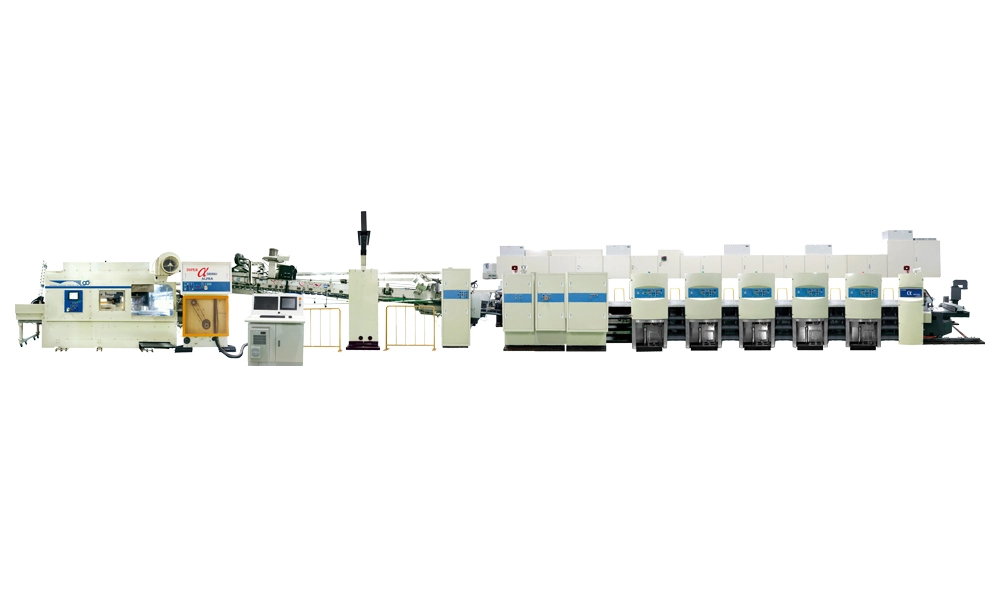
High-grade Full Automatic Flexo Printing Slotting Die Cutting Inline Folding Gluing and Countering Ejectoring Machine
Discover the Keshenglong&Shinko High-grade Full Automatic Flexo Printing Slotting Die Cutting Inline Folding Gluing and Countering Ejectoring Machine, the epitome of precision and efficiency. Ideal for modern packaging needs, this advanced machine streamlines operations by seamlessly integrating printing, slotting, die-cutting, folding, gluing, and ejecting processes. Elevate your production line with Keshenglong's innovative solution, designed to enhance productivity and deliver exceptional results.
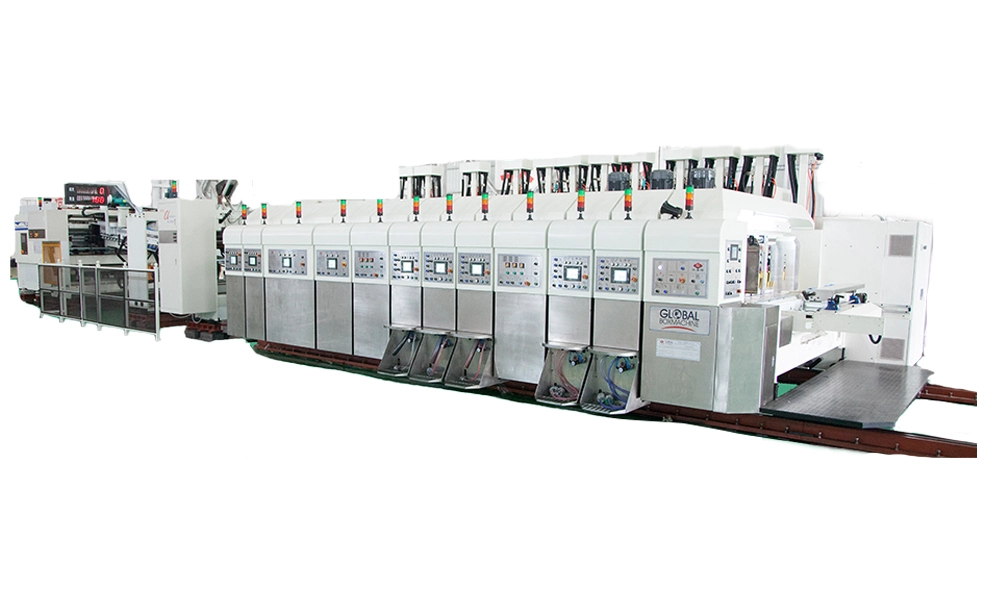
Computerized Flexo Printing Slotting Die-Cutting Inline Folding Gluing Countering Ejecting Machine
Introducing the Keshenglong&Shinko Computerized Flexo Printing Slotting Die-Cutting Inline Folding Gluing Countering Ejecting Machine. Engineered for precision, this advanced machine streamlines your packaging production with integrated Flexo Printing Slotting Die-Cutting functionalities. Seamlessly perform inline folding, gluing, countering, and ejecting—all in one efficient system. Designed for optimal performance, it enhances productivity while reducing downtime.
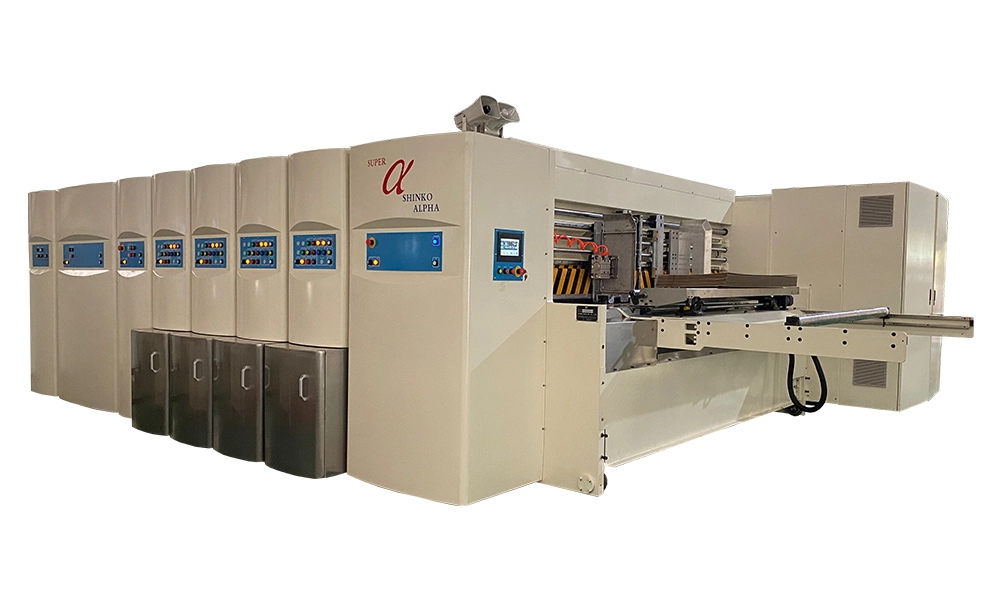
Shinko Super Alpha Movable Type Full Servo Drive Flexo Printing Slotting Die Cutting Machine
Introducing the Shinko Super Alpha Movable Type Full Servo Drive Flexo Printing Slotting Die Cutting Machine by Keshenglong. Engineered for precision and efficiency, this state-of-the-art machine enhances your production line with its advanced servo drive technology. Designed for seamless Flexo printing, slotting, and die-cutting, it ensures superior quality with every output.
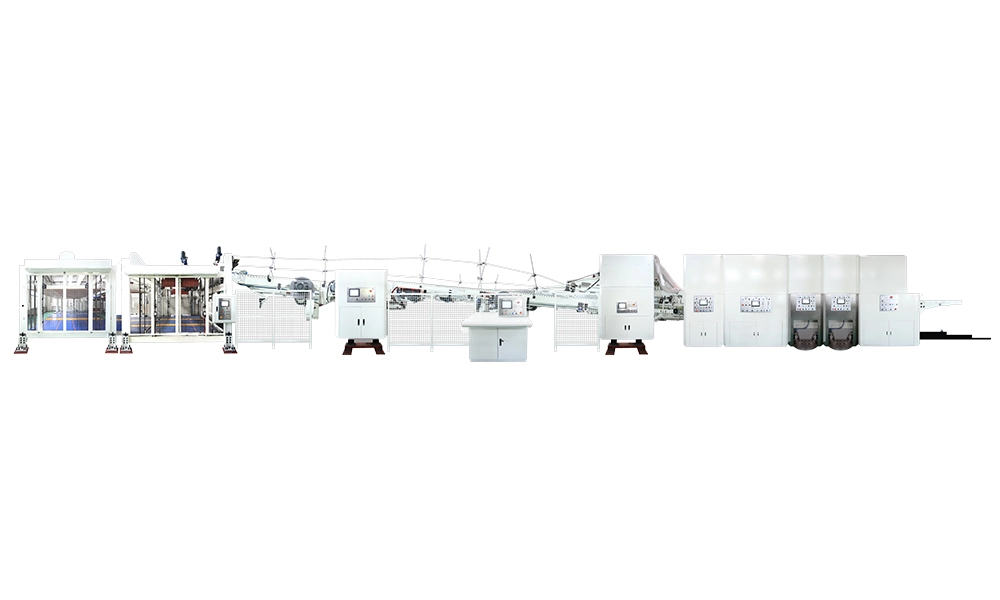
Jumbo Flexo Bottom Printing Slotting Die-Cutting Inline Folding Gluing Countering Ejecting Machine
Introducing the Keshenglong&Shinko Jumbo Flexo Bottom Printing Slotting Die-Cutting Inline Folding Gluing Countering Ejecting Machine. This advanced flexo printing slotting die-cutting machine ensures precision and efficiency for your packaging needs. Designed as a versatile flexo folder gluer machine, it optimizes every step from printing to ejecting, delivering seamless integration and superior quality.


© 2025 Keshenglong & SHINKO All Rights Reserved.
Keshenglong Carton Packing Machine
Keshenglong Carton Packing Machine
Keshenglong Carton Packing Machine
Keshenglong Carton Packing Machine
Keshenglong Carton Packing Machine