
How to Choose a Flexo Printing Machine for Large-Scale Production
- Selecting the Right Flexo Press for High-Volume Corrugated Printing
- Understand your production profile
- Match print quality to brand requirements
- Choose the right press configuration
- Key Technical Specifications and Their Impact
- Speed, repeat length, and registration
- Ink systems, drying, and color management
- Automation, waste reduction, and Industry 4.0 readiness
- Cost, ROI and Operational Considerations
- Assess total cost of ownership (TCO)
- Workforce requirements and maintainability
- Sustainability, waste, and regulatory compliance
- Supplier Evaluation: Why Manufacturer Matters & Keshenglong Case
- How to evaluate suppliers
- Keshenglong & Shinko: profile and strengths
- What differentiates Keshenglong & Shinko
- Press Type Comparison
- Implementation Checklist and Acceptance Criteria
- Pre-purchase checklist
- Factory acceptance and site installation
- FAQ
- 1. What is the main difference between flexo and digital printing for corrugated boxes?
- 2. How do I determine the right number of colors for my press?
- 3. How long is the typical lead time for a production-grade flexo machine?
- 4. What maintenance is critical to keep uptime high?
- 5. Should I buy a stand-alone flexo press or an integrated printing-slotting-stacking line?
- 6. How can I validate vendor performance claims?
- Contact / Request a Quote
- References
Selecting the Right Flexo Press for High-Volume Corrugated Printing
Understand your production profile
Begin by defining measurable production targets: daily and monthly output in square meters or number of boxes, job mix (long runs vs short runs), and required lead times. Large-scale corrugated converters typically need continuous high uptime, fast changeover, and reproducible color across long runs. Clarify substrate range (single-, double-, triple-wall corrugated), flute sizes, and board grammages — these determine cylinder sizes, shafting, and drying capacity.
Match print quality to brand requirements
Ask whether your customers demand High Quality graphics, photographic reproduction, or basic branding. Flexo technologies differ in achievable resolution and consistency: central impression (CI) and high-precision inking systems achieve better registration and tone reproduction than basic inline setups. Define minimum resolution (lines per inch or LPI) or process capability targets (e.g., Delta E tolerance) to guide press selection.
Choose the right press configuration
Press architectures commonly used in corrugated packaging include inline multi-color flexo, CI flexo, and hybrid flexo-print & die systems. Consider whether you need integrated slotting/die-cutting and stacking to reduce floor-to-finish time. Later in this guide there's a comparison table showing typical trade-offs.
Key Technical Specifications and Their Impact
Speed, repeat length, and registration
Press maximum speed affects throughput but must be balanced with substrate handling and print quality. Short repeat lengths help label and folding carton work, while corrugated carton typically uses larger repeat and wider web handling. Critical metrics:
- Nominal production speed (m/min) and effective production speed after accounting for makeready and changeovers
- Repeat length range (mm) — affects plate/cylinder choices
- Registration system accuracy — both short-term (during the run) and long-term (across shifts)
Specify target throughput (e.g., boxes/hour or m2/hour) and verify vendor data with live demonstrations or factory acceptance tests.
Ink systems, drying, and color management
Water-based, solvent-based, and UV/UV-LED inks are common. For corrugated carton, water-based flexo inks are typical due to cost and sustainability, but UV systems give faster curing and sharper dot holdout at higher speeds. Key elements to evaluate:
- Drying capacity (hot air, IR, IR+hot air, UV) matched to speed and ink type
- Closed-loop color control (spectrophotometer integration) to reduce waste and stabilize color between jobs
- Anilox roll selections and availability (volume/cm2), since anilox directly affects ink laydown and tone reproduction
Automation, waste reduction, and Industry 4.0 readiness
Large-scale operations benefit most from automation: servo controls for register, automatic plate loading, auto splicing, remote diagnosis, and data capture for OEE (overall equipment effectiveness). Confirm the press offers:
- Automatic plate and sleeve change options or quick-makeready systems
- Integration with MIS/ERP for job ticketing and production planning
- Remote monitoring and predictive maintenance features to reduce downtime
Cost, ROI and Operational Considerations
Assess total cost of ownership (TCO)
CapEx is only the start. Build a multi-year TCO model including:
- Initial purchase price and financing terms
- Installation, commissioning, and training costs
- Consumables: plates, anilox rolls, inks, solvents, blades
- Energy consumption (drying systems are a major energy user)
- Planned maintenance, spare parts, and service contracts
Estimate payback period by modeling productivity gains (reduced makeready, higher speed, lower waste) against added costs. Vendors should provide sample ROI calculations for realistic job mixes.
Workforce requirements and maintainability
Consider the skills needed to operate and maintain the press. Higher automation often reduces operator count but increases the need for technicians with PLC, servo, and printing process knowledge. Evaluate the availability of spare parts, local service engineers, and training programs.
Sustainability, waste, and regulatory compliance
For many buyers, sustainability is both a compliance requirement and a selling point. Look for machines that:
- Support low-VOC or water-based inks
- Offer efficient drying and energy-saving modes
- Minimize substrate waste via quick makeready and precise registration
Document how the new press will help meet sustainability goals (reduced waste, energy savings, recyclable materials) and, where possible, quantify gains.
Supplier Evaluation: Why Manufacturer Matters & Keshenglong Case
How to evaluate suppliers
Beyond machine specs, suppliers differ in quality control, parts sourcing, after-sales service, and industry credibility. Check:
- Track record: years in business, export footprint, and references from similar converters
- Local presence: spare parts, certified technicians, and training availability
- R&D and continuous improvement investment — important for long-term viability
- Factory acceptance testing (FAT) and performance guarantees
Keshenglong & Shinko: profile and strengths
Keshenglong Founded in 1995, Specialized in Manufacturing Corrugated Carton Printing Machine & Solutions is a leading manufacturer in China, specializing in the manufacturing of carton printing and packaging machinery. Our main products are flexo printer, Computerized high-speed Flexo Slotting Die-Cutting machines (1-6 color), Computerized high-speed Flexo case makers, '6+1' high-precision Precision Printing Slotting Die-Cutting machines, Top & Bottom Printing Slotting Die-Cutting machines, jumbo-size Flexo Printing Slotting Die-Cutting machines, etc. Merged into Keshenglong in 2017, Japan Shinko kept as the R&D center and production base and set up another production base in Guangzhou, China. Main parts are imported from Japan, instructed by experienced Japanese technicians, and installed and tested on-site to ensure quality up to the same standard as Japan Shinko. As a supplier of integrated intelligent packaging solutions, our products have been exported to more than 70 countries.
What differentiates Keshenglong & Shinko
Key competitive advantages to verify when evaluating Keshenglong & Shinko products:
- Joint R&D heritage combining Chinese manufacturing scale with Japanese technical guidance — typically improving reliability and parts compatibility
- Integrated solutions: flexo printing combined with slotting, die-cutting, and stacking reduces floor handling and time-to-finish
- Import of key components from Japan and on-site Japanese technical instruction that supports consistent build quality
- Global export footprint and installed base — valuable for references and spare part logistics
Press Type Comparison
The table below summarizes typical trade-offs when choosing a press for large-scale corrugated production.
| Press Type | Strengths | Limitations | Best for |
|---|---|---|---|
| Inline multi-color flexo | Flexible color combinations; often lower initial cost; good for variable jobs | Longer makeready vs CI; registration can drift at highest speeds | Converters with mixed job sizes and need for color flexibility |
| Central impression (CI) flexo | Superior registration and print consistency; high-quality graphics | Higher CAPEX; larger footprint | High-volume runs where print quality and color consistency are prioritized |
| Flexo with integrated slotting/die-cutting & stacker | Reduced material handling; single-pass finishing; lower labor | Higher system complexity; requires well-matched workflow | Converters seeking end-to-end automation and faster throughput |
Implementation Checklist and Acceptance Criteria
Pre-purchase checklist
- Define KPIs: throughput, waste %, color stability (Delta E), downtime targets
- Require FAT demonstration with your substrate and a representative job
- Confirm spare parts list and guaranteed availability/supply times
- Review training plans and warranty/service SLAs
Factory acceptance and site installation
During FAT and installation verify:
- Repeatability tests (registration and color) across representative runs
- Energy consumption measured under expected operating conditions
- Operator training and maintenance run-throughs completed
FAQ
1. What is the main difference between flexo and digital printing for corrugated boxes?
Flexo excels for high-volume runs with lower per-unit cost and broad substrate compatibility. Digital is better for short runs, variable data, and fast job changes without plates. For large-scale production, flexo typically delivers lower cost per unit once volumes justify plate and setup costs.
2. How do I determine the right number of colors for my press?
Decide based on artwork needs: spot-color branding may need 1–3 units plus a varnish or primer; photographic reproduction typically requires 4-color process (CMYK) and possibly additional spot colors or white. Factor in future product lines and growth.
3. How long is the typical lead time for a production-grade flexo machine?
Lead times vary by configuration and supplier; standard machines can take several weeks to months, and highly customized integrated systems often require 3–6 months or longer. Always confirm realistic delivery and installation windows.
4. What maintenance is critical to keep uptime high?
Key activities: regular anilox and plate care, precise cylinder and bearing maintenance, drying system checks, and software/servo updates. Establish a preventive maintenance schedule with supplier support to avoid unplanned downtime.
5. Should I buy a stand-alone flexo press or an integrated printing-slotting-stacking line?
Integrated lines reduce floor handling and shorten lead times but increase initial cost and complexity. Choose integrated systems if you aim for end-to-end automation and consistent high throughput; otherwise a modular approach may offer greater flexibility.
6. How can I validate vendor performance claims?
Request customer references in similar applications, visit live installations when possible, require FAT using your substrate, and ensure contractual performance guarantees and acceptance tests tied to KPIs.
Contact / Request a Quote
For tailored recommendations and product details, contact Keshenglong to discuss your production profile and request factory acceptance demonstrations. View product lines including corrugated carton flexo printing machine, flexo printing slotting die-cutting machine, flexo printing slotting die-cutting and stacker machine, flexo printer, and corrugated box printing machine. Request a site visit or quote to evaluate the right press configuration for your high-volume production needs.
References
- Wikipedia: Flexography. https://en.wikipedia.org/wiki/Flexography. Accessed 2026-01-03.
- Smithers: Flexographic printing market and technology reports. https://www.smithers.com. Accessed 2026-01-03.
- FINAT — The Association for the European Narrow Web Label Industry (industry insights on flexo technologies). https://www.finat.com. Accessed 2026-01-03.
- Fibre Box Association (resources on corrugated packaging). https://www.fibrebox.org. Accessed 2026-01-03.
- Keshenglong company profile and product descriptions (manufacturer-supplied). Accessed 2026-01-03.
How to Choose Right corrugated carton flexo printing slotting die cutter machine manufacturer and supplier ?
What are the different types of Printer Slotter Die Cutter Machines?
Why choose Keshenglong&Shinko 2 color flexo folder gluer manufacturer
The latest trends for flexo printing machines
Shipping
Can I track my shipment once it has been dispatched?
Yes, we provide tracking information for all shipments so you can monitor the delivery status.
What is the estimated delivery time for your machines?
Delivery times vary based on location and order size, but we typically estimate 4-6 weeks for delivery.
What should I do if my machine arrives damaged?
If your machine arrives damaged, please contact our customer service immediately to arrange for repairs or replacement.
Product
What should I do if the machine jams during operation?
In case of a jam, immediately stop the machine, remove any obstructions, and check for any damage before restarting.
Are there safety features integrated into your machines?
Yes, our machines come equipped with multiple safety features including emergency stop buttons and safety guards.
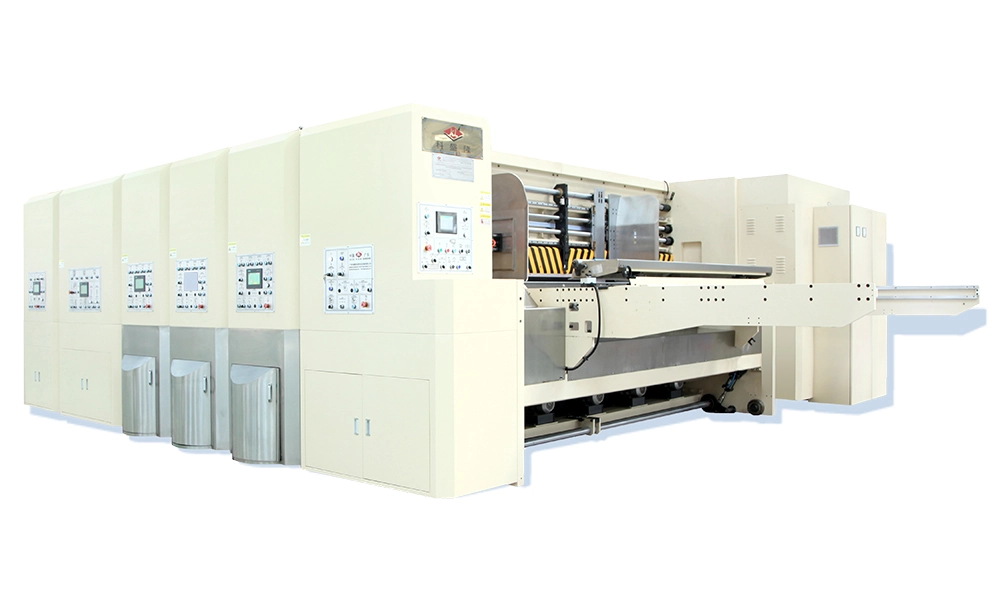
Computerized Jumbo Corrugated Carton Box Flexo Printing Slotting Die-Cutting Machine
Introducing the Keshenglong&Shinko Computerized Jumbo Corrugated Carton Box Flexo Printing Slotting Die-Cutting Machine – your top choice for precision and efficiency in packaging solutions. Engineered to deliver high-quality outputs, this advanced Flexo Printing Slotting Die-Cutting Machine enhances production processes, ensuring accuracy and consistency. Optimize your operations and improve productivity with its user-friendly interface and robust construction.
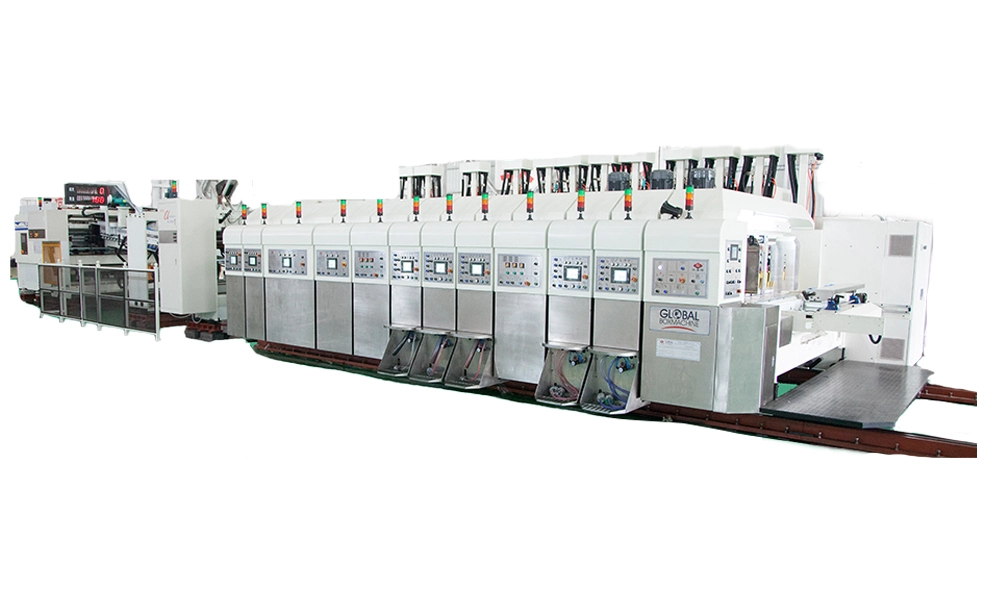
Computerized Flexo Printing Slotting Die-Cutting Inline Folding Gluing Countering Ejecting Machine
Introducing the Keshenglong&Shinko Computerized Flexo Printing Slotting Die-Cutting Inline Folding Gluing Countering Ejecting Machine. Engineered for precision, this advanced machine streamlines your packaging production with integrated Flexo Printing Slotting Die-Cutting functionalities. Seamlessly perform inline folding, gluing, countering, and ejecting—all in one efficient system. Designed for optimal performance, it enhances productivity while reducing downtime.
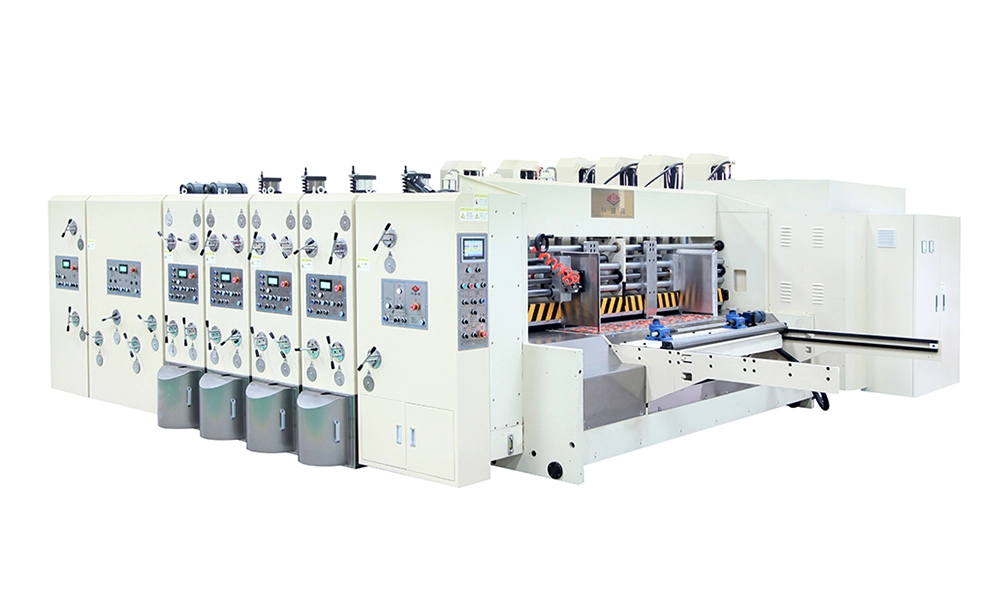
Computerzied Semi Auto Flexo Printing Slotting Die-Cutting Machine
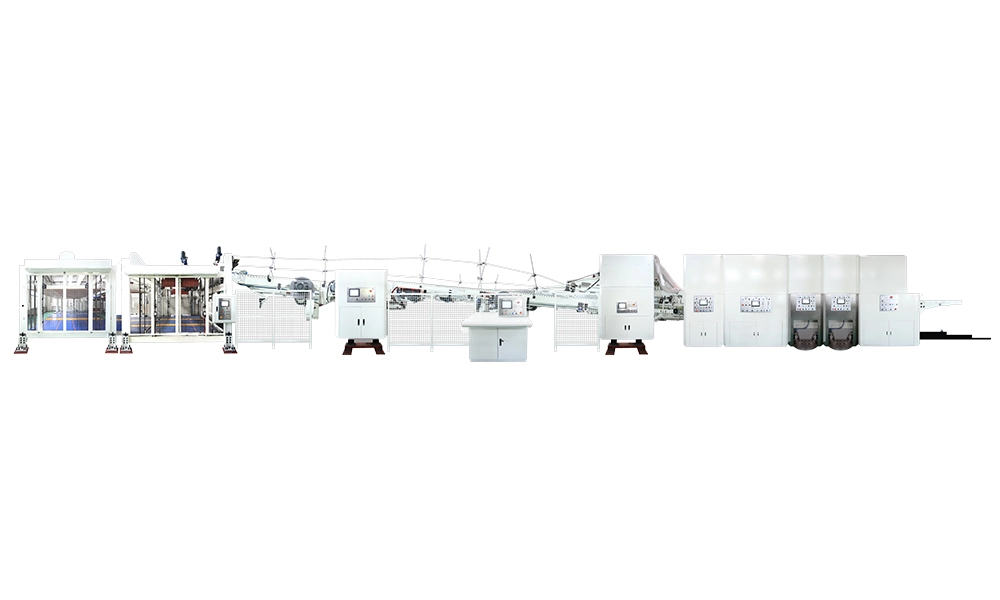
Jumbo Flexo Bottom Printing Slotting Die-Cutting Inline Folding Gluing Countering Ejecting Machine
Introducing the Keshenglong&Shinko Jumbo Flexo Bottom Printing Slotting Die-Cutting Inline Folding Gluing Countering Ejecting Machine. This advanced flexo printing slotting die-cutting machine ensures precision and efficiency for your packaging needs. Designed as a versatile flexo folder gluer machine, it optimizes every step from printing to ejecting, delivering seamless integration and superior quality.


© 2025 Keshenglong & SHINKO All Rights Reserved.
Keshenglong Carton Packing Machine
Keshenglong Carton Packing Machine
Keshenglong Carton Packing Machine
Keshenglong Carton Packing Machine
Keshenglong Carton Packing Machine